Stem cell therapy for elbow tendon pain at our Istanbul clinic treats tennis elbow and golfer’s elbow with fresh Wharton’s jelly stem cells and their exosomes, tiny repair messages, injected where the sore forearm tendon attaches to the elbow. It is common: in 4,783 working-age adults, 1.3% had tennis elbow and 0.4% golfer’s elbow.1 Uzm. Dr. Cihan Bolat reviews your scan report free of charge, and PRP comes free with any stem cell package.
01
Living with tennis elbow or golfer’s elbow: we understand
If you live with tennis elbow or golfer’s elbow, you know how one sore spot near the elbow can take over your day. Lifting the kettle, turning a key, shaking hands or typing at work: small movements you never used to think about now come with a sharp reminder, on the outer elbow in tennis elbow and the inner elbow in golfer’s elbow. You are far from alone: in a study of 4,783 adults aged 30 to 64, elbow tendon pain was most common between the ages of 45 and 54, and repetitive, forceful work raised the risk.1
It is rarely only about the elbow. A weak grip makes work harder, your racket or golf clubs stay in the cupboard, and lifting a grandchild or a heavy pan needs a plan. Perhaps rest, a brace, physiotherapy or an injection helped for a while, and then the pain returned. Wanting your strong grip and your easy days back is completely natural, and it deserves a careful plan.
Lifting a cup or kettle without a wince
Your morning tea or coffee, in the hand you prefer.
A firm handshake again
Greeting friends and colleagues without bracing for it.
Back to your racket, clubs or tools
Tennis, golf, the garden or the workshop, at your own pace.
Carrying the shopping, and your grandchildren
Lifting and carrying with confidence in both arms.
Here is the hopeful part: you do not have to just put up with it. Stem cell therapy for tennis and golfer’s elbow now aims at the worn tendon itself, alongside your physiotherapy. Here is how it works, in plain words, with the published studies further down:
02
How stem cells and exosomes can help your tennis or golfer’s elbow, in plain words
Picture the tendon at your elbow as a rope tied to a post. Every grip and lift tugs on the knot, and over time the fibres fray. Your body keeps trying to patch it, but the repairs come out untidy, and an alarm of irritation keeps ringing. Stem cells act like a site manager. They do not become your new tendon. They calm the alarm and send your own repair cells tiny text messages, called exosomes, packed with instructions. In research models, these signals are a main way stem cells help tendons repair.11
Calming the irritation
First, they help quiet the irritation in your worn tendon. That irritation is the alarm that hurts each time you grip, lift or twist.
Sending repair messages
Next, the stem cells release exosomes, tiny parcels of proteins and instructions. Your own tendon cells read these messages and are nudged to protect themselves and get back to repair work.
Rebuilding stronger fibres
Finally, they help your tendon cells lay down strong collagen (the tough, rope-like fibres of a healthy tendon) in neater lines. Across 46 animal studies, these tiny messages went with more of this strong collagen and stronger tendons.12
What this could mean for you: your morning cup or kettle, lifted without a wince. A firm handshake with friends again. The shopping, or your grandchildren, carried with confidence in both arms. A calmer, stronger tendon may give you back these moments. We aim to help you return to your racket, your clubs, the garden or the workshop, at your own pace.
03
Stem cell treatment for golfer's elbow or tennis elbow
Stem cells offer hope for recovery and symptom management in golfer's elbow or tennis elbow.
Read the full section
Golfer's elbow and tennis elbow are conditions that occur due to overuse of the forearm and elbow muscles. This overuse can lead to pain and discomfort in the area around the elbow, often caused by repetitive movements or activities. While you may not be able to completely control your daily activities, especially if they are part of your profession, you can still take steps to prevent these conditions.
It is helpful to take regular breaks to relieve the strain on the tendons around your elbow. Remember that repetitive movements are the primary cause of these injuries and inflammation. By being mindful of your activities and incorporating rest periods, you can reduce the risk of developing golfer's elbow or tennis elbow and maintain better overall elbow health.
In cases where these conditions do occur, our stem cell therapy offers a promising approach that aims to support healing and ease symptoms, helping patients return to their daily activities.
04
Why acting early can make a difference
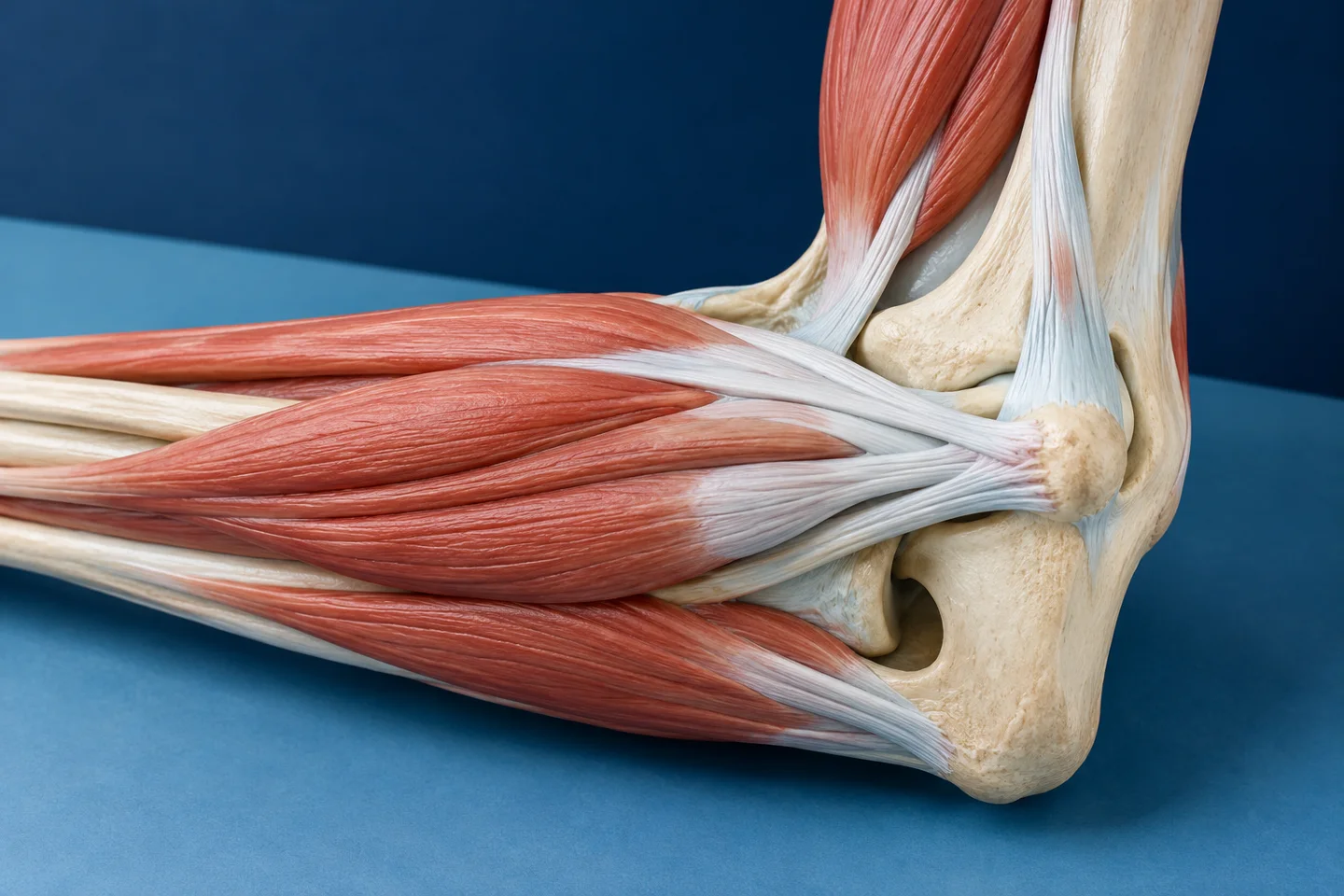
Tennis elbow is a sore tendon at the outer elbow, where the muscles that lift your wrist attach; golfer’s elbow is the same on the inner side, where the muscles that bend your wrist attach. In long-standing cases, the problem is tendon wear more than simple inflammation: in 11 elbows that needed surgery, every tendon showed signs of degeneration.7 Many elbows settle with time, but in a population study of 576 people with tennis elbow, the authors suggest that an elbow still sore after six months may take a longer course.8
Today’s care does a lot of good. In a trial of 198 people with tennis elbow, physiotherapy with exercise worked better than waiting in the first six weeks, and by one year most people in both groups reported success.9 Exercise and loading stay the foundation, and we work alongside them, never instead. On their own, they are not designed to rebuild a long-worn tendon.
This is where timing helps. In a research model of tendon damage, umbilical cord stem cells worked best when given at an early stage.10 Starting while your tendon still has plenty of healthy fibres gives any treatment, regenerative care included, a better place to begin.
05
How Wharton’s jelly stem cells and exosomes work in tennis and golfer’s elbow
In tennis and golfer’s elbow, the tendon where the forearm muscles attach to the elbow bone becomes worn and irritated, with small tears and disorganised fibres. Wharton’s jelly stem cells and their exosomes, tiny messages that carry proteins and RNA between cells, are injected into that tendon. There they aim to calm the irritation, protect the tendon cells and support stronger, better-organised healing.
How Wharton’s jelly stem cells and exosomes aim to calm a sore elbow tendon
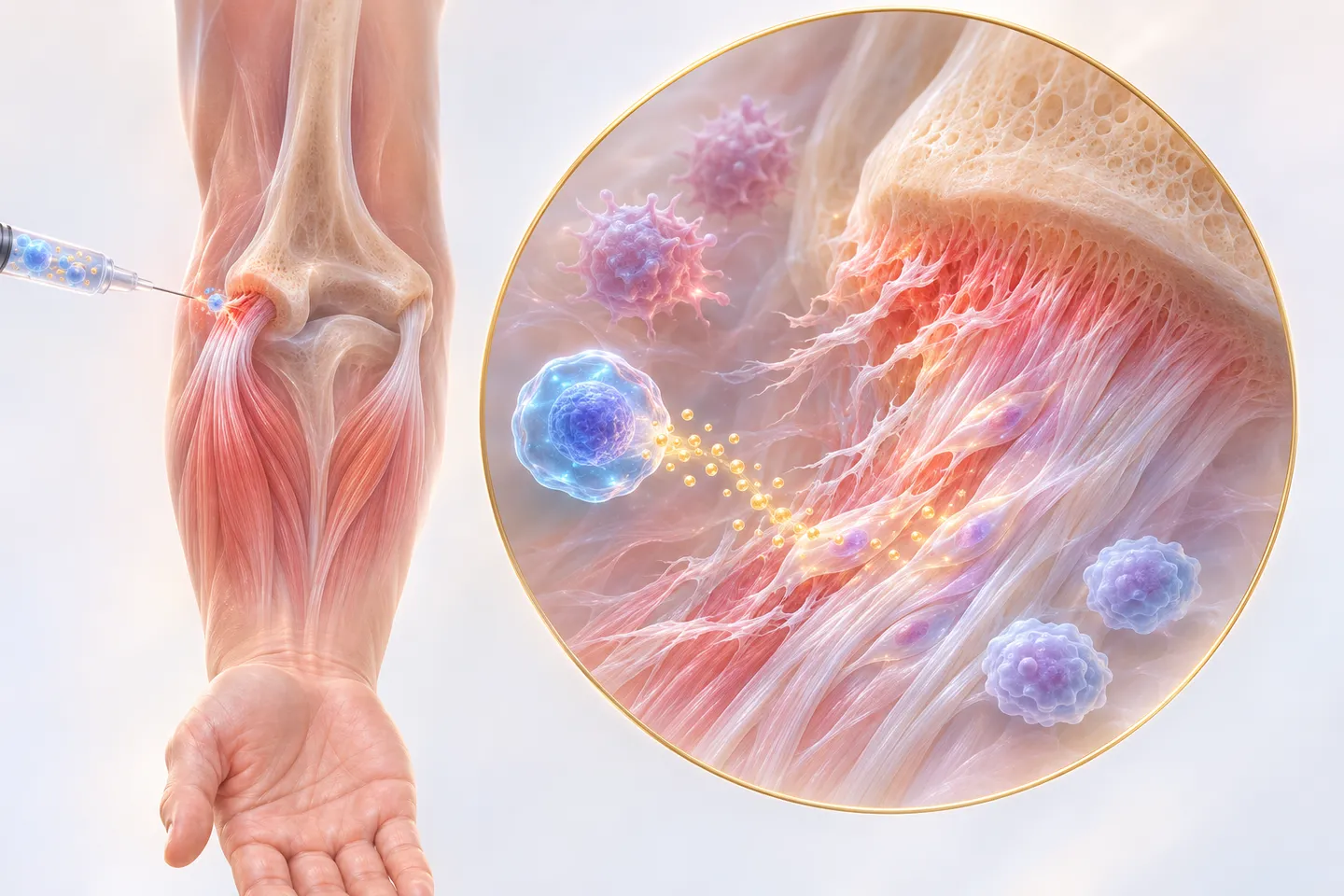
- Outer elbow bone (lateral epicondyle)The bony bump on the outer side of the elbow, where the tendon of tennis elbow attaches.
- Common extensor tendonThe shared tendon of the muscles that lift your wrist and fingers. In tennis elbow it becomes worn and sore.
- Inner elbow bone (medial epicondyle)The bony bump on the inner side of the elbow, where the tendon of golfer’s elbow attaches.
- Common flexor tendonThe shared tendon of the muscles that bend your wrist. In golfer’s elbow it becomes worn and sore.
- Worn tendon fibresFrayed, disorganised fibres where the tendon meets the bone. Gripping, lifting and twisting make them hurt.
- Targeted injectionA fine needle, guided by imaging where needed, places the treatment where it is needed. Dr. Cihan Bolat plans the routes for you.
- Wharton’s jelly stem cellA fresh donor stem cell from umbilical cord tissue. It works mainly through calming and repair signals, shown mostly in research models.
- ExosomesTiny messages released by stem cells, carrying signals that calm inflammation and support repair.
Read the science: how the treatment aims to calm a sore elbow tendon
Stem cells release signals, exosomes included, that promote tendon repair.11 Each effect below says whether it was seen in people or in research models. Read more about our stem cells and our exosomes.
Calming the irritated tendon
Seen in research models. In rats with Achilles tendon damage, umbilical cord stem cells lowered the inflammatory signals TNF-α and IL-1β and the tissue-breaking enzyme MMP-3, and the collagen fibres grew thicker.10
Filling in the worn tendon
Seen in people. After one injection of donor fat-derived stem cells, a different cell type from our Wharton’s jelly cells, tendon defects in tennis elbow became significantly smaller on scans over a year.2 With tennis players’ own fat-derived stem cells, the MRI grade of tendon damage improved from 4.22 to 2.22 at six months.3
Stronger collagen and new blood vessels
Seen in research models. Stem cells helped new blood vessels form and shifted healing tendon from weaker type III collagen towards the type I collagen of healthy tendon.11
Exosomes, the repair messages
Seen in research models. Across 46 animal studies, extracellular vesicles, the family of tiny messages that includes exosomes, were linked with better tendon healing scores, stronger tendons, more type I collagen and less of the inflammatory signal IL-6.12
Umbilical cord stem cell signals on human tendon cells
Seen in research models. In the laboratory, tendon cells taken from people’s worn, torn rotator cuffs were given an inflammatory trigger. Signals released by umbilical cord stem cells calmed their inflammatory genes, lowered the inflammatory messenger PGE2, raised the strong type I collagen and reversed the cell ageing and cell death that the trigger caused.16
Exosomes calming a sore tendon
Seen in research models. In rats with a worn, sore shoulder tendon (a model of tendinopathy), exosomes from umbilical cord stem cells were injected in a collagen gel that held them in the tendon for two weeks. The tendon looked calmer and less swollen on MRI, its collagen was better organised, and its immune cells shifted towards calming, repair-friendly types.17
06
How is our stem cell therapy transplant for golfer's elbow or tennis elbow performed in Istanbul?
Stem Cell Treatment for Golfer's or Tennis Elbow
Read the full section
Stem cell therapy can also be used in the treatment of golfer's elbow and tennis elbow. This therapy uses Wharton's jelly and umbilical cord-derived mesenchymal stem cells (MSCs), injected into the elbow, to calm irritation and support the healing of the tendon. PRP therapy, also known as platelet-rich plasma therapy, can be added to your plan, free of charge with any stem cell package.
PRP is made by drawing a small amount of the patient's blood and centrifuging it to create a concentrate rich in platelets and the growth factors they release, signals involved in tendon healing. Studies published in the American Journal of Sports Medicine have shown encouraging pain relief with PRP in tennis elbow.
By integrating umbilical cord-derived MSCs and exosomes into our treatment approach, we offer a promising solution for patients suffering from golfer's or tennis elbow. This comprehensive strategy aims to enhance recovery and improve the quality of life for our patients while minimizing the need for invasive procedures.
07
Why Wharton’s jelly stem cells and exosomes lead our elbow treatment
Wharton’s jelly is the soft tissue inside the umbilical cord. Its stem cells come from cords donated after healthy births, so nothing is taken from your body and no donor matching is needed. They are prepared fresh for your treatment date in a Ministry of Health-approved GMP laboratory, with the cell count and viability certified (see what our lab report shows). Your plan can also include umbilical cord stem cells and extra Wharton’s jelly exosomes.
Compare Wharton’s jelly stem cells with your own cells
| Fresh Wharton’s jelly stem cells (our cells) | Stem cells from your own bone marrow or fat | |
|---|---|---|
| Age of the cells | Newborn tissue, from cords donated after healthy births | As old as you are |
| A procedure for you | None | A bone marrow draw or liposuction first |
| Ready for treatment | Prepared fresh for your date, usually within 5 to 10 days | After a harvest, often with laboratory growth |
| Growth | Multiplied faster in a side-by-side laboratory comparison of 18 donors each13 | Bone marrow cells grew more slowly in the same comparison13 |
08
Stem cell therapy for tennis elbow: what the studies show
First, research models with umbilical cord stem cells, which come from the same source as our Wharton’s jelly cells. In rats, umbilical cord stem cells calmed inflammatory signals in a damaged tendon and helped thicker collagen fibres grow,10 and in the laboratory their signals calmed inflammation and raised the strong type I collagen in tendon cells from people’s torn shoulder tendons.16 The human elbow studies below are small, mostly without a comparison group, and each used a different cell type from the Wharton’s jelly cells we use, named in each line. All treated tennis elbow; golfer’s elbow has been studied less. The highlights:
- Donor fat cells: in long-standing tennis elbow, donor fat-derived stem cells lowered pain from 66.8 to 14.8 out of 100, and the elbow performance score rose from 64.0 to 90.6 over 52 weeks, with no significant side effects.2
- Tennis players, own cells: in 18 players whose elbows had not settled with earlier care, one injection of their own fat-derived stem cells, followed by physiotherapy, lowered the worst pain from 6.28 to 0.74 out of 10 at one year; on average they were back on court after about 3.3 months.3
- Long-term, own tendon cells: with cultured cells taken from their own knee tendon (tendon cells, not stem cells), people with severe tennis elbow had 78% less pain an average of 4.5 years later, and 93% were satisfied.4
Elbow pain and function before and 52 weeks after donor fat-derived stem cells in long-standing tennis elbow
Elbow pain, 0–100 (lower is better)2
Elbow performance score, 0–100 (higher is better)2
The studies in detail, with all 4 in one table
| Study | Design | n | Cells and route | Result with exact numbers |
|---|---|---|---|---|
| Lee 2015, Stem Cells2 | Pilot, two dose groups, 52 weeks; chronic tennis elbow | 12 | Donor fat-derived MSCs with fibrin glue; one injection into the tendon | Pain 66.8 → 14.8 (0–100) and elbow performance 64.0 → 90.6 at 52 weeks; tendon defects smaller; no significant adverse effects |
| Khoury 2021, Journal of Experimental Orthopaedics3 | Pilot, single group, 12 months; tennis players after unsuccessful earlier care | 18 | Own fat-derived MSCs, grown in the laboratory; one injection into the tendon, then physiotherapy | Worst pain 6.28 → 1.0 at 6 months and 0.74 at 12 months (0–10); QuickDASH 51.38 → 5.56 at 12 months; MRI grade 4.22 → 2.22 at 6 months; back to tennis at 3.31 months |
| Wang 2015, American Journal of Sports Medicine4 | Case series, mean 4.5 years; severe tennis elbow after unsuccessful earlier care | 16 (15 at final follow-up) | Own cultured tendon cells (tenocytes, not stem cells); one injection into the tendon | Pain 5.73 → 1.21 (0–10, 78% better); QuickDASH 45.88 → 6.61; grip strength 19.85 → 46.60; MRI grade 4.31 → 2.87; 93% satisfied |
| Singh 2014, Journal of Natural Science, Biology and Medicine14 | Prospective series, 12 weeks; tennis elbow not treated before | 30 | Own bone marrow concentrate (the platelet-rich layer with marrow cells); one injection | PRTEE score 72.8 → 14.86 (0–100, lower is better) at 12 weeks |
PRP for tennis elbow. PRP (platelet-rich plasma), made from a small sample of your own blood, is free with any stem cell package. These are PRP results, not stem cell results: in a double-blind trial of 230 people with long-standing tennis elbow, pain improved by 71.5% at 24 weeks with PRP, against 56.1% with tendon needling alone,5 and in a randomised trial of 100 people, 37 of the 51 given PRP (73%) were treated successfully at one year.15 Trials differ, so Dr. Cihan Bolat tells you whether PRP suits your plan.
09
Who can have stem cell therapy for tennis or golfer’s elbow?
We treat tennis elbow and golfer’s elbow, with no fixed age limit. Dr. Cihan Bolat decides with you from your ultrasound or MRI report, plans the routes and timing for you, and tells you honestly if treatment is not right for you. For other problems, see shoulder and Achilles tendinitis, bursitis (a swollen sac at the elbow tip), ligament injuries and sports injuries.
Often suitable
- Long-standing tennis elbow (lateral epicondylitis, on the outer elbow)
- Golfer’s elbow (medial epicondylitis, on the inner elbow)
- Small tears or thickening of the tendon on your scan
- Pain despite rest, a brace, physiotherapy or injections
Considered case by case
- A large or full-thickness tendon tear: send your MRI or ultrasound for a free, honest review by Dr. Cihan Bolat, including whether surgery would suit you better
- Numbness or tingling in the hand, once your doctor has checked the nerve
- Blood thinners or a bleeding disorder
- Diabetes or another long-term condition
Not suitable for now
- A hot, red, swollen elbow or a fever: please see your own doctor first, as it can be an infection
- Active cancer, or recent cancer treatment
- An active infection elsewhere
- Pregnancy
10
Expert stem cell treatment led by Uzm. Dr. Cihan Bolat, MD
Under the guidance of Uzm. Dr. Cihan Bolat, MD, Specialist in Anesthesiology & Reanimation and Regenerative Medicine, we provide specialized treatments tailored to the unique needs of our patients suffering from golfer's elbow or tennis elbow. With extensive experience and a wide range of umbilical cord-derived stem cells at our disposal, we offer an integrated approach to the treatment of these conditions.
Read the full section
In our clinic, we prioritize patient safety and well-being, creating a relaxed atmosphere supported by a friendly and professional team dedicated to ensuring you have a positive experience during your stay. Our commitment to utilizing advanced stem cell therapies enhances the effectiveness of our treatments and promotes better health outcomes.
By focusing on the specific needs of patients with golfer's elbow or tennis elbow, we aim to provide a comprehensive and compassionate treatment experience that aims at the tendon changes behind these conditions while supporting our patients in their journey toward improved health.
11
How does our stem cell treatment for golfer’s elbow or tennis elbow work?
All our stem cell treatments in Istanbul are evaluated and administered by specialists in the field, trained in the United States and Turkey, rather than general practitioners or other specialists. We do this to ensure the highest level of precision, understanding of the condition, and quality of treatment for our patients. We are 100% transparent and honest with our patients. Not everyone is eligible for our stem cell treatments. Many patients are declined when our specialist evaluates their current health status and medical history, determining that the treatment is not suitable to avoid false promises or expectations when the risks outweigh the benefits. For this reason, and to ensure patient safety in all our treatments, each patient is assessed by the specialist before they can schedule their treatment.
Step 1. Specialist Assessment – For patients with golfer's elbow or tennis elbow, our specialist needs to know the patient's age and previous medical treatments. Additionally, specific tests related to elbow health will need to be reviewed, which you will be asked to bring.
Step 2. Free Telephone Consultation with the Specialist – Once the specialist has reviewed the medical records and approved your case, we will present treatment options and pricing tailored specifically for golfer's elbow or tennis elbow. At that time, we also offer a free telephone consultation to discuss any questions or concerns regarding the treatment process.
Step 3. Preparation of Stem Cells – Once you decide to proceed with our treatment, we will send an invoice for the deposit to initiate the stem cell preparation process, ensuring it is ready for your scheduled treatment. The duration of this process may vary depending on current demand and availability, but it can take 5-10 days.
Step 4. Treatment Day – On the day of treatment, you can choose to come to our hospital location or take advantage of our free transportation to and from our clinic in Istanbul. Our driver will pick you up from your desired location and escort you to our clinic, where the specialist will administer the treatment, utilizing advanced techniques such as umbilical cord-derived mesenchymal stem cells (MSCs) to optimize results. Afterward, our driver will safely return you.
Step 5. Follow-Up Treatment – Our specialist for follow-up treatment will contact you according to our follow-up schedule to ensure you have all the necessary resources for maximum benefits from your stem cell therapy. Your well-being and satisfaction are our top priorities.
By focusing on the specific needs of patients with golfer's elbow or tennis elbow and utilizing the latest advancements in stem cell therapy, we are committed to providing an effective and compassionate treatment experience that aims at the tendon changes behind these conditions.
12
What our patients say
Transformative Treatment for Elbow Pain!
I recently underwent stem cell therapy for my golfer's elbow at this clinic, and I am beyond impressed with the results! From the moment I stepped in, the staff was welcoming and attentive. the medical team explained the entire process clearly, making me feel confident in my decision. After the treatment, I noticed a significant reduction in pain and improved mobility in my elbow. It has truly transformed my daily life, allowing me to return to the activities I love. I highly recommend this clinic to anyone struggling with elbow pain—it's been a life-changing experience!
Exceptional Care and Remarkable Results!
I can't speak highly enough of the care I received at this clinic for my tennis elbow treatment. The professionalism of the medical team was evident throughout the entire process. They took the time to assess my condition thoroughly and tailored a treatment plan specifically for me. After just a few sessions of stem cell therapy, my pain levels decreased significantly, and my strength returned. The combination of expert care and innovative treatments truly set this clinic apart. If you're dealing with elbow issues, this is the place to go!
13
Golfer’s and tennis elbow stem cell therapy cost in Turkey
Elbow treatment is a targeted injection into the sore tendon, so it is priced in your written plan: a fixed, all-inclusive price before you book. Where your plan also includes an IV infusion, it follows our price list, effective 1 June 2026, in US dollars (M = million stem cells), with free Wharton’s jelly exosomes from 50M. See our stem cell therapy cost guide.
| Cell count | USD price | Free exosomes | Free hotel |
|---|---|---|---|
| 25M | $4,950 | No | No |
| 50M | $6,950 | 10 billion exosomes | No |
| 75M | $8,950 | 10 billion exosomes | No |
| 100M | $10,500 | 20 billion exosomes | 2 nights |
| 125M | $11,850 | 20 billion exosomes | 2 nights |
| 150M | $13,550 | 30 billion exosomes | 2 nights |
| 175M | $15,000 | 30 billion exosomes | 2 nights |
| 200M | $16,500 | 30 billion exosomes | 3 nights |
| 225M | $18,000 | 30 billion exosomes | 3 nights |
| 250M | $19,500 | 30 billion exosomes | 3 nights |
What is included, and what is optional
Included
- Free review of your ultrasound or MRI report, and a phone consultation
- Your injections, and any IV infusion, as set out in your plan
- Fresh Wharton’s jelly stem cells, count and viability certified
- PRP (platelet-rich plasma), free with any stem cell package
- Treatment by Uzm. Dr. Cihan Bolat’s specialist team
- Ground transport, a case manager and interpreter help
- Hotel nights as listed, in 5-star hotels
- Follow-up by phone or WhatsApp
Not included / optional
- Flights and extra hotel nights
- Extra exosomes, priced in your plan
- Add-ons such as Muse cells, Muse exosomes or CD34+ exosomes
- A repeat treatment, if you choose one
14
Read our full guides
Would you like the whole story? These guides go deeper.
Does stem cell therapy work for sports injuries?
Tendons, ligaments and muscles, with the studies and how physiotherapy fits in.
Read the guide GuideExosome treatments explained
What exosomes are, how they carry repair signals and how each exosome injection is given.
Read the guide GuideWhat a stem cell lab report shows
How cell count, viability and sterility are tested, and why fresh cells from a GMP laboratory matter.
Read the guide15
Frequently asked questions
Is PRP good for tennis elbow?
PRP (platelet-rich plasma) is made from a small sample of your own blood, and it is free with any stem cell package. In a double-blind trial of 230 people with long-standing tennis elbow, pain improved by 71.5% at 24 weeks with PRP, against 56.1% with tendon needling alone. These are PRP results, not stem cell results; Dr. Cihan Bolat decides whether PRP suits your plan.
Does stem cell therapy work for golfer’s elbow too?
Golfer’s elbow is a similar tendon problem to tennis elbow, on the inner side of the elbow, and we treat both. Most published studies so far are in tennis elbow, where donor fat-derived stem cells, a different cell type from the Wharton’s jelly cells we use, lowered pain from 66.8 to 14.8 out of 100 over a year. Dr. Cihan Bolat reviews golfer’s elbow case by case and tells you honestly what is realistic for you.
How soon will I feel a difference, and how long does it last?
Results build gradually over weeks and months, as the tendon heals. In the tennis player study on this page, the worst pain fell from 6.28 to 1.0 out of 10 by six months and to 0.74 at one year; with people’s own cultured tendon cells, the benefit lasted an average of 4.5 years. Everyone responds at their own pace.
Do I still need physiotherapy and exercises?
Yes. Exercise and loading are the foundation of tendon care, and stem cell therapy works alongside them, never instead. In the tennis player study on this page, physiotherapy followed the injection, and the players were back on court after about 3.3 months on average.
Can stem cell therapy help me avoid elbow surgery?
Some people use it to delay or avoid surgery. A large or full-thickness tendon tear is looked at case by case, and you do not need a surgeon’s opinion first: send your ultrasound, MRI or X-ray report, and Dr. Cihan Bolat will review it free of charge and tell you honestly whether stem cell therapy suits you, or whether surgery or another option would suit you better. When surgery is needed, stem cells can sit alongside it and your physiotherapy, never instead.
What happens on treatment day, and how long do I stay in Istanbul?
Dr. Cihan Bolat, a specialist in anaesthesiology and reanimation, plans every injection with your comfort in mind, guided by imaging where needed, and you walk out the same day. Your plan sets the dates: your cells are prepared fresh for your treatment date, usually within 5 to 10 days of booking, and your case manager helps you choose dates that suit you.
Is stem cell therapy for golfer's elbow or tennis elbow safe?
Yes, stem cell therapy is generally safe and carries few risks: large reviews of mesenchymal stem cell trials found it well tolerated, and the most common effect was a passing fever. It is minimally invasive, given by injection without surgery.
Can stem cell therapy cure my golfer's elbow or tennis elbow?
The benefits of stem cell treatment for golfer's elbow or tennis elbow may vary from patient to patient, depending on factors such as current health, medical history, the extent of damage, and other considerations. It is important to understand that, although mesenchymal stem cell injections have shown encouraging results in long-standing tennis elbow, the goals of treatment are less pain, a stronger grip, easier use of your arm and a better quality of life.
How effective is stem cell treatment for golfer's elbow or tennis elbow?
Patient satisfaction after stem cell treatment for golfer's elbow or tennis elbow is high. However, it is important to understand that treatment effectiveness depends on several factors, including the patient's age, medical history, and overall lifestyle.
How much does stem cell treatment for golfer's elbow or tennis elbow cost?
Treatment prices may vary depending on the patient's individual needs, such as special accommodation or stay requirements, and the number of stem cells in your plan. Our prices include: ground transportation to and from our clinic; treatment by a certified specialist in this field; certified allogeneic stem cells with 97% viability, prepared fresh for your treatment date; a personal case manager; and aftercare.

Medical review
Uzm. Dr. Cihan Bolat
Medical Director, Istanbul Stemcell
This page was written from the published studies listed below and reviewed for medical accuracy on .
16
References
All 17 published studies, with PubMed links
- Shiri R, et al. Prevalence and determinants of lateral and medial epicondylitis: a population study. Am J Epidemiol. 2006;164(11):1065-74. PMID 16968862
- Lee SY, et al. Treatment of Lateral Epicondylosis by Using Allogeneic Adipose-Derived Mesenchymal Stem Cells: A Pilot Study. Stem Cells. 2015;33(10):2995-3005. PMID 26202898
- Khoury M, et al. Promising improvement of chronic lateral elbow tendinopathy by using adipose derived mesenchymal stromal cells: a pilot study. J Exp Orthop. 2021;8(1):6. PMID 33501619
- Wang A, et al. Evidence for the Durability of Autologous Tenocyte Injection for Treatment of Chronic Resistant Lateral Epicondylitis: Mean 4.5-Year Clinical Follow-up. Am J Sports Med. 2015;43(7):1775-83. PMID 25908113
- Mishra AK, et al. Efficacy of platelet-rich plasma for chronic tennis elbow: a double-blind, prospective, multicenter, randomized controlled trial of 230 patients. Am J Sports Med. 2014;42(2):463-71. PMID 23825183
- Wang Y, Yi H, Song Y. The safety of MSC therapy over the past 15 years: a meta-analysis. Stem Cell Res Ther. 2021;12(1):545. PMID 34663461
- Regan W, et al. Microscopic histopathology of chronic refractory lateral epicondylitis. Am J Sports Med. 1992;20(6):746-9. PMID 1280910
- Sanders TL Jr, et al. The epidemiology and health care burden of tennis elbow: a population-based study. Am J Sports Med. 2015;43(5):1066-71. PMID 25656546
- Bisset L, et al. Mobilisation with movement and exercise, corticosteroid injection, or wait and see for tennis elbow: randomised trial. BMJ. 2006;333(7575):939. PMID 17012266
- Yuan Z, et al. Early delivery of human umbilical cord mesenchymal stem cells improves healing in a rat model of Achilles tendinopathy. Regen Med. 2024;19(2):93-102. PMID 38415316
- Jiang L, et al. Mesenchymal stem cells: An efficient cell therapy for tendon repair (Review). Int J Mol Med. 2023;52(2). PMID 37387410
- Gilmer G, et al. Extracellular Vesicles Are Associated With Biological, Mechanical, and Structural Tendon Healing Metrics in Preclinical Models: A Systematic Review and Meta-Analysis. J Orthop Res. 2026;44(10):e70289. PMID 42845123
- Batsali AK, et al. Differential expression of cell cycle and WNT pathway-related genes accounts for differences in the growth and differentiation potential of Wharton's jelly and bone marrow-derived mesenchymal stem cells. Stem Cell Res Ther. 2017;8(1):102. PMID 28446235
- Singh A, Gangwar DS, Singh S. Bone marrow injection: A novel treatment for tennis elbow. J Nat Sci Biol Med. 2014;5(2):389-91. PMID 25097421
- Peerbooms JC, et al. Positive effect of an autologous platelet concentrate in lateral epicondylitis in a double-blind randomized controlled trial: platelet-rich plasma versus corticosteroid injection with a 1-year follow-up. Am J Sports Med. 2010;38(2):255-62. PMID 20448192
- Lee MJ, et al. Effects of Conditioned Media From Human Umbilical Cord-Derived Mesenchymal Stem Cells on Tenocytes From Degenerative Rotator Cuff Tears in an Interleukin 1β-Induced Tendinopathic Condition. Orthop J Sports Med. 2024;12(11):23259671241286412. PMID 39534392
- Jeon YD, et al. Regenerative Effect of Injectable Collagen Loaded With Mesenchymal Stem Cell-Derived Extracellular Vesicles in a Collagenase-Induced Tendinopathy Rat Model. Am J Sports Med. 2026;54(5):1088-1102. PMID 41761488