
Stem cell therapy for facet syndrome uses fresh Wharton’s jelly stem cells and their exosomes, injected into or beside the small facet joints at the back of your spine, in the lower back or the neck, to calm inflammation and support the joint’s own repair.1 With donor stem cells injected into painful lumbar facet joints, back pain at least halved in 6 of 10 people for two years.2 It is a careful, specialist-led facet joint pain treatment in Turkey.
01
Living with facet syndrome: we understand
If you live with facet syndrome, you may know the deep ache on one or both sides of your spine, the stiffness when you first get up, and the sharp catch when you lean back, twist or look over your shoulder. Standing at the sink, reversing the car or turning over in bed can take more thought than it should. You are far from alone: in a study of 500 people with long-term spinal pain, the facet joints were a source of the pain in 55% of those with neck pain and 31% of those with low back pain.7
It is never only about your spine. Facet pain reaches into your sleep, your work, your hobbies and your time with family. Wanting your easy days back is completely natural, and stem cell therapy for facet syndrome is one careful way to work towards them, alongside the care you already have.

Looking over your shoulder
Reversing the car or crossing the road without turning your whole body.
Mornings without the stiffness
Getting out of bed and into your day with an easier back.
Standing and walking for longer
The kitchen, the shops or a city break, without looking for a seat.
Time with the people you love
Lifting a grandchild, dancing at a wedding or a long family meal in comfort.
Here is the hopeful part: you do not have to simply live with that sharp catch. People with worn, painful facet joints now have more options than ever, and the published studies are further down. First, in plain words, this is how stem cells and exosomes aim to help:
02
How stem cells and exosomes can help your painful facet joints, in plain words
Your facet joints are small hinges at the back of your spine, built like tiny knees. They let you bend, lean back and twist. When they wear, their lining becomes inflamed and keeps sending “danger” signals, like an alarm that will not switch off, even when you rest. Wharton’s jelly stem cells, from donated umbilical cords, work like a calm site manager. They do not become new joint tissue. They send exosomes, tiny text messages full of instructions, telling your own cells to settle down and look after the joint. The messages do most of the work.
Turning down the alarm
First, the cells and exosomes help calm the inflammation in and around your facet joints. In the laboratory, umbilical cord stem cell exosomes turned inflammatory immune cells towards a calmer state.1
Sending repair messages
Next, the exosomes carry their instructions to the cells that look after your joint’s cartilage (the smooth covering on the joint surfaces). The message: protect yourselves and keep the surface smooth.
Protecting your joints
Finally, a calmer joint can help protect the cartilage you still have. After donor bone marrow stem cells were injected into worn facet joints, MRI showed less joint wear in 5 of 10 people.2
What this could mean for you: checking over your shoulder at the wheel without turning your whole body. Mornings that start with an easier back. Cooking a meal, browsing the shops or exploring a new city without hunting for a seat. Dancing at a wedding or lifting a grandchild. Treatment aims to make these moments easier again.
03
Stem Cell Treatment for Facet Syndrome
Stem cells offer hope for recovery and symptom management in facet syndrome.
Read the full section
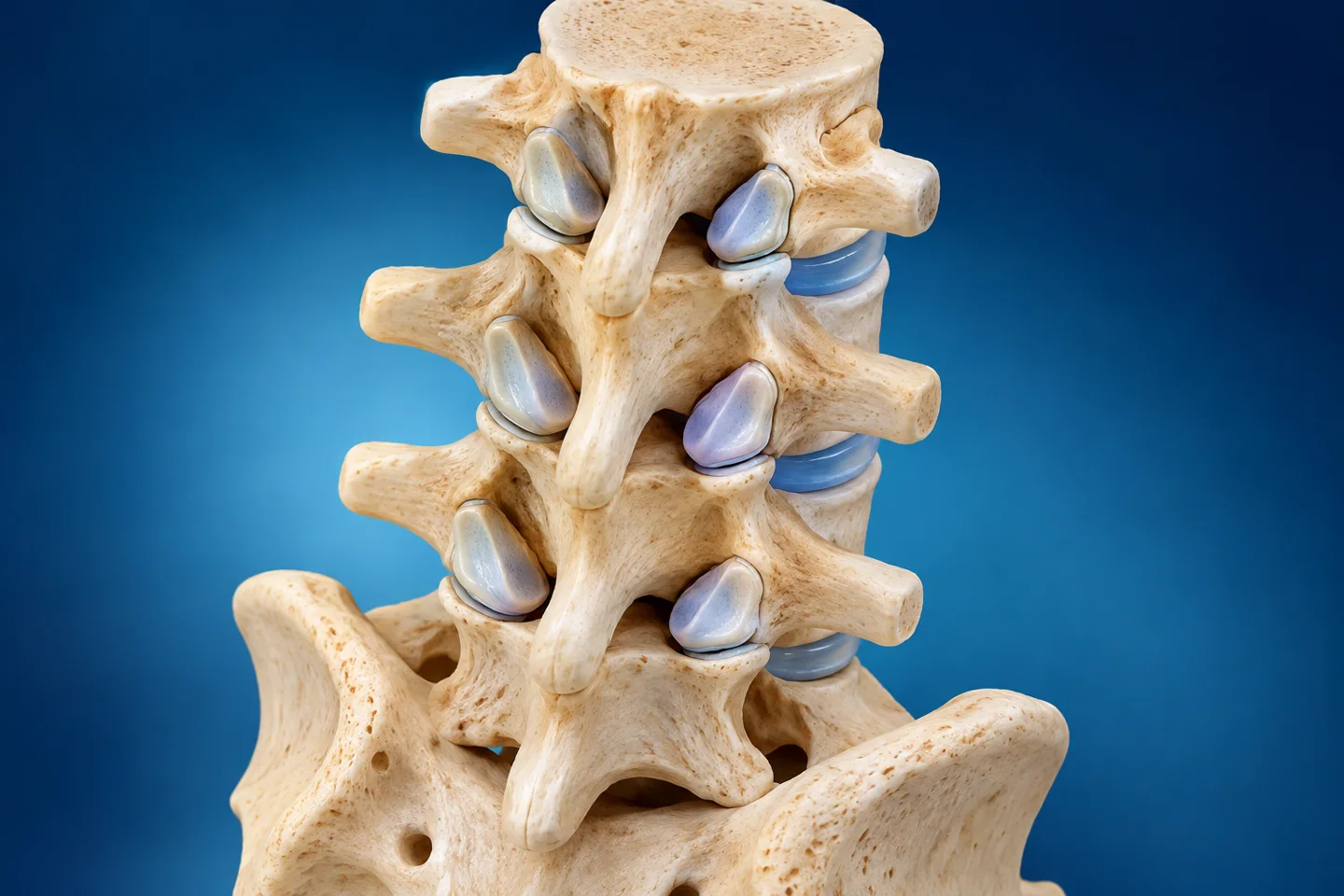
Facet syndrome is a condition in which the small joints in the spine become inflamed. This inflammation can be caused by various factors, such as excessive strain, injuries, or wear and tear. Facet syndrome can lead to pain and discomfort and affects individuals of different ages.
Our stem cell treatment for facet syndrome involves the direct administration of allogeneic mesenchymal stem cells (MSCs) to promote the healing of inflamed joints in the spine and improve joint health. This innovative therapy aims to enhance the recovery process, leading to improved function and a better quality of life for patients. By utilizing the regenerative properties of umbilical cord-derived MSCs, we provide hope for those suffering from the challenges of facet syndrome, with the aim of a more active life with less pain.
04
Why acting early can make a difference
Facet syndrome is pain from the facet joints, the small paired joints at the back of each level of your spine. They are the only true gliding (synovial) joints between your vertebrae, built like a small knee, and their wear is a common cause of back and neck pain, more often with age.8 Facet wear usually follows wear of the disc in front: in an MRI study, facet arthritis was not seen without disc wear, and it may take 20 years or more to develop after disc wear begins.9 The smooth cartilage inside these joints has little ability to repair itself.10
Today’s care does a lot of good. In a review of 249 trials, exercise therapy eased chronic low back pain by a clinically important amount,11 and medicines and facet injections help you keep moving. They ease pain, but they do not reliably rebuild worn cartilage.10
This is where timing helps. Because facet wear builds slowly over many years,9 there is usually more healthy cartilage left to protect earlier on. Beginning while your joints still have those reserves gives any treatment, regenerative care included, a better place to start.
05
How Wharton’s jelly stem cells and exosomes work in facet syndrome
Each level of your spine has a soft disc in front and two small facet joints behind. In facet syndrome, the cartilage of these joints wears and their lining becomes inflamed: worn facet joints release inflammatory signals such as IL-1β, TNF-α and IL-6.12 Wharton’s jelly stem cells and their exosomes are placed in or beside these joints to calm the inflammation, protect the cartilage and support the joint’s own repair.
How Wharton’s jelly stem cells and exosomes aim to calm a painful facet joint
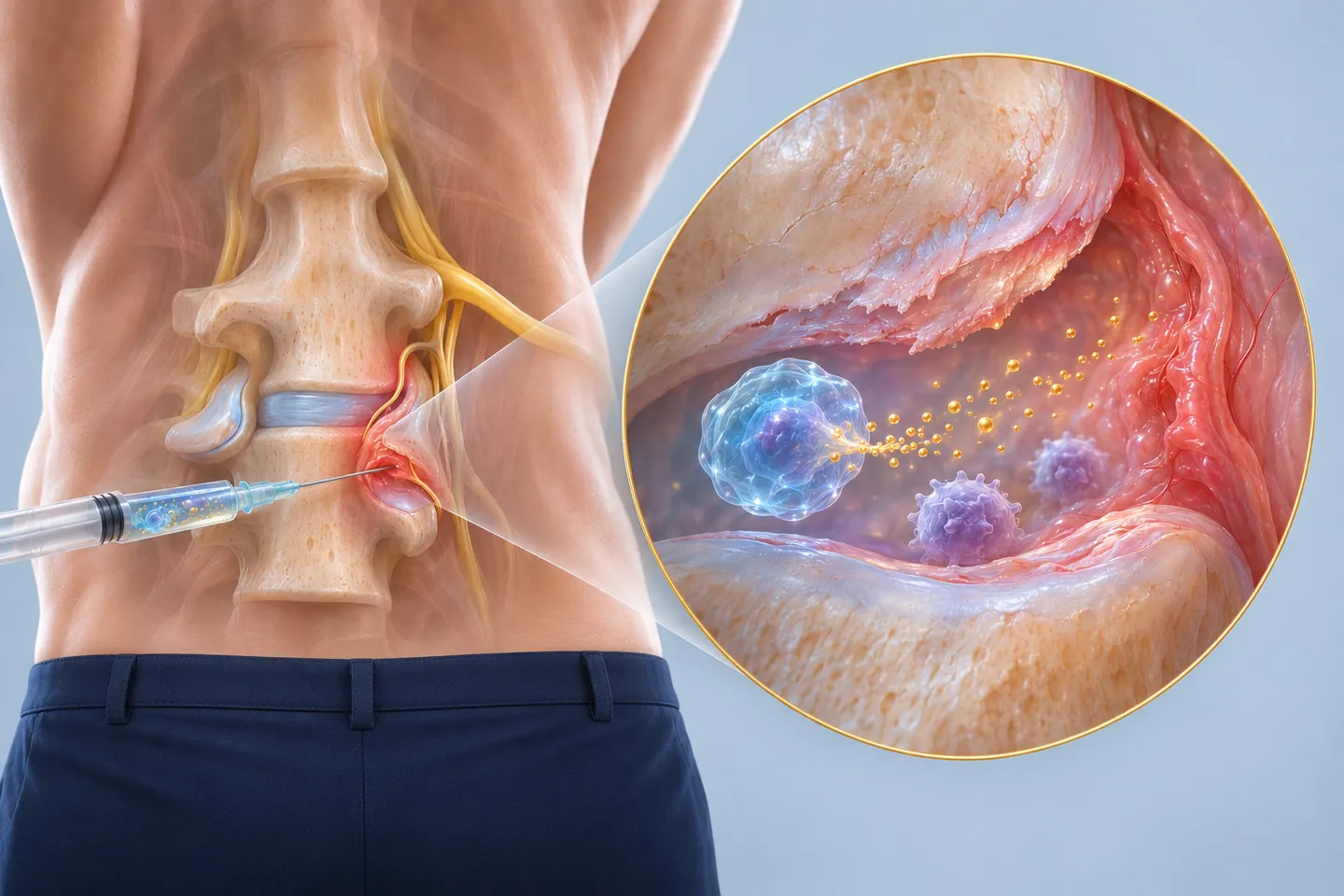
- VertebraOne of the bones of the lower spine. Each level has a disc at the front and two facet joints at the back.
- Facet jointA small joint at the back of the spine, built like a small knee. Here it is inflamed, a common source of back and neck pain.
- Worn cartilageThe smooth covering of the joint surfaces, thinned by wear, as in arthritis of other joints.
- Inflamed joint liningThe reddened lining around the joint. Calming this inflammation is a main aim of treatment.
- Intervertebral discThe cushion between two vertebrae. When it wears, more load passes to the facet joints.
- Nerve rootThe nerve leaving the spine at this level. Swelling nearby can irritate it.
- Medial branch nerveThe small nerve that carries pain signals from the facet joint.
- Stem cells and exosomesFresh Wharton’s jelly stem cells and their exosomes, placed in the joint with a fine needle. They work mainly through calming signals, shown mostly in research models.
Read the science: how the treatment aims to help a painful facet joint
Exosomes are tiny messages of proteins and RNA that stem cells send to nearby cells; clinical-grade cord stem cell exosomes have been injected into a human joint with no adverse effects over 12 months.1 Each effect below says whether it was seen in people or in research models. Read about our stem cells and our exosomes.
Calming the inflamed joint
Shown in laboratory studies. Umbilical cord stem cell exosomes turned inflammatory immune cells (macrophages) towards a calmer state,1 which matters in a facet joint full of inflammatory signals.12
Protecting the joint cartilage
Shown in research models. In mice with facet joint arthritis, stem cell exosomes (from bone marrow) reduced cartilage wear,13 and in mice with knee arthritis, cord stem cell exosomes injected into the joint were followed by new smooth (hyaline) cartilage.1
Quieting pain signals from the bone
Shown in research models. In facet joint arthritis, pain-carrying nerves can grow into the bone just beneath the joint. In mice, stem cell exosomes held back this abnormal nerve growth and eased signs of back pain.13
Less facet joint wear on MRI
Seen in people. After donor stem cells were injected into worn lumbar facet joints, MRI showed less joint wear at one or more levels in 5 of 10 people.2
Donor cells, well accepted
Seen in people. In the same facet joint trial there were no clinical signs of an immune reaction to the donor cells,2 and Wharton’s jelly cord stem cells injected into arthritic knees caused no severe adverse events.5
06
How is our stem cell therapy transplantation for facet syndrome performed in Istanbul?
Stem cell therapy is now being utilized for the treatment of degenerative conditions such as facet syndrome. Research indicates that mesenchymal stem cells (MSCs), particularly those derived from umbilical cord tissue, release signals that calm joint inflammation and support the cells that maintain cartilage, as shown in laboratory and research models. Some people use this approach to delay or avoid surgery (your surgeon’s advice comes first), and it is given by injection, without a surgical incision.
Read the full section
Published studies of stem cell injections into painful facet joints report encouraging results: in a trial of donor stem cells, back pain at least halved in 6 of 10 people for two years.2 By applying umbilical cord-derived MSC therapy directly to the site of pain, we aim to reduce inflammation and support healing in the affected joints. This regenerative treatment offers renewed hope for patients suffering from facet syndrome, improving their quality of life and enabling them to return to their daily activities with greater ease.
07
Why Wharton’s jelly stem cells and exosomes lead our facet joint treatment
Wharton’s jelly is the soft, protective tissue of the umbilical cord. We use stem cells from cords donated after healthy births: young cells, with no harvest from your own body and no donor matching. Each batch is prepared fresh for your treatment date in a Ministry of Health-approved GMP laboratory, and its cell count and viability are certified (see what our lab report shows). Your plan may add umbilical cord stem cells and extra Wharton’s jelly exosomes.
Compare Wharton’s jelly stem cells with your own cells
| Fresh Wharton’s jelly stem cells (our cells) | Stem cells from your own bone marrow or fat | |
|---|---|---|
| Age of the cells | Newborn tissue, from cords donated after healthy births | As old as you are |
| A procedure for you | None | A bone marrow draw or liposuction first |
| Ready for treatment | Prepared fresh for your date, usually within 5 to 10 days | After a harvest, often with laboratory growth |
| Pain relief in osteoarthritis trials | Umbilical cord stem cells: the largest effect on pain of three sources, in a meta-analysis of 36 randomised arthritis trials14 | Smaller effects for fat and bone marrow stem cells14 |
08
Stem cell therapy for facet joint pain: what the studies show
Human studies in facet joints are still few, and each used its own cells. The highlights:
- Donor stem cells in facet joints: back pain at least halved in 6 of 10 people at 6, 12, 18 and 24 months, with no study-related serious adverse events.2
- The patients’ own fat cells, beside the facet joints: in 37 people, average pain fell from 6.8 to 1.5 out of 10 at one year, and was 1.4 at five years.3
- Exosome-type injections: in 20 adults with lumbar facet joint pain, vesicles from bone marrow stem cells were followed by disability scores 58.43% better within 3 months.4
- Wharton’s jelly cord stem cells in a joint: in arthritic knees, two doses lowered pain to 2.4, against 22.1 with hyaluronic acid (0–100 scale), at 12 months.5
Back pain and disability before and after one treatment with the patients’ own fat cells for facet joint syndrome (lower is better)
Back pain at 1 year, on a 0–10 scale3
Back pain at 5 years, on a 0–10 scale3
Disability (Oswestry Disability Index) at 5 years3
The studies in detail, with all 4 in one table
| Study | Design | n | Cells and route | Result with exact numbers |
|---|---|---|---|---|
| Qu 2025, Stem Cell Research & Therapy2 | Phase I, single arm; lumbar facet joint arthritis | 10 | Donor bone marrow MSCs, 10 million per joint; into two facet joints | Pain at least halved in 6 at 6, 12, 18 and 24 months; function gain in 5; less facet wear on MRI in 5; no study-related serious adverse events |
| Rothoerl 2023, Journal of Personalized Medicine3 | Observational, 5 years; lumbar facet joint syndrome | 37 | Own fat (adipose) regenerative cells; beside the facet joints | Pain 6.8 before, 1.5 at 1 year and 1.4 at 5 years (0–10); disability 71.05% before, 17.5% and 18.7%; every patient had less pain than before |
| Wilson 2024, Regenerative Medicine4 | Pilot, 3 months; lumbar facet joint pain | 20 | Bone marrow MSC vesicles; into facet joints | Pain severity 65.04%, interference 72.09% and disability 58.43% better; no adverse effects |
| Matas 2019, Stem Cells Translational Medicine5 | Randomised phase I/II; knee osteoarthritis | 26 | Wharton’s jelly cord MSCs, 20 million, once or twice; into the knee | At 12 months, two doses vs hyaluronic acid: pain 2.4 vs 22.1 (0–100); WOMAC pain 1.1 vs 4.3; no severe adverse events |
Our plans bring these strengths together with young Wharton’s jelly stem cells and exosomes. If a worn disc is your main pain source, see degenerative disc disease; for pain where the spine meets the pelvis, SI joint inflammation; and for wear across several levels, spinal osteoarthritis.
09
Who can have stem cell therapy for facet syndrome?
We treat facet joint pain in the lower back and the neck, with no fixed age limit: the people in the five-year facet study above were 31 to 78 years old.3 Dr. Cihan Bolat decides with you whether this facet syndrome treatment suits you, from your MRI or CT report and your history, and plans the routes and timing for you. Injections are guided by imaging where needed.
Often suitable
- Facet joint wear or inflammation seen on MRI or CT
- Back or neck pain that is worse when you lean back or twist
- Pain that eased after a diagnostic facet injection or nerve block
- Pain despite exercise, physiotherapy or medicines
- Stable health, and well enough to travel
Considered case by case
- Previous spine surgery, such as a fusion
- Several levels, or a slipped vertebra
- Inflammatory arthritis of the spine
- Blood thinners or a bleeding disorder
- Diabetes or another long-term condition
Not suitable for now
- Active cancer, or recent cancer treatment
- An active infection
- Pregnancy
- New arm or leg weakness, or bladder changes: please see your own doctor first
10
Expert Stem Cell Treatment Led by Uzm. Dr. Cihan Bolat, MD
Under the leadership of Uzm. Dr. Cihan Bolat, MD, Specialist in Anesthesiology & Reanimation and Regenerative Medicine, we provide specialized treatments tailored to the unique needs of our patients. With extensive experience and a wide range of mesenchymal stem cells (MSCs) derived from umbilical cord tissue at our disposal, we offer a comprehensive approach to treating facet syndrome.
Read the full section
At our clinic, we prioritize creating a relaxed atmosphere, and our friendly and professional team is dedicated to ensuring you have an enjoyable stay while receiving the best possible care. Our goal is to help you achieve optimal health and recovery through advanced stem cell therapy.
11
How does our stem cell therapy treatment for facet syndrome work?
All our stem cell treatments for facet syndrome in Istanbul are evaluated and administered by specialists in the field, trained in both the United States and Turkey, rather than general practitioners. This ensures the highest level of precision, understanding of the condition, and quality of treatment for our patients. We are 100% transparent and honest with our patients. Not everyone qualifies for our stem cell treatments; we carefully assess each individual’s situation. Many patients are turned away after our specialist evaluates their current health status and medical history, determining that the treatment may not be suitable. This helps us avoid making false promises or expectations when the risks may outweigh the benefits. To ensure patient safety, every individual must be assessed by the specialist before scheduling treatment.
Step 1. Specialist Assessment For patients with facet syndrome, our specialist will need to know your age and any previous medical treatments. Additionally, specific diagnostic tests should be reviewed that you are asked to bring.
Step 2. Free Phone Consultation with the Specialist Once the specialist has reviewed your medical records and approved your case, we will present treatment options and pricing. At that time, we also offer a complimentary phone consultation to address any questions or concerns you may have.
Step 3. Preparation of the Stem Cells Once you decide to proceed with our treatment, we will send you an invoice for a deposit to initiate the stem cell preparation process, ensuring it is ready for your scheduled treatment. The duration of this process can vary based on current demand and availability but typically takes 5-10 days.
Step 4. Treatment Day On the day of treatment, you can choose to come to our hospital location or take advantage of our free transportation to and from our clinic in Istanbul. Our driver will pick you up from your chosen location and escort you to our clinic, where the specialist will administer your treatment and then safely bring you back.
Step 5. Follow-Up Treatment Our follow-up specialist will contact you according to our established follow-up schedule to ensure you have all the necessary resources for maximum benefit. Your well-being and satisfaction are our top priorities.
By utilizing mesenchymal stem cells (MSCs) derived from umbilical cord tissue, we aim to enhance the healing process for patients with facet syndrome, supporting the joint’s own repair and improving overall joint function.
12
What our patients say
A Remarkable Experience at Istanbul Stem Cell Clinic
I recently underwent stem cell therapy at Istanbul Stem Cell Clinic, and I am thrilled with the results. From the moment I arrived, the staff was incredibly welcoming and professional. They took the time to explain every step of the process, which made me feel at ease and confident in my decision. The medical team are truly experts in their field. They conducted a thorough assessment of my condition and tailored the treatment specifically to my needs. The procedure was surprisingly comfortable, and I appreciated the attentive care provided by the medical staff throughout. Since my treatment, I have experienced significant improvements in my health and overall well-being. My pain has greatly diminished, and I feel more energetic than I have in years. The difference has been life-changing! I cannot thank the team at Istanbul Stem Cell Clinic enough for their dedication and support. I highly recommend their services to anyone considering stem cell therapy. You will be in excellent hands!
Transformative Healing at Istanbul Stem Cell Clinic
My experience at Istanbul Stem Cell Clinic was truly transformative. From the first consultation, the team made me feel comfortable and informed about the stem cell therapy process. The medical team is not only highly knowledgeable but also incredibly compassionate, ensuring that all my questions were answered and that I understood the treatment plan. The clinic itself has a warm and welcoming atmosphere, which helped ease my nerves. The treatment was conducted with the utmost professionalism, and I felt well cared for throughout the entire process. I was pleasantly surprised at how smooth and pain-free the procedure was. Since receiving the therapy, I have noticed remarkable improvements in my symptoms. My mobility has increased, and I am experiencing much less pain in my joints. It feels like I have regained a quality of life that I thought was lost forever. I wholeheartedly recommend Istanbul Stem Cell Clinic to anyone seeking effective treatment options. The combination of expert care and innovative stem cell therapy has made a significant difference in my life, and I am grateful for the exceptional service provided by the entire team!
13
Facet syndrome stem cell therapy cost in Turkey
Our IV packages use fresh Wharton’s jelly stem cells and follow one price list, effective 1 June 2026, in US dollars (M = million stem cells). Facet and paraspinal injections, including exosome injections for back and neck pain, are priced in your written plan: a fixed, all-inclusive price before you book. PRP (platelet-rich plasma) is free with any stem cell package. See our cost guide.
| Cell count | USD price | Free exosomes | Free hotel |
|---|---|---|---|
| 25M | $4,950 | No | No |
| 50M | $6,950 | 10 billion exosomes | No |
| 75M | $8,950 | 10 billion exosomes | No |
| 100M | $10,500 | 20 billion exosomes | 2 nights |
| 125M | $11,850 | 20 billion exosomes | 2 nights |
| 150M | $13,550 | 30 billion exosomes | 2 nights |
| 175M | $15,000 | 30 billion exosomes | 2 nights |
| 200M | $16,500 | 30 billion exosomes | 3 nights |
| 225M | $18,000 | 30 billion exosomes | 3 nights |
| 250M | $19,500 | 30 billion exosomes | 3 nights |
What is included, and what is optional
Included
- Free MRI review and phone consultation
- Fresh Wharton’s jelly stem cells, count and viability certified
- Free Wharton’s jelly exosomes from 50M, as listed
- PRP (platelet-rich plasma), free with any stem cell package
- Treatment by Uzm. Dr. Cihan Bolat’s specialist team
- Ground transport, a case manager and interpreter help
- Hotel nights as listed, in 5-star hotels
- Follow-up by phone or WhatsApp
Not included / optional
- Flights and extra hotel nights
- Facet joint injections and extra exosomes, priced in your plan
- Add-ons such as Muse cells, Muse exosomes or CD34+ exosomes
- A repeat treatment, if you choose one
14
Read our full guides
Would you like the whole story? These guides go deeper.
Stem cell therapy for back and neck pain
Every part of the spine that can cause pain, from discs to facet joints, with the routes and the trials.
Read the guide GuideExosome treatments explained
What exosomes are, how they are prepared and how each exosome treatment is given.
Read the guide GuideOsteoarthritis vs rheumatoid arthritis
How wear-and-tear arthritis, the usual cause of facet syndrome, differs from inflammatory arthritis.
Read the guide15
Frequently asked questions
What is the success rate of stem cell therapy for facet syndrome?
It depends on how worn your facet joints are and how many levels are involved. In a trial of donor stem cells injected into painful lumbar facet joints, back pain at least halved in 6 of 10 people for two years. In a five-year study of 37 people treated with cells from their own fat, every patient had less pain than before treatment.
How soon will I feel a difference, and how long does it last?
In the five-year study on this page, people already reported less pain one week after treatment, and average pain was 1.4 out of 10 five years later, against 6.8 before. In the donor stem cell trial, the 6 people whose pain halved kept that relief through the full two years of follow-up. Everyone responds at their own pace.
Can stem cells help facet joint pain in the neck?
Yes, we treat facet joints in the neck as well as the lower back. Neck facet joints are the same kind of small gliding joint, and in one study they were a source of the pain in 55% of people with long-term neck pain. Most published studies so far treated the lower back, so Dr. Cihan Bolat reviews your neck MRI and tells you honestly what to expect.
Are facet joint injections painful?
Dr. Cihan Bolat, a specialist in anaesthesiology and reanimation, plans every injection with your comfort in mind, guided by imaging where needed, and you walk out the same day. Some people notice a passing ache where an injection was given.
Can stem cell therapy help me avoid spine surgery?
Some people use it to delay or avoid surgery, but your surgeon’s advice comes first, especially if you have new weakness or numbness. It sits alongside the exercises, medicines and facet injections you already have, and it can also be considered after spine surgery, case by case.
How long do I need to stay in Istanbul?
Your plan sets the dates. Your cells are prepared fresh for your treatment date, usually within 5 to 10 days of booking, and your case manager helps you choose dates that suit you.
Can stem cell therapy cure my facet syndrome?
The benefits of stem cell treatment for facet syndrome may vary from patient to patient, depending on factors such as current health, medical history, the extent of damage, and other considerations. It is important to understand that, although allogeneic mesenchymal stem cell injections have shown some of the most encouraging results in this condition, the goals of treatment are less pain, easier movement and a better quality of life.
How effective is stem cell treatment for facet syndrome?
Patient satisfaction after stem cell treatment for facet syndrome is high. However, it is important to understand that treatment effectiveness depends on several factors, including the patient's age, medical history, and overall lifestyle.
How safe is stem cell treatment for facet syndrome at this clinic?
We take pride in being the safest and most honest stem cell therapy clinic in Istanbul. All our stem cell treatments are evaluated and administered by specialists in this field who have trained in both the United States and Turkey, rather than only by general physicians or specialists. This helps ensure the highest level of precision, understanding of the condition, and treatment quality for our patients. We are completely clear and honest with our patients. Not everyone qualifies for our stem cell treatments. We decline many patients when our specialist determines that treatment is unsuitable, to avoid false promises or expectations when the risks outweigh the benefits.
How much does stem cell treatment for facet syndrome cost?
Treatment prices may vary depending on the patient's individual needs, such as special accommodation or stay requirements, and the number of stem cells in your plan. Our prices include: ground transportation to and from our clinic; treatment by a certified specialist in this field; certified allogeneic stem cells with 97% viability, prepared fresh for your treatment date; a personal case manager; and aftercare.
Medical review
Uzm. Dr. Cihan Bolat
Medical Director, Istanbul Stemcell
This page was written from the published studies listed below and reviewed for medical accuracy on .
16
References
All 14 published studies, with PubMed links
- Figueroa-Valdés AI, et al. Clinical-grade extracellular vesicles derived from umbilical cord mesenchymal stromal cells: preclinical development and first-in-human intra-articular validation as therapeutics for knee osteoarthritis. J Nanobiotechnology. 2025;23(1):13. PMID 39806427
- Qu W, et al. Intra-articular delivery of allogeneic bone marrow derived mesenchymal stromal cells (BM-MSCs) for painful lumbar facet arthropathy: a phase I clinical trial. Stem Cell Res Ther. 2025;16(1):596. PMID 41163019
- Rothoerl R, Tomelden J, Alt EU. Safety and Efficacy of Autologous Stem Cell Treatment for Facetogenic Chronic Back Pain. J Pers Med. 2023;13(3). PMID 36983621
- Wilson JE, et al. Safety of bone marrow derived mesenchymal stem cell extracellular vesicle injection for lumbar facet joint pain. Regen Med. 2024;19(1):19-26. PMID 38327218
- Matas J, et al. Umbilical Cord-Derived Mesenchymal Stromal Cells (MSCs) for Knee Osteoarthritis: Repeated MSC Dosing Is Superior to a Single MSC Dose and to Hyaluronic Acid in a Controlled Randomized Phase I/II Trial. Stem Cells Transl Med. 2019;8(3):215-224. PMID 30592390
- Wang Y, Yi H, Song Y. The safety of MSC therapy over the past 15 years: a meta-analysis. Stem Cell Res Ther. 2021;12(1):545. PMID 34663461
- Manchikanti L, et al. Prevalence of facet joint pain in chronic spinal pain of cervical, thoracic, and lumbar regions. BMC Musculoskelet Disord. 2004;5:15. PMID 15169547
- Gellhorn AC, Katz JN, Suri P. Osteoarthritis of the spine: the facet joints. Nat Rev Rheumatol. 2013;9(4):216-24. PMID 23147891
- Fujiwara A, et al. The relationship between facet joint osteoarthritis and disc degeneration of the lumbar spine: an MRI study. Eur Spine J. 1999;8(5):396-401. PMID 10552323
- Thomas-Charles CA, et al. Cartilage regeneration: clinical progress and future outlook. Trends Mol Med. 2026. PMID 42521588
- Hayden JA, et al. Exercise therapy for chronic low back pain. Cochrane Database Syst Rev. 2021;9(9):CD009790. PMID 34580864
- Igarashi A, et al. Inflammatory cytokines released from the facet joint tissue in degenerative lumbar spinal disorders. Spine (Phila Pa 1976). 2004;29(19):2091-5. PMID 15454697
- Li J, et al. BMSCs-Derived Exosomes Ameliorate Pain Via Abrogation of Aberrant Nerve Invasion in Subchondral Bone in Lumbar Facet Joint Osteoarthritis. J Orthop Res. 2020;38(3):670-679. PMID 31608495
- Zeng L, et al. Efficacy and safety of culture-expanded mesenchymal stromal cell therapy in the treatment of 4 types of inflammatory arthritis: A systematic review and meta-analysis of 36 randomized controlled trials. Semin Arthritis Rheum. 2024;68:152498. PMID 38970896