
01
What is Stem Cell Therapy?
Stem cell therapy utilizes the unique ability of stem cells to repair damaged tissue. Stem cells can differentiate into various cell types (such as muscle, bone, or cartilage cells) and help regenerate damaged tissue. For sports injuries, mesenchymal stem cells (MSCs) are commonly used, as these can grow into tissues like muscles, bones, and cartilage. At Istanbul Stemcell, the mesenchymal stem cells are derived from Wharton’s jelly of umbilical cord tissue, and then injected at the injury site. There, they support recovery by generating new cells and reducing inflammation.
02
How Effective is Stem Cell Therapy for Sports Injuries?
Stem cell therapy generates a lot of excitement because of its promise of faster recovery and better tissue quality. But is it effective? Current studies and practical experience provide valuable insights. Although stem cell therapy has shown promise for certain injuries, such as cartilage damage and tendon issues, results vary. Studies show that patients experience less pain and faster recovery, but there is still limited scientific evidence regarding its long-term effectiveness. It's important to assess the potential and limitations for each injury type before considering stem cell therapy as a treatment option.

03
Recovery from Cartilage and Joint Issues
Cartilage injuries, such as knee joint damage, are common sports injuries that are difficult to treat because cartilage naturally heals poorly. Stem cell therapy appears promising here. Studies show that stem cells can aid in cartilage regeneration, reducing pain and improving joint function.
A clinical study published in the American Journal of Sports Medicine showed that patients with knee cartilage damage experienced significantly less pain after stem cell therapy. Additionally, the quality of the repaired cartilage was better than after traditional surgeries, such as microfracture treatment.73
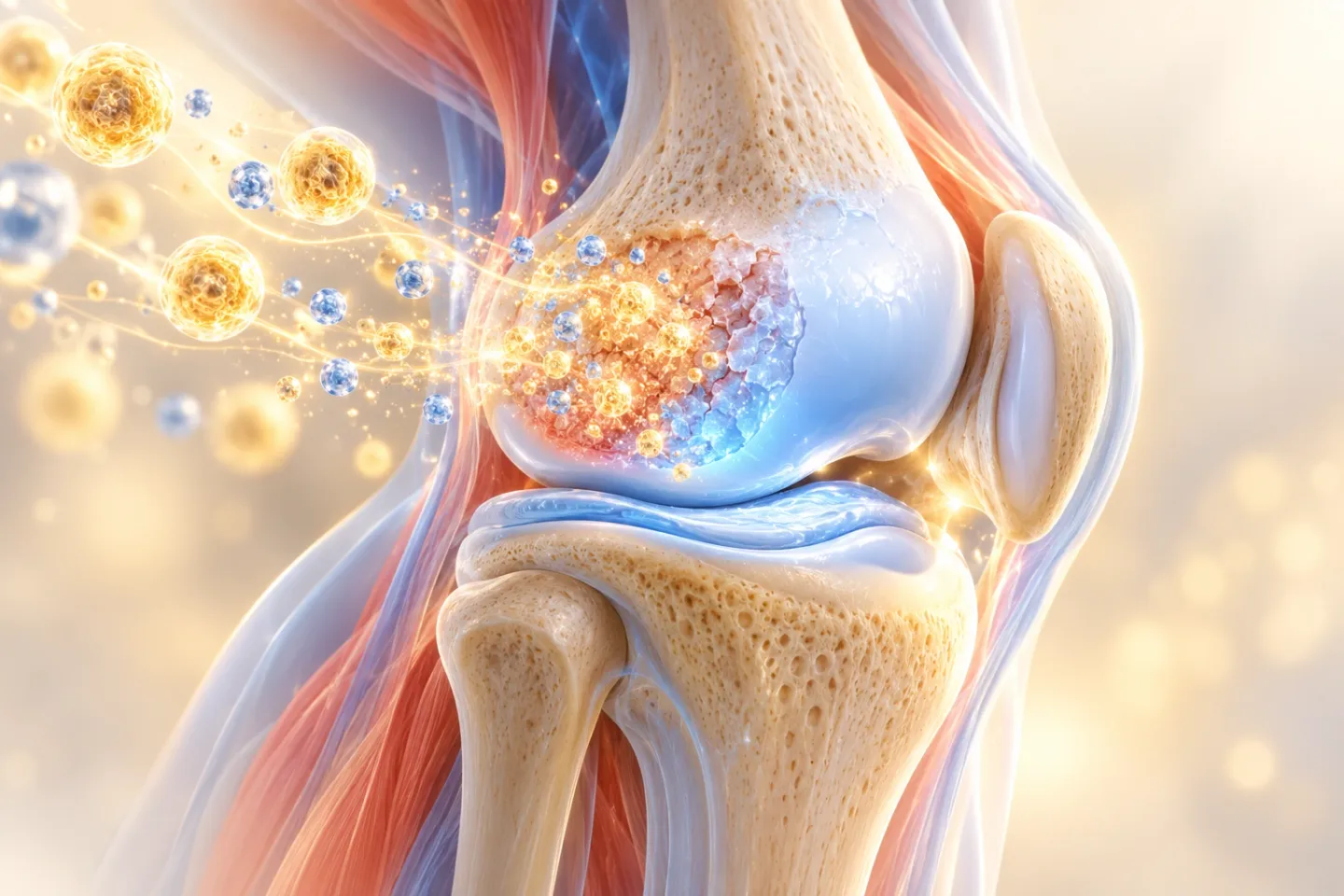
What studies report in knee cartilage and osteoarthritis
Cartilage has no blood vessels of its own, which is why it heals so slowly after an injury. Stem cells help in two ways: they calm the inflammation inside the joint, and they encourage the joint’s own cartilage cells to multiply and rebuild. In research models, stem cell exosomes helped cartilage cells multiply and produce new cartilage matrix, and created a calmer, more regenerative joint environment.8
For people with knee cartilage injuries and knee osteoarthritis, published studies are encouraging:
- Large cartilage defects. In a randomised trial of 114 people with large, full-thickness cartilage defects in the knee, 97.7% of those treated with donor umbilical cord blood stem cells improved by at least one cartilage repair grade at 48 weeks, against 71.7% after microfracture. Tissue samples from the repaired cartilage also scored better, and pain and function were better at three to five years.3
- Active people with deep cartilage injuries. In 50 physically active adults, every patient treated with a concentrate of their own bone marrow stem cells on a scaffold was rated normal or nearly normal on a standard knee examination at two years, against 64% after microfracture, and all of them kept their improvement at five years.7
- Knee osteoarthritis. In a phase III trial of 261 people, one injection of their own fat-derived stem cells improved knee pain by 25.2 points on a 100-point scale after six months, against 15.5 with placebo.9 In a placebo-controlled trial of 146 people, donor bone marrow stem cells improved pain, stiffness and function at six and twelve months, and MRI showed no worsening of the deep knee cartilage over the year.10
- Umbilical cord and Wharton’s jelly stem cells. After two doses of umbilical cord stem cells, the total WOMAC knee score at 12 months was 4.2, against 15.2 with hyaluronic acid (lower is better).11 In 16 people with advanced knee osteoarthritis treated with Wharton’s jelly stem cells, the same type of cells we use, pain and function improved at one and four years, with improvements on MRI at one year.12
- Exosomes. In 29 people with knee osteoarthritis, injections of umbilical cord stem cell exosomes (extracellular vesicles) lowered pain by 38.8 points on a 100-point scale on average, with the largest gains in quality of life and in sport and recreation; two in three knees met the international criteria for a treatment response.13
- The wider picture. An analysis of ten randomised trials with 818 patients found that stem cell injections improved knee pain, function and MRI joint scores more than hyaluronic acid at 12 months.14
Read more in our guide to stem cell therapy for arthritis and joint pain.
04
Muscle and Tendon Injuries
For tendon injuries, like a torn Achilles tendon, and muscle injuries, stem cell therapy is increasingly used. Stem cells can stimulate the regeneration of tendons and muscles by reducing inflammation and repairing damaged tissue. Although there is limited scientific research specifically on muscle injuries, athletes have reported faster recovery and earlier return to normal activities after stem cell treatment.
An example is American baseball player Bartolo Colón, who used stem cell therapy for a shoulder injury and then returned to top-level performance, despite earlier predictions that his career was over.
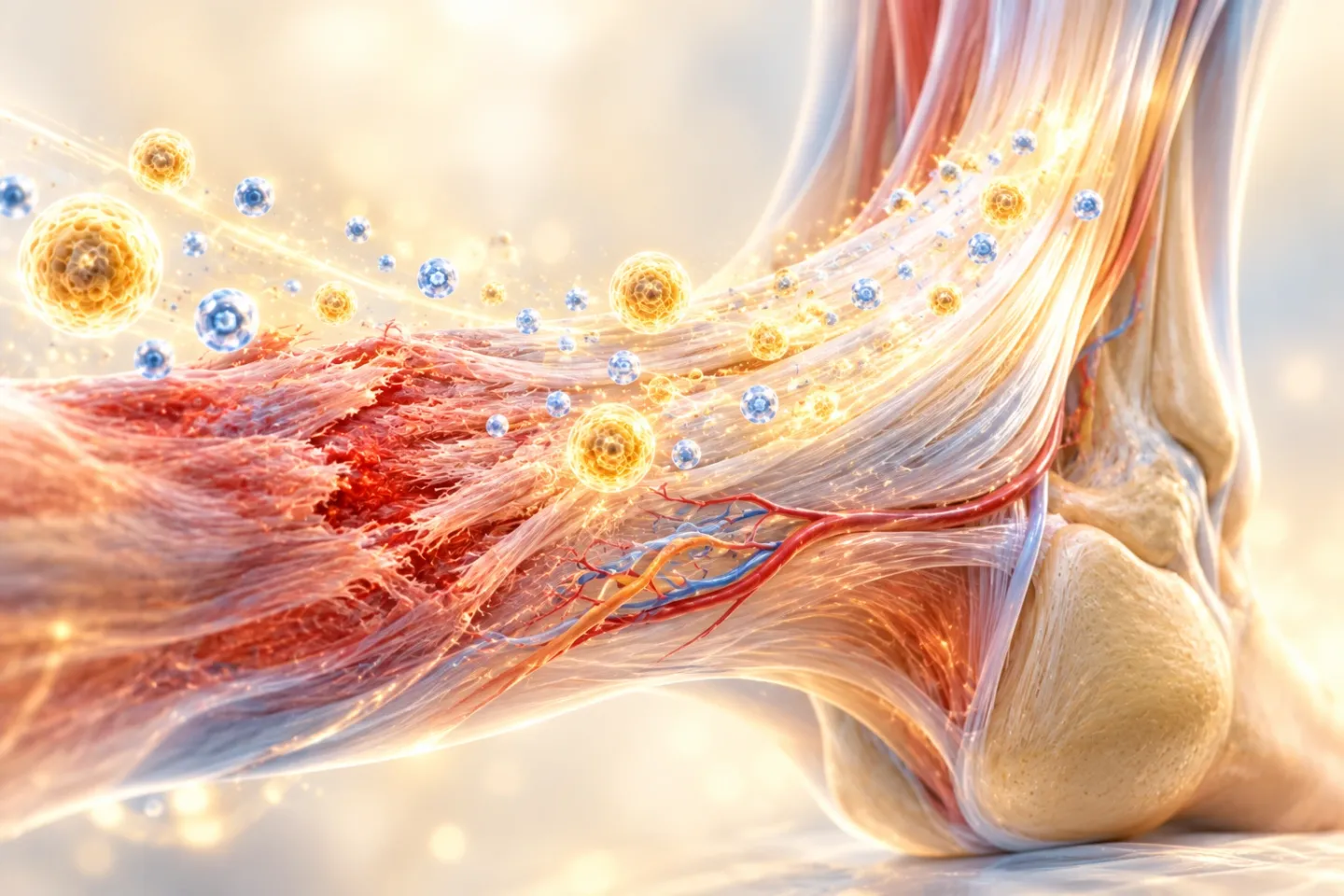
What studies report in tendon injuries
Tendons heal slowly after injury,15 so support for the healing process can make a real difference. Across 46 animal studies of tendon healing, treatment with extracellular vesicles, the family of tiny messengers to which exosomes belong, was linked with better healing scores, stronger and stiffer tendons and more type I collagen.16 In people, studies of stem cell therapy for tendon injuries report encouraging results:
- Achilles tendon. In ten people with long-standing Achilles tendon pain that had not improved with other treatments, an injection of their own bone marrow stem cells improved pain and function scores, with pain easing further at each check-up up to 24 weeks.17
- Patellar tendon (jumper’s knee). In 20 people with chronic patellar tendinopathy, bone marrow stem cells led to a highly significant improvement in symptoms and a better tendon structure on MRI after 12 months.18
- Rotator cuff. In people with partial rotator cuff tears, injections of their own fat-derived stem cells reduced shoulder pain by about 90% at one and two years at the two higher doses, and in the high-dose group the defect on the outer (bursal) side of the tendon had nearly disappeared on MRI at one year.19 Ten years after rotator cuff repair supported with bone marrow stem cells, 87% of repairs were still intact, against 44% without.4 In another study, the re-tear rate on MRI was 14.3% when fat-derived stem cells were added during repair, against 28.5% with repair alone.20
- Tennis elbow. In chronic tennis elbow, elbow pain fell from 66.8 to 14.8 on a 100-point scale over a year after donor fat-derived stem cells, while elbow performance scores rose from 64.0 to 90.6.21 In 18 tennis players, maximum pain dropped from 6.3 to 1.0 out of 10 six months after an injection of their own fat-derived stem cells followed by physiotherapy.22
What studies report in ligament injuries and the ACL
Ligaments hold your joints stable, and the anterior cruciate ligament (ACL) is key to the twisting and jumping of so many sports. Studies of stem cell treatment for ligament tears are encouraging:
- In a randomised trial in partial and complete ACL tears that had not pulled back, people treated with an injection of their own bone marrow concentrate and platelet products gained significantly more function at three months than with exercise therapy, kept their gains in function and pain over two years with a median self-rated improvement of 90%, and showed significant improvements in the ligament on MRI.23
- In an earlier registry of 29 people with ACL tears treated with bone marrow concentrate injections, 77% of those scanned showed a significant improvement in ligament integrity on MRI, and knee function scores were better than before treatment at every check-up up to three years.24
- In 12 people with partial tears of the posterior cruciate ligament, treatment with the secretome of donor umbilical cord stem cells, the mix of growth factors and vesicles these cells release, led to knee scores of about 90 out of 100 at one year, and on MRI 11 of the 12 ligaments had regained normal or near-normal continuity.25
What studies report in muscle injuries
Small muscle strains usually heal well. With larger tears, the aim is to rebuild muscle fibres rather than scar tissue, and cell-based approaches have shown the most promising results in research, with success in the first clinical trials.26 In research models, stem cells increased the number of regenerating muscle fibres and improved muscle strength after a contusion, the classic bruising injury of contact sports.27
The first human trial is encouraging. In a placebo-controlled trial, 20 people having hip replacement surgery, which the researchers used as a model of muscle injury, received donor placenta-derived stromal cells or placebo into the affected gluteal muscle. With the lower dose, muscle strength and muscle volume at 26 weeks were significantly greater than with placebo.28
Read more about stem cell therapy for sports injuries and rehabilitation.
05
Faster Recovery After Injuries

Every athlete wants to know how quickly they can get back to training. Stem cells are designed to support healing from the very first weeks: they calm early inflammation, encourage new small blood vessels and stimulate the body’s own repair cells to multiply.12 In published studies, this showed up as earlier healing and an earlier return of strength:
- Tendon-to-bone healing. Every one of 45 rotator cuff repairs supported with bone marrow stem cells had healed by six months, compared with 30 of 45 repairs without them.4
- Muscle strength. After hip surgery, strength in the treated muscle improved as early as week six with donor placenta-derived stromal cells, and tissue samples showed accelerated healing.28
- Achilles tendon. After bone marrow concentrate injections, Achilles pain was already significantly lower at six weeks.29
- Back on your feet. After surgical repair of a torn Achilles tendon supported with bone marrow concentrate, patients walked without a boot after 1.8 months and returned to light activity after 3.4 months on average.5
How quickly you notice a difference depends on your injury, your sport and your rehabilitation. In knee trials, gains were clear at six months and kept growing up to twelve months,10 which is why we review your progress with you at about 1, 3, 6 and 12 months.
06
Are There Any Limitations?
While stem cell therapy shows a lot of potential, there are also limitations and questions that have not yet been fully answered.
Limited Scientific Evidence
Although initial studies and practical experiences are positive, stem cell therapy is a relatively new treatment method, and there is not yet a broad range of clinical research available to prove its long-term effectiveness. Many of the current studies have small sample sizes or vary in approach, making it difficult to draw definitive conclusions. Long-term research is needed to determine whether stem cell therapy is truly superior to traditional methods.
Not Suitable for Every Injury
Stem cell therapy is not always effective for every sports injury. In complex injuries, such as complete muscle tears or severe fractures, surgery is often necessary. While stem cells can support the healing process, they do not offer a solution for all sports-related issues. For certain injuries, stem cell therapy may be beneficial in promoting tissue regeneration, but in cases of severe injuries, surgical intervention remains the best option. It’s important to understand that stem cell therapy can be a valuable supplement but is not a miracle cure for all injuries.
Cost and Accessibility
A drawback of stem cell therapy is the high cost, which is often not covered by health insurance. This makes the treatment difficult to access for many athletes, despite its potential to speed up recovery and heal injuries more effectively. The limited financial accessibility forms a barrier, even if stem cell therapy could offer promising results. For many athletes, this means opting for more traditional treatments, even though stem cell therapy might get them back on their feet faster.
07
Does Stem Cell Therapy Work for Sports Injuries?
Stem cell therapy offers promising results for certain sports injuries, particularly in the recovery of cartilage, muscles, and tendons. Many athletes benefit from faster healing and improved quality of the repaired tissue, allowing them to return to their sport more quickly. Nevertheless, it is important to have realistic expectations: stem cell therapy is not a miracle cure and is not suitable for every injury. Moreover, the scientific evidence is still evolving, and costs are currently a barrier to broader application.
If you have a sports injury and are considering stem cell therapy, it is wise to seek thorough information from a medical specialist. They can assess whether the treatment is a suitable option for your specific case. With technological advancements and increasing clinical research being conducted, stem cell therapy may become a standard treatment for sports injuries in the future. For now, it offers hope for athletes seeking advanced, effective recovery options.
08
How stem cells and exosomes help injured tissue heal
When you injure a tendon, ligament, muscle or cartilage, your body repairs it in three overlapping stages: inflammation, which clears away damaged tissue; repair, when new cells and small blood vessels move in; and remodelling, when new collagen is laid down and gradually strengthened. Stem cell therapy is designed to support every one of these stages.
Mesenchymal stem cells work mainly as messengers. They are drawn towards injured or inflamed tissue,30 where they release growth factors and other signals that calm the local immune response, limit scarring, encourage new blood vessels and stimulate the tissue’s own repair cells.1 Much of this message travels in exosomes, tiny packages about a ten-thousandth of a millimetre across that carry proteins, RNA and other molecules from cell to cell.31 Exosomes are the main messengers that mesenchymal stem cells release, and researchers are studying them for tendon, ligament and muscle injuries in sports medicine.32
Read more about stem cell therapy and exosome therapy at our clinic, or see what stem cells can do beyond sport in Stem cells: The promise of healing and renewal.
Calming inflammation
Stem cell signals settle an overactive immune response in the injured area.1 Across animal studies of tendon healing, extracellular vesicle treatment lowered the inflammatory signal IL-6.16
A new blood supply
Healing tissue needs oxygen and nutrients. Stem cell signals encourage new small blood vessels,1 and in research models, exosomes from CD34+ stem cells stimulated vessel growth and improved blood flow.3334
Stronger collagen
In research models of tendon injury, stem cells encouraged tendon cells to multiply and helped turn weaker type III collagen into the stronger type I collagen of a healthy tendon.2
09
Why we use Wharton’s jelly stem cells and exosomes
Many of the studies above used patients’ own cells, collected from bone marrow or fat in a separate procedure. At Istanbul Stemcell, your treatment uses fresh mesenchymal stem cells from Wharton’s jelly, the soft, protective tissue inside the umbilical cord. The cords are donated after healthy births, so nothing needs to be taken from your own body: no bone marrow or fat harvest before your treatment.
Wharton’s jelly cells are among the youngest mesenchymal stem cells available to medicine. They multiply quickly, have strong immune-balancing abilities and are well accepted by the immune system.37 In laboratory comparisons they produced more of the signals that support new blood vessels than bone marrow stem cells,38 and in a trial of umbilical cord stem cells, laboratory tests showed 55 times higher expression of hepatocyte growth factor, a signal involved in muscle repair, cell migration and immune balance, than in bone marrow stem cells.39 In knee osteoarthritis, Wharton’s jelly stem cells improved pain and function in clinical studies.1240
Your plan can also include Wharton’s jelly MSC exosomes and CD34+ exosomes, which deliver these repair messages in concentrated form. We prepare your cells and exosomes especially for your treatment date in a Ministry of Health-approved GMP laboratory, and we never freeze them, so they reach you fresh.
Young, fast-growing cells
In a side-by-side laboratory comparison of cells from 18 donors each, Wharton’s jelly stem cells showed a higher capacity to multiply than bone marrow stem cells.41
No donor matching needed
Wharton’s jelly cells lack the signals that switch on rejection and did not stimulate immune cells in laboratory tests, so no donor matching is needed.6
Fresh for your date
Prepared for your treatment date in a Ministry of Health-approved GMP laboratory and never frozen.
10
Getting back to your sport
For an athlete, recovery is measured on the pitch, the court or the track. Less pain is the first step; the real goal is to train, compete and enjoy your sport again with confidence. Studies that followed sporting patients after stem cell treatment report encouraging return-to-sport results:
- After surgical repair of a torn Achilles tendon supported with bone marrow concentrate, 25 of 27 patients (92%) returned to their sport, on average 5.9 months later, and none of the repaired tendons tore again.5
- Eighteen tennis players with long-standing tennis elbow went back to playing tennis on average 3.3 months after an injection of their own fat-derived stem cells followed by physiotherapy.22
- Of 140 athletes treated with their own bone marrow cells for cartilage and bone damage in the ankle joint, 72.8% returned to their sport at their pre-injury level, and their foot and ankle scores rose from 58.7 to 90.9 out of 100 at four years.42
- Five years after treatment for deep knee cartilage injuries, active patients treated with a concentrate of their own bone marrow stem cells had higher sports activity scores than those treated with microfracture.7
Every return to sport is gradual: your sports doctor or physiotherapist decides when you are ready for each step, from running to sport-specific drills to full competition. You can share your written treatment plan with your team at home, so everyone works towards the same goal: you, back doing what you love.

11
Stem cells and physiotherapy: a strong team
Stem cell therapy does not replace your rehabilitation; it works alongside it. Physiotherapy and exercise are powerful healing tools in their own right. Tendon, muscle, cartilage and bone cells sense mechanical load and respond to it by repairing and remodelling the tissue, a process called mechanotransduction, which is why well-dosed exercise helps with so many sports injuries.43
The two fit together naturally. Stem cells and their exosomes support the biology of healing, while your physiotherapy programme gives the new tissue the loading it needs to grow strong and work well in your sport. In the study of tennis players with tennis elbow, physiotherapy followed the stem cell injection, and the players were back on court on average 3.3 months later.22
Before you travel
Tell us about your current physiotherapy. You can share your written plan with your physiotherapist, so your rehabilitation fits around your treatment.
The first days
After your treatment day, you follow the simple advice we give you for the first days, with gentle everyday movement.
The following weeks
Your physiotherapist gradually builds up loading and strength, adapting each step to how your injury responds.
Back to your sport
Sport-specific training and a step-by-step return to competition, with follow-up from our team at about 1, 3, 6 and 12 months.
12
Your stem cell treatment for a sports injury, step by step
From your first message to your follow-up at home, our team guides you at every stage. Patients from the Netherlands and Belgium can also read about sports rehabilitation in Dutch at IstanbulStamcel.nl.
Free medical review
Send us your diagnosis, your MRI or ultrasound reports and a short description of your injury, your sport and the treatments you have tried. Dr. Cihan Bolat, our medical director, reviews your case personally and free of charge. Request your free medical review.
Written plan and fixed price
If stem cell therapy suits your injury, you receive a written plan and a fixed price before you travel.
Travel to Istanbul
We help you with accommodation, transport and translation, so you can arrive relaxed and focused on your recovery.
Fresh cells for your date
Your Wharton’s jelly stem cells and exosomes are prepared for your treatment date in a Ministry of Health-approved GMP laboratory, never frozen.
Your treatment day
Our team guides you through the day calmly and at your pace, and Dr. Cihan Bolat, a specialist in anaesthesiology and reanimation, plans your comfort with you.
Rehabilitation and follow-up
Back home, you continue your physiotherapy, and we review your progress with you at about 1, 3, 6 and 12 months. Read the full journey in The stem cell treatment in Turkey, step by step.
Looking for another condition? See all the conditions we treat.
13
Frequently asked questions
Does stem cell therapy work for sports injuries?
Published studies are encouraging. Patients treated with stem cells for knee cartilage damage, knee osteoarthritis, Achilles and patellar tendon problems, rotator cuff tears and tennis elbow experienced less pain, better function and, in several studies, better tissue healing on scans. Results depend on your injury and how long you have had it, so Dr. Cihan Bolat first reviews your scans free of charge and tells you honestly whether treatment is a good fit for you.
Which sports injuries can stem cell therapy help?
Stem cells have been studied most in knee cartilage injuries and knee osteoarthritis, and in tendon problems such as Achilles tendinopathy, jumper’s knee, rotator cuff tears and tennis elbow. Studies in partial ligament tears, including the ACL, are encouraging, and the first trials in muscle injuries are promising too. Stem cell therapy can support your recovery on its own or alongside surgery and physiotherapy, depending on your injury and your goals.
How soon can I return to sport after stem cell therapy?
It depends on your injury, your sport and your rehabilitation. In studies, tennis players with tennis elbow were back on court about three months after treatment, and most sporting patients whose torn Achilles tendon was repaired with the support of bone marrow concentrate returned to their sport at around six months. Your physiotherapist or sports doctor guides each step back, and we review your progress at about 1, 3, 6 and 12 months.
Can stem cell therapy help a torn ACL?
For partial ACL tears and tears where the ligament has not pulled back, studies are encouraging: patients treated with injections of their own bone marrow concentrate gained knee function, and MRI scans showed improvements in the ligament over time. Every knee is different, so Dr. Cihan Bolat looks at your MRI during your free medical review and advises which approach suits your knee and your sport best.
Can stem cell therapy work alongside surgery?
Stem cells and surgery can work well together. In studies, adding stem cells to rotator cuff repair meant that 87% of repairs were still intact ten years later, against 44% without, and most patients whose Achilles tendon repair was supported with bone marrow concentrate returned to their sport. If you have had an operation or are planning one, Dr. Cihan Bolat can review your situation and tell you how stem cell therapy could support your recovery.
Do I still need physiotherapy after stem cell treatment?
Yes, and that is good news. Physiotherapy and stem cell therapy work best as a team: stem cells support the biology of healing, while well-dosed exercise gives the new tissue the loading it needs to grow strong and work well in your sport. In one study, tennis players had physiotherapy after their stem cell injection and were back on court in about three months. You can share your written plan with your physiotherapist at home.
Why do you use Wharton’s jelly stem cells instead of my own cells?
Wharton’s jelly, the soft tissue inside the umbilical cord, is rich in young mesenchymal stem cells that multiply quickly and release a strong mix of repair signals. The cords are donated after healthy births, so no bone marrow or fat needs to be taken from you, and no donor matching is needed. We prepare the cells fresh for your treatment date in a Ministry of Health-approved GMP laboratory and never freeze them.
Are Wharton’s jelly stem cells safe?
The published safety record of mesenchymal stem cells, the family Wharton’s jelly cells belong to, is reassuring. An analysis of 62 randomised trials with more than 3,500 participants found stem cell treatment to be safe compared with placebo, with no serious side effects found across the studies. Wharton’s jelly cells need no donor matching, and Dr. Cihan Bolat plans every treatment around your own health, your injury and your medical history.

Medical review
Uzm. Dr. Cihan Bolat
Medical Director, Istanbul Stemcell
This page was written from the published studies listed below and reviewed for medical accuracy on .
14
References
- Caplan AI, Dennis JE. Mesenchymal stem cells as trophic mediators. J Cell Biochem. 2006;98(5):1076-84. PMID 16619257
- Jiang L, et al. Mesenchymal stem cells: An efficient cell therapy for tendon repair (Review). Int J Mol Med. 2023;52(2). PMID 37387410
- Lim HC, et al. Allogeneic Umbilical Cord Blood-Derived Mesenchymal Stem Cell Implantation Versus Microfracture for Large, Full-Thickness Cartilage Defects in Older Patients: A Multicenter Randomized Clinical Trial and Extended 5-Year Clinical Follow-up. Orthop J Sports Med. 2021;9(1):2325967120973052. PMID 33490296
- Hernigou P, et al. Biologic augmentation of rotator cuff repair with mesenchymal stem cells during arthroscopy improves healing and prevents further tears: a case-controlled study. Int Orthop. 2014;38(9):1811-8. PMID 24913770
- Stein BE, Stroh DA, Schon LC. Outcomes of acute Achilles tendon rupture repair with bone marrow aspirate concentrate augmentation. Int Orthop. 2015;39(5):901-5. PMID 25795246
- Weiss ML, et al. Immune properties of human umbilical cord Wharton's jelly-derived cells. Stem Cells. 2008;26(11):2865-74. PMID 18703664
- Gobbi A, Whyte GP. One-Stage Cartilage Repair Using a Hyaluronic Acid-Based Scaffold With Activated Bone Marrow-Derived Mesenchymal Stem Cells Compared With Microfracture: Five-Year Follow-up. Am J Sports Med. 2016;44(11):2846-2854. PMID 27474386
- Zhang S, et al. MSC exosomes mediate cartilage repair by enhancing proliferation, attenuating apoptosis and modulating immune reactivity. Biomaterials. 2018;156:16-27. PMID 29182933
- Kim KI, et al. Clinical Efficacy and Safety of the Intra-articular Injection of Autologous Adipose-Derived Mesenchymal Stem Cells for Knee Osteoarthritis: A Phase III, Randomized, Double-Blind, Placebo-Controlled Trial. Am J Sports Med. 2023;51(9):2243-2253. PMID 37345256
- Gupta PK, et al. Efficacy and Safety of Stempeucel in Osteoarthritis of the Knee: A Phase 3 Randomized, Double-Blind, Multicenter, Placebo-Controlled Study. Am J Sports Med. 2023;51(9):2254-2266. PMID 37366164
- Matas J, et al. Umbilical Cord-Derived Mesenchymal Stromal Cells (MSCs) for Knee Osteoarthritis: Repeated MSC Dosing Is Superior to a Single MSC Dose and to Hyaluronic Acid in a Controlled Randomized Phase I/II Trial. Stem Cells Transl Med. 2019;8(3):215-224. PMID 30592390
- Samara O, et al. Ultrasound-guided intra-articular injection of expanded umbilical cord mesenchymal stem cells in knee osteoarthritis: a safety/efficacy study with MRI data. Regen Med. 2022;17(5):299-312. PMID 35546314
- Yokota N, Kambayashi T, Tanabe Y. Safety and Efficacy of Intra-Articular Injection of Umbilical Cord-Derived Extracellular Vesicles in Patients With Knee Osteoarthritis: A Retrospective Study. Orthopedics. 2026;49(4):e351-e358. PMID 42611014
- Jin WS, et al. Mesenchymal Stem Cells Injection Is More Effective Than Hyaluronic Acid Injection in the Treatment of Knee Osteoarthritis With Similar Safety: A Systematic Review and Meta-analysis. Arthroscopy. 2025;41(2):318-332. PMID 39154667
- Lui PPY. Mesenchymal Stem Cell-Derived Extracellular Vesicles for the Promotion of Tendon Repair - an Update of Literature. Stem Cell Rev Rep. 2021;17(2):379-389. PMID 32785869
- Gilmer G, et al. Extracellular Vesicles Are Associated With Biological, Mechanical, and Structural Tendon Healing Metrics in Preclinical Models: A Systematic Review and Meta-Analysis. J Orthop Res. 2026;44(10):e70289. PMID 42845123
- Goldberg AJ, et al. Autologous bone marrow derived mesenchymal stem cells are safe for the treatment of Achilles tendinopathy. Sci Rep. 2024;14(1):11421. PMID 38763976
- Soler R, et al. Safety and Efficacy of Bone Marrow-Derived Mesenchymal Stem Cells for Chronic Patellar Tendinopathy (With Gap >3 mm) in Patients: 12-Month Follow-up Results of a Phase 1/2 Clinical Trial. Orthop J Sports Med. 2023;11(9):23259671231184400. PMID 37711505
- Jo CH, et al. Intratendinous Injection of Mesenchymal Stem Cells for the Treatment of Rotator Cuff Disease: A 2-Year Follow-Up Study. Arthroscopy. 2020;36(4):971-980. PMID 31805388
- Kim YS, et al. Does an Injection of Adipose-Derived Mesenchymal Stem Cells Loaded in Fibrin Glue Influence Rotator Cuff Repair Outcomes? A Clinical and Magnetic Resonance Imaging Study. Am J Sports Med. 2017;45(9):2010-2018. PMID 28448728
- Lee SY, et al. Treatment of Lateral Epicondylosis by Using Allogeneic Adipose-Derived Mesenchymal Stem Cells: A Pilot Study. Stem Cells. 2015;33(10):2995-3005. PMID 26202898
- Khoury M, et al. Promising improvement of chronic lateral elbow tendinopathy by using adipose derived mesenchymal stromal cells: a pilot study. J Exp Orthop. 2021;8(1):6. PMID 33501619
- Centeno CJ, et al. Non-surgical treatment of anterior cruciate ligament tears with percutaneous bone marrow concentrate and platelet products versus exercise therapy: a randomized-controlled, crossover trial with 2-year follow-up. BMC Musculoskelet Disord. 2025;26(1):882. PMID 41029301
- Centeno C, et al. Symptomatic anterior cruciate ligament tears treated with percutaneous injection of autologous bone marrow concentrate and platelet products: a non-controlled registry study. J Transl Med. 2018;16(1):246. PMID 30176875
- Rhatomy S, et al. Allogeneic umbilical cord mesenchymal stem cell conditioned medium (secretome) for treating posterior cruciate ligament rupture: a prospective single-arm study. Eur J Orthop Surg Traumatol. 2023;33(3):669-675. PMID 35699826
- Qazi TH, et al. Cell therapy to improve regeneration of skeletal muscle injuries. J Cachexia Sarcopenia Muscle. 2019;10(3):501-516. PMID 30843380
- Chiu CH, et al. Application of Bone Marrow-Derived Mesenchymal Stem Cells for Muscle Healing After Contusion Injury in Mice. Am J Sports Med. 2020;48(5):1226-1235. PMID 32134689
- Winkler T, et al. Immunomodulatory placental-expanded, mesenchymal stromal cells improve muscle function following hip arthroplasty. J Cachexia Sarcopenia Muscle. 2018;9(5):880-897. PMID 30230266
- Thueakthong W, et al. Outcomes of iliac crest bone marrow aspirate injection for the treatment of recalcitrant Achilles tendinopathy. Int Orthop. 2021;45(9):2423-2428. PMID 34254148
- Schulman IH, Balkan W, Hare JM. Mesenchymal Stem Cell Therapy for Aging Frailty. Front Nutr. 2018;5:108. PMID 30498696
- Kalluri R, LeBleu VS. The biology, function, and biomedical applications of exosomes. Science. 2020;367(6478). PMID 32029601
- Xue Y, et al. Recent advances of exosomes in soft tissue injuries in sports medicine: A critical review on biological and biomaterial applications. J Control Release. 2023;364:90-108. PMID 37866405
- Sahoo S, et al. Exosomes from human CD34(+) stem cells mediate their proangiogenic paracrine activity. Circ Res. 2011;109(7):724-8. PMID 21835908
- Mathiyalagan P, et al. Angiogenic Mechanisms of Human CD34(+) Stem Cell Exosomes in the Repair of Ischemic Hindlimb. Circ Res. 2017;120(9):1466-1476. PMID 28298297
- Nakamura Y, et al. Mesenchymal-stem-cell-derived exosomes accelerate skeletal muscle regeneration. FEBS Lett. 2015;589(11):1257-65. PMID 25862500
- Choi A, et al. Anti-Fibrotic Effect of Human Wharton's Jelly-Derived Mesenchymal Stem Cells on Skeletal Muscle Cells, Mediated by Secretion of MMP-1. Int J Mol Sci. 2020;21(17). PMID 32872523
- Marino L, et al. Mesenchymal Stem Cells from the Wharton's Jelly of the Human Umbilical Cord: Biological Properties and Therapeutic Potential. Int J Stem Cells. 2019;12(2):218-226. PMID 31022994
- Hsieh JY, et al. Mesenchymal stem cells from human umbilical cord express preferentially secreted factors related to neuroprotection, neurogenesis, and angiogenesis. PLoS One. 2013;8(8):e72604. PMID 23991127
- Bartolucci J, et al. Safety and Efficacy of the Intravenous Infusion of Umbilical Cord Mesenchymal Stem Cells in Patients With Heart Failure: A Phase 1/2 Randomized Controlled Trial (RIMECARD Trial [Randomized Clinical Trial of Intravenous Infusion Umbilical Cord Mesenchymal Stem Cells on Cardiopathy]). Circ Res. 2017;121(10):1192-1204. PMID 28974553
- Ishak-Samrin M, et al. Treatment of Knee Osteoarthritis and Chondral Injury with Umbilical Cord/Wharton's Jelly-Derived Mesenchymal Stem Cells: A Systematic Review of Safety and Efficacy. J Funct Biomater. 2025;16(3). PMID 40137363
- Batsali AK, et al. Differential expression of cell cycle and WNT pathway-related genes accounts for differences in the growth and differentiation potential of Wharton's jelly and bone marrow-derived mesenchymal stem cells. Stem Cell Res Ther. 2017;8(1):102. PMID 28446235
- Vannini F, et al. Return to Sports After Bone Marrow-Derived Cell Transplantation for Osteochondral Lesions of the Talus. Cartilage. 2017;8(1):80-87. PMID 27994723
- Khan KM, Scott A. Mechanotherapy: how physical therapists' prescription of exercise promotes tissue repair. Br J Sports Med. 2009;43(4):247-52. PMID 19244270