
01
What is NAD+ IV therapy?
In short: NAD+ IV therapy is a slow drip that delivers NAD+ (nicotinamide adenine dinucleotide), a natural molecule found in every cell, straight into your bloodstream. NAD+ is the fuel your mitochondria use to make energy and the key that switches on your repair enzymes, and its levels fall as we age.72 At our clinic, NAD+ IV is added to a longevity plan with fresh Wharton’s jelly stem cells and exosomes, so your cells receive the fuel and the repair signals together.
You may also see it called an NAD+ drip, an NAD+ infusion or simply NAD therapy. There are two ways to raise NAD+. Capsules of the building blocks NMN and NR give the body raw materials that it converts into NAD+, step by step,16 while an IV drip delivers NAD+ itself straight into the blood, under medical supervision.
Interest in NAD+ has grown quickly because it sits at the centre of so many processes linked with ageing: energy production, DNA repair, the body clock and cellular senescence, the state in which worn-out cells stop dividing and linger in tissues.11718 Raising NAD+ is one of the most studied ideas in longevity medicine, and human trials of NAD+ and its precursors report higher NAD+ levels, better metabolic health and improved physical performance.8911
This guide focuses on NAD+ itself: what it does, why it declines, what the human studies report, how a drip is given and how it fits with Wharton’s jelly stem cells and exosomes. For our full treatment page, see anti-aging stem cell therapy and NAD+ in Istanbul, and for the bigger picture of longevity science, read can you reverse aging?
NAD+ and stem cells in human studies
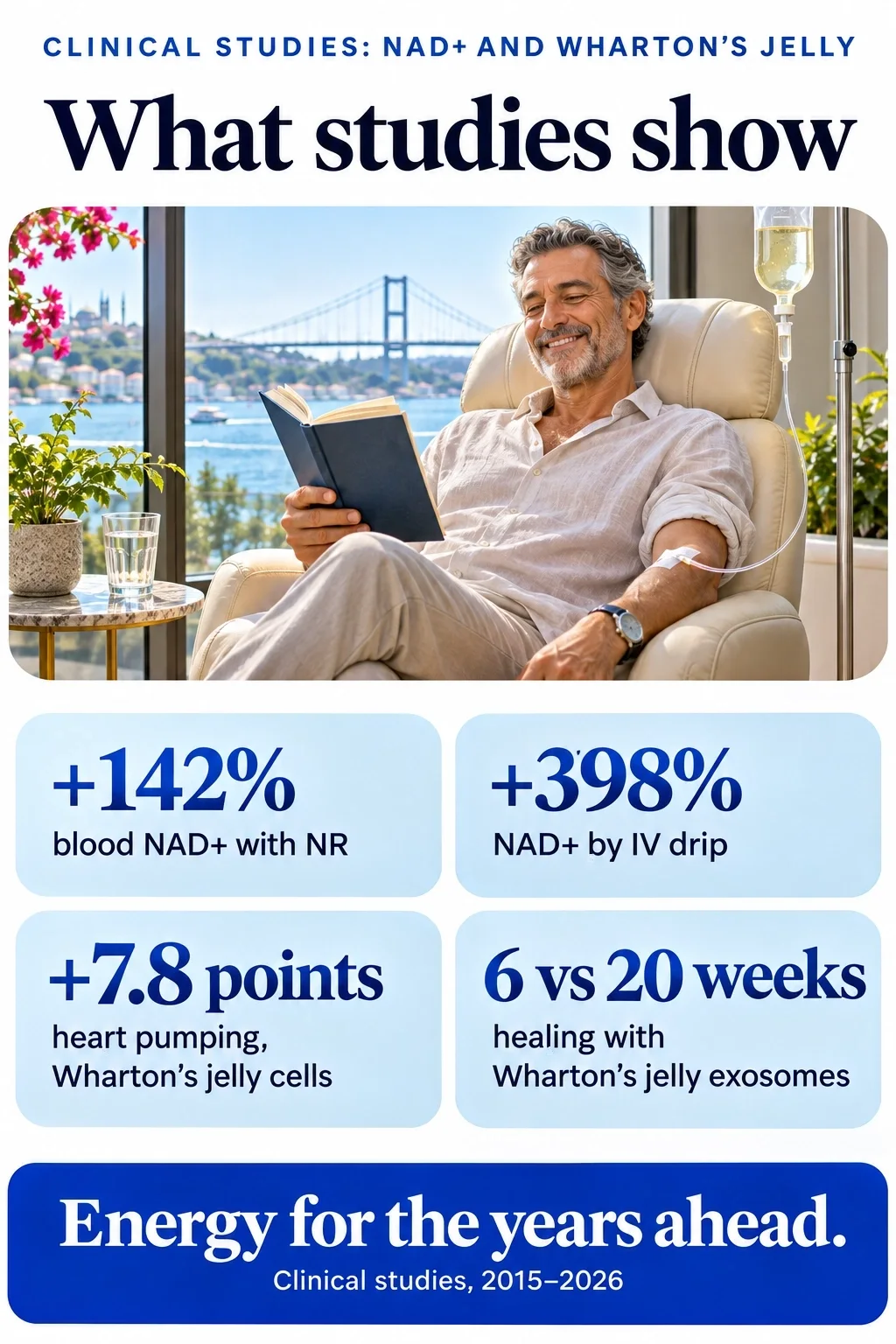
- +142%blood NAD+ within two weeks with 1,000 mg of NR a day8
- +398%plasma NAD+ by the end of a six-hour NAD+ drip, with no adverse events12
- 56.32% vs 53.37%heart pumping strength 30 days after a heart attack with a week of IV NAD+, against placebo13
- +7.8 vs +2.8points of heart pumping strength 18 months after Wharton’s jelly stem cells, against placebo4
02
What is NAD+, and what does it do in your body?
NAD+ is a coenzyme, a helper molecule that many enzymes need to do their work. Your body builds it from forms of vitamin B3 and from the amino acid tryptophan, and recycles it constantly.1 Without it, your cells could not turn the food you eat into usable energy.7
NAD+ has two main jobs. It carries energy in the chemical reactions that produce ATP, the fuel every cell runs on, and it is consumed by enzymes that protect and repair the cell. Both jobs matter for how you feel as the years go by.117
Energy from food
In the mitochondria, the power plants of your cells, NAD+ picks up energy released from food and passes it along the chain that makes ATP. The brain, heart and muscles, which use the most energy, depend on it most.7
DNA repair
PARP enzymes use NAD+ to repair the everyday damage your DNA meets, from sunlight to normal metabolism.1
Sirtuins, the longevity enzymes
Sirtuins need NAD+ to work. They help regulate metabolism and stress resistance and are among the most studied enzymes in ageing research.17
Your body clock
NAD+, the enzyme NAMPT that recycles it and the sirtuin SIRT1 work together to keep metabolism and the daily circadian rhythm in step.17
Healthy, active cells
NAD+ interfaces with several hallmarks of ageing, including cellular senescence, and low NAD+ can let DNA damage and mitochondrial strain build up.18
Stem cells and renewal
Your own stem cells need NAD+ too: in aged mice, an NAD+ precursor rejuvenated muscle stem cells and delayed the ageing of neural and pigment stem cells.19
Because NAD+ is used up whenever the body repairs DNA or responds to stress, your cells need a steady supply. When demand rises and production slows, as happens over the years, NAD+ levels drop. That is the gap NAD+ therapy aims to fill.
03
Why do NAD+ levels fall with age?
NAD+ does not disappear overnight. It declines gradually as the balance between making it and using it shifts, and the change has been measured directly in people.
Measured in people
- In the brain. Using a special MRI method, researchers measured NAD+ in the brains of healthy volunteers and found that NAD+ and total NAD fell with age, while the reduced form, NADH, rose.2
- In muscle. NAD+ was one of the most prominent molecules that was lower in older adults’ muscle than in younger adults’. It was lowest in older people with physical impairment, trained older adults had levels closer to those of the young, and NAD+ rose in step with daily steps and muscle function.3
Why it happens
- More is used up. As DNA damage and stress accumulate, repair enzymes consume more NAD+.1
- An enzyme called CD38 rises. In research models, CD38, an NAD+-consuming enzyme linked with immune activity, increased with age and was required for the age-related fall in NAD+ and the decline in mitochondrial function.20
- Less is recycled. NAMPT, the enzyme that recycles NAD+ in muscle, falls with age, although exercise training restores it.21
| What you may notice | What is happening | What can help |
|---|---|---|
| Tiredness and slower recovery | Mitochondria make less energy as NAD+ falls73 | NAD+ IV and NAD+ precursors;128 stem cells, which share healthy mitochondria in research models22 |
| Lower stamina | Less NAD+ in muscle, especially when activity drops3 | Aerobic and strength training;21 NMN, which improved aerobic capacity and walking distance109 |
| A foggier, slower head | NAD+ falls in the ageing brain2 | NR, which raised NAD+ in the brain and in vesicles released by nerve cells2324 |
| Aches, stiffness and frailty | Chronic, low-grade inflammation and worn-out cells18 | NR, which lowered inflammatory signals;25 umbilical cord stem cells, which lowered TNF-α and IL-626 |
| Weight and blood fats creeping up | Slower metabolism and insulin resistance | NMN, which lowered weight, blood pressure and LDL cholesterol27 and raised muscle insulin sensitivity11 |
The pattern is encouraging: lower NAD+ is not a fixed fate. Movement, NAD+ precursors and NAD+ IV all raise or protect it, and regenerative treatment works on the inflammation and wear that use it up.
04
How can you boost NAD+ naturally?
Before any drip or capsule, your daily habits shape your NAD+ levels. These steps cost nothing, they start working straight away, and they help every other treatment do its job.
Train your muscles
Over 12 weeks of training, resistance exercise raised NAMPT, the enzyme that recycles NAD+ in muscle, by 30% in older adults, and aerobic exercise raised it by 28%, restoring levels that usually fall with age.21
Keep moving every day
Muscle NAD+ rose in step with the number of steps people took each day, and trained older adults had levels close to those of younger people.3
Give your body the raw materials
Your body builds NAD+ from forms of vitamin B3, such as niacin, nicotinamide and nicotinamide riboside, and from the amino acid tryptophan, so a varied, protein-rich diet supplies what it needs.1
Respect your body clock
NAD+, NAMPT and SIRT1 work together to regulate metabolism and the circadian rhythm, one more reason to keep regular sleep and mealtimes.17
Calm chronic inflammation
Inflammation-linked enzymes such as CD38 consume NAD+,20 so whatever calms chronic inflammation, from regular activity and good sleep to regenerative treatment, helps protect it.
Habits protect what you have. When you want a more direct lift, NAD+ precursors and an NAD+ drip raise levels further, and our team can build NAD+ IV into your plan. For the wider set of everyday longevity habits with the strongest evidence, see our guide on how to slow aging.
05
NAD+ IV benefits: what human studies report
Most human trials have used the NAD+ precursors NMN and NR, which the body turns into NAD+, because capsules are easy to give to large groups over weeks. They show what raising NAD+ can do, and NAD+ IV is the most direct way to raise it. Here is what improved, goal by goal.
Higher NAD+ levels
In healthy overweight adults, NR raised blood NAD+ by 22%, 51% and 142% at 100, 300 and 1,000 mg a day within two weeks, and the rise held for all eight weeks.8 In adults aged 55 to 79, NR raised NAD+ in immune cells by about 60%,28 and 12 weeks of NMN raised whole-blood NAD+ in healthy volunteers.29
Energy and stamina
In 80 healthy middle-aged adults, 60 days of NMN improved six-minute walking distance at every dose compared with placebo, and general health scores improved as well.9 In 48 recreational runners, six weeks of NMN at 600 or 1,200 mg a day raised oxygen uptake and the power reached at both ventilatory thresholds more than placebo, a sign that the muscles were using oxygen better.10
Focus and brain health
Brain fog has many possible causes, and NAD+ is central to the brain’s energy supply. In 22 healthy older adults, six weeks of NR raised NAD+ in vesicles released by nerve cells and lowered markers linked with brain ageing, including amyloid-β42.24 In 30 people newly diagnosed with Parkinson’s disease, 30 days of NR raised NAD levels measured directly in the brain, and those whose brain NAD rose showed changes in brain metabolism that went with mild clinical improvement.23 In 108 older adults, NMN taken in the afternoon for 12 weeks reduced drowsiness and improved a chair-rise test of leg strength.30
Metabolism, weight and heart health
In a randomised trial published in Science, ten weeks of NMN raised muscle insulin sensitivity by about 25% in women with prediabetes.11 In 30 overweight adults aged 45 and over, 28 days of NMN lowered body weight by 1.9 kg, diastolic blood pressure by 7.01 mmHg and LDL cholesterol by 18.73 mg/dL more than placebo.27 And in a randomised, placebo-controlled trial of 120 people treated for a heart attack, IV NAD+ for seven days alongside standard care was followed by an ejection fraction of 56.32% at 30 days, against 53.37% with placebo, and lower NT-proBNP, a marker of strain on the heart.13
Calmer inflammation and healthy ageing
In men aged 70 to 80, three weeks of NR raised NAD+ in muscle and lowered circulating inflammatory signals,25 and in the 80-adult NMN trial, blood-based biological age rose over 60 days with placebo but stayed unchanged with NMN.9
| Goal | Result | Study and product |
|---|---|---|
| Blood NAD+ | +142% within 2 weeks, held for 8 weeks | Conze 2019; NR 1,000 mg a day, by mouth8 |
| Plasma NAD+ | +398% by the end of a 6-hour drip | Grant 2019; NAD+ 750 mg by IV drip12 |
| Walking distance | Six-minute walk improved more than with placebo at 30 and 60 days | Yi 2023; NMN 300–900 mg a day9 |
| Aerobic capacity | Oxygen uptake and threshold power rose more than with placebo | Liao 2021; NMN 600–1,200 mg a day, runners10 |
| Muscle insulin sensitivity | About 25% higher | Yoshino 2021, Science; NMN 250 mg a day11 |
| Weight, blood pressure, LDL | −1.9 kg, −7.01 mmHg and −18.73 mg/dL against placebo | Pencina 2023; NMN 2,000 mg a day27 |
| Heart pumping (LVEF) | 56.32% against 53.37% with placebo at 30 days | Yu 2026; IV NAD+ after a heart attack13 |
Each study used its own product, dose and schedule, and most used capsules rather than a drip. NAD+ IV delivers NAD+ itself, and your doctor tailors the dose to you. For a broader view of how we support the ageing body, see our anti-aging treatment page.
06
How does NAD+ IV work? From the drip to your cells
An IV drip bypasses the digestive system. NAD+ enters the bloodstream directly, where the body’s enzymes and cells process it quickly, partly into smaller building blocks such as nicotinamide that cells recycle back into NAD+.121
How NAD+ IV works in your cells
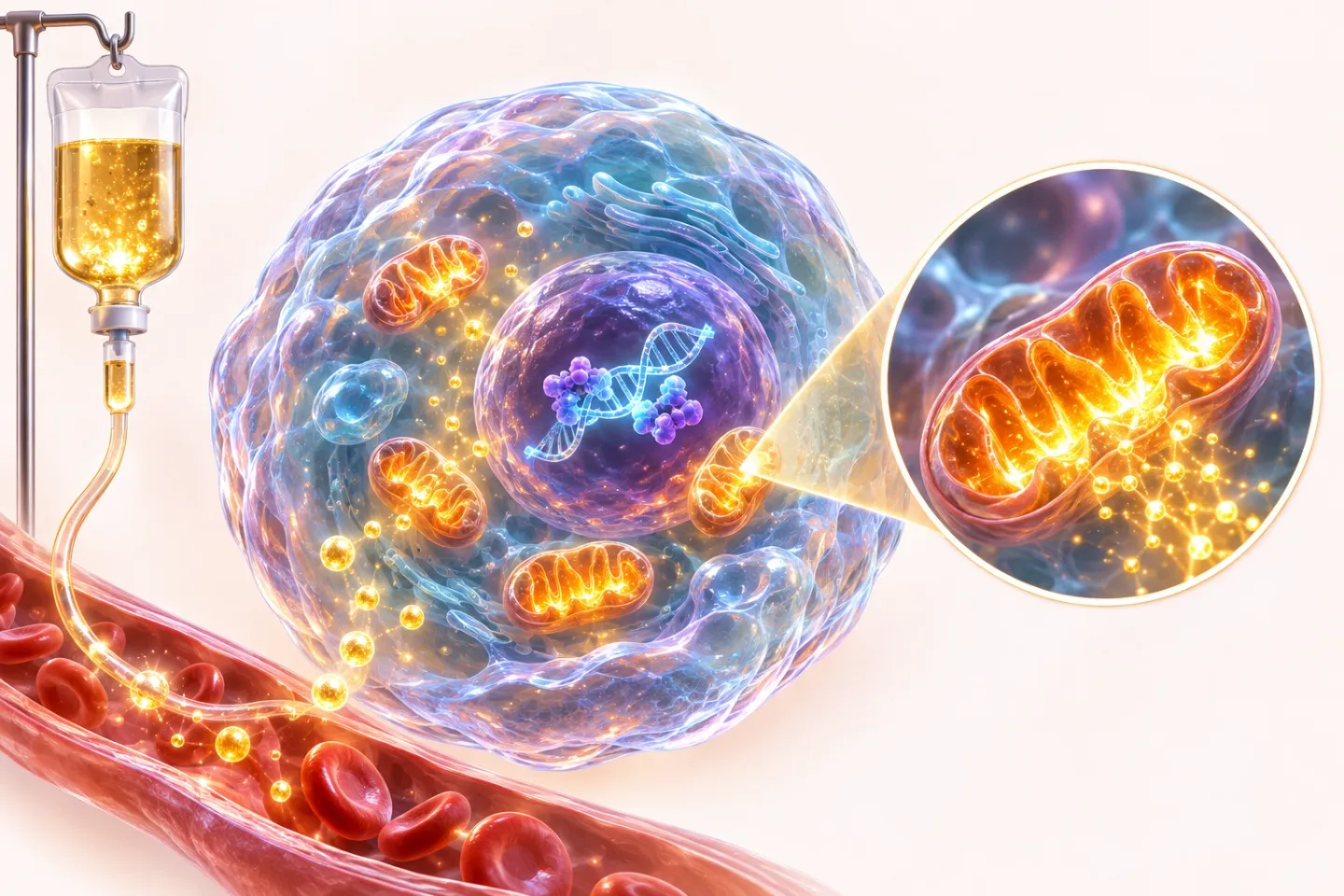
- NAD+ IV dripA slow IV drip delivers NAD+ straight into your bloodstream.
- NAD+ in the bloodNAD+ travels through the bloodstream to cells throughout the body.
- DNA repairInside the cell, NAD+ fuels repair enzymes (sirtuins and PARPs) that look after your DNA.
- MitochondriaThe cell’s power plants use NAD+ to turn food into energy.
- EnergyRestoring NAD+ aims to support the energy that your muscles and brain rely on.
What happens to NAD+ in the blood
In the first human study of an NAD+ drip, eight healthy men received 750 mg of NAD+ over six hours. For the first two hours, the body cleared NAD+ from the blood as quickly as it arrived; after that, levels climbed, reaching 398% above the starting level at six hours, together with its breakdown products, and no adverse events occurred.12 The body takes up and uses NAD+ quickly, which is one reason the drip is given slowly, over time, rather than all at once.
What IV NAD+ achieved in a randomised trial
A randomised, placebo-controlled trial in cardiology shows what NAD+ given into a vein can do for stressed tissue. In 120 people treated with emergency angioplasty (primary PCI) after a heart attack, IV NAD+ for seven days on top of standard care was followed by better heart pumping strength at 30 days than placebo, and lower NT-proBNP.13 The trial used its own dose and schedule, chosen for heart patients, and it shows that NAD+ delivered by IV can support the body’s recovery.
Drip or capsule?
Capsules of NMN or NR raise NAD+ gradually over weeks of daily use.829 A drip delivers NAD+ itself in one session under medical supervision, which is why many people like to add an NAD+ drip to their regenerative treatment day. The next section compares the two in more detail.
07
NMN vs NAD+ IV: which is better for you?
It is one of the most searched questions about NAD+, and the honest answer is that they do different jobs. NMN and NR are building blocks that your body converts into NAD+; an NAD+ drip delivers the finished molecule.16 Many people use both: a drip for a direct lift on their treatment day, and healthy habits at home, with capsules if their doctor agrees.
NAD+ IV drip
- Delivers NAD+ itself straight into the bloodstream12
- Plasma NAD+ rose by 398% by the end of a six-hour drip12
- Given slowly by our medical team, with the dose and pace set by your doctor
- Fits into the same day as your stem cell and exosome treatment
- Better heart pumping than placebo after a heart attack in a randomised trial13
NMN vs NR: is one better?
Both raise NAD+ reliably. NR raised blood NAD+ by 142% at 1,000 mg a day,8 and NMN was tested at up to 900 mg a day, with the longest walking distances at 600 and 900 mg.9 The right choice depends on your goals, your other medicines and your doctor’s advice. At our clinic, the focus is NAD+ IV on your treatment day, alongside Wharton’s jelly stem cells and exosomes, and you are welcome to ask your doctor about capsules for home.
08
How long does an NAD+ drip take, and what does it feel like?
At our clinic, NAD+ IV is given as a slow drip by our medical team under physician supervision. Your doctor sets the dose and the pace for you, and you rest in a comfortable chair while it runs, usually for one to a few hours.
Why slowly? The body takes NAD+ up quickly, and a gentle pace is simply more comfortable. In a published study, 750 mg was given over six hours with no adverse events,12 and in a clinic review of 500 mg drips given on four days in a row, a drip took about an hour and a half on average.31
Your NAD+ drip, step by step
- A short checkOur team checks how you feel and goes through the plan for your day.
- A fine IV lineOur medical team places a fine line in a vein in your arm.
- A slow, supervised dripNAD+ runs in slowly at the pace your doctor sets, while you read, rest or listen to music.
- Back to your dayWhen the drip finishes, the line comes out and you can rest at your hotel.
What does it feel like?
Most people simply relax. Some notice a passing warmth, flushing, stomach discomfort or a tight feeling in the chest while NAD+ flows in. These sensations ease when the drip is slowed, and in a clinic review every one of them passed once the infusion finished, while liver, kidney, inflammation and thyroid blood tests stayed stable over the following 30 days.31 Because a doctor sets and adjusts the pace, your comfort comes first throughout.
How often, and how long do the effects last?
Your doctor advises whether NAD+ IV on your treatment day suits your goals, or whether a short course is better for you. NAD+ is used and renewed by the body all the time, so regular exercise and an active day help keep your levels up afterwards.213
09
Why Wharton’s jelly stem cells and exosomes
NAD+ gives tired cells fuel. Wharton’s jelly stem cells and their exosomes bring the repair signals. Together they form our longevity plans, and the stem cells and exosomes are the core of your treatment.
What Wharton’s jelly is
Wharton’s jelly is the soft, jelly-like tissue that cushions the blood vessels of the umbilical cord. It is rich in mesenchymal stem cells (MSCs), collected from cords donated after healthy births, so nothing is taken from your body. MSCs act as the body’s repair coordinators: rather than replacing tissue directly, they release growth factors, immune-balancing messengers and exosomes that help your own cells protect and repair themselves.32
Young, active and immune-friendly
- Young cells. In side-by-side laboratory comparisons, Wharton’s jelly MSCs multiplied faster than bone marrow MSCs taken from adults.33
- No donor matching. Wharton’s jelly cells carry very few of the signals that trigger rejection, so no donor matching is needed.34
- Fresh, never frozen. We prepare your cells fresh for your treatment date in a Ministry of Health-approved GMP laboratory. In laboratory comparisons, fresh MSCs kept stronger immune-calming properties than cells used straight after thawing.35
- Exosomes from the same tissue. Wharton’s jelly MSC exosomes carry the cells’ messages, proteins and RNA, in concentrated form, with no living cells inside.36
What Wharton’s jelly stem cells achieved in people
In a double-blind, randomised trial of 116 people after a heart attack, Wharton’s jelly stem cells given into the heart artery raised heart pumping strength (LVEF) by 7.8 points over 18 months, against 2.8 with placebo, and the living, well-supplied heart muscle in the affected area grew more than with placebo at four months.4 In 22 people with type 2 diabetes, Wharton’s jelly stem cells, given once by IV and once through a catheter to the pancreas, lowered blood sugar and HbA1c, improved C-peptide and calmed markers of systemic inflammation over 12 months.37
For healthy ageing, the closest trials used umbilical cord stem cells, the second type of cell we use. In a double-blind, placebo-controlled trial in older adults with frailty, IV umbilical cord stem cells raised grip strength by 7.4 kg over six months, against 1.3 kg with placebo, and lowered the inflammation markers TNF-α and IL-17.5 In 147 frail adults aged 60 to 85, two infusions three months apart gave physical performance scores 1.1 points higher than in the control group at nine months, with less fatigue and lower TNF-α and IL-6.26
What Wharton’s jelly exosomes achieved in people
In a randomised trial of 110 people with diabetic foot ulcers, wounds treated weekly with Wharton’s jelly MSC exosomes healed fully in 6 weeks on average, against 20 weeks with standard care alone.6 For the skin, a cream combining factors from Wharton’s jelly stem cells with herbal extracts reduced pigmentation and improved skin texture and pores more than a vehicle cream over eight weeks in a double-blind trial,38 and across 39 human studies of exosome treatments from various sources, facial wrinkles fell by 20.2% on average.39
Wharton’s jelly and umbilical cord cells in human trials
- +7.8 vs +2.8points of heart pumping strength at 18 months with Wharton’s jelly stem cells, against placebo4
- 6 vs 20 weeksaverage time to full healing of diabetic foot ulcers with Wharton’s jelly exosomes, against standard care6
- +7.4 kggrip strength in older adults after umbilical cord stem cells, against +1.3 kg with placebo5
- +1.1 pointsphysical performance in frail older adults after two umbilical cord stem cell infusions, against control26
Each trial used its own cells, route and schedule. Your plan uses fresh Wharton’s jelly MSCs, with umbilical cord MSCs where Dr. Cihan Bolat advises, and Wharton’s jelly MSC exosomes, given by the routes he plans with you, most often IV infusion for whole-body longevity goals. Read more about stem cell therapy and exosome therapy at our clinic.
10
NAD+ with stem cells: why they work better together
NAD+ and stem cells support your cells from two directions. NAD+ is the fuel for energy and repair enzymes, while Wharton’s jelly stem cells and exosomes send the signals that calm inflammation and guide repair. Research models suggest that the two also strengthen each other, in six ways.
Stem cells restore NAD+ in stressed cells
In laboratory and mouse studies, human bone marrow MSCs raised NAD+ and its recycling enzyme NAMPT in stressed lung cells and reduced their senescence.14 In mice whose hearts aged under simulated weightlessness, IV adipose MSCs revived NAD+ metabolism in the heart and protected heart function, and the NAD+ precursor NMN had a similar effect.40
NAD+ helps stem cells work harder
In a research model of age-related muscle loss, MSCs primed with NAD+ released more NAMPT and worked better than standard MSCs, improving mitochondrial function in the muscle.15
Your own stem cells run on NAD+
In aged mice, the NAD+ precursor NR rejuvenated muscle stem cells, delayed senescence in neural and pigment stem cells and extended lifespan.19
Vesicles that carry NAD+ machinery
In mice, extracellular vesicles carrying eNAMPT, an NAD+-making enzyme, boosted NAD+ production inside cells, and vesicles from young mice improved activity and extended lifespan in old mice. These eNAMPT-carrying vesicles circulate in humans too.41
Exosomes and NMN together for the skin
In a mouse model of skin ageing, umbilical cord MSC vesicles loaded with NMN raised NAD+ inside skin cells, restored mitochondrial function and improved skin ageing.42
Sharing healthy mitochondria
In research models, MSCs pass healthy mitochondria to stressed cells through tiny tunnels, restoring their energy production,22 and NAD+ is what those mitochondria run on.7
In people, each part has its own track record: Wharton’s jelly and umbilical cord stem cells and exosomes in the trials above, and NAD+ and its precursors in the NAD+ trials. Bringing them together gives your body the repair signals and the fuel on the same day, under the care of one specialist team. Our anti-aging stem cell therapy page explains how the treatments support the ageing body as a whole.
11
Your longevity plan in Istanbul: Wharton’s jelly stem cells, exosomes and NAD+
Every plan starts with you. Dr. Cihan Bolat, our medical director and a specialist in anaesthesiology and reanimation and in regenerative medicine, reviews your health, recent blood tests, medicines and goals with his team, and talks with you about what you would most like to improve: energy, stamina, focus, recovery or the way you look and feel.
A typical longevity plan centres on IV Wharton’s jelly stem cells and IV Wharton’s jelly exosomes for the whole body, with NAD+ IV added on the same day. Your written plan sets out exactly what you receive, and our anti-aging treatment page describes each part in more detail.
Wharton’s jelly stem cells, fresh for your date
The core of your plan: MSCs from cords donated after healthy births, prepared fresh in a Ministry of Health-approved GMP laboratory and never frozen, with no harvest from your body and no donor matching.34
Wharton’s jelly exosomes
The same cells’ repair messages in concentrated form, given through the same IV line, with facial treatment if fresher skin is among your goals.
Umbilical cord stem cells
Umbilical cord MSCs, the type of cell used in the frailty trials above, can join your plan where Dr. Cihan Bolat advises.526
NAD+ IV on the same day
A slow, supervised NAD+ drip, with the dose and pace set by your doctor.
Optional: Muse cells and Muse exosomes
Muse cells are hardy repair cells within the MSC family, discovered in 2010.43 In a randomised stroke trial, 40.0% of patients given one IV dose of a donor Muse cell product could look after their own affairs at 12 weeks, against 10.0% with placebo.44 If you wish, Muse cells can be added by IV, and Muse exosomes by IV or nasal spray.
CD34+ exosomes
CD34+ exosomes can also be added, according to your plan.
Your cell count in writing
The number of cells in your plan is confirmed in writing, and the count and viability are checked and certified by the GMP laboratory before treatment.
Follow-up together
We review your progress with you at about 1, 3, 6 and 12 months, so you can see how things develop and plan any repeat treatment together.
Who is a good candidate?
People usually come to us in their forties, fifties, sixties and beyond, when they notice lower energy, slower recovery, less stamina or a foggier head, and want to protect their health and independence for the years ahead. The NAD+ trials included healthy adults from middle age onwards,928 and the stem cell frailty trials included adults aged 60 to 85.26 There is no fixed age limit. Dr. Cihan Bolat reviews every case individually and tells you honestly whether treatment is a good fit.
12
NAD+ IV, NMN, stem cells and exercise compared
Each option works on a different part of ageing, and they add up rather than compete. This table shows where each one fits.
| Option | What it aims to do | Results in people | How it is given |
|---|---|---|---|
| Wharton’s jelly stem cells and exosomes, with NAD+ IV | Repair signals, calmer inflammation and cell fuel, together | Better heart pumping than placebo with Wharton’s jelly stem cells;4 faster healing with Wharton’s jelly exosomes;6 stronger grip with umbilical cord stem cells5 | IV infusion in one treatment day, with NAD+ as a slow drip |
| NAD+ IV | Raise NAD+ directly, for cell energy and repair enzymes | Plasma NAD+ +398%;12 better heart pumping than placebo after a heart attack13 | A slow IV drip of one to a few hours |
| NMN capsules | Raise NAD+ gradually | Longer six-minute walk, better aerobic capacity and muscle insulin sensitivity91011 | Daily, by mouth |
| NR capsules | Raise NAD+ gradually | Blood NAD+ +142%;8 lower inflammatory signals in older men25 | Daily, by mouth |
| Exercise | Protect muscle NAD+, strength and stamina | NAMPT, the NAD+-recycling enzyme, up 28–30% in older adults21 | Several sessions a week, for life |
Everyday movement protects your NAD+ a little every day. NAD+ IV and NAD+ precursors raise it further, and Wharton’s jelly stem cells and exosomes add the repair signals that calm inflammation and support tissues throughout the body.
13
Is NAD+ IV therapy safe?
Safety is the first question most people ask, and the published record is reassuring. In the first human study of an NAD+ drip, no adverse events occurred during a six-hour infusion.12 In a clinic review of NAD+ drips on four days in a row, every sensation felt during the drip passed once it finished, and liver, kidney, inflammation and thyroid blood tests stayed stable over 30 days.31 The NAD+ precursors were well tolerated in randomised trials: NR at up to 1,000 mg a day, with no reports of flushing,8 and NMN at up to 900 mg a day, with no safety issues.9
The stem cells and exosomes in your plan have a strong safety record too. A 2021 meta-analysis of 62 randomised trials with 3,546 patients found MSC treatment safe, the most common effect a passing fever.45 In the Wharton’s jelly heart trial, adverse events over 18 months were no different from placebo,4 and in the umbilical cord frailty trial, side effects were no more common than with placebo.5
Your own care adds further layers. Wharton’s jelly cells need no donor matching,34 your cells are prepared in a Ministry of Health-approved GMP laboratory with certified count and viability, and Dr. Cihan Bolat, a specialist in anaesthesiology and reanimation, plans your comfort for the treatment day. NAD+ is given slowly by our medical team under physician supervision, with the pace adjusted for you. We screen carefully beforehand, and a specialist team treats you.
14
Why patients travel to Istanbul, Turkey for NAD+ and stem cell therapy
People come to us from the UK, across Europe, the Middle East and the Gulf, the USA and beyond. Many want NAD+ IV and regenerative treatment in one place: a specialist team, a clear written plan, fresh Wharton’s jelly stem cells and a city they will enjoy visiting.

A specialist-led plan
A free medical review and phone consultation with the specialist team led by Uzm. Dr. Cihan Bolat, and a written plan before you book.
A fixed price before you travel
One all-inclusive price in writing, so you can decide calmly at home.
One treatment day
Most plans take one treatment day in Istanbul, with no second trip needed.
Help at every step
Help with the hotel, ground transport and translation, and a personal case manager.
Easy to reach
Istanbul has two international airports, with direct flights from many European and Gulf cities.
Follow-up from home
Reviews at about 1, 3, 6 and 12 months, so your care continues after you fly home.
Make the most of your stay
Because the treatment itself takes one day, many patients add a few days to enjoy the city: a ferry between Europe and Asia, a walk along the Bosphorus, a Turkish breakfast and the Mediterranean-style food that suits a longevity plan so well. Our clinic is in Suadiye, a calm residential district on Istanbul’s Asian side, near the Marmara seafront.
15
Your treatment in Istanbul, step by step
From your first message to follow-up at home, every step is planned with you in advance, whether you are travelling from London, Berlin, Dubai or New York. For the fuller story, read the stem cell treatment in Turkey, step by step, or request your free consultation now.
Tell us your goals
Share your age, health, recent blood tests, medicines and what you would most like to improve through our free consultation request, or by WhatsApp on +90 534 856 92 92.
Free medical review and phone call
Dr. Cihan Bolat and his specialist team review your details free of charge and talk your goals through with you.
Your written plan and fixed price
If treatment is a good fit, you receive a written plan with the cell count, the exosomes, NAD+ IV and the routes, and a fixed, all-inclusive price before you travel.
One treatment day in Istanbul
Your fresh stem cells and exosomes are prepared for your date. Our team welcomes you and gives your IV treatment and your NAD+ drip in one relaxed day.
Follow-up at home
Back home, we review your progress with you at about 1, 3, 6 and 12 months and stay available for your questions.
16
How much does NAD+ therapy cost in Turkey?
Every plan is personal, so the price depends on the number of stem cells, the exosomes, NAD+ IV and the routes in your plan. After the free medical review, you receive a fixed, all-inclusive price in writing before you book anything, so there are no surprises.
When you compare prices, look at what is included. A single drip and a complete longevity plan with fresh Wharton’s jelly stem cells, exosomes and NAD+ are very different things, and a clear written plan lets you see exactly what you receive.
Included
- Free medical review and phone consultation
- Fresh Wharton’s jelly stem cells, with certified count and viability
- Wharton’s jelly exosomes, as set out in your plan
- Treatment by our specialist team in one treatment day
- Ground transport to and from the clinic, and help with translation
- A personal case manager and follow-up reviews
Not included / optional
- Flights
- Hotel stay, which we can help you arrange
- NAD+ IV and facial treatment, if you add them; your written price then includes them
- A repeat session, if you decide on one later
17
Frequently asked questions
What is NAD+ IV therapy?
NAD+ IV therapy is a slow drip that delivers NAD+ (nicotinamide adenine dinucleotide), a coenzyme found in every cell, straight into your bloodstream. Your cells use NAD+ to turn food into energy and to power repair enzymes such as sirtuins and PARPs. At our clinic, NAD+ IV is offered as part of your stem cell treatment plan, not on its own, and is given by our medical team under physician supervision.
What are the benefits of NAD+ IV?
NAD+ supports cell energy, DNA repair and healthy metabolism, and its levels fall with age in the brain and muscle. In human trials, raising NAD+ went with a longer six-minute walk, better aerobic capacity, higher muscle insulin sensitivity and lower inflammatory signals, and in one trial with lower weight, blood pressure and LDL cholesterol. In a randomised trial after a heart attack, IV NAD+ was followed by stronger heart pumping than placebo.
Does NAD+ IV therapy really work?
Raising NAD+ clearly works in people: an NAD+ drip raised plasma NAD+ by 398% over six hours, and NR capsules raised blood NAD+ by up to 142%. The gains in walking, stamina and metabolism come mainly from trials of the precursors NMN and NR, and a randomised trial of IV NAD+ found better heart function after a heart attack. We combine NAD+ with Wharton’s jelly stem cells and exosomes, which have strong results of their own, so your plan supports energy and repair together.
How long does an NAD+ drip take?
NAD+ is given slowly for comfort, usually over one to a few hours. A published study gave 750 mg over six hours, and in a clinic review a 500 mg drip took about an hour and a half on average. Your doctor sets the dose and pace for you.
What does an NAD+ drip feel like?
Most people simply relax, read or rest. Some feel a passing warmth, flushing, stomach discomfort or chest tightness while NAD+ flows in; these sensations ease when the drip is slowed and pass once it is finished. Every infusion is given by our medical team under physician supervision.
How often should you have NAD+ IV, and how long do the effects last?
There is no single schedule for everyone. Your doctor advises whether one drip on your treatment day suits your goals or whether a short course is better. NAD+ is used and renewed by the body all the time, so regular exercise, good sleep and a balanced diet help keep your levels up afterwards.
NMN vs NAD+ IV: which is better?
They do different jobs. NMN is a building block that your body turns into NAD+ gradually over weeks of daily capsules, while an NAD+ drip delivers NAD+ itself into the bloodstream in one session. Many people combine them: NAD+ IV on their treatment day, and healthy habits at home, with capsules if their doctor agrees.
What is the difference between NAD+, NMN and NR?
NAD+ is the active coenzyme your cells use. NMN (nicotinamide mononucleotide) and NR (nicotinamide riboside) are forms of vitamin B3 that the body converts into NAD+. Taken by mouth, they reliably raised NAD+ levels in clinical trials, while an IV drip delivers NAD+ directly.
Can NAD+ help with brain fog and low energy?
NAD+ powers energy production in the brain and muscles, and its levels fall with age in both. In studies, NR raised NAD+ in the brain and in vesicles released by nerve cells, and NMN reduced drowsiness and improved walking distance and aerobic capacity. Brain fog and tiredness can have many causes, so Dr. Cihan Bolat reviews your health and blood tests first and plans what suits you.
Is NAD+ IV therapy safe?
In published studies, NAD+ infusions were well tolerated: no adverse events occurred during a six-hour drip, and in a clinic review, sensations during the drip passed once it finished while liver, kidney and thyroid tests stayed stable. NAD+ is given slowly by our medical team under physician supervision, and your doctor adjusts the pace for your comfort.
Can I have NAD+ IV with stem cell therapy?
Yes. At our clinic, NAD+ IV can be added to your stem cell treatment plan on the same day. Stem cells and exosomes send repair and anti-inflammatory signals, while NAD+ is the fuel for cell energy and repair enzymes. In research models, stem cells raised NAD+ in stressed cells, and NAD+ helped stem cells work better.
Why do you use Wharton’s jelly stem cells?
Wharton’s jelly, the soft tissue of the umbilical cord, holds young, active mesenchymal stem cells that multiplied faster than adult bone marrow cells in laboratory comparisons and need no donor matching. In a randomised trial after a heart attack, Wharton’s jelly stem cells raised heart pumping strength by 7.8 points, against 2.8 with placebo. We prepare them fresh for your treatment date, never frozen, and add exosomes from the same tissue.
Who is NAD+ IV therapy for?
People usually ask about NAD+ in their forties, fifties, sixties and beyond, when they notice lower energy, slower recovery or less stamina, or simply want to protect their health as they age. There is no fixed age limit. Dr. Cihan Bolat reviews your health, medicines and blood tests free of charge and tells you honestly whether NAD+ IV and stem cells are a good fit.
How much does NAD+ therapy cost in Turkey?
The price depends on your plan: the number of stem cells, the exosomes, NAD+ IV and the routes. After a free medical review, you receive a fixed, all-inclusive price in writing before you book anything.
How can I raise my NAD+ levels naturally?
Regular exercise is the best-studied way: 12 weeks of aerobic or strength training raised NAMPT, the enzyme that recycles NAD+, by 28% to 30% in older adults, and active older people keep muscle NAD+ closer to that of younger people. A varied, protein-rich diet, regular sleep and steady daily routines support it too.
Does NAD+ reverse aging?
No treatment can turn back the calendar, and NAD+ is not a way to become young again. What it does is support processes that slow with age, such as cell energy and DNA repair. In a trial of NMN, blood-based biological age stayed unchanged over 60 days while it rose with placebo, and walking distance improved. With Wharton’s jelly stem cells, exercise and good habits, it is part of a plan to help you feel your best at every age.
Can I travel to Istanbul for NAD+ and stem cell therapy from the UK, Europe or the Gulf?
Yes. Patients come to us from the UK, across Europe, the Middle East and the Gulf, the USA and beyond. Most plans take one treatment day in Istanbul, our case manager helps with your hotel, ground transport and translation, and follow-up reviews continue from home at about 1, 3, 6 and 12 months.
Medical review
Uzm. Dr. Cihan Bolat
Medical Director, Istanbul Stemcell
This page was written from the published studies listed below and reviewed for medical accuracy on .
18
References
- Covarrubias AJ, et al. NAD(+) metabolism and its roles in cellular processes during ageing. Nat Rev Mol Cell Biol. 2021;22(2):119-141. PMID 33353981
- Zhu XH, et al. In vivo NAD assay reveals the intracellular NAD contents and redox state in healthy human brain and their age dependences. Proc Natl Acad Sci U S A. 2015;112(9):2876-81. PMID 25730862
- Janssens GE, et al. Healthy aging and muscle function are positively associated with NAD(+) abundance in humans. Nat Aging. 2022;2(3):254-263. PMID 37118369
- Gao LR, et al. Intracoronary infusion of Wharton's jelly-derived mesenchymal stem cells in acute myocardial infarction: double-blind, randomized controlled trial. BMC Med. 2015;13:162. PMID 26162993
- Zhu Y, et al. Safety and efficacy of umbilical cord tissue-derived mesenchymal stem cells in the treatment of patients with aging frailty: a phase I/II randomized, double-blind, placebo-controlled study. Stem Cell Res Ther. 2024;15(1):122. PMID 38679727
- Kishta MS, et al. The transforming role of wharton's jelly mesenchymal stem cell-derived exosomes for diabetic foot ulcer healing: a randomized controlled clinical trial. Stem Cell Res Ther. 2025;16(1):559. PMID 41084065
- Verdin E. NAD⁺ in aging, metabolism, and neurodegeneration. Science. 2015;350(6265):1208-13. PMID 26785480
- Conze D, Brenner C, Kruger CL. Safety and Metabolism of Long-term Administration of NIAGEN (Nicotinamide Riboside Chloride) in a Randomized, Double-Blind, Placebo-controlled Clinical Trial of Healthy Overweight Adults. Sci Rep. 2019;9(1):9772. PMID 31278280
- Yi L, et al. The efficacy and safety of β-nicotinamide mononucleotide (NMN) supplementation in healthy middle-aged adults: a randomized, multicenter, double-blind, placebo-controlled, parallel-group, dose-dependent clinical trial. Geroscience. 2023;45(1):29-43. PMID 36482258
- Liao B, et al. Nicotinamide mononucleotide supplementation enhances aerobic capacity in amateur runners: a randomized, double-blind study. J Int Soc Sports Nutr. 2021;18(1):54. PMID 34238308
- Yoshino M, et al. Nicotinamide mononucleotide increases muscle insulin sensitivity in prediabetic women. Science. 2021;372(6547):1224-1229. PMID 33888596
- Grant R, et al. A Pilot Study Investigating Changes in the Human Plasma and Urine NAD+ Metabolome During a 6 Hour Intravenous Infusion of NAD. Front Aging Neurosci. 2019;11:257. PMID 31572171
- Yu X, et al. Effect of Intravenous Nicotinamide Adenine Dinucleotide on Left Ventricular Function After Primary Percutaneous Coronary Intervention in ST-Segment Elevation Myocardial Infarction: A Randomized Controlled Trial. Am J Cardiovasc Drugs. 2026. PMID 42961639
- Lai X, et al. Mesenchymal stromal cells attenuate alveolar type 2 cells senescence through regulating NAMPT-mediated NAD metabolism. Stem Cell Res Ther. 2022;13(1):12. PMID 35012648
- Song J, et al. NAD(+) Enhanced Mesenchymal Stromal Cells Effect on Muscle Atrophy by Improving SIRT1-Mediated Mitochondrial Function via NAMPT. J Cachexia Sarcopenia Muscle. 2025;16(6):e70142. PMID 41383117
- Yoshino J, Baur JA, Imai SI. NAD(+) Intermediates: The Biology and Therapeutic Potential of NMN and NR. Cell Metab. 2018;27(3):513-528. PMID 29249689
- Imai S, Guarente L. NAD+ and sirtuins in aging and disease. Trends Cell Biol. 2014;24(8):464-71. PMID 24786309
- Chini CCS, et al. NAD metabolism: Role in senescence regulation and aging. Aging Cell. 2024;23(1):e13920. PMID 37424179
- Zhang H, et al. NAD⁺ repletion improves mitochondrial and stem cell function and enhances life span in mice. Science. 2016;352(6292):1436-43. PMID 27127236
- Camacho-Pereira J, et al. CD38 Dictates Age-Related NAD Decline and Mitochondrial Dysfunction through an SIRT3-Dependent Mechanism. Cell Metab. 2016;23(6):1127-1139. PMID 27304511
- de Guia RM, et al. Aerobic and resistance exercise training reverses age-dependent decline in NAD(+) salvage capacity in human skeletal muscle. Physiol Rep. 2019;7(12):e14139. PMID 31207144
- Paliwal S, et al. Regenerative abilities of mesenchymal stem cells through mitochondrial transfer. J Biomed Sci. 2018;25(1):31. PMID 29602309
- Brakedal B, et al. The NADPARK study: A randomized phase I trial of nicotinamide riboside supplementation in Parkinson's disease. Cell Metab. 2022;34(3):396-407.e6. PMID 35235774
- Vreones M, et al. Oral nicotinamide riboside raises NAD+ and lowers biomarkers of neurodegenerative pathology in plasma extracellular vesicles enriched for neuronal origin. Aging Cell. 2023;22(1):e13754. PMID 36515353
- Elhassan YS, et al. Nicotinamide Riboside Augments the Aged Human Skeletal Muscle NAD(+) Metabolome and Induces Transcriptomic and Anti-inflammatory Signatures. Cell Rep. 2019;28(7):1717-1728.e6. PMID 31412242
- Nguyen LT, et al. Safety and efficacy of allogeneic umbilical cord-derived mesenchymal stem cell infusion for frailty: a phase 2, single-centre, randomised, open-label controlled trial. EBioMedicine. 2026;127:106268. PMID 42019090
- Pencina KM, et al. Nicotinamide Adenine Dinucleotide Augmentation in Overweight or Obese Middle-Aged and Older Adults: A Physiologic Study. J Clin Endocrinol Metab. 2023;108(8):1968-1980. PMID 36740954
- Martens CR, et al. Chronic nicotinamide riboside supplementation is well-tolerated and elevates NAD(+) in healthy middle-aged and older adults. Nat Commun. 2018;9(1):1286. PMID 29599478
- Okabe K, et al. Oral Administration of Nicotinamide Mononucleotide Is Safe and Efficiently Increases Blood Nicotinamide Adenine Dinucleotide Levels in Healthy Subjects. Front Nutr. 2022;9:868640. PMID 35479740
- Kim M, et al. Effect of 12-Week Intake of Nicotinamide Mononucleotide on Sleep Quality, Fatigue, and Physical Performance in Older Japanese Adults: A Randomized, Double-Blind Placebo-Controlled Study. Nutrients. 2022;14(4). PMID 35215405
- Reyna K, et al. Intravenous infusion of nicotinamide adenine dinucleotide (NAD(+)) versus nicotinamide riboside (NR): a retrospective tolerability pilot study in a real-world setting. Front Aging. 2026;7:1652582. PMID 41704678
- Caplan AI, Dennis JE. Mesenchymal stem cells as trophic mediators. J Cell Biochem. 2006;98(5):1076-84. PMID 16619257
- Batsali AK, et al. Differential expression of cell cycle and WNT pathway-related genes accounts for differences in the growth and differentiation potential of Wharton's jelly and bone marrow-derived mesenchymal stem cells. Stem Cell Res Ther. 2017;8(1):102. PMID 28446235
- Weiss ML, et al. Immune properties of human umbilical cord Wharton's jelly-derived cells. Stem Cells. 2008;26(11):2865-74. PMID 18703664
- Moll G, et al. Do cryopreserved mesenchymal stromal cells display impaired immunomodulatory and therapeutic properties? Stem Cells. 2014;32(9):2430-42. PMID 24805247
- Kalluri R, LeBleu VS. The biology, function, and biomedical applications of exosomes. Science. 2020;367(6478). PMID 32029601
- Liu X, et al. A preliminary evaluation of efficacy and safety of Wharton's jelly mesenchymal stem cell transplantation in patients with type 2 diabetes mellitus. Stem Cell Res Ther. 2014;5(2):57. PMID 24759263
- Lee YJ, et al. Skin Brightening and Anti-Aging Effects of Human Umbilical Cord Wharton's Jelly-Derived Mesenchymal Stem Cell Conditioned Media and Herbal Extract: A Randomized, Controlled Double-Blinded Trial. J Cosmet Dermatol. 2026;25(11):e71265. PMID 43047314
- Stack ER, et al. Clinical Advances in Exosome-Based Therapies for Aesthetic Medicine: A Systematic Review and Meta-analysis of Human Clinical Trials. Aesthet Surg J. 2026;46(12 Suppl 2):S13-S25. PMID 41800726
- Zhang C, et al. Mesenchymal stem cells arouse myocardial NAD+ metabolism to alleviate microgravity-induced cardiac dysfunction. Biochem Biophys Res Commun. 2024;733:150623. PMID 39255619
- Yoshida M, et al. Extracellular Vesicle-Contained eNAMPT Delays Aging and Extends Lifespan in Mice. Cell Metab. 2019;30(2):329-342.e5. PMID 31204283
- Sun Z, et al. Small extracellular vesicles derived from mesenchymal stromal cells loaded with β-nicotinamide mononucleotide activate NAD(+)/SIRT3 signaling pathway-mediated mitochondrial autophagy to delay skin aging. Stem Cell Res Ther. 2025;16(1):339. PMID 40598314
- Kuroda Y, et al. Unique multipotent cells in adult human mesenchymal cell populations. Proc Natl Acad Sci U S A. 2010;107(19):8639-43. PMID 20421459
- Niizuma K, et al. Randomized placebo-controlled trial of CL2020, an allogenic muse cell-based product, in subacute ischemic stroke. J Cereb Blood Flow Metab. 2023;43(12):2029-2039. PMID 37756573
- Wang Y, Yi H, Song Y. The safety of MSC therapy over the past 15 years: a meta-analysis. Stem Cell Res Ther. 2021;12(1):545. PMID 34663461