
01
What is stem cell therapy for a torn meniscus?
In short: stem cell therapy for a torn meniscus places young repair cells, or the exosomes they release, into the knee, where they aim to calm inflammation, support healing of the torn tissue and protect the cartilage around it.1011 It can be used on its own, as a meniscus tear treatment without surgery, or alongside physiotherapy, arthroscopic repair or a partial meniscectomy.
Your meniscus is a remarkable piece of tissue. Two C-shaped cushions of tough, slightly springy cartilage sit between your thigh bone and your shin bone, spreading your weight, steadying the joint and protecting the smooth cartilage on the ends of the bones.12 When one of them tears, through a sudden twist on the pitch or slowly over the years, the knee can feel painful, swollen, stiff or less reliable on stairs and turns.
The good news is that a torn meniscus has more treatment options today than ever. Physiotherapy helps a great many people, skilled surgeons can stitch a tear or trim a loose flap through keyhole surgery, and regenerative medicine adds cells and signals that support the knee’s own repair, especially where blood reaches the meniscus only poorly. This guide explains each option and what a plan with fresh Wharton’s jelly stem cells and Wharton’s jelly exosomes can include in Istanbul. For our full treatment page for damaged cartilage in the knee and other joints, see stem cell therapy for cartilage disorders in Istanbul.
Meniscus treatment in numbers
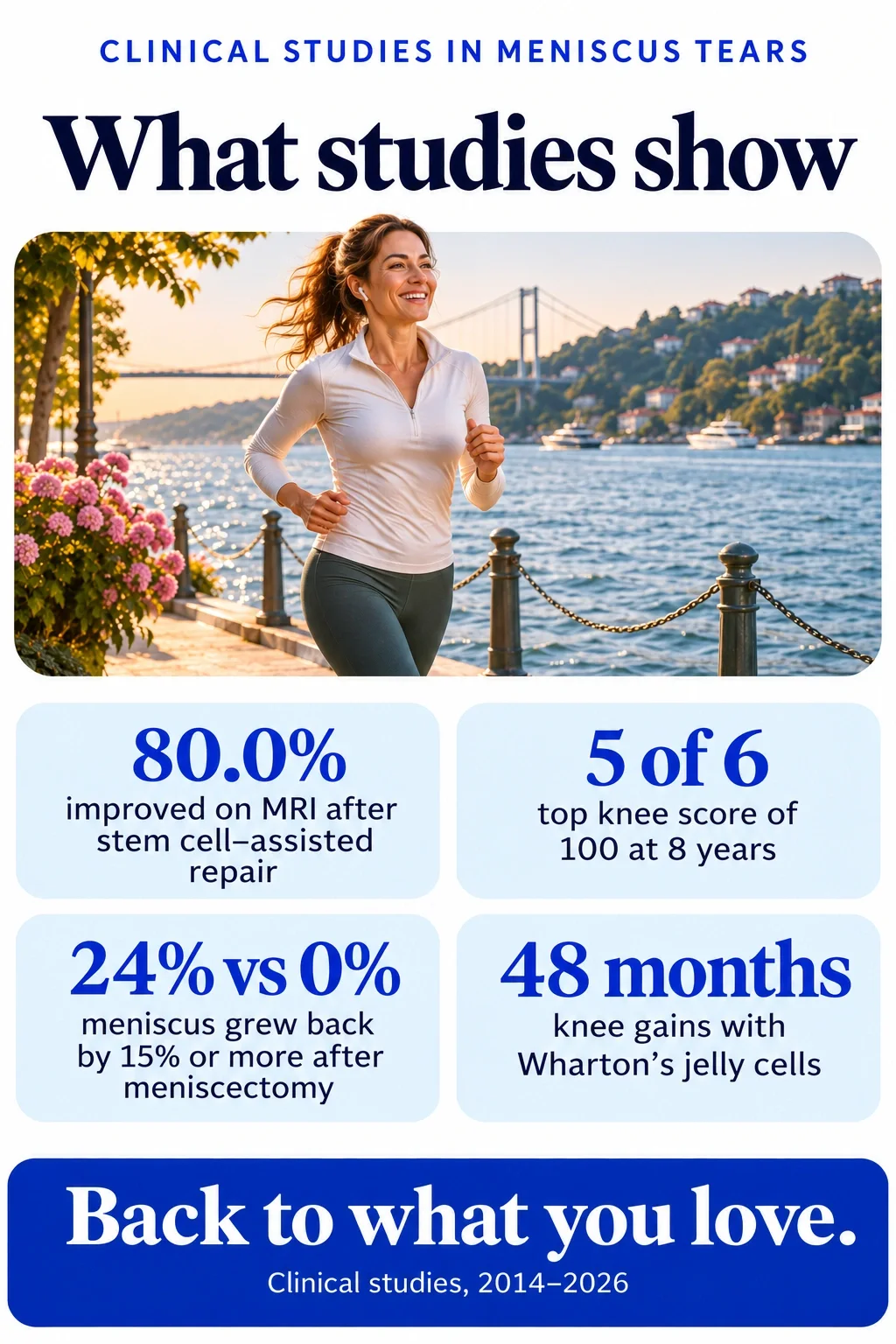
- 80.0%of patients showed improvement on MRI after stem cells were added to stitched meniscal flap tears, in a phase III trial1
- 5 of 6patients reached the maximum Lysholm knee score of 100 eight years after a stem-cell-augmented meniscus repair; the sixth scored 996
- 7.2 → 3.36fall in knee pain out of 10 a year after four umbilical cord stem cell injections, against 7.0 → 4.6 with hyaluronic acid7
- 24% vs 0%of patients gained at least 15% meniscal volume a year after one donor stem cell injection following partial meniscectomy, against the control2
02
What is a meniscus tear? Tear types, the red and white zones, and why tears heal slowly
Each knee has two menisci: the medial meniscus on the inner side and the lateral meniscus on the outer side. Together they deepen the shallow top of the shin bone so that the rounded end of the thigh bone sits securely, and they carry a remarkable share of the load: about 50% of the compressive load across the knee when your leg is straight, and about 85% when your knee is bent to 90 degrees.12 They also help to steady the joint, spread the joint fluid and nourish the cartilage.
A meniscus tear is a split or fray in this tissue. Doctors describe a tear by its shape and its position, because both tell them how it is likely to behave and which treatment suits it best.
Traumatic tears
A traumatic tear happens suddenly, usually when the foot is planted and the knee twists, as in football, skiing or tennis, and is most common in active people under 40. Many run along the length of the meniscus (longitudinal tears); a large one can flip over like the handle of a bucket (a bucket-handle tear). Radial tears cut across the meniscus, and root tears happen where it anchors to the bone.
Degenerative tears
A degenerative tear develops gradually as the meniscus becomes less elastic, often from the 40s onwards. These tears are usually horizontal, frayed or flap-shaped, and they are very common; many cause no trouble at all. In an MRI study of 991 people aged 50 to 90, a meniscal tear or wear was found in 19% of women aged 50 to 59 and in 56% of men aged 70 to 90, and 61% of the people with a tear had had no knee pain, aching or stiffness in the previous month.13 A tear on a scan is a finding to understand, not a reason to worry.
Why tears heal slowly: the red and white zones
Healing needs blood, and the meniscus has little of it. In adults, only the outer 10% to 30% of the meniscus has a blood supply.12 Capillaries from the joint capsule and lining feed this outer rim, while the inner part relies on the joint fluid,14 so surgeons divide the meniscus into three zones. This is where regenerative treatment aims to help: by bringing repair signals to tissue that the bloodstream reaches only poorly.
Red-red zone
The outer rim, fed by a capillary network from the joint capsule.14 Tears here have the best natural chance of healing, and they are the classic tears for a surgical repair.
Red-white zone
The border where blood vessels thin out. Tears here can heal, especially with a repair and added biology: in a double-blind trial of repairs in this zone, 85% healed with PRP, against 47% without.15
White-white zone
The inner part, fed only by joint fluid. In 30 patients with tears in this zone, repairs reinforced with a bone marrow clot rich in growth signals improved knee scores, with clinical failure in only 10%.16
The cartilage beside it
A torn meniscus spreads load less evenly, so the cartilage next to it works harder. Protecting that cartilage can be part of your plan; see our cartilage disorders treatment page.
03
Can a torn meniscus heal on its own? Meniscus tear treatment without surgery
Often the symptoms settle, and sometimes the tear itself heals. Small, stable tears in the outer, red zone have a real chance of mending, because blood reaches them.14 Degenerative tears often calm down too, and many never cause symptoms at all.13 What matters most is how your knee feels and works, not only how the tear looks on a scan.
That is why an international consensus of 67 knee surgeons, sports doctors and physiotherapists from 14 countries recommends non-operative treatment, including physiotherapy, as the first approach for degenerative meniscus lesions, and as an option for some acute tears.17
Physiotherapy: the foundation
Physiotherapy strengthens the thigh and hip muscles that take load off the meniscus, and restores confident movement. Its results are impressive:
- In the OMEX trial, 140 adults with degenerative tears had 12 weeks of supervised exercise or a partial meniscectomy. Knee scores were comparable at two years, thigh strength improved more with exercise at three months,18 and ten years on both groups still reported better pain and function.19
- In the ESCAPE trial of 321 people aged 45 to 70, knee function improved over five years by 25.1 points out of 100 with 16 sessions of physiotherapy and by 29.6 points with surgery, meeting the trial’s goal of physiotherapy being as good as surgery.8
- In the DREAM trial of 121 adults aged 18 to 40, 12 weeks of exercise and education improved pain, function and quality of life about as much as early surgery, for sudden and gradual tears alike.20
Injections that support healing
When a knee needs more than exercise, an injection can add biological support. PRP, platelet-rich plasma, is made from your own blood and is rich in platelet growth factors. In a Spanish series of 392 people treated with PRP injected into the meniscus and the joint, 90.3% did not need meniscus surgery during follow-up, and 69.9% reached a clinically important improvement at six months.21 In a double-blind trial in 72 people with long-standing degenerative tears, adding PRP to needling of the tear (trephination) meant fewer later arthroscopies: 8%, against 28% without PRP.22 A review of 10 studies with 686 patients found that most showed better pain and function by three months, lasting for at least a year.23
Stem cell injections go a step further, bringing living repair cells into the knee. In a pilot study of 20 people with degenerative meniscal tears and early arthritis whose pain had continued despite conservative care, fat tissue rich in stem cells, injected under ultrasound guidance into the torn meniscus and the joint, lowered pain from 5.45 to 2.21 out of 10 after a year, and every area of the KOOS knee score improved.24 And in a randomised trial in arthritic knees, umbilical cord stem cells gave significantly better meniscal healing on MRI than hyaluronic acid, as the sections below explain.7 Whichever path you choose, a pause from pivoting sports, a healthy weight and a gradual return to activity give the meniscus calm conditions to recover.
04
Meniscus repair vs meniscectomy: when arthroscopic surgery is the right step, and recovery times
Arthroscopic, or keyhole, surgery is an important and well-established part of meniscus care, and today’s surgeons work hard to save as much meniscus as they can. There are two main operations, and each has its place.
Meniscus repair: stitching the tear
In a repair, the surgeon stitches the torn edges together so that they can grow back as one. It suits tears with a good chance of healing, typically longitudinal and bucket-handle tears near the blood supply, and root tears. Keeping the meniscus pays off over the years: across 20 studies with 31,783 patients, people whose meniscus was repaired after an acute tear went on to advanced knee arthritis and to knee replacement less often than people who had a partial meniscectomy.9 For root tears, a repair gave greater improvement in knee scores, a lower rate of severe arthritis (odds ratio 0.31) and fewer reoperations than a meniscectomy.25
Repair is not only for the young. Across 14 studies, repairs in people aged 40 and older did as well as in younger people, with an average Lysholm knee score of 86.7 out of 100 after surgery.26
Partial meniscectomy: trimming the torn part
When a tear cannot be stitched, for example a frayed flap that catches in the joint, the surgeon trims away only the unstable part and keeps the healthy rim. It is a short operation with a quick recovery, and for catching or locking it can bring welcome relief. Caring for the remaining rim and the cartilage beside it then becomes the next goal.
Meniscus tear recovery time
In a 2026 analysis of studies in athletes, return to sport took an average of 2.1 months after a meniscectomy and 5.8 months after a meniscal repair, and 98.2% and 96.9% of athletes returned to their sport.27 The physiotherapy programmes in the trials above ran for 12 weeks.1820 After a stem cell injection you walk out of the clinic the same day, and in studies the gains built up over the months that followed and held for two years and more.167
Biology can help surgery succeed. The next sections show how stem cells, exosomes and PRP support repairs and the knee after a meniscectomy. For athletes, our stem cell therapy for sports rehabilitation page and our article does stem cell therapy work for sports injuries? explain how regenerative treatment fits with a return to sport.
05
How do stem cells and exosomes help a torn meniscus heal?
Mesenchymal stem cells (MSCs) are the body’s repair coordinators. Injected into the knee, they work mainly through the signals they release rather than by staying in the joint. Researchers call this a “hit-and-run” effect: the cells release growth factors, calming messengers and vesicles such as exosomes that counter inflammation, aid the repair of damaged tissue and restore healthier tissue metabolism, and inflammatory signals in an injured joint prompt them to release even more.10
For a torn meniscus, that matters twice over. The signals reach the torn tissue, including the inner parts that the bloodstream barely reaches, and they protect the cartilage and bone around it.
How a stem cell injection supports a torn meniscus
- Into the jointFresh stem cells and exosomes are injected into the knee, where inflammatory signals prompt the cells to release more repair molecules.10
- Repair signalsIn laboratory studies, stem cell vesicles helped the knee’s own cartilage cells and stem cells grow and move into the injured meniscus.28
- A calmer jointIrritated bone beneath the cartilage settled in 80.0% of patients after umbilical cord stem cells, against 44.0% with hyaluronic acid.7
- A healing meniscusStem cells added to stitched meniscal tears brought improvement on MRI in 80.0% of patients.1
How Wharton’s jelly stem cells and exosomes support a torn meniscus
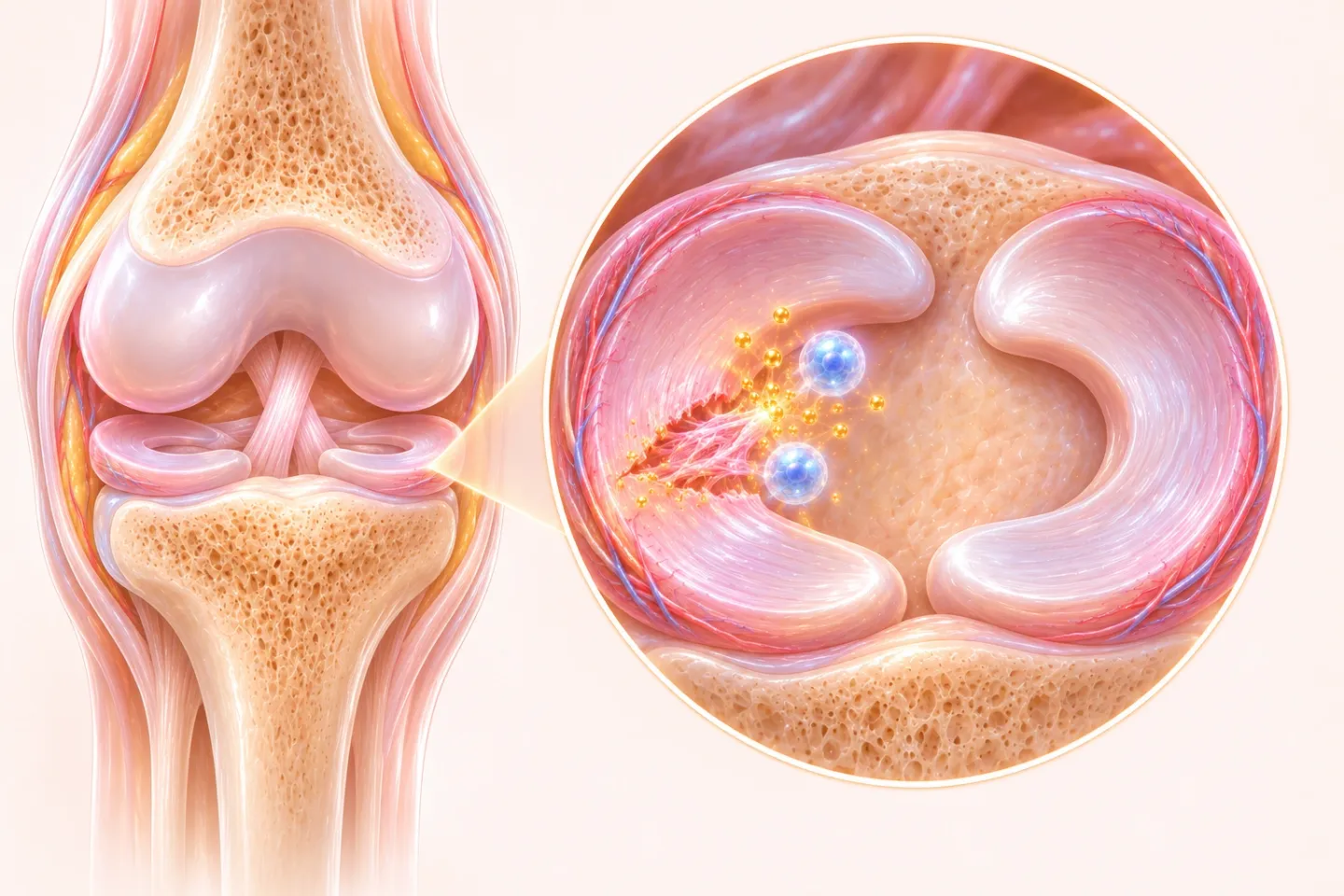
- Joint cartilageSmooth cartilage covers the ends of the thigh and shin bones so the knee glides.
- The menisciTwo C-shaped cushions between the bones spread your weight and steady the knee.
- Shin boneThe menisci rest on the flat top of the shin bone, the tibial plateau.
- Outer red zoneThe outer rim of each meniscus has a blood supply, so tears there heal more readily.
- Meniscus tearTears that reach the inner part heal slowly, because it has little blood supply.
- ExosomesTiny vesicles carry repair signals to the torn tissue, injected into the knee.
- Stem cellsWharton’s jelly MSCs release growth factors that support the cells that rebuild meniscus tissue.
Waking the meniscus’s own cells
In laboratory studies, vesicles from synovial stem cells, injected into the knee, accelerated meniscus regeneration by stimulating the growth and migration of the knee’s own cartilage cells and stem cells.28 A placental stem cell secretome likewise activated resident meniscus progenitor cells in research models.29
Becoming meniscus tissue
In research models of a large meniscal defect, synovial stem cells injected into the knee settled in the defect, became meniscus-like cells producing type 2 collagen and regenerated the meniscus, without travelling to other organs.30
Calming inflammation
MSCs release chemokines and cytokines that counteract inflammation, and release more when the joint is inflamed.10 MSC exosomes favoured healing M2 macrophages and lowered the inflammatory signals IL-1β and TNF-α in research models.31
Protecting cartilage and bone
In a randomised trial of umbilical cord stem cells, the MRI cartilage repair score rose by 13.6 points with stem cells, against 7.8 with hyaluronic acid, and femoral bone marrow oedema, irritated bone beneath the cartilage, settled in 80.0% of patients, against 44.0%.7
Messengers that travel
Exosomes carry proteins, genetic messages and other molecules from cell to cell.32 In research models of meniscus tears, a Wharton’s jelly gel carrying umbilical cord stem cell exosomes helped torn menisci heal and protected the cartilage.33
For how our cells act across the whole knee, including in arthritis, see our stem cell knee injection guide, and for injured cartilage in the knee and other joints, our page on stem cell treatment for cartilage disorders.
06
Torn meniscus stem cell injection: what human studies report
Research on regenerative treatment for the meniscus has grown quickly, from the first pilot studies to randomised and phase III trials. A systematic review of the laboratory and clinical studies of stem cells for meniscal tears found that all of them documented good results in laboratory markers, clinical scores and imaging.11 These are the human studies with the clearest results.
Umbilical cord stem cells for meniscal healing in arthritic knees
In a 2026 triple-blind randomised trial in China, 50 people with advanced knee osteoarthritis (Kellgren-Lawrence grade 3 or 4) received four injections of umbilical cord stem cells, two weeks apart, or five weekly injections of hyaluronic acid. MRI follow-up included the repair of meniscal injuries, and after 12 months the stem cell group showed significantly better meniscal healing, cartilage repair and resolution of bone marrow oedema. Pain fell from 7.2 to 3.36 out of 10, against 7.0 to 4.6 with hyaluronic acid, and no serious adverse events occurred.7 Umbilical cord stem cells are the second cell type in our plans.
Stem cells added to a meniscus repair
- A phase III trial in Japan. Surgeons stitched meniscal flap tears, which are often trimmed away, and four to six weeks later placed cultured synovial stem cells, grown from the lining of the knee, onto the repair. At 52 weeks, even the lowest estimate of the gain in the Lysholm knee score, 48.7 points, far exceeded the trial’s target of 22 points. Second-look arthroscopy showed improvement in 71.4% of patients and MRI in 80.0%, the gains held at 104 weeks, and there were no treatment-related adverse events.1
- Eight years later. Of the first patients treated this way, all six followed for eight years kept their improvement: five reached the maximum Lysholm score of 100 and the sixth scored 99, with no reoperations and no serious adverse events.6
- Bone marrow signals in the white zone. In 30 patients with tears in the inner, avascular zone, repairs reinforced with a bone marrow clot, which held more of the growth factors bFGF, TGF-β and SDF-1 than a blood clot, improved knee scores and the appearance of the meniscus on MRI, with clinical failure in only 10%.16
- Complex tears. In 44 people with complex meniscal tears repaired with stitches, a collagen wrap and an injection of bone marrow blood, knee scores improved significantly at two and five years, and the repairs had a survival rate of 88% at a minimum of five years.34
Stem cells without surgery
In the pilot study of stem-cell-rich fat tissue injected into degenerative tears, the KOOS symptom score rose from 57.7 to 78.2 out of 100 over a year, alongside the fall in pain described above.24
07
Why Wharton’s jelly stem cells and exosomes lead our meniscus plans
Wharton’s jelly is the soft, protective tissue around the blood vessels of the umbilical cord. Our stem cells come from cords donated after healthy births, so nothing is taken from your own body, and the cells start young. Wharton’s jelly stem cells, together with the exosomes made by the very same cells, are the core of the meniscus plans we offer, with umbilical cord stem cells alongside.
What Wharton’s jelly stem cells achieved in knees
Across six clinical studies of Wharton’s jelly stem cells in knee arthritis and cartilage injury, with 97 patients and 134 knees followed for up to 48 months, pain and function improved, no serious adverse effects were noted, and several injections did better than one.3 In people with advanced knee arthritis, two injections of Wharton’s jelly stem cells a month apart improved pain and function at 12 and 48 months, with better MRI scores at 12 months for cartilage loss, bone marrow lesions and synovitis.4 Knee arthritis and cartilage injury share the inflamed joint and the stressed cartilage that come with many meniscus tears, which is why these results matter for your meniscus plan.
Young cells, rich signals, no matching
When researchers compared the proteins released by stem cells from four sources, the secretome of Wharton’s jelly cells was more diverse than that of fat or bone marrow cells.35 Wharton’s jelly cells also calm overactive immune cells and carry very few of the signals that trigger rejection, so no donor matching is needed.36
Wharton’s jelly exosomes: the same signals, concentrated
Exosomes from Wharton’s jelly carry the repair signals of these young cells in cell-free form. Their strongest human result comes from slow-healing tissue with a poor blood supply: in a randomised trial in 110 people with slow-healing diabetic foot ulcers, wounds treated with Wharton’s jelly exosomes healed in an average of 6 weeks, against 20 weeks with standard care alone.5 In research models of meniscus tears, a Wharton’s jelly gel carrying umbilical cord stem cell exosomes promoted healing and protected the cartilage from further wear.33 That is why a meniscus plan can pair Wharton’s jelly exosomes with the cells.
Umbilical cord stem cells: the second cell type
Umbilical cord stem cells add strong knee results of their own. In the 2026 triple-blind trial described above, four injections gave significantly better meniscal healing on MRI than hyaluronic acid, the WOMAC score for pain, stiffness and function improved by 23.2 points, against 15.6, and femoral bone marrow oedema settled in 80.0% of patients, against 44.0%.7 In another randomised trial, two doses six months apart left a pain score of 2.4 out of 100 after a year, against 22.1 with hyaluronic acid.37
Wharton’s jelly and umbilical cord cells in numbers
- 134 kneestreated with Wharton’s jelly stem cells across six clinical studies improved in pain and function over up to 48 months, with no serious adverse effects3
- 80.0% vs 44.0%of patients had femoral bone marrow oedema settle after umbilical cord stem cells, against hyaluronic acid7
- 48 monthsof better pain and function after two Wharton’s jelly stem cell injections in advanced knee arthritis4
- 6 vs 20 weeksaverage healing time of diabetic foot ulcers with Wharton’s jelly exosomes, against standard care, in a randomised trial5
Fresh, never frozen
Our Wharton’s jelly stem cells are prepared for your date in a GMP-certified laboratory approved by the Turkish Ministry of Health, and never frozen. In laboratory comparisons, fresh MSCs kept stronger immune-calming properties than cells used straight after thawing.38
Your cell count in writing
Your plan states your exact cell count in writing, and the laboratory checks the cell count and viability before every treatment.
The right dose
Dose and repetition matter: across 16 randomised trials in knee arthritis, repeated stem cell injections improved pain and function more than a single one at 6 and 12 months.39 Your doctor sets the dose for your knee.
No harvest, no waiting
Nothing is taken from your fat or bone marrow, and there are no weeks of waiting while your own cells grow. Your cells are prepared fresh, usually within 5 to 10 days of booking.
Umbilical cord stem cells alongside
Umbilical cord stem cells, the second cell type in our plans, can be added on the same day. Across 36 randomised trials in arthritis, umbilical cord cells gave the largest relief of osteoarthritis pain of all cell sources.40
CD34+ exosomes as an extra
Your plan can also include CD34+ exosomes, which your doctor may add to support the small blood vessels at the edge of a tear.
Why we combine cells and exosomes. Stem cells release their repair signals over a period of time, in response to the joint around them; exosomes deliver a concentrated dose of those signals at once. Together they aim to support the torn meniscus and the cartilage around it. Read more on our exosome therapy page and our stem cell therapy page.
08
Exosomes for a meniscus tear: the cell-free option
Exosomes are tiny vesicles, far smaller than a cell, that stem cells release to communicate with the cells around them. Each one carries proteins, genetic messages and other molecules that reflect the cell it came from.32 Because they contain no living cells, exosomes can be given on their own or added to a stem cell plan.
What laboratory studies show for the meniscus
In laboratory studies, vesicles from synovial stem cells, injected into the knee, accelerated meniscus regeneration and normalised the shape and make-up of the repaired tissue.28 An injectable gel made from Wharton’s jelly and loaded with umbilical cord stem cell exosomes promoted healing of torn menisci and protected the cartilage from secondary wear.33
The first results in people’s knees
In knee arthritis, the human results are encouraging. In 29 people (33 knees) given six injections of umbilical cord extracellular vesicles, the family of messengers that exosomes belong to, knee pain fell by 38.8 points on a 100-point scale, every area of the KOOS knee score improved beyond the threshold that patients notice, and 66.7% of knees met the international criteria for a treatment response, with no serious adverse events.41
How exosomes are given for a meniscus tear
For a meniscus tear, Wharton’s jelly exosomes can be injected into the knee joint (intra-articular), on their own or with the stem cells, so that their signals reach the meniscus, cartilage and joint lining, and an IV infusion can be added if your doctor advises. Both are among the 21 exosome routes on our exosome therapy page.
09
Stem cells after meniscectomy: supporting the knee that remains
A partial meniscectomy often brings quick relief and leaves a healthy rim of meniscus to look after for the decades ahead. Physiotherapy and a healthy weight come first, and regenerative treatment can add support for the meniscus that remains and the cartilage beside it.
Meniscal tissue that grew back
In a randomised, double-blind trial at seven centres in the USA, 55 people received one knee injection 7 to 10 days after a partial medial meniscectomy: 50 million donor bone marrow stem cells, 150 million, or a hyaluronic acid control. A year later, MRI showed at least 15% more meniscal volume in 24% of the patients given 50 million cells and in 6% of those given 150 million, and in none of the control group. People who already had signs of arthritis had significantly less pain with stem cells than with the control, and no ectopic tissue or clinically important safety issues were seen.2
Two lessons from this trial shape our plans: stem cells can support meniscal tissue after surgery, and the right dose works better than the biggest dose.
Cord tissue and cord blood cells
In a comparative study of 113 people after arthroscopic meniscectomy, those who also received particulate amniotic membrane and umbilical cord tissue had a significant fall in pain and clear gains in knee function at six months, while improvement without it was less marked.42 Umbilical cord blood stem cells implanted during a realignment operation (high tibial osteotomy) improved knee scores and regenerated cartilage even in knees that had lost much of their meniscus.43 And in older patients with large, full-thickness cartilage defects, umbilical cord blood stem cells improved the cartilage grade at second-look arthroscopy in 97.7%, against 71.7% with microfracture, with better pain and function at three to five years.44
If your meniscectomy was some years ago and your knee now shows wear, read our guide to alternatives to knee replacement, which explains every stage of knee arthritis, and our page on stem cell therapy for hip, knee and shoulder osteoarthritis. If you are unsure whether your knee pain comes from wear or from inflammation, our guide to osteoarthritis vs rheumatoid arthritis explains the difference.
10
Torn meniscus treatments compared: physiotherapy, PRP, surgery, stem cells and exosomes
Every option has its place, and many people do best with a combination: physiotherapy as the foundation, surgery when a tear needs stitching or trimming, and regenerative treatment to support healing and protect the knee. This table shows how each one works and what studies report.
| Treatment | How it works | What studies report | How it is given |
|---|---|---|---|
| Wharton’s jelly stem cells and exosomes | Young repair cells and their concentrated signals calm the joint and support the meniscus and cartilage1028 | Better pain and function in 134 knees followed for up to 48 months, with no serious adverse effects3 | An injection into the knee, with IV if advised, in one treatment day |
| Umbilical cord stem cells | A second young cell type with strong repair signals | Significantly better meniscal healing on MRI than hyaluronic acid7; largest relief of osteoarthritis pain of all cell sources40 | Added to Wharton’s jelly cells on the same day |
| Stem cells added to a repair | Synovial stem cells or bone marrow signals placed on the stitched tear | Improvement on MRI in 80.0% after stitched flap tears1 | During or a few weeks after arthroscopic repair |
| PRP | Growth factors from your own platelets | 85% of bucket-handle repairs healed, against 47%15; 90.3% needed no surgery after injections21 | Injected into the meniscus or joint, or during a repair |
| Physiotherapy and exercise | Stronger thigh and hip muscles take load off the meniscus | As good as surgery for knee function over five years in degenerative tears8 | Usually 12 weeks of supervised sessions, then home exercise |
| Meniscus repair | Stitches hold the torn edges together so that they heal | Less progression to advanced arthritis and knee replacement than after meniscectomy9 | Arthroscopic surgery; back to sport after about 5.8 months27 |
| Partial meniscectomy | Trims away the unstable torn part and keeps the healthy rim | 98.2% of athletes returned to their sport27 | Arthroscopic surgery; back to sport after about 2.1 months27 |
Better together
These treatments add up. Across nine randomised trials with 345 patients, adding PRP to meniscus surgery improved the healing rate of the repair (risk ratio 1.44),45 and across nine studies with 1,164 participants, repairs with PRP failed less often (odds ratio 0.64).46 Stem cells added to stitched tears gave large, lasting gains,16 and physiotherapy remains the partner of every option. To compare injections in arthritic knees, see our stem cell knee injection guide.
11
Muse cells and Muse exosomes: an optional add-on
Muse cells, short for multilineage-differentiating stress-enduring cells, are a small group of especially hardy repair cells within the MSC family, discovered in Japan in 2010.47 After an IV infusion they home to damaged tissue, and donor Muse cells have been given without tissue matching or immune-suppressing medicines.48 In a randomised trial in stroke, 40.0% of patients given one IV dose of a donor Muse cell product could look after their own affairs at 12 weeks, against 10.0% with placebo.49
For cartilage, the research so far comes from the laboratory: Muse cells formed cartilage more readily than other MSCs, and in research models they supported the healing of cartilage and bone injuries.50 Muse exosomes carry the cells’ signals in cell-free form.
If Dr. Cihan Bolat recommends it, Muse cells and Muse exosomes can be added by IV infusion, alongside the Wharton’s jelly stem cells and exosomes injected into your knee, which remain the core of your plan.
12
How we plan your meniscus treatment in Istanbul: routes, dose and timing
Every plan starts with a free medical review. Dr. Cihan Bolat, our medical director and a specialist in anaesthesiology and reanimation and in regenerative medicine, and his team look at your age, your activity, how and when the tear happened, any surgery you have had, and your MRI report and images.
He then plans the cells, the exosomes and the route for you. A meniscus plan can include fresh Wharton’s jelly stem cells and Wharton’s jelly exosomes injected into the knee joint, with umbilical cord stem cells or CD34+ exosomes where they help. If a ligament or tendon around the knee is injured too, it can be treated on the same day, and if both knees need help, both can be treated in a single day. An IV infusion can be added when more than one joint is affected or when your doctor sees a benefit for your wider joint health.
Your meniscus plan in four steps
- Free reviewYour MRI, your history and your goals, reviewed by our specialist team.
- Into the kneeWharton’s jelly stem cells and exosomes injected into the joint, the route used in the knee injection trials.24
- With your surgeon or physioTimed with your repair, meniscectomy or exercise programme; in trials, cells were given between 7 days and 6 weeks after surgery.12
- Follow-up and a second doseReviews at about 1, 3, 6 and 12 months, with a second dose if planned.39

One treatment day
Our driver picks you up, takes you to the clinic and brings you back afterwards. You walk out the same day.
Comfort first
Dr. Cihan Bolat, a specialist in anaesthesiology, plans your comfort and the route with you. Several of the trials used ultrasound-guided injections into the knee.424
A second dose, if planned
The umbilical cord stem cell trial gave four injections two weeks apart,7 and in arthritis trials repeated injections improved pain and function more than one.39 Your plan may include a second dose.
Before or after surgery
If you are planning a repair or have recently had a meniscectomy, we time your treatment with your surgeon’s advice.
Physiotherapy continues
Your exercise programme is the best partner for your cells, and we are happy to share your plan with your physiotherapist.
Your cell count in writing
Your exact cell count is stated in writing, and the GMP laboratory checks the count and viability before every treatment.
- Day 1Treatment dayYou walk out the same day
- Weeks 1–6Gentle activityPhysiotherapy guides your return
- 3 monthsFirst changesPain and function begin to ease
- 6–12 monthsClear gainsMeasured on MRI in the trials
- Second doseIf plannedBuilds on your result
When to expect changes
Results build gradually as the knee calms and the tissue responds. In the umbilical cord stem cell trial, pain eased steadily over the year without rebounding,7 and after stem cells were added to repairs, the gains held at 104 weeks1 and, in the first patients, for eight years.6 We review your progress at about 1, 3, 6 and 12 months.
13
Is stem cell therapy for a torn meniscus safe?
Safety matters to everyone considering treatment for their knee, and the published record is reassuring. A 2021 meta-analysis of 62 randomised trials with 3,546 patients found MSC treatment safe, the most common effect a passing fever.51
The meniscus studies point the same way. In the phase III trial of stem cells added to meniscus repair, there were no treatment-related adverse events up to 104 weeks,1 and the first patients, followed for eight years, had no serious adverse events, infections, reoperations or abnormal tissue growth.6 After a partial meniscectomy, donor stem cell injections caused no ectopic tissue and no clinically important safety issues over two years.2 In the umbilical cord stem cell trial no serious adverse events occurred,7 and across six studies of Wharton’s jelly stem cells in the knee no serious adverse effects were noted.3 Knee injections of umbilical cord vesicles caused no serious adverse events either.41
Your own care adds further layers. Wharton’s jelly cells need no donor matching,36 your cells are prepared in a Ministry of Health-approved, GMP-certified laboratory with checked count and viability, and every injection is given under sterile conditions by our specialist team. We screen carefully, and a specialist team treats you.
14
Why patients travel to Istanbul, Turkey for meniscus tear treatment
Patients travel to us from the UK, Germany, the Netherlands, across Europe, the Middle East and the Gulf, the USA and beyond. Whether you are an athlete who wants to get back to your sport or simply want a dependable knee for walks and stairs, and whether or not you have had physiotherapy or surgery at home, Istanbul adds the regenerative part of the plan: fresh Wharton’s jelly stem cells and exosomes, given by a specialist team in one treatment day.

Specialist-led from the first message
A free medical review and phone consultation with the specialist team led by Uzm. Dr. Cihan Bolat, and a written plan before you book.
Fresh cells for your date
Your Wharton’s jelly stem cells come from cords donated after healthy births and are prepared fresh for your treatment date, never frozen.
No harvest, no matching
Nothing is taken from your own fat or bone marrow, and no donor matching is needed.36
One treatment day
Most plans take one treatment day in Istanbul, and you walk out of the clinic the same day.
Everything arranged
Help with the hotel, ground transport and translation, and a personal case manager who plans your stay with you.
A clear price before you fly
You receive a written plan with a fixed, all-inclusive price before you travel.
Our clinic is in Suadiye, a calm residential district on Istanbul’s Asian side near the Marmara seafront, and the city is served by two international airports with direct flights from across Europe, the Middle East and beyond. You can combine your treatment day with a few relaxed days in the city. Read why patients choose Turkey for stem cell therapy.
15
Your treatment in Istanbul, step by step
From your first message to follow-up at home, every step is planned in advance, whether you travel from London, Berlin, Amsterdam, Dubai or New York. For the fuller story, read the stem cell treatment in Turkey, step by step, or request your free consultation now.
Free medical review
Send us your age, how and when the tear happened, any surgery you have had and your MRI report and images, through our consultation request or by WhatsApp on +90 534 856 92 92.
Phone consultation and fixed price
Once your case is approved, you discuss your plan with the specialist and receive a written plan with the cell count, the exosomes, the route and a fixed, all-inclusive price.
Fresh preparation
After your deposit, your Wharton’s jelly stem cells and exosomes are prepared fresh for your date, usually within 5 to 10 days.
One treatment day
Our driver takes you to the clinic, where the specialist gives your treatment, and brings you back to your hotel. You walk out the same day.
Home and follow-up
Back home, you continue your physiotherapy, and we review your progress at about 1, 3, 6 and 12 months and plan a second dose with you if it is part of your plan.
16
How much does stem cell therapy for a torn meniscus cost in Turkey?
Your price depends on your plan: the number of Wharton’s jelly stem cells, the exosomes, whether one or both knees are treated, any IV infusion and whether a second dose is planned. After your free medical review you receive a fixed, all-inclusive price in writing, before you book anything, so you can decide calmly at home.
When you compare prices, compare what is included: fresh cells with checked count and viability, the exosomes, treatment by our specialist, ground transport, a personal case manager and follow-up, all in one trip and one treatment day.
Included
- Free medical review and phone consultation
- Fresh Wharton’s jelly stem cells, with certified count and viability
- Wharton’s jelly exosomes, and umbilical cord stem cells or CD34+ exosomes if they are in your plan
- Treatment by our specialist in one treatment day
- Ground transport to and from the clinic, and help with translation
- A personal case manager and follow-up reviews
Not included / optional
- Flights
- Hotel stay, which we can arrange for you
- An IV infusion, if advised
- A second dose, if it is part of your plan
See how our cells are prepared on our stem cell therapy page, or read about treatment for damaged cartilage on our cartilage disorders page.
17
Frequently asked questions
Can stem cell therapy help a torn meniscus?
Yes, in human studies stem cells supported healing of the meniscus. Added to stitched repairs in a phase III trial, stem cells brought improvement on MRI in 80.0% of patients, and in a randomised trial in arthritic knees, umbilical cord stem cells gave significantly better meniscal healing on MRI than hyaluronic acid.
Can a torn meniscus heal on its own?
Sometimes. Small, stable tears in the outer zone, where there is a blood supply, can heal with time, and many degenerative tears cause few or no symptoms: in an MRI study of people aged 50 to 90, 61% of those with a tear had had no knee pain, aching or stiffness in the previous month. Physiotherapy helps many tears settle, and tears in the inner zone, which heal less readily, are where stem cells and exosomes aim to help.
What is the best meniscus tear treatment without surgery?
Physiotherapy is the foundation, and in large trials it improved knee function about as much as surgery for degenerative tears. When more support is needed, PRP or a stem cell injection can be added; our plans use fresh Wharton’s jelly stem cells and their exosomes, injected into the knee.
How does a torn meniscus stem cell injection work?
The cells are injected into the knee joint, where they release growth factors, calming messengers and exosomes that calm inflammation, help the meniscus’s own cells move into the injured area and protect the cartilage. In a randomised trial of umbilical cord stem cells, pain fell from 7.2 to 3.36 out of 10 over a year.
Can stem cells regrow a meniscus?
Stem cells can support meniscal tissue. After a partial meniscectomy, one injection of donor stem cells increased meniscal volume by at least 15% in 24% of patients a year later, against none with the control injection. Your doctor explains what is realistic for your knee.
Is meniscus repair or meniscectomy better?
Both have their place. A repair keeps the meniscus and was followed by less advanced arthritis and fewer knee replacements than a meniscectomy across 20 studies. A partial meniscectomy suits tears that cannot be stitched and has a quicker recovery. Your surgeon advises which suits your tear, and stem cells can support either.
Can I have stem cell therapy after a meniscectomy?
Yes. In a randomised trial, an injection 7 to 10 days after a partial meniscectomy helped meniscal tissue grow back and eased pain in knees with early arthritis. Whether your surgery was recent or years ago, we plan your treatment with your surgeon’s advice and your physiotherapy.
What is the best treatment for a degenerative meniscus tear?
International experts recommend non-operative treatment, including physiotherapy, as the first approach. PRP injections helped many people avoid surgery, and in arthritic knees, umbilical cord stem cells gave significantly better meniscal healing on MRI than hyaluronic acid.
Does PRP work for a meniscus tear?
PRP has helped many people. In a double-blind trial, 85% of bucket-handle tear repairs healed with PRP, against 47% without, and in a series of 392 people treated with PRP injections into the meniscus and joint, 90.3% did not need meniscus surgery during follow-up.
PRP or stem cells for a meniscus tear: which is better?
They work differently and can be combined. PRP delivers growth factors from your own platelets at the moment of injection. Stem cells are living repair cells that keep releasing signals in the knee, and umbilical cord stem cells also protected cartilage and calmed irritated bone in a randomised trial. Our doctors explain which suits your tear.
Do exosomes help a meniscus tear?
In laboratory studies, stem cell exosomes injected into the knee accelerated meniscus regeneration and protected cartilage. In knee arthritis, 66.7% of knees responded to injections of umbilical cord vesicles, the family exosomes belong to. Your plan can include Wharton’s jelly exosomes, on their own or with the stem cells, injected into the knee.
How long does a torn meniscus take to heal?
It depends on the tear and the treatment. Physiotherapy programmes usually run for about 12 weeks, and athletes returned to sport after about 2.1 months following a meniscectomy and 5.8 months following a repair. After a stem cell injection you walk out the same day, gentle activity is encouraged, and in studies the gains built up over the following months and held for two years and more.
How many stem cell injections will my knee need?
Your plan starts with one treatment day. In a randomised trial of umbilical cord stem cells, four injections were given two weeks apart, and in arthritis trials repeated injections improved pain and function more than a single one, so your plan may include a second dose.
Is stem cell therapy for a torn meniscus safe?
The published record is reassuring. A meta-analysis of 62 randomised trials with 3,546 patients found MSC treatment safe, with a passing fever the most common effect. In the meniscus trials, there were no treatment-related adverse events after stem cells were added to repairs, and no serious adverse effects across six studies of Wharton’s jelly stem cells in the knee.
How much does stem cell therapy for a torn meniscus cost in Turkey?
Your price depends on the number of Wharton’s jelly stem cells, the exosomes, whether one or both knees are treated and whether a second dose is planned. After a free medical review you receive a fixed, all-inclusive price in writing.
Can I have meniscus tear treatment in Istanbul if I live abroad?
Yes. Patients travel to us from the UK, Europe, the Gulf and further afield. You send your MRI from home, receive a free review and a written plan with a fixed price, and most plans take one treatment day in Istanbul. You can reach us by WhatsApp on +90 534 856 92 92.

Medical review
Uzm. Dr. Cihan Bolat
Medical Director, Istanbul Stemcell
This page was written from the published studies listed below and reviewed for medical accuracy on .
18
References
- Sekiya I, et al. Synovial mesenchymal stem cell-augmented meniscal repair for flap tears: A phase III multicenter clinical trial. J Orthop Sci. 2026;31(6):1263-1277. PMID 42270542
- Vangsness CT Jr, et al. Adult human mesenchymal stem cells delivered via intra-articular injection to the knee following partial medial meniscectomy: a randomized, double-blind, controlled study. J Bone Joint Surg Am. 2014;96(2):90-8. PMID 24430407
- Ishak-Samrin M, et al. Treatment of Knee Osteoarthritis and Chondral Injury with Umbilical Cord/Wharton's Jelly-Derived Mesenchymal Stem Cells: A Systematic Review of Safety and Efficacy. J Funct Biomater. 2025;16(3). PMID 40137363
- Samara O, et al. Ultrasound-guided intra-articular injection of expanded umbilical cord mesenchymal stem cells in knee osteoarthritis: a safety/efficacy study with MRI data. Regen Med. 2022;17(5):299-312. PMID 35546314
- Kishta MS, et al. The transforming role of wharton's jelly mesenchymal stem cell-derived exosomes for diabetic foot ulcer healing: a randomized controlled clinical trial. Stem Cell Res Ther. 2025;16(1):559. PMID 41084065
- Sekiya I, et al. Eight-year clinical and radiographic outcomes after meniscal repair augmented with autologous synovial mesenchymal stem cell transplantation: A long-term follow-up case series. J Orthop Sci. 2026;31(6):1283-1290. PMID 42373345
- Chen C, et al. Multiple intra-articular injections of umbilical cord mesenchymal stem cells in treating severe knee osteoarthritis: a triple-blind randomized controlled trial. Stem Cell Res Ther. 2026;17(1). PMID 42972476
- Noorduyn JCA, et al. Effect of Physical Therapy vs Arthroscopic Partial Meniscectomy in People With Degenerative Meniscal Tears: Five-Year Follow-up of the ESCAPE Randomized Clinical Trial. JAMA Netw Open. 2022;5(7):e2220394. PMID 35802374
- Migliorini F, et al. Meniscectomy is associated with a higher rate of osteoarthritis compared to meniscal repair following acute tears: a meta-analysis. Knee Surg Sports Traumatol Arthrosc. 2023;31(12):5485-5495. PMID 37812251
- Mancuso P, et al. Mesenchymal Stem Cell Therapy for Osteoarthritis: The Critical Role of the Cell Secretome. Front Bioeng Biotechnol. 2019;7:9. PMID 30761298
- Rinonapoli G, et al. Stem cells application in meniscal tears: a systematic review of pre-clinical and clinical evidence. Eur Rev Med Pharmacol Sci. 2021;25(24):7754-7764. PMID 34982437
- Fox AJ, Bedi A, Rodeo SA. The basic science of human knee menisci: structure, composition, and function. Sports Health. 2012;4(4):340-51. PMID 23016106
- Englund M, et al. Incidental meniscal findings on knee MRI in middle-aged and elderly persons. N Engl J Med. 2008;359(11):1108-15. PMID 18784100
- Arnoczky SP, Warren RF. Microvasculature of the human meniscus. Am J Sports Med. 1982;10(2):90-5. PMID 7081532
- Kaminski R, et al. A Prospective, Randomized, Double-Blind, Parallel-Group, Placebo-Controlled Study Evaluating Meniscal Healing, Clinical Outcomes, and Safety in Patients Undergoing Meniscal Repair of Unstable, Complete Vertical Meniscal Tears (Bucket Handle) Augmented with Platelet-Rich Plasma. Biomed Res Int. 2018;2018:9315815. PMID 29713647
- Hashimoto Y, et al. Biochemical Characteristics and Clinical Result of Bone Marrow-Derived Fibrin Clot for Repair of Isolated Meniscal Injury in the Avascular Zone. Arthroscopy. 2022;38(2):441-449. PMID 34052371
- Prill R, et al. The formal EU-US Meniscus Rehabilitation 2024 Consensus: An ESSKA-AOSSM-AASPT initiative. Part II-Prevention, non-operative treatment and return to sport. Knee Surg Sports Traumatol Arthrosc. 2025;33(8):3014-3024. PMID 40501314
- Kise NJ, et al. Exercise therapy versus arthroscopic partial meniscectomy for degenerative meniscal tear in middle aged patients: randomised controlled trial with two year follow-up. BMJ. 2016;354:i3740. PMID 27440192
- Berg B, et al. Arthroscopic partial meniscectomy versus exercise therapy for degenerative meniscal tears: 10-year follow-up of the OMEX randomised controlled trial. Br J Sports Med. 2025;59(2):91-98. PMID 39326908
- Damsted C, et al. Early Surgery Versus Exercise Therapy and Patient Education for Traumatic and Nontraumatic Meniscal Tears in Young Adults-An Exploratory Analysis From the DREAM Trial. J Orthop Sports Phys Ther. 2024;54(5):340-349. PMID 38385220
- Sánchez M, et al. High survival rate after the combination of intrameniscal and intraarticular infiltrations of platelet-rich plasma as conservative treatment for meniscal lesions. Knee Surg Sports Traumatol Arthrosc. 2023;31(10):4246-4256. PMID 37302993
- Kaminski R, et al. Short-Term Outcomes of Percutaneous Trephination with a Platelet Rich Plasma Intrameniscal Injection for the Repair of Degenerative Meniscal Lesions. A Prospective, Randomized, Double-Blind, Parallel-Group, Placebo-Controlled Study. Int J Mol Sci. 2019;20(4). PMID 30781461
- Elphingstone JW, Alston ET, Colorado BS. Platelet-rich plasma for nonoperative management of degenerative meniscal tears: A systematic review. J Orthop. 2024;54:67-75. PMID 39036807
- Malanga GA, et al. Clinical evaluation of micro-fragmented adipose tissue as a treatment option for patients with meniscus tears with osteoarthritis: a prospective pilot study. Int Orthop. 2021;45(2):473-480. PMID 33026537
- Ro KH, et al. Clinical and Radiological Outcomes of Meniscal Repair Versus Partial Meniscectomy for Medial Meniscus Root Tears: A Systematic Review and Meta-analysis. Orthop J Sports Med. 2020;8(11):2325967120962078. PMID 33241058
- Sedgwick MJ, Saunders C, Getgood AMJ. Systematic Review and Meta-analysis of Clinical Outcomes Following Meniscus Repair in Patients 40 Years and Older. Orthop J Sports Med. 2024;12(8):23259671241258974. PMID 39131093
- Bensa A, et al. Return to sport after meniscectomy, meniscal repair, and meniscal allograft transplantation for meniscal lesions in athletes: A systematic review and meta-analysis. Knee Surg Sports Traumatol Arthrosc. 2026. PMID 42003662
- Kawata K, et al. Extracellular vesicles derived from mesenchymal stromal cells mediate endogenous cell growth and migration via the CXCL5 and CXCL6/CXCR2 axes and repair menisci. Stem Cell Res Ther. 2021;12(1):414. PMID 34294118
- Chen WH, et al. Secretome from human placenta-derived mesenchymal stem cells repairs mechanically induced meniscus injury in mice by activating the proliferation and suppressing the apoptosis of endogenous meniscus progenitor cells. Stem Cell Res Ther. 2025;16(1):565. PMID 41088346
- Horie M, et al. Intra-articular Injected synovial stem cells differentiate into meniscal cells directly and promote meniscal regeneration without mobilization to distant organs in rat massive meniscal defect. Stem Cells. 2009;27(4):878-87. PMID 19350690
- Zhang S, et al. MSC exosomes mediate cartilage repair by enhancing proliferation, attenuating apoptosis and modulating immune reactivity. Biomaterials. 2018;156:16-27. PMID 29182933
- Kalluri R, LeBleu VS. The biology, function, and biomedical applications of exosomes. Science. 2020;367(6478). PMID 32029601
- Kang S, et al. Injectable decellularized Wharton's jelly hydrogel containing CD56(+) umbilical cord mesenchymal stem cell-derived exosomes for meniscus tear healing and cartilage protection. Mater Today Bio. 2024;29:101258. PMID 39347017
- Ciemniewska-Gorzela K, et al. Complex Meniscus Tears Treated with Collagen Matrix Wrapping and Bone Marrow Blood Injection: Clinical Effectiveness and Survivorship after a Minimum of 5 Years' Follow-Up. Cartilage. 2021;13(1_suppl):228S-238S. PMID 32476440
- Shin S, et al. Comparative Proteomic Analysis of the Mesenchymal Stem Cells Secretome from Adipose, Bone Marrow, Placenta and Wharton's Jelly. Int J Mol Sci. 2021;22(2). PMID 33467726
- Weiss ML, et al. Immune properties of human umbilical cord Wharton's jelly-derived cells. Stem Cells. 2008;26(11):2865-74. PMID 18703664
- Matas J, et al. Umbilical Cord-Derived Mesenchymal Stromal Cells (MSCs) for Knee Osteoarthritis: Repeated MSC Dosing Is Superior to a Single MSC Dose and to Hyaluronic Acid in a Controlled Randomized Phase I/II Trial. Stem Cells Transl Med. 2019;8(3):215-224. PMID 30592390
- Moll G, et al. Do cryopreserved mesenchymal stromal cells display impaired immunomodulatory and therapeutic properties? Stem Cells. 2014;32(9):2430-42. PMID 24805247
- Deng L, et al. Efficacy and safety of single versus repeated injections of mesenchymal stem cells for the treatment of knee osteoarthritis: a systematic review and network meta-analysis of randomized controlled trials. Stem Cell Res Ther. 2025;16(1):505. PMID 41013772
- Zeng L, et al. Efficacy and safety of culture-expanded mesenchymal stromal cell therapy in the treatment of 4 types of inflammatory arthritis: A systematic review and meta-analysis of 36 randomized controlled trials. Semin Arthritis Rheum. 2024;68:152498. PMID 38970896
- Yokota N, Kambayashi T, Tanabe Y. Safety and Efficacy of Intra-Articular Injection of Umbilical Cord-Derived Extracellular Vesicles in Patients With Knee Osteoarthritis: A Retrospective Study. Orthopedics. 2026;49(4):e351-e358. PMID 42611014
- Duru N, et al. Comparative, Controlled, Retrospective Study of Patient-Reported Outcomes After Meniscectomy With Adjunctive Use of Platelet-Rich Plasma or Amniotic Umbilical Cord Tissue. Ochsner J. 2024;24(1):6-13. PMID 38510228
- Lee DW, et al. Effect of preoperative medial meniscus status on the outcomes of high tibial osteotomy with human umbilical cord-derived mesenchymal stem cells cartilage regeneration. Orthop Traumatol Surg Res. 2025;111(7):104179. PMID 39900334
- Lim HC, et al. Allogeneic Umbilical Cord Blood-Derived Mesenchymal Stem Cell Implantation Versus Microfracture for Large, Full-Thickness Cartilage Defects in Older Patients: A Multicenter Randomized Clinical Trial and Extended 5-Year Clinical Follow-up. Orthop J Sports Med. 2021;9(1):2325967120973052. PMID 33490296
- Xie Y, et al. Can platelet-rich plasma enhance the effect of meniscus repair? A meta-analysis of randomized controlled trials Platelet-rich plasma and meniscus repair. J Orthop Surg (Hong Kong). 2022;30(3):10225536221131483. PMID 36278428
- Li Z, Weng X. Platelet-rich plasma use in meniscus repair treatment: a systematic review and meta-analysis of clinical studies. J Orthop Surg Res. 2022;17(1):446. PMID 36209223
- Kuroda Y, et al. Unique multipotent cells in adult human mesenchymal cell populations. Proc Natl Acad Sci U S A. 2010;107(19):8639-43. PMID 20421459
- Minatoguchi S, et al. Donor Muse Cell Treatment Without HLA-Matching Tests and Immunosuppressant Treatment. Stem Cells Transl Med. 2024;13(6):532-545. PMID 38560897
- Niizuma K, et al. Randomized placebo-controlled trial of CL2020, an allogenic muse cell-based product, in subacute ischemic stroke. J Cereb Blood Flow Metab. 2023;43(12):2029-2039. PMID 37756573
- Watanabe S, et al. Investigating the Potential of Multilineage Differentiating Stress-Enduring Cells for Osteochondral Healing. Cartilage. 2026;17(2):207-219. PMID 38887038
- Wang Y, Yi H, Song Y. The safety of MSC therapy over the past 15 years: a meta-analysis. Stem Cell Res Ther. 2021;12(1):545. PMID 34663461