
01
What is the difference between osteoarthritis and rheumatoid arthritis?
In short: osteoarthritis is the joint’s own wear-and-repair process slowly tipping out of balance, usually in a few hard-working joints such as the knees, hips and hands. Rheumatoid arthritis is an autoimmune condition: the immune system inflames the soft lining of many joints, often the same ones on both sides of the body, and it can make you feel tired all over.12
Both cause joint pain and stiffness, which is why they are so often confused, but they start in different places and are treated in different ways, so knowing which one you have is the first step to the right care.
Osteoarthritis: a whole-joint wear-and-repair condition
Osteoarthritis is no longer seen as simple wear and tear but as a condition of the whole joint: the cartilage, the bone beneath it, the joint lining, the ligaments and the muscles around it.1 The joint keeps trying to repair itself, but over the years the balance tips towards breakdown, and a low-grade inflammation inside the joint adds to the pain.11 It is by far the most common form of arthritis: an estimated 595 million people, 7.6% of the world’s population, had osteoarthritis in 2020, most often in the knee. It becomes more common with every decade after 40.12 Female sex, a higher body weight, family history and an old joint injury make it more likely.1
Rheumatoid arthritis: when the immune system targets the joints
In rheumatoid arthritis, the immune system mistakes the synovium, the thin lining of the joint, for something foreign. The lining becomes swollen and inflamed, and without treatment this inflammation can wear away cartilage and the neighbouring bone.2 An estimated 17.6 million people had rheumatoid arthritis in 2020, 2.45 times as many women as men.13 It can begin at any adult age, most often between 55 and 75.2
The good news is that both conditions are far more manageable today than a generation ago, as the sections below show. For our treatment page covering both, see stem cell therapy for rheumatoid arthritis and osteoarthritis.
OA and RA in numbers
- 595 millionpeople had osteoarthritis in 2020, 7.6% of the world’s population12
- 17.6 millionpeople had rheumatoid arthritis in 2020, 2.45 times as many women as men13
- 95%specificity of the anti-CCP blood test, so a positive result points strongly to rheumatoid arthritis8
- About 80%of people with RA reach remission or low disease activity when a biologic or JAK inhibitor medicine is added2
Osteoarthritis and rheumatoid arthritis inside the joint
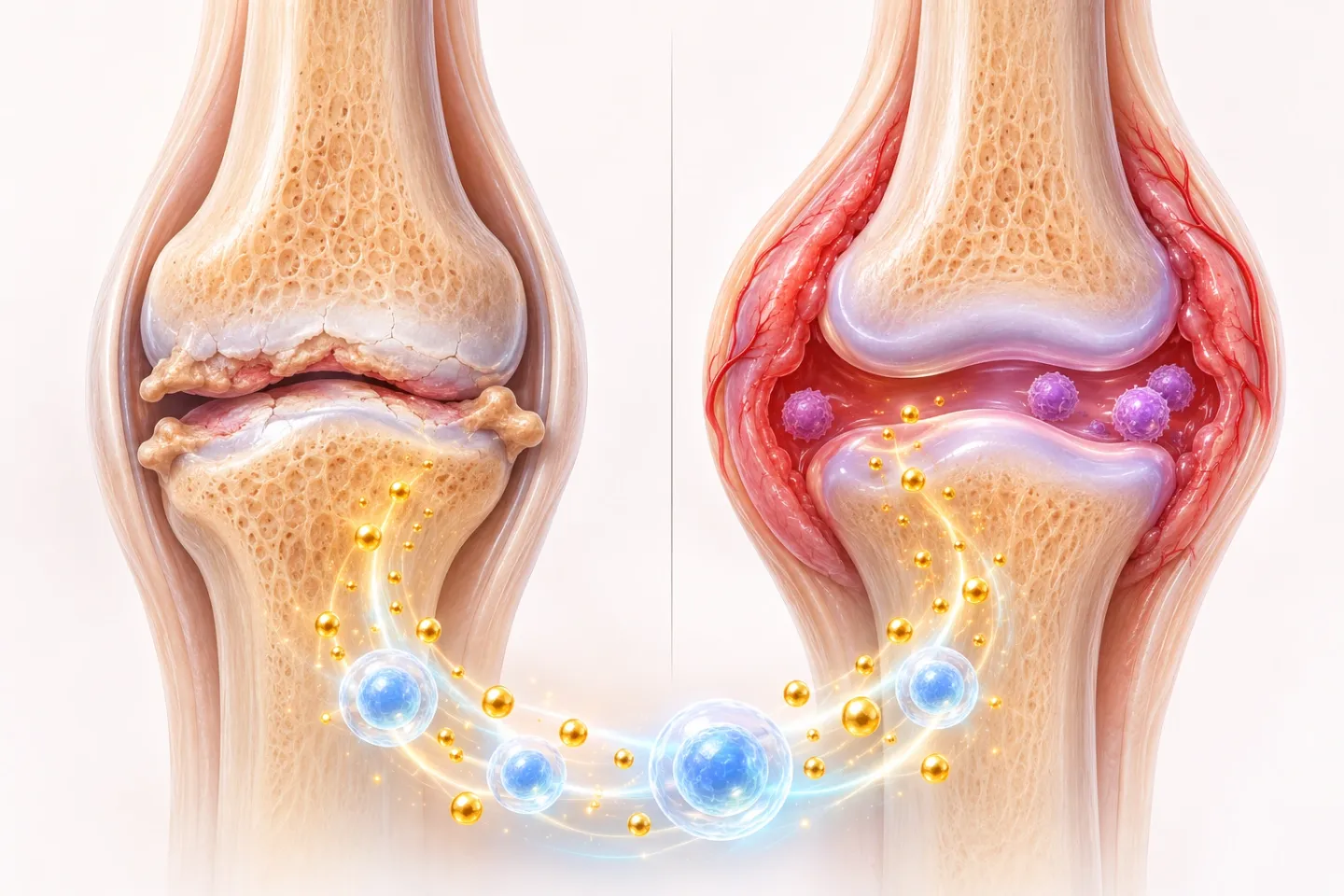
- Worn cartilage (OA)In osteoarthritis the cartilage thins and cracks, and the joint space narrows.
- Bone spur (OA)Small bony growths can form at the edges of a worn joint.
- Swollen lining (RA)In rheumatoid arthritis the immune system inflames the joint lining, which thickens and swells.
- Immune cells (RA)Immune cells gather in the joint fluid and keep the inflammation going.
- Cartilage (RA)Early in rheumatoid arthritis the cartilage is often still smooth; calming the lining helps protect it.
- ExosomesTiny vesicles carry calming and repair signals, injected into the joint or given by IV drip.
- Stem cellsWharton’s jelly MSCs support cartilage repair in osteoarthritis and help rebalance the immune system in rheumatoid arthritis.
02
OA vs RA symptoms side by side: a comparison table
The table below sets the two conditions side by side. No single feature settles the question on its own, but together they usually point clearly one way.
| Osteoarthritis (OA) | Rheumatoid arthritis (RA) | |
|---|---|---|
| Cause | Wear and repair of the whole joint, with low-grade inflammation111 | Autoimmune: the immune system inflames the joint lining2 |
| Who gets it | Mostly people over 40, more often women; the knee is the most common site12 | Any adult age, most often 55 to 75; about 2.45 times as common in women213 |
| How it starts | Gradually, over months and years | Often over weeks to months |
| Typical joints | Knees, hips, hands and feet; in the hands, the fingertip joints and the base of the thumb114 | Knuckles, middle finger joints and wrists, often with the feet72 |
| Pattern | Often one side, or one joint more than another | Usually symmetrical: the same joints on both sides7 |
| Morning stiffness | Brief, easing soon after you get going15 | Long, typically an hour or more7 |
| Swelling | Hard, bony enlargement15 | Soft, warm, puffy swelling of the joint lining7 |
| How you feel overall | Well; it stays in the joints | Can bring tiredness and feeling run down during flares |
| Blood tests | Usually normal | Often raised CRP or ESR, and RF or anti-CCP antibodies28 |
| X-ray | Narrowed joint space and small bony spurs (osteophytes)1 | Erosions and thinning of the bone next to the joints7 |
| Main treatments | Exercise, weight care, pain relief and injections; joint replacement when advanced1 | Early DMARDs such as methotrexate, then biologic or JAK inhibitor medicines if needed2 |
| Where stem cells and exosomes fit | Injections into the joint to calm inflammation, protect cartilage and ease pain316 | IV infusions alongside usual medicine to rebalance the immune system417 |
Morning stiffness: the clearest everyday clue
In knee osteoarthritis, morning stiffness is brief, and together with persistent knee pain, reduced function, a creaking feel, restricted movement and bony enlargement it makes the diagnosis very likely: when all six are present, the chance of osteoarthritis on X-ray rises to 99%.15 In rheumatoid arthritis, stiffness that lasts at least an hour in the morning has long been one of the classic signs.7
Pain with use, or stiffness after rest?
Osteoarthritis pain tends to build with use, after a long walk or hours on your feet, and to settle with rest. Rheumatoid arthritis often feels worst after rest and loosens as you move, and because it comes from the immune system, it can bring tiredness during flares. If you notice tiredness together with swollen joints on both sides, ask a doctor about rheumatoid arthritis early, because early treatment works best.18
03
Which joints does each affect? OA vs RA in the hands
The pattern of joints is one of the most useful clues, and the hands show it most clearly.
Osteoarthritis in the hands
Hand osteoarthritis typically affects the joints nearest the fingertips, where firm bony bumps called Heberden’s nodes form, the middle finger joints, where similar bumps are called Bouchard’s nodes, and the base of the thumb. Heberden’s nodes on their own suggest about a 20% chance of hand osteoarthritis, but together with age over 40, a family history of nodes and narrowing of a finger joint on X-ray, the chance rises to 88%.14
Rheumatoid arthritis in the hands
Rheumatoid arthritis prefers the knuckles where the fingers meet the hand, the middle finger joints and the wrists, usually on both hands, with soft swelling rather than bony bumps.72 The joints nearest the fingertips are usually left alone. The knuckles can feel tender when you shake hands, and making a full fist may be hard first thing in the morning.
Knees, hips, feet and other joints
Beyond the hands, osteoarthritis most often affects the knees, hips and feet,1 usually the joints that have carried the most load over the years. Rheumatoid arthritis can affect any joint with a lining, including the knees, shoulders, elbows, ankles and the small joints of the feet, and it tends to involve three or more joint areas at once.72 Whichever you have, your treatment can include the hand and thumb joints as well as the knees, hips, shoulders and other joints. For knee, hip and shoulder wear in particular, see our page on stem cell therapy for hip, knee and shoulder osteoarthritis.

04
How doctors tell them apart: RA blood tests (RF, anti-CCP) and imaging
A doctor usually starts with your story and an examination, then uses blood tests and imaging to confirm the picture.
Blood tests for rheumatoid arthritis
- Anti-CCP antibodies. The most specific blood test for rheumatoid arthritis. In a meta-analysis of 37 studies, anti-CCP had a specificity of 95% and a sensitivity of 67%, so a positive result points strongly to rheumatoid arthritis.8
- Rheumatoid factor (RF). The classic test, with a sensitivity of 69% and a specificity of 85% in the same analysis.8 It can also be positive in some people without rheumatoid arthritis, which is why doctors read it alongside anti-CCP and your symptoms.
- CRP and ESR. Markers of inflammation that are often raised in rheumatoid arthritis and help track how active it is.2
Not everyone with rheumatoid arthritis has these antibodies: about 40% to 60% do at diagnosis,2 so a negative result does not rule it out, and the pattern of swollen joints matters just as much.
Blood tests in osteoarthritis
There is no blood test for osteoarthritis, and routine results are usually normal. A careful clinical assessment, with an X-ray where needed, can often give a confident diagnosis.15
X-ray, ultrasound and MRI
On X-ray, osteoarthritis shows narrowing of the joint space and small bony spurs called osteophytes.1 Rheumatoid arthritis can show erosions and thinning of the bone next to the joints.7 Ultrasound and MRI also show soft tissues, so they can reveal an inflamed joint lining or early cartilage changes that an X-ray may miss.

05
Can you have both OA and RA? And which is more serious?
Yes, you can have both
Osteoarthritis and rheumatoid arthritis are separate conditions with separate causes. But because osteoarthritis is so common, many people with rheumatoid arthritis also develop it as the years pass, for example in a knee or at the base of the thumb, and a joint that was inflamed for a long time can later show wear. A specialist can usually tell which joints are affected by which condition, and a plan can be tailored to each.
Can osteoarthritis turn into rheumatoid arthritis?
No. Osteoarthritis is not autoimmune, even though it involves a low-grade inflammation inside the joint.11 If someone with osteoarthritis later develops rheumatoid arthritis, it is a second, separate condition, not a change in the first.
Which is worse?
Neither has to define your life. Rheumatoid arthritis can affect the whole body, which is why rheumatologists treat it early and actively, and the results are impressive: early diagnosis and treatment can stop or substantially slow joint damage in up to 90% of patients.18 Osteoarthritis usually changes slowly over many years, and education, exercise and weight care are the cornerstones of its care.1
When it might be another condition
Joint pain can also come with other autoimmune conditions. Lupus, for example, often brings aching, swollen joints together with tiredness, skin rashes or mouth ulcers. If that sounds familiar, read our guide to stem cell therapy for lupus, where stem cell infusions are also used to calm an overactive immune system.
06
Modern treatments that help OA and RA, and where stem cells fit
Both conditions have effective, well-proven foundations of care. Stem cells and exosomes do not replace them; they add a regenerative layer on top.
Osteoarthritis: movement, weight and smart pain relief
Education, exercise and, where appropriate, weight loss are the cornerstones of osteoarthritis care, complemented by anti-inflammatory gels or tablets and, for short-term relief, steroid injections; for an advanced hip or knee, a joint replacement effectively relieves pain.1 Exercise works: across 44 trials, it reduced knee pain by about 12 points on a 100-point scale and improved function by about 10 points, an effect comparable to anti-inflammatory tablets.9 Weight matters too: every pound lost takes about four pounds of load off the knee with each step.19
Rheumatoid arthritis: early medicine and a clear target
Rheumatoid arthritis care has been transformed. The goal is remission or low disease activity, and treatment starts early with a disease-modifying medicine (DMARD), usually methotrexate.18 With first-line treatment, about 40% of people with newly diagnosed rheumatoid arthritis reach remission within six months, and when a biologic medicine or a JAK inhibitor is added, about 80% reach remission or low disease activity.2 Results keep improving: in Norway, six-month remission rates more than doubled within a decade, from 16.9% to 46.3% for people starting a TNF inhibitor with methotrexate.20 Rheumatology guidelines also give consistent exercise a strong recommendation alongside medicine.21
Where stem cells and exosomes fit
Many people come to us when they want more than their current treatment gives them: less knee pain without surgery, a way to delay a joint replacement, or extra help for rheumatoid arthritis alongside their medicines. For osteoarthritis, Wharton’s jelly stem cells and exosomes are injected into the joint; for rheumatoid arthritis, they are given by IV infusion alongside your usual medicine, as in the clinical trials.
| Option | Main use | What studies report | How it fits |
|---|---|---|---|
| Wharton’s jelly stem cells and exosomes | OA: injection into the joint. RA: IV infusion alongside medicine | Two Wharton’s jelly injections: total knee score 4.2 vs 15.2 with hyaluronic acid at 12 months;3 no serious adverse effects across six Wharton’s jelly studies6 | One treatment day with fresh cells, alongside your other care |
| Umbilical cord stem cells | OA and RA | In RA, IV infusions with usual medicine improved disease activity, maintained through five years;45 in severe knee OA, bone marrow oedema resolved in 80.0% vs 44.0%22 | Added where the doctor advises |
| Exercise and weight care | OA and RA | Knee pain about 12 points lower on a 100-point scale with exercise9 | The foundation at every stage |
| Pain relief, steroid and hyaluronic acid injections | OA pain and flares | Short-term relief from steroid injections;1 stem cell injections beat hyaluronic acid at 12 months across 10 randomised trials23 | Helpful for flares; stem cells work on the joint environment |
| DMARDs such as methotrexate | RA, first line | About 40% of newly diagnosed people reach remission within six months2 | Continue as your rheumatologist advises; stem cells are added alongside |
| Biologic and JAK inhibitor medicines | RA, next step | About 80% reach remission or low disease activity when these are added2 | Stem cell trials helped people whose RA stayed active despite medicine417 |
| Joint replacement | Advanced hip or knee OA | Effectively relieves pain in advanced joints1 | Regenerative treatment can help delay it: 1 vs 4 knee replacements over two years with stem cells vs placebo24 |
To see how the injection itself compares with hyaluronic acid, steroid and PRP, read our guide to the stem cell knee injection. For the full treatment page for both conditions, see stem cell therapy for arthritis.
07
Why Wharton’s jelly stem cells and exosomes, for OA and RA?
Wharton’s jelly is the soft, protective jelly that surrounds the blood vessels of the umbilical cord. Our cells come from cords donated after healthy births, so nothing is taken from your own body, there is no harvest of fat or bone marrow, and the cells start young. Wharton’s jelly stem cells, together with the exosomes made by these very same cells, are the heart of our joint plans, for osteoarthritis and rheumatoid arthritis alike.
Human results with Wharton’s jelly stem cells in arthritis
In a randomised trial in people with knee osteoarthritis, Wharton’s jelly-derived umbilical cord stem cells were compared with hyaluronic acid. Only the stem cell groups improved significantly, and the group that received two injections, at the start and after six months, did best: at 12 months, their pain score was 2.4 against 22.1 with hyaluronic acid on a 100-point scale, and their total knee arthritis score was 4.2 against 15.2 (lower is better).3 In 16 people with advanced knee osteoarthritis, two injections of Wharton’s jelly stem cells a month apart improved pain and function at 12 months and again at 48 months, and MRI at one year showed improvement in cartilage loss, bony spurs, bone marrow lesions, joint fluid and inflammation of the joint lining.25 A systematic review of six Wharton’s jelly studies, with 97 patients and 134 knees followed for 3 to 48 months, found significant gains in pain and function, no serious adverse effects and better results with more than one injection.6
Why they suit an immune condition like RA
Wharton’s jelly cells have special immune properties. In laboratory tests, they calmed overactive immune cells and were poor at provoking an immune reaction themselves, which is why donor cells can be used without donor matching.26 In research models of rheumatoid arthritis, Wharton’s jelly stem cells pooled from several donors showed strong immune-calming ability and reduced the severity of arthritis.27 In people, the rheumatoid arthritis trials used umbilical cord stem cells by IV infusion, with lasting gains alongside usual medicine.45
Wharton’s jelly exosomes: the same signals, concentrated
Exosomes are tiny packages of proteins and genetic messages that stem cells use to talk to other cells, and much of the benefit of stem cells in the joint is thought to come from what they release.28 Wharton’s jelly exosomes carry the repair and calming signals of these young cells in cell-free form. Their strongest human result so far comes from healing: in a randomised trial in 110 people with slow-healing diabetic foot ulcers, wounds treated with Wharton’s jelly exosomes healed in 6 weeks on average, against 20 weeks with standard care alone.29
Wharton’s jelly and umbilical cord cells in numbers
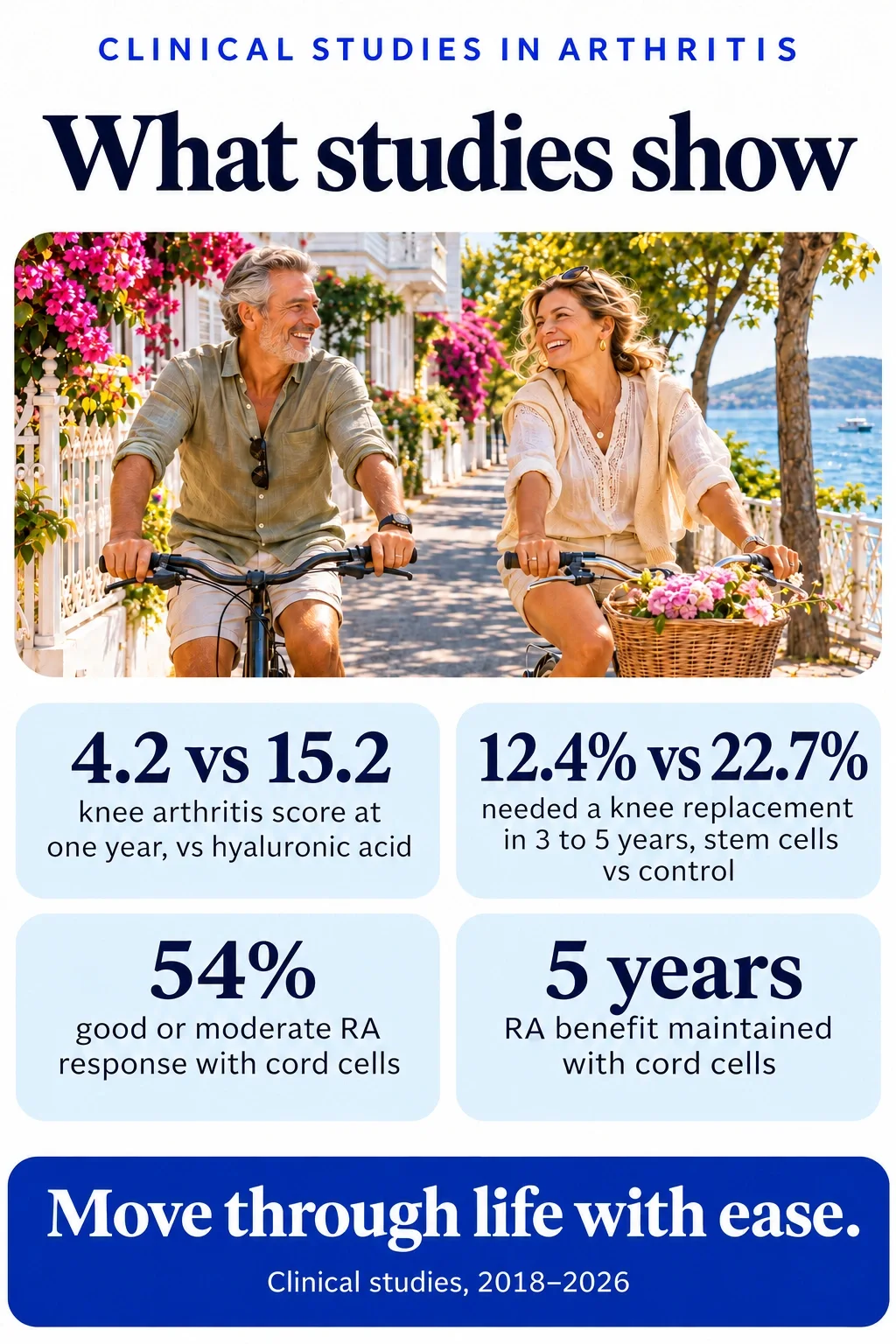
- 4.2 vs 15.2total knee arthritis score at 12 months after two Wharton’s jelly stem cell injections, against hyaluronic acid (lower is better)3
- 48 monthsof improved knee pain and function after two Wharton’s jelly stem cell injections25
- 6 vs 20 weeksaverage healing time of foot ulcers with Wharton’s jelly exosomes, against standard care29
- 5 yearsof maintained benefit in rheumatoid arthritis after umbilical cord stem cell infusions5
Young cells, rich signals
When researchers compared the proteins released by stem cells from four sources, the secretome of Wharton’s jelly cells was more diverse than that of fat or bone marrow cells.30
Fresh, never frozen
Our cells are prepared fresh for your treatment date in a GMP-certified laboratory approved by the Turkish Ministry of Health, and never frozen. In laboratory comparisons, fresh MSCs kept stronger immune-calming properties than cells used straight after thawing.31
The right dose
In a dose study of umbilical cord stem cells in knee osteoarthritis, every dose improved pain and function at 3 and 6 months, and the low and medium doses did better than the highest.32 Your exact cell count is stated in writing.
Umbilical cord cells alongside
In 50 people with severe knee osteoarthritis, four injections of umbilical cord stem cells lowered pain from 7.2 to 3.36 on a 10-point scale at 12 months, against 7.0 to 4.6 with hyaluronic acid.22
CD34+ exosomes as an extra
Your plan can also include CD34+ exosomes, from cells known for their role in forming new small blood vessels, given into the joint or by IV.
Why we combine cells and exosomes. Stem cells release their repair signals in a “hit-and-run” way, so the effect continues after the cells themselves have gone, and exosomes deliver a concentrated dose of those signals at once.28 That is why a joint plan can combine Wharton’s jelly stem cells and Wharton’s jelly exosomes, with umbilical cord stem cells and CD34+ exosomes added where they help. See our exosome therapy page for every exosome route.
08
Stem cell therapy for osteoarthritis: joint injections that calm and protect
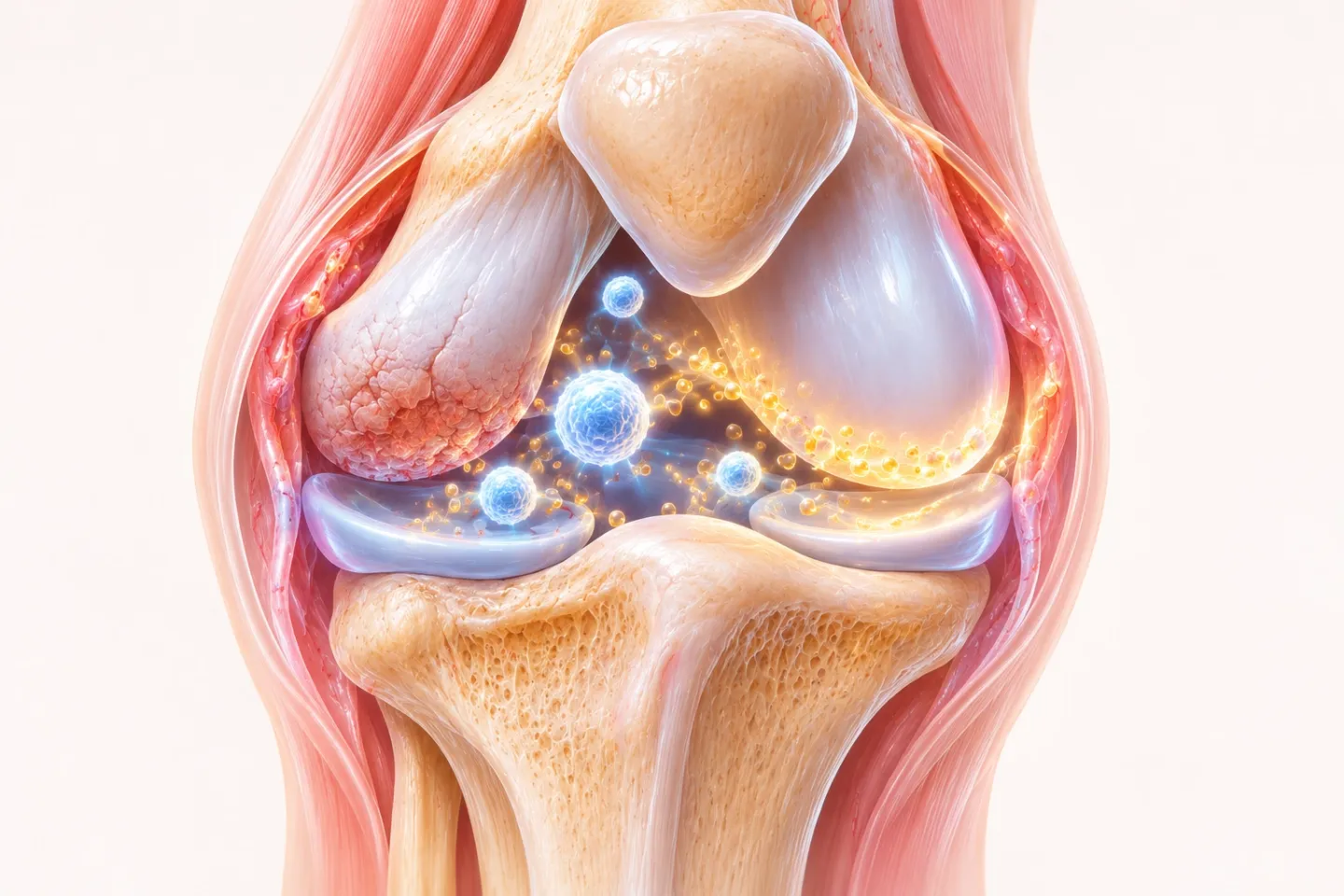
In osteoarthritis, stem cells are injected straight into the painful joint. There they release signals that calm the inflamed joint lining, protect cartilage and ease pain, so the joint can work in a healthier environment.1128
How a stem cell injection works in an osteoarthritic joint
- Into the jointFresh Wharton’s jelly stem cells and exosomes are injected into the knee, hip or other joint.
- Calming signalsAnti-inflammatory messengers and exosomes are released.28
- A protected jointCartilage did not worsen over two years after a stem cell injection, while it gradually worsened with placebo.24
- Easier movementLess pain and better function in randomised trials.1623
Knee osteoarthritis: stem cells vs comparison treatments
Improvement in knee pain after 6 months (0–100 scale), against placebo
Bone marrow oedema resolved after 12 months in severe knees, against hyaluronic acid
What the trials show
- The largest trial. In a 261-patient, double-blind phase III trial, one injection of the patients’ own fat-derived stem cells improved knee pain by 25.2 points against 15.5 with placebo on a 100-point scale at six months, with no serious treatment-related side effects.16
- Fewer knee replacements. In a placebo-controlled trial of 146 people, one injection of donor bone marrow stem cells improved pain, stiffness and function at 6 and 12 months,33 and at two years, cartilage volume had increased in the cell group and 1 person had needed a knee replacement, against 4 with placebo.24
- Severe knees too. In 50 people with grade III to IV knee osteoarthritis, four umbilical cord stem cell injections two weeks apart improved the total knee score by 23.2 points, against 15.6 with hyaluronic acid, with better cartilage repair scores on MRI.22
- Better than hyaluronic acid. A meta-analysis of 10 randomised trials with 818 patients found that stem cell injections improved pain and function more than hyaluronic acid at 12 months, with similar safety.23
- Delaying surgery. A 2026 umbrella review of 30 high-quality studies of moderate knee osteoarthritis found that 12.4% of people treated with stem cells went on to a knee replacement within three to five years, against 22.7% in control groups.34
Hips, shoulders and hands
Stem cell injections into the hip reduced pain by around 30% to 50% in the studies reviewed, with better hip function and only rare, mild side effects.3536 At the base of the thumb, injections of patients’ own fat-derived cells with platelet-rich plasma into 30 thumb joints reduced pain at 6 and 24 months and improved pinch strength.37 We treat hand and thumb joints too. See also stem cell therapy for hip, knee and shoulder osteoarthritis.
More on knees
For the injection itself and how it compares with PRP, read about the stem cell knee injection. If your knee pain started with a twist or a tear, see stem cell therapy for a torn meniscus, and for every stage of knee arthritis, alternatives to knee replacement. Our treatment page is stem cell therapy for arthritis in Istanbul.
09
Stem cell therapy for rheumatoid arthritis: IV infusions alongside your medicine
In rheumatoid arthritis, the problem lies in an immune system that has lost its balance, in many joints at once. That is why most clinical trials gave umbilical cord stem cells by IV infusion, so the cells could reach the immune system throughout the body, alongside the patients’ usual medicines.438
What the trials show
In 172 people with active rheumatoid arthritis, adding umbilical cord stem cell infusions to standard medicines brought significant improvement in disease activity and daily function; a repeat infusion strengthened the effect, and the group on medicines alone showed no such gains.4 Pooling 8 randomised trials with 480 patients, stem cell treatment significantly lowered disease activity at two and three months and lowered rheumatoid factor.39 Other cell sources point the same way: a single IV infusion of umbilical cord blood stem cells lowered disease activity by 1.60 points at four weeks,40 and patients’ own fat-derived stem cells improved swollen and tender joint counts at 52 weeks.41 The table lists the key umbilical cord trials.
More regulatory T cells
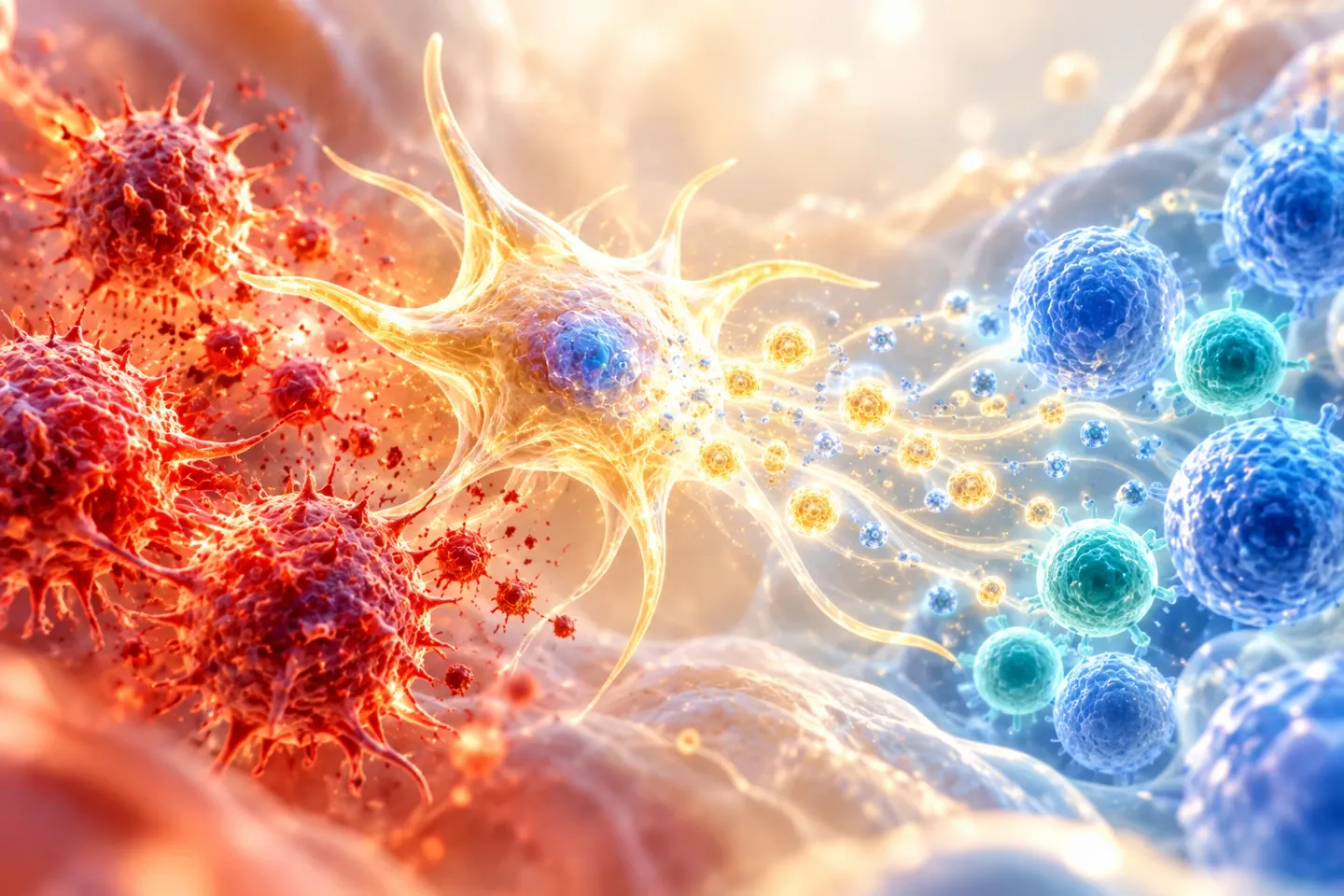
Regulatory T cells keep autoimmunity in check. They rose after umbilical cord stem cell infusions in people with rheumatoid arthritis,4 and the balance between regulatory T cells and inflammatory Th17 cells improved in those who responded.17
Fewer inflammatory messengers
TNF-α and IL-6, two of the main drivers of joint inflammation in rheumatoid arthritis, fell after the first umbilical cord stem cell infusion,4 and the calming messenger IL-10 rose in responders.17
Calmer Th17 cells
After one IV dose of patients’ own bone marrow stem cells, disease activity fell at 1 and 12 months and inflammatory Th17 cells fell over the year.42
| Study | Design and people | Cells and route | What improved |
|---|---|---|---|
| Wang 2013, Stem Cells Dev4 | Controlled cohort; 172 people with active RA | Umbilical cord stem cells by IV, with usual medicines | Disease activity and function; TNF-α and IL-6 lower; regulatory T cells higher |
| Yang 2018, J Transl Med17 | Randomised; 105 people | Umbilical cord stem cells by IV | 54% good or moderate response at 12 weeks; effect lasted 48 weeks |
| He 2020, Ann Rheum Dis43 | Randomised; 63 people | Umbilical cord stem cells by IV | 53.3% reached at least a 20% improvement at 3 months with the cells alone |
| Wang 2019, Drug Des Devel Ther38 | Phase I/II; 64 people | Umbilical cord stem cells by IV, with usual medicines | Disease activity, function, ESR, CRP and RF lower at 1 and 3 years |
| Yang 2025, Stem Cell Res Ther5 | 5-year follow-up of 2 randomised trials; 110 people | Umbilical cord stem cells by IV | Benefit maintained through at least 5 years; no increase in side effects |
Each study used its own cells. Your treatment uses fresh Wharton’s jelly stem cells, with umbilical cord stem cells where the doctor advises, given by IV infusion alongside the medicines your rheumatologist prescribes and, where a particular joint needs extra help, by injection into that joint on the same day. Dr. Cihan Bolat plans the routes with you. For the treatment page, see stem cell therapy for rheumatoid arthritis, and for another autoimmune condition treated with IV stem cells, our lupus guide.
10
Exosomes for arthritis: what they offer in OA and RA
Exosomes carry the stem cells’ signals without the cells themselves. That makes them a natural partner to cell treatment, and they can be injected into the joint or given by IV.
Osteoarthritis: encouraging human results
In 29 people with knee osteoarthritis, six injections of umbilical cord exosomes two weeks apart reduced pain by 38.8 points on a 100-point scale and improved every area of the knee score beyond the threshold patients notice, and two in three knees (66.7%) met the formal responder criteria, with no serious adverse events. Responses were highest in milder knees: 83.3% at grade 2 and 66.7% at grade 3.44 In a randomised, double-blind dose study, umbilical cord exosome injections caused no adverse consequences and improved knee scores and MRI findings compared with before treatment,45 and a first-in-human study of a clinical-grade umbilical cord exosome product found no adverse effects over 12 months.46
How they work in the joint
In laboratory studies, umbilical cord exosomes switched the joint’s immune cells (macrophages) towards a calming, anti-inflammatory state, and in research models of osteoarthritis they helped regenerate smooth cartilage.46
Rheumatoid arthritis: promising research
For rheumatoid arthritis, the exosome evidence comes mainly from laboratory studies. A systematic review of 59 studies found that most used stem cell exosomes and that most reported lower inflammation and better joint function in research models.47 That is why, in rheumatoid arthritis, a plan can pair exosomes with IV stem cells.
Your plan can include Wharton’s jelly exosomes and CD34+ exosomes, given into the joint or by IV. For every exosome route, see our exosome therapy page.
11
Muse cells and Muse exosomes: an optional add-on
Muse cells, short for multilineage-differentiating stress-enduring cells, are a small group of especially hardy repair cells within the MSC family, discovered in Japan in 2010.48 After an IV infusion they home to damaged tissue, and donor Muse cells have been given without tissue matching or immune-suppressing medicines.49 In research models, IV Muse cells improved recovery after a stroke partly by calming the immune system,50 and in laboratory tests they formed cartilage-like cell clusters more readily than other MSCs.51 Muse exosomes carry the cells’ signals in cell-free form.52
If Dr. Cihan Bolat recommends it, Muse cells and Muse exosomes can be added by IV infusion, alongside your Wharton’s jelly stem cells and exosomes, which remain the core of your plan and the treatment that goes into the joint.
12
Your plan in Istanbul: routes for OA and for RA, and your results timeline
Every plan starts with your joints, your diagnosis and your goals. Dr. Cihan Bolat, our medical director and a specialist in anaesthesiology and reanimation and in regenerative medicine, reviews with his team your X-rays, MRI, blood tests and medicines, then plans the routes and your comfort.
Results tend to be strongest when some cartilage is still present, so it is worth acting early.44
The routes, chosen for your arthritis
- Into the joint for OAWharton’s jelly stem cells and exosomes injected into the knee, hip or other affected joint, the route used in the knee trials.316
- IV infusion for RAStem cells and exosomes by drip, the route used in most rheumatoid arthritis trials.45
- Both, where neededAn IV infusion with injections into the most painful joints, as Dr. Cihan Bolat plans.
Fresh cells, checked first
Fresh Wharton’s jelly stem cells, never frozen, from a GMP-certified laboratory approved by the Turkish Ministry of Health, with cell count and viability checked before every treatment.
Your cell count in writing
Your exact cell count is stated in your written plan, together with the exosomes and the routes.
One treatment day
Your treatment takes one day in Istanbul, and you walk out the same day.
A second dose, if planned
A second dose may be part of your plan: in the Wharton’s jelly knee trial, a second dose at six months gave the best results,3 and across 16 trials repeat doses did better than single ones.53
Comfort first
Dr. Cihan Bolat, a specialist in anaesthesiology and reanimation, plans your comfort for every step.
Tendons and ligaments too
Tendons, ligaments and muscles around the joint are also routes, if they add to your pain.
- 4 to 12 weeksRA calmsDisease activity fell in trials
- 3 monthsOA pain easesPain and function improve
- 6 monthsClear gainsMeasured in randomised trials
- 12 monthsGains holdA second dose, if planned
- 2 to 5 yearsLasting benefitMeasured in long-term studies
In trials, rheumatoid arthritis disease activity fell within four to twelve weeks,4017 and knee osteoarthritis pain and function improved from three months,32 with clear gains at six months16 that continued at 12 months.3 Long-term studies measured benefit at two years in osteoarthritis and through five years in rheumatoid arthritis.245 We review your progress at about 1, 3, 6 and 12 months.
13
Is stem cell therapy for arthritis safe?
Safety comes first, and the published record is reassuring. A 2021 meta-analysis of 62 randomised trials with 3,546 patients found MSC treatment safe, the most common effect a passing fever.10 Across 36 randomised trials in four types of arthritis, including osteoarthritis and rheumatoid arthritis, stem cell treatment did not increase adverse events.54
The joint studies point the same way. In the phase III knee trial there were no serious treatment-related side effects,16 in the 146-patient trial the only related effects were swelling or soreness at the injection site that settled within a few days,33 and across six Wharton’s jelly studies there were no serious adverse effects.6 In rheumatoid arthritis, routine blood, liver and kidney tests stayed normal three years after umbilical cord stem cells,38 and over five years of follow-up there was no increase in side effects.5
Your own care adds further layers: cells from a Ministry of Health-approved GMP laboratory with certified count and viability, injections under sterile conditions, careful screening beforehand and a specialist team to treat you.
14
Why patients travel to Istanbul, Turkey for stem cell therapy for OA and RA
People come to us with osteoarthritis and rheumatoid arthritis from the UK, Germany, the Netherlands, across Europe, the Middle East and the Gulf, the USA and beyond. Many already have excellent care at home. What they look for in Istanbul is the regenerative layer: fresh Wharton’s jelly stem cells and exosomes, planned by a specialist team and given in one treatment day.

A specialist-led plan
A free medical review and phone consultation with the specialist team led by Uzm. Dr. Cihan Bolat, and a written plan before you book.
A fixed price before you travel
One all-inclusive price in writing, so you can decide calmly at home.
One treatment day
Most plans take one treatment day in Istanbul, with no second trip needed unless a second dose is part of your plan.
Help at every step
Help with the hotel, ground transport and translation, and a personal case manager who plans your stay with you.
Easy to reach
Istanbul has two international airports. Many European cities have direct flights, and from much of Western Europe the journey takes around three to four hours.
Follow-up from home
Reviews at about 1, 3, 6 and 12 months, so your care continues after you fly home.
Planning your stay around your joints
Istanbul is a city of hills and stairs, so plan a calm day after treatment, use taxis for longer trips and save the steeper streets for later in your stay. Our clinic is in Suadiye, a calm residential district on Istanbul’s Asian side near the Marmara seafront, where a flat, gentle walk along the shore is a lovely way to keep your joints moving.
15
Your treatment in Istanbul, step by step
From your first message to follow-up at home, every step is planned with you in advance, whether you are travelling from London, Berlin, Amsterdam, Dubai or New York. For the fuller story, read the stem cell treatment in Turkey, step by step, or request your free consultation now.
Send us your results
Tell us which joints hurt and which medicines you use, and send your recent X-rays, MRI or blood tests through our free consultation request, or by WhatsApp on +90 534 856 92 92.
Free medical review and phone call
Dr. Cihan Bolat and his specialist team review your case free of charge and talk it through with you.
Your written plan and fixed price
If treatment is a good fit, you receive a written plan with the cell count, the exosomes and the routes, and a fixed, all-inclusive price before you travel.
One treatment day in Istanbul
Fresh stem cells and exosomes are prepared for your date. Our team welcomes you, gives your joint injections and any IV infusion in one treatment day, and you walk out the same day.
Home and follow-up
Back home, you keep moving and continue your usual medicines as advised, and we review your progress at about 1, 3, 6 and 12 months and plan a second dose with you if it is part of your plan.
16
How much does stem cell therapy for OA or RA cost in Turkey?
Every plan is personal, so the price depends on the number of joints treated, the number of cells, the exosomes and the routes in your plan, for example joint injections, an IV infusion or both, and whether it includes a second dose. After the free medical review, you receive a fixed, all-inclusive price in writing before you book anything, so there are no surprises.
Included
- Free medical review and phone consultation
- Fresh Wharton’s jelly stem cells with certified count and viability, and umbilical cord stem cells if they are in your plan
- Wharton’s jelly exosomes, and CD34+ exosomes if they are in your plan
- Your joint injections and any IV infusion, by our specialist team in one treatment day
- Ground transport to and from the clinic, and help with translation
- A personal case manager and follow-up reviews
Not included / optional
- Flights
- Hotel stay, which we can help you arrange
- A second dose, if it is part of your plan
Read why patients choose Turkey for stem cell therapy, or see our treatment page for stem cell therapy for arthritis.
17
Frequently asked questions
What is the main difference between osteoarthritis and rheumatoid arthritis?
Osteoarthritis is a wear-and-repair condition of the whole joint that builds slowly, usually in the knees, hips, hands or feet. Rheumatoid arthritis is an autoimmune condition in which the immune system inflames the joint lining, typically in the same small joints on both sides of the body, often with long morning stiffness and tiredness.
How can I tell if my joint pain is OA or RA?
Look at the pattern. Osteoarthritis pain tends to build with use and ease with rest, morning stiffness is brief, and swelling feels hard and bony. Rheumatoid arthritis often brings morning stiffness of an hour or more, soft, warm swelling in the same joints on both sides, and tiredness. A doctor confirms which it is with an examination, blood tests and imaging.
What does OA vs RA look like in the hands?
Hand osteoarthritis usually affects the joints nearest the fingertips, with firm bony bumps called Heberden’s nodes, the middle finger joints and the base of the thumb. Rheumatoid arthritis prefers the knuckles where the fingers meet the hand, the middle finger joints and the wrists, on both hands, with soft, puffy swelling, and it usually leaves the fingertip joints alone.
Which blood tests show rheumatoid arthritis?
The main ones are anti-CCP antibodies and rheumatoid factor (RF), with CRP and ESR to measure inflammation. Anti-CCP is the most specific: in a large analysis, its specificity was 95%. About 40% to 60% of people have these antibodies at diagnosis, so a negative result does not rule rheumatoid arthritis out. There is no blood test for osteoarthritis, and results are usually normal.
Can you have both osteoarthritis and rheumatoid arthritis?
Yes. They are separate conditions, but because osteoarthritis is so common, many people with rheumatoid arthritis also develop it in some joints over the years. A specialist can usually tell which joints are affected by which condition, and one plan can address both, for example IV stem cells for rheumatoid arthritis and a joint injection for an osteoarthritic knee.
Can osteoarthritis turn into rheumatoid arthritis?
No. Osteoarthritis is not autoimmune, although it involves some low-grade inflammation inside the joint, and it does not change into rheumatoid arthritis. If someone with osteoarthritis later develops rheumatoid arthritis, it is a second, separate condition.
Which is worse, OA or RA?
Neither has to define your life. Rheumatoid arthritis can affect the whole body, so it is treated early and actively, and early diagnosis and treatment can stop or substantially slow joint damage in up to 90% of patients. Osteoarthritis usually changes slowly over years, and exercise, weight care and well-planned treatment help most people stay active.
Can arthritis be reversed?
Today’s treatments aim to calm the condition and protect your joints. In rheumatoid arthritis, modern medicines bring about 80% of people to remission or low disease activity. In osteoarthritis, the goal is less pain, better movement and a healthier joint: in a two-year trial, cartilage did not worsen after a stem cell injection while it gradually worsened with placebo.
Can stem cell therapy help rheumatoid arthritis?
In clinical trials, yes. In 172 people with active rheumatoid arthritis, umbilical cord stem cell infusions added to standard medicines improved disease activity and lowered inflammatory messengers, and in long-term follow-up of two randomised trials, the benefit was maintained through at least five years. We use fresh Wharton’s jelly stem cells, with umbilical cord stem cells where the doctor advises.
Can stem cell therapy help osteoarthritis?
Yes. In a 261-patient phase III trial, one stem cell knee injection improved pain by 25.2 points against 15.5 with placebo on a 100-point scale, and in a randomised trial of Wharton’s jelly stem cells, two injections gave a total knee score of 4.2 at 12 months, against 15.2 with hyaluronic acid. Hips and other joints can be treated too.
Is stem cell therapy for rheumatoid arthritis given by IV or into the joint?
Mostly by IV infusion, the route used in most rheumatoid arthritis trials, so the cells can reach the immune system throughout the body. When a particular joint stays painful, stem cells can also be injected into it, on the same day as your IV infusion. Dr. Cihan Bolat plans the routes with you.
Do I need to stop my rheumatoid arthritis medicines?
No. In the clinical trials, stem cells were given alongside the patients’ usual medicines, and that is how we plan treatment too. Keep taking your medicines as your rheumatologist advises, and tell us about them in your free medical review, so Dr. Cihan Bolat can plan your treatment around them.
What are exosomes, and can they help arthritis?
Exosomes are tiny packages of the stem cells’ signals, with no living cells inside. In 29 people with knee osteoarthritis, umbilical cord exosome injections reduced pain by 38.8 points on a 100-point scale, and two in three knees responded. In rheumatoid arthritis, a plan can pair exosomes with IV stem cells.
Why do you use Wharton’s jelly stem cells?
Wharton’s jelly, the soft tissue of donated umbilical cords, gives young cells with strong immune-calming properties, with no donor matching and no harvest from your body. In a randomised knee trial, two Wharton’s jelly stem cell injections did far better than hyaluronic acid. Our cells are prepared fresh and never frozen.
Is stem cell therapy for arthritis safe?
The published record is reassuring. A meta-analysis of 62 randomised trials with 3,546 patients found MSC treatment safe, the most common effect a passing fever. In knee trials, the main effects were short-lived swelling or soreness at the injection site, and people with rheumatoid arthritis followed for five years had no increase in side effects over time.
How much does stem cell therapy for osteoarthritis or rheumatoid arthritis cost in Turkey?
The price depends on the number of joints, the number of cells, the exosomes and the routes in your plan, and whether it includes a second dose. After a free medical review, you receive a fixed, all-inclusive price in writing before you travel, covering the treatment, the fresh cells, transport to and from the clinic, a personal case manager and follow-up reviews.
Can I have stem cell treatment in Istanbul if I live abroad?
Yes. Many of our patients travel from the UK, Europe, the Gulf and further afield. You send your X-rays, MRI and blood tests from home, receive a free review and a written plan with a fixed price, and your treatment takes one day in Istanbul. You can reach us by WhatsApp on +90 534 856 92 92.
Medical review
Uzm. Dr. Cihan Bolat
Medical Director, Istanbul Stemcell
This page was written from the published studies listed below and reviewed for medical accuracy on .
18
References
- Katz JN, Arant KR, Loeser RF. Diagnosis and Treatment of Hip and Knee Osteoarthritis: A Review. JAMA. 2021;325(6):568-578. PMID 33560326
- Smolen JS, et al. Rheumatoid Arthritis in Adults: A Review. JAMA. 2026;336(14):1257-1271. PMID 42720931
- Matas J, et al. Umbilical Cord-Derived Mesenchymal Stromal Cells (MSCs) for Knee Osteoarthritis: Repeated MSC Dosing Is Superior to a Single MSC Dose and to Hyaluronic Acid in a Controlled Randomized Phase I/II Trial. Stem Cells Transl Med. 2019;8(3):215-224. PMID 30592390
- Wang L, et al. Human umbilical cord mesenchymal stem cell therapy for patients with active rheumatoid arthritis: safety and efficacy. Stem Cells Dev. 2013;22(24):3192-202. PMID 23941289
- Yang Y, et al. Mesenchymal stem cells combined with IFN-γ treatment versus mesenchymal stem cells monotherapy: safety and efficacy over five years extension follow-up. Stem Cell Res Ther. 2025;16(1):642. PMID 41250139
- Ishak-Samrin M, et al. Treatment of Knee Osteoarthritis and Chondral Injury with Umbilical Cord/Wharton's Jelly-Derived Mesenchymal Stem Cells: A Systematic Review of Safety and Efficacy. J Funct Biomater. 2025;16(3). PMID 40137363
- Arnett FC, et al. The American Rheumatism Association 1987 revised criteria for the classification of rheumatoid arthritis. Arthritis Rheum. 1988;31(3):315-24. PMID 3358796
- Nishimura K, et al. Meta-analysis: diagnostic accuracy of anti-cyclic citrullinated peptide antibody and rheumatoid factor for rheumatoid arthritis. Ann Intern Med. 2007;146(11):797-808. PMID 17548411
- Fransen M, et al. Exercise for osteoarthritis of the knee. Cochrane Database Syst Rev. 2015;1(1):CD004376. PMID 25569281
- Wang Y, Yi H, Song Y. The safety of MSC therapy over the past 15 years: a meta-analysis. Stem Cell Res Ther. 2021;12(1):545. PMID 34663461
- Kwon DG, et al. State of the Art: The Immunomodulatory Role of MSCs for Osteoarthritis. Int J Mol Sci. 2022;23(3). PMID 35163541
- . Global, regional, and national burden of osteoarthritis, 1990-2020 and projections to 2050: a systematic analysis for the Global Burden of Disease Study 2021. Lancet Rheumatol. 2023;5(9):e508-e522. PMID 37675071
- . Global, regional, and national burden of rheumatoid arthritis, 1990-2020, and projections to 2050: a systematic analysis of the Global Burden of Disease Study 2021. Lancet Rheumatol. 2023;5(10):e594-e610. PMID 37795020
- Zhang W, et al. EULAR evidence-based recommendations for the diagnosis of hand osteoarthritis: report of a task force of ESCISIT. Ann Rheum Dis. 2009;68(1):8-17. PMID 18250111
- Zhang W, et al. EULAR evidence-based recommendations for the diagnosis of knee osteoarthritis. Ann Rheum Dis. 2010;69(3):483-9. PMID 19762361
- Kim KI, et al. Clinical Efficacy and Safety of the Intra-articular Injection of Autologous Adipose-Derived Mesenchymal Stem Cells for Knee Osteoarthritis: A Phase III, Randomized, Double-Blind, Placebo-Controlled Trial. Am J Sports Med. 2023;51(9):2243-2253. PMID 37345256
- Yang Y, et al. Serum IFN-γ levels predict the therapeutic effect of mesenchymal stem cell transplantation in active rheumatoid arthritis. J Transl Med. 2018;16(1):165. PMID 29903026
- Aletaha D, Smolen JS. Diagnosis and Management of Rheumatoid Arthritis: A Review. JAMA. 2018;320(13):1360-1372. PMID 30285183
- Messier SP, et al. Weight loss reduces knee-joint loads in overweight and obese older adults with knee osteoarthritis. Arthritis Rheum. 2005;52(7):2026-32. PMID 15986358
- Aga AB, et al. Time trends in disease activity, response and remission rates in rheumatoid arthritis during the past decade: results from the NOR-DMARD study 2000-2010. Ann Rheum Dis. 2015;74(2):381-8. PMID 24285493
- England BR, et al. 2022 American College of Rheumatology Guideline for Exercise, Rehabilitation, Diet, and Additional Integrative Interventions for Rheumatoid Arthritis. Arthritis Rheumatol. 2023;75(8):1299-1311. PMID 37227071
- Chen C, et al. Multiple intra-articular injections of umbilical cord mesenchymal stem cells in treating severe knee osteoarthritis: a triple-blind randomized controlled trial. Stem Cell Res Ther. 2026;17(1). PMID 42972476
- Jin WS, et al. Mesenchymal Stem Cells Injection Is More Effective Than Hyaluronic Acid Injection in the Treatment of Knee Osteoarthritis With Similar Safety: A Systematic Review and Meta-analysis. Arthroscopy. 2025;41(2):318-332. PMID 39154667
- Gupta PK, et al. Two years efficacy and safety outcomes of using allogeneic, pooled mesenchymal stromal cells for osteoarthritis of knee in a double-blind randomized placebo-controlled phase 3 study. Osteoarthr Cartil Open. 2026;8(1):100723. PMID 41536418
- Samara O, et al. Ultrasound-guided intra-articular injection of expanded umbilical cord mesenchymal stem cells in knee osteoarthritis: a safety/efficacy study with MRI data. Regen Med. 2022;17(5):299-312. PMID 35546314
- Weiss ML, et al. Immune properties of human umbilical cord Wharton's jelly-derived cells. Stem Cells. 2008;26(11):2865-74. PMID 18703664
- Kannan S, et al. Characteristics of Pooled Wharton's Jelly Mesenchymal Stromal Cells (WJ-MSCs) and their Potential Role in Rheumatoid Arthritis Treatment. Stem Cell Rev Rep. 2022;18(5):1851-1864. PMID 35113368
- Mancuso P, et al. Mesenchymal Stem Cell Therapy for Osteoarthritis: The Critical Role of the Cell Secretome. Front Bioeng Biotechnol. 2019;7:9. PMID 30761298
- Kishta MS, et al. The transforming role of wharton's jelly mesenchymal stem cell-derived exosomes for diabetic foot ulcer healing: a randomized controlled clinical trial. Stem Cell Res Ther. 2025;16(1):559. PMID 41084065
- Shin S, et al. Comparative Proteomic Analysis of the Mesenchymal Stem Cells Secretome from Adipose, Bone Marrow, Placenta and Wharton's Jelly. Int J Mol Sci. 2021;22(2). PMID 33467726
- Moll G, et al. Do cryopreserved mesenchymal stromal cells display impaired immunomodulatory and therapeutic properties? Stem Cells. 2014;32(9):2430-42. PMID 24805247
- Matas J, et al. A Phase I Dose-Escalation Clinical Trial to Assess the Safety and Efficacy of Umbilical Cord-Derived Mesenchymal Stromal Cells in Knee Osteoarthritis. Stem Cells Transl Med. 2024;13(3):193-203. PMID 38366909
- Gupta PK, et al. Efficacy and Safety of Stempeucel in Osteoarthritis of the Knee: A Phase 3 Randomized, Double-Blind, Multicenter, Placebo-Controlled Study. Am J Sports Med. 2023;51(9):2254-2266. PMID 37366164
- Angthong C, et al. Total Knee Arthroplasty versus Mesenchymal Stem Cell Therapy for Moderate Knee Osteoarthritis: An Umbrella Analysis of Clinical Outcomes, Quality of Life, and Safety. Ortop Traumatol Rehabil. 2026;28(1):15-22. PMID 42259358
- E Reali G, Araujo Fernandes D, Campos Martins E. Outcomes Following Stem Cell-Based Therapies for Hip Osteoarthritis: A Scoping Review. Cureus. 2025;17(11):e96419. PMID 41376753
- Giorgino R, et al. Management of hip osteoarthritis: harnessing the potential of mesenchymal stem cells-a systematic review. Eur J Orthop Surg Traumatol. 2024;34(8):3847-3857. PMID 39254726
- Pumberger P, et al. The Use of Stromal Vascular Fraction, Platelet-rich Plasma, and Stem Cells in the Treatment of Thumb Carpometacarpal Osteoarthritis. Plast Reconstr Surg Glob Open. 2025;13(2):e6481. PMID 40027470
- Wang L, et al. Efficacy and Safety of Umbilical Cord Mesenchymal Stem Cell Therapy for Rheumatoid Arthritis Patients: A Prospective Phase I/II Study. Drug Des Devel Ther. 2019;13:4331-4340. PMID 31908418
- Nie DQ, et al. Combination treatment with interferon-γ may be a potential strategy to improve the efficacy of cytotherapy for rheumatoid arthritis: A network meta-analysis. J Res Med Sci. 2024;29:29. PMID 39239074
- Park EH, et al. Intravenous Infusion of Umbilical Cord Blood-Derived Mesenchymal Stem Cells in Rheumatoid Arthritis: A Phase Ia Clinical Trial. Stem Cells Transl Med. 2018;7(9):636-642. PMID 30112846
- Vij R, et al. Safety and efficacy of autologous, adipose-derived mesenchymal stem cells in patients with rheumatoid arthritis: a phase I/IIa, open-label, non-randomized pilot trial. Stem Cell Res Ther. 2022;13(1):88. PMID 35241141
- Ghoryani M, et al. Amelioration of clinical symptoms of patients with refractory rheumatoid arthritis following treatment with autologous bone marrow-derived mesenchymal stem cells: A successful clinical trial in Iran. Biomed Pharmacother. 2019;109:1834-1840. PMID 30551438
- He X, et al. Combination of human umbilical cord mesenchymal stem (stromal) cell transplantation with IFN-γ treatment synergistically improves the clinical outcomes of patients with rheumatoid arthritis. Ann Rheum Dis. 2020;79(10):1298-1304. PMID 32561603
- Yokota N, Kambayashi T, Tanabe Y. Safety and Efficacy of Intra-Articular Injection of Umbilical Cord-Derived Extracellular Vesicles in Patients With Knee Osteoarthritis: A Retrospective Study. Orthopedics. 2026;49(4):e351-e358. PMID 42611014
- Wang Y, et al. Injection of human umbilical cord mesenchymal stem cells exosomes for the treatment of knee osteoarthritis: from preclinical to clinical research. J Transl Med. 2025;23(1):641. PMID 40500748
- Figueroa-Valdés AI, et al. Clinical-grade extracellular vesicles derived from umbilical cord mesenchymal stromal cells: preclinical development and first-in-human intra-articular validation as therapeutics for knee osteoarthritis. J Nanobiotechnology. 2025;23(1):13. PMID 39806427
- Miao X, et al. Extracellular vesicles as therapeutic agents in rheumatoid arthritis: a systematic review of current evidence. Inflammopharmacology. 2025;33(3):889-915. PMID 40024954
- Kuroda Y, et al. Unique multipotent cells in adult human mesenchymal cell populations. Proc Natl Acad Sci U S A. 2010;107(19):8639-43. PMID 20421459
- Minatoguchi S, et al. Donor Muse Cell Treatment Without HLA-Matching Tests and Immunosuppressant Treatment. Stem Cells Transl Med. 2024;13(6):532-545. PMID 38560897
- Kato Y, et al. Intravenous administration of muse cells improves cerebral ischemia outcome via immunomodulation in the spleen. J Cereb Blood Flow Metab. 2025;45(3):542-557. PMID 39397400
- Watanabe S, et al. Investigating the Potential of Multilineage Differentiating Stress-Enduring Cells for Osteochondral Healing. Cartilage. 2026;17(2):207-219. PMID 38887038
- Rajabi A, Bonyadi M. Muse Cell-Derived Exosomes: a Hypothesis for a Cell-Free Therapeutic Platform in Regenerative Medicine. Stem Cell Rev Rep. 2025;21(6):1860-1862. PMID 40531406
- Deng L, et al. Efficacy and safety of single versus repeated injections of mesenchymal stem cells for the treatment of knee osteoarthritis: a systematic review and network meta-analysis of randomized controlled trials. Stem Cell Res Ther. 2025;16(1):505. PMID 41013772
- Zeng L, et al. Efficacy and safety of culture-expanded mesenchymal stromal cell therapy in the treatment of 4 types of inflammatory arthritis: A systematic review and meta-analysis of 36 randomized controlled trials. Semin Arthritis Rheum. 2024;68:152498. PMID 38970896