
01
Does stem cell therapy work for cerebral palsy?
Yes, for many children. In randomised trials, children with cerebral palsy who received umbilical cord stem cells together with their rehabilitation gained more gross motor skills, more independence in daily activities and softer muscles than children who had rehabilitation alone.123 Meta-analyses that pool these trials confirm the gains in motor function at 3, 6 and 12 months.8910
Spastic cerebral palsy
Spastic CP, with stiff, tight muscles, is the most common type and the one studied most. In children aged 4 to 14 with spastic CP, one intrathecal dose of Wharton’s jelly stem cells improved motor function and lowered muscle stiffness over 12 months.1 With bone-marrow stem cells given into the spinal fluid, children with spastic CP also improved in fine motor skills, the small movements of the hands and fingers.11
Dystonic and mixed cerebral palsy
In Istanbul, a 6-year-old with dystonic-spastic CP improved on functional scales over 18 months after umbilical cord stem cells given intrathecally and by IV, together with intensive rehabilitation.12
Mild to severe cerebral palsy
Benefits are not limited to children with mild CP. In a study of 152 children, motor scores improved at every level of the Gross Motor Function Classification System (GMFCS),13 and in 57 children with severe CP (GMFCS IV and V), Wharton’s jelly stem cells improved both gross and fine motor function.14 In another study, the gains were similar regardless of age, sex or severity.15
CP after lack of oxygen at birth
Brain injury from lack of oxygen around birth (hypoxic-ischaemic encephalopathy) is a common cause of CP. In Istanbul, children with this kind of injury became significantly more independent over 12 months after Wharton’s jelly stem cells given by three routes.16
Results at a glance
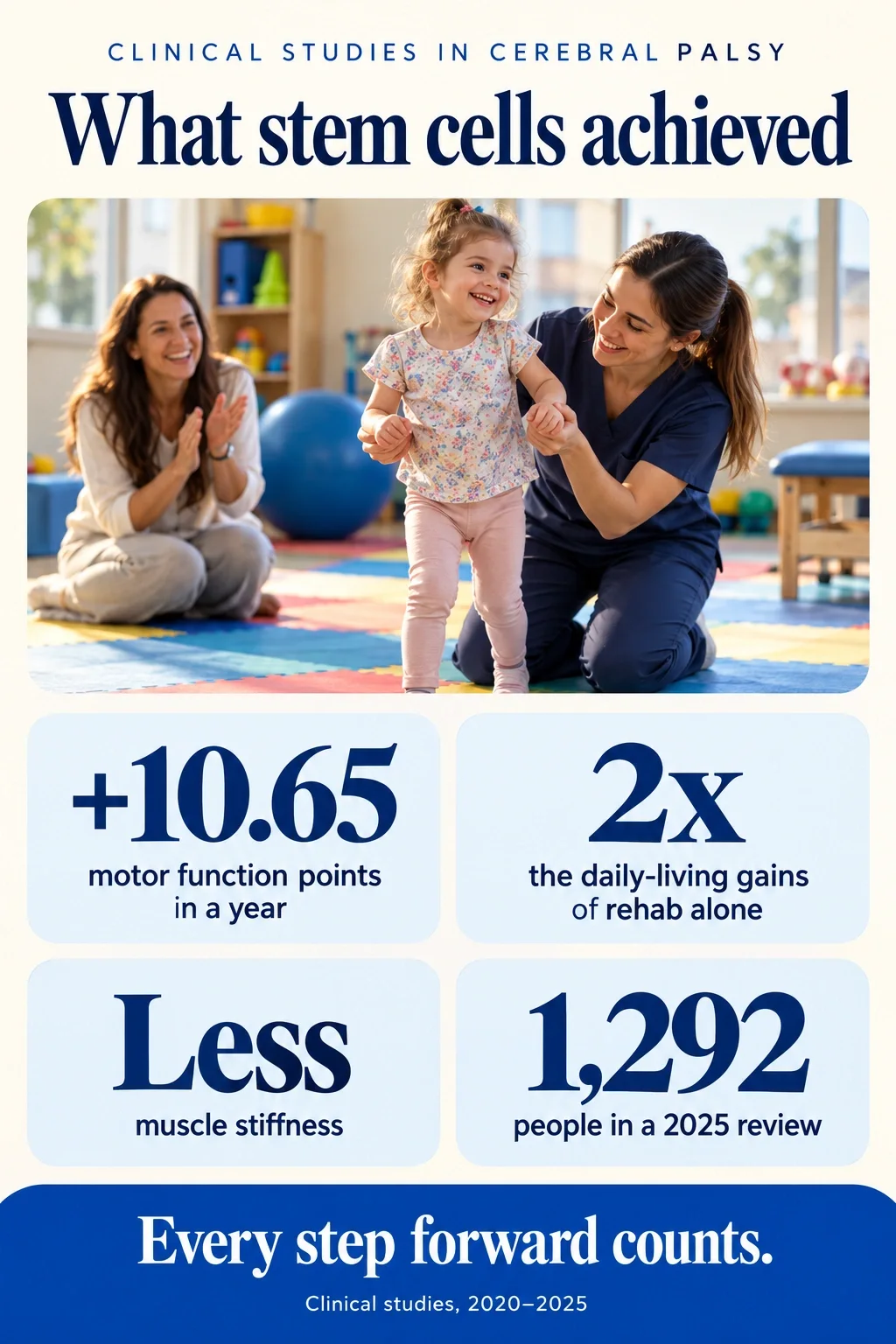
- +10.65points on the GMFM-66 motor scale a year after one intrathecal dose of Wharton’s jelly stem cells1
- 2×the gain in daily-living skills at six months with IV stem cells plus rehabilitation, compared with rehabilitation alone2
- 2 yearsmotor and overall function still ahead of rehabilitation alone after IV stem cells3
- 1,292people with CP in a 2025 review that found stem cells safe and effective for motor function8
02
How stem cells and exosomes work in cerebral palsy
Cerebral palsy is caused by an injury to the developing brain before, during or soon after birth. It often affects the white matter, the bundles of nerve fibres that carry movement signals from the brain to the muscles. Research shows that inflammation linked to this injury can persist for years, even into adulthood,1718 and in the spinal fluid of children with CP, researchers found raised levels of eight inflammatory messengers.19
Mesenchymal stem cells do not work by turning into new brain cells. They act as a source of repair signals: growth factors, immune-calming messengers and exosomes that help the brain’s own cells protect themselves, connect and recover.56 Six effects explain the results seen in studies.
How stem cell therapy works in cerebral palsy
- Fresh stem cells and exosomesInto the spinal fluid and the bloodstream, with exosomes by drip and nasal spray.
- Repair signalsIn research models, the cells reach the injured area within 24 hours and release growth factors.2021
- A calmer, better-connected brainLess brain inflammation on PET and healthier white matter on MRI in trials.41
- More movement and independenceBetter motor skills, muscle tone and daily-living skills in randomised trials.12
How stem cells and exosomes support the brain in cerebral palsy
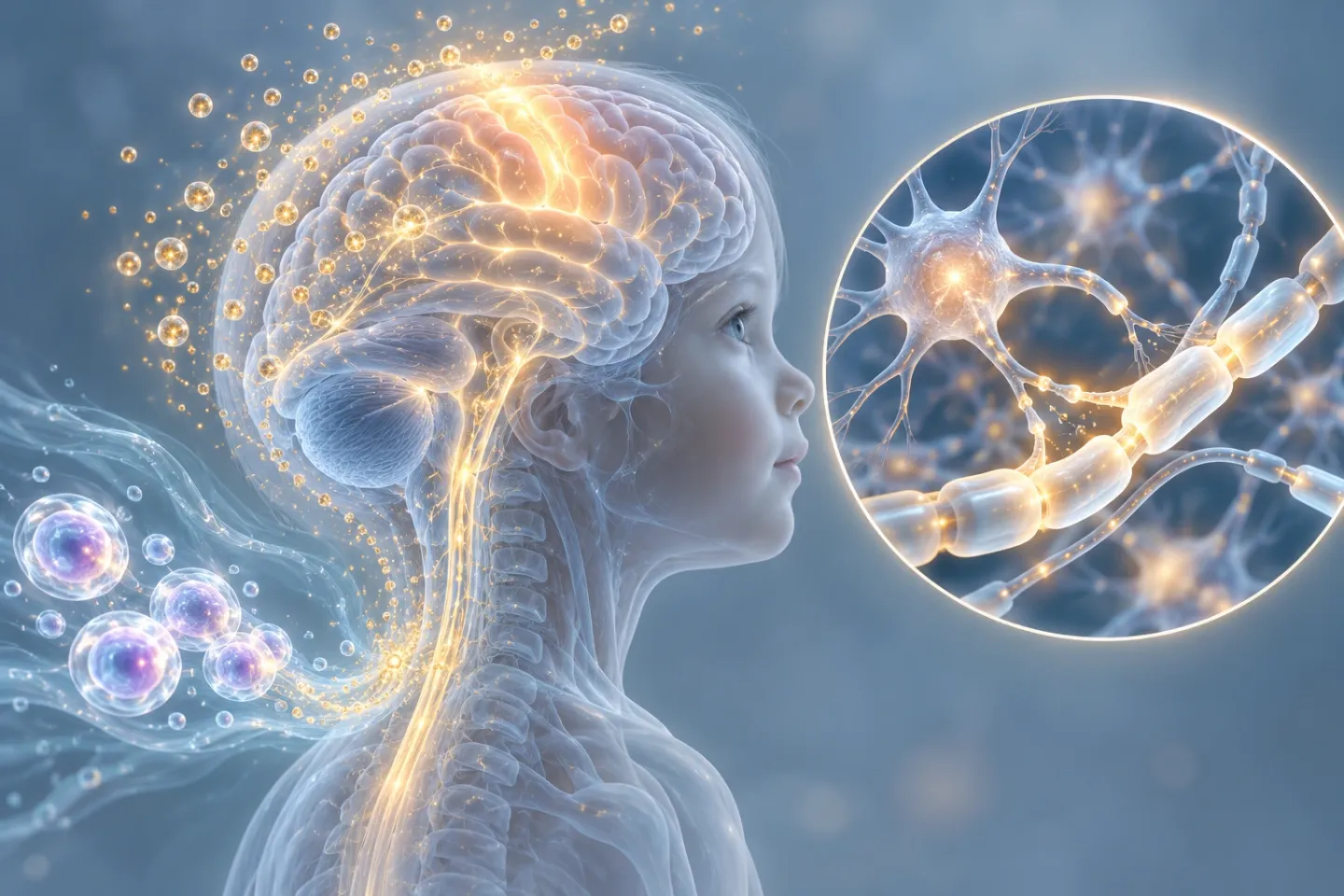
- Stem cellsGiven into the spinal fluid and the bloodstream, they travel towards the brain and release repair signals.
- ExosomesTiny vesicles carry proteins and RNA messages that calm inflammation and support nerve cells.
- Movement areasThe parts of the brain that plan and control movement, which your child’s rehabilitation trains.
- Nerve connectionsStem cell signals support myelin, the insulation of nerve fibres, and new connections between nerve cells.
Calming inflammation in the brain
PET scans showed less inflammation around the brain’s ventricles in patients treated with cord blood cells than with placebo.4 In research models, Wharton’s jelly stem cell exosomes calmed microglia, the brain’s over-active immune cells.22
Protecting the brain’s wiring
After one intrathecal dose of Wharton’s jelly stem cells, MRI showed healthier white matter in the corticospinal tract, the main pathway for movement, while children’s motor scores rose.1 In research models, stem cell exosomes restored myelin, the insulation around nerve fibres.723
Helping myelin-making cells mature
Myelin is made by cells called oligodendrocytes. In laboratory studies, Wharton’s jelly stem cell exosomes helped immature oligodendrocytes mature,24 and in research models of birth-related brain injury, stem cells increased the number of new oligodendrocytes and neurons.6
Growth factors that answer the injury
In laboratory studies, stem cells exposed to injured brain tissue released more growth factors, such as FGF2 and nerve growth factor,21 and their exosomes passed RNA messages into nerve cells and protected them from cell death after lack of oxygen.25
More active brain metabolism
After four IV infusions of Wharton’s jelly stem cells, PET scans showed brain glucose use more than 50% higher in all brain regions in 3 of the 5 children scanned.2 In a placebo-controlled cord blood trial, motor gains went hand in hand with changes in the white matter, and PET scans showed changes in brain metabolism.26
Energy for stressed brain cells
Stem cells can hand healthy mitochondria, the cell’s energy units, to stressed cells.2728 In laboratory studies, they passed mitochondria to brain support cells damaged by lack of oxygen, restoring their energy production.29
Exosomes: the stem cells’ messages
Exosomes are tiny packages released by stem cells that carry proteins and RNA messages from one cell to another.30 In research models of brain injury around birth, Wharton’s jelly exosomes sprayed into the nose reached the front of the brain within 30 minutes and the whole brain within 3 hours, restored myelination and improved learning.7 In Istanbul, Wharton’s jelly stem cell exosomes given into the spinal fluid and muscles were used in adults with traumatic brain injury, whose motor and thinking scores improved over one year.31
Learn more about how our exosome therapy works.
03
Stem cell therapy for cerebral palsy: success rates and clinical evidence
Clinical trials in cerebral palsy measure gross motor function with the GMFM (Gross Motor Function Measure: lying and rolling, sitting, crawling, standing and walking), muscle stiffness with the modified Ashworth scale, and everyday life with scales of self-care, communication and independence. In randomised trials, children treated with stem cells and rehabilitation improved more on these measures than children who had rehabilitation alone:
| Study | Design | What improved |
|---|---|---|
| Amanat 2021, Stem Cell Res Ther1 | Double-blind, sham-controlled; 72 children aged 4–14; one intrathecal dose of Wharton’s jelly stem cells | GMFM-66 +10.65 points at 12 months (8.07 more than sham); muscle stiffness −1.0 point; better daily function and quality of life; healthier white matter on MRI |
| Gu 2020, Stem Cell Res Ther2 | Double-blind, placebo-controlled; 39 children aged 2–12; four IV infusions of Wharton’s jelly stem cells with rehabilitation | Daily-living skills +21.1 vs +10.1 points at 6 months; better gross motor function at 6 and 12 months and better overall function |
| Huang 2018, Cell Transplant3 | Placebo-controlled; 54 children aged 3–12; four IV infusions of cord blood MSCs with rehabilitation | GMFM-88 +12.66% vs +4.81% and overall function +25.0 vs +10.6 points at 24 months |
| Min 2013, Stem Cells26 | Double-blind, placebo-controlled; 96 children; cord blood with erythropoietin and rehabilitation | Better gross motor performance and higher mental and motor development scores at 6 months |
| Kang 2015, Stem Cells Dev4 | Double-blind, placebo-controlled; 36 patients aged 6 months to 20 years; cord blood | More muscle strength at 1 and 3 months; gross motor performance +8.54 vs +2.60 at 6 months; less brain inflammation on PET |
| Liu 2017, J Transl Med11 | Randomised; 105 children with spastic CP; four intrathecal injections of bone-marrow stem cells | Gross and fine motor function better than rehabilitation alone at 3, 6 and 12 months |
Gross motor skills: sitting, standing and walking
In the Wharton’s jelly trial, children’s GMFM-66 scores rose by 10.65 points in 12 months, 8.07 points more than with a sham procedure.1 With IV cord blood MSCs and rehabilitation, GMFM-88 scores rose by 12.66% over two years, against 4.81% with rehabilitation alone, with gains in all five areas from lying to walking.3 In 152 children treated with umbilical cord stem cells, the distance walked in six minutes rose by a median of 75 metres, and the timed up-and-go test was 2 seconds faster.13
Muscle tone and spasticity
Muscle stiffness on the modified Ashworth scale fell by 1.0 point a year after intrathecal Wharton’s jelly stem cells, more than with sham treatment,1 and by 0.87 points with intrathecal matched cord blood cells.32 In Istanbul, children who could not stand or walk without support had significantly less spasticity on both sides at 2, 4 and 12 months after umbilical cord stem cells given by three routes.33
Hand use and fine motor skills
In 105 children with spastic CP, stem cells given into the spinal fluid improved fine motor function, such as grasping and hand control, more than rehabilitation alone at 3, 6 and 12 months.11 In 57 children with severe CP, Wharton’s jelly stem cells improved fine as well as gross motor function, and a second course improved both further.14 In the Istanbul study, hand-use levels on the Manual Ability Classification System improved significantly at 12 months.33
Daily activities and independence
Children who received four IV infusions of Wharton’s jelly stem cells with rehabilitation gained 21.1 points in daily-living skills, such as feeding, dressing and moving around, at six months, against 10.1 points with rehabilitation alone.2 After intrathecal Wharton’s jelly stem cells, scores on the Pediatric Evaluation of Disability Inventory rose by 8.53 points,1 and after IV Wharton’s jelly stem cells, 48 of 54 children (88.9%) gained in quality of life.34
Understanding, communication and learning
In a placebo-controlled trial of 96 children, cord blood cells with rehabilitation raised mental development scores, with differences from the first month, and improved social cognition.26 Overall function scores, which cover understanding, language, self-care, movement and social skills, rose by 25.0 points over two years with stem cells, against 10.6 points with rehabilitation alone.3 Parents of children treated with intrathecal Wharton’s jelly stem cells rated their children’s quality of life higher for friends and family, taking part in activities and communication.1
The overall picture
A 2025 review of 40 studies and registered trials, covering 1,292 people with CP, found mesenchymal stem cells safe and linked to significant motor gains at 3, 6 and 12 months; most participants received umbilical cord tissue stem cells, intrathecally or by IV.8 A meta-analysis of randomised trials found significant gains in gross motor and overall function,9 another found the largest gains with umbilical cord stem cells and with intrathecal delivery,10 and a 2025 analysis of individual data from 11 cord blood studies confirmed better motor function at 6 and 12 months, with larger gains at higher doses.35 A 2020 overview of all CP treatments listed umbilical cord blood cell therapy among the effective medical interventions.36
04
Beyond physiotherapy and medicines: where stem cells differ
Today’s standard care for cerebral palsy works, and it remains the foundation: physiotherapy and goal-directed training, occupational therapy, botulinum toxin injections, medicines such as baclofen and diazepam, casting and, for some children, surgery such as selective dorsal rhizotomy.36 These treatments train skills, relax tight muscles and protect the joints.
What stem cells add
Stem cell therapy works on a different level: the biology of the brain itself. Its signals are designed to calm the inflammation that can persist after the original injury, support the white matter that carries movement signals and boost the brain’s own repair processes.1741 In trials, this showed up as better motor skills, less stiffness and more independence on top of what rehabilitation alone achieved.23
Stem cells and rehabilitation work together
The leading randomised trials gave stem cells together with rehabilitation, and that is how the best results were reached. In the Wharton’s jelly trials, children continued Bobath-based physiotherapy, in one trial twice a day, six days a week, during the treatment period.12 In a cord blood trial, children had intensive physical and occupational therapy as well.26 The cells’ signals support the brain, and therapy turns that support into new skills: keep your child’s therapy programme going, and we plan the treatment around it.
From injured nerve fibres to stronger connections
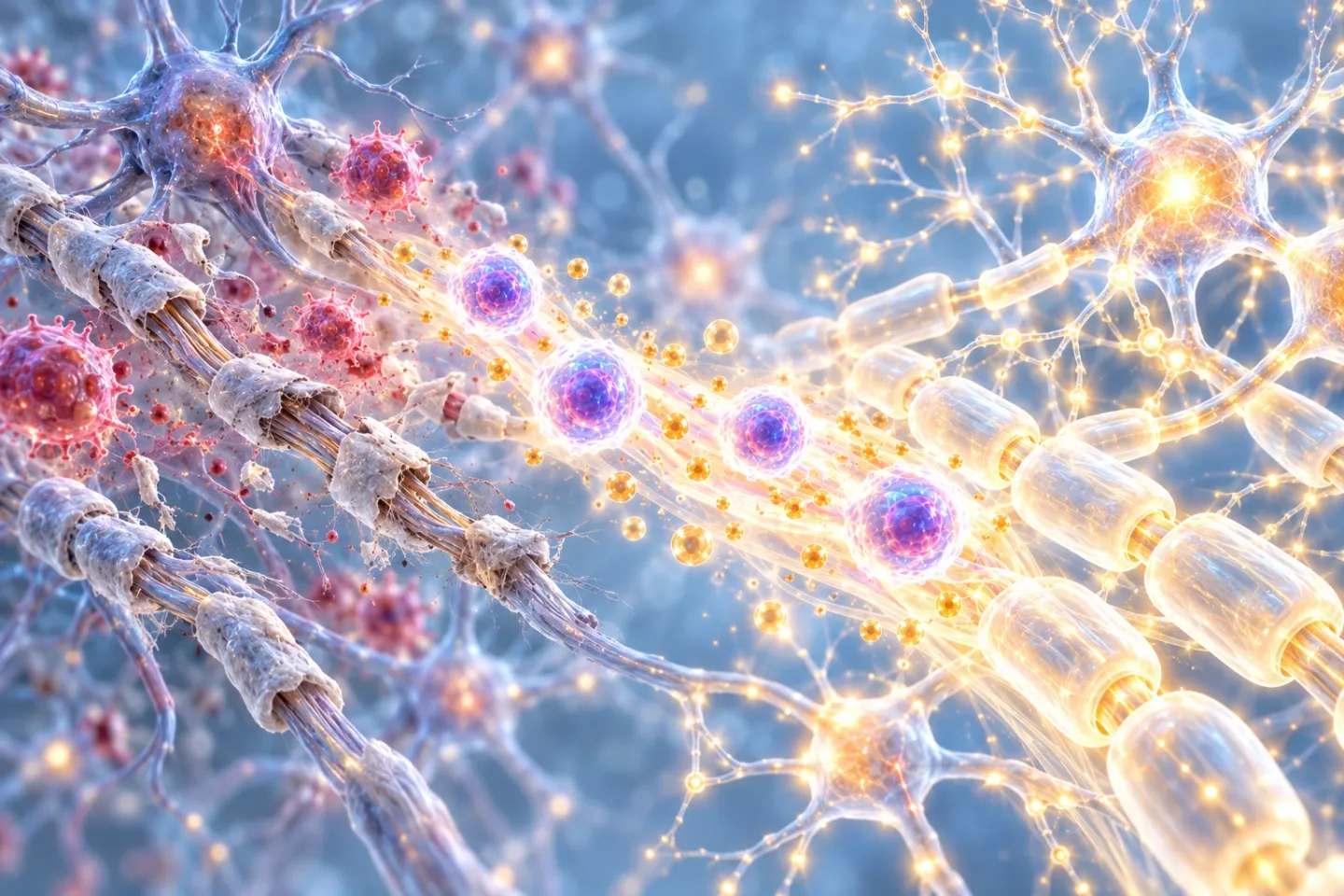
- Injured nerve fibresIn cerebral palsy, inflammation and damaged myelin slow the signals that control movement.
- Stem cells and exosomesRepair signals calm inflammation and support myelin and the nerve cells around it.
- Healthier connectionsThe aim: stronger nerve fibres and new connections; in a trial, MRI showed healthier white matter after treatment.
05
Is stem cell therapy a cure for cerebral palsy?
Every parent hopes for this answer. Cerebral palsy comes from an injury early in the brain’s development, and stem cell therapy is designed to help your child do more from where they are today. The original injury does not grow,37 so every gain your child makes is something to build on, and in studies children gained new motor skills, had softer muscles, used their hands better and became more independent in daily life.1211
Realistic, meaningful goals
- More movement: sitting more steadily, standing, taking steps or walking further.313
- Less stiffness: muscles that are easier to stretch, which makes therapy, dressing and daily care easier.133
- Better hand use: grasping, holding and finer control.1114
- More independence: progress in feeding, dressing and getting around.2
- A better quality of life for your child and your family.341
Improvements can keep building as your child grows and continues therapy: in one trial, the gains were still increasing two years after treatment.3

06
Who is stem cell therapy for cerebral palsy for?
Most children and adults with cerebral palsy can be assessed for stem cell therapy. CP is the most common physical disability of childhood, affecting about 1.6 in every 1,000 children born in high-income countries,3638 and clinical studies have included a wide range of patients:
- All main types of CP, with spastic CP studied most, as well as dystonic and mixed forms.11112
- Every level of severity, from children who walk on their own to children who cannot sit without support (GMFCS levels I to V).131415
- CP after lack of oxygen at birth or after premature birth.16152
- Young children and older patients: trials have included patients from 6 months to 20 years of age, and analyses of the trials patients up to 35.437
Is there a best age?
Younger children often gain most: in a 2025 analysis of cord blood studies, children under about 5 with milder CP benefited most.35 Older children benefit too, as a study of 152 children showed,13 and in another study the improvement in motor function did not depend on age.14 Whatever your child’s age, it is worth asking.
Our specialist reviews your child’s medical reports, MRI, seizure history and therapies before a plan is made, so the treatment is built around your child.
07
Your child’s treatment: fresh cells and the routes your doctor plans
Fresh Wharton’s jelly (umbilical cord) stem cells
Our stem cells come from Wharton’s jelly, the soft, gel-like tissue of umbilical cords donated after healthy births, so nothing is taken from your child. They are young cells that carry very few of the markers that trigger rejection, so no donor matching is needed.39 We prepare them fresh for your child’s date and never freeze them, because in laboratory tests cells used straight after thawing showed weaker immune-calming properties than fresh cells.40 They are prepared in a laboratory approved by the Turkish Ministry of Health and certified to GMP standards, and the cell count and viability are certified before every treatment.
Cord blood or Wharton’s jelly: what is the difference?
Both come from the umbilical cord, but they are different cells. Cord blood is the blood left in the cord and placenta after birth. It is rich in blood-forming stem cells and immune cells, and in cerebral palsy trials it was usually given as a tissue-matched unit.2632 A few trials grew mesenchymal stem cells from cord blood instead.3 Wharton’s jelly is the tissue of the cord itself and is rich in mesenchymal stem cells, the repair-signalling cells used in the double-blind intrathecal trial and the IV trial of daily-living skills.3912
The routes your doctor plans
Your doctor plans the routes for your child, typically as in our protocol for children with autism: intrathecal and IV stem cells with IV and nasal exosomes, all in one hospital day. The dose follows your child’s weight, usually 1 to 2 million stem cells per kilogram; published studies in Istanbul gave 1 million cells per kilogram for each route.121633
1. Intrathecal stem cells
Given into the spinal fluid that surrounds the brain and spinal cord, through a very fine needle in the lower back, so the cells’ signals reach the brain directly. This is the route of the Wharton’s jelly trials that improved motor scores and muscle tone.114
2. IV stem cells
A drip into a vein, so the cells’ calming signals reach the immune system throughout the body. This is the route of the Wharton’s jelly studies of daily-living skills and quality of life.234
3. IV exosomes
Exosomes from Wharton’s jelly stem cells and from CD34+ stem cells: the cells’ signals in concentrated form. In research models, CD34+ stem cell exosomes promoted the growth of new blood vessels.41
4. Nasal exosomes
A few painless sprays into the nose. In research models of brain injury around birth, Wharton’s jelly exosomes given this way reached the brain within an hour and helped myelin-making cells mature.227
5. Gentle care for your child
The intrathecal step is done with gentle sedation, planned by Dr. Cihan Bolat, a specialist in anaesthesiology and reanimation, and your child is cared for in hospital throughout the treatment day.
08
Your child’s stem cell treatment in Istanbul, step by step
Free medical review
Send us your child’s age, weight, diagnosis and type of cerebral palsy, any MRI report, seizure history, current medicines and therapies, and short videos of how your child moves. Tell us what you would most like to improve.
Free phone consultation and fixed price
Once your child’s case is approved, you discuss the plan with the specialist and receive a written plan with the dose for your child’s weight, the routes and the total price.
Fresh preparation
After your deposit, your child’s stem cells and exosomes are prepared fresh for your date. Preparation usually takes 5 to 10 days.
Treatment day in hospital
Our driver takes you to the hospital, where your child is treated in one day by our specialist team, and brings you back to your hotel afterwards.
Home and follow-up
Your child continues their usual therapies at home, and we review progress with you at about 1, 3, 6 and 12 months and plan any further session together.
Read more about the treatment process step by step.
09
When you may notice changes
Every child’s path is different, and changes build up gradually alongside therapy. In trials, muscle strength was already higher one month after treatment and mental development scores rose from the first month;426 daily-living skills and overall function had improved clearly by three months;23 gross motor scores pulled ahead at six months;24 and at 12 months children had higher motor scores and less muscle stiffness than without stem cells.1 In one trial, the gains were still growing two years after treatment.3 We review your child’s progress with you at about 1, 3, 6 and 12 months.
- Month 1First changesStrength and mental scores rise in studies
- 3 monthsDaily lifeSelf-care and overall function improve
- 6 monthsMotor skillsGross motor gains pull ahead
- 12 monthsSofter musclesHigher motor scores, less stiffness
- 2 yearsStill buildingGains still growing in one trial
10
Is stem cell therapy for cerebral palsy safe?
The published safety record is reassuring. A 2025 review of 1,292 people with CP treated with mesenchymal stem cells found the treatment safe,8 and in a meta-analysis of the trials, side effects were no more common with stem cells than in the comparison groups.10 In the two-year IV trial, no serious adverse events were seen.3 A review of 39 studies of intrathecal mesenchymal stem cells reported no serious side effects from the procedure,42 and a review of 361 people treated with donor cord blood for neurological conditions, including CP, found no serious side effects linked to the infusion.43 A 2021 meta-analysis of 62 randomised trials with 3,546 patients found mesenchymal stem cell treatment safe; the most common effect was a passing fever.44
The effects children had most often were a low fever, a mild headache or some back discomfort after the intrathecal step, which passed on their own.116
Your child’s comfort guides every step. Our doctor reviews every child before a plan is made, the treatment day takes place in hospital, and Dr. Cihan Bolat, a specialist in anaesthesiology and reanimation, plans your child’s comfort and sedation for the intrathecal step.
11
Stem cells vs physiotherapy, botulinum toxin, medicines and surgery
Each treatment for cerebral palsy has its own job, and they work best together. Stem cells and exosomes are the option designed to act on the brain’s own biology, and they are given alongside the therapies your child already has.
| Option | How it works | Where it acts | How often |
|---|---|---|---|
| Stem cells and exosomes | Release signals that calm inflammation, support the white matter and boost the brain’s own repair541 | The brain and the whole body | One hospital day; a further session can be planned14 |
| Physiotherapy and occupational therapy | Train movement, strength and everyday skills36 | Muscles, movement and daily skills | Ongoing, often several times a week |
| Botulinum toxin injections | Temporarily relax overactive muscles36 | The injected muscles | Repeated as the effect wears off |
| Baclofen (tablets or pump) | Lowers muscle tone through the nervous system36 | Muscle tone throughout the body | Daily, or a pump that is refilled regularly |
| Orthopaedic surgery or selective dorsal rhizotomy | Lengthens tight muscles or reduces spasticity through surgery36 | Specific muscles, joints or nerves | Usually once, followed by intensive rehabilitation |
These options are not either-or. In the trials, stem cells were added to rehabilitation and gave better results than rehabilitation alone,23 and your child can keep any medicines or injections their doctor recommends.
12
Stem cell therapy for cerebral palsy cost in Turkey: what’s included
Your price depends on the number of stem cells, which follows your child’s weight, on the amount of exosomes and on the routes in the plan. After your free medical review you receive a fixed, all-inclusive price in writing, before you book anything.
Included
- Free medical review and phone consultation
- Fresh Wharton’s jelly stem cells and exosomes, with certified count and viability
- The treatment day in hospital, by our specialist team
- Ground transport to and from the hospital
- A personal case manager
- Aftercare and follow-up reviews
Not included / optional
- Flights
- Hotel stay, which we can arrange for you
- Extra exosomes, from Wharton’s jelly or CD34+ stem cells
- A further session, if it is part of your plan
13
Our guarantees to your family
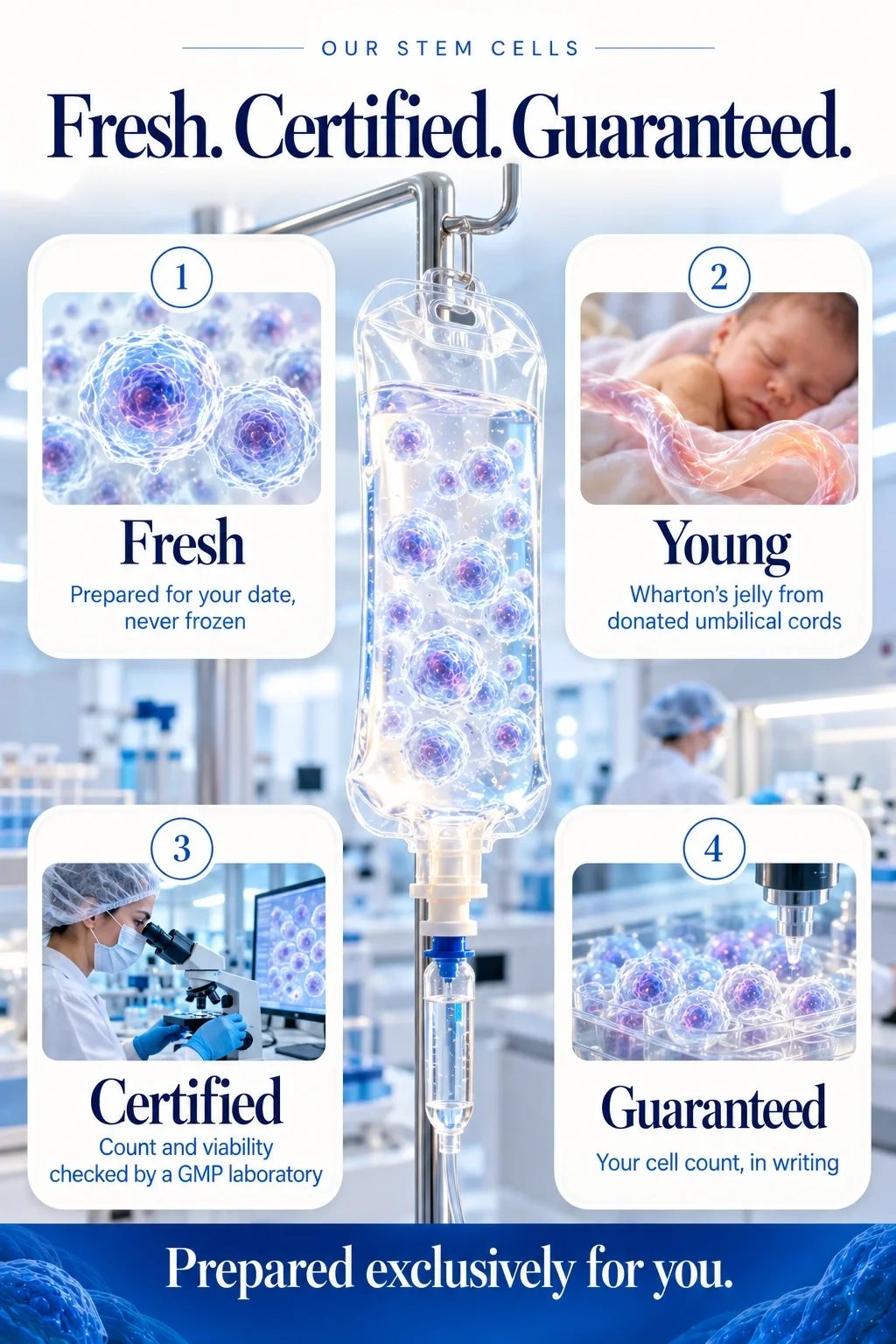
- A fixed price in writingYour all-inclusive price is confirmed in writing before you travel. No surprises.
- A guaranteed cell countThe number of fresh stem cells in your child’s plan is guaranteed, and the count and viability are checked and certified by our GMP laboratory before treatment.
- Follow-up includedProgress reviews at about 1, 3, 6 and 12 months are part of every treatment.
- A free consultation with Dr. Cihan BolatBefore you commit, our medical director reviews your child’s case free of charge.
14
Where can I get stem cell treatment for cerebral palsy?
With us in Istanbul, Turkey, after a free medical review. In the United States and much of Europe, stem cell therapy for cerebral palsy is offered mainly within research studies, which is why many families travel to experienced clinics abroad.
Why families choose Istanbul
Istanbul is easy to reach, with direct flights from most of Europe, the Middle East and beyond, and doctors in Istanbul have published their own results with umbilical cord stem cells. A 6-year-old with CP improved on functional scales after intrathecal and IV umbilical cord stem cells with intensive rehabilitation,12 children who could not stand or walk without support had less spasticity after cells given by three routes,33 and children with brain injury from lack of oxygen became significantly more independent over 12 months after Wharton’s jelly stem cells.16
Why families choose Istanbul Stemcell
- Led by Dr. Cihan Bolat, a specialist in anaesthesiology and reanimation and in regenerative medicine, with a specialist team.
- Fresh cells, licensed laboratory: Wharton’s jelly stem cells and exosomes from a Ministry of Health-approved GMP laboratory, never frozen, with the cell count guaranteed in writing.
- One hospital day, no harvest: nothing is taken from your child, and no second trip is needed.
- Everything arranged: ground transport, a personal case manager and, on request, your hotel.
- Experienced with children: our team also treats children with autism using the same routes. Read about stem cell therapy for autism.
15
Frequently asked questions
Does stem cell therapy work for cerebral palsy?
In randomised trials, children with cerebral palsy who received umbilical cord stem cells with their rehabilitation gained more motor skills, more independence and less muscle stiffness than with rehabilitation alone. In a double-blind trial, one intrathecal dose of Wharton’s jelly stem cells raised motor scores by 10.65 points in a year.
Can stem cells cure cerebral palsy?
Stem cell therapy is designed to help your child do more: move more freely, use their hands better and become more independent. The original brain injury does not grow, so every gain is something to build on, and in one trial the gains were still growing two years after treatment.
What is the success rate of stem cell therapy for cerebral palsy?
Results differ between children, but the studies point the same way. After IV Wharton’s jelly stem cells, 48 of 54 children (88.9%) gained in quality of life, and in a study of 152 children, 63.6% improved on a global clinical rating. Meta-analyses of the trials found significant gains in motor function at 3, 6 and 12 months.
Can stem cell therapy help my child walk?
Walking is one of the skills the trials measure. In 152 children treated with umbilical cord stem cells, the distance walked in six minutes rose by a median of 75 metres, and in a randomised trial, scores rose in all five areas of gross motor function, from lying and sitting to standing and walking. Our specialist discusses what is realistic for your child.
Does stem cell therapy help spasticity and muscle stiffness?
Yes. Muscle stiffness on the modified Ashworth scale fell by 1.0 point a year after intrathecal Wharton’s jelly stem cells, more than with a sham procedure, and children in an Istanbul study had less spasticity on both sides at 2, 4 and 12 months.
Can stem cells help hand use, speech and understanding?
Fine motor skills such as grasping and hand control improved more than with rehabilitation alone in a trial of 105 children. In a placebo-controlled trial of 96 children, cord blood cells raised mental development scores, and parents in a Wharton’s jelly trial rated their child’s communication higher. We discuss your child’s goals with you.
What is the best age for stem cell therapy for cerebral palsy?
Younger children often gain most: in a 2025 analysis, children under about 5 with milder CP benefited most. Older children benefit too, and trials have included patients from 6 months to 20 years of age, so whatever your child’s age, it is worth asking.
Can teenagers and adults with cerebral palsy have stem cell therapy?
Yes, they can be assessed. Trials have included teenagers and young adults, up to 20 years in a placebo-controlled trial and up to 35 years in a meta-analysis, and research shows that the inflammation linked to CP can persist into adulthood, which is one of the processes stem cells work on.
How is stem cell therapy for cerebral palsy given?
Your doctor plans the routes, typically intrathecal and IV stem cells with IV and nasal exosomes, all in one hospital day. Intrathecal means into the spinal fluid through a fine needle in the lower back, with gentle sedation planned by Dr. Cihan Bolat, a specialist in anaesthesiology; the IV is a simple drip, and the nasal spray is painless.
How many stem cells and sessions does my child need?
The dose follows your child’s weight, usually 1 to 2 million stem cells per kilogram, for example 20 to 40 million cells for a child of 20 kg. Several trials gave more than one dose, and in one study a second course improved motor function further, so your doctor plans any further session with you at follow-up.
How soon will we see results, and do they last?
In trials, the first changes, such as more muscle strength, came within the first month, daily-living skills improved by three months and motor skills by six months. At 12 months children were still ahead, and in one trial the gains were still growing after two years.
Is stem cell therapy for cerebral palsy safe?
The published safety record is reassuring. A 2025 review of 1,292 people with CP treated with mesenchymal stem cells found the treatment safe, and a review of 39 studies of intrathecal stem cells reported no serious side effects from the procedure. The most common effects were a low fever, a headache or back discomfort that passed on their own.
Should my child continue physiotherapy after stem cell therapy?
Yes. Stem cells and rehabilitation work together: the trials gave stem cells alongside physiotherapy, and children improved more than with physiotherapy alone. Keep your child’s therapy programme going after treatment.
What is the difference between cord blood and Wharton’s jelly stem cells?
Both come from the umbilical cord. Cord blood is rich in blood-forming stem cells and immune cells and was usually given as a tissue-matched unit in trials. Wharton’s jelly is the cord tissue itself and is rich in mesenchymal stem cells, which need no donor matching; they were used in the double-blind intrathecal trial and in the IV trial of daily-living skills.
How much does stem cell therapy for cerebral palsy cost in Turkey?
The price depends on the number of stem cells, which follows your child’s weight, on the amount of exosomes and on the routes in the plan. After a free medical review you receive a fixed, all-inclusive price in writing, which includes the treatment day in hospital, fresh Wharton’s jelly stem cells and exosomes, ground transport, a personal case manager and follow-up reviews.
Where can I get stem cell treatment for cerebral palsy?
With us in Istanbul, Turkey, after a free medical review. In the United States and much of Europe, stem cell therapy for cerebral palsy is offered mainly within research studies, which is why many families travel to experienced clinics abroad. We use fresh cells from a laboratory approved by the Turkish Ministry of Health and certified to GMP standards.
Medical review
Uzm. Dr. Cihan Bolat
Medical Director, Istanbul Stemcell
This page was written from the published studies listed below and reviewed for medical accuracy on .
16
References
- Amanat M, et al. Clinical and imaging outcomes after intrathecal injection of umbilical cord tissue mesenchymal stem cells in cerebral palsy: a randomized double-blind sham-controlled clinical trial. Stem Cell Res Ther. 2021;12(1):439. PMID 34362453
- Gu J, et al. Therapeutic evidence of umbilical cord-derived mesenchymal stem cell transplantation for cerebral palsy: a randomized, controlled trial. Stem Cell Res Ther. 2020;11(1):43. PMID 32014055
- Huang L, et al. A Randomized, Placebo-Controlled Trial of Human Umbilical Cord Blood Mesenchymal Stem Cell Infusion for Children With Cerebral Palsy. Cell Transplant. 2018;27(2):325-334. PMID 29637820
- Kang M, et al. Involvement of Immune Responses in the Efficacy of Cord Blood Cell Therapy for Cerebral Palsy. Stem Cells Dev. 2015;24(19):2259-68. PMID 25977995
- Caplan AI, Dennis JE. Mesenchymal stem cells as trophic mediators. J Cell Biochem. 2006;98(5):1076-84. PMID 16619257
- van Velthoven CT, et al. Mesenchymal stem cell treatment after neonatal hypoxic-ischemic brain injury improves behavioral outcome and induces neuronal and oligodendrocyte regeneration. Brain Behav Immun. 2010;24(3):387-93. PMID 19883750
- Thomi G, et al. Intranasally Administered Exosomes from Umbilical Cord Stem Cells Have Preventive Neuroprotective Effects and Contribute to Functional Recovery after Perinatal Brain Injury. Cells. 2019;8(8). PMID 31398924
- Paton MCB, et al. Clinical Evidence of Mesenchymal Stromal Cells for Cerebral Palsy: Scoping Review with Meta-Analysis of Efficacy in Gross Motor Outcomes. Cells. 2025;14(10). PMID 40422203
- Xie B, et al. Therapeutic Evidence of Human Mesenchymal Stem Cell Transplantation for Cerebral Palsy: A Meta-Analysis of Randomized Controlled Trials. Stem Cells Int. 2020;2020:5701920. PMID 32765613
- Qu J, et al. Efficacy and safety of stem cell therapy in cerebral palsy: A systematic review and meta-analysis. Front Bioeng Biotechnol. 2022;10:1006845. PMID 36588957
- Liu X, et al. Comparative analysis of curative effect of bone marrow mesenchymal stem cell and bone marrow mononuclear cell transplantation for spastic cerebral palsy. J Transl Med. 2017;15(1):48. PMID 28235424
- Okur SÇ, et al. The Effect of Umbilical Cord-derived Mesenchymal Stem Cell Transplantation in a Patient with Cerebral Palsy: A Case Report. Int J Stem Cells. 2018;11(1):141-147. PMID 29699386
- Chrościńska-Kawczyk M, Zdolińska-Malinowska I, Boruczkowski D. The Impact of Umbilical Cord Mesenchymal Stem Cells on Motor Function in Children with Cerebral Palsy: Results of a Real-world, Compassionate use Study. Stem Cell Rev Rep. 2024;20(6):1636-1649. PMID 38877284
- Fu X, et al. Synergistic Improvement in Children with Cerebral Palsy Who Underwent Double-Course Human Wharton's Jelly Stem Cell Transplantation. Stem Cells Int. 2019;2019:7481069. PMID 31636676
- Nguyen LT, et al. Outcomes of autologous bone marrow mononuclear cells for cerebral palsy: an open label uncontrolled clinical trial. BMC Pediatr. 2017;17(1):104. PMID 28403842
- Kabatas S, et al. Feasibility of allogeneic mesenchymal stem cells in pediatric hypoxic-ischemic encephalopathy: Phase I study. World J Stem Cells. 2021;13(5):470-484. PMID 34136076
- Paton MCB, et al. Persistent Inflammation in Cerebral Palsy: Pathogenic Mediator or Comorbidity? A Scoping Review. J Clin Med. 2022;11(24). PMID 36555983
- Lin CY, et al. Altered inflammatory responses in preterm children with cerebral palsy. Ann Neurol. 2010;68(2):204-12. PMID 20695013
- Than UTT, et al. Inflammatory mediators drive neuroinflammation in autism spectrum disorder and cerebral palsy. Sci Rep. 2023;13(1):22587. PMID 38114596
- Donega V, et al. Intranasal mesenchymal stem cell treatment for neonatal brain damage: long-term cognitive and sensorimotor improvement. PLoS One. 2013;8(1):e51253. PMID 23300948
- van Velthoven CT, et al. Nasal administration of stem cells: a promising novel route to treat neonatal ischemic brain damage. Pediatr Res. 2010;68(5):419-22. PMID 20639794
- Tscherrig V, et al. All but Small: miRNAs from Wharton's Jelly-Mesenchymal Stromal Cell Small Extracellular Vesicles Rescue Premature White Matter Injury after Intranasal Administration. Cells. 2024;13(6). PMID 38534387
- Drommelschmidt K, et al. Mesenchymal stem cell-derived extracellular vesicles ameliorate inflammation-induced preterm brain injury. Brain Behav Immun. 2017;60:220-232. PMID 27847282
- Joerger-Messerli MS, et al. Human Wharton's Jelly Mesenchymal Stromal Cell-Derived Small Extracellular Vesicles Drive Oligodendroglial Maturation by Restraining MAPK/ERK and Notch Signaling Pathways. Front Cell Dev Biol. 2021;9:622539. PMID 33869172
- Joerger-Messerli MS, et al. Extracellular Vesicles Derived from Wharton's Jelly Mesenchymal Stem Cells Prevent and Resolve Programmed Cell Death Mediated by Perinatal Hypoxia-Ischemia in Neuronal Cells. Cell Transplant. 2018;27(1):168-180. PMID 29562785
- Min K, et al. Umbilical cord blood therapy potentiated with erythropoietin for children with cerebral palsy: a double-blind, randomized, placebo-controlled trial. Stem Cells. 2013;31(3):581-91. PMID 23281216
- Paliwal S, et al. Regenerative abilities of mesenchymal stem cells through mitochondrial transfer. J Biomed Sci. 2018;25(1):31. PMID 29602309
- Liu D, et al. Intercellular mitochondrial transfer as a means of tissue revitalization. Signal Transduct Target Ther. 2021;6(1):65. PMID 33589598
- Babenko VA, et al. Miro1 Enhances Mitochondria Transfer from Multipotent Mesenchymal Stem Cells (MMSC) to Neural Cells and Improves the Efficacy of Cell Recovery. Molecules. 2018;23(3). PMID 29562677
- Kalluri R, LeBleu VS. The biology, function, and biomedical applications of exosomes. Science. 2020;367(6478). PMID 32029601
- Kabatas S, et al. Efficacy and safety of exosomes from Wharton's Jelly-derived mesenchymal stem cells in traumatic brain injury. World J Crit Care Med. 2025;14(4):103782. PMID 41377533
- Zarrabi M, et al. The safety and efficacy of umbilical cord blood mononuclear cells in individuals with spastic cerebral palsy: a randomized double-blind sham-controlled clinical trial. BMC Neurol. 2022;22(1):123. PMID 35351020
- Boyalı O, et al. Allogeneic mesenchymal stem cells may be a viable treatment modality in cerebral palsy. World J Clin Cases. 2024;12(9):1585-1596. PMID 38576742
- Boruczkowski D, Zdolińska-Malinowska I. Wharton's Jelly Mesenchymal Stem Cell Administration Improves Quality of Life and Self-Sufficiency in Children with Cerebral Palsy: Results from a Retrospective Study. Stem Cells Int. 2019;2019:7402151. PMID 31191683
- Finch-Edmondson M, et al. Cord Blood Treatment for Children With Cerebral Palsy: Individual Participant Data Meta-Analysis. Pediatrics. 2025;155(5). PMID 40210215
- Novak I, et al. State of the Evidence Traffic Lights 2019: Systematic Review of Interventions for Preventing and Treating Children with Cerebral Palsy. Curr Neurol Neurosci Rep. 2020;20(2):3. PMID 32086598
- Eggenberger S, et al. Stem cell treatment and cerebral palsy: Systemic review and meta-analysis. World J Stem Cells. 2019;11(10):891-903. PMID 31692977
- McIntyre S, et al. Global prevalence of cerebral palsy: A systematic analysis. Dev Med Child Neurol. 2022;64(12):1494-1506. PMID 35952356
- Weiss ML, et al. Immune properties of human umbilical cord Wharton's jelly-derived cells. Stem Cells. 2008;26(11):2865-74. PMID 18703664
- Moll G, et al. Do cryopreserved mesenchymal stromal cells display impaired immunomodulatory and therapeutic properties? Stem Cells. 2014;32(9):2430-42. PMID 24805247
- Mathiyalagan P, et al. Angiogenic Mechanisms of Human CD34(+) Stem Cell Exosomes in the Repair of Ischemic Hindlimb. Circ Res. 2017;120(9):1466-1476. PMID 28298297
- Barmada A, et al. Serious Adverse Events Have Not Been Reported with Spinal Intrathecal Injection of Mesenchymal Stem Cells: A Systematic Review. Curr Stem Cell Res Ther. 2023;18(6):829-833. PMID 35980065
- Paton MCB, et al. Safety of allogeneic umbilical cord blood infusions for the treatment of neurological conditions: a systematic review of clinical studies. Cytotherapy. 2022;24(1):2-9. PMID 34384698
- Wang Y, Yi H, Song Y. The safety of MSC therapy over the past 15 years: a meta-analysis. Stem Cell Res Ther. 2021;12(1):545. PMID 34663461