
01
Does stem cell therapy work for Crohn’s disease and ulcerative colitis?
Yes, for many people with IBD. In clinical trials, stem cells lowered disease activity, reduced the need for steroids and led to response, remission and mucosal healing (a calm, healthy-looking bowel lining on colonoscopy) in both Crohn’s disease and ulcerative colitis, including in people whose disease had not responded well enough to standard medicines or biologics.3415 Meta-analyses of the trials point the same way.79
Crohn’s disease
Crohn’s disease can affect any part of the gut, most often the end of the small bowel and the colon. In a randomised trial, four weekly IV infusions of Wharton’s jelly stem cells lowered the Crohn’s disease activity index (CDAI) by 62.5 points over 12 months, against 23.6 points with standard treatment, and steroid doses came down further too.3 In people whose Crohn’s had not responded to infliximab or adalimumab, IV donor stem cells brought the average CDAI down from 370 to 203 within six weeks.5
Ulcerative colitis
Ulcerative colitis affects the lining of the colon and rectum. With umbilical cord stem cells, given into a vein and into the artery that supplies the bowel and added to their usual treatment, 85.3% of patients with moderate to severe ulcerative colitis responded or reached remission at three months, against 15.7% of those given saline, and their bowel biopsies looked healthier.4 In a 2024 study, 73.2% of patients responded and 43.9% reached mucosal healing two months after two IV infusions of umbilical cord stem cells.1
Perianal fistulas
Perianal fistulas are small tunnels near the anus that can form in Crohn’s disease. In the fistula trials, the stem cells were injected directly into the fistula by a surgeon. In the largest, a placebo-controlled trial of 212 patients, 50% of those given a single injection of donor stem cells reached combined remission at 24 weeks, against 34% with placebo.10
Results at a glance
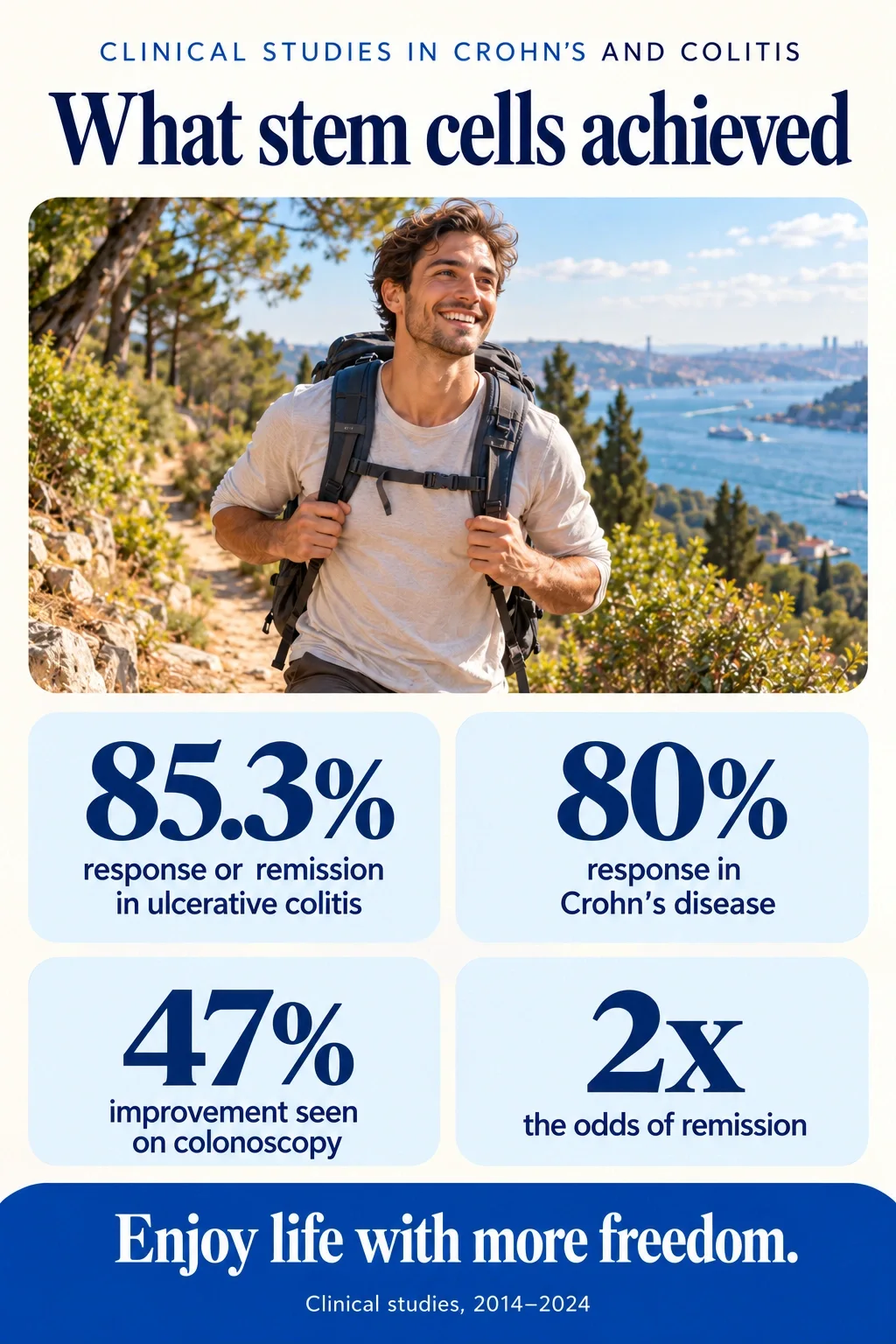
- 85.3%of people with ulcerative colitis responded or reached remission at three months, against 15.7% with saline4
- 80%responded in Crohn’s disease not controlled by biologics, six weeks after IV stem cells5
- 3 of 5people with ulcerative colitis reached a Mayo score of 0 and kept it for two years11
- 2×about twice the odds of remission in Crohn’s disease, across 12 randomised trials with 632 patients7
02
How stem cells and exosomes work in Crohn’s disease and ulcerative colitis
In Crohn’s disease and ulcerative colitis, the immune system keeps attacking the lining of the bowel. The inflamed lining becomes leaky, bacteria and food particles slip through, and this keeps the inflammation going. Medicines quieten parts of this cycle; mesenchymal stem cells (MSCs) work on several parts of it at once.6
MSCs from Wharton’s jelly, the soft tissue of donated umbilical cords, act as living signalling cells. After an IV drip they travel to inflamed tissue, a process called homing, and release growth factors, immune-balancing signals and exosomes: tiny vesicles that carry proteins and RNA messages from cell to cell.612 They can even hand healthy mitochondria, the energy units of the cell, to stressed cells.613 Six effects explain the results seen in studies.
How stem cell therapy works in IBD
- Fresh stem cells and exosomesA relaxed IV drip carries them through the bloodstream.
- Homing to the bowelIn research models, cells and exosomes reach the inflamed colon.1415
- Calmer gut, stronger liningLower inflammation markers and stronger gut-barrier activity in patients.12
- Response and remissionFewer symptoms, less steroid and mucosal healing in trials.341
How stem cells calm the gut
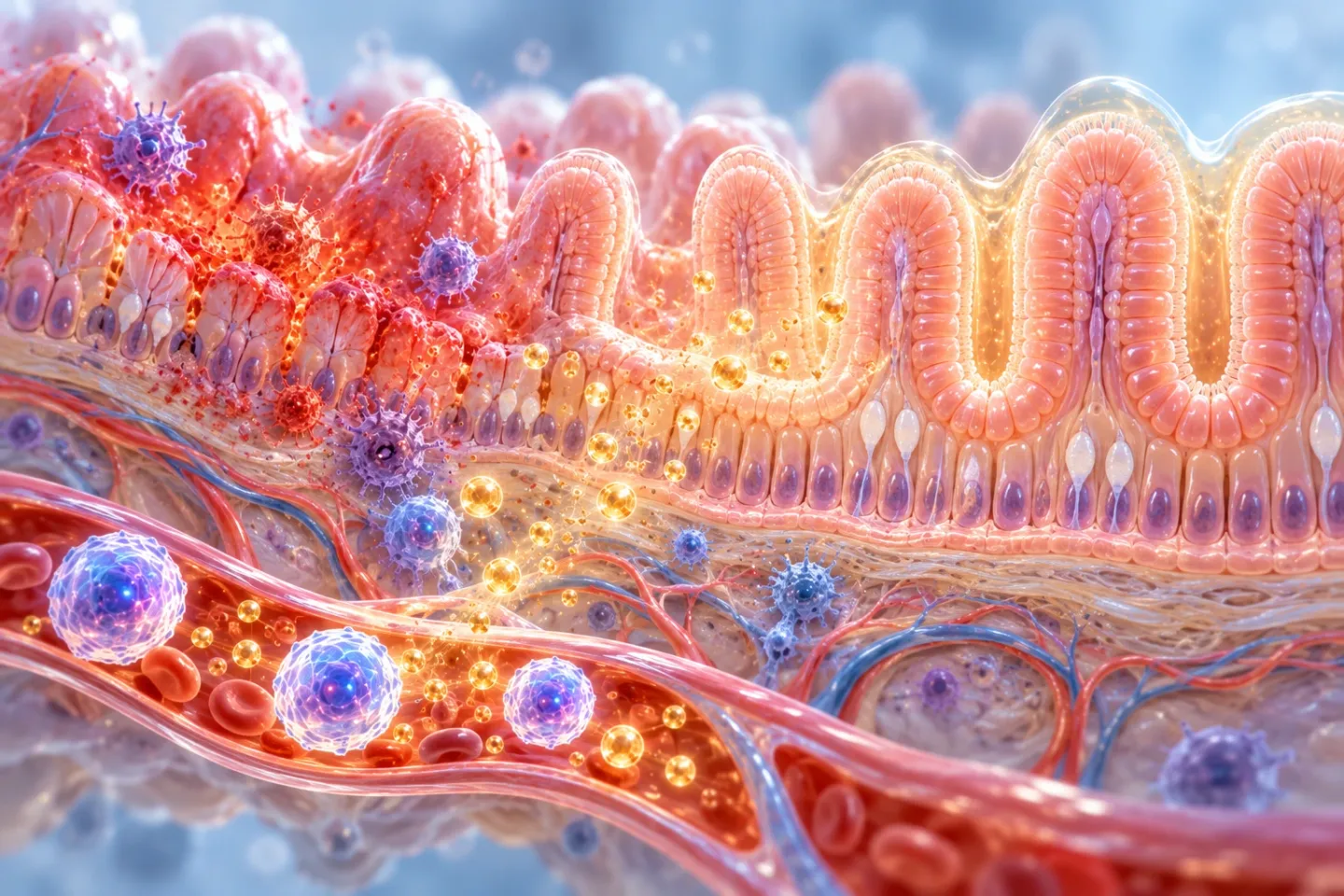
- Stem cellsGiven by IV, they travel through the blood to the inflamed bowel.
- Inflamed liningIn Crohn’s and colitis, overactive immune cells inflame the lining of the gut.
- ExosomesTiny vesicles carry calming messages that settle the immune response.
- Healthy gut liningStem cell signals support the gut lining and its protective barrier.
Homing to the inflamed gut
In research models, umbilical cord stem cells given into the bloodstream travelled to the inflamed colon and lowered the inflammatory signals IL-17, IL-23, IFN-γ and IL-6 there,14 and umbilical cord stem cell exosomes reached the colon within 12 hours.15
Calming intestinal inflammation
After IV umbilical cord stem cells, people with ulcerative colitis had lower levels of the inflammatory messengers IL-1β, IL-6, IL-8, IL-12 and IL-17A, and a higher ratio of the calming signal IL-10 to IL-17A.1 In research models, exosomes carrying the RNA message miR-378a-5p switched off NLRP3, an inflammation trigger in the colon.16
Supporting the gut lining and its barrier
In bowel biopsies taken before and after umbilical cord stem cell treatment for Crohn’s disease, genes that keep the gut barrier sealed became more active and the TNF and IL-17 inflammation pathways quietened.2 In research models, umbilical cord stem cell exosomes activated the intestinal stem cells that renew the lining and sped up its regrowth.17
Rebalancing the immune system
During stem cell treatment for Crohn’s fistulas, regulatory T cells, the immune cells that keep inflammation in check, increased in the bowel lining and the blood and stayed higher for 12 months.18 In ulcerative colitis, IV umbilical cord stem cells were linked to calmer, less aggressive T cells in the colon.19 In research models, umbilical cord stem cell products switched gut macrophages from attack to repair mode.20
A healthier gut microbiome
After eight IV infusions of umbilical cord stem cells, people with Crohn’s disease showed changes in their gut bacteria and stool metabolites, alongside lower CDAI and CRP.21 In research models, umbilical cord stem cells increased bacteria that make protective short-chain fatty acids, such as Akkermansia.22
Energy for the gut lining
The gut lining renews itself every three to five days and depends on healthy mitochondria, and in Crohn’s disease, mitochondrial problems in intestinal stem cells have been linked to inflammation and relapse.2324 Stem cells can pass healthy mitochondria to stressed cells, one of the repair mechanisms described in IBD research.136
Learn more about how our exosome therapy works.
03
Success rates and clinical evidence: what the trials show
IBD trials measure disease activity with the Crohn’s disease activity index (CDAI, where a score below 150 means remission) and, in ulcerative colitis, the Mayo score (0 to 12, lower is better), and they look at the bowel lining directly on colonoscopy.51 These are the key studies:
| Study | Design | What improved |
|---|---|---|
| Zhang 2018, Gut and Liver3 | Randomised; 82 people with Crohn’s on steroids; Wharton’s jelly stem cells by IV, four weekly infusions | CDAI 62.5 points lower vs 23.6 with standard care; steroid dose 4.2 vs 1.2 mg/day lower at 12 months |
| Forbes 2014, Clin Gastroenterol Hepatol5 | Phase 2; 16 people with Crohn’s not controlled by biologics; donor bone marrow stem cells by IV, four weekly infusions | 80% response, 53% remission and 47% endoscopic improvement at day 42; average CDAI 370 → 203 |
| Hu 2016, Exp Ther Med4 | Controlled; 70 people with ulcerative colitis; umbilical cord stem cells into a vein and the bowel’s artery vs saline | Response or remission 85.3% vs 15.7% at 3 months; lower Mayo and biopsy scores; better quality of life |
| Jiang 2024, Stem Cell Res Ther1 | 41 people with ulcerative colitis; umbilical cord stem cells by IV, two monthly infusions | 73.2% response, 41.5% remission and 43.9% mucosal healing at 2 months |
| Luo 2025, Clin Transl Med19 | 26 people with left-sided ulcerative colitis; umbilical cord stem cells by IV, two monthly infusions | 80.8% response and 46.2% remission at 2 months; healthier bowel lining in responders |
| Lazebnik 2010, Ter Arkh25 | 50 people with ulcerative colitis or Crohn’s vs 40 on standard care; donor bone marrow stem cells by IV | Remission in 40 of 50; steroids stopped in 34 of 50 |
| Panés 2016 and 2018, ADMIRE-CD1026 | Randomised, double-blind; 212 people with complex perianal fistulas; one local injection of donor fat-derived stem cells into the fistula | Combined remission 50% vs 34% at 24 weeks and 56.3% vs 38.6% at 52 weeks |
| Qiu 2024, meta-analysis7 | 12 randomised trials; 632 people with Crohn’s disease or Crohn’s fistulas | About twice the odds of clinical remission (odds ratio 2.08); serious side effects no more common than with placebo |
Crohn’s disease
In eight people with relapsing Crohn’s disease, eight IV infusions of umbilical cord stem cells lowered the average CDAI from 228.9 to 150.1, brought CRP down from 12.2 to 3.1 mg/L and helped them regain weight, from 51.0 to 55.0 kg.21 When umbilical cord stem cells were placed around ulcers during colonoscopy and given by IV the next day, 47% of 17 patients had an endoscopic response and 3 reached complete mucosal healing.2 In 34 people with Crohn’s disease, stem cell treatment lowered the average CDAI from about 335 to about 100 points, well inside the remission range, over 12 months.27 A 2021 meta-analysis of 18 human trials found lower CDAI and endoscopic scores after stem cell treatment, with high remission rates maintained for 3 to 24 months.28
Ulcerative colitis
In a 2024 study, three IV infusions of 100 million umbilical cord stem cells each were followed by a Mayo score of 0 in 3 of 5 patients, still 0 at 12 and 24 months.11 In the controlled umbilical cord trial, Mayo scores reached their lowest point at about six months and stayed low through two years of follow-up.4 A 2019 meta-analysis of seven human trials with 216 patients found clearly higher healing rates when stem cells were part of treatment.9
Perianal fistulas (local injection)
In the fistula trials, the cells were injected into the fistula during a short procedure under anaesthesia. In a Dutch randomised study, 80% of patients given 30 million donor bone marrow stem cells had closed fistulas at weeks 12 and 24, against 33% with placebo,29 and fistulas that had closed by week 24 were still closed four years later.30 With umbilical cord stem cells, 60% of 10 patients reached combined remission at 24 weeks.31 A 2025 meta-analysis of 25 studies with 596 patients found combined remission in 57.9% at six months.32 Our standard treatment is the IV drip, and your doctor will discuss with you how stem cells and exosomes fit alongside your fistula care.
Exosomes
Stem cell exosomes have also been injected into Crohn’s fistulas. With exosomes from umbilical cord stem cells, 3 of 5 patients had complete closure in a first study,33 and in a phase 2 trial of 20 patients, 60% had fully closed fistulas and 69.7% of all treated tracts closed.34 A 2025 analysis of stem cell exosomes for complex perianal fistulas found complete closure in 57% of patients and a response in 86%.35
04
Beyond standard treatment: where stem cells differ
Today’s IBD medicines, from mesalazine and steroids to immunosuppressants such as azathioprine and biologics such as infliximab, adalimumab, vedolizumab and ustekinumab, have transformed life with Crohn’s disease and ulcerative colitis. Each one quietens a particular part of the immune response. Stem cell therapy works differently, and it is designed to work alongside them.
Many signals at once
Rather than blocking one target, stem cells release a whole set of signals that calm inflammation, rebalance immune cells and support repair of the gut lining.612 That is why they are studied for people whose disease has not settled with one medicine after another.
When medicines have not been enough
In Crohn’s disease that infliximab or adalimumab had not controlled, 80% of patients responded to IV stem cells.5 In ulcerative colitis that was steroid-dependent, steroid-resistant or not responding to immunosuppressants or biologics, 72.7% of patients responded two months after IV umbilical cord stem cells.1
Together with your medicines
In the trials, stem cells were added to patients’ usual treatment. With mesalazine continued, ulcerative colitis improved far more with stem cells than with saline.4 With stem cells and vedolizumab together, people with ulcerative colitis reached deeper remission in their bowel biopsies, with lower faecal calprotectin, than with either treatment alone.36 Combined with azathioprine, stem cells had a stronger anti-inflammatory effect.27
Less steroid
Steroids settle a flare quickly but are best kept to short courses. In the randomised Crohn’s trial, steroid doses fell by 4.2 mg a day with stem cells against 1.2 mg a day with standard care,3 and in an earlier study steroids could be stopped altogether in 34 of 50 people.25
From an inflamed gut lining to a healed one
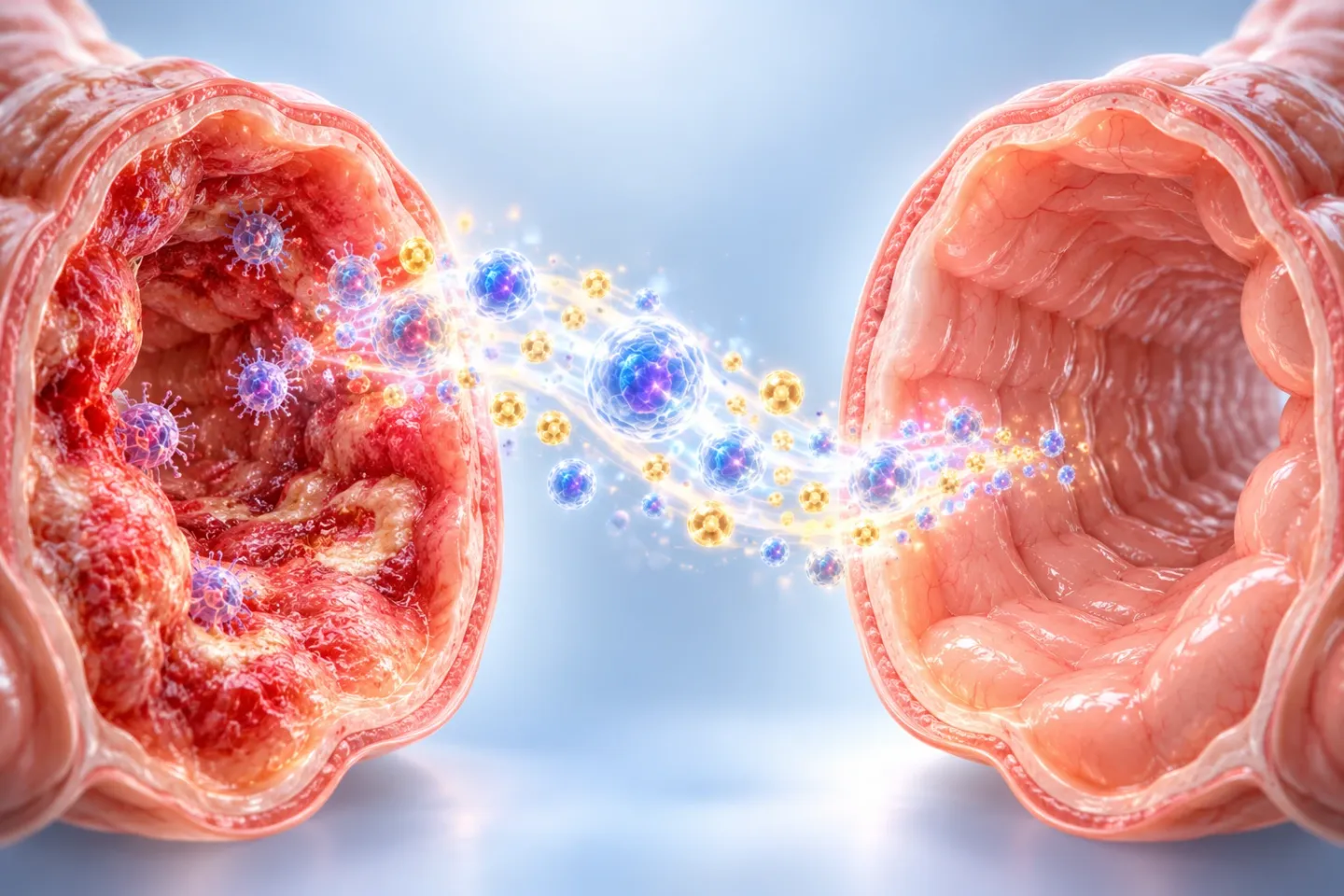
- Inflamed liningIn Crohn’s disease and ulcerative colitis, the bowel lining is swollen, red and sore.
- Stem cells and exosomesCalming signals settle the immune response and support the gut lining.
- Mucosal healingThe aim: a calm, healthy-looking lining, the mucosal healing seen on colonoscopy in the trials.
05
Is stem cell therapy a cure for Crohn’s disease or ulcerative colitis?
Crohn’s disease and ulcerative colitis are lifelong conditions that come and go, so the aim of every treatment, stem cells included, is long-lasting remission. Stem cell therapy aims for what matters most in daily life: calmer disease, fewer flares, less need for steroids, a bowel lining that looks healthier on colonoscopy and a better quality of life.
The trials show these goals are within reach. People reached remission and mucosal healing,119 3 of 5 patients with ulcerative colitis in one study kept a Mayo score of 0 for two years,11 and in Crohn’s disease high remission rates were maintained for 3 to 24 months after treatment.28 Quality-of-life scores improved as well.4
In short: the goal is long, settled stretches of life with your IBD in the background, not in charge. A repeat treatment can be planned with you to build on your result.

06
Who is stem cell therapy for Crohn’s disease and ulcerative colitis for?
Most adults with Crohn’s disease or ulcerative colitis can be assessed for stem cell therapy. It has been studied most in:
- People with active Crohn’s disease or ulcerative colitis despite their current medicines.31
- People whose disease has not responded well enough to biologics such as infliximab or adalimumab.5
- People who rely on steroids and would like to take less of them.325
- People with perianal fistulas, where the trials injected stem cells into the fistula.1029
- Teenagers: in a study of 13- to 17-year-olds with Crohn’s fistulas, 83% had their fistulas fully closed on examination and MRI at six months.37
Whatever stage your IBD is at, you are welcome to ask for a free review. Our specialist looks at your colonoscopy, scans, blood tests and medicines before your plan is made, so your treatment is built around you.
07
Your stem cell treatment for IBD in Istanbul, step by step
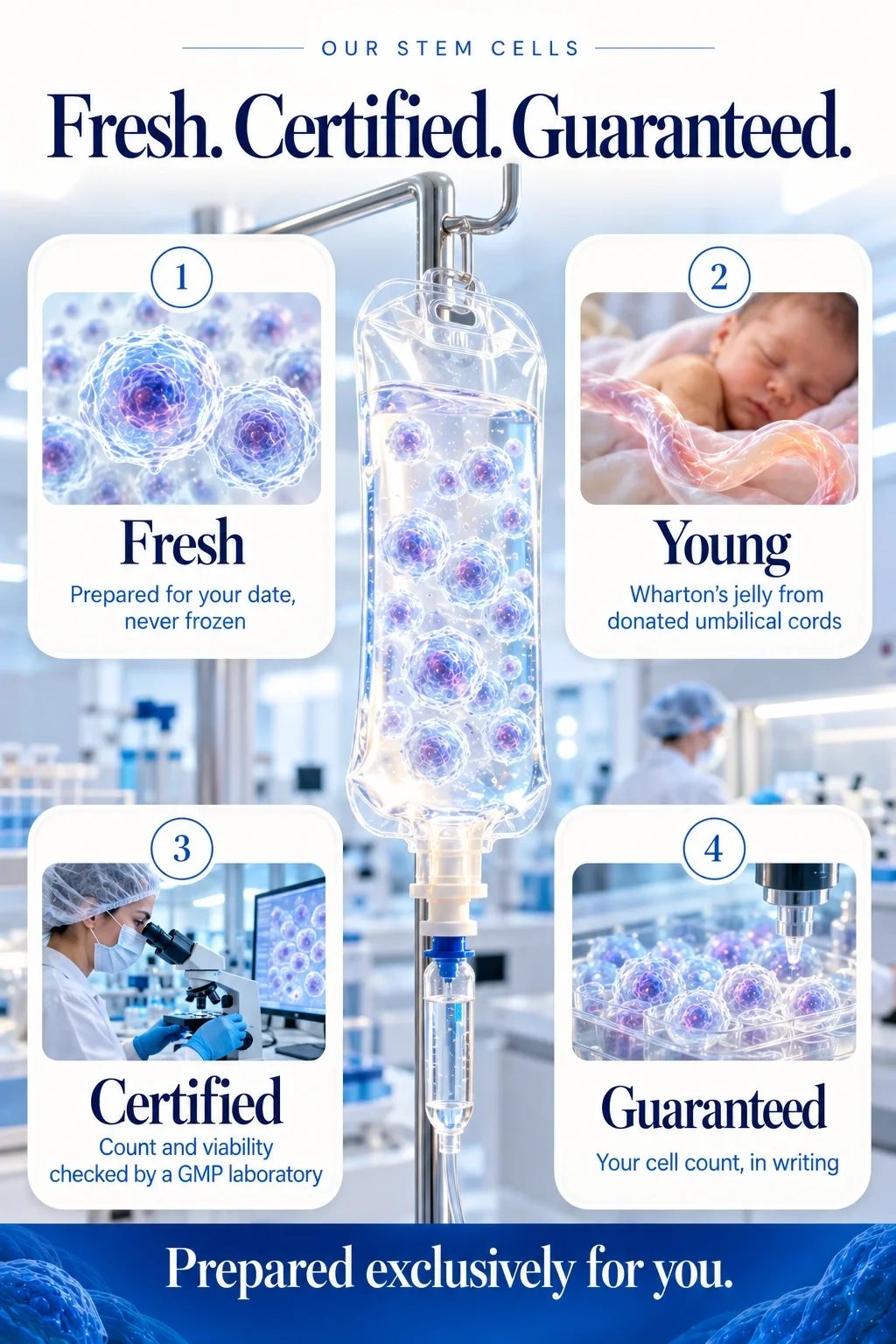
Your treatment uses fresh Wharton’s jelly stem cells from umbilical cords donated after healthy births, prepared for your date in a Ministry of Health-approved GMP laboratory and never frozen. Published trials used about 1 to 2 million cells per kilogram of body weight per infusion.351 Your plan states your exact cell count in writing, and it can add exosomes from Wharton’s jelly and CD34+ stem cells; in research models, CD34+ stem cell exosomes promoted the growth of new small blood vessels.38
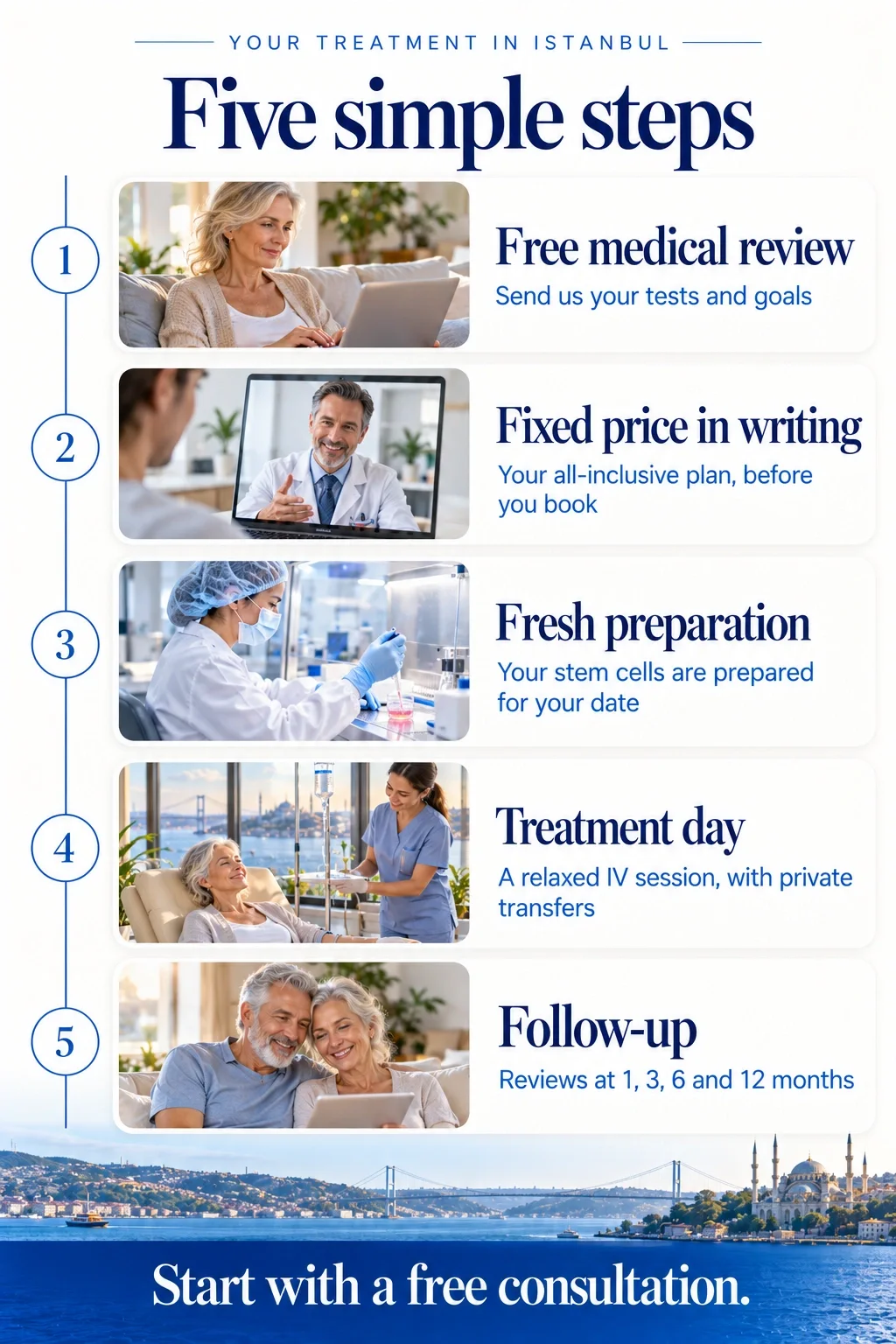
Free medical review
Send us your diagnosis, your latest colonoscopy report and biopsy results, any MRI of the bowel or a fistula, recent blood tests (complete blood count, CRP, liver and kidney function), a faecal calprotectin result if you have one, and a list of your current medicines.
Free phone consultation and fixed price
Once your case is approved, you discuss your plan with the specialist and receive the total price in writing.
Fresh preparation
After your deposit, your stem cells and exosomes are prepared fresh for your date. Preparation usually takes 5 to 10 days.
Treatment day
Our driver takes you to the clinic, where the specialist gives your IV infusion while you relax, and brings you back afterwards. Your doctor tells you in advance how to take your usual IBD medicines around the day.
Home and follow-up
We review your symptoms and test results with you at about 1, 3, 6 and 12 months and plan any further treatment together.
Read more about the treatment process step by step.
08
When you may notice changes
In trials, Crohn’s disease activity fell after each weekly infusion and 80% of patients had responded by day 42.5 In ulcerative colitis, most patients had fewer symptoms within a month, 85.3% had responded or reached remission at three months, and Mayo scores reached their lowest point at about six months and stayed low through two years of follow-up.4 In Crohn’s disease, lower disease activity and steroid doses were still measured at 12 months,3 and some patients with ulcerative colitis kept a Mayo score of 0 for two years.11 Fistula trials measured closure at 24 and 52 weeks.1026 We review your progress with you at about 1, 3, 6 and 12 months.
- Weeks 1–6First changesDisease activity falls after each infusion
- 1–3 monthsResponseMost patients responded in trials
- 6 monthsDeeper resultsMayo scores at their lowest
- 12 monthsStill betterLower disease activity and steroid doses
- 2 yearsLasting remissionSome patients kept a Mayo score of 0
09
Is stem cell therapy for IBD safe?
The published safety record is reassuring. In the randomised Crohn’s trial of 82 people, the only side effect was a passing fever in four patients, with no serious side effects.3 In a five-year follow-up of 103 people with Crohn’s disease or ulcerative colitis treated with stem cells, complications were no more common than in 208 people on standard treatment, apart from a passing fever.39 Across 12 randomised trials in Crohn’s disease, serious side effects were no more common with stem cells than with placebo,7 and no study of exosomes for fistulas reported side effects.35 A 2021 meta-analysis of 62 randomised trials with 3,546 patients found mesenchymal stem cell treatment safe compared with placebo, with no serious adverse events such as death or infection; the most common effect was a passing fever.40
Wharton’s jelly cells carry very few of the markers that trigger rejection,8 and stem cells of this kind need no preparatory treatment to suppress the immune system.5 Our specialist team screens your health carefully first, and Dr. Cihan Bolat, a specialist in anaesthesiology and reanimation, plans your comfort with you. The IV drip is relaxed, and you return to your hotel the same day.
10
Stem cells vs biologics, steroids and other IBD treatments
Each IBD treatment has its place. Stem cells and exosomes are the option designed to calm inflammation and support repair of the gut lining at the same time, and they are given alongside your other treatments.
| Option | How it works | How it is given | Main role |
|---|---|---|---|
| Stem cells and exosomes | Release signals that calm inflammation, rebalance immune cells and support the gut lining and its barrier62 | One treatment day by IV drip; a repeat can be planned | Response, remission and mucosal healing, alongside your medicines4136 |
| Mesalazine (5-ASA) | Calms inflammation in the bowel lining | Tablets, granules or enemas, every day | Mild to moderate ulcerative colitis |
| Steroids | Quickly damp down a flare | Tablets, a drip or enemas, in short courses | Bringing a flare under control |
| Immunosuppressants (azathioprine, methotrexate) | Lower overall immune activity | Daily tablets or weekly injections | Keeping remission |
| Biologics and small molecules (anti-TNF, vedolizumab, ustekinumab, JAK inhibitors) | Block one specific inflammation signal | Regular injections, drips or daily tablets | Moderate to severe Crohn’s disease and colitis |
| Surgery | Removes or repairs damaged bowel, or drains a fistula | An operation | Complications, or disease that does not settle |
Treatments can work together: stem cells added to mesalazine gave better results than mesalazine with saline,4 and stem cells with vedolizumab gave deeper remission than vedolizumab alone.36
11
Stem cell therapy for Crohn’s disease and ulcerative colitis: cost in Turkey
Your price depends on the number of Wharton’s jelly stem cells, the amount of exosomes and the routes in your plan. After your free medical review you receive a fixed, all-inclusive price in writing, before you book anything.
Included
- Free medical review and phone consultation
- Fresh Wharton’s jelly stem cells, with certified count and viability
- Exosomes, as set out in your plan
- Treatment by our specialist
- Ground transport to and from the clinic
- A personal case manager
- Aftercare and follow-up reviews
Not included / optional
- Flights
- Hotel stay, which we can arrange for you
- Extra exosomes, from Wharton’s jelly or CD34+ stem cells
- A repeat treatment, if you choose one
12
Our guarantees to you
- A fixed price in writingYour all-inclusive price is confirmed in writing before you travel. No surprises.
- A guaranteed cell countThe number of fresh stem cells in your plan is guaranteed, and the count and viability are checked and certified by our GMP laboratory before treatment.
- Follow-up includedProgress reviews of your symptoms and tests at about 1, 3, 6 and 12 months are part of every treatment.
- A free consultation with Dr. Cihan BolatBefore you commit, our medical director reviews your IBD history and tests free of charge.
13
Where can I get stem cell treatment for Crohn’s disease and ulcerative colitis?
With us in Istanbul, Turkey, after a free medical review. In the United States and much of Europe, stem cell therapy for Crohn’s disease and ulcerative colitis is offered mainly within research studies, which is why many people with IBD travel to experienced clinics abroad. Patients from around the world choose Istanbul for specialist care, fresh cells and a treatment that fits into one short trip.
Led by Dr. Cihan Bolat
Our medical director is a specialist in anaesthesiology and reanimation and in regenerative medicine, and leads every treatment.
Fresh cells, licensed laboratory
Fresh Wharton’s jelly stem cells and exosomes from a Ministry of Health-approved, GMP-certified laboratory, never frozen, with count and viability certified before every treatment.
No harvest, one trip
Donated umbilical cord cells mean nothing is taken from your body and no second trip is needed: your cells are ready 5 to 10 days after booking.
Clear pricing, personal care
A fixed, all-inclusive price in writing before you travel, a personal case manager, transport to and from the clinic and follow-up reviews after you return home.
14
Frequently asked questions
Does stem cell therapy work for Crohn’s disease?
In clinical trials, yes for many patients. In a randomised trial of 82 people, four IV infusions of Wharton’s jelly stem cells lowered disease activity and steroid doses more than standard treatment over 12 months, and in Crohn’s disease that biologics had not controlled, 80% of patients responded within six weeks.
Can stem cell therapy help ulcerative colitis?
Yes. With umbilical cord stem cells added to their usual treatment, 85.3% of patients with moderate to severe ulcerative colitis responded or reached remission at three months, against 15.7% with saline. In a 2024 study, 43.9% of patients reached mucosal healing two months after two IV infusions.
Can stem cells cure Crohn’s disease or ulcerative colitis?
IBD is a lifelong condition that comes and goes, so the goal of every treatment is long-lasting remission. Stem cell therapy aims for calmer disease, fewer flares, less steroid and a healthier-looking bowel lining. In one study, 3 of 5 patients with ulcerative colitis kept a Mayo score of 0 for two years, and a repeat treatment can be planned to build on your result.
What is the success rate of stem cell therapy for IBD?
Results vary between studies, but they point the same way. In ulcerative colitis, response rates of 73% to 85% were reported within three months, and in Crohn’s disease 80% of patients responded in a phase 2 trial. A 2024 meta-analysis of 12 randomised trials found about twice the odds of remission with stem cells.
How do stem cells help the gut in IBD?
Stem cells act as messengers. They travel to inflamed tissue and release anti-inflammatory signals, growth factors and exosomes that calm the immune attack on the bowel, rebalance immune cells, support the gut lining and its barrier, and can even pass healthy mitochondria to stressed cells.
Can stem cells help Crohn’s fistulas?
Perianal fistulas are one of the most studied uses. In trials where stem cells were injected directly into the fistula, combined remission reached 56.3% at one year against 38.6% with placebo, and fistulas that had closed were still closed four years later in a Dutch study. Your doctor will discuss how our IV treatment fits alongside your fistula care.
Is stem cell therapy for Crohn’s disease and ulcerative colitis safe?
The published safety record is reassuring. Across 12 randomised trials in Crohn’s disease, serious side effects were no more common with stem cells than with placebo, and in a five-year follow-up of 103 people with IBD, the only extra effect compared with standard treatment was a passing fever.
Can I keep taking my biologic or other IBD medicines?
In the trials, stem cells were added to people’s usual treatment, and some of the best results came from combinations, such as stem cells with vedolizumab. Our specialist reviews your medicines and tells you how to take them around your treatment day.
How soon will I notice results, and how long do they last?
In trials, disease activity fell after each infusion, most patients with ulcerative colitis had fewer symptoms within a month, and results were at their best at about six months. Benefits were still measured at 12 months in Crohn’s disease and, in some patients with ulcerative colitis, at two years.
How is the treatment given, and how many sessions do I need?
Your stem cells and exosomes are given by a relaxed IV drip on one treatment day. Published trials used from a single infusion to several infusions a few weeks apart, at about 1 to 2 million cells per kilogram. Your plan states your cell count and any repeat treatment in writing before you travel.
What is the difference between stem cells and exosomes?
Stem cells are living cells that keep releasing signals in the body; exosomes are tiny packages of those signals, carrying proteins and RNA messages, with no living cells inside. In a phase 2 trial, stem cell exosomes injected into Crohn’s fistulas fully closed them in 60% of patients, and your plan can combine stem cells and exosomes.
Is this the same as a stem cell transplant (HSCT) for Crohn’s disease?
No. A haematopoietic stem cell transplant uses chemotherapy to reset the immune system and needs a hospital stay. Our treatment uses mesenchymal stem cells from Wharton’s jelly, which calm and rebalance the immune system without any preparatory treatment, so it is given by IV drip in one day.
How much does stem cell therapy for Crohn’s disease or ulcerative colitis cost in Turkey?
Your price depends on the number of stem cells, the amount of exosomes and the routes in your plan. After a free medical review you receive a fixed, all-inclusive price in writing, which includes the treatment by our specialist, fresh Wharton’s jelly stem cells, ground transport, a personal case manager and follow-up reviews.
Which stem cells do you use, and do I need a harvest?
We use fresh Wharton’s jelly stem cells from donated umbilical cords, the type of cells used in the 82-patient randomised Crohn’s trial. Nothing is taken from your own fat or bone marrow, no donor matching is needed and there is no second trip.
Where can I get stem cell therapy for Crohn’s disease or ulcerative colitis?
With us in Istanbul, Turkey, after a free medical review. In the United States and much of Europe, this treatment is offered mainly within research studies, which is why many people with IBD travel to experienced clinics abroad. We use fresh cells from a laboratory approved by the Turkish Ministry of Health and certified to GMP standards.
Medical review
Uzm. Dr. Cihan Bolat
Medical Director, Istanbul Stemcell
This page was written from the published studies listed below and reviewed for medical accuracy on .
15
References
- Jiang X, et al. Umbilical cord mesenchymal stem cells in ulcerative colitis treatment: efficacy and possible mechanisms. Stem Cell Res Ther. 2024;15(1):272. PMID 39218946
- Sun Q, et al. hUC-MSCs therapy for Crohn's disease: efficacy in TNBS-induced colitis in rats and pilot clinical study. EBioMedicine. 2024;103:105128. PMID 38653187
- Zhang J, et al. Umbilical Cord Mesenchymal Stem Cell Treatment for Crohn's Disease: A Randomized Controlled Clinical Trial. Gut Liver. 2018;12(1):73-78. PMID 28873511
- Hu J, et al. Safety and therapeutic effect of mesenchymal stem cell infusion on moderate to severe ulcerative colitis. Exp Ther Med. 2016;12(5):2983-2989. PMID 27882104
- Forbes GM, et al. A phase 2 study of allogeneic mesenchymal stromal cells for luminal Crohn's disease refractory to biologic therapy. Clin Gastroenterol Hepatol. 2014;12(1):64-71. PMID 23872668
- Wei S, et al. Mesenchymal Stromal Cells: New Generation Treatment of Inflammatory Bowel Disease. J Inflamm Res. 2024;17:3307-3334. PMID 38800593
- Qiu Y, Li C, Sheng S. Efficacy and safety of stem cell therapy for Crohn's disease: a meta-analysis of randomized controlled trials. Stem Cell Res Ther. 2024;15(1):28. PMID 38303054
- Weiss ML, et al. Immune properties of human umbilical cord Wharton's jelly-derived cells. Stem Cells. 2008;26(11):2865-74. PMID 18703664
- Shi X, Chen Q, Wang F. Mesenchymal stem cells for the treatment of ulcerative colitis: a systematic review and meta-analysis of experimental and clinical studies. Stem Cell Res Ther. 2019;10(1):266. PMID 31443677
- Panés J, et al. Expanded allogeneic adipose-derived mesenchymal stem cells (Cx601) for complex perianal fistulas in Crohn's disease: a phase 3 randomised, double-blind controlled trial. Lancet. 2016;388(10051):1281-90. PMID 27477896
- Jafar H, et al. Safety and Potential Efficacy of Expanded Umbilical Cord-Derived Mesenchymal Stromal Cells in Luminal Ulcerative Colitis Patients. Stem Cells Dev. 2024;33(23-24):645-651. PMID 39446772
- Xie C, et al. Immunomodulatory properties of umbilical cord mesenchymal stromal cells in immune disorders: immunoregulatory functions, therapeutic progress, and engineering strategies for enhanced efficacy. Front Immunol. 2026;17:1948742. PMID 42812564
- Paliwal S, et al. Regenerative abilities of mesenchymal stem cells through mitochondrial transfer. J Biomed Sci. 2018;25(1):31. PMID 29602309
- Liang L, et al. Human umbilical cord mesenchymal stem cells ameliorate mice trinitrobenzene sulfonic acid (TNBS)-induced colitis. Cell Transplant. 2011;20(9):1395-408. PMID 21396175
- Mao F, et al. Exosomes Derived from Human Umbilical Cord Mesenchymal Stem Cells Relieve Inflammatory Bowel Disease in Mice. Biomed Res Int. 2017;2017:5356760. PMID 28589143
- Cai X, et al. hucMSC-derived exosomes attenuate colitis by regulating macrophage pyroptosis via the miR-378a-5p/NLRP3 axis. Stem Cell Res Ther. 2021;12(1):416. PMID 34294138
- Liang X, et al. HucMSC-Exo Promote Mucosal Healing in Experimental Colitis by Accelerating Intestinal Stem Cells and Epithelium Regeneration via Wnt Signaling Pathway. Int J Nanomedicine. 2023;18:2799-2818. PMID 37256205
- Ciccocioppo R, et al. Autologous bone marrow-derived mesenchymal stromal cells in the treatment of fistulising Crohn's disease. Gut. 2011;60(6):788-98. PMID 21257987
- Luo X, et al. Reconstitution of T cell-mediated immunity by umbilical cord-derived mesenchymal stem cells in ulcerative colitis. Clin Transl Med. 2025;15(8):e70452. PMID 40842289
- Song JY, et al. Umbilical cord-derived mesenchymal stem cell extracts reduce colitis in mice by re-polarizing intestinal macrophages. Sci Rep. 2017;7(1):9412. PMID 28842625
- Yang F, et al. Short-Term Clinical Response and Changes in the Fecal Microbiota and Metabolite Levels in Patients with Crohn's Disease After Stem Cell Infusions. Stem Cells Transl Med. 2023;12(8):497-509. PMID 37399531
- Liu A, et al. Human umbilical cord mesenchymal stem cells ameliorate colon inflammation via modulation of gut microbiota-SCFAs-immune axis. Stem Cell Res Ther. 2023;14(1):271. PMID 37749611
- Rath E, Moschetta A, Haller D. Mitochondrial function - gatekeeper of intestinal epithelial cell homeostasis. Nat Rev Gastroenterol Hepatol. 2018;15(8):497-516. PMID 29844587
- Khaloian S, et al. Mitochondrial impairment drives intestinal stem cell transition into dysfunctional Paneth cells predicting Crohn's disease recurrence. Gut. 2020;69(11):1939-1951. PMID 32111634
- Lazebnik LB, et al. [Use of allogeneic mesenchymal stem cells in the treatment of intestinal inflammatory diseases]. Ter Arkh. 2010;82(2):38-43. PMID 20387674
- Panés J, et al. Long-term Efficacy and Safety of Stem Cell Therapy (Cx601) for Complex Perianal Fistulas in Patients With Crohn's Disease. Gastroenterology. 2018;154(5):1334-1342.e4. PMID 29277560
- Knyazev OV, et al. Mesenchymal stromal cells of bone marrow and azathioprine in Crohn's disease therapy. Ter Arkh. 2018;90(2):47-52. PMID 30701772
- Wang R, et al. Stem cell therapy for Crohn's disease: systematic review and meta-analysis of preclinical and clinical studies. Stem Cell Res Ther. 2021;12(1):463. PMID 34407875
- Molendijk I, et al. Allogeneic Bone Marrow-Derived Mesenchymal Stromal Cells Promote Healing of Refractory Perianal Fistulas in Patients With Crohn's Disease. Gastroenterology. 2015;149(4):918-27.e6. PMID 26116801
- Barnhoorn MC, et al. Long-term Evaluation of Allogeneic Bone Marrow-derived Mesenchymal Stromal Cell Therapy for Crohn's Disease Perianal Fistulas. J Crohns Colitis. 2020;14(1):64-70. PMID 31197361
- Wei J, et al. Efficacy and safety of allogeneic umbilical cord-derived mesenchymal stem cells for the treatment of complex perianal fistula in Crohn's disease: a pilot study. Stem Cell Res Ther. 2023;14(1):311. PMID 37904247
- Guillo L, et al. Efficacy of mesenchymal stem cell-based therapies in the treatment of perianal fistulizing Crohn's disease: a systematic review and meta-analysis. Stem Cell Res Ther. 2025;16(1):152. PMID 40156066
- Nazari H, et al. Evaluating the safety and efficacy of mesenchymal stem cell-derived exosomes for treatment of refractory perianal fistula in IBD patients: clinical trial phase I. Gastroenterol Rep (Oxf). 2022;10:goac075. PMID 36518984
- Hadizadeh A, et al. Localized Administration of Mesenchymal Stem Cell-Derived Exosomes for the Treatment of Refractory Perianal Fistula in Patients With Crohn's Disease: A Phase II Clinical Trial. Dis Colon Rectum. 2024;67(12):1564-1575. PMID 39250316
- Cheng F, Chen X, Liao Y. Mesenchymal stem cell-derived exosomes for complex perianal fistula ‒ A systematic review and single-arm meta-analysis. Rev Esp Enferm Dig. 2025. PMID 41020978
- Knyazev OV, et al. [Histological remission of ulcerative colitis with combined anti-cytokine and cell therapy]. Ter Arkh. 2021;93(12):1435-1442. PMID 36286670
- Lightner AL, et al. A Phase I Study of Ex Vivo Expanded Allogeneic Bone Marrow-Derived Mesenchymal Stem Cells for the Treatment of Pediatric Perianal Fistulizing Crohn's Disease. Inflamm Bowel Dis. 2023;29(12):1912-1919. PMID 37263018
- Mathiyalagan P, et al. Angiogenic Mechanisms of Human CD34(+) Stem Cell Exosomes in the Repair of Ischemic Hindlimb. Circ Res. 2017;120(9):1466-1476. PMID 28298297
- Knyazev OV, et al. [Safety of mesenchymal stromal cell therapy for inflammatory bowel diseases: results of a 5-year follow-up]. Ter Arkh. 2015;87(2):39-44. PMID 25864347
- Wang Y, Yi H, Song Y. The safety of MSC therapy over the past 15 years: a meta-analysis. Stem Cell Res Ther. 2021;12(1):545. PMID 34663461