Stem cell therapy for capsular ligament injuries in Istanbul uses fresh Wharton’s jelly stem cells and their exosomes, tiny repair messages, injected into and around the injured ligament or joint capsule. A capsular ligament injury is a sprain or partial tear of the bands that hold a joint together. Many ligament injuries heal well, yet a year after an ankle sprain, 5% to 33% of people still have pain.1 Uzm. Dr. Cihan Bolat reviews your scan report free of charge.
01
Living with a capsular ligament injury: we understand
If you live with a capsular ligament injury, you know how one twist, fall or awkward landing can change the way you trust a joint. Weeks or months later, your ankle may still feel wobbly on uneven ground, your knee may swell after a long walk, or your thumb may ache each time you open a jar. Many ligament injuries heal well with time and physiotherapy, but some stay loose or painful: a year after an ankle sprain, 5% to 33% of people still have pain, and up to 34% sprain the same ankle again within three years.1
It is rarely only about one joint. You may hold back at sport, at the gym or on a walk with friends, choose flat shoes and careful steps, or think twice before lifting a child. Wanting to move freely and confidently again is completely natural, and it deserves a careful plan.

Walking on uneven ground with confidence
Cobbled streets, forest paths and beaches, without watching every step.
Trusting your knee on the stairs
Up, down and turning, without that loose, unsteady feeling.
Back to the sport you love
Tennis, football, skiing or dancing, at your own pace.
A firm grip again
Opening jars, carrying bags and holding a racket without a twinge.
Here is the hopeful part: a loose, sore joint does not have to be your new normal. Stem cell therapy for ligament injuries now aims at the injured ligament itself, alongside your physiotherapy, and this page shows the published studies. First, how it works, in plain words:
02
How stem cells and exosomes can help your ligament injury, in plain words
Think of a ligament as a strong rope that holds two bones together. A sprain frays some of its threads. Your body sends builders to mend it, but after a bad sprain the body’s alarm, inflammation, can keep ringing, and the builders patch the gap with quick, untidy scar. Stem cells work like a site manager. They do not become your new ligament. Instead, they send exosomes, tiny text messages packed with instructions, that tell your own cells to calm down, line up and rebuild. The signals they send do most of the work.
They calm the alarm
Stem cells and exosomes help quieten the inflammation (the swelling and soreness) around your torn fibres, so your ligament can move past the sore, swollen stage and get on with healing.
They send repair messages
Exosomes carry proteins and RNA, the cell’s own instructions, to your ligament cells. The message: wake up, make new fibres, and let tiny new blood vessels bring in food and oxygen.
Neater fibres, less scar
Your own cells lay down new collagen, the threads a ligament is made of. In research models, stem cell exosomes helped that collagen line up more neatly, with less scar.12
What this could mean for you: the aim is a joint you can trust again. That may mean a cobbled street or a forest path without watching every step, stairs without that loose, wobbly feeling, tennis, football or dancing at your own pace, and a firm grip to open a jar or carry the shopping.
03
Stem cell treatment for Capsular ligament injury (Ligamentum injury)
Stem cells offer hope for recovery and symptom control in Capsular Ligament Injury
Read the full section
Capsular ligament injury (Ligamentum injury) occurs when ligaments become damaged, causing pain, discomfort, and reduced mobility. This condition affects both men and women and is often the result of overuse, repetitive motion, or acute injury.
At Istanbul StemCell Clinic, we offer advanced stem cell therapy for capsular ligament injuries. Our treatment involves the precise administration of allogeneic mesenchymal stem cells directly to the injured area. This approach aims to reduce inflammation, support the healing of the injured ligament, and bring lasting relief from pain and discomfort.
Discover how stem cell therapy may help you move more freely and improve your quality of life. Contact us today to learn more about stem cell therapy for ligament injuries.
04
Why acting early can make a difference
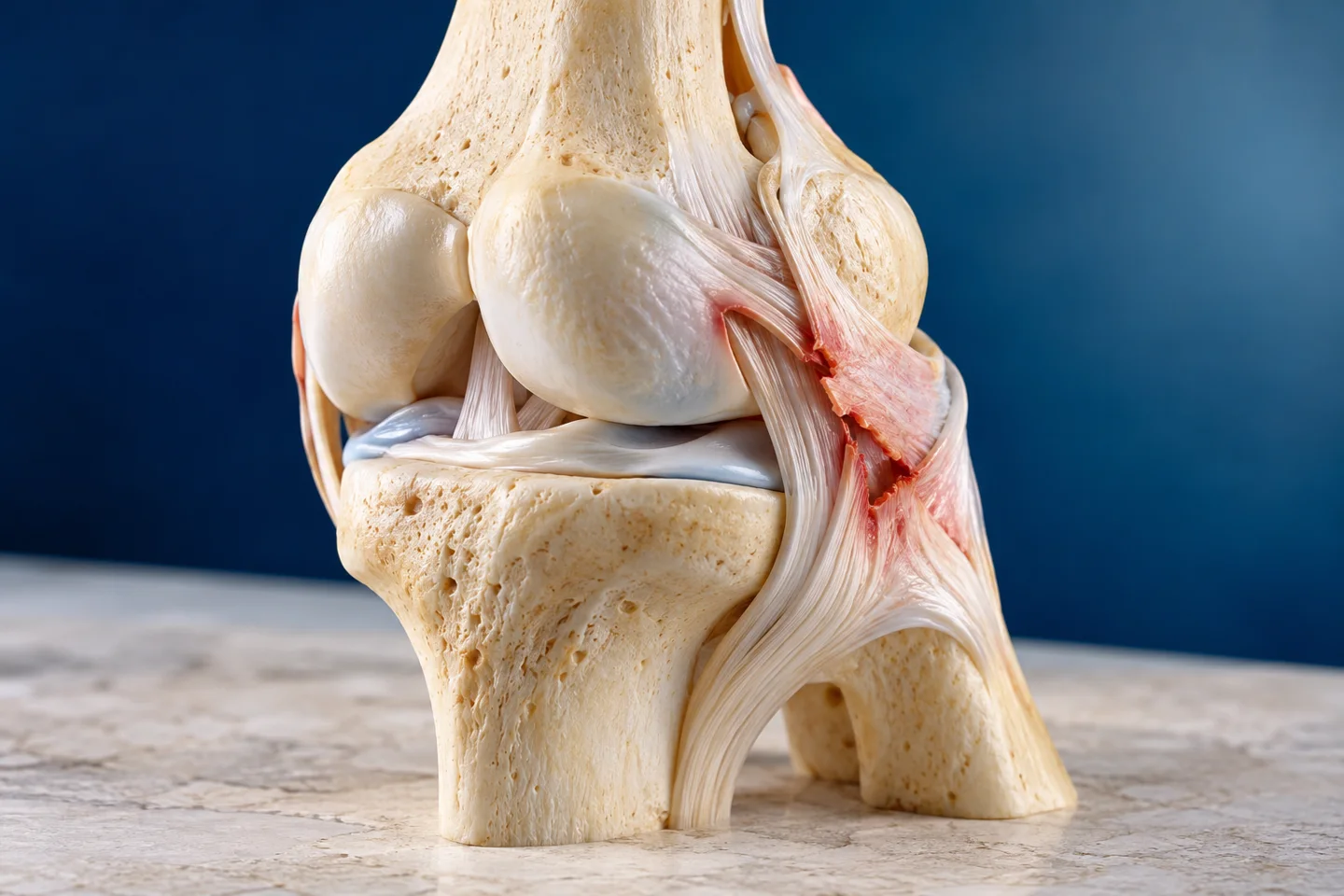
Ligaments are strong bands that join bone to bone, and the joint capsule is the ligament sleeve wrapped around a joint. A sprain stretches or partly tears these fibres. Ligaments heal by forming scar tissue, which is weaker and stretchier than the original ligament.7 Even the inner knee ligament (MCL), which usually heals without surgery, can take weeks to months, and the healed ligament differs from the original, with a higher risk of re-injury and lingering symptoms.8
Today’s care does a lot of good. After an ankle sprain, anti-inflammatory medicines and early movement ease pain and swelling, and a brace and balance training help prevent another sprain.9 In seven trials with 1,417 people, exercise-based rehabilitation lowered the risk of a new sprain at 7 to 12 months.10 These steps protect the joint, but they are not designed to rebuild the ligament’s fibres.
This is where timing helps. In a randomised trial in ACL tears, people whose tears were more than 12 months old reported smaller gains after their own bone marrow concentrate.3 Starting while your injury is recent and the ligament is still in one piece gives any treatment, regenerative care included, a better place to begin.
05
How Wharton’s jelly stem cells and exosomes work in ligament injuries
After a sprain, the injured ligament fills with inflammatory signals and heals with scar tissue that is weaker than its original fibres. Wharton’s jelly stem cells and their exosomes, tiny messages that carry proteins and RNA between cells, are injected into and around the ligament. There they aim to calm the inflammation, support new blood vessels and help the ligament heal with better-organised collagen.
How Wharton’s jelly stem cells and exosomes aim to support an injured ligament
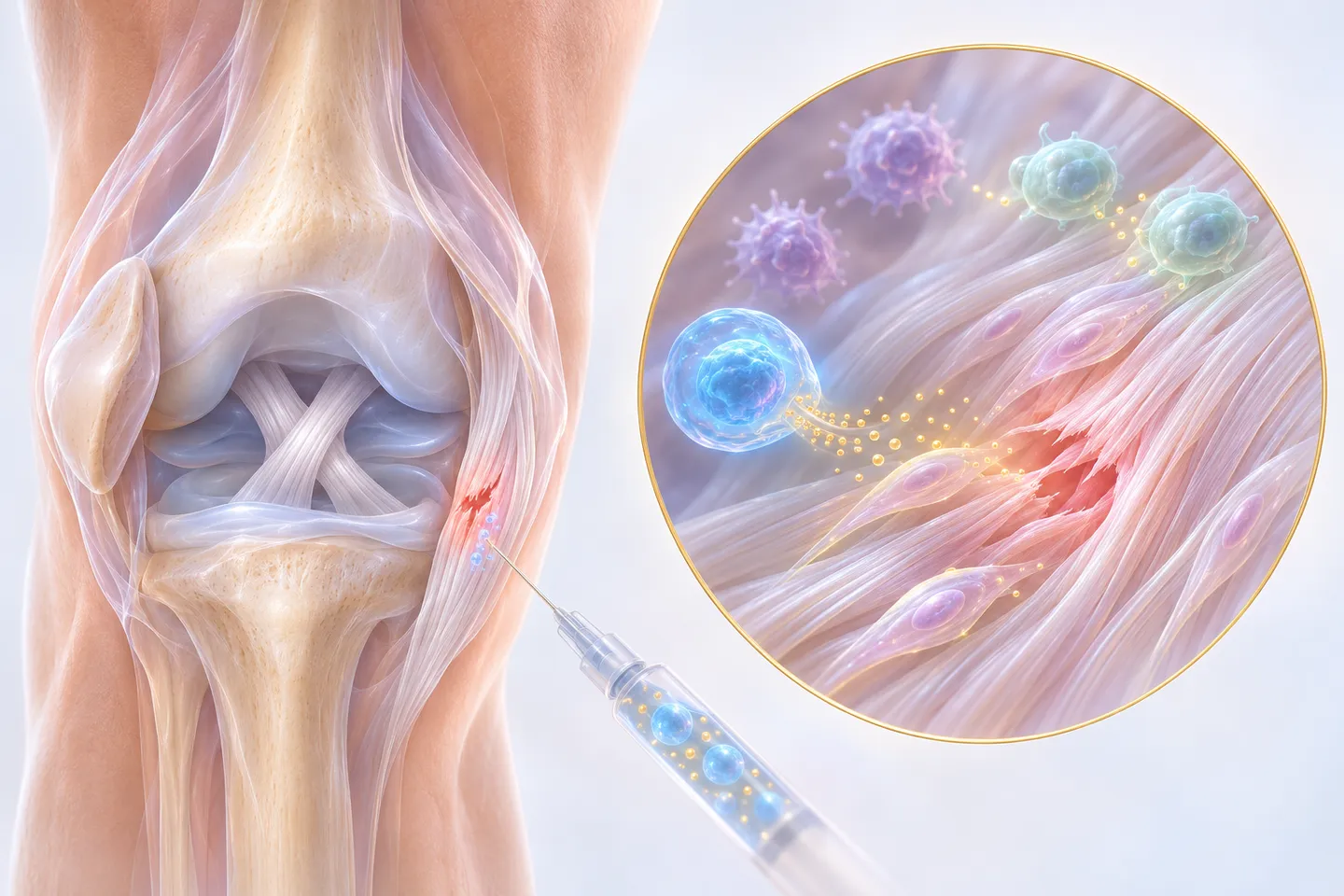
- Thigh bone (femur)The upper bone of the knee joint.
- Shin bone (tibia)The lower bone of the knee joint.
- ACLThe anterior cruciate ligament, one of the two ligaments that cross in the middle of the knee and keep it stable.
- Inner knee ligament (MCL)The flat band on the inner side of the knee. It is often sprained when the knee is twisted or knocked inwards.
- Joint capsuleThe thin ligament sleeve that wraps around the joint and holds the fluid inside.
- Partial tearA sprain where some fibres are torn but the ligament is still in one piece. Some heal slowly or stay painful and loose.
- Wharton’s jelly stem cells and exosomesFresh donor stem cells and the tiny messages they release, placed beside the injured fibres. They work mainly through calming and repair signals, shown mostly in research models.
- Calmer immune cellsLess inflammation around the injured ligament, which is a main aim of treatment.
Read the science: how the treatment aims to support an injured ligament
Each effect below says whether it was seen in people or in research models. Read more about our stem cells and our exosomes.
Calming inflammation in the injured ligament
Seen in research models. In an injured knee ligament (MCL), stem cells primed to be more anti-inflammatory created a calmer healing environment and improved healing.11
Better-organised collagen and less scar
Seen in research models. In the same ligament injury, stem cell exosomes improved how the healing ligament made and organised its collagen, and reduced scar formation.12
Ligament healing seen on MRI
Seen in people. After the healing signals of donor umbilical cord stem cells, 11 of 12 partly torn PCLs looked normal or near-normal on MRI at one year.2 After people’s own bone marrow concentrate, 77% of those treated for ACL tears showed better ligament integrity on MRI.4
Protecting the knee joint after an ACL injury
Seen in people. After ACL reconstruction, one joint injection of donor bone marrow precursor stem cells was followed by less joint-space narrowing and less tibial bone expansion (0.5% vs 4.0% over 26 weeks) than hyaluronic acid alone, changes the authors link with arthritis after a knee injury.5
Support when surgery is needed
Seen in research models. In 16 controlled studies of ACL reconstruction, stem cell treatments made the healing graft stronger and stiffer and improved how it joined the bone.13
The ankle: sprained fibres lining up again
Seen in research models. In rats with a moderate sprain of the main outer ankle ligament (the ATFL), Wharton’s jelly stem cells primed with two growth factors eased the swelling faster, evened out walking by day 6 and helped the ligament heal with almost fully aligned collagen and minimal scar.16 Collagen is the rope-like protein a ligament is made of: healthy ligament is tightly organised, while scar is weaker.7
Healing where ligament meets bone
Seen in research models. The anchor where a tendon or ligament joins bone is one of the hardest places to heal well.17 In rats, Wharton’s jelly stem cells placed on a small scaffold at an injured shoulder tendon anchor gave denser, better-organised collagen and a stronger repair.17 In sheep, tiny vesicles from umbilical cord stem cells, placed during surgery, improved healing of a shoulder tendon and its attachment to bone, with less inflammation on MRI.18
The shoulder capsule: less scar, freer movement
Seen in research models. In mice whose shoulder had been held still until the capsule stiffened, three injections into the joint of tiny vesicles from human bone marrow stem cells, a different source from our Wharton’s jelly cells, reduced the scar tissue in the capsule and improved shoulder movement.19
Fingers and thumb: the same healing biology
The same biology in every ligament. Finger and thumb ligaments, such as the one torn in skier’s thumb, heal like ligaments everywhere in the body: with scar that is weaker and stretchier than the original fibres.7 No stem cell study has looked at them yet, but the calming and repair signals described above aim at that same healing process.
06
How is our stem cell therapy transplant for Capsular ligament injury (Ligamentum injury) performed in Istanbul?
A capsular ligament injury, often caused by a sudden twist, a fall or repeated strain, can result in significant pain, swelling and a joint that feels loose. Traditional treatments include applying ice to reduce swelling, using a brace, splint or bandage to protect the ligament, physiotherapy, and managing pain with nonsteroidal anti-inflammatory drugs. A complete rupture with an unstable joint is looked at case by case. You do not need a surgeon’s opinion first: send your MRI or X-ray, and Dr. Cihan Bolat will review it free of charge and tell you honestly whether stem cell therapy suits you, or whether surgery or another option would suit you better. When surgery is needed, stem cells can sit alongside it and your physiotherapy, never instead.
Read the full section
At Istanbul StemCell Clinic, we offer a specialist-led stem cell therapy protocol for capsular ligament injuries. Our treatment involves the targeted injection of allogeneic (donor) Wharton’s jelly mesenchymal stem cells into and around the injured ligament or joint capsule, guided by imaging where needed. These cells aim to reduce inflammation, support the ligament’s healing and help you move more freely. Our personalized approach looks at what keeps your ligament injury painful or loose, and works alongside physiotherapy, and alongside surgery when it is needed.
Explore a modern, carefully planned option for ligament injuries. Contact us today to learn more about our treatment options and take the first step towards easier, more comfortable movement.
07
Why Wharton’s jelly stem cells and exosomes lead our ligament treatment
Wharton’s jelly is the soft tissue inside the umbilical cord. Its stem cells come from cords donated after healthy births, so nothing is taken from your body and no donor matching is needed. They are prepared fresh for your treatment date in a Ministry of Health-approved GMP laboratory, with the cell count and viability certified (see what our lab report shows). Your plan can also include umbilical cord stem cells and extra Wharton’s jelly exosomes.
Compare Wharton’s jelly stem cells with your own cells
| Fresh Wharton’s jelly stem cells (our cells) | Stem cells from your own bone marrow or fat | |
|---|---|---|
| Age of the cells | Newborn tissue, from cords donated after healthy births | As old as you are |
| A procedure for you | None | A bone marrow draw or liposuction first |
| Ready for treatment | Prepared fresh for your date, usually within 5 to 10 days | After a harvest, often with laboratory growth |
| Growth | Multiplied faster in a side-by-side laboratory comparison of 18 donors each14 | Bone marrow cells grew more slowly in the same comparison14 |
08
Stem cell therapy for ligament injuries: what the studies show
Research on stem cells in ligaments is young and growing, and the human studies so far are in the knee. Each used its own cells and route. The highlights:
- Knee (PCL), signals from donor cells: in 12 people with a partial tear of the posterior cruciate ligament, the secretome of donor umbilical cord stem cells (the growth factors and tiny vesicles they release), given during a keyhole knee procedure, was followed by an IKDC knee score of 90.58 out of 100 at one year.2
- Knee (ACL), randomised trial: people’s own bone marrow concentrate, which contains stem cells, with platelets, injected into ACL tears whose ends had not pulled apart, raised the median IKDC knee score from 58.8 to 94.3 out of 100 at two years.3
- Knee (ACL), MRI: after the same kind of injection, 77% of those treated showed significantly better ligament integrity on MRI, and people reported an average improvement of 72% about two years later.4
Stem cell therapy for ankle ligament injuries. An ankle sprain usually injures the anterior talofibular ligament (ATFL), the small band on the outer side of your ankle.16 We inject Wharton’s jelly stem cells and exosomes into and around the injured ankle ligaments, and PRP is free with any stem cell package. Seen in research models: in rats with a moderate ATFL sprain, Wharton’s jelly stem cells, first primed in the laboratory with two growth factors, brought the swelling down faster, evened out walking within a week and left the ligament with almost fully lined-up collagen and little scar at four weeks.16 The human studies so far are in the knee, so Dr. Cihan Bolat tells you honestly what is realistic for your ankle.
Knee function before and two years after people’s own bone marrow concentrate for ACL tears
IKDC knee score, 0–100 (higher is better)3
Lower Extremity Functional Scale, 0–80 (higher is better)3
The studies in detail, with all 4 in one table
| Study | Design | n | Cells and route | Result with exact numbers |
|---|---|---|---|---|
| Rhatomy 2023, Eur J Orthop Surg Traumatol2 | Prospective single-arm, 1 year; grade 1–2 PCL tears | 12 | Secretome of donor (allogeneic) umbilical cord stem cells; given during arthroscopy | IKDC 90.58, modified Cincinnati 90.90 and Lysholm 89.42 at 1 year; on MRI, 6 ligaments normal-looking and 5 near-normal |
| Centeno 2025, BMC Musculoskelet Disord3 | Randomised crossover trial against exercise therapy, 2 years; partial and complete ACL tears whose ends had not pulled apart | 51 (34 + 17) | Own bone marrow concentrate with platelet products; injection into the ACL | LEFS and SANE improved more than with exercise therapy at 3 months; median SANE 90% at 2 years; ACL integrity better on MRI; no serious adverse events |
| Centeno 2018, J Transl Med4 | Registry study, up to 3 years; grade 1–3 ACL tears with less than 1 cm retraction | 29 (23 with MRI) | Own bone marrow concentrate with platelet products; injection into the ACL | ACL integrity on MRI significantly better in 77%; average self-rated improvement 72% at about 23 months; LEFS and IKDC better than before at every time point |
| Wang 2017, Arthritis Res Ther5 | Randomised, double-blind, against hyaluronic acid, 2 years; after ACL reconstruction | 17 | Donor (allogeneic) bone marrow precursor stem cells, 75 million, with hyaluronic acid; one joint injection | KOOS pain, symptoms and daily activities improved more; less joint-space narrowing; tibial bone expansion 0.5% vs 4.0% over 26 weeks; no cell-related serious adverse effects |
PRP for ligament injuries. PRP (platelet-rich plasma), made from a small sample of your own blood, is free with any stem cell package. This is a PRP result, not a stem cell result: in 16 elite athletes with a high ankle sprain, PRP injections into the torn ligament plus rehabilitation were followed by a return to play after 40.8 days on average, against 59.6 days with rehabilitation alone.15 Dr. Cihan Bolat tells you whether PRP suits your plan.
09
Who can have stem cell therapy for ligament injuries?
We treat sprains and partial tears of ligaments and joint capsules in the ankle, knee, shoulder, fingers and thumb, with no fixed age limit. Dr. Cihan Bolat decides with you from your MRI, X-ray or ultrasound report, plans the routes and timing for you, and tells you honestly if treatment is not right for you. A complete rupture with an unstable joint is looked at case by case, and you do not need a surgeon’s opinion first: Dr. Cihan Bolat reviews your scan free of charge and tells you honestly whether stem cell therapy suits you, or whether surgery or another option would suit you better. When surgery is needed, stem cells can sit alongside it and your physiotherapy, never instead. For a sore tendon, see shoulder and Achilles tendinitis; for joint surface damage, cartilage disorders; for arthritis, hip, knee and shoulder osteoarthritis; and after a sports injury, sports injuries and rehabilitation.
Often suitable
- An ankle sprain that still feels loose or painful after physiotherapy
- A partial tear of a knee ligament, such as the ACL, PCL or MCL
- A sore shoulder capsule, or a finger or thumb ligament (such as skier’s thumb)
- Pain or a giving-way feeling months after the injury
Considered case by case
- A complete rupture with an unstable joint, after a free review of your MRI or X-ray
- Before or after ligament surgery, planned around your operation and physiotherapy
- Repeated sprains, or a shoulder that has dislocated
- Blood thinners, a bleeding disorder or diabetes
Not suitable for now
- A fresh injury with a possible broken bone: please see a doctor first
- Active cancer, or recent cancer treatment
- An active infection
- Pregnancy
10
Expert stem cell treatment led by Uzm. Dr. Cihan Bolat, MD
Under the leadership of Uzm. Dr. Cihan Bolat, MD, Specialist in Anesthesiology & Reanimation and Regenerative Medicine, we deliver specialized treatments tailored to meet each patient's unique needs. With extensive experience and access to advanced mesenchymal stem cells (MSCs) from umbilical cord sources, we provide an integrated approach to treating capsular ligament injuries. At our clinic, we prioritize a natural and therapeutic approach, free from performance-enhancing substances. Our friendly, professional team ensures a relaxing atmosphere to make your experience as comfortable and effective as possible.
Read the full section
11
How Does Our Stem Cell Therapy Treat Capsular Ligament Injuries?
All our stem cell treatments in Istanbul are conducted by highly specialized professionals, trained in the United States and Turkey, ensuring precision, in-depth knowledge of each condition, and top-quality care. Unlike general practitioners, our specialists are dedicated exclusively to stem cell therapy, allowing for the most accurate and effective treatments. We prioritize transparency and honesty with our patients. Not everyone qualifies for our stem cell therapies, as our experts carefully review each patient's health status and medical history to ensure the treatment is appropriate and beneficial. To maintain patient safety and realistic expectations, every potential candidate undergoes a thorough evaluation by a specialist before treatment planning begins.
Step 1. Assessment by the Specialist – For patients with capsular ligament injury (Ligamental Injury) complaints, our specialist must know the patient's age and previous medical treatments. In addition, he will need to review specific tests that you will be asked to bring.
Step 2. Free Phone Consultation with the Specialist – Once the specialist has reviewed the medical records and approved your case, we will present treatment options and pricing. At this time we also offer a free telephone consultation to discuss questions and concerns.
Step 3. Stem Cell Preparation – Once you decide to undergo our treatment, we will send a deposit invoice to begin the process of stem cell preparation so that it is ready for your scheduled treatment. The duration of this process may vary depending on current demand and availability, but can take 5-10 days.
Step 4. Treatment day – On the day of treatment you can choose to come to our hospital location or use our free transportation to and from our clinic in Istanbul. Our driver will pick you up at your desired location and accompany you to our clinic, where the specialist will administer the treatment, and then return you safely.
Step 5. Follow-up Treatment – Our follow-up treatment specialist will contact you according to our follow-up schedule to ensure you have all the resources you need for maximum benefits. Your well-being and satisfaction are our top priority.
12
What our patients say
Professional and friendly!
After long research and much hesitation, I decided to have my stem cell treatment carried out by Istanbul Stemcel. From the moment I contacted them I felt completely supported and reassured by their professional and friendly team. The treatment itself went smoothly and was virtually painless. What really struck me was the care and dedication of the medical staff to ensure everything went according to plan. The result? I couldn't be happier! My health has improved significantly, and I am grateful to Istanbul Stem Cell for this life-changing experience. I would have no hesitation in recommending them to anyone considering stem cell therapy.
Simply stunning!
My experience with Istanbul Stem Cell was simply amazing. From the very first contact they were extremely professional and helpful. I was initially a little skeptical about stem cell therapy, but their team answered all my questions and concerns patiently and convincingly. The treatment itself was carried out carefully and professionally, and I felt in good hands. After treatment, I quickly began to notice improvements in my health, and I can happily say that my life has changed significantly thanks to Istanbul Stem Cell. I can't thank them enough and would highly recommend their services to anyone looking for high quality stem cell therapy.
13
Capsular ligament injury stem cell therapy cost in Turkey
Ligament treatment is a targeted injection into and around the injured ligament or joint, so it is priced in your written plan: a fixed, all-inclusive price before you book. Both knees plus nearby tendons and ligaments can be treated in a single day. An IV infusion, only where your plan includes one, follows our price list, effective 1 June 2026, in US dollars (M = million stem cells), with free Wharton’s jelly exosomes from 50M. See our stem cell therapy cost guide.
| Cell count | USD price | Free exosomes | Free hotel |
|---|---|---|---|
| 25M | $4,950 | No | No |
| 50M | $6,950 | 10 billion exosomes | No |
| 75M | $8,950 | 10 billion exosomes | No |
| 100M | $10,500 | 20 billion exosomes | 2 nights |
| 125M | $11,850 | 20 billion exosomes | 2 nights |
| 150M | $13,550 | 30 billion exosomes | 2 nights |
| 175M | $15,000 | 30 billion exosomes | 2 nights |
| 200M | $16,500 | 30 billion exosomes | 3 nights |
| 225M | $18,000 | 30 billion exosomes | 3 nights |
| 250M | $19,500 | 30 billion exosomes | 3 nights |
What is included, and what is optional
Included
- Free review of your MRI or ultrasound report, and a phone consultation
- Your injections, and any IV infusion, as set out in your plan
- Fresh Wharton’s jelly stem cells, count and viability certified
- PRP (platelet-rich plasma), free with any stem cell package
- Treatment by Uzm. Dr. Cihan Bolat’s specialist team
- Ground transport, a case manager and interpreter help
- Hotel nights as listed, in 5-star hotels
- Follow-up by phone or WhatsApp
Not included / optional
- Flights and extra hotel nights
- Extra exosomes, priced in your plan
- Add-ons such as Muse cells, Muse exosomes or CD34+ exosomes
- A repeat treatment, if you choose one
14
Read our full guides
Would you like the whole story? These guides go deeper.
Does stem cell therapy work for sports injuries?
Tendons, ligaments and muscles, with the studies and how physiotherapy fits in.
Read the guide GuideStem cell therapy for a torn meniscus
When a knee injury reaches the meniscus, the knee’s shock absorber, and how stem cells and exosomes support it.
Read the guide GuideExosome treatments explained
What exosomes are, how they carry repair signals and how each exosome injection is given.
Read the guide15
Frequently asked questions
What is the success rate of stem cell therapy for ligament injuries?
It depends on which ligament is injured, how badly and how long ago. In published knee studies, 11 of 12 partly torn PCLs looked normal or near-normal on MRI a year after the healing signals of donor umbilical cord stem cells, and people with ACL tears rated their knee a median of 90% better two years after their own bone marrow concentrate. Dr. Cihan Bolat tells you honestly what is realistic for you.
Can stem cells help a partial ACL tear?
Many partial ACL tears are treated first with physiotherapy. For a tear that stays painful or unstable, injections into the ligament have been studied: after people’s own bone marrow concentrate, which contains stem cells, 77% of those treated showed significantly better ligament integrity on MRI. We inject Wharton’s jelly stem cells and exosomes into and around the ligament, guided by imaging where needed; partial MCL and PCL tears are treated the same way.
What is the best treatment for an ankle ligament injury?
Ankle sprains are treated first with early movement, anti-inflammatory medicines, a brace and balance exercises, and many settle with this care. When the ankle stays painful or loose for months, Wharton’s jelly stem cells and exosomes can be injected into and around the injured ligaments, and PRP is free with any stem cell package. The human stem cell ligament studies so far are in the knee; in rats with a sprained outer ankle ligament, Wharton’s jelly stem cells primed with growth factors helped the fibres heal well lined up, with little scar. Dr. Cihan Bolat tells you honestly what is realistic for your ankle.
Do I still need surgery for a torn ligament?
Not always, and you do not need a surgeon’s opinion first. Send your MRI or X-ray, and Dr. Cihan Bolat will review it free of charge and tell you honestly whether stem cell therapy suits you, or whether surgery or another option would suit you better. A complete rupture with an unstable joint is looked at case by case. For sprains and partial tears, some people use stem cell therapy to support healing and to delay or avoid surgery. When surgery is needed, stem cells can sit alongside it and your physiotherapy, never instead.
How soon will I feel a difference, and how long does it last?
Results build gradually over weeks and months. In the randomised ACL trial, knee function was better by 3 months and kept improving to two years. Everyone responds at their own pace, and physiotherapy helps you build on every gain.
How long do I need to stay in Istanbul?
Your plan sets the dates. Your cells are prepared fresh for your treatment date, usually within 5 to 10 days of booking. Dr. Cihan Bolat, a specialist in anaesthesiology and reanimation, plans each injection with your comfort in mind, you walk out the same day, and your case manager helps you choose dates that suit you.
Can stem cell therapy cure my capsular ligament injuries?
The benefits of stem cell treatment for capsular ligament injuries may vary from patient to patient, depending on factors such as current health, medical history, the extent of damage, and other considerations. It is important to understand that, although stem cell injections have shown encouraging results in studies of knee ligament tears, the goals of treatment are less pain, easier movement, a more confident joint and a better quality of life.
What is stem cell therapy, and how does it differ from conventional treatments for certain conditions?
Stem cell therapy is a medical treatment that uses stem cells, and the signals they release, to calm inflammation and support the healing of damaged tissue. It works alongside conventional treatments, such as medicines, physiotherapy or surgery, and aims at the inflammation and injured tissue behind your symptoms, not only the symptoms themselves.
How safe is stem cell treatment for capsular ligament injuries at this clinic?
We take pride in being the safest and most honest stem cell therapy clinic in Istanbul. All our stem cell treatments are evaluated and administered by specialists in this field who have trained in both the United States and Turkey, rather than only by general physicians or specialists. This helps ensure the highest level of precision, understanding of the condition, and treatment quality for our patients. We are completely clear and honest with our patients. Not everyone qualifies for our stem cell treatments. We decline many patients when our specialist determines that treatment is unsuitable, to avoid false promises or expectations when the risks outweigh the benefits.
Which specialists perform stem cell treatments for capsular ligament injuries at Istanbul Stem Cell?
Our stem cell treatments for capsular ligament injuries are performed by specialists in this condition who have trained in the United States and Turkey.

Medical review
Uzm. Dr. Cihan Bolat
Medical Director, Istanbul Stemcell
This page was written from the published studies listed below and reviewed for medical accuracy on .
16
References
All 19 published studies, with PubMed links
- van Rijn RM, et al. What is the clinical course of acute ankle sprains? A systematic literature review. Am J Med. 2008;121(4):324-331.e6. PMID 18374692
- Rhatomy S, et al. Allogeneic umbilical cord mesenchymal stem cell conditioned medium (secretome) for treating posterior cruciate ligament rupture: a prospective single-arm study. Eur J Orthop Surg Traumatol. 2023;33(3):669-675. PMID 35699826
- Centeno CJ, et al. Non-surgical treatment of anterior cruciate ligament tears with percutaneous bone marrow concentrate and platelet products versus exercise therapy: a randomized-controlled, crossover trial with 2-year follow-up. BMC Musculoskelet Disord. 2025;26(1):882. PMID 41029301
- Centeno C, et al. Symptomatic anterior cruciate ligament tears treated with percutaneous injection of autologous bone marrow concentrate and platelet products: a non-controlled registry study. J Transl Med. 2018;16(1):246. PMID 30176875
- Wang Y, et al. Safety, tolerability, clinical, and joint structural outcomes of a single intra-articular injection of allogeneic mesenchymal precursor cells in patients following anterior cruciate ligament reconstruction: a controlled double-blind randomised trial. Arthritis Res Ther. 2017;19(1):180. PMID 28768528
- Wang Y, Yi H, Song Y. The safety of MSC therapy over the past 15 years: a meta-analysis. Stem Cell Res Ther. 2021;12(1):545. PMID 34663461
- Hildebrand KA, Frank CB. Scar formation and ligament healing. Can J Surg. 1998;41(6):425-9. PMID 9854530
- Lee CS, et al. Mesenchymal Stem Cells for Enhanced Healing of the Medial Collateral Ligament of the Knee Joint. Medicina (Kaunas). 2023;59(4). PMID 37109683
- Doherty C, et al. Treatment and prevention of acute and recurrent ankle sprain: an overview of systematic reviews with meta-analysis. Br J Sports Med. 2017;51(2):113-125. PMID 28053200
- Bleakley CM, et al. Rehabilitation Exercises Reduce Reinjury Post Ankle Sprain, But the Content and Parameters of an Optimal Exercise Program Have Yet to Be Established: A Systematic Review and Meta-analysis. Arch Phys Med Rehabil. 2019;100(7):1367-1375. PMID 30612980
- Saether EE, et al. Primed Mesenchymal Stem Cells Alter and Improve Rat Medial Collateral Ligament Healing. Stem Cell Rev Rep. 2016;12(1):42-53. PMID 26530282
- Chamberlain CS, et al. Exosome-educated macrophages and exosomes differentially improve ligament healing. Stem Cells. 2021;39(1):55-61. PMID 33141458
- Sun X, Zhao S, Wang C. Effect of stem cell therapies on tendon-bone healing after anterior cruciate ligament reconstruction in animal models: a systematic review and meta-analysis. Front Bioeng Biotechnol. 2026;14:1869863. PMID 42978926
- Batsali AK, et al. Differential expression of cell cycle and WNT pathway-related genes accounts for differences in the growth and differentiation potential of Wharton's jelly and bone marrow-derived mesenchymal stem cells. Stem Cell Res Ther. 2017;8(1):102. PMID 28446235
- Laver L, et al. Plasma rich in growth factors (PRGF) as a treatment for high ankle sprain in elite athletes: a randomized control trial. Knee Surg Sports Traumatol Arthrosc. 2015;23(11):3383-92. PMID 24938396
- Gan QF, et al. Functional recovery effects of growth factor-stimulated mesenchymal stromal cells in a Wistar rat model of ankle sprain injury. Int Orthop. 2026;50(10):2487-2498. PMID 42440119
- Doğramacı AR, et al. Efficacy of Wharton Jelly-Derived Mesenchymal Stem Cells Implanted on 3-Dimensional Hyaluronan-Based Scaffold in Tendon-Bone Interface Healing. Ann Plast Surg. 2025;95(2):206-211. PMID 40399138
- Jenner F, et al. Evaluation of the Potential of Umbilical Cord Mesenchymal Stromal Cell-Derived Small Extracellular Vesicles to Improve Rotator Cuff Healing: A Pilot Ovine Study. Am J Sports Med. 2023;51(2):331-342. PMID 36645050
- Luo Z, et al. Human bone marrow mesenchymal stem cell-derived extracellular vesicles inhibit shoulder stiffness via let-7a/Tgfbr1 axis. Bioact Mater. 2022;17:344-359. PMID 35386460