
01
Can stem cells help muscular dystrophy? The short, honest answer
In short: stem cells cannot correct the gene change behind muscular dystrophy. What human studies do show is that mesenchymal stem cells (MSCs) can support muscle strength, breathing tests and everyday function, alongside steroids, physiotherapy and the care of a neuromuscular team.123
They work mainly as signal-givers. Instead of replacing muscle fibres one by one, they release calming immune signals, growth factors and exosomes, tiny parcels of proteins and RNA, that aim to ease inflammation and scarring and help the muscle’s own repair cells.89 This guide gathers the favourable human studies so you can judge the evidence yourself; for our treatment page, see stem cell therapy for muscular dystrophy in Istanbul.
Results at a glance
- 13.0 Nthe largest of 14 significant strength gains after donor Wharton’s jelly stem cells1
- 86.67%of 150 people with Duchenne, Becker and limb-girdle improved in symptoms and function with cell therapy3
- 87.8%of 82 people had better daily-living scores after stem cells into the muscles and a vein10
- 12 studiesreviewed in 2024: cell therapies may offer a new, safe and effective option for Duchenne6
02
What is muscular dystrophy? Duchenne, Becker, limb-girdle and other types
Muscular dystrophies are a family of inherited muscle conditions caused by changes in more than 40 genes.11 Each of these genes holds the recipe for a protein that keeps muscle fibres strong. In Duchenne muscular dystrophy, changes in the DMD gene stop the body from making dystrophin, a protein that steadies the wall of each muscle fibre as it works, so fibres are more easily damaged during everyday use.12 In Becker muscular dystrophy, dystrophin is still made, but shorter or in smaller amounts.
Diagnosis has changed a great deal. Now that most of the genes are known, doctors can name the exact type and plan care that anticipates each person’s needs, which has improved quality of life.11
| Type | The protein or gene | How common |
|---|---|---|
| Duchenne | Dystrophin is missing (DMD gene) | 19.8 per 100,000 boys born13 |
| Becker | Dystrophin is shorter or reduced (DMD gene) | 1.53 per 100,000 males14 |
| Myotonic dystrophy | DMPK or CNBP gene | 8.26 per 100,000 people15 |
| Facioscapulohumeral (FSHD) | DUX4 switched on in muscle; face, shoulders and upper arms | 3.95 per 100,000 people15 |
| Limb-girdle | Many different genes; mainly shoulder and hip muscles | 1.63 per 100,000 people15 |
03
Living with muscular dystrophy: the everyday side
Muscular dystrophy touches the whole family. Parents learn a new language of genes, scores and clinic letters while keeping school runs, birthdays and sibling squabbles going. Children want what every child wants: friends, play, a sense of humour and a say in their own lives. Adults with Becker, limb-girdle or FSHD often balance work, relationships and independence with careful planning of their energy.
There is real reason for optimism in how people feel about their own lives. In a study of 117 boys with Duchenne and 200 parents, the older boys rated their emotional and social well-being higher than younger boys did, whatever their need for mobility aids, and more positively than their parents rated it; boys taking steroids reported significantly less worry.16 International care guidelines now look across the whole lifespan, with support for mental health, education, work, relationships and independence.17
School and friendships
Joining in, keeping up and feeling part of the group.
Arms and hands
Writing, eating, gaming and reaching without tiring so soon.
Rest and energy
Sleeping well and having energy left for the evening.
Independence
Making choices, travelling and doing more on your own terms.
04
Muscular dystrophy treatment today: what helps
Care for muscular dystrophy is led by a neuromuscular team, and it has moved towards anticipatory, team-based care with a renewed focus on quality of life.18 For Duchenne, steroids are the foundation: in a 10-year study of 440 boys and young men, a year or more of steroids helped them keep everyday abilities, such as standing up, climbing stairs and using their hands, for longer.19 Physiotherapy matters too. In a randomised trial, 24 weeks of assisted cycling of the arms and legs kept motor function steady in boys with Duchenne.20
Genetic treatments are a major step forward. Exon skipping, stop codon readthrough, gene replacement and gene editing all aim to restore dystrophin, and several are already in use for some boys.21 Stem cells and exosomes are studied alongside this care, because inflammation remains an important target in muscular dystrophy.22
| Option | What it does | How it fits with stem cells and exosomes |
|---|---|---|
| Wharton’s jelly stem cells and exosomes | Aim to calm inflammation, reduce scarring and support muscle strength | Added to your care and planned around it |
| Steroids | Help protect muscle strength and everyday abilities | Continue as your neuromuscular team prescribes |
| Physiotherapy and exercise | Keep muscles and joints moving and support function | Stay the foundation, before and after treatment |
| Genetic treatments | Aim to restore dystrophin for suitable gene changes | Continue; Dr. Cihan Bolat plans the timing with you |
| Heart and breathing care | Regular checks and medicines that protect the heart and lungs | Continue; recent results help plan your treatment |
05
Why acting early matters in muscular dystrophy
Three facts explain why timing matters. Muscle fibres without enough dystrophin are more sensitive to everyday wear, so muscle tissue changes gradually over the years.12 In Duchenne, inflammation begins in the muscle very early, even before symptoms, while the signals that drive scarring become stronger later.23 And international care guidelines have shifted to anticipatory care, planning ahead rather than waiting for changes.18
Regenerative research points the same way. In a research model of Duchenne, mesenchymal stromal cells given early by IV calmed inflammation and improved grip strength, running and heart function over the long term.24 The more healthy muscle there is today, the more any treatment, and your physiotherapy, has to build on.
Just as important, older children and adults are not left out. People aged 4 to 63, most of them adults, took part in the Wharton’s jelly study in which strength rose in 14 movements,1 and a 5-year study of limb-girdle muscular dystrophy reported significant gains in strength and independence.25
06
How do stem cells and exosomes act in muscular dystrophy?
Mesenchymal stem cells act as repair coordinators rather than replacement parts. Here is what the research shows, step by step, and whether each effect was seen in people or in research models. For a short version with an illustration, see our muscular dystrophy treatment page.
How Wharton’s jelly stem cells and exosomes aim to support muscle in muscular dystrophy
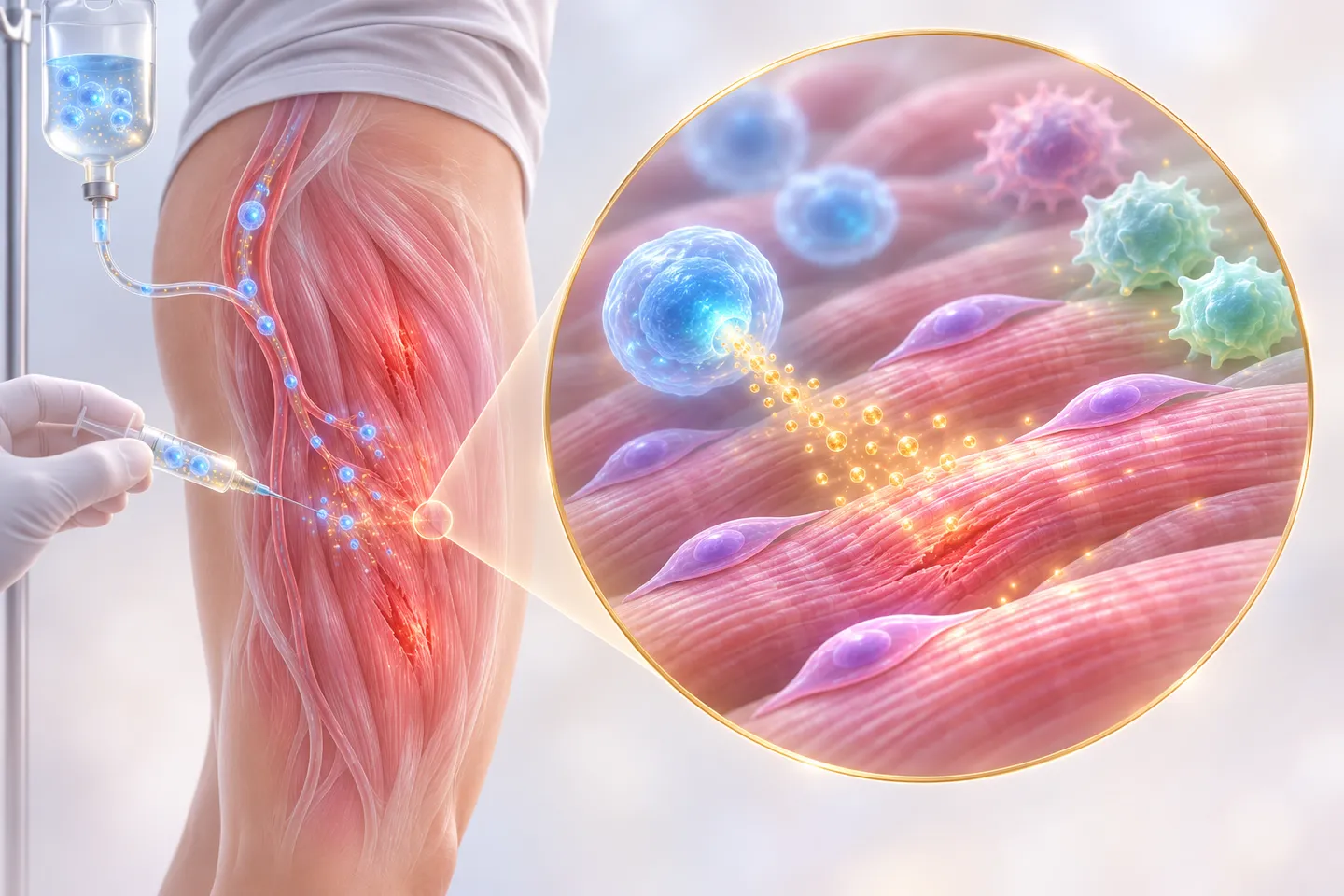
- IV dripFresh Wharton’s jelly stem cells are given by IV infusion.
- Cells in the bloodstreamThe stem cells travel with the blood to the muscles and release calming signals.
- Muscle injectionWhere Dr. Cihan Bolat plans it, cells are also placed directly into chosen muscles with a fine needle.
- Weakened fibresIn muscular dystrophy, muscle fibres are fragile and become inflamed and damaged over time.
- Stem cellA Wharton’s jelly MSC. It works mainly by releasing protective signals.
- ExosomesTiny messages from stem cells that tell muscle cells to calm inflammation and protect themselves.
- Muscle stem cellsSatellite cells, the muscle’s own repair cells. Supporting them is an aim shown mainly in research models.
- Calmer immune cellsLess inflammation in the muscle, one of the main aims of the treatment.
Calming inflammation
Seen in research models. Inflammation drives much of the damage that follows missing dystrophin.22 MSCs are natural anti-inflammatories that also release growth factors for the muscle’s own repair cells,8 and in a research model of Duchenne they turned immune cells in the muscle towards their calming, repairing (M2) form.24
Reducing scarring
Seen in research models. IV Wharton’s jelly stem cells significantly reduced scarring and damaged fibres through MMP-1, an enzyme that breaks down excess scar tissue,4 and raised miR-499, a small RNA that blocks receptors for the scarring signal TGF-β.5
Protecting muscle fibres
Seen in laboratory studies and research models. Wharton’s jelly stem cells release GRO-α, a signal that protected muscle cells from necroptosis, a form of cell breakdown, and GRO-α also worked in a research model of Duchenne.26 Given by IV, the cells lowered CK, a blood marker of muscle damage, and supported new muscle, with stronger effects at higher doses.5
Exosomes and utrophin
Seen in laboratory studies. Exosomes from placental MSCs helped muscle cells from people with Duchenne mature, lowered scarring genes and raised utrophin, a natural back-up for dystrophin, partly through a small RNA called miR-29c.27
New muscle and blood vessels
Seen in laboratory studies and research models. MSC exosomes supported the forming of new muscle cells and blood vessels in laboratory studies, and muscle repair after injury in research models,28 and umbilical cord MSC exosomes carried follistatin, a natural brake on the muscle-limiting protein myostatin, which reduced scarring and supported muscle repair.29
Donor cells, dystrophin and strength in people
Seen in people. In 9 boys with Duchenne, donor cells were found in the muscle after Wharton’s jelly stem cells and dystrophin expression rose,2 and in 22 people with different muscular dystrophies, strength rose significantly in 14 measured movements.1
That is why plans can combine routes: cells injected into chosen muscles work close to the fibres, while IV cells and exosomes travel throughout the body; in research models, IV cells also supported heart function.24 Read more about our stem cell therapy and our exosome therapy.
07
Why Wharton’s jelly stem cells and exosomes for muscular dystrophy?
Wharton’s jelly is the soft, protective tissue inside the umbilical cord. Its stem cells come from cords donated after healthy births, so they are among the youngest used in treatment, and nothing is taken from your body or your child’s. Cells of this type were used in the Turkish study in boys with Duchenne and the Polish study in 22 people with different muscular dystrophies.21
Young and vigorous
In a comparison of cells from 18 donors each, Wharton’s jelly stem cells multiplied more readily than bone marrow stem cells.30
Muscle-friendly signals
In a gene comparison, they showed more activity in muscle-forming (WNT) pathways and less in scarring (TGF-β) pathways than stem cells from fat, and the researchers named them a preferable source for Duchenne.31
No donor matching
They lack CD40, CD80 and CD86, signals that alert the immune system, and did not stimulate another person’s immune cells in laboratory tests.32
Fresh, never frozen
Prepared for your date in a Ministry of Health-approved GMP laboratory. In laboratory work, cells used straight after thawing had weaker immune-calming properties than fresh cells.33
Umbilical cord MSCs and CD34+ exosomes
Your plan can also include umbilical cord MSCs, the cells of the Becker family study below,34 and CD34+ exosomes for their blood-vessel-supporting signals. Every batch is certified for cell count, viability and sterility, as our stem cell quality guide explains.
08
Stem cell therapy for muscular dystrophy: what human studies report
Here are the favourable human studies, each with its own cells, route and results. They include children and adults, people who walk and people who use mobility aids, and several types of muscular dystrophy.
| Study | Design | n | Cells (their own source) and route | Result with exact numbers |
|---|---|---|---|---|
| Świątkowska-Flis 2021, Stem Cells Transl Med1 | Compassionate use, single group (Poland); ages 4 to 63; limb-girdle, FSHD, Becker and other types | 22 | Donor Wharton’s jelly MSCs, about 1 million per kg; IV, then IV or into the spinal fluid | Strength significantly up in 14 movements, by up to 13.0 N; 6 (27.3%) better in walking or movement tests; one passing headache and back pain |
| Dai 2018, Degener Neurol Neuromuscul Dis2 | Phase 1/2, open label (Turkey); Duchenne, boys aged 7 to 14 | 9 | Donor Wharton’s jelly MSCs, 2 million per kg; into an artery and into the muscles | Well tolerated; lung function tests rose; donor cells found in the muscle and dystrophin expression up |
| Li 2015, Int J Mol Med34 | Family case series; Becker | 3 treated | Donor umbilical cord MSCs; IV | Stronger limbs, larger muscles and more activity from week 1; a six-year-old’s walking normal by 12 weeks; CK and LDH lower; no adverse reactions |
| Klimczak 2020, Cells35 | Case series; Duchenne, aged 11 to 22 | 3 | Donor bone marrow MSCs with muscle progenitor cells; injected into one muscle | No adverse effects; better EMG motor unit measures; CK lower; inflammatory signals normalised |
| Yang 2009, Zhonghua Yi Xue Za Zhi10 | Before-and-after study (China) | 82 | Own bone marrow MSCs plus umbilical cord blood MSCs; into the muscles and a vein | Daily-living scores up in 72 (87.8%); LDH lower; no adverse reactions |
| Sharma 2013, Cell Transplant3 | Open-label clinical study; Duchenne, Becker and limb-girdle | 150 | Own bone marrow mononuclear cells; into the spinal fluid and muscles, with rehabilitation | 86.67% improved at about 12 months; strength up in the trunk (53%), upper limbs (48%) and lower limbs (59%) |
| Sharma 2015, Degener Neurol Neuromuscul Dis25 | 5-year longitudinal study; limb-girdle | 65 (59 analysed) | Own bone marrow mononuclear cells; into the spinal fluid and muscles | Significant improvement in muscle testing and independence (FIM) scores; no adverse events |
| Sharma 2013, Case Rep Transplant36 | Case report; Becker, aged 39 | 1 | Own bone marrow mononuclear cells, 3 treatments, with rehabilitation | Independence (FIM) score 93 → 105; walking with knee splints; no increase in muscle fat on MRI |
The donor Wharton’s jelly studies
In the Polish study, most people received a first IV dose followed by doses into the spinal fluid, at about 1 million cells per kilogram, with the largest gains in the shoulders, elbow and knee.1 In the Turkish study, boys aged 7 to 14, some walking and some not, received 2 million cells per kilogram into an artery and into the muscles, and lung function tests rose.2 Both groups were treated with cells of the type that leads our plans for stem cell treatment for muscular dystrophy in Turkey.
What the pooled evidence says
A 2024 systematic review of 12 completed clinical studies of cell therapies in Duchenne, including MSCs and bone marrow cells, concluded that these approaches may offer a new, safe and effective option.6
09
Stem cell therapy for muscular dystrophy success rate: what the numbers mean
“Success” in muscular dystrophy can mean a stronger grip, easier stairs, steadier breathing tests or keeping the abilities a child has today. Studies measure it with force meters, manual muscle testing, independence scales such as FIM, and breathing tests. Beside the chart, these are the clearest figures:
- 27.3% walked or moved better on testing, and strength rose in 14 movements, after donor Wharton’s jelly stem cells.1
- 86.67% of 150 people improved in symptoms and function about a year after cell therapy with rehabilitation, and 59% had stronger legs.3
- 87.8% had better daily-living scores after stem cells into the muscles and a vein.10
- 93 to 105 on the independence (FIM) scale for a man with Becker after three cell treatments with rehabilitation.36
Your own result depends on the type of muscular dystrophy, age, current strength, heart and lung health, and how actively physiotherapy continues. Dr. Cihan Bolat explains what is realistic after reviewing the reports.
The six largest strength gains after donor Wharton’s jelly stem cells: median force in newtons (higher is stronger)
Left shoulder: raising the arm out to the side1
Right shoulder: raising the arm out to the side1
Straightening the right elbow1
Straightening the right knee1
Bending the right hip1
Bending the left shoulder1
10
Exosomes for muscular dystrophy: what research shows
Exosomes are tiny vesicles, on average about 100 nanometres across, that cells use to send proteins, fats and RNA messages to one another.9 Much of the repair effect of stem cells travels in these parcels, which is why exosomes are studied as a cell-free treatment of their own.
In muscle research, MSC exosomes supported the forming of new muscle cells and blood vessels and helped muscle repair after injury,28 exosomes from placental MSCs raised utrophin and lowered scarring genes in muscle cells from people with Duchenne,27 and vesicles from amniotic membrane stromal cells increased active muscle stem cells and new fibres and reduced scarring in a research model of Duchenne.37 So far, these results come from laboratory studies and research models.
In your plan, Wharton’s jelly exosomes are given by IV infusion, and from 50 million cells our IV packages include free Wharton’s jelly exosomes. Learn more in exosome treatments explained and on our exosome therapy page.
11
What is established and what is still early
Research into muscular dystrophy is moving fast. Here is where stem cells and exosomes stand today.
| Level of evidence | What it shows | Key studies |
|---|---|---|
| Shown in randomised human trials | MSC treatment is safe across 62 randomised trials in about 20 conditions, the most common effect a passing fever | Wang 20217 |
| Seen in early human studies | Strength gains in 14 movements, better walking or movement in 27.3%, rising breathing tests, donor cells and dystrophin in muscle, and better independence scores, in Duchenne, Becker, limb-girdle and other types | Świątkowska-Flis 2021, Dai 2018, Li 2015, Sharma 2013 and 20151234325 |
| Seen in research models only | Calmer inflammation, less scarring, protected muscle fibres, more utrophin, new muscle fibres and blood vessels, and the effects of exosomes | Nitahara-Kasahara 2023, Choi 2020, Park 2021, Bier 2018, Nakamura 201524452728 |
The direction of travel is encouraging: the first studies of donor Wharton’s jelly stem cells in muscular dystrophy reported gains in strength and breathing tests, and a 2024 review of 12 clinical studies saw cell therapy as a promising, safe option for Duchenne.126
12
Is stem cell therapy for muscular dystrophy safe?
The published record is reassuring. A 2021 meta-analysis of 62 randomised trials with 3,546 patients found MSC treatment safe, the most common effect a passing fever,7 and a review of 39 studies of MSC injections into the spinal fluid found no serious adverse events related to the injection.38
The muscular dystrophy studies point the same way. In the Polish Wharton’s jelly study, only one of 22 people had a passing headache and lower back pain;1 the Becker family had no adverse reactions;34 donor cells injected into muscle caused no adverse effects;35 and the Turkish study in boys reported no complications from the procedures.2
Your own care adds further layers: careful screening of the records, including heart and lung tests, fresh cells with certified count and viability, and a specialist team led by Dr. Cihan Bolat, a specialist in anaesthesiology and reanimation.
13
Muse cells and Muse exosomes: an optional add-on
Muse cells, short for multilineage-differentiating stress-enduring cells, are a small group of hardy repair cells within the mesenchymal stem cell family, first described in Japan in 2010. In that first report, Muse cells given locally or by IV in research models settled in damaged muscle and became cells that made dystrophin.39 If you choose them, Muse cells are given by IV infusion or intrathecally, and Muse exosomes by IV infusion, alongside the Wharton’s jelly cells that lead your plan.
14
Your treatment in Istanbul: routes, plan and step by step
Every plan starts with the reports and your goals. Dr. Cihan Bolat, our medical director and a specialist in anaesthesiology and reanimation and in regenerative medicine, reviews the genetic report, neuromuscular clinic letters, recent heart and lung tests, current medicines including steroids, and physiotherapy. Dr. Cihan Bolat plans the routes and timing for you.
For muscular dystrophy, Wharton’s jelly stem cells are given by IV infusion and by injection into chosen muscles, and exosomes by IV infusion. Where Dr. Cihan Bolat plans it, stem cells can also be given intrathecally, into the spinal fluid, as in the Polish study.1 A typical IV range is 1–2 million cells per kilogram, and the right dose for a child or an adult is set in the medical review. Parents and companions are welcome, and interpreter help is available when needed. Most of our international patients come from the UK and the United States: see our guides for UK patients and US patients.
Questions worth asking any clinic
- Which cells, from which tissue, and are they fresh?
- Will we see the batch certificate?
- Which routes, and why for this type of muscular dystrophy?
- How will the plan fit with steroids, physiotherapy and genetic treatments?
- What is the total price, in writing?
Our guide on how to choose a stem cell clinic abroad explains them, and things to do in Istanbul during treatment has ideas for calm family days.
Send us the reports
Share the genetic report, neuromuscular clinic letters, recent heart and lung tests, medicines and a short note on daily life, by our consultation form or WhatsApp on +90 534 856 92 92.
Free medical review
Dr. Cihan Bolat reviews the case free of charge and talks it through with you and your family.
Your written plan and fixed price
If treatment suits, you receive the cells, exosomes and routes in writing, with a fixed, all-inclusive price.
Treatment in Istanbul
Fresh cells are prepared for your date, and our team guides you calmly through each step.
Home, physiotherapy and follow-up
Back home, physiotherapy and the neuromuscular team’s care continue, and we follow up at about 1, 3, 6 and 12 months by phone or WhatsApp.
15
How much does stem cell therapy for muscular dystrophy cost in Turkey?
Our IV stem cell packages follow one clear price list, effective 1 June 2026. All prices are in US dollars, M stands for million stem cells, and from 50M every package includes free Wharton’s jelly exosomes. Injections into the muscles, intrathecal treatment and extra exosomes are priced in your written plan, so you know the fixed price before you book. See also our guide to stem cell therapy cost in Turkey and our page on stem cell therapy for muscular dystrophy in Turkey.
| Cell count | USD price | Free exosomes | Free hotel |
|---|---|---|---|
| 25M | $4,950 | No | No |
| 50M | $6,950 | 10 billion exosomes | No |
| 75M | $8,950 | 10 billion exosomes | No |
| 100M | $10,500 | 20 billion exosomes | 2 nights |
| 125M | $11,850 | 20 billion exosomes | 2 nights |
| 150M | $13,550 | 30 billion exosomes | 2 nights |
| 175M | $15,000 | 30 billion exosomes | 2 nights |
| 200M | $16,500 | 30 billion exosomes | 3 nights |
| 225M | $18,000 | 30 billion exosomes | 3 nights |
| 250M | $19,500 | 30 billion exosomes | 3 nights |
Included
- Free medical review and phone consultation
- Fresh Wharton’s jelly stem cells, with certified count and viability
- Treatment by our specialist team, led by Uzm. Dr. Cihan Bolat
- Ground transport, with airport transfers depending on your package
- A case manager, with interpreter help when needed
- Hotel nights where the price list shows them, in 5-star hotels
- Follow-up at about 1, 3, 6 and 12 months
Not included / optional
- Flights
- Injections into the muscles, intrathecal treatment and extra exosomes, priced in your written plan
- Add-ons such as Muse cells or CD34+ exosomes
To reserve your date, a deposit of 10% to 25% of your plan is payable by any major credit or debit card, with Stripe instalments where available.
16
Frequently asked questions
Can stem cells help muscular dystrophy?
They can support it, although they do not change the gene behind it. Stem cells send calming, repair signals, and human studies report gains in strength, breathing tests and everyday function alongside steroids and physiotherapy, for example significant strength gains in 14 measured movements after donor Wharton’s jelly stem cells.
Is there a cure for muscular dystrophy?
Not today, and our treatment does not promise one. Steroids, physiotherapy, heart and breathing care and, for some boys, genetic treatments help protect strength and health, and stem cell therapy aims to add support for muscle strength, function and quality of life.
What is the success rate of stem cell therapy for muscular dystrophy?
It depends on how success is measured. After donor Wharton’s jelly stem cells, 6 of 22 people (27.3%) walked or moved better on testing, and in a study of 150 people given cell therapy with rehabilitation, 86.67% improved in symptoms and function.
Can stem cell therapy help boys with Duchenne muscular dystrophy?
Studies in Duchenne are encouraging. In 9 boys aged 7 to 14, donor Wharton’s jelly stem cells were well tolerated, lung function tests rose and dystrophin expression increased in the muscle, and a 2024 review of 12 clinical studies saw cell therapies as a possible new, safe and effective option.
Can stem cells help Becker muscular dystrophy?
Published reports are encouraging. In one family, IV umbilical cord stem cells brought stronger limbs and more daily activity within a week, and a six-year-old boy’s walking was normal by 12 weeks; in a man aged 39, independence scores rose from 93 to 105 after cell therapy with rehabilitation.
What about limb-girdle and facioscapulohumeral (FSHD) muscular dystrophy?
Both were included in the Polish Wharton’s jelly study, in which 10 people had limb-girdle and 6 had FSHD, and the group gained strength in 14 movements. A 5-year study of limb-girdle muscular dystrophy also reported significant gains in strength and independence.
Can stem cells replace the missing dystrophin?
Not on their own. In boys with Duchenne, donor cells were found in the muscle and dystrophin expression rose, but the main effect of stem cells is calming inflammation and scarring. Genetic treatments are designed to restore dystrophin, and the two approaches can sit side by side.
Should my child keep taking steroids and having physiotherapy?
Yes. Keep every medicine, physiotherapy programme and genetic treatment the neuromuscular team prescribes. Stem cell therapy is added to this care, never used instead of it, and Dr. Cihan Bolat plans the timing around it.
Can stem cell therapy be combined with exon skipping or gene therapy?
Tell us about every treatment, including genetic ones. Dr. Cihan Bolat reviews the timing with you, so that each treatment has its place in the plan.
What are the new treatments for muscular dystrophy in 2026?
Research is moving on several fronts. Exon skipping, stop codon readthrough, gene replacement and gene editing aim to restore dystrophin, while cell therapies and exosomes aim to calm inflammation and scarring. In the studies of donor Wharton’s jelly stem cells, people gained strength and breathing tests rose.
Is intrathecal treatment used for muscular dystrophy?
It can be. In the Polish study, most people received a first IV dose and then doses into the spinal fluid, and 39 studies of intrathecal MSC injections reported no serious adverse events from the injection. Dr. Cihan Bolat decides whether it suits your plan.
How much does stem cell therapy for muscular dystrophy cost?
IV packages range from USD 4,950 for 25 million stem cells to USD 19,500 for 250 million, with free Wharton’s jelly exosomes from 50 million. Injections into the muscles and intrathecal treatment are priced in your written plan, with a fixed, all-inclusive price after your free review.
Medical review
Uzm. Dr. Cihan Bolat
Medical Director, Istanbul Stemcell
This page was written from the published studies listed below and reviewed for medical accuracy on .
17
References
- Świątkowska-Flis B, et al. The use of umbilical cord-derived mesenchymal stem cells in patients with muscular dystrophies: Results from compassionate use in real-life settings. Stem Cells Transl Med. 2021;10(10):1372-1383. PMID 34313400
- Dai A, et al. Efficacy of stem cell therapy in ambulatory and nonambulatory children with Duchenne muscular dystrophy - Phase I-II. Degener Neurol Neuromuscul Dis. 2018;8:63-77. PMID 30498389
- Sharma A, et al. A clinical study shows safety and efficacy of autologous bone marrow mononuclear cell therapy to improve quality of life in muscular dystrophy patients. Cell Transplant. 2013;22 Suppl 1:S127-38. PMID 24070109
- Choi A, et al. Anti-Fibrotic Effect of Human Wharton's Jelly-Derived Mesenchymal Stem Cells on Skeletal Muscle Cells, Mediated by Secretion of MMP-1. Int J Mol Sci. 2020;21(17). PMID 32872523
- Park SE, et al. Wharton's Jelly-Derived Mesenchymal Stem Cells Reduce Fibrosis in a Mouse Model of Duchenne Muscular Dystrophy by Upregulating microRNA 499. Biomedicines. 2021;9(9). PMID 34572277
- Akat A, Karaöz E. Cell Therapy Strategies on Duchenne Muscular Dystrophy: A Systematic Review of Clinical Applications. Stem Cell Rev Rep. 2024;20(1):138-158. PMID 37955832
- Wang Y, Yi H, Song Y. The safety of MSC therapy over the past 15 years: a meta-analysis. Stem Cell Res Ther. 2021;12(1):545. PMID 34663461
- Ichim TE, et al. Mesenchymal stem cells as anti-inflammatories: implications for treatment of Duchenne muscular dystrophy. Cell Immunol. 2010;260(2):75-82. PMID 19917503
- Kalluri R, LeBleu VS. The biology, function, and biomedical applications of exosomes. Science. 2020;367(6478). PMID 32029601
- Yang XF, et al. [Functional improvement of patients with progressive muscular dystrophy by bone marrow and umbilical cord blood mesenchymal stem cell transplantations]. Zhonghua Yi Xue Za Zhi. 2009;89(36):2552-6. PMID 20137617
- Mercuri E, Bönnemann CG, Muntoni F. Muscular dystrophies. Lancet. 2019;394(10213):2025-2038. PMID 31789220
- Duan D, et al. Duchenne muscular dystrophy. Nat Rev Dis Primers. 2021;7(1):13. PMID 33602943
- Crisafulli S, et al. Global epidemiology of Duchenne muscular dystrophy: an updated systematic review and meta-analysis. Orphanet J Rare Dis. 2020;15(1):141. PMID 32503598
- Mah JK, et al. A systematic review and meta-analysis on the epidemiology of Duchenne and Becker muscular dystrophy. Neuromuscul Disord. 2014;24(6):482-91. PMID 24780148
- Mah JK, et al. A Systematic Review and Meta-analysis on the Epidemiology of the Muscular Dystrophies. Can J Neurol Sci. 2016;43(1):163-77. PMID 26786644
- Uzark K, et al. Health-related quality of life in children and adolescents with Duchenne muscular dystrophy. Pediatrics. 2012;130(6):e1559-66. PMID 23129083
- Birnkrant DJ, et al. Diagnosis and management of Duchenne muscular dystrophy, part 3: primary care, emergency management, psychosocial care, and transitions of care across the lifespan. Lancet Neurol. 2018;17(5):445-455. PMID 29398641
- Birnkrant DJ, et al. Diagnosis and management of Duchenne muscular dystrophy, part 1: diagnosis, and neuromuscular, rehabilitation, endocrine, and gastrointestinal and nutritional management. Lancet Neurol. 2018;17(3):251-267. PMID 29395989
- McDonald CM, et al. Long-term effects of glucocorticoids on function, quality of life, and survival in patients with Duchenne muscular dystrophy: a prospective cohort study. Lancet. 2018;391(10119):451-461. PMID 29174484
- Jansen M, et al. Assisted bicycle training delays functional deterioration in boys with Duchenne muscular dystrophy: the randomized controlled trial "no use is disuse". Neurorehabil Neural Repair. 2013;27(9):816-27. PMID 23884013
- Roberts TC, Wood MJA, Davies KE. Therapeutic approaches for Duchenne muscular dystrophy. Nat Rev Drug Discov. 2023;22(11):917-934. PMID 37652974
- Rosenberg AS, et al. Immune-mediated pathology in Duchenne muscular dystrophy. Sci Transl Med. 2015;7(299):299rv4. PMID 26246170
- Chen YW, et al. Early onset of inflammation and later involvement of TGFbeta in Duchenne muscular dystrophy. Neurology. 2005;65(6):826-34. PMID 16093456
- Nitahara-Kasahara Y, et al. Immunomodulatory amnion-derived mesenchymal stromal cells preserve muscle function in a mouse model of Duchenne muscular dystrophy. Stem Cell Res Ther. 2023;14(1):108. PMID 37106393
- Sharma A, et al. The role of cell transplantation in modifying the course of limb girdle muscular dystrophy: a longitudinal 5-year study. Degener Neurol Neuromuscul Dis. 2015;5:93-102. PMID 32669917
- Park SE, et al. Anti-necroptotic effects of human Wharton's jelly-derived mesenchymal stem cells in skeletal muscle cell death model via secretion of GRO-α. PLoS One. 2024;19(12):e0313693. PMID 39621655
- Bier A, et al. Placenta-derived mesenchymal stromal cells and their exosomes exert therapeutic effects in Duchenne muscular dystrophy. Biomaterials. 2018;174:67-78. PMID 29783118
- Nakamura Y, et al. Mesenchymal-stem-cell-derived exosomes accelerate skeletal muscle regeneration. FEBS Lett. 2015;589(11):1257-65. PMID 25862500
- Hu H, et al. Umbilical cord mesenchymal stem cell-derived exosomal Follistatin inhibits fibrosis and promotes muscle regeneration in mice by influencing Smad2 and AKT signaling. Exp Cell Res. 2025;444(2):114396. PMID 39732451
- Batsali AK, et al. Differential expression of cell cycle and WNT pathway-related genes accounts for differences in the growth and differentiation potential of Wharton's jelly and bone marrow-derived mesenchymal stem cells. Stem Cell Res Ther. 2017;8(1):102. PMID 28446235
- Sun E, Karaoz E. Can Wharton jelly derived or adipose tissue derived mesenchymal stem cell can be a treatment option for duchenne muscular dystrophy? Answers as transcriptomic aspect. Am J Stem Cells. 2020;9(4):57-67. PMID 32929392
- Weiss ML, et al. Immune properties of human umbilical cord Wharton's jelly-derived cells. Stem Cells. 2008;26(11):2865-74. PMID 18703664
- Moll G, et al. Do cryopreserved mesenchymal stromal cells display impaired immunomodulatory and therapeutic properties? Stem Cells. 2014;32(9):2430-42. PMID 24805247
- Li P, et al. Transplantation of human umbilical cord-derived mesenchymal stems cells for the treatment of Becker muscular dystrophy in affected pedigree members. Int J Mol Med. 2015;35(4):1051-7. PMID 25647308
- Klimczak A, et al. Co-Transplantation of Bone Marrow-MSCs and Myogenic Stem/Progenitor Cells from Adult Donors Improves Muscle Function of Patients with Duchenne Muscular Dystrophy. Cells. 2020;9(5). PMID 32365922
- Sharma A, et al. Cellular Transplantation Alters the Disease Progression in Becker's Muscular Dystrophy. Case Rep Transplant. 2013;2013:909328. PMID 23841012
- Sandonà M, et al. Amniotic Membrane-Derived Stromal Cells Release Extracellular Vesicles That Favor Regeneration of Dystrophic Skeletal Muscles. Int J Mol Sci. 2023;24(15). PMID 37569832
- Barmada A, et al. Serious Adverse Events Have Not Been Reported with Spinal Intrathecal Injection of Mesenchymal Stem Cells: A Systematic Review. Curr Stem Cell Res Ther. 2023;18(6):829-833. PMID 35980065
- Kuroda Y, et al. Unique multipotent cells in adult human mesenchymal cell populations. Proc Natl Acad Sci U S A. 2010;107(19):8639-43. PMID 20421459