
01
Stem cell therapy in Turkey for UK patients: why Istanbul?
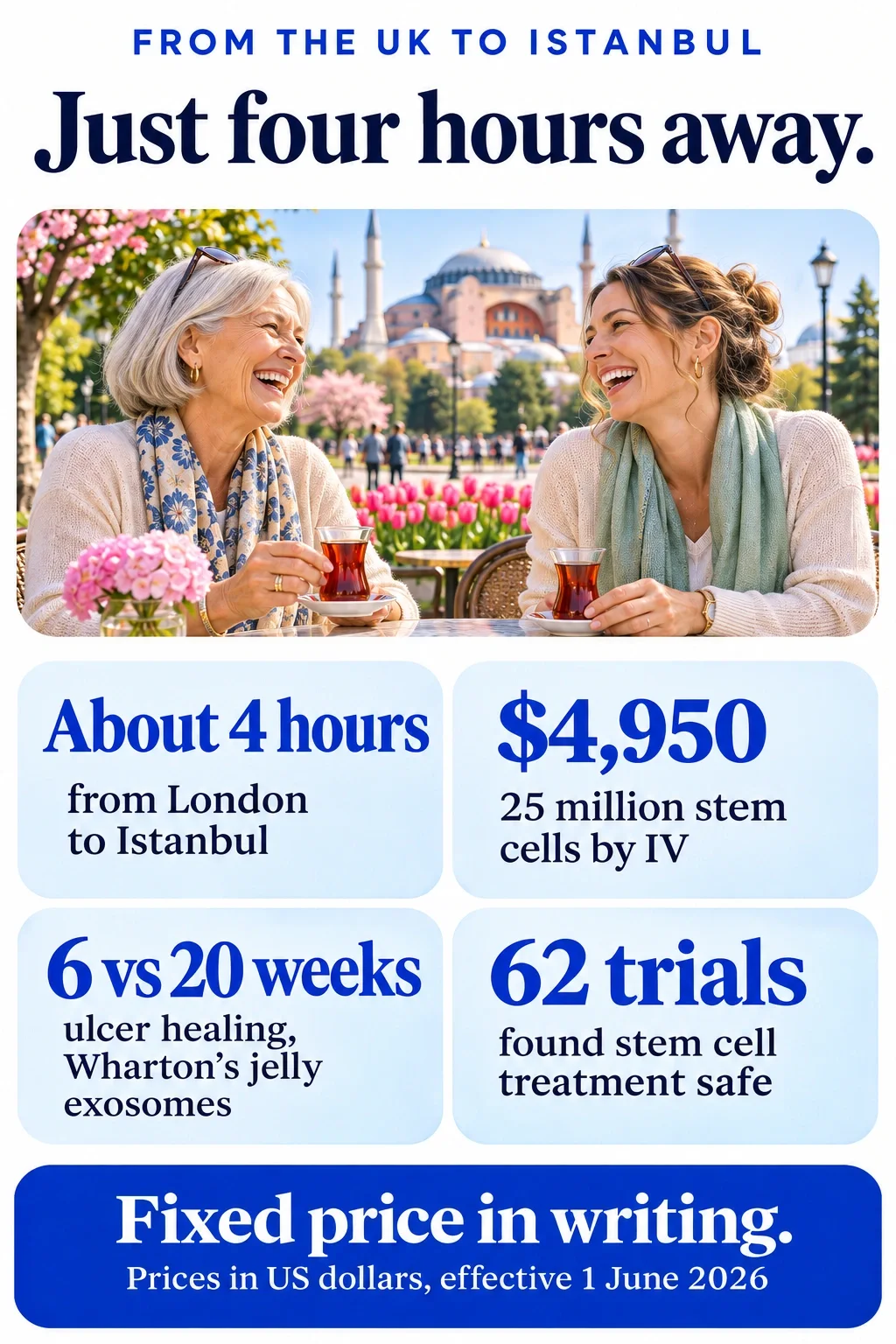
Most of our international patients come from the UK and the United States. For people in Britain, Istanbul brings together the things that matter most when you plan treatment abroad: specialist-led care with fresh Wharton’s jelly stem cells, a fixed price agreed in writing before you travel, and one treatment day for most plans, in a city only about four hours’ flight from London.
Planning starts from home. You send your reports, our medical director reviews them free of charge, his team talks your case through with you by phone, and only then, if treatment suits you, do you receive a written plan and price. Nothing is booked until you have read it, slept on it and, ideally, talked it over with your family and your GP.
The wider reasons people choose Turkey for stem cell therapy are set out in our guide why choose stem cell therapy in Turkey. This guide is written for readers in England, Scotland, Wales and Northern Ireland, and focuses on what you receive, what it costs, how the journey works, the practical side of the trip and how your care continues once you are home.
Fresh Wharton’s jelly cells, never frozen
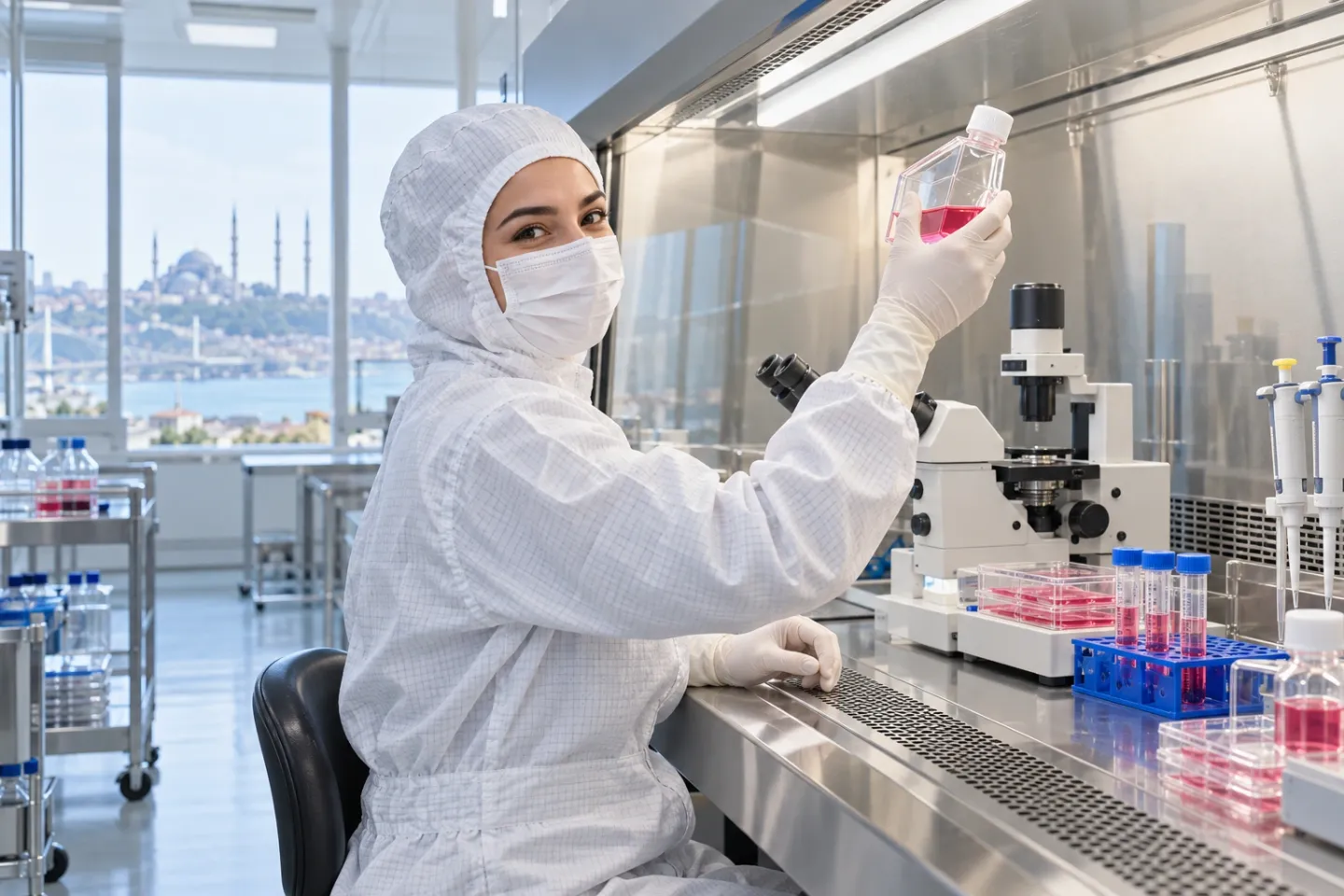
Your stem cells come from umbilical cords donated after healthy births and are prepared for your treatment date in a GMP laboratory approved by the Turkish Ministry of Health. They are never frozen.
A doctor reviews your case first
Uzm. Dr. Cihan Bolat, our medical director, a specialist in anaesthesiology and reanimation and in regenerative medicine, leads the free review of your records before anything is booked.
A fixed price in writing
Your cell count, any exosomes, the routes and a single all-inclusive figure in US dollars are set down on paper, so you can think it over at your own kitchen table.
One treatment day
Most plans take one treatment day in Istanbul, and you walk out of the clinic the same day.
Close to the UK
Direct flights from London take about four hours, and Istanbul is only 2 hours ahead of UK time in summer and 3 in winter.
Care that follows you home
We check in on your progress at about 1, 3, 6 and 12 months, long after your flight has landed back in Britain.
Travelling from America instead? Our guide to stem cell therapy in Turkey for US patients is written for you. Still weighing things up? Our checklist on how to choose a stem cell clinic abroad lists the questions to put to any clinic, ours included.
02
Why Wharton’s jelly stem cells and exosomes lead our treatment
Two products from one young tissue sit at the centre of every plan we design for British patients: Wharton’s jelly mesenchymal stem cells (MSCs) and the exosomes those same cells release. They are our main treatment and the reason for your trip.
What Wharton’s jelly is
Wharton’s jelly is the soft, gel-like tissue that cushions the blood vessels inside the umbilical cord. The cells come from cords donated after healthy births, which means nothing has to be harvested from you: there is no bone marrow draw, no fat harvest and no wait while your own cells are cultured. They come from the very start of life, and in a side-by-side laboratory comparison they multiplied faster than bone marrow stem cells from adults.8 They also carry very few of the signals that alert the immune system, so no donor matching is needed.9
How the cells and exosomes work together
Stem cells do much of their good work through the signals they release: growth factors and immune-balancing messengers that help your own tissues calm inflammation and repair.10 Exosomes are tiny packages of those signals, carrying proteins and RNA messages from one cell to another and changing how the receiving cell behaves.11 Wharton’s jelly exosomes deliver those messages in a concentrated, cell-free form. That is why your plan can pair the two: the living cells go on reading your body’s signals and answering them for some time after treatment, while the exosomes deliver a concentrated burst of messages straight away.
Fresh for your date, never frozen
Your Wharton’s jelly stem cells are prepared for your treatment date in a GMP laboratory approved by the Turkish Ministry of Health, and they are never frozen. That takes careful planning, because the laboratory times the preparation to your arrival from the UK. It is worth it: in laboratory comparisons, MSCs used straight after thawing had weaker immune-balancing and blood-regulating properties than freshly harvested cells.4
The batch certificate shows the cell count, the viability and sterility tests, and you receive the certificate the laboratory provides for your batch. It is a useful document to take home to your GP, and if you would like to understand each figure on it, our guide to stem cell quality and the lab report walks through them one by one.
What Wharton’s jelly cells and exosomes achieved in people
- A stronger heart. After a heart attack, 116 people in a double-blind trial received either Wharton’s jelly stem cells through the heart artery or a placebo. Over 18 months, ejection fraction, the heart’s pumping strength, climbed 7.8 points with the cells and 2.8 with placebo, and at four months the living muscle in the damaged area had increased by 6.9%, against 3.3%.1
- Faster healing. In a randomised trial of 110 people with diabetic foot ulcers, wounds treated with Wharton’s jelly exosomes healed fully in 6 weeks on average, against 20 weeks with standard care.2
- Type 1 diabetes. Adults diagnosed within the previous two years who received an infusion of Wharton’s jelly stem cells lost only 10% of their own insulin production over twelve months, compared with 47% on placebo, and their daily insulin dose did not need to rise.12
- Type 2 diabetes. In 22 people with type 2 diabetes, Wharton’s jelly stem cells, given once by IV and once through a catheter to the pancreas, lowered blood sugar and HbA1c, improved beta-cell function and reduced markers of inflammation over 12 months.13
- Erectile health. In 22 men with diabetes whose erectile dysfunction had not responded to standard treatment, two injections of Wharton’s jelly stem cells improved erectile function, hardness and blood flow at every check-up over 12 months.14
Wharton’s jelly stem cells and exosomes in people
- +7.8 vs +2.8points of heart pumping strength 18 months after a heart attack, against placebo1
- 6 vs 20 weeksaverage time to full healing of diabetic foot ulcers with Wharton’s jelly exosomes, against standard care2
- 10% vs 47%of their own insulin production lost in a year in early type 1 diabetes: cells against placebo12
- 12 monthsof better erectile function, hardness and blood flow after two Wharton’s jelly stem cell injections14
| Option | What it is | How it is given | What studies report |
|---|---|---|---|
| Fresh Wharton’s jelly stem cells, our main treatment | Young donor stem cells from cords donated after healthy births, prepared fresh and never frozen | IV infusion, plus targeted routes such as into a joint, a disc or around a nerve where your plan needs them | Heart pumping strength +7.8 against +2.8 with placebo at 18 months1 |
| Wharton’s jelly exosomes, free from 50M | Concentrated, cell-free repair messages from the same young tissue | IV infusion or nasal spray | Diabetic foot ulcers healed in 6 against 20 weeks2 |
| Umbilical cord stem cells, second in our plans | Young donor stem cells from the wider cord tissue | IV infusion and targeted routes, where your doctor advises | Heart pumping strength +7.07 against +1.85 with placebo after one IV infusion of 1 million cells per kilogram3 |
| CD34+ exosomes | Exosomes that can be added alongside your Wharton’s jelly exosomes | As your doctor plans | An optional extra, priced in your written plan |
| Muse cells and Muse exosomes (optional extra) | Especially hardy repair cells within the MSC family, and their exosomes | Muse cells by IV or intrathecal injection; Muse exosomes by IV or nasal spray | Stroke: 40.0% independent in daily affairs at 12 weeks, against 10.0% with placebo15 |
Stem cells are never given into the nose; the nasal spray is for exosomes only. Read how the cells are prepared and given on our stem cell therapy page, and how exosomes work on our exosome therapy page.
03
Your stem cell treatment in Istanbul from the UK, step by step
Planning treatment abroad is simpler than many people expect, because the medical part is settled before you travel. Here is the whole journey, from the first message you send from the UK to your follow-up reviews at home. For more detail on each stage, read the stem cell treatment in Turkey, step by step, or request your free consultation now.
Your journey from the UK to Istanbul and back

- Free review from homeSend your reports; Dr. Cihan Bolat’s team reviews them free of charge and talks them through with you by phone.
- Your written planThe cells, your exact cell count and the routes, with one fixed, all-inclusive price, before you book.
- Fly to IstanbulDirect flights from London take about four hours, and there are direct flights from other UK airports too. Your case manager helps you choose your dates.
- One treatment dayFresh Wharton’s jelly stem cells and exosomes; for most plans one treatment day, and you walk out the same day.
- Your days in IstanbulTime for tea by the Bosphorus; hotel nights are included from 100M cells.
- Follow-up from homeReviews at about 1, 3, 6 and 12 months after your treatment.
Send your health details
Tell us your diagnosis, your age, your weight and your goals, and share recent clinic letters, scans or blood tests. Use our free consultation request or WhatsApp on +90 534 856 92 92.
Free medical review and phone call
Dr. Cihan Bolat’s team reviews your records free of charge, talks your case through with you by phone and tells you honestly whether stem cell therapy suits you.
Your written plan and fixed price
You receive a written plan with your cells, your exact cell count, any exosomes, the routes and a fixed, all-inclusive price in US dollars. Take your time, and share it with your family and your GP.
Booking and fresh preparation
Once you decide to go ahead, a deposit invoice starts the preparation of your fresh cells, which generally takes 5 to 10 days. Your case manager helps you choose your dates, and the team is happy to help with flights and a hotel.
Arriving in Istanbul
Fly to Istanbul Airport or Sabiha Gökçen and settle in. Your case manager is your contact for the practical side of your stay.
Your treatment day
Ground transport in Istanbul is included, so you are taken to the clinic and back. Our specialist team gives your treatment, most plans take one treatment day, and you walk out the same day. Keep it a calm day.
Your days in Istanbul
Planning some sightseeing as well? Ask your case manager which activities suit the days after your treatment.
Flying home and follow-up
Fly home with your written plan and your batch certificate. Back in the UK, we review your progress with you at about 1, 3, 6 and 12 months.
For calm ideas for the days around treatment, from a Bosphorus ferry to the seafront near our clinic, read our guide to things to do in Istanbul during treatment.
04
Stem cell therapy Turkey cost for UK patients: our 2026 price list in US dollars
One price list applies to everyone, whether you live in Leeds or Los Angeles, and it is written in US dollars. We do not convert our prices into pounds, because exchange rates move from day to day: the amount in pounds depends on the rate when you pay, and your bank can tell you about its charges for payments abroad. Here is the full list, effective 1 June 2026, with M standing for million stem cells.
| Cell count | USD price | Free exosomes | Free hotel |
|---|---|---|---|
| 25M | $4,950 | No | No |
| 50M | $6,950 | 10 billion exosomes | No |
| 75M | $8,950 | 10 billion exosomes | No |
| 100M | $10,500 | 20 billion exosomes | 2 nights |
| 125M | $11,850 | 20 billion exosomes | 2 nights |
| 150M | $13,550 | 30 billion exosomes | 2 nights |
| 175M | $15,000 | 30 billion exosomes | 2 nights |
| 200M | $16,500 | 30 billion exosomes | 3 nights |
| 225M | $18,000 | 30 billion exosomes | 3 nights |
| 250M | $19,500 | 30 billion exosomes | 3 nights |
Package notes
- All prices are in USD.
- The free exosome amounts are complimentary and included as shown.
- Hotel nights are included only where indicated.
- Treatment plans can be customised after the medical review.
Every package is built on fresh Wharton’s jelly stem cells by IV infusion, and the free exosomes are Wharton’s jelly exosomes. If your plan also includes targeted injections, for example into a knee, a disc or around a nerve, or extras such as more exosomes, NAD+ IV within your stem cell plan or Muse cells, those are priced individually in your written plan after the medical review. For a deeper look at the list, including what each million cells costs in every package, see our stem cell therapy cost guide.
Condition plans with published prices
Some plans have their own published prices. Most erectile dysfunction plans cost under USD 10,000, fixed in writing, and a complete stem cell treatment for autism costs EUR 8,000–15,000, including your hotel and all ground transport. For every other goal, your free medical review leads to a fixed price in writing.
05
How many stem cells do I need? A weight guide in kilograms and stone
Your body weight is the simplest guide to your cell count. A typical IV range is 1–2 million cells per kilogram of body weight, about 0.45–0.9 million per pound. Because many people in Britain still think of their weight in stone, we have added a rounded stone figure to the guide. The right dose for you is set in your free medical review, where Dr. Cihan Bolat looks at your condition, your goals, your age and your health as a whole.
| Your weight | About, in stone | Typical IV range |
|---|---|---|
| 50 kg / 110 lb | 7 st 12 lb | 50M–100M |
| 70 kg / 154 lb | 11 st | 70M–140M |
| 90 kg / 198 lb | 14 st 2 lb | 90M–180M |
| 110 kg / 243 lb | 17 st 5 lb | 110M–220M |
The ideal protocol depends on your condition, your goals, your age and the physician’s evaluation, and higher cell-count packages may suit heavier patients or more complex goals. Your written plan states your exact cell count before you travel.
The range sits comfortably within published research. In a review of 914 registered MSC trials, the median IV dose was 100 million cells per patient, and among the IV trials with positive results, the minimal effective dose was 70 to 190 million cells per patient in 14 of 16 trials.16 The RIMECARD trial in heart failure used 1 million umbilical cord stem cells per kilogram, given once by IV, and pumping strength improved at the 3-, 6- and 12-month checks in the cell group alone.3
06
What is included in your price, and what you arrange from the UK
Your price covers your treatment from your first message to your follow-up reviews at home. Two things sit outside most packages: your flights, and a hotel where the price list shows no nights. Even then you are not on your own, because the team can help you book both: we arrange your medical journey from A to Z.
Included
- Free medical review and phone consultation with Dr. Cihan Bolat’s team
- Fresh Wharton’s jelly stem cells, with certified count and viability
- Wharton’s jelly exosomes at no extra cost in packages from 50M
- Treatment by our specialist team, in one treatment day for most plans
- Ground transport in Istanbul
- A personal case manager
- Follow-up reviews at about 1, 3, 6 and 12 months
- Hotel nights where the price list shows them: 2 nights from 100M, 3 nights from 200M
Not included / optional
- Flights from the UK; the team can help you book them
- A hotel stay, unless your package includes nights; the team can help you book one
- Add-ons you choose, such as more exosomes, further routes, NAD+ IV within your stem cell plan or Muse cells
- Travel insurance and your spending money in Istanbul
No surprises in Istanbul
Once your free medical review is done, the written plan spells out the cell count, the exosomes, the routes and any extras under a single all-inclusive figure in US dollars. You see the full cost before you book anything, so there are no surprises once you are in Istanbul, and you can plan your budget around four simple parts: your package, your flights, any hotel nights your package does not include and your spending money.
07
Is stem cell therapy covered by insurance? A note for UK patients
Stem cell plans at our clinic are self-paid. If you have private medical insurance, it is worth asking your insurer about your plan; showing them your written plan, which itemises the treatment, makes the question simple to answer.
Travel insurance is a separate question, and a simple one to settle before you go. The UK Global Health Insurance Card (GHIC) and the European Health Insurance Card (EHIC) are not valid in Turkey, and the UK government’s travel advice recommends appropriate travel insurance. Tell your travel insurer that your trip includes planned treatment, and ask how your policy applies.
Your dollar price is fixed before you travel; only the pound figure on your bank statement moves with the exchange rate.
08
Talking to your GP about stem cell treatment abroad
Your GP knows your health history well, and a conversation before you travel is a good idea. The UK government’s travel advice suggests talking any medical treatment abroad through with your UK doctor first, and we welcome it: the more your own doctors know, the better your care fits together.
What to share with your GP
- Your written plan: the cells, your exact cell count, any exosomes, the routes and your dates.
- The reports and test results you sent for your free medical review.
- Your current medicines, so you can talk about them together; Dr. Cihan Bolat also reviews them before any plan is made.
What to bring home
After treatment, keep your written plan and the batch certificate the laboratory provides for your batch, with its cell count, viability and sterility tests. Together they give your GP, or any consultant you see in the UK, a clear record of what you received and when.
Alongside your usual care
Stem cell therapy sits alongside the treatment you already have, whether that is medication, physiotherapy or a diabetes plan, rather than taking its place. If you also see a hospital consultant, share the same documents with them.
09
Flights from the UK to Istanbul, entry requirements and the time difference
If you are planning stem cell treatment in Istanbul from London, Manchester or anywhere else in the UK, the travel side is straightforward. These are the points worth knowing before you book.

Flights from the UK
Direct flights from London take about four hours, and there are direct flights from other UK airports too, such as Manchester. Check the current routes and flight times with the airlines when you book.
Two airports
Istanbul Airport is on the European side of the city, and Sabiha Gökçen is on the Asian side. Our clinic is in Suadiye, Kadıköy, on the Asian side, so Sabiha Gökçen is the nearer of the two.
Entry requirements
Entry rules for British passport holders depend on the purpose and length of your visit, and they can change. The current visa and passport rules are published by the UK government’s foreign travel advice for Turkey and by the Turkish Ministry of Foreign Affairs; check the latest entry requirements before you book.
Time difference
Istanbul is on UTC+3 all year. It is 3 hours ahead of the UK in winter, on Greenwich Mean Time, and 2 hours ahead during British Summer Time, from the last Sunday in March to the last Sunday in October.
Your medicines
Bring enough of your usual medicines for your whole stay, because British prescriptions are not accepted in Turkish pharmacies. Some common medicines are controlled in Turkey, so check the official guidance on travelling with medicines before you pack.
Your reports
Pack copies of your recent clinic letters, scans and test results with your written plan, so everything is at hand on treatment day.
Official sources for UK travellers: UK foreign travel advice: Turkey entry requirements, the Turkish Ministry of Foreign Affairs visa information and TravelHealthPro’s Turkey page for travel health advice. Because these rules are updated now and then, check the latest entry requirements before you book.
10
Money, phones, plugs and weather: practical tips for travellers from the UK
A little preparation before you leave Britain goes a long way once you land.

Money
Turkey’s currency is the Turkish lira. Since your treatment is already priced in dollars in your written plan, you only need lira for meals, shopping and getting about on your own. Let your bank know you are travelling, and check its charges for card payments and cash withdrawals abroad.
Phones
Check with your UK mobile provider what it charges for calls and data in Turkey before you go, so you can stay in touch without surprises on your bill.
Plugs
Turkey uses round two-pin European plugs, at 230 volts like the UK, so pack a UK-to-European adaptor for your phone and chargers.
Weather
Istanbul has warm summers and mild, wet winters. Spring and autumn are lovely for gentle walks, and in April the tulips bloom in Emirgan Park. Pack layers and comfortable shoes whatever the season.
Time for yourself
From a Bosphorus ferry to the old city, Istanbul is a rewarding place to spend a few quiet days. Ask your case manager which activities suit the days after your treatment.
Looking for more? Browse things to do in Istanbul during treatment.
11
Knees, backs, healthy ageing, diabetes and more: treatments you can plan from the UK
Stem cell therapy in Istanbul can be planned around many different goals. Here is what published studies report for some of them, each with a link to our in-depth guide. Where a study used another type of stem cell than our Wharton’s jelly cells, we say so.
Knees
People with knee osteoarthritis who had two injections, six months apart, of umbilical cord stem cells grown from Wharton’s jelly scored their pain at 2.4 out of 100 after a year; with hyaluronic acid, the score was 22.1.5 Both knees and the tendons and ligaments around them can be treated in a single day. Read our knee injection guide
Back and neck
In 125 people with worn discs treated with Wharton’s jelly stem cells injected into the disc, pain and disability fell significantly at 3 and 6 months, and adding Wharton’s jelly exosomes made a clinically meaningful gain in everyday function about twice as likely at 6 months.17 Read our back and neck guide
Healthy ageing and longevity
Older adults with frailty who received IV umbilical cord stem cells in a placebo-controlled trial reported better physical quality of life from their first follow-up visit; by six months their grip was stronger than the placebo group’s, and the inflammation markers TNF-α and IL-17 had dropped.18 Read our longevity guide
Diabetes
Among 91 adults with type 2 diabetes in a double-blind trial, three IV infusions of umbilical cord stem cells cut HbA1c by 1.31 percentage points across 48 weeks (0.63 with placebo), and daily insulin came down by 27.78% (15.62% with placebo).6 Read our diabetes guide
Neuropathy
We treat peripheral and diabetic neuropathy. In type 1 diabetes, 7.1% of people treated with umbilical cord stem cells, together with their own bone marrow cells, developed peripheral neuropathy over eight years, against 46.7% with standard care.19 Read our neuropathy guide
Multiple sclerosis
In a controlled study, people given three IV infusions of umbilical cord stem cells alongside anti-inflammatory treatment had significantly lower disability scores and fewer relapses than with that treatment alone.20 Read our MS guide
Heart
After one IV infusion of umbilical cord stem cells, people with heart failure gained 7.07 points of heart pumping strength over 12 months, against 1.85 with placebo.3 Read our heart failure guide
Erectile health
Two injections of Wharton’s jelly stem cells improved erectile function and blood flow in men with diabetes over 12 months,14 and most plans cost under USD 10,000. Read our drug-free ED guide
Autism
Our autism plans use fresh Wharton’s jelly stem cells and exosomes, and a complete treatment costs EUR 8,000–15,000, including your hotel and all ground transport. Read our autism guide
See all the conditions we treat, or read about the treatment itself on our stem cell therapy page.
12
Muse cells and Muse exosomes: an optional add-on
Muse cells, short for multilineage-differentiating stress-enduring cells, are a small group of especially hardy repair cells within the MSC family, first described in 2010.21 Donor Muse cells have been given in trials without tissue matching or immune-suppressing medicines,22 and in a randomised stroke trial, 40.0% of patients given one IV dose of a donor Muse cell product could look after their own affairs at 12 weeks, against 10.0% with placebo.15 If you wish, Muse cells can be added by IV infusion or intrathecal injection, and Muse exosomes by IV infusion or nasal spray, priced in your written plan, while your Wharton’s jelly stem cells and exosomes remain the core of your plan.
13
Is stem cell therapy in Turkey safe? What the research shows
Safety comes first, and the published record of MSC treatment is reassuring. Pooling 62 randomised trials and 3,546 patients with around 20 different conditions, a 2021 meta-analysis concluded that MSC treatment is safe; the effect seen most often was a short-lived fever.7 Exosome treatments have a reassuring record too: across 21 clinical reports of extracellular vesicle therapies, the family exosomes belong to, serious adverse events were rare, at 0.7%.23
The cell types we use have their own encouraging safety results. In the Wharton’s jelly heart trial, side effects and laboratory tests, including immune and blood counts, did not differ from placebo over 18 months.1 In the RIMECARD heart failure trial, the IV infusion of umbilical cord cells caused no infusion-related adverse events, and the patients who were tested made no antibodies against the donor cells.3 And a single IV dose of umbilical cord stem cell exosomes was safe and lowered the inflammation markers TNF-α and CRP compared with placebo in people with severe lung inflammation.24
Your own care adds further layers. Dr. Cihan Bolat reviews your health, your results and your medicines before any plan is made; your cells are prepared fresh in a GMP laboratory approved by the Turkish Ministry of Health; every batch certificate shows the cell count, the viability and sterility tests; and every treatment is given by our specialist team. Our guide on how to choose a stem cell clinic abroad turns these points into a checklist you can use anywhere.

14
Follow-up after returning to the UK
Your care does not end when you board your flight home. Once you are home, we go through your progress with you at about 1, 3, 6 and 12 months, so you can follow how things develop and ask whatever you like.
Why follow-up runs through the year
Stem cells support your body’s own repair, so changes are measured over months. In the Wharton’s jelly heart trial, the gain in pumping strength was measured at 18 months;1 in the knee trial, the results were measured at 12 months, when pain after two injections was 2.4 on a 100-point scale, against 22.1 with hyaluronic acid;5 and in older adults with frailty, the gain in physical quality of life appeared at the first check-up after treatment and lasted to six months.18 Reviews at about 1, 3, 6 and 12 months follow that same rhythm.
Keeping your GP in the picture
Share your follow-up notes and any new test results with your GP, together with your written plan and batch certificate. If you and Dr. Cihan Bolat decide on further treatment later, for example a second dose for a knee, it is planned together with you, with a new written price.
15
Ready to plan stem cell therapy in Istanbul from the UK?
Planning starts with a message, not a booking. Send us your reports and your questions; Dr. Cihan Bolat’s team reads them at no charge, rings you to discuss them and, where treatment is a good fit, follows up with a written plan and a fixed price in US dollars. You can then decide at home, talk it over with your family and your GP, and choose your dates with your case manager.
You can reach us through our free consultation request, by WhatsApp on +90 534 856 92 92 or through our contact page. Our clinic is in Suadiye, Bağdat Cad. No: 393, Kadıköy, Istanbul. To read more about the treatment itself, visit our stem cell therapy page.
16
Frequently asked questions
Can UK patients have stem cell therapy in Turkey?
Yes. Most of our international patients come from the UK and the United States. Your treatment is planned from home: Dr. Cihan Bolat’s team reviews your records free of charge, and if treatment suits you, you receive a written plan with a fixed price before you travel. Most plans take one treatment day in Istanbul, and you walk out the same day.
How do I arrange stem cell therapy abroad from the UK?
Send us your diagnosis, recent reports and goals through our free consultation request or by WhatsApp. After a free medical review and a phone call, you receive a written plan and a fixed price. When you decide to proceed, a deposit invoice sets the preparation of your fresh cells in motion; this generally takes 5 to 10 days, and your case manager helps you choose your dates.
How long is the flight from the UK to Istanbul?
Direct flights from London take about four hours, and there are direct flights from other UK airports too, such as Manchester. Istanbul has two international airports: Istanbul Airport on the European side and Sabiha Gökçen on the Asian side, which is nearer our clinic in Suadiye.
Do I need a visa for Turkey from the UK?
Entry rules for British passport holders depend on the purpose and length of your visit, and they can change. The UK government’s foreign travel advice for Turkey and the Turkish Ministry of Foreign Affairs publish the current visa and passport rules. Check the latest entry requirements before you book, and look at your passport’s expiry date well ahead of travel.
What is the time difference between the UK and Istanbul?
Istanbul is on UTC+3 all year. It is 3 hours ahead of the UK in winter and 2 hours ahead during British Summer Time, which runs from the last Sunday in March to the last Sunday in October.
How much does stem cell therapy in Turkey cost in pounds?
Our prices are set in US dollars, and we do not convert them into pounds, because exchange rates change daily. The IV packages start at USD 4,950 (25 million fresh Wharton’s jelly stem cells) and go up to USD 19,500 (250 million); exosomes are free from 50 million cells and hotel nights from 100 million. What you pay in pounds depends on the rate on the day.
What is included in the price?
Your price covers the free medical review and phone call, fresh Wharton’s jelly stem cells whose count and viability are certified, any free exosomes in your package, treatment by our specialist team, ground transport in Istanbul, your own case manager, follow-up at about 1, 3, 6 and 12 months, and hotel nights in the packages that list them.
Are flights and a hotel included?
Flights are not included, but the team can help you book them. Hotel nights are included where the price list shows them: 2 nights with packages from 100 million cells and 3 nights from 200 million. For other packages, the team can help you book a hotel.
Is stem cell therapy covered by insurance?
Stem cell plans at our clinic are self-paid. Private medical insurers differ, so ask yours, using your written plan, which lists every part of the treatment. For your trip, the UK GHIC and EHIC are not valid in Turkey, so arrange travel insurance and tell your insurer that your trip includes planned treatment.
Should I talk to my GP before stem cell treatment abroad?
Yes, it is a good idea, and the UK government’s travel advice suggests talking medical treatment abroad through with your UK doctor first. Share your written plan, your reports and your list of medicines. After treatment, your written plan and the batch certificate the laboratory provides give your GP a clear record of what you received.
How many stem cells do I need?
A typical IV range is 1–2 million cells per kilogram of body weight. That means 50M–100M for 50 kg (about 7 st 12 lb), 70M–140M for 70 kg (about 11 st), 90M–180M for 90 kg (about 14 st 2 lb) and 110M–220M for 110 kg (about 17 st 5 lb). Your exact dose is set in your free medical review and stated in your written plan.
How long do I need to stay in Istanbul?
Most plans take one treatment day, and you walk out the same day. Packages from 100 million cells include 2 hotel nights, and packages from 200 million include 3. Your case manager helps you choose your dates.
What follow-up do I get after returning to the UK?
Progress reviews take place at about 1, 3, 6 and 12 months after treatment, giving you regular moments to look at your results and raise questions. Your GP can be kept informed with your follow-up notes, your written plan and your batch certificate.
Which stem cells and exosomes do you use?
Fresh Wharton’s jelly mesenchymal stem cells lead every plan, prepared for your date in a GMP laboratory approved by the Turkish Ministry of Health and never frozen. Umbilical cord stem cells can be added where your doctor advises. The free exosomes in packages from 50 million cells are Wharton’s jelly exosomes, and CD34+ exosomes can be added. Muse cells and Muse exosomes are an optional add-on.
What should I pack for my treatment trip?
Your passport, your written plan, copies of recent clinic letters and test results, and enough of your usual medicines for the whole stay, because British prescriptions are not accepted in Turkish pharmacies. Add a UK-to-European plug adaptor, comfortable shoes and layers for the weather.
Is stem cell therapy in Turkey safe?
The published record is reassuring. A meta-analysis of 62 randomised trials with 3,546 patients found MSC treatment safe, the most common effect a passing fever. Dr. Cihan Bolat reviews your health before any plan is made, your cells are prepared fresh in a GMP laboratory, and every batch certificate shows the cell count, the viability and sterility tests.
Are Muse cells included in the price list?
No. Muse cells and Muse exosomes are an optional add-on. Muse cells can be given by IV infusion or intrathecal injection, and Muse exosomes by IV infusion or nasal spray, and your written plan prices them if you choose them.
Can I combine my treatment with a short break in Istanbul?
Yes, if you wish. Istanbul is a rewarding city for calm days, from a Bosphorus ferry to the seafront near our clinic in Suadiye. Let the treatment day itself be a calm day; for everything else, ask your case manager which activities suit the days after your treatment.

Medical review
Uzm. Dr. Cihan Bolat
Medical Director, Istanbul Stemcell
This page was written from the published studies listed below and reviewed for medical accuracy on .
17
References
- Gao LR, et al. Intracoronary infusion of Wharton's jelly-derived mesenchymal stem cells in acute myocardial infarction: double-blind, randomized controlled trial. BMC Med. 2015;13:162. PMID 26162993
- Kishta MS, et al. The transforming role of wharton's jelly mesenchymal stem cell-derived exosomes for diabetic foot ulcer healing: a randomized controlled clinical trial. Stem Cell Res Ther. 2025;16(1):559. PMID 41084065
- Bartolucci J, et al. Safety and Efficacy of the Intravenous Infusion of Umbilical Cord Mesenchymal Stem Cells in Patients With Heart Failure: A Phase 1/2 Randomized Controlled Trial (RIMECARD Trial [Randomized Clinical Trial of Intravenous Infusion Umbilical Cord Mesenchymal Stem Cells on Cardiopathy]). Circ Res. 2017;121(10):1192-1204. PMID 28974553
- Moll G, et al. Do cryopreserved mesenchymal stromal cells display impaired immunomodulatory and therapeutic properties? Stem Cells. 2014;32(9):2430-42. PMID 24805247
- Matas J, et al. Umbilical Cord-Derived Mesenchymal Stromal Cells (MSCs) for Knee Osteoarthritis: Repeated MSC Dosing Is Superior to a Single MSC Dose and to Hyaluronic Acid in a Controlled Randomized Phase I/II Trial. Stem Cells Transl Med. 2019;8(3):215-224. PMID 30592390
- Zang L, et al. Efficacy and safety of umbilical cord-derived mesenchymal stem cells in Chinese adults with type 2 diabetes: a single-center, double-blinded, randomized, placebo-controlled phase II trial. Stem Cell Res Ther. 2022;13(1):180. PMID 35505375
- Wang Y, Yi H, Song Y. The safety of MSC therapy over the past 15 years: a meta-analysis. Stem Cell Res Ther. 2021;12(1):545. PMID 34663461
- Batsali AK, et al. Differential expression of cell cycle and WNT pathway-related genes accounts for differences in the growth and differentiation potential of Wharton's jelly and bone marrow-derived mesenchymal stem cells. Stem Cell Res Ther. 2017;8(1):102. PMID 28446235
- Weiss ML, et al. Immune properties of human umbilical cord Wharton's jelly-derived cells. Stem Cells. 2008;26(11):2865-74. PMID 18703664
- Caplan AI, Dennis JE. Mesenchymal stem cells as trophic mediators. J Cell Biochem. 2006;98(5):1076-84. PMID 16619257
- Kalluri R, LeBleu VS. The biology, function, and biomedical applications of exosomes. Science. 2020;367(6478). PMID 32029601
- Carlsson PO, et al. Umbilical cord-derived mesenchymal stromal cells preserve endogenous insulin production in type 1 diabetes: a Phase I/II randomised double-blind placebo-controlled trial. Diabetologia. 2023;66(8):1431-1441. PMID 37221247
- Liu X, et al. A preliminary evaluation of efficacy and safety of Wharton's jelly mesenchymal stem cell transplantation in patients with type 2 diabetes mellitus. Stem Cell Res Ther. 2014;5(2):57. PMID 24759263
- Al Demour S, et al. Safety and Efficacy of 2 Intracavernous Injections of Allogeneic Wharton's Jelly-Derived Mesenchymal Stem Cells in Diabetic Patients with Erectile Dysfunction: Phase 1/2 Clinical Trial. Urol Int. 2021;105(11-12):935-943. PMID 34384079
- Niizuma K, et al. Randomized placebo-controlled trial of CL2020, an allogenic muse cell-based product, in subacute ischemic stroke. J Cereb Blood Flow Metab. 2023;43(12):2029-2039. PMID 37756573
- Kabat M, et al. Trends in mesenchymal stem cell clinical trials 2004-2018: Is efficacy optimal in a narrow dose range? Stem Cells Transl Med. 2020;9(1):17-27. PMID 31804767
- Toro-Rivera A, et al. Mechanisms of Exosome-Supplemented WJ-MSC Therapy in Degenerative Disc Disease: Integrating Proteomic Profiling with Clinical Functional Recovery. Biomedicines. 2026;14(10). PMID 42940041
- Zhu Y, et al. Safety and efficacy of umbilical cord tissue-derived mesenchymal stem cells in the treatment of patients with aging frailty: a phase I/II randomized, double-blind, placebo-controlled study. Stem Cell Res Ther. 2024;15(1):122. PMID 38679727
- Wu Z, et al. Prevention of chronic diabetic complications in type 1 diabetes by co-transplantation of umbilical cord mesenchymal stromal cells and autologous bone marrow: a pilot randomized controlled open-label clinical study with 8-year follow-up. Cytotherapy. 2022;24(4):421-427. PMID 35086778
- Li JF, et al. The potential of human umbilical cord-derived mesenchymal stem cells as a novel cellular therapy for multiple sclerosis. Cell Transplant. 2014;23 Suppl 1:S113-22. PMID 25385295
- Kuroda Y, et al. Unique multipotent cells in adult human mesenchymal cell populations. Proc Natl Acad Sci U S A. 2010;107(19):8639-43. PMID 20421459
- Minatoguchi S, et al. Donor Muse Cell Treatment Without HLA-Matching Tests and Immunosuppressant Treatment. Stem Cells Transl Med. 2024;13(6):532-545. PMID 38560897
- Van Delen M, et al. A systematic review and meta-analysis of clinical trials assessing safety and efficacy of human extracellular vesicle-based therapy. J Extracell Vesicles. 2024;13(7):e12458. PMID 38958077
- Hosseinzadeh M, et al. Therapeutic potential of hUCMSC-derived exosomes in modulating inflammation and immune response in COVID-19-associated ARDS: A randomized clinical trial. Respir Med. 2025;249:108475. PMID 41202994