
01
Stem cell therapy for Parkinson’s in 2026: what is new?
There has never been more reason for hope. Donor stem cell infusions improved movement scores in a year-long trial,3 controlled trials report benefits lasting at least 12 months,4 transplanted iPS-cell dopamine cells survived and made dopamine,11 and between 2015 and 2024, 444 clinical trials tested 281 medicines for Parkinson’s.12
If you or someone you love lives with Parkinson’s disease, you already know the core of good care: levodopa and other medicines, exercise and physiotherapy, and for some people deep brain stimulation (DBS). They remain the foundation. What many families now look for is the next layer: a treatment that aims to protect the nerve cells that remain.
Three cell-based approaches are discussed for Parkinson’s in 2026, and it helps to know how they differ:
- Mesenchymal stem cells (MSCs) from the umbilical cord, Wharton’s jelly, bone marrow or fat release nerve-nourishing, immune-balancing signals and exosomes.131 They are given by IV infusion or into the spinal fluid, with no brain surgery.
- Muse cells are an especially hardy group of repair cells within the MSC family that travel to damaged tissue.14
- iPS-cell dopamine cells are new dopamine-producing cells grown in the laboratory and placed directly into the brain by neurosurgery.11
At our clinic in Istanbul we use the first two, together with exosomes, as a complement to your current care. For our full treatment page, see stem cell therapy for Parkinson’s disease in Istanbul.
Results at a glance
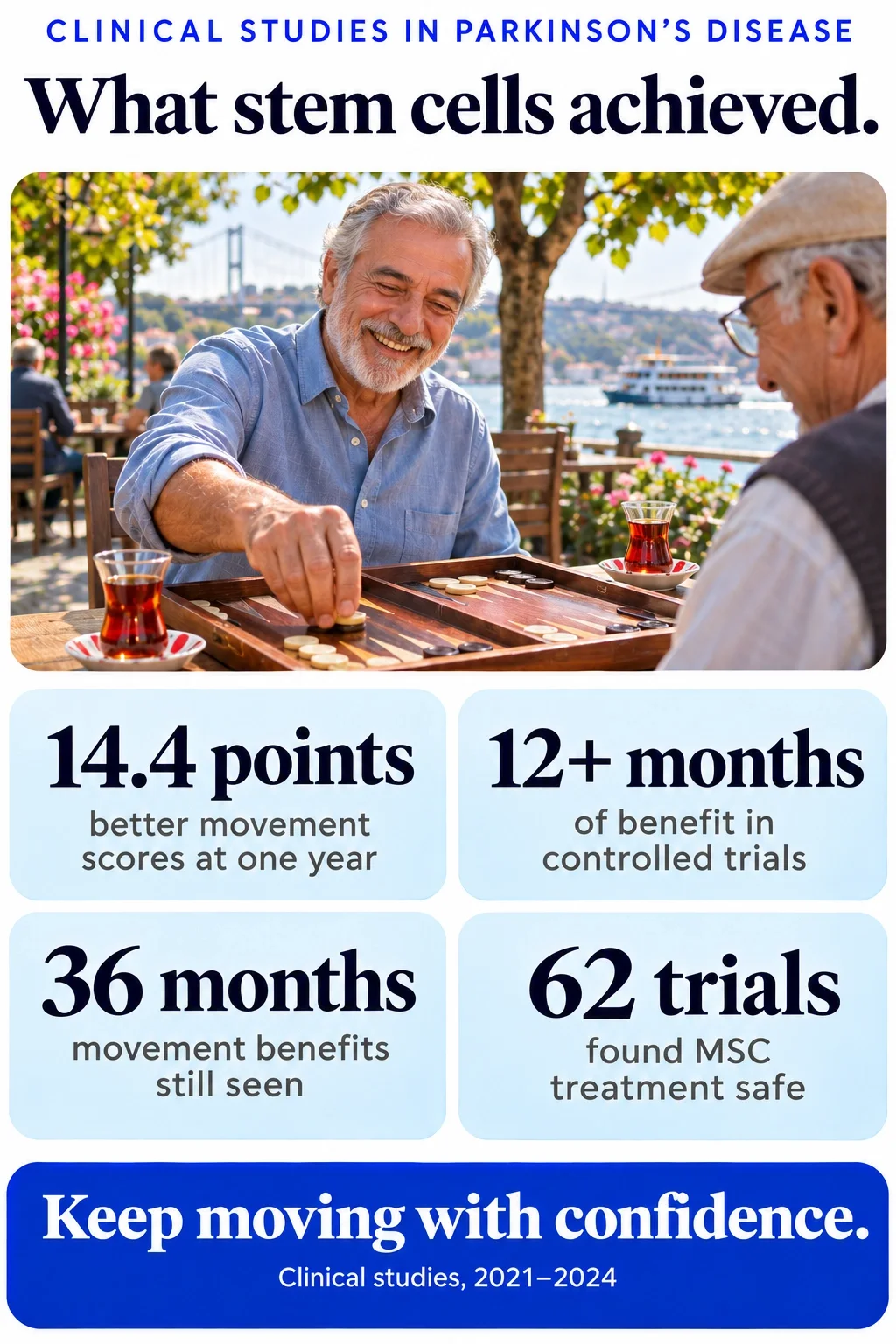
- −14.4points on the movement score (UPDRS motor, off medication) a year after one donor stem cell infusion, at the highest dose3
- −20.8points on the total UPDRS score in the same group3
- 12 months+of benefit in a meta-analysis of nine controlled stem cell trials with 129 people4
- 0adverse events in 19 people with Parkinson’s given a nasal treatment rich in umbilical cord stem cell exosomes8
02
What happens in the brain in Parkinson’s disease?
Knowing what changes in the brain makes every treatment easier to follow, and shows why researchers are so interested in stem cells. Parkinson’s is far more than a shortage of dopamine. Several processes unfold together, often for years before the first tremor.
Dopamine nerve cells
Movement is steered by dopamine from nerve cells in a small area of the brainstem, the substantia nigra. As these cells decline, movement becomes slower and stiffer, and tremor can appear. Dopamine-based medicines typically help these first movement symptoms well.15
Alpha-synuclein clumps
A protein called alpha-synuclein gathers into clumps known as Lewy bodies and Lewy neurites, the hallmark of Parkinson’s under the microscope.16
Inflammation
Brain-imaging, blood and spinal-fluid studies show inflammation and immune changes in Parkinson’s that are thought to feed the loss of nerve cells.17
More than movement
The changes often begin in the smell centre and in the brainstem centre of the vagus nerve, which links the brain with the gut.16 That is why a reduced sense of smell, constipation and acting out dreams in sleep can come before the movement symptoms.15
Every course is different
About half of people with Parkinson’s (49% to 53%) have a mild, mainly motor form, with a good response to medicines and slower progression.15
This is where each treatment fits. Levodopa and other medicines restore dopamine signals, DBS fine-tunes the movement circuits, and iPS-cell transplants aim to add new dopamine cells. Stem cells, Muse cells and exosomes aim to work on inflammation and on the survival of the nerve cells that remain.117 Because these approaches act on different parts of the picture, they sit comfortably side by side. Stem cells are studied in other brain conditions for the same reasons, from Alzheimer’s disease to multiple sclerosis.
03
Parkinson’s treatment options in 2026: medicines, exercise and DBS
Your neurologist remains at the heart of your care, and stem cell therapy is always planned alongside the treatment you already receive, never instead of it. Here is what each established option brings.
Levodopa and other Parkinson’s medicines
Treatment typically centres on levodopa, often with other medicines such as dopamine agonists, and dopamine-based treatment usually helps the early movement symptoms well.15 In the ELLDOPA trial, 361 people with early Parkinson’s were randomised to one of three doses of levodopa or to placebo for 40 weeks. At 42 weeks, symptom scores (total UPDRS) had worsened by 7.8 points with placebo, against 1.9 points with each of the two lower doses, and the highest dose brought an improvement of 1.4 points.5 Symptoms beyond movement, such as low mood or changes in thinking, have their own treatments.15
Exercise and physiotherapy
Exercise is one of the most powerful things you can do for yourself, and it complements medicines.15 A 2024 Cochrane review of 154 randomised trials with 7,837 people found benefits for most types of exercise. Compared with no exercise, dance improved UPDRS movement scores by 10.18 points and gait, balance and functional training by 7.50 points, and water-based training brought a large gain in quality of life.6
Deep brain stimulation (DBS)
DBS uses fine electrodes in the brain’s movement circuits and a small pacemaker-like stimulator under the skin of the chest. It helps people whose medicines wear off between doses, or who have tremor that medicines do not control or dyskinesias.15 In a randomised trial of 156 people with advanced Parkinson’s, those treated with DBS improved by 19.6 points on the movement score off medication and by 9.5 points on quality of life (PDQ-39) at six months, more than with medicines alone.18 In the EARLYSTIM trial of 251 people with early motor complications, quality of life improved by 7.8 points over two years with DBS, while it stayed almost unchanged with medicines alone.19
What is coming next
The research pipeline is full: between 2015 and 2024, 444 clinical trials tested 281 medicines for Parkinson’s.12 Cell-based treatments are part of this wave, from iPS-cell dopamine cells at specialist neurosurgery centres to MSCs, Muse cells and exosomes, which you can already plan with us in Istanbul.
04
iPS cells for Parkinson’s: new dopamine cells grown in the laboratory
One of the most talked-about developments of recent years is the transplantation of dopamine cells grown from induced pluripotent stem cells (iPS cells). iPS cells are made by reprogramming adult cells, such as skin or blood cells, so that they can be guided to become the dopamine-producing cells that Parkinson’s affects.
What the Kyoto trial reported
In a phase I/II trial at Kyoto University Hospital, seven people aged 50 to 69 received dopamine cell precursors grown from donor iPS cells, transplanted into both sides of the brain. There were no serious adverse events, and MRI showed no overgrowth of the grafts. Of the six people assessed for efficacy, four improved on the movement score off medication and five on the score on medication. The average improvements were 9.5 points (20.4%) off medication and 4.3 points (35.7%) on medication, and dopamine production in the putamen rose by 44.7% on PET scans.11 The team also reported no clinically significant immune reaction with a single immune-suppressing medicine, tacrolimus.20
Personalised iPS cells
In the USA, one person with Parkinson’s received dopamine cell precursors grown from their own iPS cells, implanted into the putamen on one side of the brain and then the other, six months apart, without immune-suppressing medicines. PET scans suggested that the cells survived, and symptoms had stabilised or improved 18 to 24 months later.21
How iPS cells and MSCs differ
The two approaches complement each other. iPS-cell dopamine cells aim to replace lost dopamine cells and are placed in the brain by neurosurgery at specialist university centres. MSCs, Muse cells and exosomes aim to protect the nerve cells you have and to calm inflammation,1 and they are given by IV infusion, into the spinal fluid and, for exosomes, as a nasal spray, with no brain surgery. For many families, this is the regenerative option they can plan now.
05
How does mesenchymal stem cell therapy work in Parkinson’s?
Mesenchymal stem cells are the body’s repair coordinators. Rather than mainly turning into new brain cells, they act through the signals they release: growth factors, immune-balancing messengers and exosomes that help the body’s own cells protect and repair tissue.13 Umbilical cord MSCs are especially rich in signals linked with protecting nerve cells, forming new nerve cells and growing new blood vessels.22
For Parkinson’s, researchers highlight that MSCs produce nerve-nourishing (neurotrophic) factors, and that their exosomes are thought to carry a large share of their benefit.1 A 2026 review of umbilical cord MSCs in Parkinson’s describes better motor and behavioural recovery, protected nerve cells and less cell death and oxidative stress in research models, and the ability of these cells to become dopamine-neuron-like cells.2
How stem cell therapy works in Parkinson’s
- Fresh stem cells and exosomesStem cells by IV and intrathecal routes, exosomes by IV and nasal spray.
- Repair signalsGrowth factors, immune-balancing messengers and exosomes.1323
- Protected dopamine cellsLess inflammation and oxidative stress, and more surviving dopamine cells, in research models.2425
- Results in peopleBetter movement scores and lower inflammation markers in trials.34
How stem cells and exosomes aim to support the brain in Parkinson’s
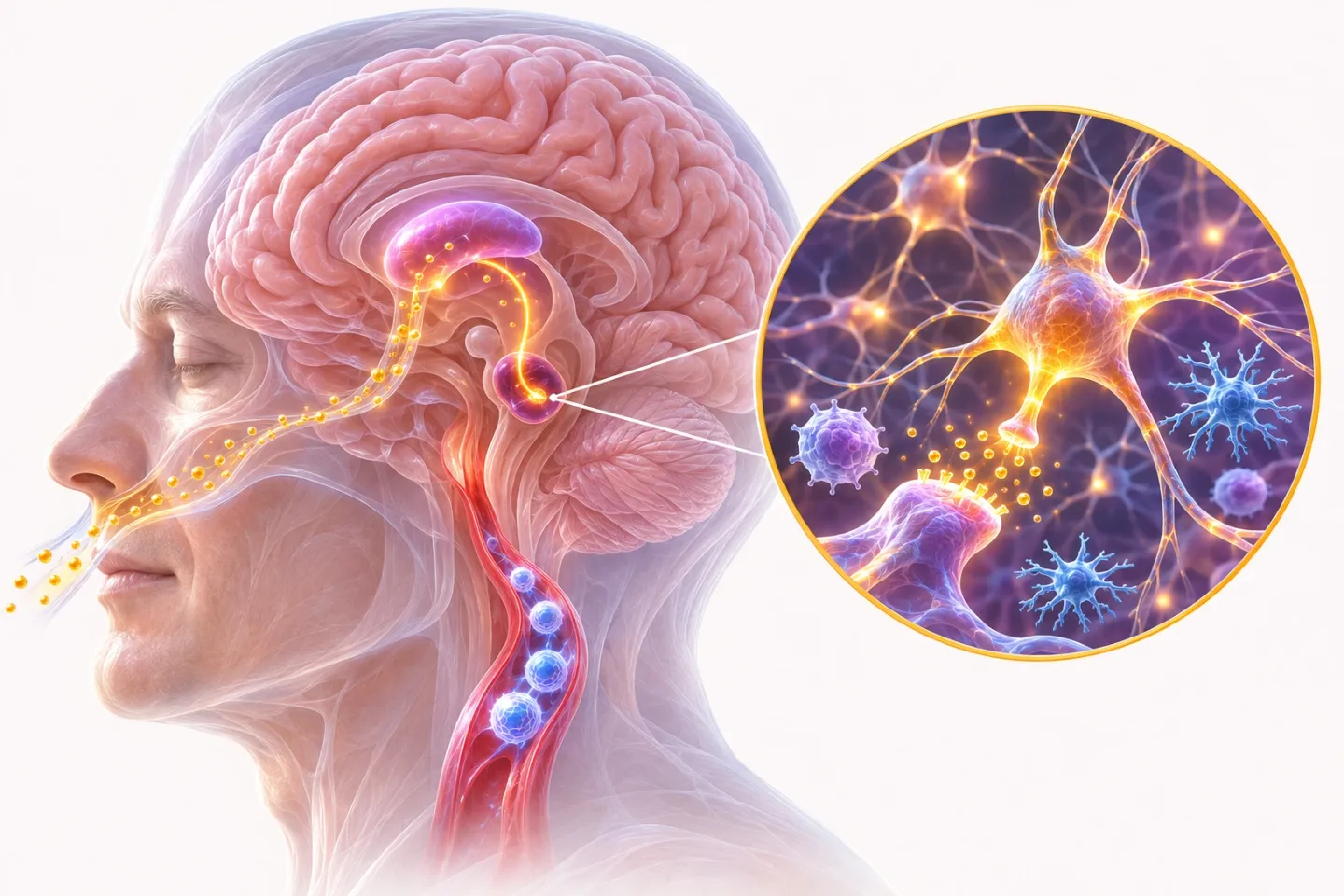
- Nasal exosomesGiven as a gentle nasal spray, exosomes are designed to reach the brain along the smell nerve pathway.
- StriatumThe brain’s movement centre, which receives dopamine to make movement smooth.
- Substantia nigraHome of the dopamine-producing nerve cells that Parkinson’s gradually affects.
- Stem cellsGiven by IV and intrathecally, stem cells and Muse cells release protective, anti-inflammatory signals.
- Dopamine nerve cellsThe aim is to protect these cells and support the connections they make.
- Calm immune cellsCalming inflammation in the brain is a key aim of treatment.
Protecting dopamine cells
In a research model of Parkinson’s, umbilical cord MSCs given into a vein improved movement and reduced the death of dopamine cells and oxidative stress in the brain.24
Working alongside levodopa
In rats with a Parkinson’s model, Wharton’s jelly MSCs given by IV, alone or together with levodopa, protected dopamine nerve cells and improved pain sensitivity, anxiety-like behaviour and brain electrical activity.26 In a related study, the cells, alone and with levodopa, improved movement and raised dopamine levels.27
Calming inflammation
In people with Parkinson’s, one IV infusion of donor MSCs at the highest dose lowered the inflammatory signal TNF-α and raised the nerve-supporting factor BDNF after a year.3
Exosomes that reach the brain
In research models, exosomes from umbilical cord MSCs crossed the blood–brain barrier, reached the substantia nigra, reduced the loss of dopamine cells and raised dopamine levels in the striatum.25
Settling the brain’s immune cells
In a research model, nasal exosomes from umbilical cord MSCs calmed the brain’s immune cells (microglia) and support cells (astrocytes), lowering inflammation in the brain.28
Each of these effects matches one of the brain changes described above, which is why our doctors plan stem cells and exosomes as a combination, as described on our Parkinson’s treatment page. Read more about stem cell therapy at our clinic in Istanbul.
06
Does stem cell therapy work for Parkinson’s? What human trials report
Human studies of stem cell therapy for Parkinson’s are encouraging. Here is what each study reports, with the cells and routes it used.
Donor bone marrow MSCs by IV infusion
At the University of Texas in Houston, 20 people with mild to moderate Parkinson’s received a single IV infusion of donor bone marrow MSCs at one of four doses and were followed for a year. The infusions were safe and well tolerated at every dose, with no immune response to the donor cells. At the highest dose, movement scores off medication (UPDRS motor) improved by 14.4 points and total UPDRS scores by 20.8 points at 52 weeks, the inflammatory signal TNF-α fell and the nerve-supporting factor BDNF rose.3
Umbilical cord MSCs and the meta-analyses
A 2024 systematic review and meta-analysis gathered nine controlled trials with 129 people with Parkinson’s. Stem cell transplantation was effective, with a pooled improvement of 14.86 points on the UPDRS; umbilical cord MSCs, the same type of cells we use, and bone marrow MSCs were among the effective cell sources, and benefits lasted for at least 12 months.4 In the umbilical cord MSC trials it included, the cells were given by infusion into the bloodstream or intrathecally.4
A second meta-analysis, of 11 trials with 210 patients, found benefits of cell therapy for disease severity and movement off medication at 3, 6, 12 and 24 months, and for movement even after 36 months. Daily activities improved too, and donor (allogeneic) cells did better than patients’ own cells.7
MSCs into the spinal fluid
In a first-in-human trial in China, five people with severe Parkinson’s received olfactory mucosa MSCs intrathecally, by lumbar puncture into the spinal fluid. The treatment improved the recovery of neurological function and balanced the inflammatory response, with no adverse reactions, and one month after treatment total UPDRS scores were lower in all five patients.29
Repeated infusions
In Japan, three people with Parkinson’s received five or six infusions of their own adipose (fat) stem cells, about a month apart. No adverse events occurred up to six months after the last dose, and MDS-UPDRS scores improved in all three.30
Wharton’s jelly MSCs for the brain and nerves, in Turkey
Turkish teams are adding to the evidence with Wharton’s jelly MSCs, the same type of cells we use. In Istanbul, six young adults with traumatic brain injury received them by intrathecal, intramuscular and IV routes, and over one year their cognitive abilities, strength and independence improved.31 In a Turkish multicentre trial in chronic complete spinal cord injury, the same routes were followed by significant improvements in neurological function over one year.32 These are different conditions, but they show these cells supporting the nervous system by routes we also use.
You can read how we put this evidence into practice on our Parkinson’s disease treatment page.
| Study | Design and people | Cells and route | What improved |
|---|---|---|---|
| Schiess 2021, Movement Disorders3 | Open-label phase 1 dose escalation; 20 people with mild to moderate Parkinson’s | Donor bone marrow MSCs, one IV infusion | Safe and well tolerated, no immune response; highest dose: UPDRS motor (off) −14.4 and total −20.8 at 52 weeks; TNF-α down, BDNF up |
| Zhao 2024, Frontiers in Neurology4 | Meta-analysis of 9 controlled trials; 129 people | Umbilical cord MSCs, bone marrow MSCs and other stem cell types; umbilical cord MSCs by infusion or intrathecally | Effective, with a pooled UPDRS improvement of 14.86 points; benefits for at least 12 months |
| Wang 2023, Journal of Translational Medicine7 | Meta-analysis of 11 trials; 210 patients | Several cell types and routes | Better disease severity, movement and daily activities off medication from 3 to 24 months; donor cells better than own cells |
| Zhuo 2024, Military Medical Research29 | First-in-human phase I; 5 people with severe Parkinson’s | Olfactory mucosa MSCs, intrathecal | Neurological function improved, with no adverse reactions |
| Shigematsu 2022, Acta Neurologica Scandinavica30 | Pilot study; 3 people | Own adipose stem cells, 5 or 6 monthly infusions | No adverse events; MDS-UPDRS improved in all three |
| Prodromos 2026, Pain Medicine Case Reports8 | Case series; 19 people | Exosome-rich umbilical cord MSC secretome, nasal | No adverse events; most had a lasting decrease in symptoms over up to a year; PDQ-39 improved with each treatment |
| Sawamoto 2025, Nature11 | Phase I/II; 7 people | Donor iPS-cell dopamine precursors, brain surgery | No serious adverse events; movement score off medication −9.5 points (20.4%) on average; dopamine production +44.7% |
Each study used its own cells and routes. Your treatment uses fresh umbilical cord and Wharton’s jelly MSCs, prepared for your date, together with Muse cells and exosomes if they are part of your plan, given by the routes Dr. Cihan Bolat plans.
07
MSC vs iPS cells vs DBS: Parkinson’s treatment options compared
Each option works in a different way, and the strongest plans combine several of them. This table shows where each one fits.
| Option | How it works | Who it suits | How it is given |
|---|---|---|---|
| Stem cells and exosomes | Repair signals that aim to calm inflammation and protect dopamine cells;1 better movement scores a year after one infusion in a trial3 | Adults at any stage of Parkinson’s, after a medical review, alongside current care | IV and intrathecal stem cells with IV and nasal exosomes, in one hospital day |
| Muse cells and Muse exosomes | Hardy repair cells that home to damaged tissue;14 became dopamine-neuron-like cells in a research model of Parkinson’s9 | Adults planning regenerative treatment, added to stem cells and exosomes after a medical review | Muse cells by IV and intrathecal routes, Muse exosomes by IV infusion and nasal spray |
| iPS-cell dopamine cells | New dopamine cells grown in the laboratory; survived and produced dopamine in a phase I/II trial11 | People taking part in studies at specialist university centres | Neurosurgery into the brain, with an immune-suppressing medicine20 |
| Deep brain stimulation (DBS) | Electrical stimulation of the movement circuits; improved movement and quality of life in randomised trials1819 | People whose medicines wear off, or with tremor or dyskinesias15 | Electrodes in the brain and a stimulator in the chest, by neurosurgery |
| Levodopa and other medicines | Restore dopamine signals; symptom scores worsened less than with placebo5 | Most people with Parkinson’s, from early on | Tablets, patches or, in later stages, pump infusions |
| Exercise and physiotherapy | Keep body and brain active; improved movement and quality of life across 154 trials6 | Everyone, at every stage | Several sessions a week: dance, balance training, water-based or strength exercise |
These options do not compete; they add up. DBS fine-tunes the movement circuits, while stem cells and exosomes aim to support the nerve cells themselves. Your medicines, DBS and exercise continue, and stem cell therapy is planned around them, in agreement with your own neurologist.
08
Exosome therapy for Parkinson’s: nasal and IV exosomes
Exosomes are tiny packages, around a ten-thousandth of a millimetre across, that cells use to pass proteins and RNA to one another.23 They carry much of a stem cell’s message in concentrated form, and because they are so small, they can reach places that whole cells cannot.
Why the nose?
The brain is protected by the blood–brain barrier. The nose offers a gentle way around it, because nerve pathways at the top of the nose lead directly into the brain. In research models, exosomes from Wharton’s jelly MSCs given into the nose reached the front of the brain within 30 minutes and the whole brain within three hours.33 The smell pathway is also one of the first areas Parkinson’s touches,16 which makes this route especially interesting.
What studies report
- In people with Parkinson’s. In a case series of 19 people, a nasal treatment with an exosome-rich secretome from umbilical cord MSCs, given over two days and repeated if the patient wished, caused no adverse events. Most patients had a lasting decrease in symptoms during up to a year of follow-up, quality-of-life (PDQ-39) scores improved with each treatment, and tremor, sensory symptoms, bladder and bowel function and sleep improved.8
- Nasal exosomes in a research model. In mice with a Parkinson’s model, nasal exosomes from umbilical cord MSCs improved motor and non-motor functions and the activity of nerve cells in the smell centre, protected dopamine cells and lowered inflammation in the brain.28
- Reaching the substantia nigra. In another research model, umbilical cord MSC exosomes crossed the blood–brain barrier, reached the substantia nigra, reduced the loss of dopamine cells and raised dopamine levels.25
- Across many studies. A 2025 systematic review of 13 controlled studies in research models found that MSC exosomes improved motor coordination, lowered the inflammatory signals TNF-α and IL-6 and increased the number of dopamine-producing cells, with benefits lasting at least eight weeks.34
Our exosomes
Your plan can include three kinds of exosomes: Wharton’s jelly MSC exosomes, Muse exosomes and CD34+ exosomes. For Parkinson’s and other brain conditions, the doctor typically plans them by IV infusion and as a nasal spray of a few gentle sprays, with no needle. Stem cells, including Muse cells, are never given into the nose; the nasal route is for exosomes only. Read more on our exosome therapy page.
09
Muse cells and Parkinson’s: a special kind of repair cell
Muse cells, short for multilineage-differentiating stress-enduring cells, were discovered in Japan in 2010 by the team of Professor Mari Dezawa.35 They are a small group within the mesenchymal stem cell family, about 1% to several percent of MSCs.36
Four qualities make them special:
- Stress-enduring. True to their name, they tolerate stress, and a single Muse cell can renew itself and give rise to many different cell types.35
- Homing to damage. Injured cells release a damage signal called S1P. Muse cells sense it through their S1PR2 receptor and travel selectively to the damaged tissue.3714
- Becoming tissue cells. Once there, they can turn into the tissue’s own cell types and replace damaged cells with healthy, working ones.14
- Immune-friendly and non-tumorigenic. Donor Muse cells have been given without HLA matching or immune-suppressing medicines,36 and they did not form tumours in laboratory testing.35
Muse cells in a research model of Parkinson’s
The Parkinson’s research is especially exciting. In 2025, a team in China gave human Muse cells through the nose to mice with a Parkinson’s model. The Muse cells homed to the brain more strongly than non-Muse cells, guided by the same S1P–S1PR2 damage signal, and gave rise to tyrosine hydroxylase-positive cells, which carry the key feature of dopamine-producing nerve cells. In laboratory tests, Muse cells also crossed a model of the blood–brain barrier more readily when it was inflamed.9 A 2026 review co-written by Professor Dezawa’s team describes Muse cells as a mechanistically distinct candidate for regenerative therapy in Parkinson’s.38
These nasal findings come from research models. At Istanbul Stemcell, Muse cells are given by IV infusion and intrathecally, and the nasal spray is used for exosomes, including Muse exosomes.
Muse cells in human trials
- 40.0% vs 10.0%of stroke patients able to look after their own affairs at 12 weeks after one IV dose of a donor Muse cell product, against placebo10
- 40.7% → 52.0%heart pumping strength (LVEF) 12 weeks after IV Muse cells following a heart attack39
- 1 IV doseof donor Muse cells was followed by significant gains in movement, daily activities and quality of life after spinal cord injury40
- No HLA matchingneeded: donor Muse cells were given in trials without matching or immune-suppressing medicines36
What human trials report
Muse cell trials have given donor cells by IV drip. In a randomised, double-blind, placebo-controlled trial, 35 people with an ischaemic stroke and moderate or severe disability received one IV dose of a donor Muse cell product or placebo, 14 to 28 days after the stroke; at 12 weeks, 40.0% of the Muse cell group could look after their own affairs again, against 10.0% with placebo.10 After a heart attack, three patients given 15 million Muse cells by IV saw their heart pumping strength rise from 40.7% to 52.0% at 12 weeks, with no adverse drug reaction.39 In ten people with a spinal cord injury in the neck, one IV dose was followed by significant gains in motor scores, daily activities and quality of life.40 Each trial used its own donor Muse cell product.
In the brain, Muse cells have also shown promise in research models of stroke, where cells given through the nose reached the injured brain and 63.6% of the settled cells took on the features of nerve cells,41 and of vascular dementia, where IV Muse cells protected the memory centre and improved cognitive function.42
Muse exosomes
In laboratory studies, the secretome of Muse cells contained factors that regulate tissue repair, oxidative balance and immune activity, and factors that help cells survive under stress.43 Researchers have proposed Muse cell exosomes as a cell-free way to deliver these signals,44 and Muse exosomes bring that message in concentrated form, by IV infusion and as a nasal spray.
Muse cells and Muse exosomes can be part of your plan
Your plan can bring the strengths of each together: fresh umbilical cord and Wharton’s jelly MSCs for their rich repair signals,22 Muse cells for their homing and repair abilities, given by IV infusion and intrathecally, and Wharton’s jelly MSC, Muse and CD34+ exosomes by IV infusion and nasal spray. Dr. Cihan Bolat chooses the mix with you, and your written plan sets out exactly which cells and exosomes you receive.
10
How we plan treatment for Parkinson’s in Istanbul: IV and intrathecal stem cells, nasal exosomes
Every plan starts with you, not with a protocol. Dr. Cihan Bolat, our medical director and a specialist in anaesthesiology and reanimation and in regenerative medicine, reviews with his team your diagnosis, your neurologist’s reports and scans, your medicines and any DBS system, and your general health, and talks with you and your family about your goals.
For brain conditions such as Parkinson’s, the doctor plans the routes. Typically this means IV and intrathecal stem cells with IV and nasal exosomes, all in one hospital day. The intrathecal route places cells into the spinal fluid through a very fine needle in the lower back, so their signals can circulate around the brain and spinal cord.
Why we combine IV, intrathecal and nasal routes
Each route reaches the brain in its own way, so together they cover more ground than any single route. Stem cells, including Muse cells, are given by IV infusion and intrathecally; exosomes (Wharton’s jelly MSC, Muse and CD34+ exosomes) by IV infusion and nasal spray. Researchers in Turkey describe the same logic for plans that use several routes: the intrathecal route for local targeting of the spinal cord, and the IV route for immune balance throughout the body.32
Four routes in one hospital day
- IV stem cellsImmune-balancing signals through the whole body; better movement scores in a Parkinson’s trial.3
- Intrathecal stem cellsInto the spinal fluid around the brain; improved neurological function in Parkinson’s.29
- IV exosomesConcentrated repair messages in tiny packages.23
- Nasal exosomesA nose-to-brain route that reached the whole brain in research models.33
IV infusion: support for the whole body
A slow drip carries stem cells through the bloodstream, where they release anti-inflammatory messengers and exosomes. In Parkinson’s, one IV infusion of donor MSCs was safe and was followed by better movement scores, lower TNF-α and higher BDNF,3 and in research models, IV umbilical cord MSCs protected dopamine cells.24
Intrathecal: closer to the brain
A very fine needle in the lower back places cells in the cerebrospinal fluid, so their signals start on the brain’s side of the blood–brain barrier. In severe Parkinson’s, intrathecal MSCs improved neurological function with no adverse reactions,29 and umbilical cord MSCs were given intrathecally in trials included in the 2024 meta-analysis.4
Intrathecal cells in other conditions
In a double-blind, sham-controlled trial in children with cerebral palsy, one intrathecal dose of umbilical cord tissue MSCs, the same type of cells we use, raised motor scores (GMFM-66) by 10.65 points at 12 months.45 In progressive multiple sclerosis, 58.6% of patients treated intrathecally with their own MSCs showed no evidence of disease activity over one year, against 9.7% with sham.46
Nasal exosomes: a direct route
Exosomes given into the nose reached the whole brain within three hours in research models,33 and in 19 people with Parkinson’s, a nasal treatment rich in umbilical cord MSC exosomes caused no adverse events.8
Fresh cells, prepared for your date
Umbilical cord and Wharton’s jelly MSCs from cords donated after healthy births, prepared in a Ministry of Health-approved GMP laboratory and never frozen. In laboratory comparisons, fresh MSCs kept stronger immune-calming properties than cells used straight after thawing.47
No harvest, no donor matching
Nothing is taken from your body. Wharton’s jelly cells carry very few of the signals that trigger rejection, so no donor matching is needed.48
Muse cells and exosomes
Muse cells can be added by IV infusion and intrathecally, and Wharton’s jelly MSC, Muse and CD34+ exosomes by IV infusion and nasal spray, according to your plan.
Your cell count in writing
The number of cells in your plan is confirmed in writing, and the count and viability are checked and certified by the GMP laboratory before treatment.
Alongside your neurologist
Levodopa, other medicines, DBS and physiotherapy continue, and you can share the written plan with your own neurologist.
Follow-up together
We review progress with you at about 1, 3, 6 and 12 months, so you can see how things develop and plan the next steps together.
Your Parkinson’s medicines on the treatment day
Keep taking your medicines as your doctors advise, and bring them with you. Send us the full list with the doses and timings in advance, and Dr. Cihan Bolat takes them into account when he plans your treatment day, so that you can stay as comfortable and mobile as possible. You can read the full treatment page on stem cell therapy for Parkinson’s.
11
Who is a good candidate for stem cell therapy for Parkinson’s?
Stem cell therapy has been studied at every stage of Parkinson’s, from mild to severe. The donor MSC infusion trial included people with mild to moderate Parkinson’s,3 and the intrathecal trial included people with severe Parkinson’s.29 In the meta-analysis of 11 cell therapy trials, most patients responded well to levodopa, and the authors suggest the benefits may apply especially to people who do.7
Early Parkinson’s
Diagnosed recently, with a good response to medicines? This is when there are the most nerve cells to protect, and treatment fits well with an active exercise programme.
Moderate Parkinson’s
When medicines start to wear off between doses or walking becomes less steady, regenerative treatment can be added to your medicines and physiotherapy.
Advanced Parkinson’s
Even in severe Parkinson’s, intrathecal MSCs improved neurological function in a first-in-human trial.29 Dr. Cihan Bolat tells you honestly what is realistic.
Related conditions
Diagnosed with another form of parkinsonism, such as multiple system atrophy or progressive supranuclear palsy? Send us your reports: every case is reviewed individually.
The best first step is a free medical review. Send us your neurologist’s latest letter, your medicines list and any scans, and we will tell you whether treatment is a good fit. A family member is welcome at every step.
12
Where to get stem cell therapy for Parkinson’s: what to look for in a clinic
Once you decide to explore stem cell therapy for Parkinson’s, the next question is where. Patients compare clinics across Europe, the Middle East, Asia and the Americas, and the right choice comes down to a few clear quality signs. Here is what we recommend you look for, wherever you are treated.
A specialist-led review
A doctor reviews your reports before you book and tells you clearly whether treatment suits you.
Named cells
You know exactly which cells you receive. Ours are umbilical cord and Wharton’s jelly MSCs from cords donated after healthy births, with Muse cells and exosomes according to your plan.
A GMP laboratory
Cells come from a GMP laboratory, with the count and viability certified before treatment and the count confirmed to you in writing.
Fresh, not frozen
Our MSCs are prepared fresh for your date and never frozen; in laboratory comparisons, fresh MSCs kept stronger immune-calming properties than freshly thawed cells.47
Routes that suit the brain
IV and intrathecal stem cells with IV and nasal exosomes reach the brain in complementary ways.
A plan, a price and follow-up
A written plan and one all-inclusive price before you travel, a plan you can share with your neurologist, and reviews after you go home.
These are the standards our clinic in Istanbul works to every day. Our Parkinson’s treatment page explains the treatment in full.
13
Is stem cell therapy for Parkinson’s safe?
Safety is the first question every family asks, and the published record is reassuring. A 2021 meta-analysis of 62 randomised trials with 3,546 patients found MSC treatment safe, the most common effect a passing fever.49
The Parkinson’s studies point the same way. In the phase 1 trial, a single IV infusion of donor MSCs was safe, well tolerated and caused no immune response to the donor cells, at all four doses.3 Intrathecal MSCs in severe Parkinson’s caused no adverse reactions,29 repeated infusions of adipose stem cells caused no adverse events,30 and a nasal treatment rich in umbilical cord MSC exosomes caused no adverse events in 19 people.8
The routes and Muse cells have reassuring records too. Intrathecal MSC treatment was well tolerated in progressive multiple sclerosis,46 and intrathecal umbilical cord tissue MSCs were safe in children with cerebral palsy.45 In the first Muse cell trial after a heart attack, no adverse drug reaction was noted,39 and in spinal cord injury, no safety concerns were identified and Muse cells were well tolerated.40
Your own care adds further layers. Wharton’s jelly cells need no donor matching,48 your cells are prepared in a Ministry of Health-approved GMP laboratory with certified count and viability, and Dr. Cihan Bolat, a specialist in anaesthesiology and reanimation, plans your comfort for the treatment day. We screen carefully beforehand, and a specialist team treats you.
14
Why patients travel to Istanbul, Turkey for Parkinson’s treatment
Patients come to us from Germany, the UK and across Europe, from the Gulf and the wider Middle East, from the USA and beyond. They value a team that plans everything around Parkinson’s: medicine timings, mobility and rest. For patients comparing Parkinson’s treatment in Germany and Turkey, or in the UK and Turkey, Istanbul offers specialist-led regenerative treatment with fresh cells and a fixed, all-inclusive price, within easy reach.

A specialist-led plan
A free medical review and phone consultation with the specialist team led by Uzm. Dr. Cihan Bolat, and a written plan before you book.
A fixed price before you travel
One all-inclusive price in writing, so you and your family can decide calmly at home.
One treatment day
Most plans take one treatment day in Istanbul, with no second trip needed.
Help at every step
Help with the hotel, ground transport and translation, and a personal case manager who gets to know you.
Easy to reach
Istanbul has two international airports. Many European cities have direct flights, and from much of Western Europe the journey takes around three to four hours.
Follow-up from home
Reviews at about 1, 3, 6 and 12 months, so care continues after you fly home.
Travelling with Parkinson’s
A little planning makes the journey smooth. Keep your medicines in your hand luggage with a written list of doses and timings, and keep to your usual dosing times on the way; your neurologist can advise you if you cross time zones. Ask the airline for assistance at the airport, choose a direct flight if you can and travel with a companion. Allow a quiet day of rest after you arrive. Our case manager helps you plan the stay at your pace, and our clinic is in Suadiye, a calm residential district on Istanbul’s Asian side, near the Marmara seafront.
15
Your treatment in Istanbul, step by step
From your first message to follow-up at home, every step is planned with you in advance, whether you are travelling from Berlin, London, Dubai or New York. For the fuller story, read the stem cell treatment in Turkey, step by step, or request your free consultation now.
Send us your reports
Share your diagnosis, your neurologist’s latest letter, any scans, your medicines with their timings and your questions through our free consultation request, or by WhatsApp on +90 534 856 92 92.
Free medical review and phone call
Dr. Cihan Bolat and his specialist team review your case free of charge and talk it through with you and your family.
Your written plan and fixed price
If treatment is a good fit, you receive a written plan with the cell count, exosomes and routes, and a fixed, all-inclusive price before you travel.
One hospital day in Istanbul
Fresh stem cells and exosomes are prepared for your date. Our team welcomes you and guides you calmly through the IV, intrathecal and nasal treatment in one hospital day.
Follow-up at home
Back home, we review progress with you at about 1, 3, 6 and 12 months and stay available for your questions.
16
How much does stem cell therapy for Parkinson’s cost in Turkey?
Every plan is personal, so the price depends on the number of cells, the exosomes, any Muse cells or Muse exosomes and the routes in your plan. After the free medical review, you receive a fixed, all-inclusive price in writing before you book anything, so there are no surprises and you can decide calmly with your family.
Included
- Free medical review and phone consultation
- Fresh umbilical cord and Wharton’s jelly stem cells, with certified count and viability
- Exosomes as set out in your plan
- Muse cells and Muse exosomes, if they are part of your plan
- Treatment by our specialist team in one hospital day
- Ground transport to and from the clinic, and help with translation
- A personal case manager and follow-up reviews
Not included / optional
- Flights
- Hotel stay, which we can help you arrange
- A repeat session, if you decide on one later
17
Frequently asked questions
Is there stem cell therapy for Parkinson’s in 2026?
Yes. Mesenchymal stem cells from the umbilical cord, Wharton’s jelly, bone marrow or fat have been given to people with Parkinson’s in clinical studies, and in a year-long trial one donor stem cell infusion improved movement scores by 14.4 points at the highest dose. At our clinic in Istanbul, you can plan treatment with fresh umbilical cord and Wharton’s jelly stem cells, Muse cells and exosomes alongside your usual medicines.
Where can I get stem cell therapy for Parkinson’s?
Choose a clinic that reviews your reports before you book, names its cells, uses a GMP laboratory with certified cell count and viability, explains its routes and gives you a written plan with a fixed price. At Istanbul Stemcell in Turkey, Dr. Cihan Bolat’s team reviews your case free of charge, and treatment takes one hospital day. Patients come to us from Germany, the UK, the Gulf, the USA and beyond.
Does stem cell therapy work for Parkinson’s? What is the success rate?
Human studies are encouraging. A 2024 meta-analysis of nine controlled trials with 129 people found stem cell treatment effective, with benefits for at least 12 months, and an analysis of 11 trials with 210 patients found better disease severity, movement and daily activities. Results differ from person to person, so Dr. Cihan Bolat reviews what is realistic for you.
What are the new Parkinson’s treatments in 2026?
The newest approaches include stem cell and exosome therapy, Muse cells, iPS-cell dopamine cell transplants studied at specialist centres, and steadily improving medicines and DBS. Between 2015 and 2024, 444 clinical trials tested 281 medicines for Parkinson’s. Treatment with stem cells, Muse cells and exosomes is something you can already plan with us in Istanbul.
What is the best treatment for Parkinson’s?
The best plan is usually a combination. Levodopa and other medicines ease movement symptoms, regular exercise helps at every stage, and DBS helps people whose medicines wear off or who have tremor or dyskinesias. Stem cells, Muse cells and exosomes can be added alongside, aiming to calm inflammation and protect the nerve cells that remain.
MSC vs iPS cells vs DBS: what is the difference?
MSCs, including Muse cells, are given by IV infusion and into the spinal fluid, with exosomes by IV and nasal spray, and they aim to protect nerve cells and calm inflammation, with no brain surgery. iPS-cell dopamine cells are grown in the laboratory and placed in the brain by neurosurgery to add new dopamine cells. DBS fine-tunes the movement circuits with electrodes and a stimulator. They complement one another.
Can Parkinson’s be reversed?
Today’s treatments aim to ease symptoms, protect the nerve cells you have and help you live well for longer, and they work best together. Levodopa, DBS and exercise all improved symptom scores in randomised trials, and in a stem cell trial, movement scores improved by 14.4 points a year after one infusion at the highest dose.
Is there a cure for Parkinson’s?
Today’s care focuses on easing symptoms and helping you stay active and independent, and it keeps improving. About half of people with Parkinson’s have a mild, mainly motor form that responds well to medicines and progresses slowly. Stem cells and exosomes add a new layer, aiming to protect the remaining nerve cells, and controlled trials report benefits lasting at least 12 months.
Can I keep taking levodopa and my other Parkinson’s medicines?
Yes, stem cell therapy is designed to work alongside your existing care. Keep taking your medicines as your doctors advise, bring them with you and send us the full list with the timings, so that Dr. Cihan Bolat can take them into account when he plans your treatment day.
Can I have stem cell therapy if I already have DBS?
Please tell us about your DBS system and send your latest reports. Stem cells and exosomes work in a different way from DBS, and Dr. Cihan Bolat reviews every case individually and takes your DBS into account when he plans the routes and the treatment day.
What are Muse cells, and can they help in Parkinson’s?
Muse cells are especially hardy repair cells within the mesenchymal stem cell family, discovered in Japan in 2010. They sense damage signals, travel to injured tissue and can replace damaged cells. In a research model of Parkinson’s, Muse cells homed to the brain and gave rise to dopamine-neuron-like cells, and in a placebo-controlled stroke trial, 40.0% of patients given one IV dose of a donor Muse cell product could look after their own affairs at 12 weeks, against 10.0% with placebo. Muse cells and Muse exosomes can be part of your plan.
Can exosomes help Parkinson’s? What is a nasal exosome spray?
Exosomes are tiny packages of proteins and RNA that stem cells use to send repair signals. Given as a gentle nasal spray, they can travel along nerve pathways from the nose into the brain. In 19 people with Parkinson’s, a nasal treatment rich in umbilical cord stem cell exosomes caused no adverse events, and most had a lasting decrease in symptoms. Our plans use Wharton’s jelly MSC, Muse and CD34+ exosomes.
Who is a good candidate for stem cell therapy for Parkinson’s?
Stem cell therapy has been studied from mild to severe Parkinson’s, and earlier stages give the brain more nerve cells to protect. Dr. Cihan Bolat reviews every case individually, including other forms of parkinsonism, and tells you honestly whether treatment is a good fit.
Is stem cell therapy for Parkinson’s safe?
The published record is reassuring. A 2021 analysis of 62 randomised trials with 3,546 patients found MSC treatment safe, with a passing fever the most common effect. In Parkinson’s, one IV infusion of donor stem cells was safe and well tolerated, and a nasal exosome treatment caused no adverse events. We screen carefully, and a specialist team treats you.
How is stem cell treatment for Parkinson’s given at your clinic?
The doctor plans the routes, typically IV and intrathecal stem cells, including Muse cells if they are in your plan, with IV and nasal exosomes, all in one hospital day. The intrathecal route uses a very fine needle in the lower back to place cells in the spinal fluid around the brain and spinal cord. Stem cells and Muse cells are never given through the nose; the nasal spray is for exosomes.
How soon might I notice changes, and how long do they last?
Changes build gradually. In the studies, improvements were reported from one to three months after treatment, and a meta-analysis of controlled trials found benefits for at least 12 months. We review progress with you at about 1, 3, 6 and 12 months.
How much does stem cell therapy for Parkinson’s cost in Turkey?
The price depends on the number of cells, the exosomes, any Muse cells or Muse exosomes and the routes in your plan. After a free medical review, you receive a fixed, all-inclusive price in writing before you travel, covering the treatment, the fresh cells with certified count and viability, transport to and from the clinic, a case manager and follow-up reviews. Flights and the hotel are separate.
Can I travel to Istanbul for Parkinson’s treatment from Germany, the UK or the Gulf?
Yes. Keep your medicines and a list of doses in your hand luggage, stick to your usual dosing times, ask the airline for assistance and travel with a companion. Our case manager helps arrange the hotel, ground transport and translation, and the treatment itself takes one hospital day. You can reach us by WhatsApp on +90 534 856 92 92.
Medical review
Uzm. Dr. Cihan Bolat
Medical Director, Istanbul Stemcell
This page was written from the published studies listed below and reviewed for medical accuracy on .
18
References
- Heris RM, et al. The potential use of mesenchymal stem cells and their exosomes in Parkinson's disease treatment. Stem Cell Res Ther. 2022;13(1):371. PMID 35902981
- Mante N, et al. Advances in Parkinson's disease management using umbilical cord-derived mesenchymal stem cells. J Neuroimmunol. 2026;416:578911. PMID 41861502
- Schiess M, et al. Allogeneic Bone Marrow-Derived Mesenchymal Stem Cell Safety in Idiopathic Parkinson's Disease. Mov Disord. 2021;36(8):1825-1834. PMID 33772873
- Zhao J, et al. Efficacy and efficacy-influencing factors of stem cell transplantation on patients with Parkinson's disease: a systematic review and meta-analysis. Front Neurol. 2024;15:1329343. PMID 38682036
- Fahn S, et al. Levodopa and the progression of Parkinson's disease. N Engl J Med. 2004;351(24):2498-508. PMID 15590952
- Ernst M, et al. Physical exercise for people with Parkinson's disease: a systematic review and network meta-analysis. Cochrane Database Syst Rev. 2024;4(4):CD013856. PMID 38588457
- Wang F, et al. Cell-therapy for Parkinson's disease: a systematic review and meta-analysis. J Transl Med. 2023;21(1):601. PMID 37679754
- Prodromos CC, et al. Exosome-Rich Mesenchymal Stem Cell Secretome Improves Symptoms From Parkinson's Disease: A Case Series. Pain Med Case Rep. 2026;10(3):259-266. PMID 42263287
- Lu Z, et al. Intranasally administered muse cells attenuate neurodegeneration in Parkinson's disease. J Transl Med. 2025;23(1):1421. PMID 41444595
- Niizuma K, et al. Randomized placebo-controlled trial of CL2020, an allogenic muse cell-based product, in subacute ischemic stroke. J Cereb Blood Flow Metab. 2023;43(12):2029-2039. PMID 37756573
- Sawamoto N, et al. Phase I/II trial of iPS-cell-derived dopaminergic cells for Parkinson's disease. Nature. 2025;641(8064):971-977. PMID 40240591
- Buff S, et al. Parkinson's disease drug therapies in the clinical trial pipeline: 2015-2024. J Parkinsons Dis. 2026:1877718X261454154. PMID 42187233
- Caplan AI, Dennis JE. Mesenchymal stem cells as trophic mediators. J Cell Biochem. 2006;98(5):1076-84. PMID 16619257
- Yamashita T, et al. Non-Tumorigenic Pluripotent Reparative Muse Cells Provide a New Therapeutic Approach for Neurologic Diseases. Cells. 2021;10(4). PMID 33924240
- Armstrong MJ, Okun MS. Diagnosis and Treatment of Parkinson Disease: A Review. JAMA. 2020;323(6):548-560. PMID 32044947
- Braak H, et al. Staging of brain pathology related to sporadic Parkinson's disease. Neurobiol Aging. 2003;24(2):197-211. PMID 12498954
- Tansey MG, et al. Inflammation and immune dysfunction in Parkinson disease. Nat Rev Immunol. 2022;22(11):657-673. PMID 35246670
- Deuschl G, et al. A randomized trial of deep-brain stimulation for Parkinson's disease. N Engl J Med. 2006;355(9):896-908. PMID 16943402
- Schuepbach WM, et al. Neurostimulation for Parkinson's disease with early motor complications. N Engl J Med. 2013;368(7):610-22. PMID 23406026
- Morizane A, et al. Control of immune response in an iPSC-based allogeneic cell therapy clinical trial for Parkinson's disease. Cell Stem Cell. 2025;32(9):1346-1355.e3. PMID 40834856
- Schweitzer JS, et al. Personalized iPSC-Derived Dopamine Progenitor Cells for Parkinson's Disease. N Engl J Med. 2020;382(20):1926-1932. PMID 32402162
- Hsieh JY, et al. Mesenchymal stem cells from human umbilical cord express preferentially secreted factors related to neuroprotection, neurogenesis, and angiogenesis. PLoS One. 2013;8(8):e72604. PMID 23991127
- Kalluri R, LeBleu VS. The biology, function, and biomedical applications of exosomes. Science. 2020;367(6478). PMID 32029601
- Chi H, et al. The Effect of Human Umbilical Cord Mesenchymal Stromal Cells in Protection of Dopaminergic Neurons from Apoptosis by Reducing Oxidative Stress in the Early Stage of a 6-OHDA-Induced Parkinson's Disease Model. Cell Transplant. 2019;28(1_suppl):87S-99S. PMID 31775521
- Chen HX, et al. Exosomes derived from mesenchymal stem cells repair a Parkinson's disease model by inducing autophagy. Cell Death Dis. 2020;11(4):288. PMID 32341347
- Jalali MS, et al. Therapeutic effects of Wharton's jelly-derived Mesenchymal Stromal Cells on behaviors, EEG changes and NGF-1 in rat model of the Parkinson's disease. J Chem Neuroanat. 2021;113:101921. PMID 33600923
- Jalali MS, et al. Neuroprotective effects of Wharton's jelly-derived mesenchymal stem cells on motor deficits due to Parkinson's disease. Iran J Basic Med Sci. 2021;24(9):1173-1181. PMID 35083003
- Huang W, et al. Intranasal Administration of Umbilical Cord Mesenchymal Stem Cell Exosomes Alleviates Parkinson's Disease. Neuroscience. 2024;549:1-12. PMID 38705349
- Zhuo Y, et al. TGF-β1 mediates hypoxia-preconditioned olfactory mucosa mesenchymal stem cells improved neural functional recovery in Parkinson's disease models and patients. Mil Med Res. 2024;11(1):48. PMID 39034405
- Shigematsu K, et al. Repeated infusion of autologous adipose tissue-derived stem cells for Parkinson's disease. Acta Neurol Scand. 2022;145(1):119-122. PMID 34716582
- Kabatas S, et al. Safety and efficiency of Wharton's Jelly-derived mesenchymal stem cell administration in patients with traumatic brain injury: First results of a phase I study. World J Stem Cells. 2024;16(6):641-655. PMID 38948099
- Kaplan N, et al. Multiroute administration of Wharton's jelly mesenchymal stem cells in chronic complete spinal cord injury: A phase I safety and feasibility study. World J Stem Cells. 2025;17(5):101675. PMID 40503363
- Thomi G, et al. Intranasally Administered Exosomes from Umbilical Cord Stem Cells Have Preventive Neuroprotective Effects and Contribute to Functional Recovery after Perinatal Brain Injury. Cells. 2019;8(8). PMID 31398924
- Wang XS, et al. Effectiveness of mesenchymal stem cell-derived extracellular vesicles therapy for Parkinson's disease: A systematic review of preclinical studies. World J Stem Cells. 2025;17(4):102421. PMID 40308882
- Kuroda Y, et al. Unique multipotent cells in adult human mesenchymal cell populations. Proc Natl Acad Sci U S A. 2010;107(19):8639-43. PMID 20421459
- Minatoguchi S, et al. Donor Muse Cell Treatment Without HLA-Matching Tests and Immunosuppressant Treatment. Stem Cells Transl Med. 2024;13(6):532-545. PMID 38560897
- Yamada Y, et al. S1P-S1PR2 Axis Mediates Homing of Muse Cells Into Damaged Heart for Long-Lasting Tissue Repair and Functional Recovery After Acute Myocardial Infarction. Circ Res. 2018;122(8):1069-1083. PMID 29475983
- Mesches MH, et al. Stem Cell Therapy for Parkinson's Disease: A Mechanistically Distinct Role for Muse Cells. J Clin Med. 2026;15(11). PMID 42279231
- Noda T, Nishigaki K, Minatoguchi S. Safety and Efficacy of Human Muse Cell-Based Product for Acute Myocardial Infarction in a First-in-Human Trial. Circ J. 2020;84(7):1189-1192. PMID 32522904
- Koda M, et al. Safety and feasibility of intravenous administration of a single dose of allogenic-Muse cells to treat human cervical traumatic spinal cord injury: a clinical trial. Stem Cell Res Ther. 2024;15(1):259. PMID 39135172
- Yamamoto S, et al. Nose-to-brain delivery of human muse cells enhances structural and functional recovery in the murine ischemic stroke model. Sci Rep. 2025;15(1):16243. PMID 40346279
- Iwabuchi N, et al. Multilineage-differentiating stress-enduring cells attenuate the cognitive impairment caused by chronic cerebral hypoperfusion in rats. Exp Neurol. 2025;387:115185. PMID 39952380
- Alessio N, et al. The secretome of MUSE cells contains factors that may play a role in regulation of stemness, apoptosis and immunomodulation. Cell Cycle. 2017;16(1):33-44. PMID 27463232
- Rajabi A, Bonyadi M. Muse Cell-Derived Exosomes: a Hypothesis for a Cell-Free Therapeutic Platform in Regenerative Medicine. Stem Cell Rev Rep. 2025;21(6):1860-1862. PMID 40531406
- Amanat M, et al. Clinical and imaging outcomes after intrathecal injection of umbilical cord tissue mesenchymal stem cells in cerebral palsy: a randomized double-blind sham-controlled clinical trial. Stem Cell Res Ther. 2021;12(1):439. PMID 34362453
- Petrou P, et al. Beneficial effects of autologous mesenchymal stem cell transplantation in active progressive multiple sclerosis. Brain. 2020;143(12):3574-3588. PMID 33253391
- Moll G, et al. Do cryopreserved mesenchymal stromal cells display impaired immunomodulatory and therapeutic properties? Stem Cells. 2014;32(9):2430-42. PMID 24805247
- Weiss ML, et al. Immune properties of human umbilical cord Wharton's jelly-derived cells. Stem Cells. 2008;26(11):2865-74. PMID 18703664
- Wang Y, Yi H, Song Y. The safety of MSC therapy over the past 15 years: a meta-analysis. Stem Cell Res Ther. 2021;12(1):545. PMID 34663461