
01
What is an exosome injection, and what does each exosome treatment do?
In short: an exosome injection places exosomes, tiny vesicles about a ten-thousandth of a millimetre across that stem cells release to pass on their instructions, exactly where your body needs them. Each one carries growth factors, signalling proteins, lipids, messenger RNA and microRNAs from the cell that made it.12 An exosome treatment can be a set of fine injections, a slow IV drip, a nasal spray or exosomes applied straight after microneedling, and the route decides what the treatment does.
Mesenchymal stem cells (MSCs) do much of their repair work through what they release: signals that calm the immune system, limit scarring, support new blood vessels and wake up the body’s own repair cells.11 Exosomes carry a large part of that effect in a concentrated, cell-free form.2 If you would like the science first, our page on what exosome therapy is and how it works explains it step by step. This guide takes the practical view: the main exosome treatments one by one, what studies report for each, how each is given, how many sessions were used and when results appeared.
Seven exosome treatments, one messenger
The same Wharton’s jelly exosomes can be given in 21 different ways. Seven of them cover the most common goals:
- Face and skin: the exosome facial, for firmer, smoother skin and softer scars.
- Scalp and hair: scalp exosomes for thinning hair.
- IV whole-body: an exosome infusion for inflammation, recovery and healthy ageing.
- Nasal spray: nasal exosomes along the nose-to-brain pathway.
- Joints: injections for knees, shoulders, tendons and the back.
- Intimate health: discreet treatment for erectile dysfunction and women’s wellness.
- Wound healing: exosomes for diabetic foot ulcers and slow-healing skin.
What an exosome is and how it delivers its message
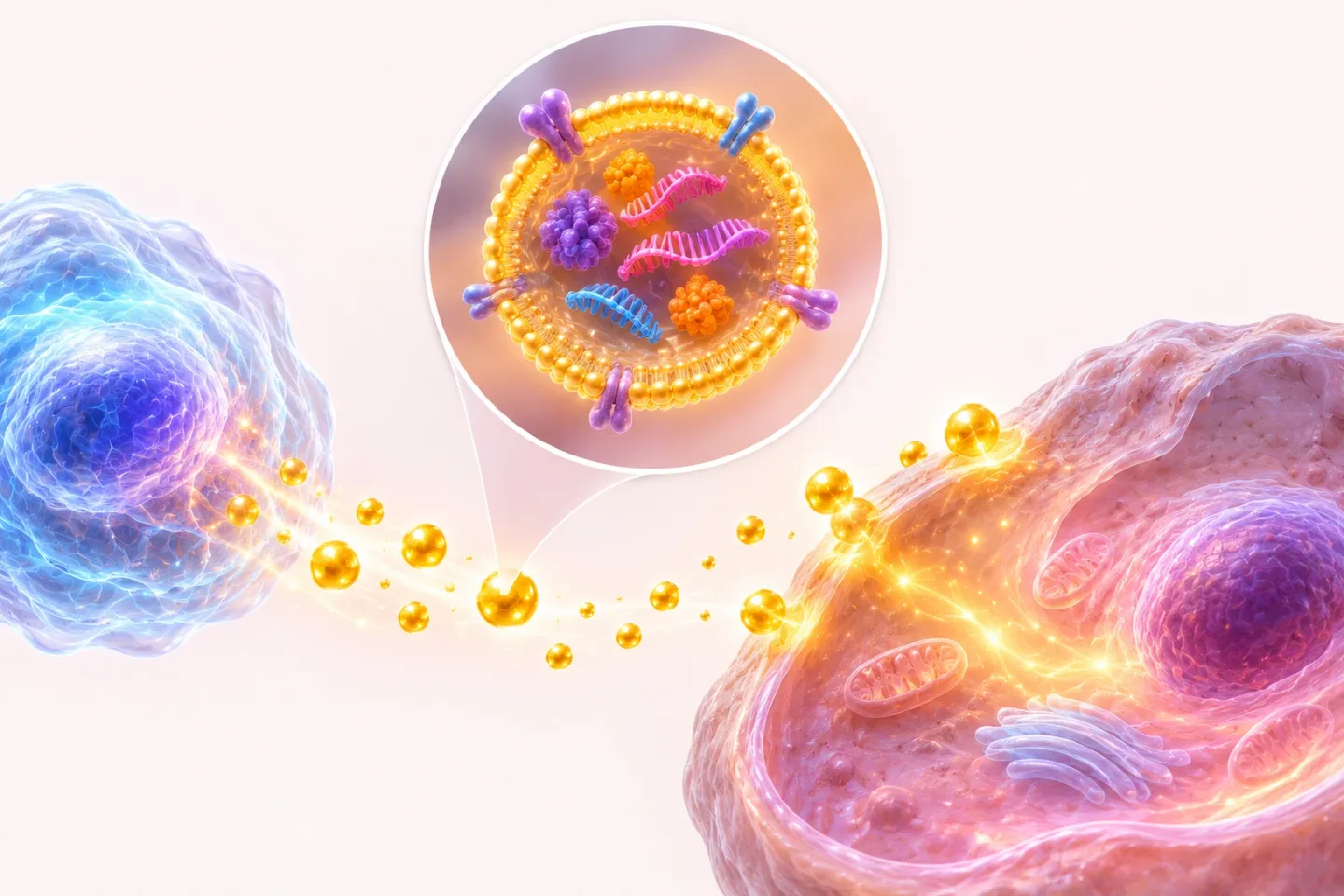
- Wharton’s jelly stem cellA young stem cell from donated umbilical cord tissue makes and releases exosomes.
- ExosomesTiny vesicles, far smaller than a cell, carry the stem cell’s repair messages.
- Surface proteinsProteins on the exosome’s membrane help it find and dock onto target cells.
- microRNAShort genetic messages that adjust how the receiving cell behaves.
- ProteinsGrowth factors and other proteins that support repair and calm inflammation.
- DeliveryExosomes fuse with the target cell and hand over their cargo.
- Supported cellThe receiving cell takes up the signals that support its repair.
| Treatment | How it is given | What studies report | Course used in studies |
|---|---|---|---|
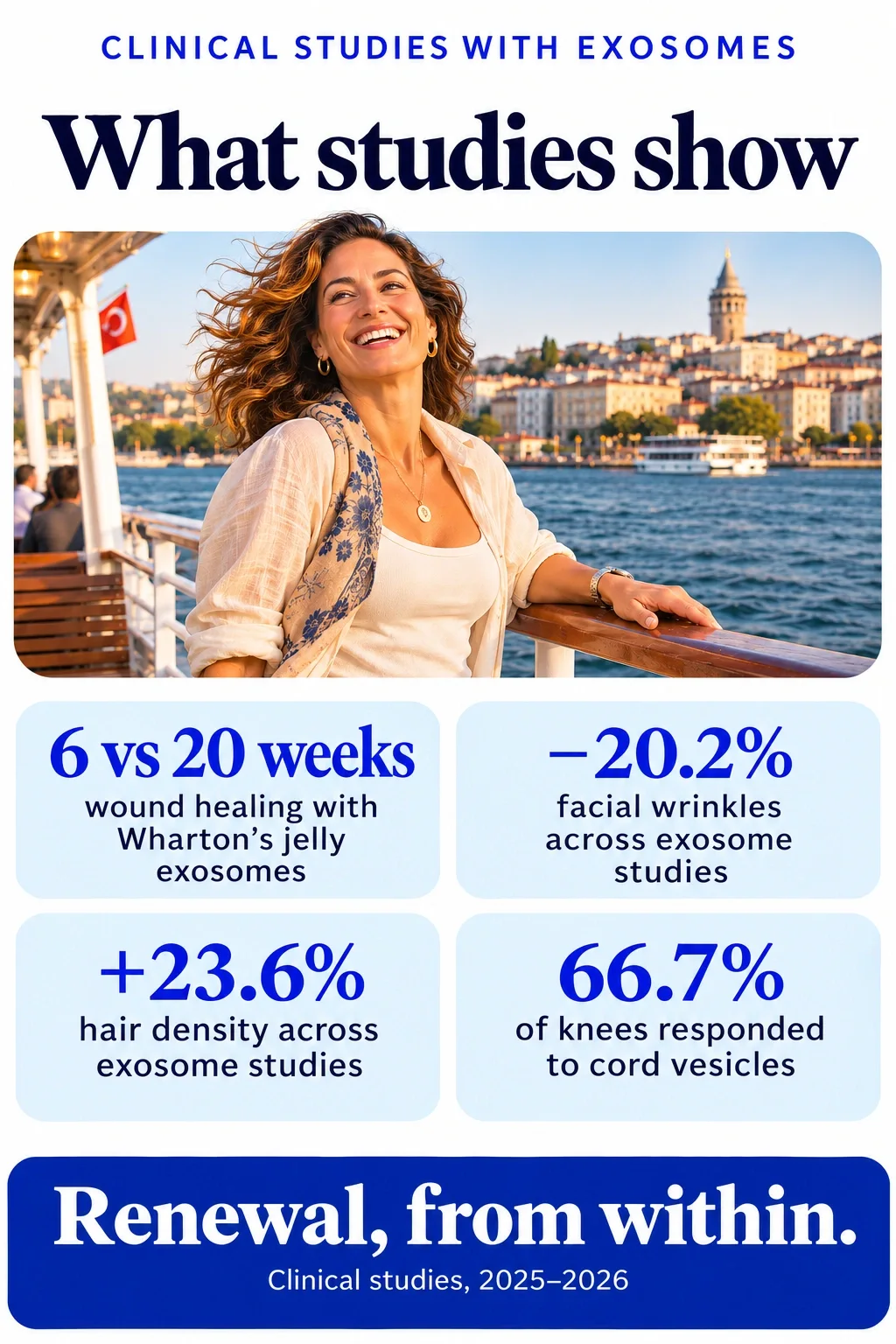
| Exosome facial and skin | Tiny, shallow injections, or applied straight after microneedling or laser | Facial wrinkles 20.2% lower on average across 26 skin studies5 | Three sessions, three weeks apart12 |
| Exosome hair treatment | Fine injections into the scalp, or applied after microneedling | Hair density 23.6% higher on average across 13 hair studies5 | Gains measured from 4 weeks to 12 months1314 |
| Exosome IV therapy | A slow drip into a vein | TNF-α and CRP lower after a single dose, against placebo6 | One dose in that trial |
| Nasal exosomes | A few gentle sprays into the nose | Thinking scores (ADAS-cog) 3.98 points better by week 36 at the medium dose7 | Twice a week for 12 weeks7 |
| Exosomes for joints | An injection into a joint, a tendon or the small joints of the spine | 66.7% of knees met the international response criteria8 | Six injections, two weeks apart8 |
| Intimate health and ED | A discreet injection into the erectile tissue, or fine intimate injections | Better erection hardness, IIEF-5 scores and morning erections with cord stem cell secretome15 | Injections into both erectile chambers15 |
| Wound healing | Applied to, or injected around, the wound | Full healing in 6 weeks on average, against 20 weeks3 | Once a week for four weeks3 |
Beyond these seven, exosomes can be breathed in as a fine mist for the lungs, given as eye drops, placed in the spinal fluid, a spinal disc, around a nerve or in a bone, or brought to the heart by catheter. A plan can combine routes, for example an IV infusion for whole-body support with an injection into a painful knee. You will find all 21 routes, with the research behind each, on our exosome therapy page.
02
Why Wharton’s jelly exosomes lead our exosome treatments
Wharton’s jelly is the soft, protective jelly that cushions the blood vessels of the umbilical cord. The mesenchymal stem cells that live in it are young and active, and the exosomes they release carry their repair messages. Our Wharton’s jelly exosomes come from cords donated after healthy births and are prepared fresh for your treatment date in a GMP-certified laboratory approved by the Turkish Ministry of Health. Nothing is taken from your own body, so there is no harvest and no wait for your own cells to grow.
Wharton’s jelly exosomes in people
- Faster wound healing. In a randomised trial in 110 people with persistent diabetic foot ulcers, those whose wounds received Wharton’s jelly MSC exosomes once a week for four weeks, alongside standard care, healed fully in 6 weeks on average (range 4 to 8), against 20 weeks (range 12 to 28) with standard care alone, and a significantly higher share healed completely.3
- Calmer, more comfortable eyes. In a triple-blind randomised trial in Sjögren’s syndrome, eye drops of Wharton’s jelly MSC exosomes, used twice a day for two weeks, lowered dry eye symptom scores, increased tear production and helped the tear film last longer than saline drops did, while the inflammatory signals IL-6 and MMP-9 fell in the tears.4
- Recovery after brain injury. At a teaching hospital in Istanbul, five adults with traumatic brain injury received six rounds of Wharton’s jelly MSC exosomes into the spinal fluid and the muscles. Over one year, their motor independence scores (FIM) rose from 46.20 to 64.20 and their overall performance scores (Karnofsky) from 46.00 to 72.00, with no serious adverse events.16
- Nerve repair. When a 24-year-old man in Istanbul had a complete radial nerve injury repaired with a nerve graft, Wharton’s jelly MSC exosomes were placed into both nerve ends. Six months later his motor recovery was rated excellent (M5) and his sensory recovery good (S3+), without physical therapy.17
- Better together with stem cells. In 125 people with degenerative disc disease treated with Wharton’s jelly stem cells injected into the disc, alone or together with Wharton’s jelly exosomes, both groups had significantly less pain and disability at three and six months. Adding the exosomes made a clinically meaningful improvement in back-related disability twice as likely at six months (adjusted relative risk 2.0).9
Why young cord cells make strong exosomes
The content of an exosome reflects the cell that made it.2 When researchers compared the proteins released by stem cells from four sources, the secretome of Wharton’s jelly cells had a more diverse composition than that of fat or bone marrow cells.18 In laboratory comparisons with bone marrow stem cells, Wharton’s jelly stem cells released more of the factors that support new blood vessels and protect nerve cells,19 and vesicles from Wharton’s jelly cells protected nerve cells from damage caused by a lack of oxygen, passing on protective microRNAs.20 Exosomes from Wharton’s jelly sped up skin wound healing in research models,21 and in laboratory studies of joint-lining cells they lowered the inflammatory enzymes MMP-13, COX-2 and iNOS.22 Because they come from a newborn’s cord, their quality does not depend on your own age or health.
Wharton’s jelly exosomes in numbers
- 6 vs 20 weeksaverage healing time for diabetic foot ulcers with Wharton’s jelly exosomes, against standard care, in a randomised trial3
- 46.2 → 64.2motor independence scores over one year after Wharton’s jelly exosomes in brain injury16
- 2.0×the likelihood of a meaningful gain in back function at six months when Wharton’s jelly exosomes were added to the stem cells9
- M5motor recovery, rated excellent, six months after Wharton’s jelly exosomes at a nerve repair17
Fresh for your date
Your Wharton’s jelly exosomes are prepared fresh for your treatment date in a GMP-certified laboratory approved by the Turkish Ministry of Health, and Dr. Cihan Bolat decides which exosomes your plan includes and by which routes.
No harvest, no matching
Wharton’s jelly cells lack the surface signals CD40, CD80 and CD86 that switch on rejection, and researchers concluded that they are well tolerated from a donor, so no tissue matching is needed.23
CD34+ exosomes alongside
CD34+ exosomes come from CD34+ cells, known for their role in forming new small blood vessels. Your plan can include them alongside your Wharton’s jelly exosomes where your doctor feels they will help.
Medical-grade, not cosmetic
Medical exosomes are made from cultured human stem cells in a GMP laboratory and planned by a doctor. They are different from skin-care products sold as “exosomes”, some of which are made from plants.
On their own or with stem cells
Exosomes can be your whole treatment, or partner fresh Wharton’s jelly stem cells, which keep releasing repair signals for longer. See how they compare further down this page.
Many routes, one plan
The same Wharton’s jelly exosomes can reach your face, scalp, bloodstream, nose, joints and intimate tissues, so several goals can be combined in one plan.
Read more about our Wharton’s jelly MSC exosomes and CD34+ exosomes, and every route they can take, on our exosome therapy page.
03
Exosome facial and skin treatments: what they do and what to expect
Firm, smooth skin depends on collagen, elastic fibres and a healthy barrier that holds in moisture, and all three slowly decline with age and sun. An exosome facial brings the repair signals of young stem cells to the fibroblasts, the cells in the deeper layer of your skin that make collagen.
How the exosome facial is given
There are two ways, and they can be combined. Tiny, shallow subdermal and intradermal injections place the exosomes just beneath the surface. Or the skin is first treated with microneedling or a fractional laser, which opens thousands of fine channels, and the exosomes are applied straight afterwards so they can reach the deeper layers.
What studies report
- Fewer wrinkles. Across 26 human skin studies, exosome treatments from several sources reduced facial wrinkles by 20.2% on average and improved pigmentation, elasticity, texture, redness and overall appearance by 14.7% to 23.4%.5
- Firmer, better-hydrated skin. In a randomised split-face trial in 28 people, the side treated with adipose stem cell exosomes and microneedling scored significantly better for overall aesthetic improvement than the side given saline, with greater gains in wrinkles, elasticity, hydration and pigmentation, confirmed in skin samples.12 Across 19 studies of vesicles and conditioned media, skin elasticity rose by 27.07%.24
- Smoother acne scars, faster recovery. In a double-blind split-face trial in 25 people, adipose stem cell exosome gel applied after a fractional CO2 laser improved acne scar scores by 32.5%, against 19.9% on the control side, with milder redness and a shorter recovery.25
- Why cord exosomes suit the skin. In laboratory studies on human skin, umbilical cord MSC exosomes were rich in the growth factors TGF-β and PDGF-BB and calmed the inflammatory signals of sun-damaged skin more strongly than adipose exosomes.26
Sessions, downtime and results
In the facial trials, three sessions were given a few weeks apart and results were measured over 12 weeks.1225 Any redness from microneedling or laser fades over the following days, and in the laser trial the exosome side recovered sooner.25 Changes build gradually as new collagen forms. For a full comparison with fillers, Botox and PRP, read our guide to the stem cell facial vs fillers, and see our facial rejuvenation treatment page.

04
Exosome hair treatment: what scalp exosomes do for thinning hair
Each hair grows from a follicle guided by a small cluster of dermal papilla cells at its base. In pattern hair loss their signals weaken, and each new hair grows a little thinner. Exosome hair treatment brings fresh repair signals right beside these cells.
How it is given
Fine, shallow injections place the exosomes in the scalp where the hair is thinning, or they are applied straight after microneedling of the scalp. There is no surgery, and nothing is taken from your body.
What studies report
- Denser, thicker hair. Across 13 human hair studies, exosome treatments increased hair density by 23.6% and hair thickness by 18.0% on average.5 A systematic review of 11 clinical studies found density gains of 9.5 to 35 hairs per square centimetre, with no serious adverse events.27
- In Istanbul. At a university hospital in Istanbul, 30 men with pattern hair loss had significantly denser hair 4 and 12 weeks after scalp injections of exosomes from foreskin-derived stromal cells, and they stayed satisfied throughout the study.13
- Umbilical cord exosomes. In an exploratory clinical study, umbilical cord MSC exosomes, from the same source tissue as ours, increased hair density and hair thickness in people with pattern hair loss. In laboratory studies and research models, they delivered let-7 microRNAs to the dermal papilla cells, lowered their androgen receptor and moved follicles into the growth phase.28
- Gains at one year. In 16 men treated with a topical exosome product after microneedling, hair density had risen by 35 hairs per square centimetre on average at 12 months, with improvement in every patient, and 87% were satisfied or highly satisfied.14
- Women too. In 20 people, 16 men and 4 women, exosomes applied after radiofrequency microneedling increased hair density and diameter at three, six and nine months, and the response did not depend on sex or on how advanced the hair loss was.29
Sessions and timeline
Hair grows slowly, so results are measured in months. Density was already higher 4 weeks after scalp injections,13 and gains were followed for 9 to 12 months.1429 In a meta-analysis of stem cell conditioned medium for hair loss, longer treatment gave significantly better results than shorter treatment,30 which is why a hair plan can include top-up sessions at your follow-up reviews. To see how exosomes compare with a hair transplant, and how the two can work together, read stem cell hair treatment vs hair transplant, or see our hair restoration treatment page.

05
Exosome IV therapy: benefits for the whole body
In exosome IV therapy, also called an exosome infusion, the exosomes flow into a vein through a slow drip while you sit back and relax, and the bloodstream carries them through the whole body. In research models, vesicles given into a vein reached mainly the liver, spleen, gut and lungs,31 and MSC vesicles gathered specifically in injured kidneys, the very place where repair was needed.32 That makes IV the natural route for whole-body goals, such as calming inflammation, supporting healthy ageing and helping recovery, and a natural partner for the targeted routes.
What studies report
- Calmer inflammation. In a double-blind, placebo-controlled trial in 30 people in hospital with severe lung inflammation from COVID-19, a single IV dose of umbilical cord MSC exosomes was safe and significantly lowered the inflammation markers TNF-α and CRP, with improvements in key immune cells.6
- Kidney function. In 40 people with stage 3 and 4 chronic kidney disease, two doses of umbilical cord MSC vesicles significantly improved eGFR, creatinine, urea and albumin in the urine, while TNF-α fell and the calming messengers IL-10 and TGF-β1 rose; the placebo group showed no significant improvement.33 Read more in can kidney function improve?
- Healthy ageing. In research models, small vesicles from young adipose stem cells given to old animals improved grip strength, coordination and stamina, reduced frailty and markers of inflammation and cell ageing, and made the predicted epigenetic age of their tissues younger.34
What to expect, and how IV exosomes fit a longevity plan
An IV session is simple: a fine cannula, a slow drip and time to read or rest, and then you are free to enjoy Istanbul. Exosome IV therapy fits naturally into a healthy-ageing programme, together with Wharton’s jelly stem cells by IV, and when your plan includes stem cells, NAD+ IV can be added too. Our guide to stem cell longevity treatment explains what such a programme involves, NAD+ IV therapy explains the drip, and our healthy ageing page shows the full treatment. If your interest is your heart and arteries, our guide on how to reduce plaque in arteries explains the everyday steps and medicines that help most.

06
Nasal exosomes: what the nose-to-brain spray does
The brain is well protected by the blood–brain barrier, so the route matters. The upper part of the nose lies just below the brain, and a nasal exosome spray uses this nose-to-brain pathway: a few gentle sprays, with no needle at all.
What studies report
- Straight to the brain. In research models, Wharton’s jelly MSC exosomes given into the nose reached the front of the brain within 30 minutes and the whole brain after 3 hours. They protected nerve cells, restored healthy myelin and improved learning after an injury to the newborn brain.35
- Drawn to where help is needed. In research models of stroke, autism, Parkinson’s and Alzheimer’s disease, MSC exosomes given through the nose gathered in the inflamed, affected brain areas and stayed there for up to 96 hours, while in healthy brains they cleared within 24 hours.36 In research models of autism, nasal exosomes increased social interaction and reduced repetitive behaviours.37
- Thinking and memory in people. In a phase I/II trial in mild to moderate Alzheimer’s disease, nasal exosomes from adipose stem cells were given twice a week for 12 weeks. No adverse events were reported, and in the medium-dose group, ADAS-cog scores fell by 2.33 points at week 12 and by 3.98 points by week 36 (lower is better), while MoCA scores rose by 2.38 points, signs of better thinking and memory.7
What to expect
Nasal exosomes are painless and quick, which makes them easy to repeat as part of a course. The nasal route is used for exosomes only, and in brain-focused plans it can be paired with an IV infusion, and with stem cells by IV or intrathecal injection where your doctor advises. Read how this fits into care for Alzheimer’s disease, Parkinson’s and autism.

07
Exosomes for joints: knee, shoulder, tendon and back injections
Inside a painful joint, a persistent low-grade inflammation slowly wears the cartilage down. An injection into the joint brings exosomes right to it, and the same kind of precise injection can reach a tendon, a ligament or the small facet joints of the spine.
What studies report
- Knees. In 29 people (33 knees) with knee osteoarthritis, six injections of umbilical cord vesicles, two weeks apart, lowered pain by 38.8 mm on a 100 mm scale, with the largest gains in quality of life and in sport and recreation, and every score passed the threshold for a clinically important change. Two in three knees (66.7%) met the international response criteria, rising to 83.3% in earlier-stage (grade 2) arthritis.8
- Gentle from the first studies. In a randomised, double-blind, ascending-dose study, umbilical cord MSC exosome injections into the knee caused no adverse consequences, and clinical scores and MRI improved compared with before treatment.38 A clinical-grade umbilical cord vesicle product injected into the knee showed no adverse effects over 12 months, and in research models the same vesicles regenerated smooth hyaline cartilage.39
- Tendons. A 45-year-old tennis player with a complete Achilles tendon rupture chose treatment without surgery: umbilical cord MSC vesicles injected into the tendon gap, three IV infusions of umbilical cord stem cells and rehabilitation. His pain fell from 10/10 to 0/10 by six months, MRI showed the tendon reconnected, and by about 14 months he was back to weight training and jogging.40
- Back pain. In 20 adults with lumbar facet joint pain, a single injection of bone marrow MSC vesicles into the facet joints caused no complications, and after three months pain severity had improved by 65.04%, its impact on daily life by 72.09% and the Oswestry Disability Index by 58.43%.41
Sessions and timeline
The knee study used six injections, two weeks apart, and measured results at 3, 6 and 12 months.8 Exosomes can be injected into the joint on their own, given by IV infusion, or combined with Wharton’s jelly stem cells in the same treatment day, and both knees and the tendons and ligaments around them can be treated in a single day. For everything about the knee, from what is injected to recovery day by day, read our stem cell knee injection guide. For a torn meniscus, see stem cell therapy for a torn meniscus, and for the spine, stem cell therapy for back and neck pain.

08
Exosomes for intimate health: erectile dysfunction and women’s wellness
A firm erection depends on healthy blood vessels, smooth muscle and nerves inside the erectile tissue. In an intracavernosal treatment, exosomes are placed right among them with a short, discreet injection through a very fine needle. For women, fine injections bring exosomes to the vaginal wall, the vulva or the tissue around the urethra, and to the ovaries or the uterus. Everything is handled privately and with great care.
What studies report for men
- In research models, a meta-analysis of 11 studies found that stem cell exosomes improved erectile function (a standardised effect of 3.68 on erectile pressure) and the structure of the erectile tissue, with more smooth muscle and healthier blood vessel and nerve markers.42
- When sildenafil no longer helped, injections of umbilical cord MSC secretome, the mix of repair signals these cells release, exosomes included, into the erectile tissue improved erection hardness, IIEF-5 scores, morning erections and penile blood flow in 15 men with severe ED, and any pain passed within minutes.15
- Wharton’s jelly stem cells given the same way improved erectile function, erection hardness and penile blood flow at every follow-up over 12 months in 22 diabetic men whose ED had resisted treatment.43
What studies report for women
In research models of menopause, umbilical cord MSC exosomes injected into the vaginal wall improved its structure, collagen, new blood vessels and natural lubrication, and calmed inflammation.44 In women, platelet-derived exosome injections, given in three sessions four weeks apart, raised sexual function scores (FSFI), assessed 6 and 12 months later.45 And in a randomised study of 30 women aged 38 to 46 with low ovarian reserve, exosomes prepared from their own platelets and injected into the ovaries were followed by better ovarian reserve markers, including AMH and the antral follicle count, more mature eggs and more positive pregnancies than with PRP or saline.46
For men, our guide to drug-free ED treatment compares exosomes and stem cells with shockwave, PRP and tablets, and our erectile dysfunction treatment page shows the full plan. Wharton’s jelly exosomes and stem cells can be given in the same private treatment day, and you return to your hotel the same day.

09
Exosomes for wound healing: diabetic foot ulcers, fistulas and slow-healing skin
A chronic wound stays open when inflammation and poor circulation stall the body’s repair. Exosomes placed on or around the wound help healing move forward again, and this is where Wharton’s jelly exosomes have some of their clearest results in people.
- Diabetic foot ulcers. In the randomised trial of 110 people described above, weekly Wharton’s jelly MSC exosomes on the wound for four weeks brought full healing in 6 weeks on average, against 20 weeks with standard care alone.3
- Crohn’s disease fistulas. In 20 people with perianal fistulas that had not responded to anti-TNF medicines, MSC exosomes injected into the fistula tracts three times, two months apart, fully closed the fistulas in 12 (60%), and 30 of the 43 tracts (69.7%) closed completely, with less inflammation in tissue samples.47
- Complex fistulas. In 11 people with complex perianal fistulas not caused by Crohn’s disease, placental MSC exosome injections closed the tract completely in 5 and stopped the discharge in 8, with no allergic or injection-related reactions.48
- In laboratory studies and research models, exosomes from Wharton’s jelly made skin cells more viable and mobile and sped up the healing of skin wounds.21
In the foot ulcer trial, the exosomes were applied once a week, so your doctor plans how a wound treatment fits your stay in Istanbul and your care at home, and it can be combined with an IV infusion. Read more on our diabetes page and in our Crohn’s disease and ulcerative colitis guide.

10
Exosomes vs stem cells vs PRP: which treatment is right for you?
Exosomes, stem cells and PRP all work with your body’s own repair, in different ways, and each has its place. Here is how they differ.
Exosomes vs stem cells
Stem cell therapy gives you living cells, which stay for a while and keep releasing growth factors, immune messengers and exosomes as they sense inflammation.11 Exosome therapy gives you those messengers directly, in a concentrated form with no living cells inside.2 Both have strong results. Two injections of umbilical cord stem cells grown from Wharton’s jelly left knee pain at 2.4 on a 100-point scale after a year, against 22.1 with hyaluronic acid,49 and injections of Wharton’s jelly stem cells into the scalp regrew hair at the treated sites in all four patients with alopecia areata, by 67% on average.50 Exosomes add flexibility: they can be given as a nasal spray, applied after microneedling and repeated as top-ups. Together, they can do more: adding Wharton’s jelly exosomes to Wharton’s jelly stem cells made a meaningful gain in back function twice as likely.9
Exosomes vs PRP
PRP (platelet-rich plasma) concentrates growth factors from a sample of your own blood, and it is a well-studied option. Across 18 randomised trials in knee osteoarthritis, it improved WOMAC scores by 44.7%, against 12.6% with hyaluronic acid;51 in 11 randomised trials in hair loss, it increased hair follicles, thickness and density compared with placebo;52 and in a placebo-controlled trial in ED, 69% of men reached a meaningful improvement, against 27%.53 When exosomes and PRP were compared directly on sun-aged facial skin, both improved wrinkles, uneven colour, redness and texture equally, and the exosomes needed no blood draw.54 The main difference is the source: PRP depends on your own platelets, while Wharton’s jelly exosomes come from young cord cells whose quality does not depend on your age or health. If you have had PRP and would like something that works differently, exosomes are a natural next step to discuss.
| Option | What you receive | How it is given | What studies report | Best suited to |
|---|---|---|---|---|
| Wharton’s jelly stem cells and exosomes together | Fresh living cells plus their concentrated messengers | Stem cells by IV, intrathecal or targeted injection; exosomes by IV, nasal spray or injection; in one treatment day | Adding the exosomes made a meaningful gain in back function twice as likely at six months9 | The strongest combination for whole-body and targeted goals |
| Wharton’s jelly exosomes on their own | Cell-free repair messengers | IV, nasal spray, fine injections or after microneedling | Diabetic foot ulcers healed in 6 vs 20 weeks3 | A gentle, cell-free treatment, the face and scalp, and nose-to-brain delivery |
| Wharton’s jelly stem cells | Fresh, living young cells, never frozen | IV, intrathecal, and injections into joints, tendons and skin | Knee pain 2.4 vs 22.1 (0–100) against hyaluronic acid at 12 months49 | Living cells to support repair from within |
| Umbilical cord stem cells | Young donor cells, the second cell type in our plans | IV and targeted injections, in the same treatment day | The largest osteoarthritis pain effect of three cell sources across 36 randomised trials55 | Added to Wharton’s jelly cells where the doctor advises |
| PRP | Growth factors from your own platelets | A blood draw, then injections, often as a series | WOMAC improved by 44.7%, against 12.6% with hyaluronic acid51 | A simple option based on your own blood |
These options add up rather than compete, and a plan can combine them. Read more about our stem cell therapy, or compare all the exosome routes on our exosome therapy page.
11
How many exosome sessions will I need, and how long do exosome results last?
Exosomes work with your body’s own repair, so results build over weeks and months rather than overnight. The number of sessions depends on the treatment and on your goal. Here is what the published studies used, and when they measured results.
| Treatment | Sessions in the study | Results measured |
|---|---|---|
| Exosome facial after microneedling12 | Three sessions, three weeks apart | Six weeks after the last session |
| Acne scars, after laser25 | Three laser sessions with exosome gel | At 12 weeks |
| Hair, scalp injections13 | Exosome injections into the scalp | At 4 and 12 weeks |
| Hair, after microneedling14 | Exosomes applied after microneedling | At 1, 3, 6 and 12 months |
| IV infusion6 | A single dose | Seven days later |
| Nasal spray7 | Twice a week for 12 weeks | Up to week 36 |
| Knee injection8 | Six injections, two weeks apart | At 3, 6 and 12 months |
| Wounds3 | Once a week for four weeks | Healed in 6 weeks on average |
| Fistulas47 | Three injections, two months apart | Six months after the last |
- Treatment dayWalk outBack to your hotel the same day
- First daysSettleAny redness or tenderness fades
- Weeks 4–12First changesSkin and hair measured in the trials
- Months 3–6BuildingJoint comfort and function gains
- Year 1HoldingBenefits followed to 12 months
How long do exosome results last?
- Hair: density was still higher 12 months after exosomes with microneedling,14 and gains were followed for a median of 10 months in another study.29
- Knees: pain and function scores were better at 3, 6 and 12 months.8
- Brain: thinking scores kept improving to week 36 after a 12-week nasal course,7 and motor independence had improved over one year with Wharton’s jelly exosomes after brain injury.16
- Spinal cord: sensation and independence in daily life had improved 12 months after umbilical cord exosomes were given into the spinal fluid.56
Exosomes support your own repair, so the aim is to build your result and then keep it. In a meta-analysis of stem cell conditioned medium for hair, longer treatment gave significantly better results than shorter treatment,30 and in knee trials of stem cells, repeated injections improved pain and function more than a single one at 6 and 12 months.57 That is why your plan can include top-up sessions, timed at your follow-up reviews at about 1, 3, 6 and 12 months. Most plans begin with one treatment day in Istanbul, and your written plan sets out the number of sessions before you travel.
12
Muse cells and Muse exosomes: an optional add-on
Muse cells, short for multilineage-differentiating stress-enduring cells, are a small group of especially hardy repair cells within the MSC family, discovered in Japan in 2010.58 Donor Muse cells have been given without tissue matching or immune-suppressing medicines,59 and in a randomised trial in stroke, 40.0% of patients given one IV dose of a donor Muse cell product could look after their own affairs at 12 weeks, against 10.0% with placebo.60 Muse cells also release their own mix of signals, linked with survival under stress and immune balance.61
If you would like to add them, Muse exosomes can be given by IV infusion or nasal spray, and Muse cells by IV infusion or intrathecal injection. Your Wharton’s jelly exosomes remain the core of your plan.
13
Are exosome injections safe? Side effects explained
Safety comes first, and the published record is reassuring. A 2024 meta-analysis of 21 clinical reports concluded that extracellular vesicle therapy is safe, with a low rate of serious adverse events, and found improvement in the majority of treated patients.10
The individual studies point the same way. No adverse events were reported with nasal exosomes given twice a week for 12 weeks;7 knee injections of umbilical cord exosomes caused no adverse consequences in a randomised dose study,38 and a clinical-grade product showed none over 12 months;39 scalp injections in Istanbul were well tolerated, with no complications;13 and no serious adverse events occurred over a year with Wharton’s jelly exosomes given into the spinal fluid and muscles.16 When people notice anything, it is brief: scalp tenderness that settled within 48 hours,14 injection discomfort that passed within minutes,15 or a passing mild temperature.16 When stem cells are part of your plan, a meta-analysis of 62 randomised trials with 3,546 patients found MSC treatment safe, the most common effect a passing fever.62
Your own care adds further layers. Your exosomes are prepared in a GMP-certified laboratory approved by the Turkish Ministry of Health, Dr. Cihan Bolat reviews your health and medical history before any plan is made, and every injection is given under sterile conditions by our specialist team. Medical exosomes are not the same as the cosmetic products sold under the same name: ours are Wharton’s jelly MSC exosomes, prepared for your treatment date.
14
Why patients travel to Istanbul, Turkey for exosome treatment
People from the UK, Germany, the Netherlands, across Europe, the Gulf, the USA and beyond travel to Istanbul for exosome treatment: specialist-led care with fresh Wharton’s jelly exosomes in a single treatment day, in a city that is easy to reach and a pleasure to stay in.

Specialist-led from the first message
Uzm. Dr. Cihan Bolat, our medical director, a specialist in anaesthesiology and reanimation and in regenerative medicine, leads the team that reviews your case free of charge and treats you.
Fresh exosomes for your date
Your Wharton’s jelly exosomes come from cords donated after healthy births and are prepared fresh for your treatment date in a GMP-certified laboratory approved by the Turkish Ministry of Health.
Every route in one plan
Exosome treatments for the face, scalp, whole body (IV and nasal spray), joints and intimate health can be combined in one plan, with Wharton’s jelly stem cells added where they help.
One treatment day
Most plans take one treatment day in Istanbul, and you walk out of the clinic the same day.
Help at every step
A personal case manager helps with your hotel, ground transport and translation, so you can focus on your treatment.
Follow-up from home
Reviews at about 1, 3, 6 and 12 months, so your care continues after you fly back.
Istanbul has two international airports with direct flights from across Europe, the Middle East and beyond, and our clinic is in Suadiye, a calm district on the Asian side near the Marmara seafront. Read more about why patients choose stem cell therapy in Turkey.
15
Your exosome treatment in Istanbul, step by step
From your first message to your follow-up at home, every step is planned with you in advance, whether you are travelling from London, Berlin, Amsterdam, Dubai or New York. For the fuller story, read the stem cell treatment in Turkey, step by step, or request your free consultation now.
Tell us your goal
Share what you hope to improve, whether it is your skin, your hair, a painful joint, whole-body wellbeing or intimate health, with any reports or photos, through our free consultation request or by WhatsApp on +90 534 856 92 92.
Free medical review and phone call
Dr. Cihan Bolat’s team reviews your case free of charge, talks it through with you by phone and tells you honestly which exosome treatment, or combination, suits you.
Your written plan and fixed price
You receive a written plan with your exosomes, the routes chosen for you, any stem cells and the number of sessions, with a fixed, all-inclusive price.
Fresh preparation and treatment day
Once you confirm, your exosomes are prepared fresh for your date. On treatment day, ground transport brings you to the clinic, and you walk out the same day.
Home and follow-up
Back home, we review your progress with you at about 1, 3, 6 and 12 months and plan any top-up sessions together.
16
How much does exosome treatment cost in Turkey?
Every exosome treatment is personal, so the price depends on the exosomes, the routes and the number of sessions in your plan: an exosome facial, scalp treatment, an IV infusion, a nasal course, a joint injection, or a combination with Wharton’s jelly stem cells. After your free medical review, you receive a fixed, all-inclusive price in writing before you book anything, so you can decide calmly at home.
When you compare exosome treatment prices in Istanbul, Turkey and abroad, compare what is included: the source of the exosomes, who plans and gives the treatment, and the follow-up. Ours are fresh Wharton’s jelly MSC exosomes from a GMP-certified laboratory approved by the Turkish Ministry of Health, planned and given by a specialist team.
Included
- Free medical review and phone consultation
- Fresh Wharton’s jelly exosomes, and CD34+ exosomes if they are in your plan
- Your exosome treatment by our specialist team, by the routes in your plan
- Wharton’s jelly or umbilical cord stem cells, if they are in your plan
- Ground transport to and from the clinic, and help with translation
- A personal case manager and follow-up reviews
Not included / optional
- Flights
- Hotel stay, which we can help you arrange
- Top-up sessions, if they are part of your plan
See every route and treatment on our exosome therapy page, or request your free review.
17
Frequently asked questions
What is an exosome injection?
An exosome injection places exosomes, the tiny messengers that stem cells release, exactly where your body needs them: in the skin, the scalp, a joint, a tendon or the erectile tissue. Exosomes carry growth factors, proteins and microRNAs but no living cells. At our clinic, we use fresh Wharton’s jelly exosomes, with CD34+ exosomes where they help, and you walk out the same day.
What are exosomes used for?
Exosome treatment is used for skin rejuvenation and scars, thinning hair, joint and tendon pain, back pain, whole-body goals such as calming inflammation and healthy ageing, brain health by nasal spray, erectile dysfunction and women’s intimate health, and slow-healing wounds. Exosomes can be given in 21 ways, and Dr. Cihan Bolat chooses the routes for your goal in a free medical review.
Exosome facial vs exosome hair vs exosome IV: what is the difference?
They use the same exosomes by different routes. An exosome facial places them in the skin with tiny injections or after microneedling or laser, to support collagen. Exosome hair treatment places them in the scalp beside the follicles. Exosome IV therapy is a slow drip that carries them through the whole body. They can be combined in one plan and one treatment day.
What does an exosome facial do?
An exosome facial brings the repair signals of young stem cells to the cells that make collagen. Across 26 human skin studies, exosome treatments reduced facial wrinkles by 20.2% on average, and in a split-face trial, exosomes after laser improved acne scars by 32.5%, against 19.9% on the control side. Read our guide comparing the stem cell facial with fillers for more.
Do exosomes work for hair loss?
In clinical studies, yes. Across 13 human hair studies, exosome treatments increased hair density by 23.6% and hair thickness by 18.0% on average, and in Istanbul, 30 men had denser hair 4 and 12 weeks after scalp exosome injections. Results build over months, and top-up sessions can help you keep them.
What are the benefits of exosome IV therapy?
Exosome IV therapy carries the exosomes through the whole body, which suits whole-body goals such as calming inflammation and supporting healthy ageing and recovery. In a placebo-controlled trial, a single IV dose of umbilical cord stem cell exosomes lowered the inflammation markers TNF-α and CRP. It is a relaxed, slow drip, and it can be combined with Wharton’s jelly stem cells.
What are nasal exosomes?
Nasal exosomes are given as a few gentle sprays into the nose, whose upper part lies just below the brain. In research models, Wharton’s jelly exosomes given this way reached the brain within 30 minutes, and in a trial in Alzheimer’s disease, nasal exosomes from adipose stem cells improved thinking scores by 3.98 points by week 36 in the medium-dose group. The spray is painless, with no needle.
Can exosomes be injected into joints?
Yes. Exosomes can be injected into the knee, hip or shoulder, into a tendon or ligament, or into the small joints of the spine. In 33 knees treated with umbilical cord vesicles, pain fell by 38.8 mm on a 100 mm scale and 66.7% met the international response criteria. Both knees and the tendons around them can be treated in one day.
Can exosomes help erectile dysfunction?
They are a hopeful, drug-free option. In research models, stem cell exosomes injected into the erectile tissue improved erectile function, and in 15 men whom sildenafil no longer helped, umbilical cord stem cell secretome improved erection hardness and morning erections. Wharton’s jelly stem cells injected the same way improved erections over 12 months. Everything is handled privately.
Exosomes vs PRP: which is better?
Both support your body’s repair, in different ways. PRP uses growth factors from your own platelets and has good results, for example in knee arthritis. Exosomes carry the concentrated messengers of young stem cells, and when the two were compared on facial skin, they worked equally well, with no blood draw needed for exosomes. Dr. Cihan Bolat can advise which suits your goal.
What is the difference between exosomes and stem cells?
Stem cells are living cells that stay for a while and keep releasing repair signals. Exosomes are those signals in a concentrated, cell-free form. Exosomes can also be given as a nasal spray or after microneedling. The two can be combined: adding Wharton’s jelly exosomes to Wharton’s jelly stem cells made a meaningful gain in back function twice as likely in a study of 125 people.
How many exosome sessions will I need?
It depends on the treatment and your goal. Facial trials used three sessions a few weeks apart, a knee study used six injections two weeks apart, and an IV trial used a single dose. Most plans begin with one treatment day in Istanbul, and top-up sessions can be planned at your follow-up reviews. Your written plan sets out every session before you travel.
How long do exosome results last?
In published studies, benefits were followed for months: hair density was still higher at 12 months, knee pain and function were better at 12 months, and thinking scores kept improving to week 36 after a nasal course. Exosomes support your own repair, so top-up sessions, a healthy lifestyle and follow-up reviews help you keep your result.
When will I see results after an exosome treatment?
Results build step by step. In the studies, hair density was higher from 4 weeks, facial skin improved over 12 weeks, knee gains were measured from 3 months, and diabetic foot ulcers treated with Wharton’s jelly exosomes healed in 6 weeks on average. We follow your progress with you at about 1, 3, 6 and 12 months.
Are exosome injections safe? What are the side effects?
The published record is reassuring. A meta-analysis of 21 clinical reports concluded that extracellular vesicle therapy is safe, with a low rate of serious adverse events. When people notice anything, it is brief, such as scalp tenderness that settled within 48 hours or mild redness after microneedling. Your exosomes come from a GMP-certified laboratory approved by the Turkish Ministry of Health.
How much does exosome treatment cost in Turkey?
The price depends on the exosomes, the routes and the number of sessions in your plan, for example a facial, scalp treatment, IV infusion, nasal course or joint injection, and whether stem cells are added. After a free medical review, you receive a fixed, all-inclusive price in writing, covering the treatment, transport to and from the clinic, a case manager and follow-up reviews.
Why have exosome treatment in Istanbul?
Istanbul offers specialist-led treatment with fresh Wharton’s jelly exosomes, every route in one plan and easy flights from the UK, Europe, the Gulf and beyond. Most plans take one treatment day, you walk out the same day, and you are free to add a few days to enjoy the city. You can reach us on WhatsApp at +90 534 856 92 92.

Medical review
Uzm. Dr. Cihan Bolat
Medical Director, Istanbul Stemcell
This page was written from the published studies listed below and reviewed for medical accuracy on .
18
References
- Kalluri R, LeBleu VS. The biology, function, and biomedical applications of exosomes. Science. 2020;367(6478). PMID 32029601
- Phinney DG, Pittenger MF. Concise Review: MSC-Derived Exosomes for Cell-Free Therapy. Stem Cells. 2017;35(4):851-858. PMID 28294454
- Kishta MS, et al. The transforming role of wharton's jelly mesenchymal stem cell-derived exosomes for diabetic foot ulcer healing: a randomized controlled clinical trial. Stem Cell Res Ther. 2025;16(1):559. PMID 41084065
- Habibi A, et al. Efficacy of topical mesenchymal stem cell exosome in Sjögren's syndrome-related dry eye: a randomized clinical trial. BMC Ophthalmol. 2025;25(1):299. PMID 40394561
- Stack ER, et al. Clinical Advances in Exosome-Based Therapies for Aesthetic Medicine: A Systematic Review and Meta-analysis of Human Clinical Trials. Aesthet Surg J. 2026;46(12 Suppl 2):S13-S25. PMID 41800726
- Hosseinzadeh M, et al. Therapeutic potential of hUCMSC-derived exosomes in modulating inflammation and immune response in COVID-19-associated ARDS: A randomized clinical trial. Respir Med. 2025;249:108475. PMID 41202994
- Xie X, et al. Clinical safety and efficacy of allogenic human adipose mesenchymal stromal cells-derived exosomes in patients with mild to moderate Alzheimer's disease: a phase I/II clinical trial. Gen Psychiatr. 2023;36(5):e101143. PMID 37859748
- Yokota N, Kambayashi T, Tanabe Y. Safety and Efficacy of Intra-Articular Injection of Umbilical Cord-Derived Extracellular Vesicles in Patients With Knee Osteoarthritis: A Retrospective Study. Orthopedics. 2026;49(4):e351-e358. PMID 42611014
- Toro-Rivera A, et al. Mechanisms of Exosome-Supplemented WJ-MSC Therapy in Degenerative Disc Disease: Integrating Proteomic Profiling with Clinical Functional Recovery. Biomedicines. 2026;14(10). PMID 42940041
- Van Delen M, et al. A systematic review and meta-analysis of clinical trials assessing safety and efficacy of human extracellular vesicle-based therapy. J Extracell Vesicles. 2024;13(7):e12458. PMID 38958077
- Caplan AI, Dennis JE. Mesenchymal stem cells as trophic mediators. J Cell Biochem. 2006;98(5):1076-84. PMID 16619257
- Park GH, et al. Efficacy of combined treatment with human adipose tissue stem cell-derived exosome-containing solution and microneedling for facial skin aging: A 12-week prospective, randomized, split-face study. J Cosmet Dermatol. 2023;22(12):3418-3426. PMID 37377400
- Ersan M, et al. Effectiveness of Exosome Treatment in Androgenetic Alopecia: Outcomes of a Prospective Study. Aesthetic Plast Surg. 2024;48(21):4262-4271. PMID 39174804
- Wan J, et al. A Prospective Study of Exosome Therapy for Androgenetic Alopecia. Aesthetic Plast Surg. 2025;49(11):3151-3156. PMID 40146273
- Margiana R, et al. Intracavernosal UC-MSC secretome therapy for severe erectile dysfunction: a clinical anatomy pilot study with elastography and Doppler assessment. Front Reprod Health. 2026;8:1775672. PMID 42094932
- Kabatas S, et al. Efficacy and safety of exosomes from Wharton's Jelly-derived mesenchymal stem cells in traumatic brain injury. World J Crit Care Med. 2025;14(4):103782. PMID 41377533
- Civelek E, et al. Effects of exosomes from mesenchymal stem cells on functional recovery of a patient with total radial nerve injury: A pilot study. World J Stem Cells. 2024;16(1):19-32. PMID 38292440
- Shin S, et al. Comparative Proteomic Analysis of the Mesenchymal Stem Cells Secretome from Adipose, Bone Marrow, Placenta and Wharton's Jelly. Int J Mol Sci. 2021;22(2). PMID 33467726
- Hsieh JY, et al. Mesenchymal stem cells from human umbilical cord express preferentially secreted factors related to neuroprotection, neurogenesis, and angiogenesis. PLoS One. 2013;8(8):e72604. PMID 23991127
- Joerger-Messerli MS, et al. Extracellular Vesicles Derived from Wharton's Jelly Mesenchymal Stem Cells Prevent and Resolve Programmed Cell Death Mediated by Perinatal Hypoxia-Ischemia in Neuronal Cells. Cell Transplant. 2018;27(1):168-180. PMID 29562785
- Bakhtyar N, et al. Exosomes from acellular Wharton's jelly of the human umbilical cord promotes skin wound healing. Stem Cell Res Ther. 2018;9(1):193. PMID 30005703
- Fotouhi A, et al. The Impact of Wharton's Jelly-derived Exosomes on the Production of Inflammatory Mediators from HIG-82 Synoviocytes. Iran J Immunol. 2024;21(3):243-254. PMID 39306730
- Weiss ML, et al. Immune properties of human umbilical cord Wharton's jelly-derived cells. Stem Cells. 2008;26(11):2865-74. PMID 18703664
- Jafarzadeh A, et al. Effectiveness of regenerative medicine for skin lightening and rejuvenation: a systematic review of extracellular vesicles and conditioned media. Stem Cell Res Ther. 2025;16(1):513. PMID 41013717
- Kwon HH, et al. Combination Treatment with Human Adipose Tissue Stem Cell-derived Exosomes and Fractional CO2 Laser for Acne Scars: A 12-week Prospective, Double-blind, Randomized, Split-face Study. Acta Derm Venereol. 2020;100(18):adv00310. PMID 33073298
- Ponnikorn S, et al. Biologically Distinct, Clinically Convergent: A Comparative Study of Umbilical Cord- and Adipose-Derived Mesenchymal Stem Cell Exosomes in Human Skin Regeneration. Aesthet Surg J. 2026;46:S38-S53. PMID 41800728
- Al Ameer MA, et al. Exosomes and Hair Regeneration: A Systematic Review of Clinical Evidence Across Alopecia Types and Exosome Sources. Clin Cosmet Investig Dermatol. 2025;18:2215-2227. PMID 40955427
- Chen Q, et al. hUC-MSC-exosomes deliver Let-7b/7f-5p to dermal papilla cells for a multi-target synergistic treatment of androgenetic alopecia. J Nanobiotechnology. 2026;24(1). PMID 42363148
- Koumprentziotis IA, et al. Microneedling radiofrequency followed by topical exosome application therapy for pattern hair loss: A scoping review and prospective study. Clin Dermatol. 2025;43(5):742-751. PMID 40744280
- Chien WY, et al. Stem cell-derived conditioned medium for alopecia: A systematic review and meta-analysis. J Plast Reconstr Aesthet Surg. 2024;88:182-192. PMID 37983981
- Wiklander OP, et al. Extracellular vesicle in vivo biodistribution is determined by cell source, route of administration and targeting. J Extracell Vesicles. 2015;4:26316. PMID 25899407
- Grange C, et al. Biodistribution of mesenchymal stem cell-derived extracellular vesicles in a model of acute kidney injury monitored by optical imaging. Int J Mol Med. 2014;33(5):1055-63. PMID 24573178
- Nassar W, et al. Umbilical cord mesenchymal stem cells derived extracellular vesicles can safely ameliorate the progression of chronic kidney diseases. Biomater Res. 2016;20:21. PMID 27499886
- Sanz-Ros J, et al. Small extracellular vesicles from young adipose-derived stem cells prevent frailty, improve health span, and decrease epigenetic age in old mice. Sci Adv. 2022;8(42):eabq2226. PMID 36260670
- Thomi G, et al. Intranasally Administered Exosomes from Umbilical Cord Stem Cells Have Preventive Neuroprotective Effects and Contribute to Functional Recovery after Perinatal Brain Injury. Cells. 2019;8(8). PMID 31398924
- Perets N, et al. Golden Exosomes Selectively Target Brain Pathologies in Neurodegenerative and Neurodevelopmental Disorders. Nano Lett. 2019;19(6):3422-3431. PMID 30761901
- Perets N, et al. Intranasal administration of exosomes derived from mesenchymal stem cells ameliorates autistic-like behaviors of BTBR mice. Mol Autism. 2018;9:57. PMID 30479733
- Wang Y, et al. Injection of human umbilical cord mesenchymal stem cells exosomes for the treatment of knee osteoarthritis: from preclinical to clinical research. J Transl Med. 2025;23(1):641. PMID 40500748
- Figueroa-Valdés AI, et al. Clinical-grade extracellular vesicles derived from umbilical cord mesenchymal stromal cells: preclinical development and first-in-human intra-articular validation as therapeutics for knee osteoarthritis. J Nanobiotechnology. 2025;23(1):13. PMID 39806427
- Ortiz A, Diaz C. Nonoperative Management of an Acute Complete Achilles Tendon Rupture With Mesenchymal Stem Cells and Extracellular Vesicles: A Case Report. Cureus. 2026;18(10):e118122. PMID 42899203
- Wilson JE, et al. Safety of bone marrow derived mesenchymal stem cell extracellular vesicle injection for lumbar facet joint pain. Regen Med. 2024;19(1):19-26. PMID 38327218
- Zhu Y, et al. Effects of stem cell-derived exosome therapy on erectile dysfunction: a systematic review and meta-analysis of preclinical studies. Sex Med. 2023;11(2):qfac019. PMID 36910707
- Al Demour S, et al. Safety and Efficacy of 2 Intracavernous Injections of Allogeneic Wharton's Jelly-Derived Mesenchymal Stem Cells in Diabetic Patients with Erectile Dysfunction: Phase 1/2 Clinical Trial. Urol Int. 2021;105(11-12):935-943. PMID 34384079
- Lai YW, et al. Regenerative Effect of Vaginal Injections of Umbilical Cord Mesenchymal Stem Cell-Derived Exosomes in Ovariectomized Rats. Aesthetic Plast Surg. 2026;50(3):1365-1376. PMID 41275445
- Aglamis SO. Platelet-Derived Exosome Vulvar Injections for Sexual Dysfunction: A Retrospective Review. Aesthet Surg J. 2025;45(9):922-927. PMID 40464751
- Navarro C, Torrecillas Cabrera P, Teppa Garrán A. Comparative analysis of the use of autologous exosomes and platelet-derived growth factors in women with premature ovarian insufficiency and infertility: A prospective, randomized, observational, analytical study. Regen Ther. 2025;30:309-320. PMID 40678344
- Hadizadeh A, et al. Localized Administration of Mesenchymal Stem Cell-Derived Exosomes for the Treatment of Refractory Perianal Fistula in Patients With Crohn's Disease: A Phase II Clinical Trial. Dis Colon Rectum. 2024;67(12):1564-1575. PMID 39250316
- Pak H, et al. Safety and efficacy of injection of human placenta mesenchymal stem cells derived exosomes for treatment of complex perianal fistula in non-Crohn's cases: Clinical trial phase I. J Gastroenterol Hepatol. 2023;38(4):539-547. PMID 36640153
- Matas J, et al. Umbilical Cord-Derived Mesenchymal Stromal Cells (MSCs) for Knee Osteoarthritis: Repeated MSC Dosing Is Superior to a Single MSC Dose and to Hyaluronic Acid in a Controlled Randomized Phase I/II Trial. Stem Cells Transl Med. 2019;8(3):215-224. PMID 30592390
- Czarnecka A, et al. Wharton's jelly-derived mesenchymal stem cells in the treatment of four patients with alopecia areata. Adv Clin Exp Med. 2021;30(2):211-218. PMID 33636057
- Belk JW, et al. Platelet-Rich Plasma Versus Hyaluronic Acid for Knee Osteoarthritis: A Systematic Review and Meta-analysis of Randomized Controlled Trials. Am J Sports Med. 2021;49(1):249-260. PMID 32302218
- Papakonstantinou M, et al. Autologous Platelet-Rich Plasma Treatment for Androgenic Alopecia: A Systematic Review and Meta-Analysis of Clinical Trials. Plast Reconstr Surg. 2023;151(5):739e-747e. PMID 36729475
- Poulios E, et al. Platelet-Rich Plasma (PRP) Improves Erectile Function: A Double-Blind, Randomized, Placebo-Controlled Clinical Trial. J Sex Med. 2021;18(5):926-935. PMID 33906807
- Estupiñan B, Ly K, Goldberg DJ. Adipose Mesenchymal Stem Cell-Derived Exosomes Versus Platelet-Rich Plasma Treatment for Photoaged Facial Skin: An Investigator-Blinded, Split-Face, Non-Inferiority Trial. J Cosmet Dermatol. 2025;24(5):e70208. PMID 40414798
- Zeng L, et al. Efficacy and safety of culture-expanded mesenchymal stromal cell therapy in the treatment of 4 types of inflammatory arthritis: A systematic review and meta-analysis of 36 randomized controlled trials. Semin Arthritis Rheum. 2024;68:152498. PMID 38970896
- Akhlaghpasand M, et al. Safety and potential effects of intrathecal injection of allogeneic human umbilical cord mesenchymal stem cell-derived exosomes in complete subacute spinal cord injury: a first-in-human, single-arm, open-label, phase I clinical trial. Stem Cell Res Ther. 2024;15(1):264. PMID 39183334
- Deng L, et al. Efficacy and safety of single versus repeated injections of mesenchymal stem cells for the treatment of knee osteoarthritis: a systematic review and network meta-analysis of randomized controlled trials. Stem Cell Res Ther. 2025;16(1):505. PMID 41013772
- Kuroda Y, et al. Unique multipotent cells in adult human mesenchymal cell populations. Proc Natl Acad Sci U S A. 2010;107(19):8639-43. PMID 20421459
- Minatoguchi S, et al. Donor Muse Cell Treatment Without HLA-Matching Tests and Immunosuppressant Treatment. Stem Cells Transl Med. 2024;13(6):532-545. PMID 38560897
- Niizuma K, et al. Randomized placebo-controlled trial of CL2020, an allogenic muse cell-based product, in subacute ischemic stroke. J Cereb Blood Flow Metab. 2023;43(12):2029-2039. PMID 37756573
- Alessio N, et al. The secretome of MUSE cells contains factors that may play a role in regulation of stemness, apoptosis and immunomodulation. Cell Cycle. 2017;16(1):33-44. PMID 27463232
- Wang Y, Yi H, Song Y. The safety of MSC therapy over the past 15 years: a meta-analysis. Stem Cell Res Ther. 2021;12(1):545. PMID 34663461