
01
What are the alternatives to knee replacement?
There are more options than many people are told. Before, alongside or instead of a knee replacement, you can build strength with exercise and physiotherapy, take load off the joint with weight loss and a brace, ease pain with injections such as hyaluronic acid, steroid or PRP, realign the leg with an osteotomy, and support the joint’s own repair with stem cells and exosomes. Which of these suits you depends mainly on the stage of your arthritis, the alignment of your leg and your goals.
The treatment ladder, from first steps to surgery
- Exercise, physiotherapy and weight. The foundation at every stage: stronger muscles and a lighter load mean less pain and better function.48
- Braces and walking aids. An unloader brace shifts weight away from the worn side of the knee.9
- Injections. Steroid to settle a flare, and hyaluronic acid or PRP to ease pain for longer.101112
- Stem cells and exosomes. Injected into the joint to calm inflammation and help protect cartilage, with better results than hyaluronic acid in randomised trials.2
- Osteotomy. Realigning surgery that keeps your own knee, which stem cells can support.13
- Partial or total knee replacement. A well-established operation for when other steps are no longer enough.
Most people move up this ladder one step at a time, and the steps work well together. Stem cells do not replace exercise or physiotherapy, and in trials they were often combined with hyaluronic acid or with knee-realigning surgery.1413 For our full treatment page, see stem cell therapy for hip, knee and shoulder osteoarthritis.
Keeping your own knee: results at a glance
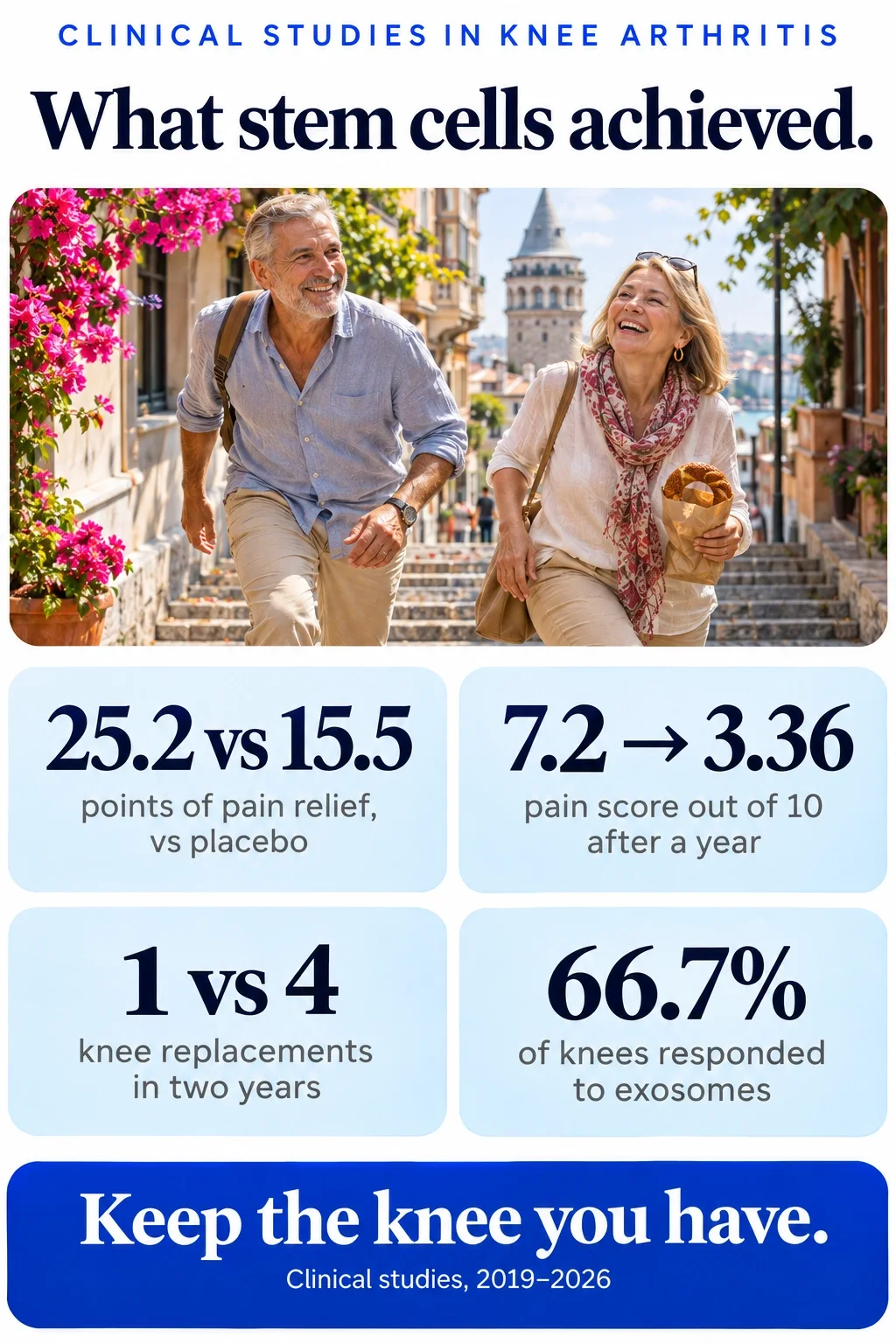
- 25.2 vs 15.5points of pain relief on a 100-point scale with one stem cell injection vs placebo, in grade 3 knees1
- 80% vs 44%bone marrow oedema resolved with umbilical cord stem cells vs hyaluronic acid, in grade 3–4 knees3
- 1 vs 4patients who went on to knee replacement within two years, stem cells vs placebo6
- 82%of knees treated with bone marrow concentrate had not needed a replacement after an average of 15 years15
02
Why many people want to keep their own knee
Knee replacement is one of the most established operations in orthopaedics, and for many people with advanced arthritis it brings welcome relief. Still, more and more people first ask whether they can keep their own knee, and there are good reasons for that.
A knee that feels like yours
Your own joint keeps its natural ligaments, its natural feel and the fine sense of position that tells you how you are moving. Many active people want to keep exactly that for as long as they can.
Younger and still active
Knee arthritis can begin long before you feel ready for an implant. Treatments that protect the knee you have help you stay active through these years.
Time for life, not recovery
Injection treatment takes place in a single day, so you can plan it around work, family and travel instead of setting aside months for an operation and rehabilitation.
Every option stays open
Treating the knee you have closes no doors: a replacement remains available later if you need it. In a two-year trial, fewer stem cell patients needed one than placebo patients.6
Your health, your preferences
Some people would rather avoid a major operation because of other health conditions, and some simply prefer to try every other route first. Both are good reasons to explore your options.
Long-term studies show how realistic this goal can be. In 140 adults aged 65 to 90 who were planning replacements of both knees, one knee was replaced and the other received bone marrow concentrate, a stem cell-rich preparation from the patient’s own hip bone, into the bone just beneath the cartilage. After an average of 15 years, 82% of the cell-treated knees had not needed a replacement, and the pain relief was enough to postpone or avoid surgery on that side.15 In the four-year follow-up of a randomised trial, patients treated with their own bone marrow stem cells still reported pain scores of 2 to 3 out of 10, against 7 for those given hyaluronic acid alone.16
03
Kellgren-Lawrence grades 1 to 4: what your X-ray report means
Doctors grade knee osteoarthritis on an X-ray with the Kellgren-Lawrence (KL) scale, from 0 (healthy) to 4 (severe). The grade reflects how narrow the joint space has become, how many bony spurs (osteophytes) have formed and how much the bone ends have hardened or changed shape.17 If your report mentions ‘joint space narrowing’, ‘osteophytes’ or ‘subchondral sclerosis’, those are the features behind your grade.
Your grade is a useful guide, but not the whole story. Two people with the same X-ray can feel very different, and an MRI shows what an X-ray cannot, such as inflammation of the joint lining and irritated bone beneath the cartilage. That is why Dr. Cihan Bolat looks at your symptoms, your scans and your goals together.
| Grade | What the X-ray shows | How it often feels | Options that fit |
|---|---|---|---|
| Grade 1 (doubtful) | Possible narrowing of the joint space and tiny spurs17 | Occasional stiffness or aching after activity | Exercise, weight management and physiotherapy |
| Grade 2 (mild) | Definite spurs, possible narrowing of the joint space17 | Pain on stairs, on long walks or during sport | Physiotherapy, then PRP, hyaluronic acid, stem cells or exosomes if pain keeps returning |
| Grade 3 (moderate) | Several spurs, definite narrowing and some hardening of the bone17 | Daily pain, morning stiffness, shorter walks | Stem cells and exosomes, a brace, other injections, and an osteotomy if the leg is bowed |
| Grade 4 (severe, bone-on-bone) | Large spurs, marked narrowing, hardened and reshaped bone ends17 | Pain at rest or at night, less bending | Stem cells and exosomes for pain and function, a brace, and partial or total replacement when other steps are not enough |
04
Grade 1 and 2 knee arthritis: how to protect your knee early
At grades 1 and 2, the cartilage is thinning, but much of it is still there. This is the stage with the most to protect, and the best time to build habits that take pressure off the joint.
Start with strength and weight
Exercise and, where needed, weight loss come first at every grade, and their benefits are well documented; the foundation section below shows what trials report.
When pain keeps coming back
If your knee still aches after a few months of good exercise, injections can help, and hyaluronic acid and PRP are common choices at this stage. Stem cells are well studied here too. Across ten randomised trials in patients with grade 1 to 3 arthritis, stem cell injections improved pain, function and MRI joint scores more than hyaluronic acid at 12 months.2 In a placebo-controlled trial of 146 people with grade 2 and 3 knees, one injection of donor bone marrow stem cells improved pain, stiffness and function significantly more than placebo at 6 and 12 months, and MRI showed no worsening of the deep cartilage, while cartilage in the placebo group gradually worsened.14
Early knees respond especially well: after umbilical cord exosome injections, 83.3% of grade 2 knees met the international criteria for a treatment response, the highest rate of any grade.7 If your knee pain began with a sports injury or a cartilage defect, see our pages on cartilage disorders and sports rehabilitation.
05
Grade 3 knee arthritis: treatment without surgery
Grade 3 is the stage at which many people first hear that they may ‘need a new knee one day’. It is also the stage of the largest stem cell trial to date, and the results are encouraging.
What studies report at grade 3
- The largest trial. In a phase III, double-blind trial of 261 people with grade 3 knees, one injection of their own fat-derived stem cells improved pain by 25.2 points on a 100-point scale at six months, against 15.5 with placebo, and WOMAC scores by 21.7 points, against 14.3. More patients reached a clinically important improvement.1
- Two years on. In grade 2 and 3 knees treated with donor bone marrow stem cells, WOMAC scores were still significantly better than with placebo at two years, cartilage volume increased and a urine marker of cartilage breakdown fell, while it rose with placebo.6
- Exosomes. Two in three grade 3 knees (66.7%) met the international response criteria after a course of umbilical cord exosome injections.7
A typical plan for grade 3
Most grade 3 plans combine several steps: physiotherapy to strengthen the thigh and hip muscles, weight management where needed, an unloader brace for long walks if your leg is bowed,9 and stem cells and exosomes injected into the joint to calm inflammation and support the cartilage you still have. For younger, active people with a bowed leg and wear on one side, an osteotomy is another way to keep the knee, and stem cells can support it (see below).
06
Bone-on-bone knee (grade 4): treatment without surgery
Hearing that your knee is ‘bone-on-bone’ can sound final, but it usually means that the cartilage has worn very thin in one part of the joint, most often on the inner side. The rest of the knee, the bone beneath and the joint lining are living tissues that still respond to treatment, and that is where stem cells and exosomes do their work.
The goals at this stage are clear and worthwhile: less pain, easier walking and, for many people, putting off surgery for years. Studies in advanced knees report encouraging progress towards each of them:
- Umbilical cord stem cells in grade 3–4 knees. In a 2026 triple-blind randomised trial of 50 people with advanced arthritis, four injections of umbilical cord stem cells, two weeks apart, lowered pain from 7.2 to 3.36 out of 10 at 12 months, against 7.0 to 4.6 with hyaluronic acid. WOMAC scores improved by 23.2 points, against 15.6; MRI cartilage repair scores rose by 13.6 points, against 7.8; and bone marrow oedema resolved in 80% of patients, against 44%.3
- Wharton’s jelly stem cells. Sixteen people with advanced knee osteoarthritis received two ultrasound-guided injections of Wharton’s jelly stem cells, one month apart. Pain and function improved at 12 and 48 months, and MRI at one year showed improvements in cartilage loss, bony spurs, bone marrow lesions and joint inflammation.18
- Severe knees treated with umbilical cord stem cells. In patients with grade 3–4 arthritis, WOMAC scores fell from 27.6 to 17.9 and pain from 5.0 to 3.4 out of 10 within six months of umbilical cord stem cells given with hyaluronic acid.19
- A placebo-controlled trial including grade 4. In a triple-blind trial of 43 people with grade 2 to 4 knees, bone marrow stem cells improved WOMAC pain and function and the distance patients could walk without pain significantly more than placebo.20
- Exosomes. Even in grade 4 knees, 44.4% met the international criteria for a treatment response to umbilical cord exosomes.7
Pain in grade 3–4 knees before and 12 months after treatment (0–10 scale)
Umbilical cord stem cells, four injections
Hyaluronic acid, five injections
Making the most of every option
Stem cell treatment for a bone-on-bone knee fits best into a wider plan: physiotherapy to keep the muscles strong, an unloader brace for longer walks, weight management and, when needed, a steroid injection to settle a flare. If a replacement does become the right step later, you will go into it with stronger muscles and a clear picture of your options. Read more about stem cell therapy for arthritis and joint pain.
07
Exercise, physiotherapy, weight loss and braces: the foundation at every stage
Whatever your grade, the steps you take every day matter. They cost little, they support every other treatment, and they are in your own hands.
Exercise and physiotherapy
Strong thigh, hip and calf muscles act as shock absorbers for the knee. Across 44 trials with 3,537 participants, land-based exercise eased knee pain by about 12 points on a 100-point scale and improved function by about 10 points, with benefits comparable to anti-inflammatory tablets.4 Cycling, swimming, water exercise and walking on level ground are kind to arthritic knees, and a physiotherapist can build a programme around your knee and your goals.
Weight: small losses, big relief
Even modest weight loss counts. In a study of 142 older adults, every pound lost meant about four pounds less load on the knee with each step.5 In the 18-month IDEA trial, people who combined diet and exercise lost an average of 11.4% of their weight and had less pain and better function than with diet or exercise alone.8 Newer weight-loss medicines can help too: in a 68-week trial in people with obesity and knee arthritis, semaglutide led to 13.7% weight loss and improved knee pain scores by 41.7 points, against 27.5 with placebo.21
Braces, sleeves and walking aids
If arthritis affects mainly the inner side of your knee and your leg is slightly bowed, an unloader brace gently shifts weight towards the healthier side. In a randomised trial of 119 people, both an unloader brace and a simple neoprene sleeve improved quality of life and function at six months compared with medical treatment alone, and the unloader brace eased pain during walking and stair-climbing more than the sleeve.9 A walking pole can make longer walks more comfortable too.
These steps also prepare the ground for regenerative treatment. Stem cells and exosomes support the joint’s biology, while exercise gives the knee the healthy loading it needs. We can give you a written plan to share with your physiotherapist at home.
08
Hyaluronic acid, steroid and PRP knee injections: what each one does
Injections into the knee are the next step for many people, and each type has its own role.
Steroid (cortisone) injections
A steroid injection calms inflammation quickly and is especially useful when your knee flares up and swells. In high-quality trials, steroid injections improved symptoms for up to two weeks, and the soundest longer-term studies also found benefits at 16 to 24 weeks.10 Doctors usually keep them for flares rather than as a long-term plan.
Hyaluronic acid (gel) injections
Hyaluronic acid is a natural part of joint fluid that helps it lubricate and cushion the joint. Injected into the knee, it eased pain and improved function in many trials, with the clearest benefit 5 to 13 weeks after injection, when pain improved by 28% to 54% from where it started.11
PRP (platelet-rich plasma)
PRP is made from a small sample of your own blood, concentrated so that it carries more platelets and their growth factors. Across 18 randomised trials with more than 1,600 patients, PRP improved WOMAC scores by 44.7%, against 12.6% with hyaluronic acid, over an average follow-up of 11 months.12
When you want relief that lasts longer
If the relief from each injection is not lasting as long as you would like, that is a good moment to look at treatments that work on the joint environment itself, such as stem cells and exosomes, described next.
09
Stem cell therapy for knees: how a stem cell knee injection works
A stem cell knee injection places mesenchymal stem cells (MSCs) directly into the joint. Their main strength is the signals they send rather than turning into new cartilage themselves: in early trials, injected cells eased pain and protected or healed cartilage through a ‘hit-and-run’ release of molecules that calm inflammation, aid repair and restore healthier tissue metabolism.22 Osteoarthritis is now understood as a low-grade, long-lasting inflammation of the whole joint, and MSCs act on it with anti-inflammatory, cartilage-building and cell-protecting effects.23
At our clinic in Istanbul, your knee is treated with fresh umbilical cord and Wharton’s jelly MSCs injected into the joint, sometimes combined with an IV infusion, as your doctor plans. Read more about how our stem cell therapy works.
How a stem cell knee injection works
- Into the jointFresh MSCs are injected into the knee, where inflammatory signals prompt them to release more of their repair molecules.22
- Repair signalsGrowth factors, anti-inflammatory messengers and exosomes carrying microRNAs reach the cartilage and joint lining.23
- A calmer jointFewer inflammatory immune cells and less of the inflammatory messenger IL-12 in the joint fluid, and less synovitis on MRI.24
- Less pain, better movementBetter pain and function scores than placebo or hyaluronic acid in randomised trials.12
How stem cells and exosomes work inside an arthritic knee

- Stem cellsInjected into the joint, they release signals that calm inflammation and support repair.
- ExosomesTiny vesicles carry these repair messages across the cartilage and the joint lining.
- Worn cartilageArthritis thins the smooth cartilage that cushions the ends of the bones.
- MeniscusThe knee’s shock absorber. A calmer joint helps protect it and the cartilage you have.
Calming joint inflammation
After bone marrow stem cell injections, the joint fluid contained fewer pro-inflammatory immune cells, and MRI synovitis and markers of cartilage breakdown fell at higher doses.24 With donor fat-derived stem cells, blood markers of inflammation fell sharply within three months, and the anti-inflammatory messenger IL-10 rose.25
Protecting cartilage
Over two years, cartilage in treated knees did not worsen on MRI T2 mapping while placebo knees gradually worsened, and cartilage volume increased with stem cells.6 In another trial, areas of poor-quality cartilage on MRI decreased after donor bone marrow stem cells.26
Supporting new cartilage
With a high dose of fat-derived stem cells, cartilage defects became smaller and cartilage volume larger on MRI, and tissue samples showed thick, hyaline-like cartilage regeneration.27 Cartilage thickness also increased slightly on MRI after donor fat-derived stem cells.25
Easing pain
A 2023 review found that numerous studies reported significant improvements in pain scores after MSC treatment in osteoarthritis, and summarised the ways in which the cells ease pain.28
Exosomes as messengers
In research models, MSC exosomes repaired cartilage defects by helping cells multiply and build new matrix, favouring healing M2 macrophages and lowering the inflammatory signals IL-1β and TNF-α.29
What randomised trials and meta-analyses report
- Across ten randomised trials with 818 patients, stem cell injections improved WOMAC scores by 10.22 points, pain by 1.31 points on a 0–10 scale and MRI joint scores more than hyaluronic acid at 12 months, all reaching clinically important differences.2
- In an analysis of 36 randomised trials in arthritis, umbilical cord MSCs gave the largest improvement in osteoarthritis pain of all cell sources (a standardised effect of −2.03, against −1.26 for fat and −0.95 for bone marrow).30 Pooling three randomised trials, umbilical cord stem cells lowered WOMAC scores by 25.85 points more than control treatments.31
- Umbilical cord stem cells given twice, six months apart, left patients with a pain score of 2.4 on a 100-point scale after a year, against 22.1 with hyaluronic acid.32
- In a review of Wharton’s jelly stem cell studies, with 97 patients and 134 knees followed for up to 48 months, pain and function improved, and several injections did better than one.33 A network analysis of 16 trials likewise found greater gains in pain and function at 6 and 12 months with repeated injections.34
- Benefits can last: after a single injection of fat-derived stem cells, pain and WOMAC scores stayed improved from six months to five years, and MRI joint scores improved for three years.35
The dose matters as much as the cells: in a dose-comparison trial of umbilical cord stem cells, low and medium doses improved WOMAC scores more than the highest dose.36 That is why your doctor sets the cell count for your knee, rather than simply giving as many cells as possible, and your plan confirms it in writing. For the full treatment page, see our stem cell treatment for knee osteoarthritis in Istanbul.
10
Exosome knee injections: concentrated repair signals
Exosomes are tiny vesicles that stem cells release to carry their messages, packed with proteins and microRNAs, to other cells. Because MSCs leave the joint fairly quickly after an injection, researchers see their exosomes as a key part of how they work, and as a treatment in their own right.23 In laboratory studies, umbilical cord MSC exosomes turned inflammatory macrophages towards an anti-inflammatory type, in research models they regenerated hyaline cartilage, and in their first use in people, injected into the knee, no adverse effects were seen over 12 months.37
What human studies report
- In 29 people (33 knees) given six injections of umbilical cord extracellular vesicles, the family of messengers that exosomes belong to, knee pain fell by 38.8 points on a 100-point scale on average and quality of life rose by 32.8 points. Overall, 66.7% of knees met the international criteria for a treatment response: 83.3% at grade 2, 66.7% at grade 3 and 44.4% at grade 4.7
- In a randomised, double-blind study of umbilical cord MSC exosomes at rising doses, treatment caused no adverse effects, and clinical scores and MRI improved compared with before treatment.38
- The secretome of umbilical cord MSCs, the full mix of growth factors and vesicles these cells release, eased knee pain more than hyaluronic acid in a 30-patient trial, with lower levels of the cartilage-degrading enzyme MMP-3 and higher levels of the repair signal TGF-β1.39 In grade 2–3 knees, five weekly secretome injections improved knee scores at 2, 4 and 6 months, and MRI T2 mapping showed a better cartilage signal in every patient.40
Your plan can add Wharton’s jelly MSC exosomes and CD34+ exosomes to your stem cells, or use exosomes on their own, injected into the joint. Learn more on our exosome therapy page.
Your plan can also include Muse cells, a naturally stress-resistant kind of repair cell found among mesenchymal stem cells, and Muse exosomes. Dr. Cihan Bolat explains in your free medical review which combination suits you.
11
PRP vs stem cells for knees, and how every option compares
PRP and stem cells are often mentioned together, and both are injections that work with your body’s own repair. They differ in an important way. PRP is a concentrate of platelets from your own blood that delivers its growth factors at the moment of injection. Stem cells are living cells that respond to the signals of an inflamed joint by releasing more of their anti-inflammatory and repair molecules, including exosomes.22 In trials, stem cells also showed effects on the joint’s structure, with cartilage quality that held steady on MRI while placebo knees worsened.14
The two are not rivals. In trials, stem cells were often given together with hyaluronic acid,1441 and your doctor may suggest PRP or hyaluronic acid as part of a wider plan. The table shows where each option fits.
| Option | How it works | What studies report | Usually considered at | Keeps your own knee |
|---|---|---|---|---|
| Stem cells and exosomes | Living cells and their exosomes release signals that calm joint inflammation and help protect cartilage2223 | Better pain, function and MRI joint scores than hyaluronic acid at 12 months across ten trials2 | Grades 1–4, including bone-on-bone37 | Yes |
| PRP | Growth factors from your own platelets | WOMAC improved by 44.7%, against 12.6% with hyaluronic acid12 | Mainly grades 1–3 | Yes |
| Hyaluronic acid | Adds to the joint fluid’s lubrication and cushioning | Pain improved by 28% to 54% at 5–13 weeks11 | Mainly grades 1–3 | Yes |
| Steroid injection | Calms inflammation quickly | Improvement for up to two weeks, and at 16–24 weeks in some studies10 | Any grade, for flares | Yes |
| Exercise, physiotherapy and weight loss | Strengthens the muscles and lightens the load on the joint | Pain eased by about 12 points out of 1004; each pound lost means about four pounds less load per step5 | Every grade | Yes |
| Unloader brace | Shifts weight away from the worn side | Better quality of life and function at six months9 | Grades 2–4 with a bowed leg | Yes |
| Osteotomy | Realigns the leg to move load to the healthier side | Adding stem cells gave better cartilage repair on MRI1342 | Younger, active people with wear on one side | Yes |
| Partial or total knee replacement | Replaces the worn joint surfaces with an implant | A well-established operation for advanced arthritis | Grade 4, when other steps are not enough | Replaced with an implant |
Many people combine options: physiotherapy and weight management form the base, injections support the joint, and an osteotomy or replacement stays available if it becomes the right step.
12
Osteotomy, partial and total knee replacement: when surgery is the right step
Surgery has an important place in knee arthritis, and modern operations help many people return to an active life. The choice is about timing and fit, and stem cells can complement surgery as well as come before it.
Osteotomy: realigning the leg
In a high tibial osteotomy, the surgeon reshapes the upper shin bone so that weight shifts from the worn inner side of the knee to the healthier outer side. It keeps your own knee and suits younger, active people with a bowed leg and wear mainly on one side. Stem cells can support it: in a randomised trial of 56 people having an osteotomy, adding cultured bone marrow stem cells improved knee scores and gave cartilage repair scores on MRI 19.6 points higher one year later.13 In another randomised trial, fat-derived stem cells injected after osteotomy led to significantly better cartilage regeneration on MRI and on arthroscopy over two years.42
Partial knee replacement
When arthritis is confined to one compartment of the knee, a partial (unicompartmental) replacement resurfaces only the worn part and keeps the healthy ligaments and the rest of the joint.
Total knee replacement
A total knee replacement resurfaces the whole joint with metal and plastic components. For people with severe arthritis whose pain still limits daily life after other treatments, it can be an excellent choice, and your orthopaedic surgeon is the right person to discuss it with. If you are still deciding, regenerative treatment can help you stay active in the meantime: in a two-year trial, 1 patient treated with stem cells went on to replacement, against 4 with placebo.6
Other procedures you may hear about
Genicular artery embolisation and radiofrequency treatment of the knee’s nerves aim to ease pain without opening the joint, and arthroscopy is mainly used for specific problems such as a knee that locks. Your specialist can tell you whether any of these suits your knee.
13
Why patients travel to Istanbul, Turkey for stem cell knee treatment
People from the UK, Europe, the Gulf, the USA and beyond travel to Istanbul for stem cell therapy for their knees. For many, it is a way to keep their own knee with a treatment planned around them, in a city that is easy to reach and a pleasure to stay in. Here is what you can expect when you come to us from abroad.
Specialist-led from the first message
Uzm. Dr. Cihan Bolat, our medical director, a specialist in anaesthesiology and reanimation and in regenerative medicine, leads the team that reviews your knee scans free of charge and treats you.
Fresh cells for your date
Your umbilical cord and Wharton’s jelly stem cells come from cords donated after healthy births and are prepared fresh for your treatment date in a Ministry of Health-approved GMP laboratory, never frozen.
No harvest, no matching
Nothing is taken from your own fat or bone marrow, and no donor matching is needed: in laboratory tests, Wharton’s jelly cells lacked the signals that trigger rejection.43
One treatment day
Most plans take one treatment day in Istanbul, with no second trip needed.
Everything arranged
A personal case manager helps with your hotel, ground transport and translation, so you can focus on your knee.
A clear price before you fly
You receive a written plan with a fixed, all-inclusive price before you travel.
Istanbul is served by two international airports, with direct flights from many cities across Europe, the Middle East and beyond. Read more about why patients choose stem cell therapy in Turkey, and see our main stem cell treatment page for knee, hip and shoulder arthritis.
14
Your knee treatment in Istanbul, step by step
From your first message to your follow-up at home, every step is planned with you in advance. For the full journey, read The stem cell treatment in Turkey, step by step.
Send your knee reports
Share your X-ray or MRI report, your KL grade if you know it, the treatments you have tried and your goals through our free consultation request.
Free medical review and phone call
Dr. Cihan Bolat’s team reviews your case free of charge, talks it through with you by phone and tells you honestly whether stem cells or exosomes suit your knee.
Your written plan and fixed price
You receive a written plan with the cell count confirmed in writing, any exosomes and routes, and a fixed, all-inclusive price.
Treatment day in Istanbul
Your cells are prepared fresh for your date, with their count and viability certified by the GMP laboratory, and the injection into your knee, sometimes with an IV infusion, takes place in one treatment day.
Home, exercise and follow-up
Back home, you continue your exercises, and we review your progress with you at about 1, 3, 6 and 12 months.
15
Is stem cell therapy for knees safe?
The published safety record of mesenchymal stem cells is reassuring. A 2021 meta-analysis of 62 randomised trials with 3,546 patients found MSC treatment safe compared with placebo or no treatment, the most common effect being a passing fever.44
In knee trials specifically, stem cell injections had a safety profile similar to hyaluronic acid,2 and a pooled analysis of 36 randomised trials in arthritis found no increase in adverse events.30 No serious treatment-related events were seen in the phase III trial of 261 patients,1 and no serious adverse effects were reported across the Wharton’s jelly studies.33 Where a reaction occurred, it was usually brief swelling or discomfort at the injection site that settled within a few days.14 Exosome injections were well tolerated too, with no serious adverse events in the umbilical cord exosome study.7
Your safety starts before treatment: Dr. Cihan Bolat reviews your health and medical history, every injection is given under sterile conditions by our specialist team, and the count and viability of your cells are certified by the GMP laboratory before treatment.
16
How much does stem cell therapy for knees cost in Turkey?
Your price depends on your plan: the number of stem cells, the exosomes and the routes, for example an injection into one or both knees, with or without an IV infusion. After your free medical review, you receive a fixed, all-inclusive price in writing before you travel, so you can decide calmly at home.
Included
- Free medical review and phone consultation
- Fresh stem cells, with certified count and viability
- Treatment by our specialist team
- Ground transport to and from the clinic
- A personal case manager
- Follow-up reviews at about 1, 3, 6 and 12 months
Not included / optional
- Flights
- Hotel stay, which we can help you arrange
- Exosomes, if added to your plan
- An IV infusion, if advised
When you weigh up the cost, include the value of a single treatment day and no second trip. For full details of our joint treatment, visit stem cell therapy for knee osteoarthritis, or read about stem cell therapy for arthritis.
17
Frequently asked questions
What are the alternatives to knee replacement?
The main alternatives are exercise and physiotherapy, weight loss, braces, injections (steroid, hyaluronic acid and PRP), stem cell and exosome injections, and a knee-realigning operation called an osteotomy. Which suits you depends on your arthritis grade, the shape of your leg, your activity level and your goals. Many people combine several, and Dr. Cihan Bolat can review your X-ray or MRI free of charge and advise which options fit your knee.
How can I avoid knee replacement surgery?
Start with the foundations: a strengthening programme, weight management and, if your leg is bowed, an unloader brace. Every pound of weight you lose takes about four pounds of load off your knee with each step. If pain persists, injections and regenerative treatment can help: in a two-year trial, 1 patient treated with stem cells went on to knee replacement, against 4 with placebo. Not every replacement can be avoided, but many people can put one off for years.
Can a bone-on-bone knee be treated without surgery?
Yes, many people with a bone-on-bone (grade 4) knee improve without surgery. The goals are less pain, easier walking and putting off an operation. In a 2026 randomised trial in grade 3 and 4 knees, umbilical cord stem cells lowered pain from 7.2 to 3.36 out of 10 after a year, against 4.6 with hyaluronic acid. A good plan combines stem cells or exosomes with physiotherapy, a brace and weight management.
Is stem cell therapy a good alternative to knee replacement?
For many people, it is a strong option to try first, especially at grades 2 and 3, and for people with grade 4 knees who want to keep their own joint. In randomised trials, stem cell injections improved pain and function more than placebo and hyaluronic acid, and a replacement stays available if you need it later. Dr. Cihan Bolat reviews your scans and tells you honestly what to expect.
Can stem cells regrow knee cartilage?
Stem cells aim to protect the cartilage you have and support its repair. In studies, cartilage volume increased on MRI after stem cell injections, tissue samples showed hyaline-like new cartilage in a high-dose study, and in a two-year trial treated knees held steady while placebo knees worsened. Results differ from person to person, and the main goals are less pain and easier movement.
How long does a stem cell knee injection last?
In long-term studies, the benefits lasted for years. After a single injection of fat-derived stem cells, pain and function stayed improved for five years. In another trial, patients treated with their own bone marrow stem cells still had pain scores of 2 to 3 out of 10 after four years, against 7 with hyaluronic acid alone. A repeat session can be planned, and studies found that more than one injection gave greater gains.
What is the success rate of stem cell therapy for knees?
It depends on your grade and the treatment. In a phase III trial in grade 3 knees, significantly more patients reached a clinically important improvement with stem cells than with placebo. After umbilical cord exosome injections, 66.7% of knees met the international response criteria, from 83.3% at grade 2 to 44.4% at grade 4. Dr. Cihan Bolat looks at your scans to tell you what is realistic for your knee.
PRP or stem cells: which is better for knee arthritis?
Both work with your body’s own repair. PRP delivers growth factors from your own platelets at the moment of injection, while stem cells are living cells that respond to the joint by releasing anti-inflammatory and repair signals, including exosomes. In trials, stem cells also showed effects on cartilage on MRI. PRP is often chosen for milder knees, while stem cells have been studied from grade 1 to grade 4. Your doctor can advise which suits you, or how to combine them.
Do exosome knee injections work?
Human studies are encouraging. In 33 knees treated with umbilical cord exosomes, pain fell by 38.8 points on a 100-point scale on average, and two in three knees met the international criteria for a treatment response. In other studies, umbilical cord exosomes and secretome were well tolerated and improved knee scores. We use Wharton’s jelly MSC exosomes and CD34+ exosomes, on their own or with stem cells.
What is the best treatment for grade 3 knee osteoarthritis?
Most people do best with a combination: physiotherapy, weight management, a brace if the leg is bowed, and an injection treatment. In the largest stem cell trial, with 261 people with grade 3 knees, one injection eased pain by 25.2 points on a 100-point scale, against 15.5 with placebo. For younger people with a bowed leg, an osteotomy, which stem cells can support, is another way to keep the knee.
Is grade 4 knee arthritis too late for stem cells?
Not necessarily. Grade 4 means the cartilage is very thin in part of the joint, but the joint lining and the bone beneath are living tissues that still respond to treatment. In studies that included grade 4 knees, stem cells improved pain, function and MRI findings, and 44.4% of grade 4 knees responded to exosome injections. Dr. Cihan Bolat reviews your scans and gives you an honest picture.
Am I too old for stem cell therapy for my knees?
Age alone is rarely the deciding factor; your general health and your knee matter more. In a long-term study of adults aged 65 to 90, bone marrow concentrate placed beneath the cartilage of one knee eased pain enough to postpone or avoid a replacement in 82% of those knees. Because we use donated umbilical cord cells, the cells you receive are young whatever your age.
How many stem cell injections will my knee need?
Many people need only one treatment day. Some plans include a second session later, because studies found that repeated injections gave greater improvements in pain and function at 6 and 12 months than a single one. Your written plan states the number of sessions and the cell count before you travel.
Can stem cells help if I have been told I need a knee replacement?
Many people who have been told they need a replacement ask us whether they can wait. Stem cells can help you stay active and comfortable, and in a two-year trial fewer patients treated with stem cells went on to replacement than with placebo. If you are still deciding, Dr. Cihan Bolat can review your scans and talk through your options with you, alongside the advice of your own surgeon.
How much does stem cell therapy for knees cost in Turkey?
The price depends on the number of cells, the exosomes and the routes in your plan, such as one or both knees and whether an IV infusion is added. After a free medical review, you receive a fixed, all-inclusive price in writing before you travel. It includes treatment by our specialist team, fresh stem cells with certified count and viability, ground transport, a personal case manager and follow-up reviews.
How long do I need to stay in Istanbul for knee treatment?
Most plans take one treatment day in Istanbul, with no second trip needed. Your written plan tells you how long to stay, and our team helps you with the hotel, ground transport and translation. Patients come to us from the UK, Europe, the Gulf and beyond, and you may like to add a day or two to enjoy the city.
Is stem cell knee treatment in Istanbul safe?
Mesenchymal stem cells have a reassuring safety record: a 2021 meta-analysis of 62 randomised trials with 3,546 patients found them safe, the most common effect being a passing fever. In knee trials, stem cell injections had a safety profile similar to hyaluronic acid. Your cells are prepared in a Ministry of Health-approved GMP laboratory, and our specialist team screens you carefully and gives your treatment.

Medical review
Uzm. Dr. Cihan Bolat
Medical Director, Istanbul Stemcell
This page was written from the published studies listed below and reviewed for medical accuracy on .
18
References
- Kim KI, et al. Clinical Efficacy and Safety of the Intra-articular Injection of Autologous Adipose-Derived Mesenchymal Stem Cells for Knee Osteoarthritis: A Phase III, Randomized, Double-Blind, Placebo-Controlled Trial. Am J Sports Med. 2023;51(9):2243-2253. PMID 37345256
- Jin WS, et al. Mesenchymal Stem Cells Injection Is More Effective Than Hyaluronic Acid Injection in the Treatment of Knee Osteoarthritis With Similar Safety: A Systematic Review and Meta-analysis. Arthroscopy. 2025;41(2):318-332. PMID 39154667
- Chen C, et al. Multiple intra-articular injections of umbilical cord mesenchymal stem cells in treating severe knee osteoarthritis: a triple-blind randomized controlled trial. Stem Cell Res Ther. 2026;17(1). PMID 42972476
- Fransen M, et al. Exercise for osteoarthritis of the knee. Cochrane Database Syst Rev. 2015;1(1):CD004376. PMID 25569281
- Messier SP, et al. Weight loss reduces knee-joint loads in overweight and obese older adults with knee osteoarthritis. Arthritis Rheum. 2005;52(7):2026-32. PMID 15986358
- Gupta PK, et al. Two years efficacy and safety outcomes of using allogeneic, pooled mesenchymal stromal cells for osteoarthritis of knee in a double-blind randomized placebo-controlled phase 3 study. Osteoarthr Cartil Open. 2026;8(1):100723. PMID 41536418
- Yokota N, Kambayashi T, Tanabe Y. Safety and Efficacy of Intra-Articular Injection of Umbilical Cord-Derived Extracellular Vesicles in Patients With Knee Osteoarthritis: A Retrospective Study. Orthopedics. 2026;49(4):e351-e358. PMID 42611014
- Messier SP, et al. Effects of intensive diet and exercise on knee joint loads, inflammation, and clinical outcomes among overweight and obese adults with knee osteoarthritis: the IDEA randomized clinical trial. JAMA. 2013;310(12):1263-73. PMID 24065013
- Kirkley A, et al. The effect of bracing on varus gonarthrosis. J Bone Joint Surg Am. 1999;81(4):539-48. PMID 10225800
- Arroll B, Goodyear-Smith F. Corticosteroid injections for osteoarthritis of the knee: meta-analysis. BMJ. 2004;328(7444):869. PMID 15039276
- Bellamy N, et al. Viscosupplementation for the treatment of osteoarthritis of the knee. Cochrane Database Syst Rev. 2006;2006(2):CD005321. PMID 16625635
- Belk JW, et al. Platelet-Rich Plasma Versus Hyaluronic Acid for Knee Osteoarthritis: A Systematic Review and Meta-analysis of Randomized Controlled Trials. Am J Sports Med. 2021;49(1):249-260. PMID 32302218
- Wong KL, et al. Injectable cultured bone marrow-derived mesenchymal stem cells in varus knees with cartilage defects undergoing high tibial osteotomy: a prospective, randomized controlled clinical trial with 2 years' follow-up. Arthroscopy. 2013;29(12):2020-8. PMID 24286801
- Gupta PK, et al. Efficacy and Safety of Stempeucel in Osteoarthritis of the Knee: A Phase 3 Randomized, Double-Blind, Multicenter, Placebo-Controlled Study. Am J Sports Med. 2023;51(9):2254-2266. PMID 37366164
- Hernigou P, et al. Human bone marrow mesenchymal stem cell injection in subchondral lesions of knee osteoarthritis: a prospective randomized study versus contralateral arthroplasty at a mean fifteen year follow-up. Int Orthop. 2021;45(2):365-373. PMID 32322943
- Lamo-Espinosa JM, et al. Intra-articular injection of two different doses of autologous bone marrow mesenchymal stem cells versus hyaluronic acid in the treatment of knee osteoarthritis: long-term follow up of a multicenter randomized controlled clinical trial (phase I/II). J Transl Med. 2018;16(1):213. PMID 30064455
- Kohn MD, Sassoon AA, Fernando ND. Classifications in Brief: Kellgren-Lawrence Classification of Osteoarthritis. Clin Orthop Relat Res. 2016;474(8):1886-93. PMID 26872913
- Samara O, et al. Ultrasound-guided intra-articular injection of expanded umbilical cord mesenchymal stem cells in knee osteoarthritis: a safety/efficacy study with MRI data. Regen Med. 2022;17(5):299-312. PMID 35546314
- Dilogo IH, et al. Umbilical cord-derived mesenchymal stem cells for treating osteoarthritis of the knee: a single-arm, open-label study. Eur J Orthop Surg Traumatol. 2020;30(5):799-807. PMID 31989258
- Emadedin M, et al. Intra-articular implantation of autologous bone marrow-derived mesenchymal stromal cells to treat knee osteoarthritis: a randomized, triple-blind, placebo-controlled phase 1/2 clinical trial. Cytotherapy. 2018;20(10):1238-1246. PMID 30318332
- Bliddal H, et al. Once-Weekly Semaglutide in Persons with Obesity and Knee Osteoarthritis. N Engl J Med. 2024;391(17):1573-1583. PMID 39476339
- Mancuso P, et al. Mesenchymal Stem Cell Therapy for Osteoarthritis: The Critical Role of the Cell Secretome. Front Bioeng Biotechnol. 2019;7:9. PMID 30761298
- Kwon DG, et al. State of the Art: The Immunomodulatory Role of MSCs for Osteoarthritis. Int J Mol Sci. 2022;23(3). PMID 35163541
- Chahal J, et al. Bone Marrow Mesenchymal Stromal Cell Treatment in Patients with Osteoarthritis Results in Overall Improvement in Pain and Symptoms and Reduces Synovial Inflammation. Stem Cells Transl Med. 2019;8(8):746-757. PMID 30964245
- Sadri B, et al. Cartilage regeneration and inflammation modulation in knee osteoarthritis following injection of allogeneic adipose-derived mesenchymal stromal cells: a phase II, triple-blinded, placebo controlled, randomized trial. Stem Cell Res Ther. 2023;14(1):162. PMID 37316949
- Vega A, et al. Treatment of Knee Osteoarthritis With Allogeneic Bone Marrow Mesenchymal Stem Cells: A Randomized Controlled Trial. Transplantation. 2015;99(8):1681-90. PMID 25822648
- Jo CH, et al. Intra-articular injection of mesenchymal stem cells for the treatment of osteoarthritis of the knee: a proof-of-concept clinical trial. Stem Cells. 2014;32(5):1254-66. PMID 24449146
- Almahasneh F, Abu-El-Rub E, Khasawneh RR. Mechanisms of analgesic effect of mesenchymal stem cells in osteoarthritis pain. World J Stem Cells. 2023;15(4):196-208. PMID 37181003
- Zhang S, et al. MSC exosomes mediate cartilage repair by enhancing proliferation, attenuating apoptosis and modulating immune reactivity. Biomaterials. 2018;156:16-27. PMID 29182933
- Zeng L, et al. Efficacy and safety of culture-expanded mesenchymal stromal cell therapy in the treatment of 4 types of inflammatory arthritis: A systematic review and meta-analysis of 36 randomized controlled trials. Semin Arthritis Rheum. 2024;68:152498. PMID 38970896
- Xiao Z, et al. Effects of the umbilical cord mesenchymal stem cells in the treatment of knee osteoarthritis: A systematic review and meta-analysis. Medicine (Baltimore). 2024;103(46):e40490. PMID 39560593
- Matas J, et al. Umbilical Cord-Derived Mesenchymal Stromal Cells (MSCs) for Knee Osteoarthritis: Repeated MSC Dosing Is Superior to a Single MSC Dose and to Hyaluronic Acid in a Controlled Randomized Phase I/II Trial. Stem Cells Transl Med. 2019;8(3):215-224. PMID 30592390
- Ishak-Samrin M, et al. Treatment of Knee Osteoarthritis and Chondral Injury with Umbilical Cord/Wharton's Jelly-Derived Mesenchymal Stem Cells: A Systematic Review of Safety and Efficacy. J Funct Biomater. 2025;16(3). PMID 40137363
- Deng L, et al. Efficacy and safety of single versus repeated injections of mesenchymal stem cells for the treatment of knee osteoarthritis: a systematic review and network meta-analysis of randomized controlled trials. Stem Cell Res Ther. 2025;16(1):505. PMID 41013772
- Kim KI, et al. Safety and Efficacy of the Intra-articular Injection of Mesenchymal Stem Cells for the Treatment of Osteoarthritic Knee: A 5-Year Follow-up Study. Stem Cells Transl Med. 2022;11(6):586-596. PMID 35567774
- Matas J, et al. A Phase I Dose-Escalation Clinical Trial to Assess the Safety and Efficacy of Umbilical Cord-Derived Mesenchymal Stromal Cells in Knee Osteoarthritis. Stem Cells Transl Med. 2024;13(3):193-203. PMID 38366909
- Figueroa-Valdés AI, et al. Clinical-grade extracellular vesicles derived from umbilical cord mesenchymal stromal cells: preclinical development and first-in-human intra-articular validation as therapeutics for knee osteoarthritis. J Nanobiotechnology. 2025;23(1):13. PMID 39806427
- Wang Y, et al. Injection of human umbilical cord mesenchymal stem cells exosomes for the treatment of knee osteoarthritis: from preclinical to clinical research. J Transl Med. 2025;23(1):641. PMID 40500748
- Partan RU, et al. Umbilical Cord Mesenchymal Stem Cell Secretome Improves Clinical Outcomes and Changes Biomarkers in Knee Osteoarthritis. J Clin Med. 2023;12(22). PMID 38002750
- Soetjahjo B, et al. Allogenic Umbilical Cord Mesenchymal Secretome for Knee Osteoarthritis: A Clinical Efficacy, Imaging and Safety Study. Int J Hematol Oncol Stem Cell Res. 2026;20(1):38-45. PMID 42272606
- Lamo-Espinosa JM, et al. Intra-articular injection of two different doses of autologous bone marrow mesenchymal stem cells versus hyaluronic acid in the treatment of knee osteoarthritis: multicenter randomized controlled clinical trial (phase I/II). J Transl Med. 2016;14(1):246. PMID 27565858
- Kim JH, et al. Intra-articular Injection of Mesenchymal Stem Cells After High Tibial Osteotomy in Osteoarthritic Knee: Two-Year Follow-up of Randomized Control Trial. Stem Cells Transl Med. 2022;11(6):572-585. PMID 35674255
- Weiss ML, et al. Immune properties of human umbilical cord Wharton's jelly-derived cells. Stem Cells. 2008;26(11):2865-74. PMID 18703664
- Wang Y, Yi H, Song Y. The safety of MSC therapy over the past 15 years: a meta-analysis. Stem Cell Res Ther. 2021;12(1):545. PMID 34663461