
01
Why we use Wharton’s jelly stem cells and exosomes for Alzheimer’s
Alzheimer’s disease touches the brain in several ways at once. Amyloid plaques and tau tangles build up, the brain’s immune cells stay switched on,7 the small blood vessels that feed nerve cells struggle,8 and the connections between nerve cells, the synapses that carry memories, are gradually lost.9 A condition with so many sides calls for a treatment that works on many targets together. That is why our Alzheimer’s plans are built on fresh Wharton’s jelly mesenchymal stem cells (WJ-MSCs) and the exosomes they release.
Wharton’s jelly is the soft, protective gel inside the umbilical cord. Our cells come from cords donated after healthy births, so nothing is taken from your loved one’s body. Because they come from newborn tissue, they are young cells: in a side-by-side comparison of cells from 18 donors each, Wharton’s jelly MSCs multiplied faster than bone marrow MSCs.1 They also have strong immune-balancing abilities, acting on both the body’s first-line (innate) and targeted (adaptive) immune defences,10 and their secretions carry more of the factors behind nerve protection, new nerve-cell growth and blood-vessel formation than those of bone marrow MSCs.3
Much of this work is carried out by exosomes, tiny vesicles about 100 nanometres across that pass proteins and RNA messages from one cell to another.11 Exosomes from Wharton’s jelly MSCs deliver microRNAs that calmed the brain’s immune cells in research models,12 and in laboratory studies they released their RNA into nerve cells and protected them from damage caused by a lack of oxygen and glucose.13 Pairing the cells with their exosomes gives your loved one both: living cells that keep producing signals, and a concentrated dose of the messages themselves.
Young, vigorous cells
Taken from the umbilical cords of full-term newborns, Wharton’s jelly MSCs showed a higher capacity to multiply than bone marrow MSCs in laboratory comparisons.1
Strong anti-inflammatory signals
In laboratory tests, Wharton’s jelly cells held back over-active immune cells.2 Given by IV in a research model of Alzheimer’s, they boosted the anti-inflammatory messenger IL-10 and reduced IL-1β and TNF-α, two drivers of brain inflammation.14
No donor matching needed
They lack the surface signals that switch on rejection and did not stimulate donor immune cells, so no matching is needed.2 Nothing is harvested from your loved one’s body.
Grow and secrete strongly
They outgrew bone marrow MSCs in culture,1 and in a direct comparison produced more nerve-protecting and blood-vessel-building factors.3
Exosomes that carry the message
Each exosome carries proteins and RNA from its parent cell.11 In research models, Wharton’s jelly exosomes sprayed into the nose reached the brain within an hour.12
Fresh, never frozen
Prepared for your date in a Ministry of Health-approved GMP laboratory, with count and viability certified. Laboratory work found that freshly cultured MSCs calm the immune system more strongly than cells thawed just before use.15
Umbilical cord MSCs and CD34+ exosomes
Alongside Wharton’s jelly MSCs, your plan can include umbilical cord MSCs, taken from the tissue of the cord itself. These are the cells used in the vascular dementia study described in the results below.16 Your plan can also add CD34+ exosomes, which carried the blood-vessel-building activity of their parent cells in research models.17 Read more about our stem cells and our exosome therapy.
02
Stem cell treatment for Alzheimer's
Stem cells offer hope for recovery and symptom management in Alzheimer's disease.
Traditional treatment options often do not provide the clinical results that patients and their families desire. Stem cell therapy is not only safe, but an increasing number of research studies demonstrate its effectiveness for neurodegenerative diseases such as Alzheimer’s. Alzheimer’s is a degenerative disease that slowly impairs brain function. As the disease progresses, tangles and plaques form in the brain, leading to cell death.
Stem cell therapy aims to support damaged brain tissue and help protect memory and thinking. By introducing mesenchymal stem cells (MSCs), derived from umbilical cord tissue, by IV and intrathecal routes, we aim to enhance the natural healing processes and improve the overall quality of life for patients with Alzheimer's. This innovative approach represents a promising avenue for managing symptoms and supporting a better quality of life with this condition.
03
How stem cell therapy for Alzheimer’s works
Wharton’s jelly stem cells do not work by replacing lost brain cells one by one. Scientists call them “trophic” cells: they send out growth factors, immune-regulating molecules and exosomes, and these signals help the brain’s own cells to protect themselves and recover.18
For Alzheimer’s, these signals reach the brain along two paths. Stem cells given by IV infusion release their messengers into the bloodstream, while intrathecal stem cells and nasal exosomes start much closer to the brain. Laboratory and research-model studies show what the signals do once they arrive, and they help explain the results now reported in people.
From infusion to a calmer, better-protected brain
- Fresh cells and exosomesIV and intrathecal stem cells, IV and nasal exosomes.
- Repair signalsGrowth factors, calming messengers and exosomes full of proteins and RNA.1811
- Protection in the brainIn research models: inflammation down, amyloid cleared and nerve cells shielded.1419
- Results in trialsBrain volume better preserved than with placebo, and memory scores up with nasal exosomes.45
How Wharton’s jelly stem cells and exosomes aim to protect the brain
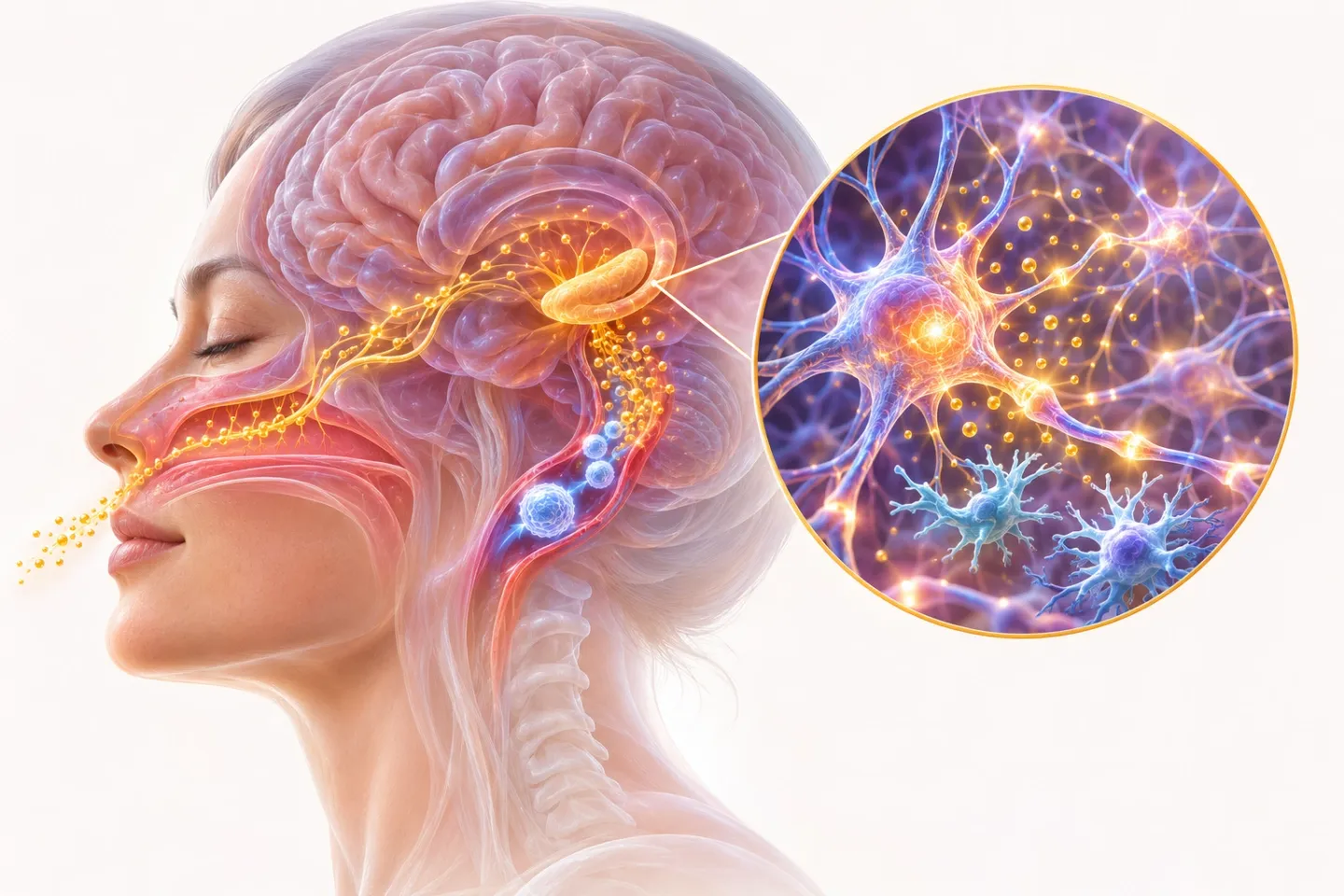
- Nasal exosomesWharton’s jelly MSC exosomes, given as a gentle nasal spray, are designed to reach the brain along the smell nerve pathway.
- HippocampusThe brain’s memory centre, one of the first areas affected in Alzheimer’s.
- Stem cellsWharton’s jelly MSCs, given by IV and intrathecally, release protective, anti-inflammatory signals.
- Nerve cells and connectionsThese signals aim to support nerve cells and the connections (synapses) that carry memories.
- MicrogliaThe brain’s immune cells. Calming their inflammation is a key aim of treatment.
Calming brain inflammation
Microglia, the brain’s immune cells, stay over-active in Alzheimer’s. In mice with Alzheimer’s-like changes, IV Wharton’s jelly MSCs quietened these cells and shifted the balance of messengers from inflammatory (IL-1β, TNF-α) towards calming (IL-10).14 In people with mild Alzheimer’s, donor bone marrow stem cell infusions lowered brain inflammation measured on diffusion MRI, compared with placebo.4
Helping clear amyloid
Injected into Alzheimer’s model mice, umbilical cord MSC exosomes reduced amyloid deposits and switched microglia into a repair mode.20 Pooling 13 mouse studies, umbilical cord MSCs significantly lowered amyloid in the brain.21
Protecting nerve cells and synapses
In the laboratory, hippocampal neurons took up vesicles from Wharton’s jelly MSCs, which guarded them against amyloid-driven oxidative stress and loss of synapses. The protection came from catalase, an antioxidant enzyme the vesicles delivered.19
More growth factor for nerve cells
In the same 13-study analysis, umbilical cord MSCs raised BDNF, a key growth factor for nerve cells, and reduced the death of nerve cells.21
Better learning and memory in research models
Four weeks after IV Wharton’s jelly MSCs, mice with Alzheimer’s-like changes showed better spatial learning and less memory decline,14 and a 13-study analysis confirmed better spatial learning and memory with umbilical cord MSCs, strongest with medium to high IV doses.21
Along the nose-to-brain route
Exosomes from Wharton’s jelly MSCs sprayed into the nose improved spatial memory in a model of Alzheimer’s and were found in the hippocampus and neocortex, the brain’s memory areas.22
All of these results come from laboratory and animal research; they are the groundwork for the human trials below. For a wider look at every option, from memory medicines to the antibody treatments, read our guide to new Alzheimer’s treatments in 2026.
04
How is our stem cell therapy transplantation for Alzheimer's performed in Istanbul?
Recent advancements in research indicate that adult stem cells may hold the key to preventing the onset of Alzheimer's disease. These remarkable cells not only provide insights into the mechanisms behind neurodegeneration but also pave the way for potential therapeutic strategies. By studying how adult mesenchymal stem cells (MSCs) function, scientists are gaining a deeper understanding of the factors contributing to the progression of Alzheimer's.
Clinical studies have shown that older adults can experience significant improvements in cognitive function and neurogenesis after receiving stem cell transplants. This innovative approach aims to enhance brain health, support damaged neural tissue and help protect cognitive abilities.
The implications of these findings are immense, suggesting a brighter future for those affected by Alzheimer's disease. With continued research and development, stem cell therapy could become a groundbreaking treatment option, offering hope for improved quality of life and better management of Alzheimer’s symptoms. Embracing the potential of adult stem cells may revolutionize the way we approach this challenging neurodegenerative condition.
05
Stem cell therapy for Alzheimer’s: results from clinical trials
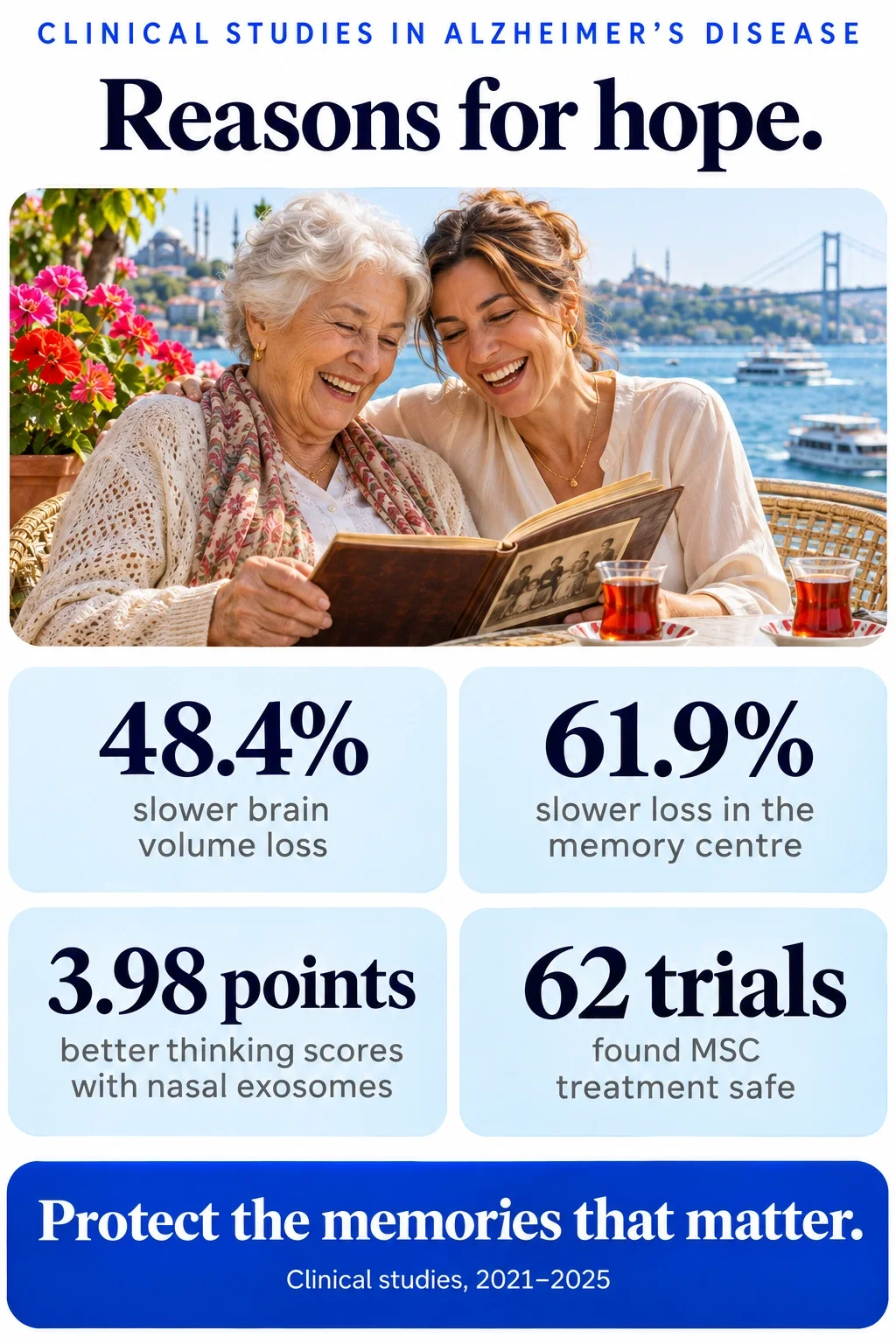
Human trials of stem cells and exosomes in Alzheimer’s are encouraging, and the clearest results come from placebo-controlled studies. These numbers sum up what has been published so far:
- 48.4% slower brain volume loss and 61.9% slower loss in the hippocampus, the brain’s memory centre, over 39 weeks with donor bone marrow stem cell infusions compared with placebo.4
- 3.98 points better by week 36 on ADAS-cog, a standard memory and thinking scale, with a nasal spray of exosomes from fat-derived stem cells (medium dose).5
- 62 randomised trials with 3,546 patients found MSC treatment safe.6
| Study | Who took part | Cells and route | Main results |
|---|---|---|---|
| Rash 2025, Nature Medicine4 | Phase 2a, randomised, double-blind and placebo-controlled; 49 adults with mild Alzheimer’s at ten US centres | Laromestrocel (donor bone marrow MSCs): one IV infusion or four monthly infusions, 25 or 100 million cells | Brain shrinkage slowed by 48.4% and left hippocampal shrinkage by 61.9% at 39 weeks; inflammation on MRI lower; MoCA and daily activities improved vs placebo |
| Brody 2023, Alzheimer’s & Dementia23 | Phase 1, randomised, double-blind and placebo-controlled; 33 adults with mild Alzheimer’s | Lomecel-B (donor bone marrow MSCs), a single IV infusion | Primary safety goal met; fluid and imaging biomarkers improved; low dose significantly better than placebo on neurocognitive tests |
| Xie 2023, General Psychiatry5 | Phase I/II comparing three doses; adults with mild to moderate Alzheimer’s | Exosomes from donor adipose (fat) MSCs as a nasal spray, twice weekly for 12 weeks | No adverse events; medium dose: ADAS-cog 2.33 and MoCA-B 2.38 points better at week 12, ADAS-cog 3.98 points better at week 36 |
| He 2017, Cell and Tissue Banking16 | Open clinical study; 10 adults with vascular dementia, mean age 73.9 | Umbilical cord MSCs (our cell type), three IV courses | MMSE up from 15.8 to 19.2 and Barthel index from 42.0 to 49.2 at three months |
| Kabatas 2024, World Journal of Stem Cells24 | Phase I, Istanbul; 6 adults aged 21 to 27 after traumatic brain injury | Wharton’s jelly MSCs (our cell type) by intrathecal, intramuscular and IV routes | Significant gains in cognitive and motor FIM scores, spasticity and Karnofsky performance over one year |
| Feizi 2024, Dementia & Neuropsychologia25 | Systematic review; 5 clinical studies, 70 people with Alzheimer’s | Cell-based treatments by several routes | Safety goals met in all studies, with improvements in biomarkers and clinical outcomes; well tolerated |
| Wang 2021, Stem Cell Research & Therapy6 | Meta-analysis of 62 randomised trials; 3,546 patients | MSCs, by IV or local injection | Safe compared with placebo, with no serious adverse events such as death or infection; a passing fever was most common |
Brain volume protected in mild Alzheimer’s
The phase 2a trial, run at ten centres, compared placebo with one or four monthly IV infusions of donor bone marrow MSCs in 49 people with mild Alzheimer’s. By week 39, MRI showed whole-brain shrinkage slowed by 48.4% and left hippocampal shrinkage by 61.9% in the treated groups, with less brain inflammation. Memory followed the scans: the better the hippocampus was preserved, the better MMSE scores held up.4 A single infusion of the same cells had already passed its safety test in a phase 1 trial, with significant improvements in fluid and imaging markers compared with placebo.23
Memory and thinking improved with nasal exosomes
Researchers in Shanghai gave a nasal spray of exosomes from donor adipose (fat) MSCs twice a week for 12 weeks to people with mild to moderate Alzheimer’s, at three dose levels. Nobody had an adverse event. At the medium dose, ADAS-cog was 2.33 points better at week 12, and the gain grew to 3.98 points by week 36, 24 weeks after the last dose.5 Our Wharton’s jelly exosomes are given by the same nasal route.
The cells we use, in dementia and brain injury
Umbilical cord MSCs, one of our two cell types, were given in three IV courses to ten older adults with vascular dementia. Three months later, average MMSE had risen from 15.8 to 19.2 and Barthel daily-living scores from 42.0 to 49.2.16 Here in Istanbul, a phase I study of Wharton’s jelly MSCs given intrathecally, into muscle and by IV found significant gains in cognitive and motor independence over a year in young adults recovering from brain injury.24 That condition differs from Alzheimer’s, yet it links our cell type, given by our routes, with gains in thinking and independence.
Every study above used its own cells and routes; your loved one’s plan uses fresh Wharton’s jelly MSCs and exosomes, prepared for the treatment date and given by the routes Dr. Cihan Bolat chooses. Our guide to new Alzheimer’s treatments in 2026 shows how these results fit with medicines and daily brain care.
06
Who is stem cell therapy for Alzheimer’s suitable for?
Most adults living with Alzheimer’s disease can be assessed. The published trials included people with mild Alzheimer’s423 and with mild to moderate Alzheimer’s,5 and earlier stages leave the brain more healthy tissue to protect. In the phase 2a trial, the people whose memory centre shrank least kept their memory scores best,4 one reason many families ask about treatment early.
Treatment may suit your loved one if they:
- have a diagnosis of Alzheimer’s disease, or memory changes that a doctor has linked with it;
- are in the mild or moderate stage, or at a later stage after an individual review;
- have vascular or mixed dementia, where umbilical cord MSCs raised memory scores in a study;16
- are well enough to travel, ideally with a family member;
- wish to keep their current medicines and add a different kind of support.
Dr. Cihan Bolat reviews every case personally: the diagnosis, recent scans and memory tests, other health conditions and medicines. He then tells you clearly whether treatment is a good fit and what it can aim for.
07
Your treatment plan: IV and intrathecal stem cells, IV and nasal exosomes
For Alzheimer’s, we combine several ways of giving treatment, so the repair signals reach the brain from more than one direction. The doctor plans the routes and the number of sessions for you, after reviewing your loved one’s diagnosis, scans and general health.
- Stem cells (Wharton’s jelly MSCs and, if they are part of your plan, umbilical cord MSCs or Muse cells) are given by IV infusion and intrathecally.
- Exosomes (Wharton’s jelly MSC exosomes, CD34+ exosomes and, if chosen, Muse exosomes) are given by IV infusion and as a nasal spray.
- The nasal spray is for exosomes only. Stem cells are never given into the nose.
IV infusion: signals through the bloodstream
An IV drip spreads the cells through the circulation, where they release their calming messengers and exosomes throughout the body. This was the route of the mild Alzheimer’s trial in which donor bone marrow MSCs slowed brain shrinkage,4 and in a 13-study analysis of Alzheimer’s model mice, medium to high IV doses of umbilical cord MSCs brought the most reliable memory gains.21
Intrathecal: inside the brain’s own fluid
The cells are placed into the cerebrospinal fluid, which circulates around the brain and spinal cord, through a thin needle between two vertebrae of the lower back. When researchers delivered Wharton’s jelly MSCs this way in rats, many cells had reached the brain 12 hours later.26 In progressive multiple sclerosis, intrathecal MSCs left 58.6% of patients free of disease activity for a year, compared with 9.7% after sham treatment, and brought added benefits on cognitive tests.27
Umbilical cord cells by the intrathecal route
Children with cerebral palsy who received one intrathecal dose of umbilical cord tissue MSCs gained 10.65 points on a motor function scale at 12 months in a double-blind, sham-controlled trial.28 In adults living with the after-effects of an ischaemic stroke, two doses of umbilical cord MSCs, given either intrathecally or by IV, improved neurological recovery and quality of life.29
Nasal spray: a needle-free path for exosomes
The smell nerves at the roof of the nose connect directly with the brain. Wharton’s jelly MSC exosomes sprayed into the nose arrived in the front of the brain within half an hour and spread through the whole brain within three hours in research models.30 In Alzheimer’s model mice, MSC vesicles given by nose quietened microglia and increased dendritic spines, the small contact points where nerve cells connect,31 and in people with Alzheimer’s, a nasal spray of fat-derived MSC exosomes improved memory and thinking scores.5
Wharton’s jelly cells by several routes in Turkey
In a Turkish phase I study, Wharton’s jelly MSCs were given intrathecally, into muscle and by IV in the same programme: intrathecally to target the spinal cord locally and by IV to balance the immune system throughout the body. Over one year, people with chronic spinal cord injury showed significant improvements in neurological function and quality of life.32
Because Dr. Cihan Bolat is a specialist in anaesthesiology and reanimation as well as regenerative medicine, your loved one’s comfort during the intrathecal and IV treatment is part of his planning. The written plan lists the cells, exosomes, routes and cell count, so your family knows exactly what to expect.
08
Muse cells and Muse exosomes: an optional add-on
Some families ask about Muse cells. These multilineage-differentiating stress-enduring cells, first described in Japan in 2010, are a small, hardy group within the mesenchymal stem cell family.3334 In trials elsewhere, donor Muse cells were given by IV without HLA matching or immune-suppressing medicines,34 and in a randomised, placebo-controlled stroke trial, one IV dose left 40.0% of patients able to manage their own affairs without help at 12 weeks, compared with 10.0% on placebo.35 In a research model of vascular dementia, IV Muse cells reached the hippocampus and improved cognitive function.36
At Istanbul Stemcell, Muse cells can be added to a Wharton’s jelly plan by IV infusion and intrathecally, and Muse exosomes by IV infusion and nasal spray. In the free review, Dr. Cihan Bolat explains whether they would add anything for your loved one.
09
Your stem cell treatment for Alzheimer’s in Istanbul, step by step
A personal case manager stays with your family from the first message to the last follow-up call. Nothing is taken from your loved one’s body, and the full plan and price are settled before you travel.
Free medical review
Send us the diagnosis, recent memory tests such as the MMSE or MoCA, any MRI or PET reports, blood tests and a list of current medicines. Uzm. Dr. Cihan Bolat and his team review them free of charge.
Phone consultation and fixed price
When the case is accepted, you discuss the plan by phone with the specialist team, then receive it in writing: cells, exosomes, routes and one all-inclusive price.
Fresh preparation
After your deposit, your loved one’s Wharton’s jelly stem cells and exosomes are prepared for your date in a Ministry of Health-approved GMP laboratory. Preparation usually takes 5 to 10 days.
Treatment in Istanbul
Our driver brings you to the clinic, where your loved one receives the stem cells and exosomes by the routes in the plan, and takes you back afterwards. The cell count and viability are certified before treatment.
Home and follow-up
We stay in touch at about 1, 3, 6 and 12 months to review progress with you and plan the next steps together.
Read more about the stem cell treatment process in Turkey, step by step.
10
Expert stem cell treatment led by Uzm. Dr. Cihan Bolat, MD
Under the guidance of Uzm. Dr. Cihan Bolat, MD, Specialist in Anesthesiology & Reanimation and Regenerative Medicine, we offer specialized treatments tailored to the unique needs of our patients. With our team’s experience and access to a wide range of mesenchymal stem cells (MSC) and umbilical cord stem cells, we provide an integrated approach for the treatment of Alzheimer’s disease. In our clinic, we focus on providing the most effective and natural treatment options, ensuring a comfortable and professional environment throughout your care.
11
How does our stem cell therapy treatment for Alzheimer’s work?
All of our stem cell treatments in Istanbul are evaluated and administered by specialists in the field, trained in both the United States and Turkey—not by general practitioners or specialists from other disciplines. This ensures the highest level of precision, understanding of the condition, and quality of care for our patients. We are committed to being completely transparent and honest with our patients. Not everyone is suitable for our stem cell treatments. Many patients are carefully assessed by our specialists, who evaluate their current health status and medical history. If we determine that the treatment is not appropriate, we will respectfully decline to avoid giving false promises or setting unrealistic expectations when the risks outweigh the potential benefits.
Step 1. Specialist Assessment
For patients with Alzheimer’s, our specialist will need to know the patient’s age, any previous medical treatments, and review specific tests that you will be asked to bring.
Step 2. Free Phone Consultation with the Specialist
Once the specialist has reviewed your medical records and approved your case, we will present the available treatment options and associated costs. At this point, we also offer a free phone consultation to address any questions or concerns you may have.
Step 3. Stem Cell Preparation
Once you decide to proceed with the treatment, we will issue a deposit invoice to begin the stem cell preparation process. This ensures the cells are ready for your scheduled treatment. The preparation time can vary depending on current demand and availability, but generally takes between 5-10 days.
Step 4. Treatment Day
On the day of treatment, you can either come directly to our hospital location or take advantage of our free transportation service to and from our clinic in Istanbul. Our driver will pick you up from your chosen location, take you to the clinic, where the specialist will perform the treatment, and then return you safely to your location.
Step 5. Follow-Up Treatment
After your procedure, our follow-up specialist will contact you according to our follow-up schedule to ensure you have all the necessary resources for maximum benefit. Your health and satisfaction are our top priorities, and we are here to support you every step of the way.
12
When might you notice changes?
Alzheimer’s changes slowly, so trials measure results over months rather than days. With nasal exosomes, thinking scores were already better at week 12 and still improving at week 36.5 In vascular dementia, memory and daily-living scores rose within three months of umbilical cord stem cells,16 and in mild Alzheimer’s, slower brain shrinkage was measured at 39 weeks.4 Everyone moves at their own pace, which is why our follow-up reviews fall at about 1, 3, 6 and 12 months.
- Week 12First improvementsMemory and thinking scores rose with nasal exosomes
- Month 3Daily livingBetter memory and daily-living scores in vascular dementia
- Week 36Continued gainsADAS-cog 3.98 points better with nasal exosomes
- Week 39Protected brain volumeSlower whole-brain and hippocampal shrinkage
- 12 monthsFollow-up togetherReviews at about 1, 3, 6 and 12 months
13
Is stem cell therapy for Alzheimer’s safe?
Families rightly put safety first, and the evidence here is encouraging. A 2021 meta-analysis of 62 randomised trials with 3,546 patients found MSC treatment safe compared with placebo, with no serious adverse events such as death or infection; a passing fever was the most common effect.6
Alzheimer’s studies tell the same story. Both donor bone marrow MSC trials met their primary safety goals, and the phase 2a trial recorded no infusion-related reactions.423 The nasal exosome trial reported no adverse events at all,5 and a systematic review of cell-based treatments in Alzheimer’s found them well tolerated.25
The routes in your plan are well studied too. Intrathecal MSCs were well tolerated in progressive multiple sclerosis27 and safe in children with cerebral palsy,28 and in the Istanbul brain injury study of Wharton’s jelly MSCs by three routes, the only effects were brief and mild, settling within 24 hours, with no other safety issues over a year of follow-up.24
On top of this, your loved one benefits from careful screening by our specialist team, Wharton’s jelly cells that need no donor matching2 and fresh preparation in a Ministry of Health-approved GMP laboratory with certified count and viability. Dr. Cihan Bolat, a specialist in anaesthesiology and reanimation, oversees comfort throughout the treatment.
14
Stem cell therapy vs Alzheimer’s medicines: how the options compare
Alzheimer’s care works best as a team effort. Memory medicines, the newer antibody treatments and everyday brain care each play their part, and Wharton’s jelly stem cells and exosomes add a different kind of support: repair signals aimed at inflammation, nerve cells and blood vessels together.314
| Option | What it does | Main aim | How it is given |
|---|---|---|---|
| Wharton’s jelly MSCs and exosomes | Young donor cells and their exosomes send calming, nerve-protecting and blood-vessel signals;311 in a placebo-controlled trial, donor bone marrow MSC infusions slowed brain volume loss by 48.4%4 | Protect nerve cells and slow the brain changes of Alzheimer’s | IV and intrathecal stem cells, IV and nasal exosomes, as planned by your doctor |
| Antibody medicines (lecanemab, donanemab) | Antibodies that remove amyloid; slowed decline on clinical dementia ratings in large phase 3 trials3738 | Slow decline in early Alzheimer’s with amyloid confirmed by testing | IV infusion every two or four weeks, with MRI monitoring |
| Donepezil and similar medicines (rivastigmine, galantamine) | Boost acetylcholine, a chemical messenger for memory; modest gains in thinking, daily function and overall state39 | Support memory and everyday function | A tablet, capsule or skin patch each day |
| Memantine | Moderates glutamate signalling; modest, consistent gains in thinking, daily living and behaviour in moderate to severe disease40 | Support thinking, daily living and mood | A tablet or oral liquid each day |
| Exercise and cognitive stimulation | Regular physical activity and group memory activities; higher MMSE scores in randomised trials4142 | Keep thinking and independence going | Weekly sessions, at home or in a group |
Nothing here has to be given up: memory medicines, antibody treatment and daily activities carry on, and the stem cell plan is fitted around them, ideally with your loved one’s own doctor kept informed. For a fuller picture of each option, see new Alzheimer’s treatments in 2026.
15
What our patients say
A Life-Changing Experience with Stem Cell Therapy for Alzheimer's
I underwent stem cell therapy for Alzheimer's at this clinic in Istanbul, and the results have been truly remarkable. The medical team is highly professional and caring, ensuring a transparent and smooth process from start to finish. The treatment uses MSCs from umbilical cords, which has shown promising results for cognitive function and memory improvement. I noticed significant improvements in my memory and mental clarity soon after the treatment. The clinic was clear about the process, and my safety was always their top priority. The facilities were excellent, and the team went above and beyond to ensure my comfort and care. I highly recommend this treatment for anyone looking for a hopeful alternative for Alzheimer's. It's a life-changing option that brings real results.
How Stem Cell Therapy Helped My Father with Alzheimer's
As the son of an Alzheimer’s patient, I want to express my gratitude for the care my father received during his stem cell therapy in Istanbul, under the expertise of the medical team. The treatment with MSCs from umbilical cord blood has helped my father make significant improvements in his memory and overall well-being. The team was incredibly professional and friendly, and the way they tailored the treatment to my father’s unique needs was impressive. Communication was clear, and we were kept well-informed throughout the entire process. The clinic provided a warm and caring atmosphere, making my father feel comfortable. Thanks to this treatment, my father has gained more energy and mental clarity. I am truly thankful for the progress he has made and highly recommend this clinic to other families seeking effective treatments for Alzheimer’s.
16
Stem cell therapy for Alzheimer’s cost in Turkey: what’s included
The cost of stem cell therapy for Alzheimer’s depends on your loved one’s plan: the number of Wharton’s jelly stem cells, the exosomes and the routes the doctor chooses. Once Dr. Cihan Bolat’s team has reviewed the reports, you receive one fixed, all-inclusive figure in writing that covers everything listed below, before you commit to anything.
Families from the UK, Europe, the Gulf and the USA value having specialist planning, fresh cells and clear pricing together, with a case manager who takes care of the practical details.
Included
- Free medical review and phone consultation with Dr. Cihan Bolat’s team
- Fresh Wharton’s jelly stem cells, with certified count and viability
- The exosomes in your plan, such as Wharton’s jelly MSC and CD34+ exosomes
- Treatment by our specialist team, by the routes in your plan
- Ground transport between your hotel and the clinic
- A personal case manager and help with translation
- Follow-up reviews at about 1, 3, 6 and 12 months
Not included
- Flights
- Hotel stay, which we can book for you
- Any further session that is not in your written plan
17
Our guarantees to you
Four promises come with every Alzheimer’s plan:
- A fixed price in writingYour all-inclusive price is confirmed in writing before you travel. No surprises.
- A guaranteed cell countThe number of fresh stem cells in your plan is guaranteed, and the count and viability are checked and certified by our GMP laboratory before treatment.
- Follow-up includedProgress reviews with your family at about 1, 3, 6 and 12 months are part of every treatment.
- A free consultation with Dr. Cihan BolatBefore you commit, our medical director reviews your loved one’s diagnosis, scans and memory tests free of charge.
18
Where to get stem cell therapy for Alzheimer’s: why families choose Istanbul, Turkey
You can receive stem cell therapy for Alzheimer’s with us in Istanbul, Turkey, after a free medical review. Families travel to us from the UK, Europe, the Middle East, the USA and beyond, because Istanbul brings together specialist doctors, a Ministry of Health-approved GMP laboratory for fresh cells and a welcoming city for international visitors. Our clinic is in Suadiye, on Bağdat Avenue on Istanbul’s Asian side.
Wharton’s jelly first
Fresh Wharton’s jelly MSCs and exosomes lead every Alzheimer’s plan, with umbilical cord MSCs and CD34+ exosomes added where they help.
Fresh, never frozen
Prepared for your date in a Ministry of Health-approved GMP laboratory, with count and viability certified before treatment.
Led by Dr. Cihan Bolat
Your loved one’s case is reviewed free of charge and the treatment planned by our medical director, a specialist in anaesthesiology and reanimation and in regenerative medicine.
Routes planned for the brain
IV and intrathecal stem cells with IV and nasal exosomes, combined by the doctor for your loved one.
Care for the whole family
A personal case manager, ground transport, translation help and a hotel booked on request. Relatives are welcome throughout.
Clear from the start
A fixed, all-inclusive price in writing, and follow-up reviews at about 1, 3, 6 and 12 months.
19
Frequently asked questions
Does stem cell therapy work for Alzheimer’s disease?
The results are encouraging. In a randomised, placebo-controlled trial in mild Alzheimer’s, brain shrinkage slowed by 48.4% and hippocampal shrinkage by 61.9% over 39 weeks with donor bone marrow stem cell infusions, while thinking tests and everyday activities improved compared with placebo. In another trial, a nasal spray of exosomes from fat-derived stem cells improved memory and thinking scores by 3.98 points by week 36. Every person is different, which is why each plan starts with a free review.
Can stem cell therapy reverse Alzheimer’s?
Stem cell therapy aims to protect the brain your loved one has today: to calm inflammation, support nerve cells and their connections and slow the changes Alzheimer’s brings. In trials, people had slower brain shrinkage than with placebo and better memory and thinking scores with nasal exosomes. Starting at an earlier stage gives the brain more to protect, and the treatment works alongside memory medicines and daily brain care.
Why do you use Wharton’s jelly stem cells for Alzheimer’s?
Wharton’s jelly MSCs are young cells from umbilical cords donated after healthy births. They multiply quickly, have strong immune-balancing abilities and, in laboratory comparisons, produced more of the factors that protect nerve cells than bone marrow stem cells. They need no donor matching, and nothing is taken from your loved one’s body. We prepare them fresh for your date and never freeze them.
What do Wharton’s jelly exosomes add to the treatment?
Exosomes are tiny vesicles that carry a stem cell’s proteins and RNA messages to other cells. Wharton’s jelly exosomes bring those messages in concentrated form, and sprayed into the nose, they can follow the smell nerves straight to the brain. In research models, Wharton’s jelly exosomes given this way reached the brain’s memory areas and improved memory, and in people with Alzheimer’s, a nasal spray of fat-derived stem cell exosomes improved thinking scores.
How are the stem cells and exosomes given?
Stem cells are given by IV drip and intrathecally, which means into the spinal fluid through a thin needle between the vertebrae of the lower back. Exosomes go in by IV drip and as a nasal spray. The nasal route is used for exosomes only, never for stem cells. The doctor plans the routes for your loved one.
How many sessions will my parent need?
The doctor plans the routes and the number of sessions for you, based on your loved one’s diagnosis, stage and general health. Your written plan states the cells, exosomes, routes and cell count, together with the all-inclusive price, before you book.
When might we notice changes?
Alzheimer’s changes slowly, so trials measure results over months. In the nasal exosome trial, the first gains in thinking scores were seen at week 12 and grew until week 36. In vascular dementia, memory and daily-living scores rose within three months of umbilical cord stem cells, and in mild Alzheimer’s, slower brain shrinkage was measured at 39 weeks. Our team checks in with you at about 1, 3, 6 and 12 months.
Which stage of Alzheimer’s is best for stem cell therapy?
The trials so far included people with mild and with mild to moderate Alzheimer’s, and earlier stages leave the brain more healthy tissue to protect. Later stages are reviewed individually. Dr. Cihan Bolat looks at the diagnosis, scans, memory tests and overall health, and tells you clearly whether treatment is a good fit.
Can stem cells help vascular dementia or other types of dementia?
In ten older adults with vascular dementia, three IV courses of umbilical cord stem cells raised memory (MMSE) scores from 15.8 to 19.2 and daily-living scores from 42.0 to 49.2 at three months. Mixed dementia and other types are reviewed case by case in your free medical review.
Can my parent keep taking donepezil, memantine or other medicines?
Yes. Stem cell therapy is planned alongside current care, so memory medicines, exercise and memory activities continue as usual. If your loved one receives an antibody medicine, Dr. Cihan Bolat will discuss the timing with you. Your loved one’s own doctor is welcome to see the written plan.
How does stem cell therapy compare with lecanemab or donanemab?
They work in different ways. The antibody medicines help the body clear amyloid and slowed decline in large phase 3 trials of people with early Alzheimer’s. Wharton’s jelly stem cells and exosomes work through repair signals that target brain inflammation and help nerve cells, their connections and the small blood vessels. The two approaches can sit side by side, and Dr. Cihan Bolat will explain how they fit together for your loved one.
What reports should we send for the free medical review?
The diagnosis letter, the latest memory tests such as the MMSE or MoCA, any MRI, CT or PET reports, recent blood tests, a list of current medicines and a few lines about daily life and your goals. Older reports help too, because they show how things have changed over time.
Can a family member come to Istanbul with my parent?
Yes, and we encourage it. Relatives are welcome throughout, from the first phone call to the treatment itself and the follow-up reviews. Your case manager helps with transfers, translation and a hotel close to the clinic.
Where can I get stem cell therapy for Alzheimer’s in Turkey?
With us in Istanbul, at our clinic in Suadiye on Istanbul’s Asian side, after a free medical review. Families come from the UK, Europe, the Middle East, the USA and beyond for fresh Wharton’s jelly stem cells and exosomes, specialist planning by Uzm. Dr. Cihan Bolat and a fixed, all-inclusive price in writing.
How much does stem cell treatment for Alzheimer's disease cost?
Treatment prices may vary depending on the patient's individual needs, such as special accommodation or stay requirements, and the number of stem cells needed for the best result. Our prices include: ground transportation to and from our clinic; treatment by a certified specialist in this field; certified allogeneic stem cells with 97% viability, prepared fresh for your treatment date; a personal case manager; and aftercare.
How effective is stem cell treatment for Alzheimer's disease?
Patient satisfaction after stem cell treatment for Alzheimer's disease is high. However, it is important to understand that treatment effectiveness depends on several factors, including the patient's age, medical history, and overall lifestyle.
Is stem cell therapy for Alzheimer's disease safe?
Yes. Stem cell therapy has a reassuring safety record: a 2021 analysis of 62 randomised trials with 3,546 patients found mesenchymal stem cell treatment safe, with a passing fever the most common effect. Treatment is minimally invasive and given by our specialist team.
How safe is stem cell treatment for Alzheimer's disease at this clinic?
We take pride in being the safest and most honest stem cell therapy clinic in Istanbul. All our stem cell treatments are evaluated and administered by specialists in this field who have trained in both the United States and Turkey, rather than only by general physicians or specialists. This helps ensure the highest level of precision, understanding of the condition, and treatment quality for our patients. We are completely clear and honest with our patients. Not everyone qualifies for our stem cell treatments. We decline many patients when our specialist determines that treatment is unsuitable, to avoid false promises or expectations when the risks outweigh the benefits.

Medical review
Uzm. Dr. Cihan Bolat
Medical Director, Istanbul Stemcell
This page was written from the published studies listed below and reviewed for medical accuracy on .
20
References
- Batsali AK, et al. Differential expression of cell cycle and WNT pathway-related genes accounts for differences in the growth and differentiation potential of Wharton's jelly and bone marrow-derived mesenchymal stem cells. Stem Cell Res Ther. 2017;8(1):102. PMID 28446235
- Weiss ML, et al. Immune properties of human umbilical cord Wharton's jelly-derived cells. Stem Cells. 2008;26(11):2865-74. PMID 18703664
- Hsieh JY, et al. Mesenchymal stem cells from human umbilical cord express preferentially secreted factors related to neuroprotection, neurogenesis, and angiogenesis. PLoS One. 2013;8(8):e72604. PMID 23991127
- Rash BG, et al. Allogeneic mesenchymal stem cell therapy with laromestrocel in mild Alzheimer's disease: a randomized controlled phase 2a trial. Nat Med. 2025;31(4):1257-1266. PMID 40065171
- Xie X, et al. Clinical safety and efficacy of allogenic human adipose mesenchymal stromal cells-derived exosomes in patients with mild to moderate Alzheimer's disease: a phase I/II clinical trial. Gen Psychiatr. 2023;36(5):e101143. PMID 37859748
- Wang Y, Yi H, Song Y. The safety of MSC therapy over the past 15 years: a meta-analysis. Stem Cell Res Ther. 2021;12(1):545. PMID 34663461
- Heneka MT, et al. Neuroinflammation in Alzheimer's disease. Lancet Neurol. 2015;14(4):388-405. PMID 25792098
- Iturria-Medina Y, et al. Early role of vascular dysregulation on late-onset Alzheimer's disease based on multifactorial data-driven analysis. Nat Commun. 2016;7:11934. PMID 27327500
- Terry RD, et al. Physical basis of cognitive alterations in Alzheimer's disease: synapse loss is the major correlate of cognitive impairment. Ann Neurol. 1991;30(4):572-80. PMID 1789684
- Marino L, et al. Mesenchymal Stem Cells from the Wharton's Jelly of the Human Umbilical Cord: Biological Properties and Therapeutic Potential. Int J Stem Cells. 2019;12(2):218-226. PMID 31022994
- Kalluri R, LeBleu VS. The biology, function, and biomedical applications of exosomes. Science. 2020;367(6478). PMID 32029601
- Tscherrig V, et al. All but Small: miRNAs from Wharton's Jelly-Mesenchymal Stromal Cell Small Extracellular Vesicles Rescue Premature White Matter Injury after Intranasal Administration. Cells. 2024;13(6). PMID 38534387
- Joerger-Messerli MS, et al. Extracellular Vesicles Derived from Wharton's Jelly Mesenchymal Stem Cells Prevent and Resolve Programmed Cell Death Mediated by Perinatal Hypoxia-Ischemia in Neuronal Cells. Cell Transplant. 2018;27(1):168-180. PMID 29562785
- Xie ZH, et al. Wharton's Jelly-derived mesenchymal stem cells alleviate memory deficits and reduce amyloid-β deposition in an APP/PS1 transgenic mouse model. Clin Exp Med. 2016;16(1):89-98. PMID 26188488
- Moll G, et al. Do cryopreserved mesenchymal stromal cells display impaired immunomodulatory and therapeutic properties? Stem Cells. 2014;32(9):2430-42. PMID 24805247
- He Y, et al. Umbilical cord-derived mesenchymal stem cell transplantation for treating elderly vascular dementia. Cell Tissue Bank. 2017;18(1):53-59. PMID 28138805
- Sahoo S, et al. Exosomes from human CD34(+) stem cells mediate their proangiogenic paracrine activity. Circ Res. 2011;109(7):724-8. PMID 21835908
- Caplan AI, Dennis JE. Mesenchymal stem cells as trophic mediators. J Cell Biochem. 2006;98(5):1076-84. PMID 16619257
- Bodart-Santos V, et al. Extracellular vesicles derived from human Wharton's jelly mesenchymal stem cells protect hippocampal neurons from oxidative stress and synapse damage induced by amyloid-β oligomers. Stem Cell Res Ther. 2019;10(1):332. PMID 31747944
- Ding M, et al. Exosomes Isolated From Human Umbilical Cord Mesenchymal Stem Cells Alleviate Neuroinflammation and Reduce Amyloid-Beta Deposition by Modulating Microglial Activation in Alzheimer's Disease. Neurochem Res. 2018;43(11):2165-2177. PMID 30259257
- Si C, et al. Human umbilical cord mesenchymal stem cells therapy for Alzheimer's disease: a systematic review and meta-analysis of mouse models. Front Neurol. 2026;17:1783757. PMID 41847685
- Zhdanova DY, et al. Effect of Intranasal Administration of Multipotent Mesenchymal Stromal Cell Exosomes on Memory of Mice in Alzheimer's Disease Model. Bull Exp Biol Med. 2021;170(4):575-582. PMID 33725248
- Brody M, et al. Results and insights from a phase I clinical trial of Lomecel-B for Alzheimer's disease. Alzheimers Dement. 2023;19(1):261-273. PMID 35357079
- Kabatas S, et al. Safety and efficiency of Wharton's Jelly-derived mesenchymal stem cell administration in patients with traumatic brain injury: First results of a phase I study. World J Stem Cells. 2024;16(6):641-655. PMID 38948099
- Feizi H, et al. A systematic review of clinical efficacy and safety of cell-based therapies in Alzheimer's disease. Dement Neuropsychol. 2024;18:e20240147. PMID 39258164
- Kim H, et al. Intrathecal Injection in A Rat Model: A Potential Route to Deliver Human Wharton's Jelly-Derived Mesenchymal Stem Cells into the Brain. Int J Mol Sci. 2020;21(4). PMID 32070050
- Petrou P, et al. Beneficial effects of autologous mesenchymal stem cell transplantation in active progressive multiple sclerosis. Brain. 2020;143(12):3574-3588. PMID 33253391
- Amanat M, et al. Clinical and imaging outcomes after intrathecal injection of umbilical cord tissue mesenchymal stem cells in cerebral palsy: a randomized double-blind sham-controlled clinical trial. Stem Cell Res Ther. 2021;12(1):439. PMID 34362453
- Nguyen LT, et al. Intrathecal versus intravenous umbilical cord mesenchymal stem cells for ischemic stroke sequelae. Stem Cells Transl Med. 2025;14(12). PMID 41277536
- Thomi G, et al. Intranasally Administered Exosomes from Umbilical Cord Stem Cells Have Preventive Neuroprotective Effects and Contribute to Functional Recovery after Perinatal Brain Injury. Cells. 2019;8(8). PMID 31398924
- Losurdo M, et al. Intranasal delivery of mesenchymal stem cell-derived extracellular vesicles exerts immunomodulatory and neuroprotective effects in a 3xTg model of Alzheimer's disease. Stem Cells Transl Med. 2020;9(9):1068-1084. PMID 32496649
- Kaplan N, et al. Multiroute administration of Wharton's jelly mesenchymal stem cells in chronic complete spinal cord injury: A phase I safety and feasibility study. World J Stem Cells. 2025;17(5):101675. PMID 40503363
- Kuroda Y, et al. Unique multipotent cells in adult human mesenchymal cell populations. Proc Natl Acad Sci U S A. 2010;107(19):8639-43. PMID 20421459
- Minatoguchi S, et al. Donor Muse Cell Treatment Without HLA-Matching Tests and Immunosuppressant Treatment. Stem Cells Transl Med. 2024;13(6):532-545. PMID 38560897
- Niizuma K, et al. Randomized placebo-controlled trial of CL2020, an allogenic muse cell-based product, in subacute ischemic stroke. J Cereb Blood Flow Metab. 2023;43(12):2029-2039. PMID 37756573
- Iwabuchi N, et al. Multilineage-differentiating stress-enduring cells attenuate the cognitive impairment caused by chronic cerebral hypoperfusion in rats. Exp Neurol. 2025;387:115185. PMID 39952380
- van Dyck CH, et al. Lecanemab in Early Alzheimer's Disease. N Engl J Med. 2023;388(1):9-21. PMID 36449413
- Sims JR, et al. Donanemab in Early Symptomatic Alzheimer Disease: The TRAILBLAZER-ALZ 2 Randomized Clinical Trial. JAMA. 2023;330(6):512-527. PMID 37459141
- Birks JS, Harvey RJ. Donepezil for dementia due to Alzheimer's disease. Cochrane Database Syst Rev. 2018;6(6):CD001190. PMID 29923184
- McShane R, et al. Memantine for dementia. Cochrane Database Syst Rev. 2019;3(3):CD003154. PMID 30891742
- Dai S, et al. Effect of Physical Activity on Cognitive Function of Patients With Alzheimer's Disease: A Meta-analysis. J Integr Neurosci. 2026;25(1):42702. PMID 41609036
- Woods B, et al. Cognitive stimulation to improve cognitive functioning in people with dementia. Cochrane Database Syst Rev. 2023;1(1):CD005562. PMID 39804128