
01
What is a stem cell knee injection, and what is injected?
In short: a stem cell knee injection is a precise injection of living mesenchymal stem cells (MSCs) into the knee joint. At our clinic, those cells are fresh Wharton’s jelly stem cells, often with umbilical cord stem cells and with Wharton’s jelly exosomes, the tiny messenger particles the same cells release. Inside the joint, they work mainly through the signals they send: messengers that calm inflammation, protect cartilage cells and support repair, an effect that continues after the cells themselves have gone.12
Three things can go into your knee
- Wharton’s jelly stem cells. Young MSCs from the soft jelly of umbilical cords donated after healthy births. They lead every knee plan we make.
- Umbilical cord stem cells. MSCs from the wider cord tissue, the second cell type in our plans. Across 36 randomised trials in arthritis, umbilical cord cells gave the largest improvement in osteoarthritis pain of any cell source.13
- Exosomes. Wharton’s jelly exosomes carry the cells’ repair messages in a concentrated, cell-free form, and CD34+ exosomes can be added where they help. They can go into the joint with the cells, or by IV infusion.
Most stem cell therapy for knees is given this way, as an intra-articular injection, the route used in the knee trials.38 Both knees can be treated in a single day, together with the tendons, ligaments and muscles around them, and some plans add an IV infusion. This guide is about the injection itself; for every option at each stage of arthritis, read our guide to alternatives to knee replacement. For our full treatment page, see stem cell therapy for hip, knee and shoulder osteoarthritis.
Stem cell knee injections: results at a glance
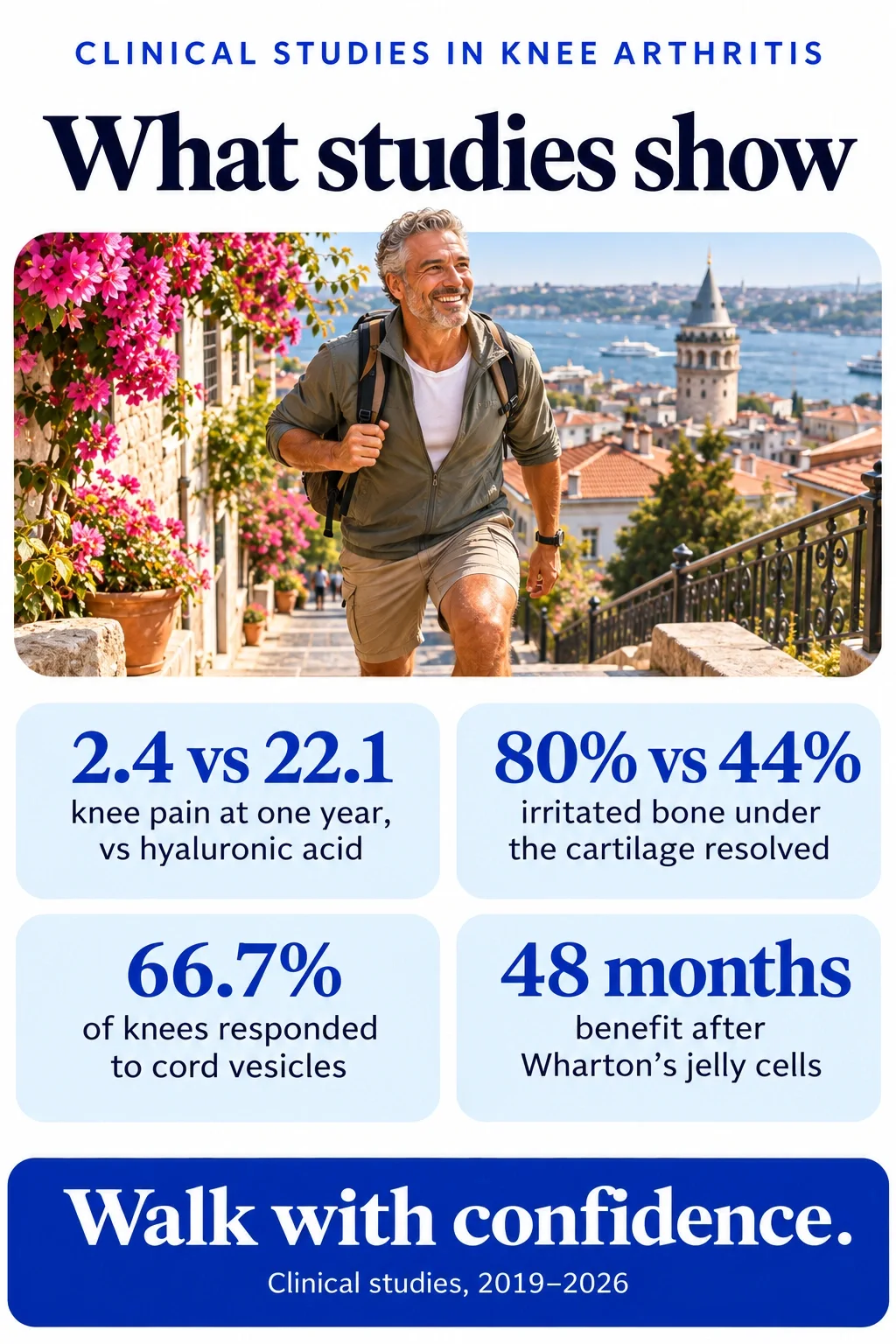
- 2.4 vs 22.1knee pain on a 100-point scale a year after two injections of cord stem cells from Wharton’s jelly, against hyaluronic acid3
- 25.2 vs 15.5points of pain relief with one stem cell injection against placebo, in a phase III trial of 261 people8
- 66.7%of knees met the international response criteria after umbilical cord exosome injections6
- 48 monthsand pain and function were still better after two Wharton’s jelly stem cell injections in advanced arthritis5
02
Why Wharton’s jelly stem cells and exosomes for your knee?
Wharton’s jelly is the soft, protective jelly that cushions the blood vessels of the umbilical cord. Our stem cells come from cords donated after healthy births, so nothing is taken from your own body: no liposuction, no bone marrow draw and no second wound to heal. They are young, active cells, and together with the exosomes released by the very same cells, they are the heart of every knee plan we make.
The knee evidence for our cell type
In a randomised trial in Chile, people with knee osteoarthritis received umbilical cord stem cells grown from Wharton’s jelly, either once or twice six months apart, or hyaluronic acid. Only the stem cell groups improved significantly from where they started. After 12 months, the two-dose group had a pain score of 2.4 on a 100-point scale, against 22.1 with hyaluronic acid, and a total WOMAC score (pain, stiffness and function; lower is better) of 4.2, against 15.2. No severe adverse events were reported.3
The results in advanced arthritis are just as encouraging. In a 2026 triple-blind randomised trial of 50 people with grade 3 and 4 knees, umbilical cord stem cells grown from Wharton’s jelly, the same type of cells we use, were injected four times, two weeks apart. After a year, pain had fallen from 7.2 to 3.36 out of 10, against 7.0 to 4.6 with hyaluronic acid; WOMAC scores had improved by 23.2 points, against 15.6; MRI cartilage repair scores had risen by 13.6 points, against 7.8; and bone marrow oedema, the irritated bone beneath worn cartilage, had resolved in 80% of patients, against 44%.4
In Jordan, 16 people with advanced knee arthritis received two injections of Wharton’s jelly stem cells a month apart. Pain and function were better at 12 and 48 months, and MRI at one year showed improvement in cartilage loss, bony spurs, bone marrow lesions and joint inflammation.5 A 2025 review of Wharton’s jelly and umbilical cord stem cell studies, with 97 patients and 134 knees followed for up to 48 months, found significant gains in pain and function and no serious adverse effects.14
Why young cord cells suit the knee
Wharton’s jelly cells are generous builders. In laboratory studies, umbilical cord stem cells from Wharton’s jelly produced more cartilage matrix (glycosaminoglycans) than bone marrow stem cells, and three times as much collagen after six weeks.15 When researchers compared the proteins released by stem cells from four sources, the secretome of Wharton’s jelly cells had a more diverse composition than that of fat or bone marrow cells.16 And because they come from a newborn’s cord, their quality does not depend on your own age or health, unlike treatments made from your own fat or bone marrow.
Wharton’s jelly and umbilical cord cells in numbers
- 4.2 vs 15.2WOMAC score a year after two injections of cord stem cells from Wharton’s jelly, against hyaluronic acid (lower is better)3
- 80% vs 44%bone marrow oedema resolved with four cord stem cell injections, against hyaluronic acid, in grade 3–4 knees4
- 134 kneestreated with Wharton’s jelly or umbilical cord stem cells across six studies, with significant gains in pain and function14
- 6 vs 20 weeksaverage healing time for diabetic foot ulcers with Wharton’s jelly exosomes, against standard care, in a randomised trial17
Wharton’s jelly exosomes work in people
In a randomised trial in 110 people with diabetic foot ulcers, wounds treated with Wharton’s jelly exosomes healed in 6 weeks on average, against 20 weeks with standard care alone, a clear sign of how strongly these exosomes support tissue repair.17
Exosomes that support cartilage
In laboratory studies, vesicles from Wharton’s jelly stem cells made cartilage cells more vital, and in research models, injected into the knee after cartilage surgery, they led to more smooth, hyaline cartilage.18
Fresh, never frozen
Your cells are prepared fresh for your date in a GMP-certified laboratory approved by the Turkish Ministry of Health, and never frozen. In laboratory comparisons, fresh MSCs kept stronger immune-calming properties than cells used straight after thawing.19
No harvest, no matching
Wharton’s jelly cells carry very few of the signals that trigger rejection.20 In knee and disc trials with donor MSCs, the immune response was weak and passing, and closer tissue matching did not improve results.21
Umbilical cord stem cells alongside
Umbilical cord stem cells, the second cell type in our plans, lowered WOMAC scores by 25.85 points more than control treatments across three randomised trials.22
CD34+ exosomes as an extra
Your plan can also include CD34+ exosomes, added alongside your Wharton’s jelly exosomes where your doctor feels they will help.
Why we combine cells and exosomes. Stem cells stay in the joint for a while and release more repair signals as they sense inflammation; exosomes deliver a concentrated dose of those signals at once.12 That is why your knee plan can pair Wharton’s jelly stem cells with Wharton’s jelly exosomes, with umbilical cord stem cells and CD34+ exosomes added where they help. Read more on our exosome therapy page.
03
How does a stem cell knee injection work inside the joint?
Osteoarthritis is no longer seen as simple wear and tear. It is a low-grade, long-lasting inflammation of the whole joint: the cartilage, the joint lining (synovium), the bone beneath and the fluid that bathes them.2 That is hopeful news, because inflammation is something the right signals can calm.
Mesenchymal stem cells are rich sources of those signals. Injected into the knee, they respond to the inflamed joint by releasing more of their anti-inflammatory and repair molecules, including exosomes packed with proteins and microRNAs. Researchers call it a ‘hit-and-run’ effect, because the benefit continues after the cells have gone.1
From injection to an easier knee
- Into the jointFresh Wharton’s jelly stem cells and exosomes are placed in the knee, where inflammatory signals switch on their repair response.1
- Calming signalsGrowth factors, anti-inflammatory messengers and microRNAs reach the cartilage and the joint lining.2
- A quieter jointFewer inflammatory immune cells in the joint fluid, and less synovitis on MRI.23
- Less pain, more movementBetter pain and function scores than hyaluronic acid in randomised trials.324
Where a stem cell knee injection works
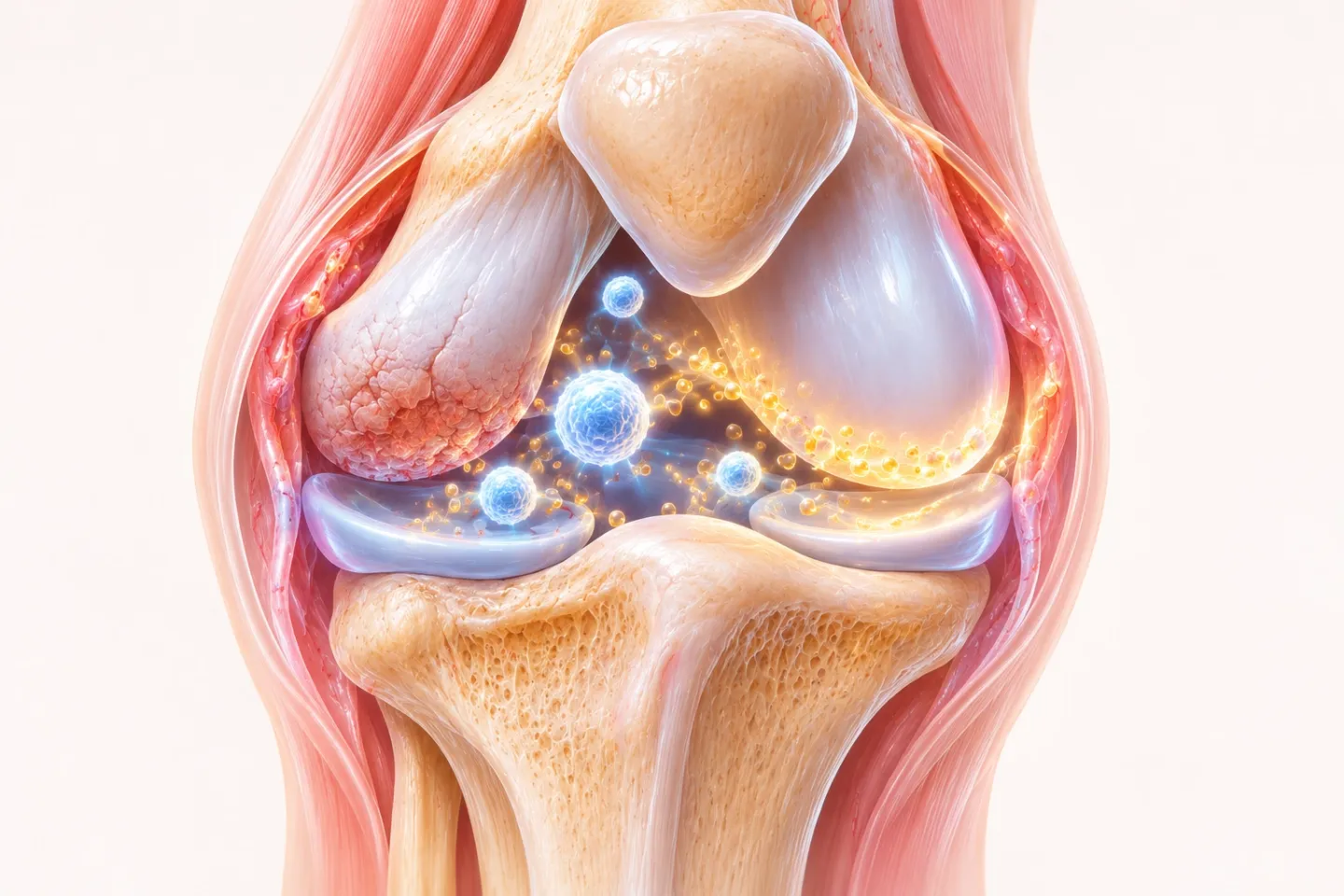
- Stem cellsInjected into the joint, they release signals that calm inflammation and support repair.
- ExosomesTiny vesicles carry these repair messages across the cartilage and the joint lining.
- Worn cartilageArthritis thins the smooth cartilage that cushions the ends of the bones.
- MeniscusThe knee’s shock absorber. A calmer joint helps protect it and the cartilage you have.
Calming the joint lining
After stem cell injections, the joint fluid contained fewer pro-inflammatory immune cells and less of the inflammatory messenger IL-12, and synovitis on MRI fell at higher doses.23
Protecting cartilage
In a two-year placebo-controlled trial, cartilage in treated knees did not worsen on MRI while placebo knees gradually worsened, cartilage volume increased with stem cells, and a urine marker of cartilage breakdown fell.9
Supporting repair
After four injections of umbilical cord stem cells, MRI cartilage repair scores rose by 13.6 points, against 7.8 with hyaluronic acid.4 With repeated cord stem cell injections in another study, MRI cartilage repair scores rose from 42 to 58 within three months.25
Turning immune cells into healers
In research models, umbilical cord exosomes shifted joint macrophages towards the healing M2 type, raised the calming messenger IL-10 and slowed osteoarthritis.26 They also lowered TNF-α, IL-1β and IL-6 in the joint fluid and promoted cartilage regeneration.27
The cells do not need to turn into new cartilage to help. By calming the joint and protecting the cartilage you still have, they aim to give you a knee that hurts less and moves more freely. Read more about how our stem cell therapy works, or see the full treatment on our knee, hip and shoulder osteoarthritis page.
04
Who is a stem cell knee injection for?
A stem cell knee injection suits many people with a painful knee, from the first signs of arthritis to advanced wear. These are the people who most often ask us about it.

Mild to moderate arthritis
Grades 1 to 3 have the most cartilage to protect. Across ten randomised trials in grade 1 to 3 knees, stem cell injections improved pain, function and MRI joint scores more than hyaluronic acid at 12 months,24 and 83.3% of grade 2 knees responded to umbilical cord exosomes.6
Advanced arthritis
Grades 3 and 4, including knees described as bone-on-bone. In grade 3 and 4 knees, four injections of cord stem cells from Wharton’s jelly lowered pain from 7.2 to 3.36 out of 10 after a year.4
Cartilage wear and defects
In a randomised trial in large cartilage defects, umbilical cord blood stem cells implanted through a small incision improved the cartilage grade in 97.7% of patients, against 71.7% with microfracture, with better pain and function three to five years later.28
Active people and athletes
If your knee keeps you from running, tennis, football or skiing, the aim is to calm the joint and get you moving again, together with physiotherapy. See how stem cells support recovery from sports injuries.
People who want to keep their own knee
In a two-year placebo-controlled trial, 1 patient treated with stem cells went on to knee replacement, against 4 with placebo.9 For every option by stage, read alternatives to knee replacement.
A torn or worn meniscus
Knee arthritis and meniscus tears often go together. Read our guide to stem cell therapy for a torn meniscus.
Results tend to be strongest when there is still cartilage to protect: response rates to cord exosomes were 83.3% at grade 2, 66.7% at grade 3 and 44.4% at grade 4.6 Not sure whether your knee pain comes from osteoarthritis or an inflammatory arthritis? Our guide to osteoarthritis vs rheumatoid arthritis explains the difference. In rheumatoid arthritis, an IV infusion, the route used in most rheumatoid arthritis trials, can be given on the same day as your joint injections; see stem cell therapy for arthritis.
05
Does a stem cell knee injection work? What clinical trials report
Stem cell knee injections are among the most studied uses of stem cells anywhere, with randomised trials, long-term follow-ups and several meta-analyses. Here is what they report, with each study’s own cell source.
What the reviews of all the trials say
- Better than hyaluronic acid. Across ten randomised trials with 818 patients, stem cell injections improved WOMAC scores by 10.22 points and pain by 1.31 points on a 0–10 scale more than hyaluronic acid at 12 months, along with MRI joint scores, all reaching clinically important differences.24
- Umbilical cord cells lead. In 36 randomised trials in arthritis, umbilical cord stem cells gave the largest improvement in osteoarthritis pain of all cell sources (a standardised effect of −2.03, against −1.26 for fat and −0.95 for bone marrow).13 In 16 studies with 875 patients, pain relief began from the third month, and the strongest relief came with fat-derived and umbilical cord cells.7
- Gains that last. An umbrella review of 30 high-quality studies found pain reductions of 20 to 40 points and function gains of 15 to 35 points at 12 to 24 months, and stem cell therapy significantly lowered the likelihood of a later knee replacement (hazard ratio 0.52).29
The largest single trials
In a phase III, double-blind trial of 261 people with grade 3 knees, one injection of their own fat-derived stem cells improved pain by 25.2 points on a 100-point scale at six months, against 15.5 with placebo.8 In a placebo-controlled trial of 146 people, donor bone marrow stem cells improved WOMAC pain, stiffness and function at 6 and 12 months,12 and the gains held at two years.9
| Study | Design and people | Cells and route | What improved |
|---|---|---|---|
| Matas 2019, Stem Cells Transl Med3 | Randomised; 26 people | Umbilical cord stem cells from Wharton’s jelly, one or two injections | Pain 2.4 vs 22.1 (0–100) and WOMAC 4.2 vs 15.2 against hyaluronic acid at 12 months |
| Chen 2026, Stem Cell Res Ther4 | Triple-blind randomised; 50 people, grade 3–4 | Cord stem cells from Wharton’s jelly, four injections | Pain 7.2 → 3.36 vs 7.0 → 4.6; bone marrow oedema resolved in 80% vs 44% |
| Samara 2022, Regen Med5 | Prospective; 16 people, advanced arthritis | Wharton’s jelly stem cells, two injections | Pain and function better at 12 and 48 months; MRI improvements at one year |
| Ao 2023, BMC Musculoskelet Disord25 | Single-arm; 14 people, grade 2–3 | Umbilical cord stem cells, repeated injections | Pain 6.0 → 3.5 and WOMAC 26.0 → 8.5 at 3 months |
| Kim 2023, Am J Sports Med8 | Phase III, double-blind; 261 people, grade 3 | Own fat-derived stem cells, one injection | Pain relief 25.2 vs 15.5 with placebo at 6 months |
| Gupta 2023 and 2026129 | Phase 3, placebo-controlled; 146 people | Donor bone marrow stem cells, one injection | Better WOMAC at 6, 12 and 24 months; cartilage held steady on MRI |
| Yokota 2026, Orthopedics6 | Clinical study; 29 people, 33 knees | Umbilical cord extracellular vesicles, six injections | Pain −38.8 (0–100); 66.7% of knees responded |
Each study used its own cells, doses and schedules. Your treatment uses fresh Wharton’s jelly and umbilical cord stem cells and Wharton’s jelly exosomes, prepared for your date. See how we put this evidence into practice on our stem cell treatment page for knee osteoarthritis.
06
Exosome knee injection: the cell-free option
An exosome knee injection gives the joint the messages of stem cells without the cells themselves. Exosomes are tiny vesicles, far smaller than a cell, that MSCs release to pass on their instructions. Because injected MSCs leave the joint fairly quickly, researchers see exosomes as a key part of how stem cells work, and as a treatment in their own right.2
What human studies report
- Two in three knees responded. In 29 people (33 knees) given six injections of umbilical cord extracellular vesicles, the family of messengers that exosomes belong to, pain fell by 38.8 points on a 100-point scale, quality-of-life scores rose by 32.8 points and sport and recreation scores by 28.6. Every score passed the threshold for a clinically important change, and 66.7% of knees met the international response criteria, with no serious adverse events.6
- A randomised, double-blind study of umbilical cord stem cell exosomes at rising doses found no adverse effects, and clinical scores and MRI improved compared with before treatment.30
- First use in people. Clinical-grade umbilical cord vesicles injected into the knee caused no adverse effects over 12 months, and in research models the same vesicles regenerated hyaline cartilage.31
- The full secretome. The mix of growth factors and vesicles that umbilical cord stem cells release eased knee pain more than hyaluronic acid in a 30-patient trial, lowering the cartilage-degrading enzyme MMP-3 and raising the repair signal TGF-β1.32 In grade 2–3 knees, five weekly injections improved knee scores at 2, 4 and 6 months, with a better cartilage signal on MRI in every patient.33
Exosomes on their own, or with stem cells?
Exosomes suit people who would like a cell-free treatment, and they are a strong partner for the cells, so for most knees our doctors combine the two. Exosomes can be injected into the joint, given by IV infusion, or both. See all the routes on our exosome therapy page.
Medical exosomes are not the same as the cosmetic products sold under the same name. Ours are Wharton’s jelly MSC exosomes, prepared for your treatment date in a Ministry of Health-approved GMP laboratory.

07
Your treatment day and stem cell knee injection recovery, day by day
A stem cell knee injection is a calm, unhurried day rather than an operation: no hospital stay, a minimally invasive injection under sterile conditions, and you walk out of the clinic the same day. Both knees, and the tendons and ligaments around them, can be treated in a single day.
Your treatment day, step by step
- Pick-up and final checkOur driver picks you up and brings you to the clinic, where the team reviews your health, your knee and your plan.
- Cells ready for youYour fresh cells arrive with their count and viability checked and certified by the GMP laboratory.
- Comfort firstDr. Cihan Bolat, a specialist in anaesthesiology and reanimation, plans your comfort and the route with you.
- The injection, then homeYour stem cells and exosomes go into the knee, with an IV infusion if planned, and you walk out the same day.

- Day 0Walk outHome the same day, with gentle walking
- Days 1–3Take it easyAny mild soreness usually settles
- First weeksEveryday lifeDaily activities at the pace your doctor advises
- Following weeksBuild strengthThe gentle exercises in your plan
- Month 3 onwardsFeel the changePain relief builds, as in the trials
Recovery, day by day
The first few days. Some people notice mild swelling or soreness in the knee for a short while. In a placebo-controlled trial, the few reactions linked to the injection were injection-site swelling and pain, which improved within a few days.12 Rest, and walk gently around your hotel or along the seafront.
The following weeks. You return to everyday activities at the pace your doctor advises. Save long hikes, running and heavy gym work until your doctor says so, and start the gentle strengthening exercises in your plan: stronger thigh and hip muscles take load off the knee and support your result.
Flying home. Your doctor tells you when you are ready to travel, and our case manager arranges your transfer. Many people like to add a day or two to enjoy Istanbul.
08
When will I feel it, and how long does a stem cell knee injection last?
Stem cells work with your knee’s own biology, so results build over weeks and months rather than overnight. In a dose-comparison trial of umbilical cord stem cells, pain and function had improved by three months,34 and across 16 studies, pain relief began from the third month.7 The largest trials measured clear gains at six months,812 and with two injections of cord stem cells from Wharton’s jelly, pain was still far lower than with hyaluronic acid after a year.3
- Month 3Less painRelief begins in trials
- Month 6Easier movementClear gains in the largest trials
- Year 1Gains holdBenefit still measured at 12 months
- Years 2–5Lasting benefitFollowed in long-term studies
- Second doseBuild on itRepeat injections did more in trials
How long do the results last?
- Four years with Wharton’s jelly cells. In advanced knee arthritis, pain and function were still better 48 months after two Wharton’s jelly stem cell injections.5
- Two years, placebo-controlled. Donor bone marrow stem cells kept WOMAC scores significantly better than placebo at two years, with cartilage volume increasing on MRI.9
- Four years against hyaluronic acid. Patients treated with their own bone marrow stem cells reported median pain scores of 2 to 3 out of 10 after four years, against 7 for those given hyaluronic acid.35
- Five years after one injection. After a single injection of fat-derived stem cells, pain and WOMAC scores were better from six months onwards and stayed better to five years.10
- Across 30 studies, fewer treated knees went on to a replacement at three to five years: 12.4%, against 22.7% in control groups.29
Arthritis is a lifelong tendency, so the aim is to build your result and then keep it. That is where a second dose, regular exercise and a healthy weight come in. We follow your progress with you at about 1, 3, 6 and 12 months.
09
How many stem cell knee injections will I need? The right dose and a second dose
Most people begin with one treatment day in Istanbul. Whether a second dose follows, and how many cells you receive, are the two decisions that shape your plan, and both are made with your doctor rather than left to chance.
Why a second dose can do more
Trials consistently found that more than one injection gave the best results. In the Wharton’s jelly-derived umbilical cord trial, two doses six months apart did better than both a single dose and hyaluronic acid at 12 months.3 Across 16 randomised trials with 622 patients, repeated injections improved pain and function more than a single injection at 6 and 12 months,11 and in the review of Wharton’s jelly studies, several injections did better than one.14 The trial in advanced knees used four injections, two weeks apart.4 That is why a second dose may be part of your plan, timed at one of your follow-up reviews.
The right dose, not the biggest dose
More cells are not automatically better. In a dose-comparison trial of umbilical cord stem cells, every dose improved pain and function at 3 and 6 months, but the low and medium doses did better than the highest.34 Positive umbilical cord trials used about 20 million cells per injection,336 and the trial in advanced knees used 45 million per injection, four times.4 Your doctor sets the cell count for your knee and your goals, and your plan states your exact cell count in writing.
Why fresh cells matter
Your cells are prepared fresh for your treatment date and never frozen, with their count and viability checked before every treatment. In laboratory comparisons, freshly prepared MSCs responded better to inflammatory signals and produced more anti-inflammatory mediators than cells used straight after thawing.19
10
PRP vs stem cell knee injection, hyaluronic acid vs stem cells: the options compared
Every knee injection has its place, and many people try several over the years. Here is how they differ, side by side.
Hyaluronic acid vs stem cells
Hyaluronic acid (gel) injections top up the joint fluid’s natural lubricant and cushion, and they ease pain for many people, most clearly 5 to 13 weeks after the injection.37 Stem cells work on the joint environment itself, calming inflammation and helping protect cartilage. In randomised trials, stem cells improved pain, function and MRI scores more than hyaluronic acid at 12 months,24 and the two are sometimes combined.
PRP vs stem cell knee injection
PRP (platelet-rich plasma) concentrates growth factors from your own blood and releases them at the moment of injection. It is a well-studied option: across 18 randomised trials, PRP improved WOMAC scores by 44.7%, against 12.6% with hyaluronic acid.38 Stem cells are living cells that keep responding to the joint’s signals, releasing more of their anti-inflammatory and repair molecules, including exosomes.1 And young Wharton’s jelly cells bring a quality that does not depend on your own age or health. If you have had PRP and would like something that works in a different way, stem cells and exosomes are a natural next step to discuss.
Steroid, bone marrow and fat-derived cells
A steroid (cortisone) injection calms a flare quickly, with improvement for up to two weeks and, in the soundest studies, at 16 to 24 weeks.39 Bone marrow concentrate and fat-derived stem cells are made from your own body, and both did well in trials;408 they need a harvest from your hip bone or belly first, while Wharton’s jelly cells come ready from a donated cord.
| Option | How it helps | What studies report | Best suited to | How it is given |
|---|---|---|---|---|
| Wharton’s jelly stem cells and exosomes | Young living cells and their exosomes release signals that calm inflammation and help protect cartilage12 | Two injections: pain 2.4 vs 22.1 (0–100) against hyaluronic acid at 12 months;3 benefit at 48 months5 | Mild to advanced arthritis, and people who want to keep their own knee | Into the knee, with IV if planned, in one treatment day; no harvest |
| Wharton’s jelly exosomes on their own | Concentrated, cell-free repair signals2 | 66.7% of knees responded to umbilical cord vesicles6 | People who prefer a cell-free option | Into the knee and by IV |
| Umbilical cord stem cells | Young donor cells, the second cell type in our plans | Largest pain effect of three cell sources across 36 trials13 | Added to Wharton’s jelly cells where the doctor advises | Into the knee, in the same treatment day |
| Fat-derived (adipose) stem cells | Your own cells, grown from a fat sample | Pain relief 25.2 vs 15.5 with placebo in a phase III trial8 | Moderate arthritis | Liposuction first, then an injection once the cells are ready |
| Bone marrow concentrate | Your own marrow cells, concentrated | Better pain and function scores than hyaluronic acid across Level I studies40 | Mild to moderate arthritis | A marrow draw from the hip, then an injection |
| PRP | Growth factors from your own platelets | WOMAC improved by 44.7%, against 12.6% with hyaluronic acid38 | Mild to moderate arthritis | A blood draw, then injections, often as a series |
| Hyaluronic acid | Tops up the joint fluid’s lubrication | Pain improved by 28% to 54% at 5–13 weeks37 | Mild to moderate arthritis | A course of injections |
| Steroid (cortisone) | Calms inflammation quickly | Improvement for up to two weeks, and at 16–24 weeks in some studies39 | Flares at any stage | A single injection, repeated sparingly |
These options add up rather than compete: physiotherapy and a healthy weight form the base, a steroid can settle a flare, and stem cells and exosomes work on the joint for the longer term. For a stage-by-stage view, including surgery, see alternatives to knee replacement.
11
Stem cell injections for hips and shoulders
The same kind of injection can help other joints. Our stem cell treatment for hip, knee and shoulder osteoarthritis covers all three, and your plan can include more than one joint.
Hips
Studies of stem cell injections into the hip report average pain reductions of 30% to 50%, with better hip function and only rare, mild side effects.41 A systematic review of ten hip studies with 316 patients found favourable improvements in pain, function and cartilage findings.42 In a 15-year study of 434 hips, people treated with bone marrow concentrate injected into the bone of the hip went on to a hip replacement far less often: 16.1%, against 40.1% with conservative care.43
Shoulders
In the shoulder, stem cells often help the rotator cuff tendons as well as the joint. When bone marrow stem cells were added to rotator cuff repair, all 45 repairs had healed by six months, against 30 of 45 without them, and ten years later 87% of the treated tendons were still intact, against 44%.44 In partial rotator cuff tears, fat-derived stem cells injected into the tendon reduced shoulder pain by about 90% at one and two years in the medium- and high-dose groups.45 Read more about stem cell treatment for shoulder tendinitis.
12
Muse cells and Muse exosomes: an optional add-on
Muse cells, short for multilineage-differentiating stress-enduring cells, are a small group of especially hardy repair cells within the MSC family, discovered in Japan in 2010.46 Donor Muse cells have been given without tissue matching or immune-suppressing medicines,47 and in a randomised trial in stroke, 40.0% of patients given one IV dose of a donor Muse cell product could look after their own affairs at 12 weeks, against 10.0% with placebo.48
For joints, the research so far comes from the laboratory: Muse cells formed cartilage more readily than other MSCs, and in research models of cartilage injury, both Muse cells and other MSCs supported better repair than no cells.49 Muse exosomes carry the cells’ secreted signals in cell-free form.50
If your knee treatment is part of a wider regenerative plan, Muse cells can be added by IV infusion, and Muse exosomes by IV infusion too. Your knee injection itself uses Wharton’s jelly stem cells and exosomes, which remain the core of your plan.
13
Is a stem cell knee injection safe? Side effects explained
Safety comes first, and the published record is reassuring. A 2021 meta-analysis of 62 randomised trials with 3,546 patients found MSC treatment safe, the most common effect a passing fever.51
The knee studies point the same way. Stem cell injections had a safety profile similar to hyaluronic acid across ten randomised trials,24 and a pooled analysis of 36 randomised trials in arthritis found no increase in adverse events.13 There were no serious treatment-related events in the phase III trial of 261 people,8 no serious adverse effects across the Wharton’s jelly and umbilical cord studies,14 and no serious adverse events with four cord stem cell injections in advanced knees4 or with umbilical cord exosomes.6 When people notice anything, it is usually brief swelling or soreness at the injection site, which improved within a few days in a placebo-controlled trial.12
Your own care adds further layers. Nothing is taken from your body, so there is no harvest wound. Wharton’s jelly cells need no donor matching,20 your cells are prepared in a GMP-certified laboratory approved by the Turkish Ministry of Health with their count and viability checked before treatment, and every injection is given under sterile conditions by our specialist team. Dr. Cihan Bolat reviews your health and medical history beforehand and plans your comfort and the route with you.
14
Why patients travel to Istanbul, Turkey for a stem cell knee injection
People from the UK, Germany, the Netherlands, across Europe, the Gulf, the USA and beyond travel to Istanbul for stem cell therapy for their knees: specialist-led treatment with fresh Wharton’s jelly stem cells in a single treatment day, in a city that is easy to reach and a pleasure to stay in.

Specialist-led from the first message
Uzm. Dr. Cihan Bolat, our medical director, a specialist in anaesthesiology and reanimation and in regenerative medicine, leads the team that reviews your knee scans free of charge and treats you.
Fresh cells for your date
Your Wharton’s jelly stem cells come from cords donated after healthy births and are prepared fresh for your treatment date, never frozen, with their count and viability checked before treatment.
Your cell count in writing
Your written plan states your exact cell count, the exosomes and the routes, with a fixed, all-inclusive price before you travel.
One treatment day
Most plans take one treatment day in Istanbul, and you walk out of the clinic the same day.
Help at every step
A personal case manager helps with your hotel, ground transport and translation, so you can focus on your knee.
Follow-up from home
Reviews at about 1, 3, 6 and 12 months, so your care continues after you fly back.
Istanbul has two international airports with direct flights from across Europe, the Middle East and beyond, and our clinic is in Suadiye, a calm district on the Asian side near the Marmara seafront, ideal for gentle walks after treatment. Read more about why patients choose stem cell therapy in Turkey.
15
Your stem cell knee treatment in Istanbul, step by step
From your first message to your follow-up at home, every step is planned with you in advance, whether you are travelling from London, Berlin, Amsterdam, Dubai or New York. For the fuller story, read the stem cell treatment in Turkey, step by step, or request your free consultation now.
Send your knee reports
Share your X-ray or MRI report, your Kellgren-Lawrence grade if you know it, the treatments you have tried and your goals, through our free consultation request or by WhatsApp on +90 534 856 92 92.
Free medical review and phone call
Dr. Cihan Bolat’s team reviews your case free of charge, talks it through with you by phone and tells you honestly whether a stem cell or exosome knee injection suits you.
Your written plan and fixed price
If treatment is a good fit, you receive a written plan with your exact cell count, any exosomes and the routes, and a fixed, all-inclusive price.
Fresh preparation and treatment day
Once you confirm, your cells are prepared fresh for your date, which usually takes 5 to 10 days. On treatment day, our driver brings you to the clinic, and you walk out the same day.
Home and follow-up
Back home, you continue your exercises, and we review your progress at about 1, 3, 6 and 12 months and plan a second dose with you if it is part of your plan.
16
How much does a stem cell knee injection cost in Turkey?
Every plan is personal, so the price depends on the number of stem cells, the exosomes and the routes in your plan: one knee or both, with or without an IV infusion, and whether a second dose is included. After your free medical review, you receive a fixed, all-inclusive price in writing before you book anything, so you can decide calmly at home.
When you compare prices, compare what is included. A treatment made from your own fat or bone marrow includes a harvest; ours does not, because your cells come ready from a donated cord, fresh for your date, with your exact cell count in writing.
Included
- Free medical review and phone consultation
- Fresh Wharton’s jelly stem cells, with certified count and viability
- Wharton’s jelly exosomes, umbilical cord stem cells and CD34+ exosomes, if they are in your plan
- Your knee injection by our specialist team in one treatment day
- Ground transport to and from the clinic, and help with translation
- A personal case manager and follow-up reviews
Not included / optional
- Flights
- Hotel stay, which we can help you arrange
- A second dose, if it is part of your plan
- Physiotherapy at home
See the full treatment on our hip, knee and shoulder osteoarthritis page, or read about stem cell therapy for rheumatoid arthritis and osteoarthritis.
17
Frequently asked questions
What is a stem cell knee injection?
It is a precise injection of living mesenchymal stem cells into the knee joint. At our clinic, we use fresh Wharton’s jelly stem cells, often with umbilical cord stem cells and Wharton’s jelly exosomes. Inside the joint, they release signals that calm inflammation, protect cartilage cells and support repair. There is no hospital stay, and you walk out the same day.
Does a stem cell knee injection work?
In randomised trials, yes, for many people. Across ten randomised trials, stem cell injections improved pain, function and MRI joint scores more than hyaluronic acid at 12 months. In a trial of umbilical cord stem cells grown from Wharton’s jelly, two injections left knee pain at 2.4 on a 100-point scale after a year, against 22.1 with hyaluronic acid. Dr. Cihan Bolat reviews your scans to tell you what is realistic for your knee.
What is injected into the knee: stem cells or exosomes?
Often both. Our knee plans are built on fresh Wharton’s jelly stem cells, with umbilical cord stem cells where they help, and Wharton’s jelly exosomes, the concentrated repair messages the same cells release. CD34+ exosomes can be added too. Exosomes can also be given on their own if you prefer a cell-free treatment.
What is a Wharton’s jelly knee injection?
It is a stem cell knee injection that uses mesenchymal stem cells from Wharton’s jelly, the soft jelly of umbilical cords donated after healthy births. Nothing is taken from your body and no donor matching is needed. In a 2026 trial in grade 3 and 4 knees, cord stem cells grown from Wharton’s jelly resolved the irritated bone beneath worn cartilage in 80% of patients, against 44% with hyaluronic acid.
PRP vs stem cell knee injection: which is better?
Both work with the body’s own repair, in different ways. PRP concentrates growth factors from your own blood and releases them at the moment of injection; across 18 trials it improved WOMAC scores by 44.7%, against 12.6% with hyaluronic acid. Stem cells are living cells that keep responding to the joint, releasing anti-inflammatory and repair signals, and young Wharton’s jelly cells do not depend on your own age or health. Your doctor can advise which suits you.
Hyaluronic acid vs stem cells: what is the difference?
Hyaluronic acid tops up the lubrication of the joint fluid and eases pain for many people, most clearly 5 to 13 weeks after injection. Stem cells work on the joint environment itself, calming inflammation and helping protect cartilage. In randomised trials, stem cell injections improved pain, function and MRI scores more than hyaluronic acid at 12 months.
Do exosome knee injections work?
Human studies are encouraging. In 33 knees treated with umbilical cord extracellular vesicles, pain fell by 38.8 points on a 100-point scale, and 66.7% of knees met the international criteria for a treatment response, with no serious adverse events. We use Wharton’s jelly MSC exosomes, on their own or together with stem cells, injected into the knee or given by IV infusion.
How many stem cell knee injections will I need?
Most people start with one treatment day. Trials found that more than one injection gave the best results: across 16 randomised trials, repeated injections improved pain and function more than a single one at 6 and 12 months. That is why a second dose may be part of your plan. Your written plan states the number of sessions and your exact cell count before you travel.
How long does a stem cell knee injection last?
In long-term studies, benefits lasted for years. Pain and function were still better 48 months after two Wharton’s jelly stem cell injections in advanced arthritis, and after a single injection of fat-derived stem cells, improvements lasted to five years. A second dose, exercise and a healthy weight help you keep your result.
How long does it take for a stem cell knee injection to work?
Results build gradually. Across 16 studies, pain relief began from the third month, and in a dose-comparison trial of umbilical cord stem cells, pain and function had improved by three months. The largest trials measured clear gains at six months that held at 12 months.
What is recovery like after a stem cell knee injection?
You walk out of the clinic the same day. Some people have mild swelling or soreness in the knee for a few days, which in a placebo-controlled trial improved within a few days. You return to everyday activities at the pace your doctor advises, add the gentle strengthening exercises in your plan, and save running and heavy gym work until your doctor says so.
Does a stem cell knee injection hurt?
It is a minimally invasive injection given under sterile conditions. Dr. Cihan Bolat, a specialist in anaesthesiology and reanimation, plans your comfort with you before the injection. If you notice swelling or soreness afterwards, it usually settles within a few days, as it did in a placebo-controlled trial.
Is a stem cell knee injection safe? What are the side effects?
The published record is reassuring. A meta-analysis of 62 randomised trials with 3,546 patients found MSC treatment safe, the most common effect a passing fever, and in knee trials stem cell injections had a safety profile similar to hyaluronic acid. When people notice anything, it is usually brief swelling or soreness at the injection site.
Can stem cells regrow knee cartilage?
Stem cells aim to protect the cartilage you have and support its repair. In studies, cartilage volume increased on MRI after stem cell injections, and four injections of umbilical cord stem cells raised MRI cartilage repair scores by 13.6 points, against 7.8 with hyaluronic acid. The main goals are less pain and easier movement.
Is my knee too far gone for a stem cell injection?
Often not. Stem cells have been studied in every grade, including grade 4, sometimes called bone-on-bone. In grade 3 and 4 knees, four cord stem cell injections lowered pain from 7.2 to 3.36 out of 10 after a year. Results are strongest when cartilage is still present, so Dr. Cihan Bolat reviews your X-ray or MRI and gives you an honest picture.
How much does a stem cell knee injection cost in Turkey?
The price depends on the number of cells, the exosomes and the routes in your plan, such as one or both knees and whether an IV infusion or a second dose is added. After a free medical review, you receive a fixed, all-inclusive price in writing, covering the treatment, fresh cells, transport to and from the clinic, a case manager and follow-up reviews.
Why travel to Istanbul for stem cell therapy for knees, and how long should I stay?
Istanbul offers specialist-led treatment with fresh Wharton’s jelly stem cells and easy flights from the UK, Europe, the Gulf and beyond. Most plans take one treatment day, and your written plan tells you how long to stay; many people add a day or two. You can reach us on WhatsApp at +90 534 856 92 92.

Medical review
Uzm. Dr. Cihan Bolat
Medical Director, Istanbul Stemcell
This page was written from the published studies listed below and reviewed for medical accuracy on .
18
References
- Mancuso P, et al. Mesenchymal Stem Cell Therapy for Osteoarthritis: The Critical Role of the Cell Secretome. Front Bioeng Biotechnol. 2019;7:9. PMID 30761298
- Kwon DG, et al. State of the Art: The Immunomodulatory Role of MSCs for Osteoarthritis. Int J Mol Sci. 2022;23(3). PMID 35163541
- Matas J, et al. Umbilical Cord-Derived Mesenchymal Stromal Cells (MSCs) for Knee Osteoarthritis: Repeated MSC Dosing Is Superior to a Single MSC Dose and to Hyaluronic Acid in a Controlled Randomized Phase I/II Trial. Stem Cells Transl Med. 2019;8(3):215-224. PMID 30592390
- Chen C, et al. Multiple intra-articular injections of umbilical cord mesenchymal stem cells in treating severe knee osteoarthritis: a triple-blind randomized controlled trial. Stem Cell Res Ther. 2026;17(1). PMID 42972476
- Samara O, et al. Ultrasound-guided intra-articular injection of expanded umbilical cord mesenchymal stem cells in knee osteoarthritis: a safety/efficacy study with MRI data. Regen Med. 2022;17(5):299-312. PMID 35546314
- Yokota N, Kambayashi T, Tanabe Y. Safety and Efficacy of Intra-Articular Injection of Umbilical Cord-Derived Extracellular Vesicles in Patients With Knee Osteoarthritis: A Retrospective Study. Orthopedics. 2026;49(4):e351-e358. PMID 42611014
- Xie RH, et al. Effect of mesenchymal stromal cells transplantation on the outcomes of patients with knee osteoarthritis: A systematic review and meta-analysis. J Orthop Res. 2024;42(4):753-768. PMID 37991925
- Kim KI, et al. Clinical Efficacy and Safety of the Intra-articular Injection of Autologous Adipose-Derived Mesenchymal Stem Cells for Knee Osteoarthritis: A Phase III, Randomized, Double-Blind, Placebo-Controlled Trial. Am J Sports Med. 2023;51(9):2243-2253. PMID 37345256
- Gupta PK, et al. Two years efficacy and safety outcomes of using allogeneic, pooled mesenchymal stromal cells for osteoarthritis of knee in a double-blind randomized placebo-controlled phase 3 study. Osteoarthr Cartil Open. 2026;8(1):100723. PMID 41536418
- Kim KI, et al. Safety and Efficacy of the Intra-articular Injection of Mesenchymal Stem Cells for the Treatment of Osteoarthritic Knee: A 5-Year Follow-up Study. Stem Cells Transl Med. 2022;11(6):586-596. PMID 35567774
- Deng L, et al. Efficacy and safety of single versus repeated injections of mesenchymal stem cells for the treatment of knee osteoarthritis: a systematic review and network meta-analysis of randomized controlled trials. Stem Cell Res Ther. 2025;16(1):505. PMID 41013772
- Gupta PK, et al. Efficacy and Safety of Stempeucel in Osteoarthritis of the Knee: A Phase 3 Randomized, Double-Blind, Multicenter, Placebo-Controlled Study. Am J Sports Med. 2023;51(9):2254-2266. PMID 37366164
- Zeng L, et al. Efficacy and safety of culture-expanded mesenchymal stromal cell therapy in the treatment of 4 types of inflammatory arthritis: A systematic review and meta-analysis of 36 randomized controlled trials. Semin Arthritis Rheum. 2024;68:152498. PMID 38970896
- Ishak-Samrin M, et al. Treatment of Knee Osteoarthritis and Chondral Injury with Umbilical Cord/Wharton's Jelly-Derived Mesenchymal Stem Cells: A Systematic Review of Safety and Efficacy. J Funct Biomater. 2025;16(3). PMID 40137363
- Wang L, et al. A comparison of human bone marrow-derived mesenchymal stem cells and human umbilical cord-derived mesenchymal stromal cells for cartilage tissue engineering. Tissue Eng Part A. 2009;15(8):2259-66. PMID 19260778
- Shin S, et al. Comparative Proteomic Analysis of the Mesenchymal Stem Cells Secretome from Adipose, Bone Marrow, Placenta and Wharton's Jelly. Int J Mol Sci. 2021;22(2). PMID 33467726
- Kishta MS, et al. The transforming role of wharton's jelly mesenchymal stem cell-derived exosomes for diabetic foot ulcer healing: a randomized controlled clinical trial. Stem Cell Res Ther. 2025;16(1):559. PMID 41084065
- Chen Z, et al. HWJMSC-EVs promote cartilage regeneration and repair via the ITGB1/TGF-β/Smad2/3 axis mediated by microfractures. J Nanobiotechnology. 2024;22(1):177. PMID 38609995
- Moll G, et al. Do cryopreserved mesenchymal stromal cells display impaired immunomodulatory and therapeutic properties? Stem Cells. 2014;32(9):2430-42. PMID 24805247
- Weiss ML, et al. Immune properties of human umbilical cord Wharton's jelly-derived cells. Stem Cells. 2008;26(11):2865-74. PMID 18703664
- García-Sancho J, et al. Influence of HLA Matching on the Efficacy of Allogeneic Mesenchymal Stromal Cell Therapies for Osteoarthritis and Degenerative Disc Disease. Transplant Direct. 2017;3(9):e205. PMID 28894792
- Xiao Z, et al. Effects of the umbilical cord mesenchymal stem cells in the treatment of knee osteoarthritis: A systematic review and meta-analysis. Medicine (Baltimore). 2024;103(46):e40490. PMID 39560593
- Chahal J, et al. Bone Marrow Mesenchymal Stromal Cell Treatment in Patients with Osteoarthritis Results in Overall Improvement in Pain and Symptoms and Reduces Synovial Inflammation. Stem Cells Transl Med. 2019;8(8):746-757. PMID 30964245
- Jin WS, et al. Mesenchymal Stem Cells Injection Is More Effective Than Hyaluronic Acid Injection in the Treatment of Knee Osteoarthritis With Similar Safety: A Systematic Review and Meta-analysis. Arthroscopy. 2025;41(2):318-332. PMID 39154667
- Ao Y, et al. Repeated intra-articular injections of umbilical cord-derived mesenchymal stem cells for knee osteoarthritis: a phase I, single-arm study. BMC Musculoskelet Disord. 2023;24(1):488. PMID 37312112
- Li K, et al. Anti-inflammatory and immunomodulatory effects of the extracellular vesicles derived from human umbilical cord mesenchymal stem cells on osteoarthritis via M2 macrophages. J Nanobiotechnology. 2022;20(1):38. PMID 35057811
- Yang H, et al. Effects of human umbilical cord mesenchymal stem cell-derived exosomes in the rat osteoarthritis models. Stem Cells Transl Med. 2024;13(8):803-811. PMID 38913985
- Lim HC, et al. Allogeneic Umbilical Cord Blood-Derived Mesenchymal Stem Cell Implantation Versus Microfracture for Large, Full-Thickness Cartilage Defects in Older Patients: A Multicenter Randomized Clinical Trial and Extended 5-Year Clinical Follow-up. Orthop J Sports Med. 2021;9(1):2325967120973052. PMID 33490296
- Angthong C, et al. Total Knee Arthroplasty versus Mesenchymal Stem Cell Therapy for Moderate Knee Osteoarthritis: An Umbrella Analysis of Clinical Outcomes, Quality of Life, and Safety. Ortop Traumatol Rehabil. 2026;28(1):15-22. PMID 42259358
- Wang Y, et al. Injection of human umbilical cord mesenchymal stem cells exosomes for the treatment of knee osteoarthritis: from preclinical to clinical research. J Transl Med. 2025;23(1):641. PMID 40500748
- Figueroa-Valdés AI, et al. Clinical-grade extracellular vesicles derived from umbilical cord mesenchymal stromal cells: preclinical development and first-in-human intra-articular validation as therapeutics for knee osteoarthritis. J Nanobiotechnology. 2025;23(1):13. PMID 39806427
- Partan RU, et al. Umbilical Cord Mesenchymal Stem Cell Secretome Improves Clinical Outcomes and Changes Biomarkers in Knee Osteoarthritis. J Clin Med. 2023;12(22). PMID 38002750
- Soetjahjo B, et al. Allogenic Umbilical Cord Mesenchymal Secretome for Knee Osteoarthritis: A Clinical Efficacy, Imaging and Safety Study. Int J Hematol Oncol Stem Cell Res. 2026;20(1):38-45. PMID 42272606
- Matas J, et al. A Phase I Dose-Escalation Clinical Trial to Assess the Safety and Efficacy of Umbilical Cord-Derived Mesenchymal Stromal Cells in Knee Osteoarthritis. Stem Cells Transl Med. 2024;13(3):193-203. PMID 38366909
- Lamo-Espinosa JM, et al. Intra-articular injection of two different doses of autologous bone marrow mesenchymal stem cells versus hyaluronic acid in the treatment of knee osteoarthritis: long-term follow up of a multicenter randomized controlled clinical trial (phase I/II). J Transl Med. 2018;16(1):213. PMID 30064455
- Švajger U, et al. Synovial Biomarker Modulation and Clinical Response to Umbilical Cord-Derived MSC Treatment in Knee Osteoarthritis: A Case Series Study. Cartilage. 2026;17(4):1484-1496. PMID 42060495
- Bellamy N, et al. Viscosupplementation for the treatment of osteoarthritis of the knee. Cochrane Database Syst Rev. 2006;2006(2):CD005321. PMID 16625635
- Belk JW, et al. Platelet-Rich Plasma Versus Hyaluronic Acid for Knee Osteoarthritis: A Systematic Review and Meta-analysis of Randomized Controlled Trials. Am J Sports Med. 2021;49(1):249-260. PMID 32302218
- Arroll B, Goodyear-Smith F. Corticosteroid injections for osteoarthritis of the knee: meta-analysis. BMJ. 2004;328(7444):869. PMID 15039276
- Belk JW, et al. Patients With Knee Osteoarthritis Who Receive Platelet-Rich Plasma or Bone Marrow Aspirate Concentrate Injections Have Better Outcomes Than Patients Who Receive Hyaluronic Acid: Systematic Review and Meta-analysis. Arthroscopy. 2023;39(7):1714-1734. PMID 36913992
- E Reali G, Araujo Fernandes D, Campos Martins E. Outcomes Following Stem Cell-Based Therapies for Hip Osteoarthritis: A Scoping Review. Cureus. 2025;17(11):e96419. PMID 41376753
- Giorgino R, et al. Management of hip osteoarthritis: harnessing the potential of mesenchymal stem cells-a systematic review. Eur J Orthop Surg Traumatol. 2024;34(8):3847-3857. PMID 39254726
- Hernigou P, et al. Intraosseous bone marrow concentrate delays total hip arthroplasty in osteoarthritis: A fifteen year matched cohort study with dose-response analysis. Int Orthop. 2026;50(7):1617-1626. PMID 42301272
- Hernigou P, et al. Biologic augmentation of rotator cuff repair with mesenchymal stem cells during arthroscopy improves healing and prevents further tears: a case-controlled study. Int Orthop. 2014;38(9):1811-8. PMID 24913770
- Jo CH, et al. Intratendinous Injection of Mesenchymal Stem Cells for the Treatment of Rotator Cuff Disease: A 2-Year Follow-Up Study. Arthroscopy. 2020;36(4):971-980. PMID 31805388
- Kuroda Y, et al. Unique multipotent cells in adult human mesenchymal cell populations. Proc Natl Acad Sci U S A. 2010;107(19):8639-43. PMID 20421459
- Minatoguchi S, et al. Donor Muse Cell Treatment Without HLA-Matching Tests and Immunosuppressant Treatment. Stem Cells Transl Med. 2024;13(6):532-545. PMID 38560897
- Niizuma K, et al. Randomized placebo-controlled trial of CL2020, an allogenic muse cell-based product, in subacute ischemic stroke. J Cereb Blood Flow Metab. 2023;43(12):2029-2039. PMID 37756573
- Watanabe S, et al. Investigating the Potential of Multilineage Differentiating Stress-Enduring Cells for Osteochondral Healing. Cartilage. 2026;17(2):207-219. PMID 38887038
- Alessio N, et al. The secretome of MUSE cells contains factors that may play a role in regulation of stemness, apoptosis and immunomodulation. Cell Cycle. 2017;16(1):33-44. PMID 27463232
- Wang Y, Yi H, Song Y. The safety of MSC therapy over the past 15 years: a meta-analysis. Stem Cell Res Ther. 2021;12(1):545. PMID 34663461