
01
Does stem cell therapy work for lupus?
Yes, for many people with lupus. In clinical studies, stem cell infusions lowered lupus disease activity scores, reduced protein in the urine, raised protective complement levels and helped patients lower their steroid dose, including people whose lupus had not settled with standard medicines.125 A 2025 meta-analysis of randomised trials found significantly lower disease activity scores with stem cells, with no increase in side effects.6
Systemic lupus erythematosus (SLE)
SLE can affect the skin, joints, kidneys, blood and more. In the first Nanjing study of umbilical cord stem cells, disease activity fell in all 16 patients,7 and in a pilot study of donor stem cells the average SLEDAI disease activity score dropped from 12.2 to 3.2 within a year.8 In a multicentre study of 40 patients, 60% had a major or partial response within 12 months of two IV infusions of umbilical cord stem cells.1
Lupus nephritis (lupus kidney disease)
Lupus nephritis affects 25–60% of people with SLE.9 In 120 people with lupus nephritis that had not responded to standard medicines, more than half (56.7%) reached a kidney response within 12 months of umbilical cord stem cells, and daily urine protein fell from 3.2 g to 1.2 g.2 In another 81 patients, kidney filtration (GFR) improved from 58.6 to 69.5 mL/min within a year.10 A meta-analysis of 12 studies with 586 patients confirmed lower disease activity and better kidney function after stem cell therapy.11
Lupus affecting the blood, lungs and skin
In 35 people whose lupus had lowered their blood counts, most had clearly better counts after stem cell treatment,12 and in four patients with bleeding in the lungs, oxygen levels were back to normal one month after umbilical cord stem cells.13 The skin, blood and kidney scores of the BILAG lupus index also improved in the multicentre study.1
Results at a glance
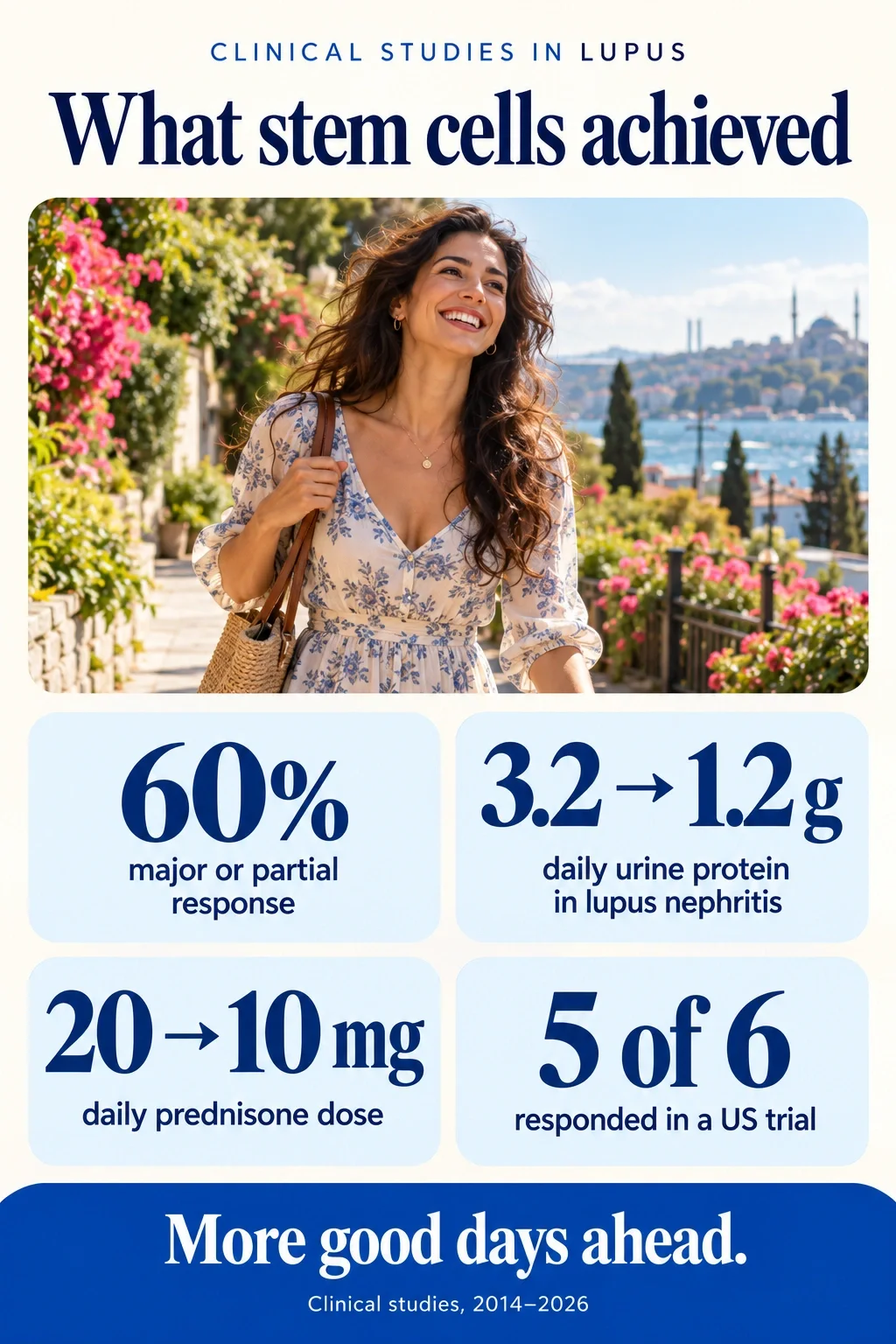
- 60%had a major or partial response within 12 months of umbilical cord stem cells, in a 40-patient multicentre study1
- 3.2 → 1.2 gdaily urine protein one year after umbilical cord stem cells, in 120 people with lupus nephritis2
- 20 → 10 mgmedian daily prednisone dose six months after treatment, in the same study2
- 5 of 6responded in a US trial of umbilical cord stem cells, on 10 mg of prednisone a day or less4
02
How stem cells and exosomes work in lupus
In lupus, the immune system loses its balance: it makes antibodies against the body’s own cells, and inflammation builds up in organs such as the skin, joints and kidneys.14 Mesenchymal stem cells do not work by switching the immune system off. They act as signalling cells that help it find its balance again, through the calming signals they release and through exosomes, tiny vesicles that carry proteins and RNA messages such as microRNAs from cell to cell.1516
After an infusion, stem cells are drawn to inflamed tissue, a process called homing. In research models of lupus nephritis, the inflamed kidney sent out a chemical signal (CXCL10) that guided umbilical cord stem cells to it, where they calmed the inflammatory immune cells.17 Wharton’s jelly cells carry very few of the markers that trigger rejection, so no donor matching is needed.18 Six effects explain the results seen in studies.
How stem cell therapy works in lupus
- Fresh stem cells and exosomesGiven by a relaxed IV drip that reaches the whole body.
- Homing to inflammationDrawn to inflamed tissue, such as the lupus kidney, in research models.17
- Immune-balancing signalsMore regulatory T cells, calmer B cells and lower TNF-α in patients.34
- Calmer lupusLower disease activity, less urine protein and lower steroid doses in studies.12
How stem cells rebalance the immune system in lupus

- Overactive immune cellsIn lupus, immune cells attack the body’s own tissues and drive inflammation.
- Stem cellMesenchymal stem cells sense the inflammation and send calming, balancing signals.
- ExosomesTiny vesicles carry these messages from cell to cell.
- A calmer immune systemRegulatory T cells increase and the immune response settles.
More of the immune system’s peacekeepers
Regulatory T cells stop the immune system attacking the body. After umbilical cord stem cell infusions, they rose within a week and stayed higher for three months, while inflammatory Th17 cells and TNF-α fell and the calming signal TGF-β rose.3 Tolerance-promoting dendritic cells also increased in patients’ blood.19
Calmer B cells, fewer autoantibodies
B cells make the autoantibodies that drive lupus. In a US trial, stem cell infusions reduced the most active B-cell types, and these changes went hand in hand with lower disease activity.4 Anti-dsDNA antibodies fell after treatment,78 and in laboratory studies umbilical cord stem cell exosomes calmed overactive B cells from lupus patients.20
Switched on by lupus inflammation
Stem cells respond to the interferon signals of active lupus. Interferon-γ from lupus T cells prompts them to release IDO, an enzyme that calms overactive T cells, and IDO activity rose in patients’ blood after treatment.21 Patients with higher interferon-γ levels before treatment were more likely to respond, and in laboratory studies lupus immune cells prompted the stem cells to release more of the growth factor VEGF.22
Protecting the kidneys
In lupus nephritis, uncontrolled complement activity damages the kidney. Stem cell treatment raised factor H, the body’s own complement brake, in patients with lupus nephritis, and interferon-α boosted its release by the cells.23 In research models, umbilical cord stem cells protected podocytes, the filter cells of the kidney, and turned kidney macrophages towards a calmer, anti-inflammatory state.24
Clearing away cell debris
Slow clearance of dying cells is thought to help drive lupus. Umbilical cord stem cells can engulf dying cells and respond by releasing PGE2, a calming signal, and in patients PGE2 levels rose after stem cell infusions as the number of dying cells in the blood fell.25
Exosomes and mitochondria
Exosomes carry the stem cells’ RNA messages to immune cells: in laboratory studies, cord blood stem cell exosomes rebalanced Th17 and regulatory T cells from lupus patients through a microRNA called miR-19b.26 Umbilical cord stem cells also passed mitochondria, the cell’s energy units, to T cells from lupus patients, calming their overactive self-recycling process (autophagy) and helping them survive.27
Your plan can add exosomes from Wharton’s jelly stem cells and from CD34+ stem cells, which carry these signals in concentrated form. In research models, CD34+ stem cell exosomes promoted the growth of new blood vessels,28 and umbilical cord stem cell vesicles reduced urine protein and kidney damage in lupus.29 Learn more about exosome therapy.
03
Success rates and clinical evidence for stem cells in lupus
Lupus studies measure disease activity with the SLEDAI and BILAG scores (lower is better), kidney involvement with urine protein and kidney filtration (GFR), and blood markers such as complement C3 and anti-dsDNA antibodies. Most patients in these studies had lupus that had stayed active despite standard medicines, and they continued their usual treatment alongside the stem cells.24
| Study | Design | What improved |
|---|---|---|
| Zheng 2026, Stem Cell Res Ther2 | 120 people with lupus nephritis not controlled by standard medicines; umbilical cord stem cells | Kidney response in 56.7% by 12 months; urine protein 3.2 → 1.2 g a day; albumin 29.7 → 36.8 g/L; prednisone 20 → 10 mg a day |
| Wang 2014, Arthritis Res Ther1 | Multicentre, 4 hospitals, 40 patients; two IV infusions of umbilical cord stem cells | Major or partial response in 60%; SLEDAI 10.8 → 6.5 at 12 months; 30 of 37 patients lowered their steroids |
| Wang 2018, Stem Cell Reports5 | 81 patients followed for 5 years; donor bone marrow and/or umbilical cord stem cells | SLEDAI, urine protein, albumin and C3 kept improving; 34% in remission at 5 years; 60 of 66 on 2.5–10 mg prednisone |
| Gu 2014, Clin Rheumatol10 | 81 people with lupus nephritis; donor bone marrow or umbilical cord stem cells by IV | Kidney remission in 60.5%; GFR 58.6 → 69.5 mL/min; SLEDAI 13.1 → 5.5 at 12 months; steroids tapered |
| Kamen 2022, Lupus Sci Med (USA)4 | Phase 1, 6 women; one IV infusion of umbilical cord stem cells | 5 of 6 responded (SRI-4) on 10 mg prednisone or less; SLEDAI 8.2 → 2.8 at 24 weeks; better energy and general health scores |
| Yang 2014, controlled trial30 | 37 patients: umbilical cord stem cells plus standard treatment vs standard treatment alone | Flares in 20% vs 50%; anti-dsDNA positive in 10% vs 40%; albumin and C3 higher with stem cells |
| Nurudhin 2025, randomised trial31 | Double-blind, placebo-controlled, 29 women; umbilical cord stem cell secretome (the cells’ signals, without cells) | Disease activity (MEX-SLEDAI) fell more than with placebo within 6 weeks; C3 rose |
| Liang 2010, Ann Rheum Dis8 | Pilot study, 15 patients; donor stem cells | SLEDAI 12.2 → 3.2 and urine protein 2,505 → 858 mg a day at 12 months |
| Zeng 2025, meta-analysis6 | 42 randomised trials with 2,183 participants across autoimmune diseases | Lupus disease activity (SLEDAI) significantly lower with stem cells; no increase in side effects |
Lower disease activity
Across studies, SLEDAI scores fell steadily after treatment: from 10.8 to 6.5 in the multicentre study,1 from 13.1 to 5.5 in people with lupus nephritis10 and from 8.2 to 2.8 within 24 weeks in the US trial.4 In a meta-analysis of randomised trials, disease activity was significantly lower with stem cells.6
Healthier kidneys
Protein in the urine, the key sign of lupus nephritis, fell in study after study, and kidney filtration improved.21011 People whose kidney filtration was still 45 mL/min or more did best: two in three (66.3%) reached a kidney response.2
Fewer flares
Of 68 people whose kidneys responded to umbilical cord stem cells, only 6 (8.8%) had a kidney flare within a year.2 In a controlled trial, flares were less than half as common when stem cells were added to standard treatment (20% vs 50%).30
Lower steroid doses
As lupus settled, doctors could lower steroids: 30 of 37 patients in the multicentre study reduced their dose,1 the median prednisone dose halved from 20 to 10 mg a day in lupus nephritis,2 and five years on, 60 of 66 patients were taking 2.5 to 10 mg a day.5 In a Spanish case series, medication doses could be reduced by 50–90%.32
Lasting results
In 81 people followed for five years, disease activity, urine protein, albumin, complement and blood counts continued to improve, and more than a third were in remission at five years.5 Researchers suggest a repeat infusion to keep results at their best.1
The overall picture
Meta-analyses of the published studies found lower disease activity, less urine protein and higher complement C3 after stem cell therapy,3334 together with better kidney function and a favourable safety profile.11
04
Beyond standard lupus medicines: where stem cells differ
Today’s lupus medicines are the foundation of your care. Hydroxychloroquine is recommended for everyone with lupus, steroids bridge periods of active disease, and immunosuppressants and biologics such as belimumab and anifrolumab help control the disease so that steroids can be reduced.35 The main goal is remission or low disease activity.14 Stem cells add something different.
Rebalancing the immune system
Most lupus medicines work by damping down the immune system. Stem cells send signals that increase regulatory T cells, calm overactive B cells and raise tolerance-promoting dendritic cells, helping the immune system find its balance again.3419
Helping you need less steroid
Lupus guidelines aim to bring long-term steroid doses down to 5 mg a day or less, and to stop them when possible.35 In stem cell studies, many patients were able to lower their steroid dose as their lupus settled, including people with lupus nephritis.125
Working throughout the body
Given by IV, stem cells act throughout the body and are drawn towards inflamed tissue.17 In studies, improvements were seen in the kidneys, blood counts, skin and overall disease activity.112
One treatment day, alongside your usual care
A stem cell treatment takes one day, and you keep your usual lupus medicines, which your own doctor can adjust as you improve. In the published studies, patients continued their standard treatment alongside the stem cells.24
From active lupus to a calmer body

- Active lupusOveractive immune cells inflame the joints, skin and kidneys.
- Stem cells and exosomesImmune-balancing signals calm the overactive immune response.
- Calmer lupusThe aim: less disease activity, healthier kidneys and lower steroid doses, as many patients experienced in studies.
05
Is stem cell therapy a cure for lupus?
Lupus is a long-term condition that tends to come and go, and today’s treatments aim for remission or low disease activity, with as little steroid as possible.1435 Stem cell therapy is designed to help you reach exactly these goals: calmer lupus, fewer flares, healthier kidneys and lower doses of steroids.
In the studies, that is what many people experienced. Disease activity fell, urine protein dropped and steroid doses came down,12 and in a five-year follow-up of people whose lupus had not responded to standard drugs, more than a third were in remission five years after treatment.5
In short: stem cell therapy aims to give you more good days, more control over your lupus and a lighter medicine load. We review your results with you at every follow-up, and a repeat infusion can be planned to keep them at their best.

06
Who can have stem cell therapy for lupus?
Most adults with lupus can be assessed for stem cell therapy. It has been studied most in:
- People whose SLE stays active despite standard medicines, the group with the most published results.157
- People with lupus nephritis, including those whose kidneys had not responded to standard treatment.210
- People who would like to lower their steroid dose.25
- People whose lupus affects their blood counts.12
- People with lupus affecting the skin, as part of overall lupus activity.1
The five-year study included people aged 12 to 62.5 People whose kidney filtration was 45 mL/min or more had the highest kidney response rate,2 which is one more reason to get in touch early. Our specialist reviews your recent tests, kidney results and medicines before your plan is made, so your treatment is built around you.
07
Your lupus treatment in Istanbul, step by step

Free medical review
Send us your diagnosis, current medicines and doses, and recent tests: a complete blood count, kidney function (creatinine and eGFR), urine protein, complement C3 and C4 and anti-dsDNA antibodies, plus any kidney biopsy report or specialist letters.
Free phone consultation and fixed price
Once your case is approved, you discuss your plan with the specialist team led by Uzm. Dr. Cihan Bolat and receive your all-inclusive price in writing.
Fresh preparation
After your deposit, your Wharton’s jelly stem cells are prepared fresh for your date in our GMP laboratory. Preparation usually takes 5 to 10 days.
Treatment day
Our driver takes you to the clinic, where you receive your stem cells and any exosomes by a relaxed IV drip, and brings you back to your hotel afterwards.
Home and follow-up
You keep taking your usual lupus medicines, and we review your progress with you at about 1, 3, 6 and 12 months and plan any repeat infusion with you.
Read more about the treatment process step by step.
08
When you may notice changes
Changes build up over the weeks and months after treatment. In studies, regulatory T cells rose within the first week,3 disease activity scores were lower and albumin was back in the normal range by the first month,1 and energy (vitality) and general health scores improved from week 12.4 In lupus nephritis, 38.3% of patients had a kidney response by 3 months, 53.3% by 6 months and 56.7% by 12 months.2 Lower disease activity and urine protein were still measured five years after treatment.5 We review your progress with you at about 1, 3, 6 and 12 months.
- Week 1Immune rebalancingRegulatory T cells rise in studies
- Month 1First changesLower disease activity, better albumin
- 3 monthsKidneys respondingUrine protein falls, more energy
- 6–12 monthsFuller responseMore kidney responses, lower steroids
- YearsLasting benefitImprovements measured at 5 years
09
Is stem cell therapy for lupus safe?
The published safety record is reassuring. In the multicentre study, umbilical cord stem cell infusions were well tolerated, with no treatment-related side effects,1 and across 146 infusions in people with lupus nephritis there were no severe side effects.2 In a Paris study published in The Lancet Rheumatology, a single infusion of 2 or 4 million umbilical cord stem cells per kilogram was safe in people with severe lupus, with no severe side effects linked to the treatment.36 In patients followed for six years, blood counts and liver tests stayed normal, heart tracings and chest X-rays showed no new changes, and tumour markers did not rise.37
A 2025 meta-analysis found that stem cells did not increase side effects in lupus trials,6 and a 2021 meta-analysis of 62 randomised trials with 3,546 patients found mesenchymal stem cell treatment safe compared with placebo, with no serious adverse events such as death or infection; the most common effect was a passing fever.38
Before your plan is made, our specialist team reviews your lupus activity, kidney results, blood counts and medicines. Your infusion is given by our medical team as a relaxed drip, and you return to your hotel the same day.
10
Stem cells and standard lupus medicines compared
Each lupus treatment has its own role. Stem cells and exosomes are the option designed to rebalance the immune system, and they are added to your usual care rather than replacing it.
| Option | How it works | Role in lupus care | How often |
|---|---|---|---|
| Stem cells and exosomes | Release immune-balancing signals: more regulatory T cells, calmer B cells, lower TNF-α34 | Added to your usual medicines; in studies, many patients lowered their steroid dose12 | One treatment day; a repeat infusion can be planned |
| Hydroxychloroquine | Gently calms the immune system | Recommended for everyone with lupus35 | Daily tablets |
| Steroids (prednisone) | Quickly damp down inflammation | Bridge periods of active lupus, then kept at 5 mg a day or less where possible35 | Daily tablets; higher doses during flares |
| Immunosuppressants (mycophenolate, azathioprine, cyclophosphamide) | Slow down overactive immune cells | Control active disease, including lupus nephritis, and help lower steroids35 | Daily tablets or IV courses |
| Biologics (belimumab, anifrolumab) | Block specific immune signals | Added to control the disease and help lower steroids35 | Regular injections or infusions |
Stem cells and your lupus medicines work well together. In the published studies, patients kept their usual treatment, and their doctors were often able to lower steroid and immunosuppressant doses as the disease settled.15
11
Stem cell therapy for lupus cost in Turkey: what’s included
Your price depends on the number of Wharton’s jelly stem cells, the amount of exosomes and the routes in your plan. Published lupus studies used about 1 to 2 million cells per kilogram of body weight, and up to 4 million in the Paris study,2436 so your plan is matched to your weight and your lupus. After your free medical review you receive a fixed, all-inclusive price in writing, before you book anything.
Included
- Free medical review and phone consultation
- Fresh Wharton’s jelly stem cells, with certified count and viability
- Your IV treatment by our specialist team
- Ground transport to and from the clinic
- A personal case manager
- Aftercare and follow-up reviews
Not included / optional
- Flights
- Hotel stay, which we can arrange for you
- Extra exosomes, from Wharton’s jelly or CD34+ stem cells
- A repeat infusion, if it is part of your plan
12
Our guarantees to you
- A fixed price in writingYour all-inclusive price is confirmed in writing before you travel. No surprises.
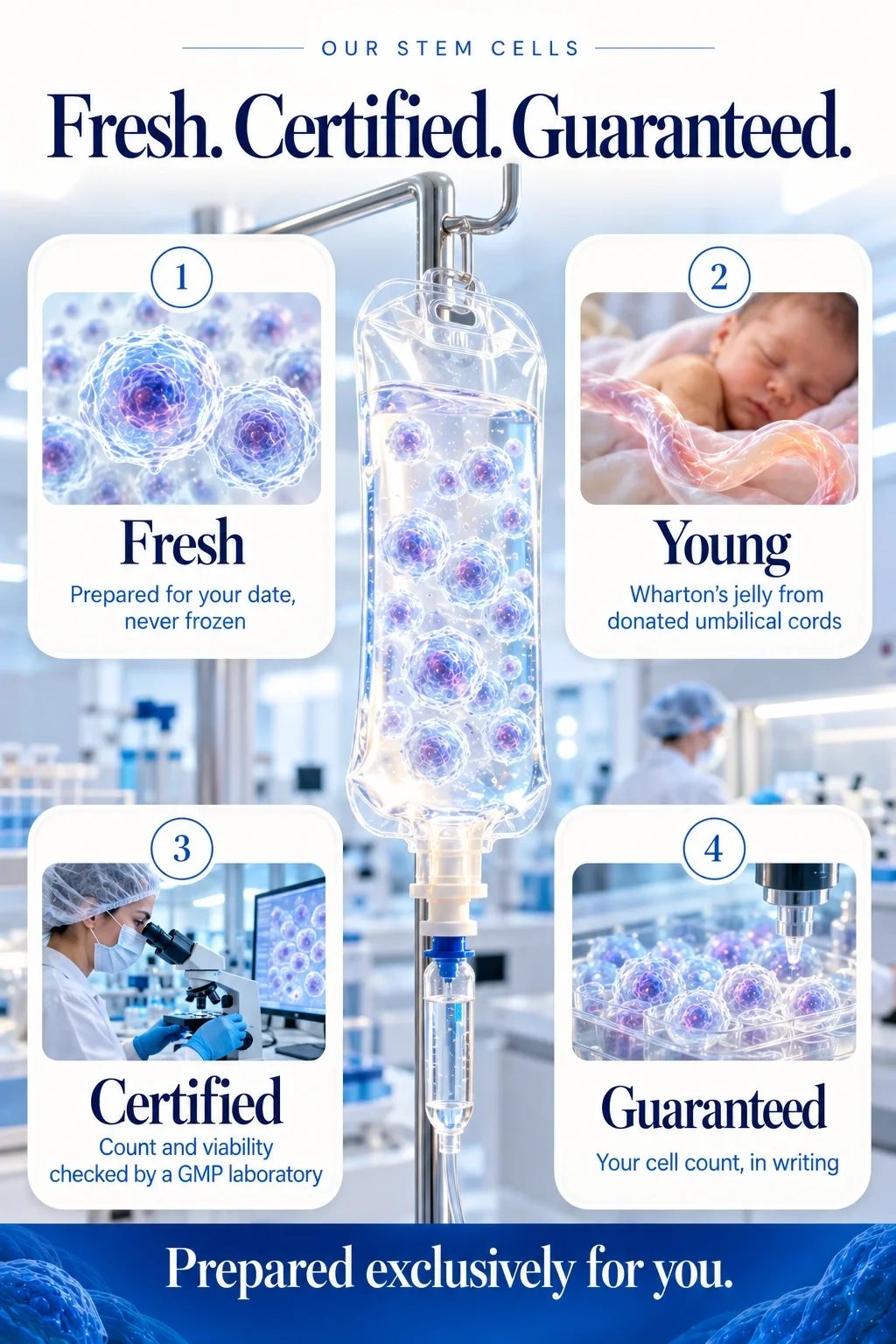
- A guaranteed cell countThe number of fresh stem cells in your plan is guaranteed, and the count and viability are checked and certified by our GMP laboratory before your treatment.
- Follow-up includedProgress reviews of your lupus at about 1, 3, 6 and 12 months are part of every treatment.
- A free consultation with Dr. Cihan BolatBefore you commit, our medical director reviews your case and your test results free of charge.
13
Where can I get stem cell treatment for lupus?
Many people with lupus travel to Istanbul, Turkey, for stem cell therapy. In the United States and much of Europe, stem cell treatment for lupus is offered mainly within research studies, while in Istanbul you can be treated with fresh umbilical cord stem cells after a free medical review, with a fixed price and a short trip.
At Istanbul Stemcell, your treatment is planned by the specialist team led by Uzm. Dr. Cihan Bolat, our medical director, and your cells are prepared fresh for your date in a laboratory approved by the Turkish Ministry of Health and certified to GMP standards.
The same type of cells as the lupus trials
Umbilical cord stem cells given by IV are the type used in the largest lupus studies, from Nanjing to the United States and Paris.12436
Fresh, never frozen
Your Wharton’s jelly stem cells are prepared for your date and never frozen, with the cell count guaranteed in writing and certified before treatment.
One trip, no harvest
Donated umbilical cord cells mean nothing is taken from your body: no bone-marrow or fat harvest and no second trip. Treatment takes one day.
Looked after from start to finish
A personal case manager, ground transport, a hotel arranged on request and follow-up reviews at about 1, 3, 6 and 12 months.
Request your free medical review to find out how stem cell therapy could fit into your lupus care.
14
Frequently asked questions
Does stem cell therapy work for lupus?
In clinical studies, stem cell infusions lowered lupus disease activity, reduced protein in the urine and helped many patients lower their steroid dose. In a 40-patient multicentre study, 60% had a major or partial response within 12 months of umbilical cord stem cells, the same type of cells we use.
Can stem cells cure lupus?
Lupus is a long-term condition, and the aim of modern treatment is remission or low disease activity with as little steroid as possible. Stem cell therapy is designed to help you reach these goals: in a five-year study, more than a third of people whose lupus had not responded to standard drugs were in remission five years after treatment.
What is the success rate of stem cell therapy for lupus?
Results vary between studies but point the same way. In the multicentre study, 60% of patients responded within a year; in 120 people with lupus nephritis, 56.7% reached a kidney response within 12 months; and in a US trial, 5 of 6 patients responded.
Can stem cell therapy help lupus nephritis?
Yes, lupus nephritis is one of the most studied areas. In 120 people with lupus nephritis that had not responded to standard treatment, daily urine protein fell from 3.2 g to 1.2 g within a year, and kidney function improved in people with stage 2 and 3a kidney disease.
Will I be able to reduce my steroids after stem cell therapy?
Many patients in the studies could. In people with lupus nephritis, the median prednisone dose halved from 20 to 10 mg a day, and five years after treatment 60 of 66 patients were taking 2.5 to 10 mg a day. Your own doctor adjusts your medicines as your lupus settles.
Do I need to stop my lupus medicines?
No. Stem cell therapy is added to your usual care. In the studies, patients continued their standard medicines, and their doctors lowered the doses as the disease improved.
How long do the results of stem cell therapy for lupus last?
In 81 people followed for five years, disease activity and urine protein kept improving. Researchers suggest a repeat infusion to keep results at their best, and we plan your follow-up with you.
How soon will I notice a difference?
In studies, immune changes started within the first week, disease activity was lower by the first month, energy and general health scores improved from week 12, and kidney responses kept increasing up to 12 months.
Is stem cell therapy for lupus safe?
The published safety record is reassuring. Umbilical cord stem cell infusions were well tolerated in lupus studies, with no severe side effects across 146 infusions in people with lupus nephritis, and a 2021 meta-analysis of 62 randomised trials found stem cell treatment safe, with a passing fever as the most common effect.
Can stem cells help lupus fatigue?
Fatigue is one of the most common lupus symptoms. In a US trial of umbilical cord stem cells, patients’ vitality (energy) scores improved from week 12 and stayed better up to week 52, together with their general health and social functioning.
Which stem cells are used for lupus: umbilical cord, bone marrow or my own?
We use fresh Wharton’s jelly stem cells from donated umbilical cords, the type used in the largest lupus studies. Research has found that the bone marrow stem cells of people with lupus do not work as well, which is why donor cells are used. Nothing is taken from your body, no donor matching is needed and, unlike a bone marrow (haematopoietic) stem cell transplant, no chemotherapy is needed beforehand.
What are exosomes, and how do they help in lupus?
Exosomes are tiny packages of signals released by stem cells, with no living cells inside. They carry RNA messages that, in laboratory studies, calmed overactive B cells and rebalanced T cells from lupus patients. Your plan can add exosomes from Wharton’s jelly and CD34+ stem cells.
How many stem cell infusions will I need for lupus?
Most studies gave one or two infusions. In a randomised comparison, a single infusion of 1 million cells per kilogram worked as well as two, and a repeat infusion can be planned later to keep results at their best. Your plan states your cell count and number of sessions in writing.
How much does stem cell therapy for lupus cost in Turkey?
Your price depends on the number of stem cells, the amount of exosomes and the routes in your plan. After a free medical review you receive a fixed, all-inclusive price in writing, which includes your treatment by our specialist team, fresh Wharton’s jelly stem cells, ground transport, a personal case manager and follow-up reviews.
Who can have stem cell therapy for lupus?
Most adults with lupus can be assessed, and the five-year study included people aged 12 to 62. People whose kidneys are still working well tend to respond best, so it helps to get in touch early. Our specialist reviews your tests and medicines before your plan is made.
Where can I get stem cell therapy for lupus, and how long do I need to stay?
With us in Istanbul, Turkey, after a free medical review. The treatment itself takes one day, our driver takes you to and from the clinic, and we can arrange your hotel. Your cells are prepared fresh in a laboratory approved by the Turkish Ministry of Health and certified to GMP standards.
Medical review
Uzm. Dr. Cihan Bolat
Medical Director, Istanbul Stemcell
This page was written from the published studies listed below and reviewed for medical accuracy on .
15
References
- Wang D, et al. Umbilical cord mesenchymal stem cell transplantation in active and refractory systemic lupus erythematosus: a multicenter clinical study. Arthritis Res Ther. 2014;16(2):R79. PMID 24661633
- Zheng Y, et al. Allogeneic umbilical cord-derived mesenchymal stromal cells for treatment of refractory lupus nephritis: a real-world study. Stem Cell Res Ther. 2026;17(1). PMID 42001190
- Wang D, et al. The regulation of the Treg/Th17 balance by mesenchymal stem cells in human systemic lupus erythematosus. Cell Mol Immunol. 2017;14(5):423-431. PMID 26435067
- Kamen DL, et al. Safety, immunological effects and clinical response in a phase I trial of umbilical cord mesenchymal stromal cells in patients with treatment refractory SLE. Lupus Sci Med. 2022;9(1). PMID 35820718
- Wang D, et al. A Long-Term Follow-Up Study of Allogeneic Mesenchymal Stem/Stromal Cell Transplantation in Patients with Drug-Resistant Systemic Lupus Erythematosus. Stem Cell Reports. 2018;10(3):933-941. PMID 29478901
- Zeng L, et al. Efficacy and safety of mesenchymal stromal cell transplantation in the treatment of autoimmune and rheumatic immune diseases: a systematic review and meta-analysis of randomized controlled trials. Stem Cell Res Ther. 2025;16(1):65. PMID 39934871
- Sun L, et al. Umbilical cord mesenchymal stem cell transplantation in severe and refractory systemic lupus erythematosus. Arthritis Rheum. 2010;62(8):2467-75. PMID 20506343
- Liang J, et al. Allogenic mesenchymal stem cells transplantation in refractory systemic lupus erythematosus: a pilot clinical study. Ann Rheum Dis. 2010;69(8):1423-9. PMID 20650877
- Parodis I, et al. Lupus nephritis. Nat Rev Dis Primers. 2025;11(1):69. PMID 40998820
- Gu F, et al. Allogeneic mesenchymal stem cell transplantation for lupus nephritis patients refractory to conventional therapy. Clin Rheumatol. 2014;33(11):1611-9. PMID 25119864
- Xia Y, et al. Efficacy of Mesenchymal Stem Cell Therapy on Lupus Nephritis and Renal Function in Systemic Lupus Erythematosus: A Meta-Analysis. Clin Invest Med. 2023;46(1):E24-35. PMID 36966389
- Li X, et al. Mesenchymal SCT ameliorates refractory cytopenia in patients with systemic lupus erythematosus. Bone Marrow Transplant. 2013;48(4):544-50. PMID 23064040
- Shi D, et al. Allogeneic transplantation of umbilical cord-derived mesenchymal stem cells for diffuse alveolar hemorrhage in systemic lupus erythematosus. Clin Rheumatol. 2012;31(5):841-6. PMID 22302582
- Hoi A, et al. Systemic lupus erythematosus. Lancet. 2024;403(10441):2326-2338. PMID 38642569
- Ding S, et al. Mesenchymal stromal cell therapy for systemic lupus erythematosus: mechanisms, clinical translation, and future directions. Stem Cell Res Ther. 2026;17(1). PMID 42244005
- Wong C, et al. Mesenchymal stromal cell derived extracellular vesicles as a therapeutic tool: immune regulation, MSC priming, and applications to SLE. Front Immunol. 2024;15:1355845. PMID 38390327
- Zhang Q, et al. Renal remodeling by CXCL10-CXCR3 axis-recruited mesenchymal stem cells and subsequent IL4I1 secretion in lupus nephritis. Signal Transduct Target Ther. 2024;9(1):325. PMID 39557841
- Weiss ML, et al. Immune properties of human umbilical cord Wharton's jelly-derived cells. Stem Cells. 2008;26(11):2865-74. PMID 18703664
- Yuan X, et al. Mesenchymal stem cell therapy induces FLT3L and CD1c(+) dendritic cells in systemic lupus erythematosus patients. Nat Commun. 2019;10(1):2498. PMID 31175312
- Zhao Y, et al. Exosome Derived from Human Umbilical Cord Mesenchymal Cell Exerts Immunomodulatory Effects on B Cells from SLE Patients. J Immunol Res. 2023;2023:3177584. PMID 37215068
- Wang D, et al. A CD8 T cell/indoleamine 2,3-dioxygenase axis is required for mesenchymal stem cell suppression of human systemic lupus erythematosus. Arthritis Rheumatol. 2014;66(8):2234-45. PMID 24756936
- Wang D, et al. Serum IFN-γ Predicts the Therapeutic Effect of Mesenchymal Stem Cells Transplantation in Systemic Lupus Erythematosus Patients. Stem Cells Transl Med. 2017;6(9):1777-1785. PMID 28755405
- Ma H, et al. Mesenchymal Stem Cells Control Complement C5 Activation by Factor H in Lupus Nephritis. EBioMedicine. 2018;32:21-30. PMID 29885865
- Zhang Z, et al. Mesenchymal stem cells prevent podocyte injury in lupus-prone B6.MRL-Faslpr mice via polarizing macrophage into an anti-inflammatory phenotype. Nephrol Dial Transplant. 2019;34(4):597-605. PMID 29982691
- Zhang Z, et al. Clearance of apoptotic cells by mesenchymal stem cells contributes to immunosuppression via PGE2. EBioMedicine. 2019;45:341-350. PMID 31248835
- Tu J, et al. UC-BSCs Exosomes Regulate Th17/Treg Balance in Patients with Systemic Lupus Erythematosus via miR-19b/KLF13. Cells. 2022;11(24). PMID 36552891
- Chen J, et al. Umbilical Cord-Derived Mesenchymal Stem Cells Suppress Autophagy of T Cells in Patients with Systemic Lupus Erythematosus via Transfer of Mitochondria. Stem Cells Int. 2016;2016:4062789. PMID 28053607
- Mathiyalagan P, et al. Angiogenic Mechanisms of Human CD34(+) Stem Cell Exosomes in the Repair of Ischemic Hindlimb. Circ Res. 2017;120(9):1466-1476. PMID 28298297
- Li C, et al. Mesenchymal stem cells-derived extracellular vesicles ameliorate lupus nephritis by regulating T and B cell responses. Stem Cell Res Ther. 2024;15(1):216. PMID 39020448
- Yang GX, et al. [Therapeutic effects of umbilical cord mesenchymal stem cells transplantation on systemic lupus erythematosus]. Sichuan Da Xue Xue Bao Yi Xue Ban. 2014;45(2):338-41, 350. PMID 24749369
- Nurudhin A, et al. Umbilical cord mesenchymal stem cell-derived secretome as a potential treatment for systemic lupus erythematosus: A double-blind randomized controlled trial. Narra J. 2025;5(1):e1799. PMID 40352183
- Barbado J, et al. Therapeutic potential of allogeneic mesenchymal stromal cells transplantation for lupus nephritis. Lupus. 2018;27(13):2161-2165. PMID 30290717
- Zeng L, et al. Efficacy and Safety of Mesenchymal Stem Cell Transplantation in the Treatment of Autoimmune Diseases (Rheumatoid Arthritis, Systemic Lupus Erythematosus, Inflammatory Bowel Disease, Multiple Sclerosis, and Ankylosing Spondylitis): A Systematic Review and Meta-Analysis of Randomized Controlled Trial. Stem Cells Int. 2022;2022:9463314. PMID 35371265
- Zhou T, et al. Clinical Efficacy and Safety of Mesenchymal Stem Cells for Systemic Lupus Erythematosus. Stem Cells Int. 2020;2020:6518508. PMID 32322279
- Fanouriakis A, et al. EULAR recommendations for the management of systemic lupus erythematosus: 2023 update. Ann Rheum Dis. 2024;83(1):15-29. PMID 37827694
- Farge D, et al. Allogeneic umbilical cord-derived mesenchymal stromal cells as treatment for systemic lupus erythematosus: a single-centre, open-label, dose-escalation, phase 1 study. Lancet Rheumatol. 2025;7(4):e261-e273. PMID 39706212
- Wang D, et al. Long-term safety of umbilical cord mesenchymal stem cells transplantation for systemic lupus erythematosus: a 6-year follow-up study. Clin Exp Med. 2017;17(3):333-340. PMID 27270729
- Wang Y, Yi H, Song Y. The safety of MSC therapy over the past 15 years: a meta-analysis. Stem Cell Res Ther. 2021;12(1):545. PMID 34663461