
Stem cell therapy for SI joint pain uses fresh Wharton’s jelly stem cells and their exosomes, injected into the sacroiliac joint where your spine meets your pelvis, to calm inflammation and support the joint’s own repair.1 In a controlled study that included SI joint injections, 74% of people had at least 2 points less pain (0–10) at 3 months after one injection of their own bone marrow stem cells.2
01
Living with SI joint inflammation: we understand
If you live with SI joint inflammation, you know the deep ache low in your back and buttock, often on one side, that can spread into your thigh. Getting up from a chair, climbing the stairs, turning over in bed or standing on one leg to put on your shoes can all set it off, and a long drive or a flight can feel like a test. You are far from alone: the SI joint is the source in 15% to 30% of people whose back pain sits mainly at the very base of the spine.7
When the pain comes from inflammation (sacroiliitis), mornings can be the stiffest part of your day. It is never only about one joint: it reaches into your sleep, your work, your sport and your time with family. Wanting easy, confident movement back is completely natural, and it deserves a careful plan.

Sitting without shifting
A meal, a film or a long flight, without counting the minutes.
Stairs and walks with confidence
Climbing, walking and stepping out of the car without that sharp catch.
A night of easy sleep
Turning over in bed without the pain waking you.
Lifting and playing again
Carrying the shopping, lifting a grandchild or getting back to your sport.
Here is the hopeful part: stem cell therapy for SI joint pain now gives people more options than ever, and the published studies are further down. First, in plain words, this is how it aims to help:
02
How stem cells and exosomes can help your inflamed SI joint, in plain words
Your SI joint is where your spine meets your pelvis. It moves only a little, but it carries the weight of your upper body to your legs when you stand, walk or climb. When it is inflamed, your immune cells keep sending “danger” signals, like an alarm that will not switch off. Wharton’s jelly stem cells, from donated umbilical cords, work like a calm site manager. They do not become new joint tissue. They send exosomes, tiny text messages full of instructions, telling your own cells to settle down and repair. The messages do most of the work.
Turning down the alarm
First, the cells and exosomes help calm the inflammation inside your SI joint. In a research model of inflammatory spine disease, umbilical cord stem cells lowered two inflammation signals.11
Sending repair messages
Next, the exosomes carry their instructions to the cells of your joint’s cartilage (the smooth covering where the bones meet) and its ligaments (the strong bands around it): calm down and look after the joint.
Protecting your joint
Finally, a calmer joint can help protect the cartilage you still have. The aim is less pain when you sit, climb the stairs, walk and sleep.
What this could mean for you: sitting through a whole film or a long flight without shifting in your seat. Taking the stairs and getting out of the car without that sharp catch. Rolling over in bed and staying asleep. Carrying the shopping, lifting a grandchild or getting back to your sport. Treatment aims to make these moments easier again.
03
Stem Cell Treatment for SI Joint Inflammation
Stem cells offer hope for recovery and symptom management in SI joint inflammation.
Read the full section
Inflammation of the SI joint, where the sacrum meets the pelvis, is a condition that can lead to significant pain and discomfort, affecting individuals of all ages. This inflammation can arise from various factors, including excessive pressure, injury, or wear and tear.
At our clinic, we offer an innovative stem cell treatment specifically designed for SI joint inflammation. This treatment utilizes allogeneic mesenchymal stem cells (MSCs) derived from umbilical cord tissue, which are studied for their regenerative properties. By placing these stem cells directly into the affected joint, guided by imaging where needed, we aim to support healing, reduce inflammation and improve joint function.
The application of umbilical cord-derived MSCs aims to support the recovery of the inflamed SI joint and overall joint health, for easier movement and a better quality of life. Patients often experience reduced pain levels and improved functionality, allowing them to return to their daily activities with greater ease.
With our advanced stem cell therapy, we provide hope for those suffering from SI joint inflammation. Discover what MSC therapy could do for you, and take the first step towards easier, more comfortable days.
04
Why acting early can make a difference
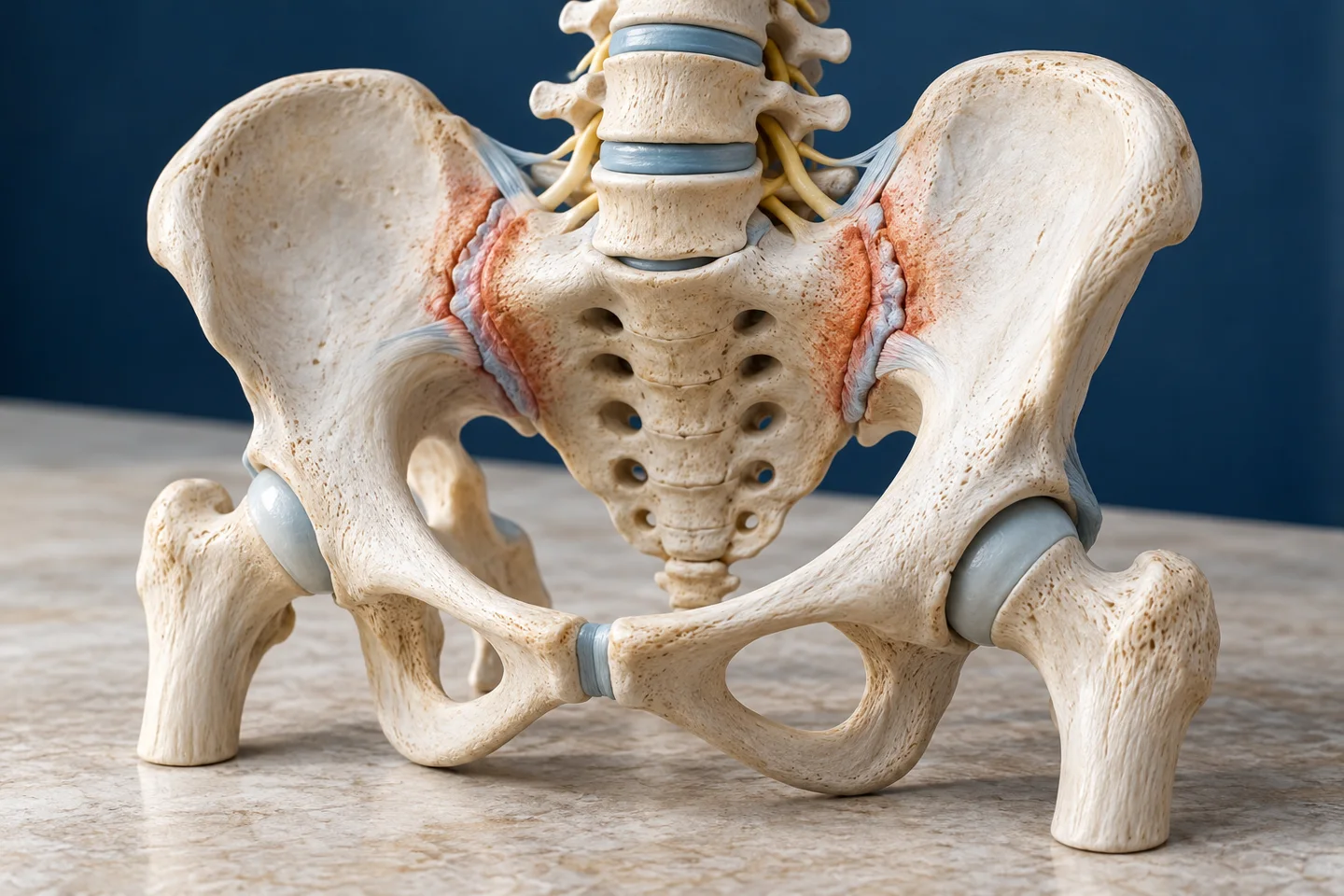
Each SI joint links the base of your spine, the sacrum, to one side of your pelvis. It moves only a little, but it carries the weight of your upper body to your legs, and strong ligaments hold it in place. Pain can start inside the joint or in the ligaments around it.7 Like other joints, the SI joint wears with the years: on CT scans of adults without back pain, 65.1% showed some wear, rising to 91% in their eighties.8 Joint cartilage has little ability to repair itself.9
Today’s care does a lot of good. Physiotherapy, exercise and anti-inflammatory medicines come first, and steroid injections into or around the joint give at least 4 weeks of relief in well-selected patients.7 For ankylosing spondylitis, biological medicines (TNF blockers) from your rheumatologist are highly effective.10 These treatments ease pain and inflammation, but they do not rebuild worn cartilage.9
This is where timing helps. In ankylosing spondylitis, a shorter disease duration predicted a major response to those medicines,10 and in any joint, the more healthy cartilage you still have, the more there is to protect. Starting earlier gives any treatment, regenerative care included, a better place to begin.
05
How Wharton’s jelly stem cells and exosomes work in an inflamed SI joint
Your SI joint has cartilage between the sacrum and the pelvic bone, a lining that can become inflamed, and strong ligaments around it. When it is inflamed, immune cells release signals that keep it sore and stiff. Wharton’s jelly stem cells and their exosomes, tiny messages that carry proteins and RNA between cells, are placed in the joint to calm those signals, protect the cartilage and support repair.
How Wharton’s jelly stem cells and exosomes aim to calm an inflamed SI joint
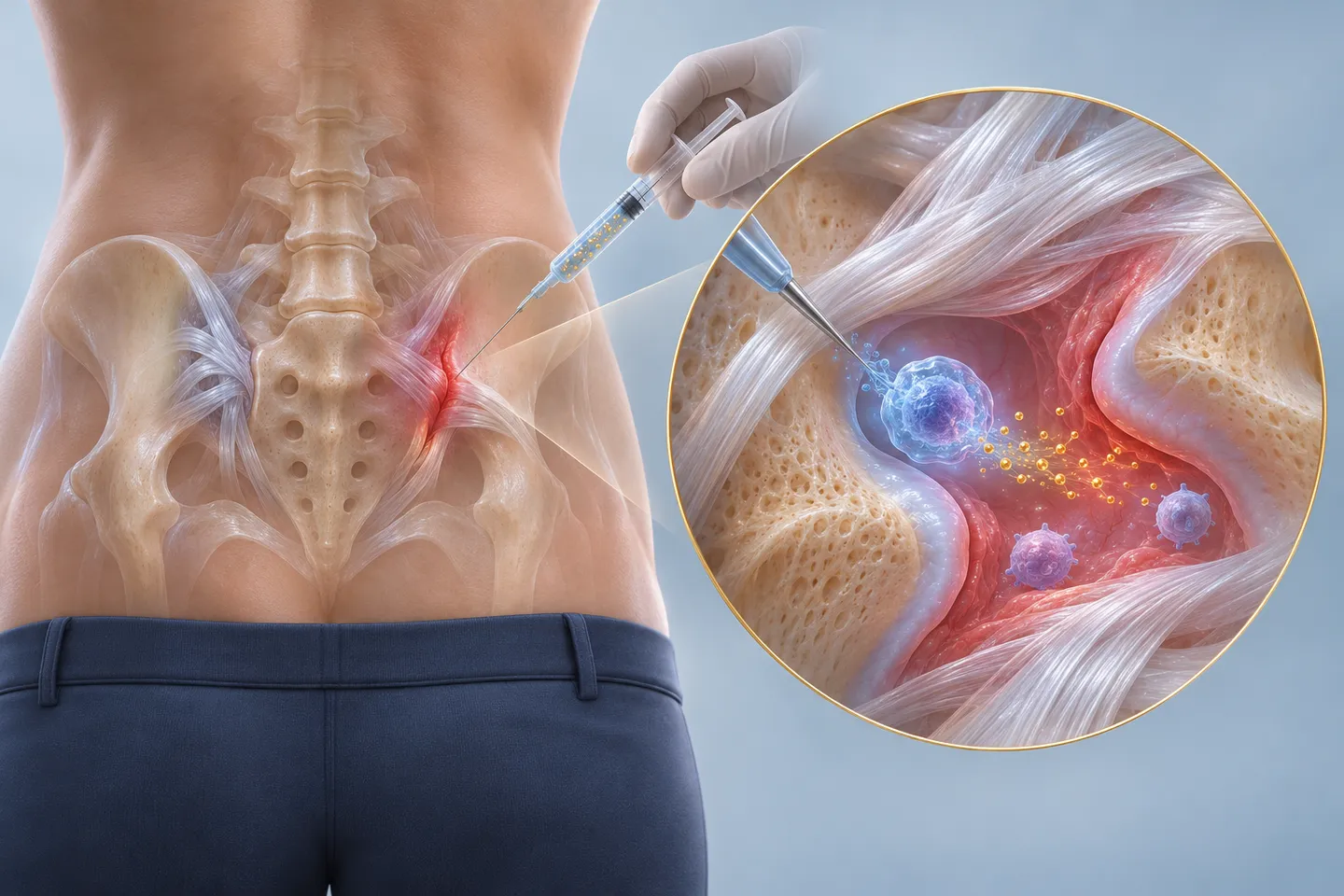
- SacrumThe triangle-shaped bone at the base of the spine.
- Pelvic bone (ilium)The wide wing of the pelvis. It meets the sacrum at the SI joint on each side.
- SI joint cartilageThe smooth covering where the two bones meet. Wear or inflammation here can cause pain in the lower back, buttock or hip.
- Inflamed joint liningThe reddened joint on one side. Calming this inflammation is a main aim of treatment.
- SI joint ligamentsStrong bands that hold the joint firmly together and keep its movement small.
- Targeted injectionA fine needle, guided by imaging where needed, places the treatment into the joint.
- Stem cells and exosomesFresh Wharton’s jelly stem cells and their exosomes. They work mainly through calming signals, shown mostly in research models.
- Calmer immune cellsLess inflammation in the joint, which in studies went with less pain.
Read the science: how the treatment aims to help an inflamed SI joint
Stem cells work mainly through the signals they release, and they leave a joint fairly quickly, so their exosomes are studied as a treatment in their own right.1 Each effect below says whether it was seen in people or in research models. Read about our stem cells and our exosomes.
Calming the inflammation
Seen in people and in research models. After four IV infusions of donor stem cells in ankylosing spondylitis, inflammation on spinal MRI was lower at week 20.4 In a research model of spondylitis, umbilical cord stem cells lowered the inflammatory signals TNF-α and CCL-2.11
Protecting the joint’s cartilage
Seen in the laboratory and in research models, with first human safety data. Umbilical cord stem cell exosomes turned inflammatory immune cells (macrophages) towards a calming type in the laboratory, and in a research model of osteoarthritis they led to new smooth (hyaline) cartilage. In their first use in a human joint, there were no adverse effects over 12 months.12
Easing pain at the base of the spine
Seen in people. After one injection of people’s own bone marrow stem cells into the worn structures causing their pain, the SI joints included, pain was at least 2 points lower (0–10) in 74% at 3 months, and opioid use fell.2
Keeping small joint spaces clear
Seen in research models. In inflammatory spine disease, unwanted new bone can stiffen joints. In a research model of spondylitis, umbilical cord stem cells held back this new bone and kept the small joint spaces clear.11
06
How is our stem cell therapy transplantation for SI joint inflammation performed in Istanbul?
SI joint inflammation currently has no definitive cure; however, various treatments can provide relief from symptoms. Stem cell therapy has emerged as a promising option for treating degenerative conditions like SI joint inflammation. Research shows that mesenchymal stem cells (MSCs) derived from umbilical cord tissue release signals that calm inflammation and support the joint’s own repair.
Read the full section
By utilizing the regenerative capabilities of umbilical cord-derived MSCs, this therapy aims to calm the inflammation behind SI joint pain, and some people use it to delay or avoid surgery; your surgeon’s advice comes first. Large reviews of stem cell (MSC) trials found the treatment well tolerated; the most common effect was a passing fever.
Patients undergoing stem cell therapy for SI joint inflammation often experience significant improvements in their symptoms, leading to enhanced mobility and a better quality of life. Embracing this advanced treatment option can provide renewed hope and effective relief for those struggling with the challenges of SI joint inflammation. Take the step towards a more comfortable and active life with our state-of-the-art stem cell therapy today!
07
Why Wharton’s jelly stem cells and exosomes lead our SI joint treatment
Wharton’s jelly is the soft tissue inside the umbilical cord. Its stem cells come from cords donated after healthy births, so nothing is taken from your body and no donor matching is needed. They are prepared fresh for your date in a Ministry of Health-approved GMP laboratory, with the cell count and viability certified (see what our lab report shows). Your plan can also include umbilical cord stem cells and extra Wharton’s jelly exosomes, injected with them.
Compare Wharton’s jelly stem cells with your own cells
| Fresh Wharton’s jelly stem cells (our cells) | Stem cells from your own bone marrow or fat | |
|---|---|---|
| Age of the cells | Newborn tissue, from cords donated after healthy births | As old as you are |
| A procedure for you | None | A bone marrow draw or liposuction first |
| Ready for treatment | Prepared fresh for your date, usually within 5 to 10 days | After a harvest, often with laboratory growth |
| Pain relief in osteoarthritis trials | Umbilical cord stem cells: the largest effect on pain of three sources, in an analysis of 36 randomised trials5 | Smaller effects for bone marrow and fat stem cells5 |
| If you have ankylosing spondylitis | No effect on the cells: they come from healthy donors | In the laboratory, bone marrow stem cells from people with ankylosing spondylitis formed bone more readily than donor cells13 |
08
Stem cell therapy for SI joint pain: what the studies show
Each human study used its own cells and route, named below. The highlights:
- SI joints included: after one injection of people’s own bone marrow stem cells into the worn structures causing their pain, 67% gained a meaningful improvement in everyday function at 12 months, against 8% with usual care alone.2
- Inflammatory sacroiliitis: in 31 people with active ankylosing spondylitis, four IV infusions of donor stem cells brought at least a 20% improvement (an ASAS20 response) in 77.4% at 4 weeks, with no adverse effects.4
- Wharton’s jelly cells in another joint: after two knee injections six months apart, pain scored 2.4 out of 100 at 12 months, against 22.1 with hyaluronic acid, in a randomised trial.3
- PRP, free with any stem cell package: in a randomised trial in 40 people, PRP (platelet-rich plasma, made from your own blood) injected into the SI joint was still effective at 3 months in 90%, against 25% of those given a steroid injection. This is a PRP result, not a stem cell result.14
Donor stem cells in ankylosing spondylitis, an inflammatory disease of the SI joints and spine
People with at least a 20% improvement (ASAS20 response) at week 44
Inflammation on spinal MRI (total inflammation extent) at week 20; lower is better4
The studies in detail, with all 5 in one table
| Study | Design | n | Cells and route | Result with exact numbers |
|---|---|---|---|---|
| Atluri 2022, Pain Physician2 | Controlled, non-randomised; severe lumbar wear | 2 groups | Own bone marrow concentrate; SI joints, discs, facets and nerve roots, by symptoms | Function gain 67% vs 8% at 12 months; pain at least 2 points lower in 74%, 66% and 56% at 3, 6 and 12 months; less opioid use |
| Wang 2014, Cell Transplantation4 | Single-group trial, 20 weeks; active ankylosing spondylitis | 31 | Donor (allogeneic) MSCs; four IV infusions | ASAS20 response in 77.4% at week 4; disease activity (ASDAS-CRP) 3.6 → 2.4 at week 4; MRI inflammation lower at week 20 (p < 0.05); no adverse effects |
| Matas 2019, Stem Cells Translational Medicine3 | Randomised phase I/II; knee osteoarthritis | 26 | Wharton’s jelly cord stem cells; one or two knee injections | Two doses, 12 months: pain 2.4 vs 22.1 (0–100) with hyaluronic acid; WOMAC 4.2 vs 15.2 |
| Zeng 2024, Seminars in Arthritis and Rheumatism5 | Meta-analysis of 36 randomised trials | 2,076 | MSCs from umbilical cord, bone marrow or fat | Osteoarthritis pain: largest effect with umbilical cord cells (SMD −2.03); adverse events not increased |
| Singla 2017, Pain Practice14 | Randomised; SI joint pain; PRP vs steroid | 40 | PRP (own blood platelets), not stem cells; image-guided SI joint injection | Effective at 3 months in 90% vs 25%; median pain 1 vs 5 (0–10) |
Our plans bring these strengths together with young Wharton’s jelly stem cells and exosomes, placed in the SI joint itself.
09
Who can have stem cell therapy for SI joint inflammation?
We treat SI joint pain and inflammation on one or both sides, with no fixed age limit: in the controlled study above, age did not affect results.2 Dr. Cihan Bolat decides with you from your scan reports and your doctor’s findings, and plans the routes and timing for you. If your sacroiliitis is part of axial spondyloarthritis, your rheumatologist and your medicines stay central: we work alongside them, never instead. Pain from the small joints higher in your back belongs to facet syndrome, and pain from a worn disc to degenerative disc disease; see also spinal osteoarthritis.
Often suitable
- SI joint pain confirmed by your doctor’s examination or a diagnostic injection
- SI joint wear or inflammation seen on X-ray, CT or MRI
- Pain despite physiotherapy, medicines or injections
- Stable health, and well enough to travel
Considered case by case
- Sacroiliitis from axial spondyloarthritis or psoriatic arthritis, with your rheumatologist
- A previous lumbar or SI joint fusion
- Pain that began with pregnancy, once your baby is born
- Blood thinners or a bleeding disorder
- Diabetes or another long-term condition
Not suitable for now
- Active cancer, or recent cancer treatment
- An active infection, or fever with back pain: please see your own doctor first
- Pregnancy
- New leg weakness or bladder changes: please see your own doctor first
10
Expert Stem Cell Treatment Led by Uzm. Dr. Cihan Bolat, MD
Under the leadership of Uzm. Dr. Cihan Bolat, MD, Specialist in Anesthesiology & Reanimation and Regenerative Medicine, we provide specialized treatments tailored to the unique needs of our patients. With extensive experience and a wide range of mesenchymal stem cells (MSCs) derived from umbilical cord tissue at our disposal, we offer a comprehensive approach to treating SI joint inflammation.
Read the full section
At our clinic, we prioritize creating a relaxed atmosphere, and our friendly and professional team is dedicated to ensuring you have an enjoyable stay while receiving the best possible care.
11
How does our stem cell therapy treatment for SI joint inflammation work?
All our stem cell treatments for SI joint inflammation in Istanbul are evaluated and administered by specialists in the field, trained in both the United States and Turkey, rather than general practitioners. This approach ensures the highest level of precision, understanding of the condition, and quality of treatment for our patients. We are 100% transparent and honest with our patients. Not everyone qualifies for our stem cell treatments; we carefully assess each individual's situation. Many patients are turned away after our specialist evaluates their current health status and medical history, determining that the treatment may not be suitable. This helps us avoid making false promises or expectations when the risks may outweigh the benefits. To ensure patient safety, every individual must be assessed by the specialist before scheduling treatment.
Step 1. Specialist Assessment For patients with SI joint inflammation, our specialist will need to know your age and any previous medical treatments. Additionally, specific diagnostic tests should be reviewed that you are asked to bring.
Step 2. Free Phone Consultation with the Specialist Once the specialist has reviewed your medical records and approved your case, we will present treatment options and pricing. At that time, we also offer a complimentary phone consultation to address any questions or concerns you may have.
Step 3. Preparation of the Stem Cells Once you decide to proceed with our treatment, we will send you an invoice for a deposit to initiate the stem cell preparation process, ensuring it is ready for your scheduled treatment. The duration of this process can vary based on current demand and availability but typically takes 5-10 days.
Step 4. Treatment Day On the day of treatment, you can choose to come to our hospital location or take advantage of our free transportation to and from our clinic in Istanbul. Our driver will pick you up from your chosen location and escort you to our clinic, where the specialist will administer your treatment and then safely bring you back.
Step 5. Follow-Up Treatment Our follow-up specialist will contact you according to our established follow-up schedule to ensure you have all the necessary resources for maximum benefit. Your well-being and satisfaction are our top priorities.
By utilizing mesenchymal stem cells (MSCs) derived from umbilical cord tissue, we aim to enhance the healing process for patients with SI joint inflammation, supporting the joint’s own repair and improving overall joint function.
12
What our patients say
Excellent Care and Remarkable Results at Istanbul Stem Cell Clinic
I cannot recommend Istanbul Stem Cell Clinic highly enough! From my very first consultation, I was met with kindness and professionalism. The entire team took the time to address all my questions and concerns, which made the decision to proceed with treatment so much easier. The stem cell therapy itself was seamless. I felt well cared for throughout the process, and I was pleasantly surprised by how comfortable the procedure was. Since my treatment, I have experienced significant improvements in my health, including reduced pain and increased mobility. What really stood out to me was the genuine dedication of the staff to my well-being. They provided excellent follow-up care and support, ensuring that I had all the resources I needed for a successful recovery. If you are considering stem cell therapy, I wholeheartedly recommend this clinic. It truly has made a positive impact on my life!
Transformative Experience at Istanbul Stem Cell Clinic
I recently had the privilege of undergoing treatment at Istanbul Stem Cell Clinic, and I can honestly say it was a life-changing experience. From the moment I arrived, the staff greeted me with warmth and professionalism, making me feel right at home. The medical team were incredibly knowledgeable and took the time to explain every aspect of the stem cell therapy process. Their expertise instilled confidence in me, and I appreciated their thoroughness in assessing my condition before proceeding with treatment. The procedure itself was smooth and surprisingly comfortable
13
SI joint inflammation stem cell therapy cost in Turkey
Our IV packages use fresh Wharton’s jelly stem cells and follow one price list, effective 1 June 2026, in US dollars (M = million stem cells). SI joint injections of stem cells and exosomes are priced in your written plan: a fixed, all-inclusive price before you book. See our cost guide.
| Cell count | USD price | Free exosomes | Free hotel |
|---|---|---|---|
| 25M | $4,950 | No | No |
| 50M | $6,950 | 10 billion exosomes | No |
| 75M | $8,950 | 10 billion exosomes | No |
| 100M | $10,500 | 20 billion exosomes | 2 nights |
| 125M | $11,850 | 20 billion exosomes | 2 nights |
| 150M | $13,550 | 30 billion exosomes | 2 nights |
| 175M | $15,000 | 30 billion exosomes | 2 nights |
| 200M | $16,500 | 30 billion exosomes | 3 nights |
| 225M | $18,000 | 30 billion exosomes | 3 nights |
| 250M | $19,500 | 30 billion exosomes | 3 nights |
What is included, and what is optional
Included
- Free MRI review and phone consultation
- Fresh Wharton’s jelly stem cells, count and viability certified
- Free Wharton’s jelly exosomes from 50M, as listed
- PRP (platelet-rich plasma), free with any stem cell package
- Treatment by Uzm. Dr. Cihan Bolat’s specialist team
- Ground transport, a case manager and interpreter help
- Hotel nights as listed, in 5-star hotels
- Follow-up by phone or WhatsApp
Not included / optional
- Flights and extra hotel nights
- SI joint injections and extra exosomes, priced in your plan
- Add-ons such as Muse cells, Muse exosomes or CD34+ exosomes
- A repeat treatment, if you choose one
14
Read our full guides
Would you like the whole story? These guides go deeper.
Stem cell therapy for back and neck pain
Discs, facet joints, the SI joint and nerves, with every route and trial.
Read the guide GuideExosome treatments explained
What each exosome treatment does, from joint injections to IV.
Read the guide GuideOsteoarthritis vs rheumatoid arthritis
How wear-and-tear arthritis differs from inflammatory arthritis.
Read the guide15
Frequently asked questions
What is the success rate of stem cell therapy for SI joint pain?
It depends on what is causing your pain and how worn the joint is. In a controlled study that included SI joint injections, 67% of people treated with their own bone marrow stem cells gained a meaningful improvement in everyday function at 12 months, against 8% with usual care alone. The first gains came early: 74% had at least 2 points less pain by 3 months.
What causes SI joint inflammation?
Common causes are wear of the joint over the years, a fall or strain, pregnancy and childbirth, a difference in leg length, and an earlier lumbar fusion. Inflammatory diseases such as ankylosing spondylitis can also inflame the SI joints, which doctors call sacroiliitis. Dr. Cihan Bolat looks at your scans and your symptoms together to find the source of your pain.
Can stem cells help sacroiliitis from ankylosing spondylitis?
We consider it case by case, always alongside your rheumatologist and your medicines, never instead of them. In a trial in 31 people with active ankylosing spondylitis, four IV infusions of donor stem cells brought at least a 20% improvement in 77.4% at 4 weeks, and inflammation on spinal MRI was lower at week 20. Send us your rheumatologist’s letter and MRI report for a free review.
How is the SI joint injection given, and is it painful?
The stem cells and exosomes are placed into the joint with a fine needle, guided by imaging where needed. Dr. Cihan Bolat, a specialist in anaesthesiology and reanimation, plans every injection with your comfort in mind, and you walk out the same day. Some people notice a passing ache where the injection was given.
Can stem cell therapy help me avoid SI joint fusion?
Some people use it to delay or avoid surgery, but your surgeon’s advice comes first. Stem cell treatment can also be considered after a lumbar or SI joint fusion, case by case.
How long do I need to stay in Istanbul?
Your plan sets the dates. Your cells are prepared fresh for your treatment date, usually within 5 to 10 days of booking, and your case manager helps you choose dates that suit you.
Can stem cell therapy cure my SI joint inflammation?
The benefits of stem cell treatment for SI joint inflammation may vary from patient to patient, depending on factors such as current health, medical history, the extent of damage, and other considerations. It is important to understand that, although stem cell injections, including into the SI joints, have shown encouraging results in studies, the goals of treatment are less pain, easier movement and a better quality of life.
How effective is stem cell treatment for SI joint inflammation?
Patient satisfaction after stem cell treatment for SI joint inflammation is high. However, it is important to understand that treatment effectiveness depends on several factors, including the patient's age, medical history, and overall lifestyle.
How much does stem cell treatment for SI joint inflammation cost?
Treatment prices may vary depending on the patient's individual needs, such as special accommodation or stay requirements, and the number of stem cells in your plan. Our prices include: ground transportation to and from our clinic; treatment by a certified specialist in this field; certified allogeneic stem cells with 97% viability, prepared fresh for your treatment date; a personal case manager; and aftercare.
How safe is stem cell treatment for SI joint inflammation at this clinic?
We take pride in being the safest and most honest stem cell therapy clinic in Istanbul. All our stem cell treatments are evaluated and administered by specialists in this field who have trained in both the United States and Turkey, rather than only by general physicians or specialists. This helps ensure the highest level of precision, understanding of the condition, and treatment quality for our patients. We are completely clear and honest with our patients. Not everyone qualifies for our stem cell treatments. We decline many patients when our specialist determines that treatment is unsuitable, to avoid false promises or expectations when the risks outweigh the benefits.

Medical review
Uzm. Dr. Cihan Bolat
Medical Director, Istanbul Stemcell
This page was written from the published studies listed below and reviewed for medical accuracy on .
16
References
All 14 published studies, with PubMed links
- Kwon DG, et al. State of the Art: The Immunomodulatory Role of MSCs for Osteoarthritis. Int J Mol Sci. 2022;23(3). PMID 35163541
- Atluri S, et al. Evaluation of the Effectiveness of Autologous Bone Marrow Mesenchymal Stem Cells in the Treatment of Chronic Low Back Pain Due to Severe Lumbar Spinal Degeneration: A 12-Month, Open-Label, Prospective Controlled Trial. Pain Physician. 2022;25(2):193-207. PMID 35322978
- Matas J, et al. Umbilical Cord-Derived Mesenchymal Stromal Cells (MSCs) for Knee Osteoarthritis: Repeated MSC Dosing Is Superior to a Single MSC Dose and to Hyaluronic Acid in a Controlled Randomized Phase I/II Trial. Stem Cells Transl Med. 2019;8(3):215-224. PMID 30592390
- Wang P, et al. Effects and safety of allogenic mesenchymal stem cell intravenous infusion in active ankylosing spondylitis patients who failed NSAIDs: a 20-week clinical trial. Cell Transplant. 2014;23(10):1293-303. PMID 23711393
- Zeng L, et al. Efficacy and safety of culture-expanded mesenchymal stromal cell therapy in the treatment of 4 types of inflammatory arthritis: A systematic review and meta-analysis of 36 randomized controlled trials. Semin Arthritis Rheum. 2024;68:152498. PMID 38970896
- Wang Y, Yi H, Song Y. The safety of MSC therapy over the past 15 years: a meta-analysis. Stem Cell Res Ther. 2021;12(1):545. PMID 34663461
- McCormick ZL, et al. Consensus practice guidelines on sacroiliac joint complex pain from a multispecialty, international working group. Pain Med. 2025;26(12):817-917. PMID 41318933
- Eno JJ, et al. The prevalence of sacroiliac joint degeneration in asymptomatic adults. J Bone Joint Surg Am. 2015;97(11):932-6. PMID 26041855
- Thomas-Charles CA, et al. Cartilage regeneration: clinical progress and future outlook. Trends Mol Med. 2026. PMID 42521588
- Rudwaleit M, et al. Prediction of a major clinical response (BASDAI 50) to tumour necrosis factor alpha blockers in ankylosing spondylitis. Ann Rheum Dis. 2004;63(6):665-70. PMID 15037444
- Shen D, et al. Evaluation of preclinical efficacy of human umbilical cord mesenchymal stem cells in ankylosing spondylitis. Front Immunol. 2023;14:1153927. PMID 37063838
- Figueroa-Valdés AI, et al. Clinical-grade extracellular vesicles derived from umbilical cord mesenchymal stromal cells: preclinical development and first-in-human intra-articular validation as therapeutics for knee osteoarthritis. J Nanobiotechnology. 2025;23(1):13. PMID 39806427
- Xie Z, et al. Imbalance Between Bone Morphogenetic Protein 2 and Noggin Induces Abnormal Osteogenic Differentiation of Mesenchymal Stem Cells in Ankylosing Spondylitis. Arthritis Rheumatol. 2016;68(2):430-40. PMID 26413886
- Singla V, et al. Steroid vs. Platelet-Rich Plasma in Ultrasound-Guided Sacroiliac Joint Injection for Chronic Low Back Pain. Pain Pract. 2017;17(6):782-791. PMID 27677100