
01
Can type 2 diabetes be reversed? The short, honest and hopeful answer
In short: type 2 diabetes can often go into remission, which means your blood sugar returns below the diabetes range and stays there without glucose-lowering medicines. An international expert group defines remission as an HbA1c below 6.5% (48 mmol/mol), measured at least three months after those medicines have stopped.1 Remission is most within reach in the first years after diagnosis and with meaningful weight loss,26 and when it is not your goal, every step towards a lower HbA1c, better insulin sensitivity and healthier blood vessels is still well worth having.
Being told you have type 2 diabetes can feel like the start of a lifetime of tablets and finger-prick tests. The encouraging news is that type 2 diabetes is far more changeable than many people are told. In a UK trial run through ordinary GP practices, almost half of the people on a structured weight programme were in remission a year later,2 and among younger adults from the Middle East and North Africa, an intensive lifestyle programme brought remission to 61%, against 12% with usual care.12
Regenerative medicine now adds a further layer. Mesenchymal stem cells (MSCs) from umbilical cord tissue, including Wharton’s jelly, have been studied in people with type 2 diabetes for more than a decade, with lower HbA1c, better insulin sensitivity and lower insulin needs in randomised trials.34 Our main treatment page, stem cell therapy for diabetes in Turkey, covers type 1 and type 2 together; this guide answers the type 2 questions people ask most, with exact numbers from the published studies.
Type 2 diabetes results at a glance
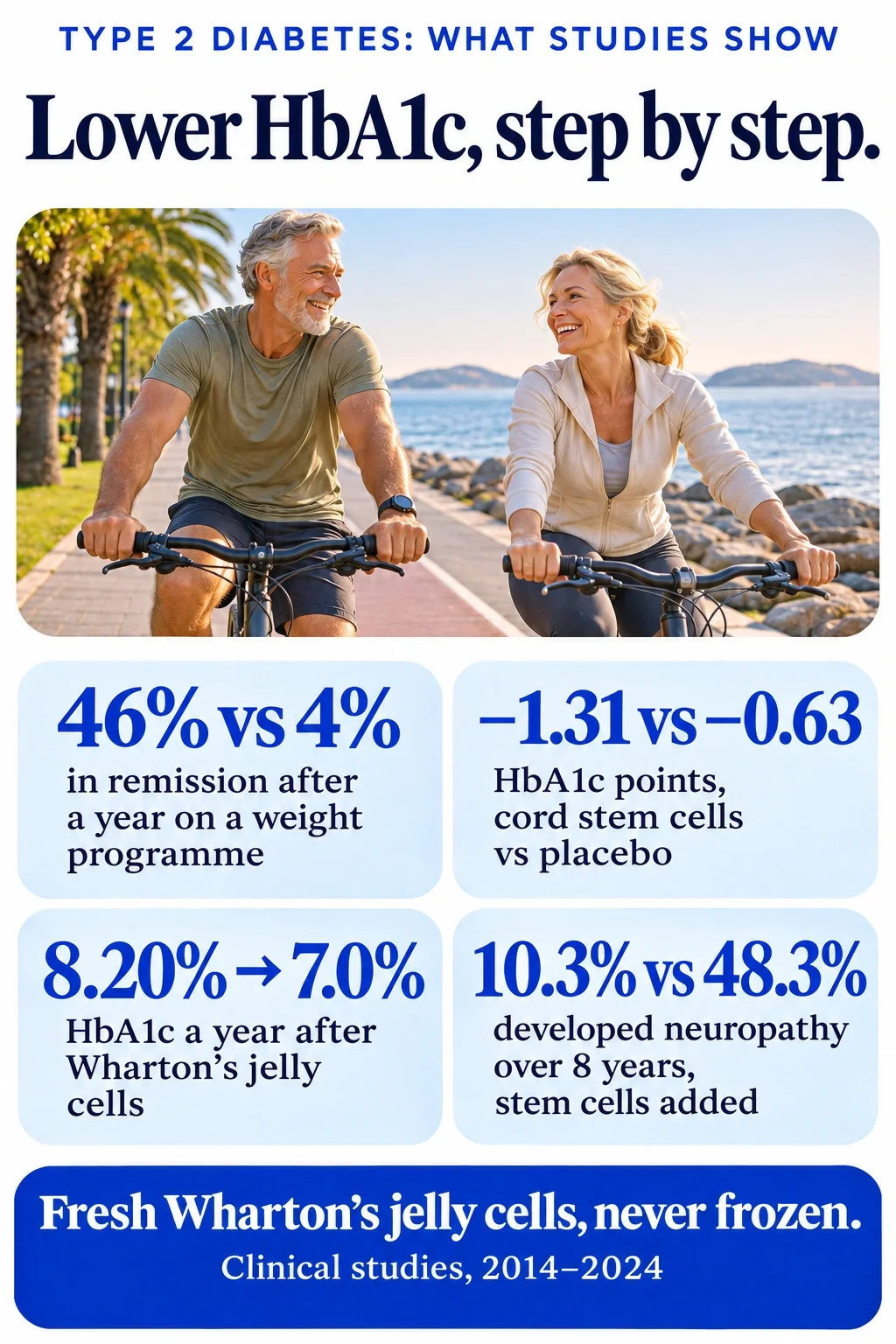
- 46% vs 4%of people were in remission one year after a structured weight programme, against usual care2
- 61% vs 12%remission at 12 months with an intensive lifestyle programme in younger adults with early type 2 diabetes12
- −1.31 vs −0.63fall in HbA1c (percentage points) over 48 weeks with umbilical cord stem cells, against placebo3
- 10.3% vs 48.3%developed neuropathy over eight years with stem cells added to standard care, against standard care alone10
02
What is type 2 diabetes? Insulin resistance and tired beta cells, explained simply
Insulin is the key that lets sugar (glucose) move from your blood into your muscles, liver and fat, where it is used for energy or stored. In type 2 diabetes, two things happen together. These tissues respond less well to insulin, which is called insulin resistance, and the beta cells in your pancreas, which make insulin, have to work harder and harder to keep up until they tire.13 The result is blood sugar that runs higher than it should.
You are in very large company. About 537 million adults were living with diabetes worldwide in 2021,14 and type 2 accounts for nearly 90% of them.15 It is closely linked with weight, activity, sleep, family history and age, and it involves the whole body rather than the pancreas alone. Researchers also see a quiet, low-grade inflammation in fat tissue, the liver, the islets of the pancreas and the blood vessels as part of the picture, which is one reason calming inflammation has become a treatment goal.16
Two blood tests tell much of the story. HbA1c shows your average blood sugar over the past two to three months, and C-peptide shows how much insulin your own pancreas still makes. Both guide your medical review with us. If you live with type 1 diabetes instead, read our guide to stem cell therapy for type 1 diabetes.
Muscles
Muscles use most of the sugar from a meal. When they respond poorly to insulin, sugar stays in the blood for longer, and regular movement is one of the most effective ways to help them respond again.1317
Liver
Between meals and overnight, the liver releases sugar to keep you going. With insulin resistance it releases too much, and fat stored in the liver adds to this. With a sharp cut in energy intake in one study, fasting blood sugar returned to normal within a week, and liver fat fell from 12.8% to 2.9% over eight weeks.18
Fat tissue
Fat tissue is an active organ that sends signals around the body. In type 2 diabetes it can become inflamed, and its signals make insulin work less well elsewhere.16
Beta cells in the pancreas
Beta cells make insulin. Under constant pressure they tire, and in the people who reached remission in a UK trial, their first rapid insulin response came back.6
Inflammation
Low-grade inflammation links these tissues together. Calming it is one of the main aims of regenerative treatment, and in people treated with Wharton’s jelly stem cells, inflammatory messengers fell.167
Blood vessels
Over the years, higher blood sugar can affect small and large blood vessels, which is why care for your nerves, feet, kidneys, heart and erections is part of good type 2 care.13
03
How do you reverse type 2 diabetes? What remission means and how people reach it
Doctors use the word remission because it describes exactly what can happen: blood sugar returns to the normal range and stays there, while regular checks continue. In 2021, an international expert group convened by the American Diabetes Association proposed “remission” as the right term, with an HbA1c below 6.5% (48 mmol/mol) at least three months after glucose-lowering medicines have stopped as the usual measure.1 Any change to your medicines is always a decision for your own doctor, who adjusts them safely as your numbers improve.
Weight loss: the best-studied route to remission
The DiRECT trial tested a structured weight programme in 49 GP practices in Scotland and north-east England, with 306 adults who had been diagnosed within the previous six years and were not using insulin. The programme began with a formula diet of 825–853 kcal a day for three to five months, followed by a step-by-step return to everyday food and long-term support. After a year, 46% of the programme group were in remission, against 4% with best-practice usual care, and their quality of life improved.2
The amount of weight lost mattered most. Remission was reached by 34% of the people who lost 5–10 kg, 57% of those who lost 10–15 kg and 86% of those who lost 15 kg or more.2 After two years, 36% of the programme group were still in remission, against 3%, and 64% of the people who had kept off at least 10 kg were in remission.5
The same approach works across cultures. In Qatar, the DIADEM-I trial offered adults aged 18 to 50 from the Middle East and North Africa, diagnosed within the previous three years, a similar programme with support for physical activity: 61% reached remission at 12 months, against 12% with usual care, and 33% had completely normal blood sugar, against 4%.12
What happens inside your body
A UK study of 11 people with type 2 diabetes on a 600 kcal-a-day research diet showed why weight loss works. Fasting blood sugar fell from 9.2 to 5.9 mmol/l within a single week, liver fat fell from 12.8% to 2.9% over eight weeks, and the first-phase insulin response more than doubled, from 0.19 to 0.46, approaching the level of people without diabetes.18 In the DiRECT metabolic study, liver fat in the programme group fell from 16.0% to 3.1%, and what set apart the people who reached remission was the recovery of the beta cells’ first rapid insulin response. They had lived with diabetes for a shorter time, 2.7 years on average against 3.8, which shows that beta cells keep the ability to recover after diagnosis.6
| Study | Who took part | What they did | Key result |
|---|---|---|---|
| DiRECT, Lean 2018 and 2019 | 306 adults diagnosed within 6 years, not using insulin | Structured weight programme in GP practices | Remission 46% vs 4% at 1 year2 and 36% vs 3% at 2 years5 |
| DIADEM-I, Taheri 2020 | 158 adults aged 18–50, diagnosed within 3 years | Intensive lifestyle programme with diet and activity support | Remission 61% vs 12% at 12 months; normal blood sugar 33% vs 4%12 |
| Lim 2011 | 11 adults with type 2 diabetes | 600 kcal-a-day research diet for 8 weeks | Fasting glucose 9.2 → 5.9 mmol/l in one week; liver fat 12.8% → 2.9%18 |
| Taylor 2018 (DiRECT metabolic study) | 64 programme and 26 control participants | Detailed tests of liver fat, pancreas fat and insulin response | Liver fat 16.0% → 3.1%; beta-cell response recovered in those in remission6 |
What this means for you. Remission is a realistic, hopeful goal for many people, especially in the first years after diagnosis and with meaningful weight loss. If remission is not your goal right now, a lower HbA1c, a lower insulin dose and healthier blood vessels are valuable gains in their own right, and they are what the regenerative treatments in this guide aim to support. Our hub page on diabetes treatment with stem cells explains the full programme.
04
How to lower HbA1c: food, movement, weight, sleep and today’s medicines
Whatever your goal, the everyday foundations have strong evidence behind them, and they help every other treatment work better. Here is what the studies show, in plain numbers.

Food you enjoy
In 215 people with newly diagnosed type 2 diabetes, a lower-carbohydrate Mediterranean-style diet meant that only 44% needed glucose-lowering medicines after four years, against 70% on a low-fat diet, with more weight lost and better blood sugar.19 Vegetables, pulses, olive oil, fish and nuts are also the heart of Istanbul’s own kitchens.
Movement, most days
Across 47 randomised trials with 8,538 people, structured exercise lowered HbA1c by 0.67 percentage points, and more than 150 minutes a week lowered it by 0.89 points. Aerobic exercise, strength training and both together all helped.17
Weight, step by step
You do not need to lose a great deal to benefit. In 5,145 people with type 2 diabetes, losing 5% to under 10% of body weight made a 0.5-point fall in HbA1c 3.52 times more likely than staying at the same weight, with better blood pressure and blood fats too.20
Restful sleep
Sleep matters more than many people think. Across 15 studies, short sleep was linked with an HbA1c 0.23 percentage points higher, and poor-quality sleep with one 0.35 points higher, than good, regular sleep.21
Today’s diabetes medicines
Modern diabetes care combines weight management, activity and sleep with well-chosen medicines, such as metformin, SGLT2 inhibitors, GLP-1-based medicines and insulin, several of which also protect the heart and kidneys.22 Keep taking your diabetes medicines as your own doctor advises.
Support that lasts
Long-term support makes the gains last: two years into DiRECT, 64% of the people who had kept off at least 10 kg were in remission.5
These steps and regenerative treatment pull in the same direction: lower inflammation, better insulin sensitivity and healthier blood vessels are also what Wharton’s jelly stem cells and exosomes aim to support. Read how we bring them together on our diabetes mellitus page.
05
Insulin resistance treatment and new treatments for type 2 diabetes in 2026
Type 2 diabetes care is moving fast, and much of the progress targets the two root problems: insulin resistance and tired beta cells. Here is the landscape in 2026, from everyday foundations to regenerative medicine.
Remission programmes
Structured weight programmes with a formula diet, a gradual return to everyday food and long-term support brought remission to 46% of people within a year.2
Hormone-based and kidney-acting medicines
Medicines that act on a gut hormone (the GLP-1-based family) and SGLT2 inhibitors lower blood sugar, and they support weight loss or heart and kidney health, which is why they play a central part in modern care.22
Treating insulin resistance directly
Movement, weight loss and metformin remain the pillars of insulin resistance treatment,2217 and in a double-blind trial, umbilical cord stem cells raised insulin sensitivity, measured with a clamp test, from 3.12 to 4.76 mg/min/kg.3
Calming inflammation
Because inflammation helps drive insulin resistance, it has become a treatment target in its own right,16 and in people treated with Wharton’s jelly stem cells, the inflammatory messengers IL-6 and IL-1β fell significantly within six months.7
Cord tissue stem cells
Randomised trials of umbilical cord and Wharton’s jelly stem cells have reported lower HbA1c and lower insulin needs, with three years of follow-up in the Wharton’s jelly study.34
Exosomes
Exosomes, the tiny messages that stem cells release, are a fast-growing field: in research models of type 2 diabetes, exosomes from umbilical cord stem cells lowered blood sugar and protected beta cells.23
Stem cell therapy for type 2 diabetes is the regenerative part of this picture, and it works alongside the other parts. The next sections explain why we lead with Wharton’s jelly stem cells and exosomes, how they act and what the human studies report.
06
Why Wharton’s jelly stem cells and exosomes for type 2 diabetes?
Wharton’s jelly is the soft, protective jelly that cushions the blood vessels of the umbilical cord. Our mesenchymal stem cells come from cords donated after healthy births, so nothing is taken from your own body and no donor matching is needed. They are young, active cells, prepared fresh for your treatment date in a GMP laboratory approved by the Turkish Ministry of Health and never frozen, and together with the exosomes released by the very same cells, they lead every type 2 plan we make.
Wharton’s jelly stem cells in people with type 2 diabetes
Wharton’s jelly stem cells, the same type of cells we use, have been studied directly in type 2 diabetes. In a randomised study of 61 people, those who received two IV infusions of Wharton’s jelly stem cells four weeks apart, on top of their usual treatment, had significantly better blood sugar, HbA1c, C-peptide and beta-cell function than the saline group throughout 36 months of follow-up, and fewer diabetic complications, with no more side effects than the control group.4
In a second study, 22 people who had lived with type 2 diabetes for 8.7 years on average received Wharton’s jelly stem cells at 1 million cells per kilogram, once by IV infusion and once through the artery that supplies the pancreas. Their HbA1c fell from 8.20% to 6.89% within three months and was 7.0% at one year. Fasting C-peptide, the sign of the body’s own insulin, rose from 1.29 to 1.86 ng/mL, beta-cell function (HOMA-2B) rose from 66% to 99% at six months and was 86% at one year, and the 17 people using insulin needed less than half as much, 0.23 instead of 0.49 units per kilogram a day. The inflammatory messengers IL-6 and IL-1β fell significantly.7 Our own treatment is given by IV infusion.
Why young cord cells
Diabetes can affect a person’s own stem cells. In laboratory studies, fat-derived stem cells taken from people with obesity and type 2 diabetes were less able to calm immune cells and to switch macrophages into their healing (M2) form than cells from lean donors.24 Wharton’s jelly cells come from a newborn’s cord, so their quality does not depend on your age, weight or blood sugar. They also carry very few of the signals that trigger rejection, and they calm over-active immune cells,25 and in laboratory comparisons, freshly prepared MSCs kept stronger immune-calming properties than freeze-thawed cells.26
Exosomes for diabetes: the messages of the same cells
Exosomes are nano-sized vesicles that cells release to carry proteins and genetic messages to other cells.27 Our Wharton’s jelly exosomes contain no living cells, which makes them a concentrated dose of the repair signals that stem cells send. In research models of type 2 diabetes, exosomes from umbilical cord stem cells given by IV lowered blood sugar, helped muscle take up glucose, increased the sugar stored in the liver and protected beta cells.23 In people, the clearest results so far are in the complications of diabetes. In a randomised trial in 110 people with diabetic foot ulcers, wounds treated with Wharton’s jelly exosomes healed in 6 weeks on average, against 20 weeks in the control group,8 and in 40 people with chronic kidney disease, vesicles from umbilical cord stem cells improved kidney function and lowered protein in the urine, while the placebo group did not change.28
Wharton’s jelly and cord cell results in type 2 diabetes
- 36 monthsof better HbA1c, C-peptide and beta-cell function with Wharton’s jelly stem cells than with saline, in a randomised study of 61 people4
- 8.20% → 7.0%HbA1c one year after Wharton’s jelly stem cells in 22 people with type 2 diabetes7
- 0.49 → 0.23units of insulin per kilogram a day, one year after Wharton’s jelly stem cells7
- 6 vs 20 weeksaverage healing time of diabetic foot ulcers with Wharton’s jelly exosomes, against standard care8
Umbilical cord stem cells alongside
Umbilical cord MSCs complete the cell part of your plan. In a double-blind trial of 91 adults, umbilical cord stem cells lowered HbA1c by 1.31 percentage points over 48 weeks, against 0.63 with placebo.3
Fresh, never frozen
Your cells are prepared fresh for your date in a GMP-certified laboratory approved by the Turkish Ministry of Health, never frozen, with their count and viability certified before treatment.
No harvest, no matching
Nothing is taken from your body: no bone marrow draw and no liposuction. Wharton’s jelly cells carry very few of the signals that trigger rejection, so no donor matching is needed.25
Certified before treatment
Every batch certificate shows the cell count, the viability and the sterility tests, and your written plan states your exact cell count.
Free exosomes in your package
IV packages from 50 million cells include 10 to 30 billion Wharton’s jelly exosomes free of charge, as the price list below shows.
CD34+ exosomes as an extra
Your plan can also include CD34+ exosomes, from cells known for their role in forming new small blood vessels, added alongside your Wharton’s jelly exosomes where your doctor feels they will help.
Why we combine cells and exosomes. Stem cells keep releasing calming, repairing signals as they sense inflammation, while exosomes deliver a concentrated dose of those signals at once. That is why your type 2 plan can pair Wharton’s jelly stem cells by IV infusion with Wharton’s jelly exosomes by IV infusion, with umbilical cord stem cells and CD34+ exosomes added where they help. Read how our cells are checked in what a stem cell lab report shows.
07
How do stem cells and exosomes work in type 2 diabetes?
Mesenchymal stem cells act mainly as messengers. Once in your bloodstream, they release signals and exosomes that calm inflammation and help your tissues respond to insulin again.2723 Human studies show the results, and research models help explain how they come about.
How stem cell therapy works in type 2 diabetes
- Fresh stem cells and exosomesWharton’s jelly stem cells by IV infusion, with exosomes by IV infusion.
- Calmer inflammationIL-6 and IL-1β fell within six months of Wharton’s jelly stem cells.7
- Better insulin sensitivityInsulin sensitivity rose from 3.12 to 4.76 mg/min/kg with umbilical cord stem cells.3
- Steadier blood sugarA lower HbA1c on less insulin in randomised trials.34
How type 2 diabetes works, and where Wharton’s jelly stem cells and exosomes aim to help
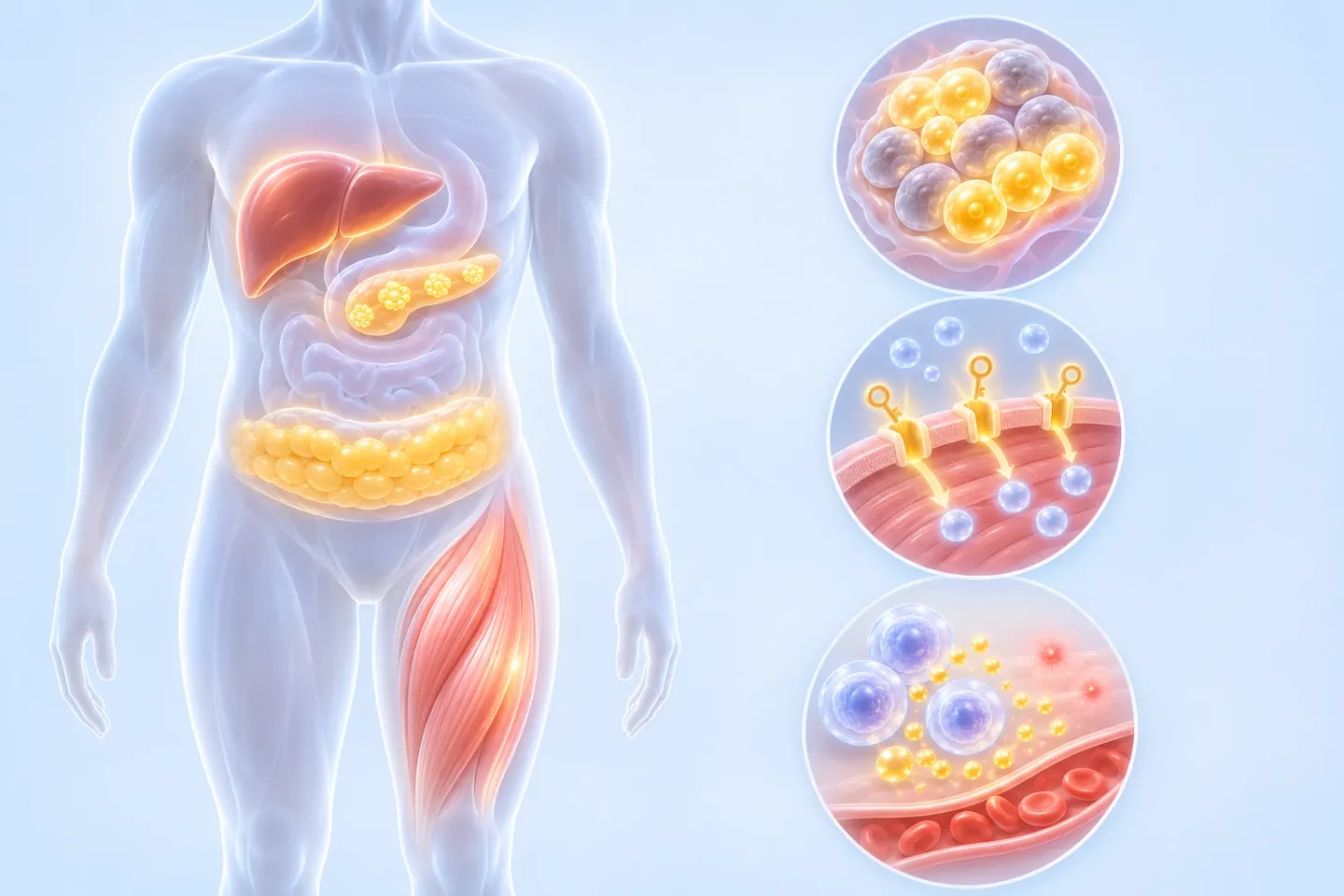
- LiverWith insulin resistance, the liver keeps releasing sugar into the blood even when levels are already high.
- PancreasSmall islets in the pancreas hold the beta cells that make insulin.
- Belly fatFat around the waist releases inflammatory signals that make insulin work less well.
- MuscleMuscles are the body’s biggest users of blood sugar, when insulin can open their doors.
- Beta cellsOverworked beta cells tire over time; protecting the ones that still work is a key aim.
- Insulin as a keyInsulin lets glucose into muscle cells; in type 2 diabetes the cells respond less well.
- Stem cells and exosomesWharton’s jelly stem cells and exosomes release signals that aim to calm inflammation and support beta cells and small blood vessels.
- InflammationLow-grade inflammation is part of insulin resistance; calming it is one of the aims of treatment.
Turning down inflammation
In people with type 2 diabetes, Wharton’s jelly stem cells lowered the inflammatory messengers IL-6 and IL-1β,7 and one IV infusion of 100 million umbilical cord stem cells lowered the activity of the inflammatory genes for TNF-α and IL-6 within two months.29
Switching macrophages to repair mode
In research models of type 2 diabetes, umbilical cord stem cells turned inflammatory macrophages in fat tissue into their calming M2 form, and insulin sensitivity improved.30
Opening the doors for glucose
In research models, stem cell infusions increased GLUT4, the transporter that lets glucose into muscle and fat cells, and restored insulin signalling through IRS-1 and Akt.31
Supporting tired beta cells
In people treated with Wharton’s jelly stem cells, fasting C-peptide and beta-cell function rose over a year,7 and in a randomised study with eight years of follow-up, insulin output (the C-peptide area under the curve) rose by 50.6% at one year after bone marrow MSCs with mononuclear cells.10
Exosomes: messages in a package
In research models of type 2 diabetes, exosomes from umbilical cord stem cells helped muscle take up glucose, increased glycogen stores in the liver and protected beta cells from dying.23
Protecting blood vessels and nerves
Over eight years, people with type 2 diabetes who had stem cells added to their usual care developed nerve and large-vessel complications far less often than those on standard care alone.10
In people, the signs that this is working are a lower HbA1c, a lower insulin dose and a steadier C-peptide, and those are exactly what the clinical studies below measured. Read more about stem cell therapy and exosome therapy at our clinic.
08
Stem cell therapy for type 2 diabetes: success rates in human studies
In type 2 diabetes, success is measured by HbA1c, the insulin dose you need, insulin sensitivity and C-peptide, and over the years by complications. Here are the key human studies, with the cell source each one used. Two of them used Wharton’s jelly stem cells, the same type of cells we use, and several others used umbilical cord stem cells, the second cell type in our plans.
| Study | Who took part | Cells used | Key result |
|---|---|---|---|
| Zang 2022 | 91 adults; double-blind, placebo-controlled | Umbilical cord MSCs, 3 IV infusions 4 weeks apart | HbA1c −1.31 vs −0.63 points; insulin −27.78% vs −15.62%; 20% vs 4.55% reached an HbA1c under 7% with insulin cut by half or more, at 48 weeks3 |
| Zang 2023 | 73 adults; randomised, placebo-controlled | Umbilical cord MSCs, 3 IV infusions | Time in range +21.36 vs +6.32 points; HbA1c −1.36 vs −0.51; both targets reached by 43.2% vs 11.1% at 48 weeks32 |
| Hu 2016 | 61 people, randomised against saline | Wharton’s jelly MSCs, 2 IV infusions | Blood sugar, HbA1c, C-peptide and beta-cell function better than with saline over 36 months; fewer complications4 |
| Liu 2014 | 22 people, diabetes for 8.7 years on average | Wharton’s jelly MSCs, IV and pancreatic artery | HbA1c 8.20% → 7.0% at 12 months; insulin 0.49 → 0.23 units/kg a day7 |
| Lian 2022 | 16 people | Umbilical cord MSCs, IV, 1 million/kg weekly for 3 weeks | Fasting glucose 9.34 → 6.52 mmol/l; HbA1c 7.80% → 7.15% at 12 weeks; every patient needed less medicine33 |
| Guan 2015 | 6 people, followed for 24 months or more | Umbilical cord MSCs | C-peptide rose within a month and stayed higher; every patient needed less insulin34 |
| Raoufinia 2025 | 11 adults with diabetes for 10 years or more | Umbilical cord MSCs, one IV infusion of 100 million | Fasting glucose −93.7 mg/dL at 2 months; better insulin sensitivity in 7 of 1129 |
| Bhansali 2014 and 2017 | 21 and 30 people using insulin; placebo or sham controls | Their own bone marrow stem cells; their own bone marrow MSCs | 82% and 60% cut their insulin by half or more while keeping HbA1c under 7%, against none of the controls3536 |
| Wu 2024 | 97 people using insulin and metformin; randomised, 8-year follow-up | Bone marrow MSCs with mononuclear cells | C-peptide area +50.6% at 1 year; neuropathy 10.3% vs 48.3% and large-vessel complications 13.8% vs 44.8% at 8 years10 |
What the reviews say
- 13 randomised trials, 507 people. In a 2025 meta-analysis of randomised trials in type 1 and type 2 diabetes, 308 of the participants with type 2, MSC treatment lowered HbA1c by 0.72 percentage points and daily insulin by 14.50 units compared with control groups at 12 months, with higher C-peptide.9
- Type 2 trials pooled. A 2021 meta-analysis of nine clinical trials in type 2 diabetes found a significant fall in HbA1c after MSC treatment (standardised mean difference −1.45).37
- HbA1c 1.51 points lower. Across ten studies with 239 people, six of them in type 2 diabetes, HbA1c after MSC treatment was 1.51 percentage points lower than at the start.38
So what is the success rate?
No single number captures it, so it helps to look at what each trial measured. Reaching an HbA1c under 7% while also halving insulin is a demanding double goal, and in the largest double-blind trial, 20% reached it with umbilical cord stem cells, against 4.55% with placebo, while the average insulin dose fell by 27.78%.3 In a second trial, 43.2% reached both an HbA1c under 7% and at least 70% of the day in the healthy glucose range, against 11.1%, and the C-peptide at the start, a sign of how much insulin your own pancreas still makes, was linked with how well people responded.32 That is why we look at your C-peptide in your free medical review.
09
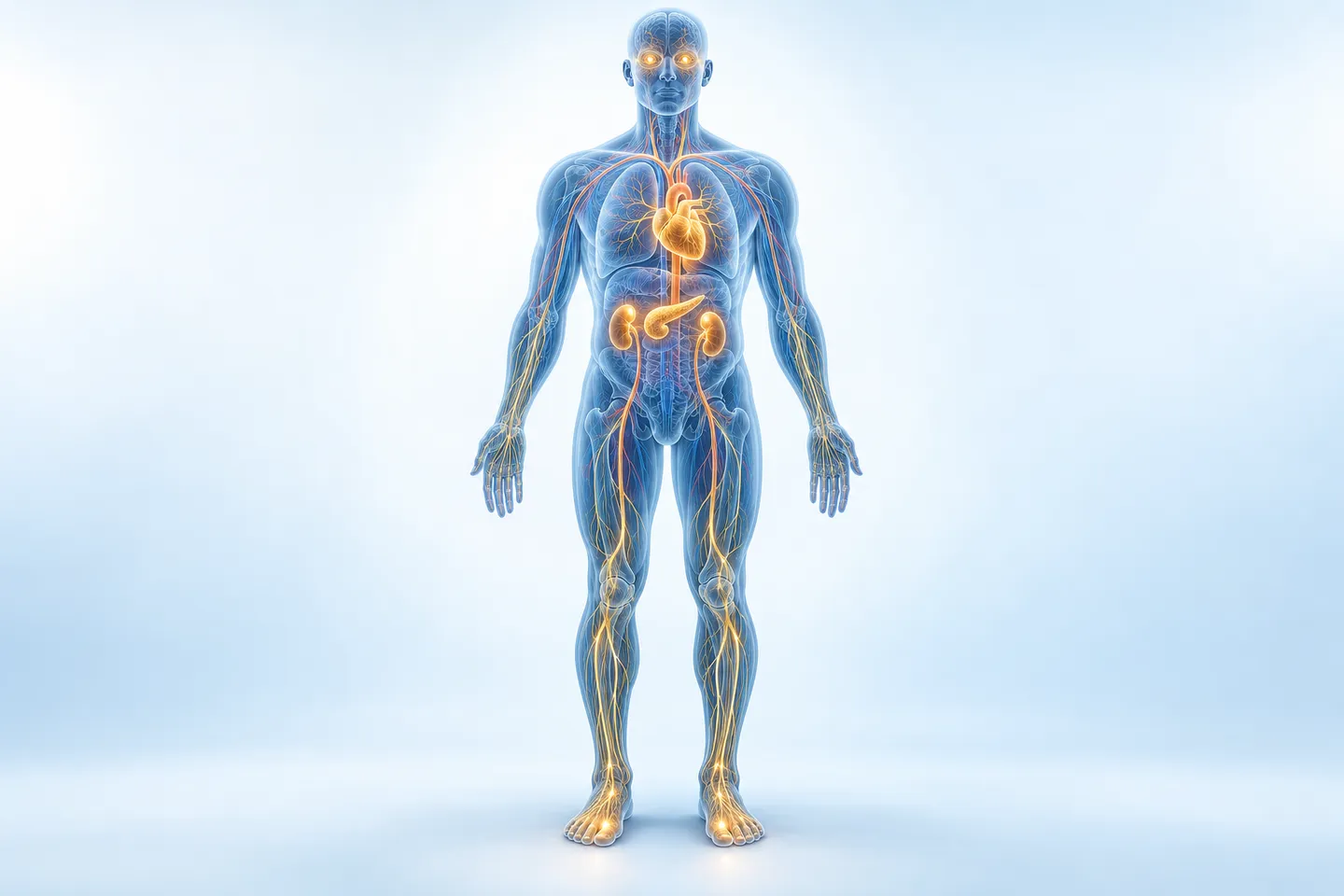
Type 2 diabetes and your nerves, feet, kidneys, heart and erections: where stem cells help
Over the years, type 2 diabetes can touch other parts of the body, and good care looks after all of them. Stem cells and exosomes have been studied in these areas too, often with clear results. In the randomised study with eight years of follow-up, people with type 2 diabetes who had bone marrow stem cells added to insulin and metformin developed neuropathy in 10.3% of cases and large-vessel (macrovascular) complications in 13.8%, against 48.3% and 44.8% with standard care alone.10 In the Wharton’s jelly study, diabetic complications were also less common than with saline over 36 months.4
Nerves
Numbness, tingling or burning in the feet is the most familiar of these. In the eight-year study, neuropathy was almost five times less common with stem cells added.10 Read our full guide to stem cell therapy for neuropathy.
Feet and slow-healing skin
In a randomised trial in 110 people, diabetic foot ulcers treated with Wharton’s jelly exosomes healed in 6 weeks on average, against 20 weeks with standard care.8
Kidneys
Vesicles from umbilical cord stem cells improved eGFR and lowered urine albumin in 40 people with chronic kidney disease at stages 3 and 4.28 See can kidney function improve?
Heart and blood vessels
Large-vessel complications developed in 13.8% of people with stem cells added, against 44.8% with standard care, over eight years.10 Read how to reduce plaque in arteries.
Erections
In 22 men with diabetes and erectile difficulties, two injections of Wharton’s jelly stem cells improved erection scores, erection hardness and penile blood flow over 12 months.39 See our guide to drug-free ED treatment.
Liver
Fatty liver often travels with type 2 diabetes, and it responds well to weight loss: liver fat fell from 12.8% to 2.9% in eight weeks in one study.18 Our fatty liver page explains the liver treatment.
These areas can be part of your plan, alongside the IV treatment for your blood sugar: injections around the affected nerves or into the leg muscles for neuropathy, and intracavernosal injections for erections, depending on Dr. Cihan Bolat’s evaluation.
10
Muse cells and Muse exosomes: an optional add-on
Muse cells, short for multilineage-differentiating stress-enduring cells, are a small group of especially hardy repair cells within the MSC family, first described in 2010.40 They make up about 1% to several percent of MSCs, home to damaged tissue after IV infusion, and donor Muse cells have been given without tissue matching or immune-suppressing medicines.41 In research models of diabetic skin ulcers, Muse-rich cells healed wounds significantly faster than Muse-poor cells,42 and in a first-in-human study after a heart attack, one IV dose of a donor Muse cell product raised heart pumping function (LVEF) from 40.7% to 52.0% at 12 weeks.43
If you wish, Muse cells by IV infusion, and Muse exosomes by IV infusion or nasal spray, can be added to your Wharton’s jelly plan after your medical review. Wharton’s jelly stem cells and exosomes remain the core of your type 2 plan.
11
Will I still need my diabetes medicines? How your plan works alongside your usual care
Yes, and that is a strength. Stem cell therapy for type 2 diabetes is added to your usual care, never put in its place. Keep taking your diabetes medicines as your own doctor advises: in the long-term studies, the cells were added to people’s usual treatment, and in the eight-year study everyone kept their insulin and metformin.410 If your blood sugar runs lower in the weeks and months after treatment, check it a little more often and let your own doctor decide whether any dose should change.
Less insulin in the studies
Lower insulin needs are one of the most consistent findings. With umbilical cord stem cells, the insulin dose fell by 27.78%, against 15.62% with placebo;3 after Wharton’s jelly stem cells, it fell from 0.49 to 0.23 units per kilogram a day;7 and with people’s own bone marrow stem cells, it fell by 66.7%, from 42 to 14 units a day.35 Changes like these are always guided by your doctor, based on your readings.
Your free medical review
Every plan starts with your own results. Uzm. Dr. Cihan Bolat, our medical director and a specialist in anaesthesiology and reanimation and in regenerative medicine, reviews with his team your HbA1c and C-peptide, your kidney and liver tests, your medicines and your goals, and talks them through with you by phone.
How it is given
Your Wharton’s jelly stem cells are given by a relaxed IV infusion, usually 50 to 200 million viable cells, as on our stem cell therapy for diabetes page. Your exosomes are given by IV infusion. A typical IV range is 1–2 million cells per kilogram of body weight, and the right dose for you is set in your medical review.
Who it suits
- Adults with type 2 diabetes whose HbA1c stays above target despite good care, like the people in the umbilical cord trials.332
- People who use insulin and would like to need less of it.735
- People with long-standing type 2 diabetes, who took part in the studies too: for 8.7 years on average in one and for 10 years or more in another.729
- People with complications such as neuropathy, slow-healing feet or erectile difficulties.10839

- Day 0Walk outOne treatment day, home the same day
- 9 weeksFirst changesHbA1c lower in studies
- 3 monthsClearer gainsHbA1c at its lowest in one study
- 12 monthsLess insulinLower doses in studies
- 3 yearsLasting benefitBetter control still measured
In the studies, HbA1c had already fallen by 9 weeks,32 reached its lowest point about three months after Wharton’s jelly stem cells,7 and better control with Wharton’s jelly stem cells was still measured at 36 months.4 We review your progress with you by phone or WhatsApp at about 1, 3, 6 and 12 months, and an HbA1c test at about three months shows how things are developing.
12
Type 2 diabetes treatments compared: lifestyle, medicines and stem cell therapy
Each option has its own role, and they work best together. Here is how they compare, with what the studies report for each.
| Option | What it aims to do | What studies report | How it fits your care |
|---|---|---|---|
| Wharton’s jelly stem cells and exosomes | Calm inflammation, improve insulin sensitivity, support beta cells and small blood vessels | HbA1c 8.20% → 7.0% and insulin 0.49 → 0.23 units/kg a day at one year;7 better control than saline over 36 months;4 foot ulcers healed in 6 vs 20 weeks with the exosomes8 | Added to your usual care; one treatment day for most plans in Istanbul |
| Umbilical cord stem cells | The same aims, as the second cell type in our plans | HbA1c −1.31 vs −0.63 points and insulin −27.78% vs −15.62% at 48 weeks3 | Can be combined with Wharton’s jelly cells in one plan |
| Structured weight and lifestyle programmes | Lower liver and pancreas fat and aim for remission | Remission 46% vs 4% at one year;2 61% vs 12% in younger adults12 | A foundation of every plan, with your own care team |
| Exercise, food and sleep | Better insulin sensitivity and everyday control | Structured exercise: HbA1c −0.67 points;17 Mediterranean-style diet: 44% vs 70% needed medicines after 4 years19 | Every day, alongside every other option |
| Diabetes medicines and insulin | Lower blood sugar; several also protect the heart and kidneys | The core of modern guideline care22 | Prescribed and adjusted by your own doctor |
| Muse cells and Muse exosomes | An optional add-on of hardy repair cells | Heart function (LVEF) 40.7% → 52.0% after a heart attack, in a first-in-human study43 | Added to your Wharton’s jelly plan if you wish |
For the full picture of cell-based options for diabetes, including islet transplants, see our diabetes treatment page.
13
Is stem cell therapy for type 2 diabetes safe?
Safety comes first, and the published record is reassuring. A 2021 meta-analysis of 62 randomised trials with 3,546 patients found MSC treatment safe, the most common effect a passing fever.11
The type 2 diabetes studies point the same way. In the double-blind umbilical cord trial, no major treatment-related adverse events occurred over 48 weeks,3 and in the randomised Wharton’s jelly study, side effects were no more common than with saline over 36 months.4 One IV infusion of 100 million umbilical cord stem cells was well tolerated,29 and a meta-analysis of ten studies in type 1 and type 2 diabetes found no obvious adverse reactions.38
Your own care adds further layers. Wharton’s jelly cells need no donor matching,25 your cells are prepared in a GMP-certified laboratory approved by the Turkish Ministry of Health, and every batch certificate shows the cell count, the viability and the sterility tests. Before your plan is made, our specialist team reviews your tests and medicines carefully. Your treatment is given by Dr. Cihan Bolat, a specialist in anaesthesiology and reanimation, and his team, who watch your pulse, blood pressure and blood sugar during the infusion, and you walk out the same day. Read more in how to read a stem cell lab report.
14
Why patients travel to Istanbul, Turkey for type 2 diabetes treatment
People from the UK, the USA, Europe, the Gulf and beyond travel to Istanbul for type 2 diabetes treatment with fresh Wharton’s jelly stem cells and exosomes: specialist-led care in a single treatment day for most plans, in a city that is easy to reach and a pleasure to stay in. Most of our international patients come from the UK and the United States.

Specialist-led from the first message
Uzm. Dr. Cihan Bolat, our medical director, a specialist in anaesthesiology and reanimation and in regenerative medicine, leads the team that reviews your HbA1c, C-peptide and medicines free of charge and treats you.
Fresh cells for your date
Your Wharton’s jelly stem cells come from cords donated after healthy births and are prepared fresh for your treatment date, never frozen.
A fixed price in writing
Your written plan states your exact cell count, the exosomes and the routes, with a fixed, all-inclusive price before you travel.
One treatment day
Most plans take one treatment day in Istanbul, and you walk out of the clinic the same day.
Help at every step
A personal case manager helps with your hotel and ground transport, with airport transfers depending on your package. Interpreter help is available when you need it, and you are welcome to bring a companion.
Follow-up from home
We review your progress with you by phone or WhatsApp at about 1, 3, 6 and 12 months, wherever home is.
Planning from Britain or America? Read our guides for UK patients and US patients, or why patients choose stem cell therapy in Turkey. Our clinic is in Suadiye, a calm district on the Asian side near the Marmara seafront, ideal for gentle walks after treatment.
15
Your type 2 diabetes treatment in Istanbul, step by step
From your first message to your follow-up at home, every step is planned with you in advance, whether you are travelling from London, Manchester, New York, Houston, Dubai or Riyadh. For the fuller story, read the stem cell treatment in Turkey, step by step, or request your free consultation now.
Send your results
Share your latest HbA1c, your C-peptide if you have it, your kidney and liver tests, your list of medicines, your weight and your goals, through our free consultation request or by WhatsApp on +90 534 856 92 92.
Free medical review and phone call
Dr. Cihan Bolat’s team reviews your case free of charge, talks it through with you by phone and tells you honestly whether a Wharton’s jelly plan suits your type 2 diabetes.
Your written plan and fixed price
If treatment is a good fit, you receive a written plan with your exact cell count, the exosomes and the routes, and a fixed, all-inclusive price.
Fresh preparation and treatment day
Your deposit is 10% to 25% of your plan, payable by any major credit or debit card, with instalments through Stripe where available. Your cells are then prepared fresh for your date, which generally takes 5 to 10 days, and on treatment day you walk out of the clinic the same day.
Home and follow-up
Back home, you keep taking your diabetes medicines as your own doctor advises, and we review your progress with you by phone or WhatsApp at about 1, 3, 6 and 12 months.
16
How much does stem cell therapy for diabetes cost in Turkey?
Every plan is personal, so the price depends on the number of stem cells, the exosomes and the routes in your plan. Our diabetes mellitus page gives a guide range of USD 4,950–15,000, and here is our full IV stem cell price list, effective 1 June 2026. All prices are in US dollars, and M stands for million stem cells.
| Cell count | USD price | Free exosomes | Free hotel |
|---|---|---|---|
| 25M | $4,950 | No | No |
| 50M | $6,950 | 10 billion exosomes | No |
| 75M | $8,950 | 10 billion exosomes | No |
| 100M | $10,500 | 20 billion exosomes | 2 nights |
| 125M | $11,850 | 20 billion exosomes | 2 nights |
| 150M | $13,550 | 30 billion exosomes | 2 nights |
| 175M | $15,000 | 30 billion exosomes | 2 nights |
| 200M | $16,500 | 30 billion exosomes | 3 nights |
| 225M | $18,000 | 30 billion exosomes | 3 nights |
| 250M | $19,500 | 30 billion exosomes | 3 nights |
Included
- Free medical review and phone consultation
- Fresh Wharton’s jelly stem cells, with certified count and viability
- Free Wharton’s jelly exosomes from 50M, as shown in the price list
- Umbilical cord stem cells and CD34+ exosomes, if they are in your plan
- Your treatment by our specialist team, in one treatment day for most plans
- Ground transport in Istanbul, with airport transfers depending on your package
- A personal case manager, and follow-up reviews by phone or WhatsApp
Not included / optional
- Flights
- A hotel stay, unless your package includes nights; we can help you arrange it
- Extra exosomes or an exosome nasal spray, as part of a custom plan
- Muse cells or Muse exosomes, as optional add-ons
Package notes
- All prices are in USD.
- The free exosome amounts are complimentary and included as shown.
- Hotel nights are included only where indicated, in 5-star hotels chosen by our team.
- Treatment plans can be customised after the medical review.
How many stem cells for type 2 diabetes?
A typical IV range is 1–2 million cells per kilogram of body weight: 50M–100M at 50 kg (110 lb), 70M–140M at 70 kg (154 lb), 90M–180M at 90 kg (198 lb) and 110M–220M at 110 kg (243 lb). The ideal protocol depends on your condition, goals, age and the physician’s evaluation, and higher cell-count packages may suit heavier patients or more complex goals. In the type 2 studies, umbilical cord stem cells were given at 1 million cells per kilogram once a week for three weeks,33 or as one IV infusion of 100 million cells.29
Your deposit is 10% to 25% of your plan, and you can pay with any major credit or debit card; where available, instalment options are offered through Stripe. After your free medical review, you receive a fixed, all-inclusive price in writing before you book anything, so you can decide calmly at home. See every package explained in our guide to stem cell therapy cost in Turkey.
17
Frequently asked questions
Can type 2 diabetes be reversed?
Type 2 diabetes can often go into remission, which means your blood sugar returns below the diabetes range without glucose-lowering medicines. Remission is defined as an HbA1c below 6.5% at least three months after those medicines have stopped. In a UK trial, 46% of people on a structured weight programme reached it within a year, against 4% with usual care. It is a realistic goal for many people, especially in the first years after diagnosis.
How can I reverse type 2 diabetes?
The best-studied route to remission is meaningful weight loss through a structured programme with long-term support. In the DiRECT trial, 86% of the people who lost 15 kg or more were in remission at one year. Regular exercise, a Mediterranean-style diet and good sleep all lower HbA1c, and any change to your medicines should be made by your own doctor.
How much weight do I need to lose for type 2 diabetes remission?
The more weight lost, the higher the chance. In DiRECT, remission was reached by 34% of the people who lost 5–10 kg, 57% of those who lost 10–15 kg and 86% of those who lost 15 kg or more. Even losing 5% to 10% of your body weight improves HbA1c, blood pressure and blood fats.
Can type 2 diabetes go into remission if I have had it for many years?
The chances are highest in the first years after diagnosis, but beta cells keep some ability to recover after diagnosis, and better control is valuable at any stage. The stem cell studies also included people with long-standing type 2 diabetes: 8.7 years on average in one Wharton’s jelly study and 10 years or more in another study.
How can I lower my HbA1c?
Structured exercise lowered HbA1c by 0.67 percentage points across 47 trials, and more than 150 minutes a week lowered it by 0.89 points. A Mediterranean-style diet, losing 5% to 10% of your weight, good sleep and your diabetes medicines all help, and stem cell therapy can add further support.
What is the best insulin resistance treatment?
Regular movement, weight loss and metformin are the foundations of insulin resistance treatment. In a double-blind trial, umbilical cord stem cells also improved insulin sensitivity measured with the clamp test, from 3.12 to 4.76 mg/min/kg, while placebo made no significant change.
What is the new treatment for type 2 diabetes in 2026?
Progress is coming on several fronts: structured remission programmes, hormone-based medicines, glucose sensors and regenerative medicine. Randomised trials of umbilical cord and Wharton’s jelly stem cells have reported lower HbA1c and lower insulin needs, and exosomes are a fast-growing field of research.
Does stem cell therapy work for type 2 diabetes?
In randomised trials it improved control. In a double-blind trial of 91 adults, umbilical cord stem cells lowered HbA1c by 1.31 percentage points over 48 weeks, against 0.63 with placebo, and insulin doses fell by 27.78%, against 15.62%. In a randomised study of 61 people, Wharton’s jelly stem cells kept HbA1c and C-peptide better than saline for 36 months.
What is the success rate of stem cells for type 2 diabetes?
It depends on the goal measured. In one trial, 43.2% of the people treated with umbilical cord stem cells reached both an HbA1c under 7% and at least 70% time in range, against 11.1% with placebo. With their own bone marrow stem cells, 82% of people in another study cut their insulin by half or more while keeping HbA1c under 7%, against none of the controls.
Why Wharton’s jelly stem cells for type 2 diabetes?
They are young cells from cords donated after healthy births, so their quality does not depend on your age, weight or blood sugar, and nothing is taken from your body. In people with type 2 diabetes, Wharton’s jelly stem cells lowered HbA1c from 8.20% to 7.0% over a year, and our cells are prepared fresh for your date, never frozen.
Do exosomes help diabetes?
In people, Wharton’s jelly exosomes healed diabetic foot ulcers in 6 weeks on average, against 20 weeks with standard care, and vesicles from cord stem cells improved kidney function in chronic kidney disease. In research models of type 2 diabetes, cord stem cell exosomes lowered blood sugar. We give exosomes by IV infusion, alongside your stem cell infusion.
Will I need less insulin after stem cell therapy?
Lower insulin needs are one of the most consistent findings in the studies: doses fell by 27.78% with umbilical cord stem cells, against 15.62% with placebo, and from 0.49 to 0.23 units per kilogram a day after Wharton’s jelly stem cells. If your readings fall, your own doctor decides whether to lower your dose.
Can I keep taking my diabetes medicines?
Yes. Keep taking your diabetes medicines as your own doctor advises. Stem cell therapy is added to your usual care, and in the long-term studies people kept their insulin and metformin. You can share your written plan with your own doctor.
Is stem cell therapy for type 2 diabetes safe?
The published record is reassuring. A meta-analysis of 62 randomised trials with 3,546 patients found MSC treatment safe, the most common effect a passing fever, and in the double-blind type 2 trial, no major treatment-related adverse events occurred. Every batch certificate shows the cell count, the viability and the sterility tests.
How many stem cells are used for type 2 diabetes?
Usually 50 to 200 million viable Wharton’s jelly stem cells by IV infusion, with exosomes. A typical IV range is 1–2 million cells per kilogram of body weight, for example 90M–180M at 90 kg (198 lb), and the right dose for you is set in your medical review.
How much does stem cell therapy for diabetes cost in Turkey?
Our IV packages start at USD 4,950 for 25 million cells, and 100 million cells cost USD 10,500 with 20 billion exosomes and 2 hotel nights. Our diabetes page gives a guide range of USD 4,950–15,000. You receive a fixed, all-inclusive price in writing after your free medical review.
Why travel to Istanbul for type 2 diabetes treatment?
Istanbul offers specialist-led treatment with fresh Wharton’s jelly stem cells and exosomes, in one treatment day for most plans, with a fixed price in writing before you travel. Most of our international patients come from the UK and the United States, and your case manager, interpreter help when needed and follow-up by phone or WhatsApp make the trip easy.
What should I send for my free medical review?
Your latest HbA1c, your C-peptide if you have it, kidney and liver tests, your list of medicines, your weight and your goals. Send them through our free consultation request or by WhatsApp on +90 534 856 92 92, and Dr. Cihan Bolat’s team will reply with an honest opinion and, if treatment suits you, a written plan.

Medical review
Uzm. Dr. Cihan Bolat
Medical Director, Istanbul Stemcell
This page was written from the published studies listed below and reviewed for medical accuracy on .
18
References
- Riddle MC, et al. Consensus Report: Definition and Interpretation of Remission in Type 2 Diabetes. Diabetes Care. 2021;44(10):2438-2444. PMID 34462270
- Lean ME, et al. Primary care-led weight management for remission of type 2 diabetes (DiRECT): an open-label, cluster-randomised trial. Lancet. 2018;391(10120):541-551. PMID 29221645
- Zang L, et al. Efficacy and safety of umbilical cord-derived mesenchymal stem cells in Chinese adults with type 2 diabetes: a single-center, double-blinded, randomized, placebo-controlled phase II trial. Stem Cell Res Ther. 2022;13(1):180. PMID 35505375
- Hu J, et al. Long term effect and safety of Wharton's jelly-derived mesenchymal stem cells on type 2 diabetes. Exp Ther Med. 2016;12(3):1857-1866. PMID 27588104
- Lean MEJ, et al. Durability of a primary care-led weight-management intervention for remission of type 2 diabetes: 2-year results of the DiRECT open-label, cluster-randomised trial. Lancet Diabetes Endocrinol. 2019;7(5):344-355. PMID 30852132
- Taylor R, et al. Remission of Human Type 2 Diabetes Requires Decrease in Liver and Pancreas Fat Content but Is Dependent upon Capacity for β Cell Recovery. Cell Metab. 2018;28(4):547-556.e3. PMID 30078554
- Liu X, et al. A preliminary evaluation of efficacy and safety of Wharton's jelly mesenchymal stem cell transplantation in patients with type 2 diabetes mellitus. Stem Cell Res Ther. 2014;5(2):57. PMID 24759263
- Kishta MS, et al. The transforming role of wharton's jelly mesenchymal stem cell-derived exosomes for diabetic foot ulcer healing: a randomized controlled clinical trial. Stem Cell Res Ther. 2025;16(1):559. PMID 41084065
- Kashbour M, et al. Mesenchymal stem cell-based therapy for type 1 & 2 diabetes mellitus patients: a systematic review and meta-analysis of randomized controlled trials. Diabetol Metab Syndr. 2025;17(1):189. PMID 40462158
- Wu Z, et al. Bone marrow mesenchymal stem cell and mononuclear cell combination therapy in patients with type 2 diabetes mellitus: a randomized controlled study with 8-year follow-up. Stem Cell Res Ther. 2024;15(1):339. PMID 39350270
- Wang Y, Yi H, Song Y. The safety of MSC therapy over the past 15 years: a meta-analysis. Stem Cell Res Ther. 2021;12(1):545. PMID 34663461
- Taheri S, et al. Effect of intensive lifestyle intervention on bodyweight and glycaemia in early type 2 diabetes (DIADEM-I): an open-label, parallel-group, randomised controlled trial. Lancet Diabetes Endocrinol. 2020;8(6):477-489. PMID 32445735
- DeFronzo RA, et al. Type 2 diabetes mellitus. Nat Rev Dis Primers. 2015;1:15019. PMID 27189025
- Sun H, et al. IDF Diabetes Atlas: Global, regional and country-level diabetes prevalence estimates for 2021 and projections for 2045. Diabetes Res Clin Pract. 2022;183:109119. PMID 34879977
- Ahmad E, et al. Type 2 diabetes. Lancet. 2022;400(10365):1803-1820. PMID 36332637
- Donath MY, Shoelson SE. Type 2 diabetes as an inflammatory disease. Nat Rev Immunol. 2011;11(2):98-107. PMID 21233852
- Umpierre D, et al. Physical activity advice only or structured exercise training and association with HbA1c levels in type 2 diabetes: a systematic review and meta-analysis. JAMA. 2011;305(17):1790-9. PMID 21540423
- Lim EL, et al. Reversal of type 2 diabetes: normalisation of beta cell function in association with decreased pancreas and liver triacylglycerol. Diabetologia. 2011;54(10):2506-14. PMID 21656330
- Esposito K, et al. Effects of a Mediterranean-style diet on the need for antihyperglycemic drug therapy in patients with newly diagnosed type 2 diabetes: a randomized trial. Ann Intern Med. 2009;151(5):306-14. PMID 19721018
- Wing RR, et al. Benefits of modest weight loss in improving cardiovascular risk factors in overweight and obese individuals with type 2 diabetes. Diabetes Care. 2011;34(7):1481-6. PMID 21593294
- Lee SWH, Ng KY, Chin WK. The impact of sleep amount and sleep quality on glycemic control in type 2 diabetes: A systematic review and meta-analysis. Sleep Med Rev. 2017;31:91-101. PMID 26944909
- Davies MJ, et al. Management of Hyperglycemia in Type 2 Diabetes, 2022. A Consensus Report by the American Diabetes Association (ADA) and the European Association for the Study of Diabetes (EASD). Diabetes Care. 2022;45(11):2753-2786. PMID 36148880
- Sun Y, et al. Human Mesenchymal Stem Cell Derived Exosomes Alleviate Type 2 Diabetes Mellitus by Reversing Peripheral Insulin Resistance and Relieving β-Cell Destruction. ACS Nano. 2018;12(8):7613-7628. PMID 30052036
- Serena C, et al. Obesity and Type 2 Diabetes Alters the Immune Properties of Human Adipose Derived Stem Cells. Stem Cells. 2016;34(10):2559-2573. PMID 27352919
- Weiss ML, et al. Immune properties of human umbilical cord Wharton's jelly-derived cells. Stem Cells. 2008;26(11):2865-74. PMID 18703664
- Moll G, et al. Do cryopreserved mesenchymal stromal cells display impaired immunomodulatory and therapeutic properties? Stem Cells. 2014;32(9):2430-42. PMID 24805247
- Kalluri R, LeBleu VS. The biology, function, and biomedical applications of exosomes. Science. 2020;367(6478). PMID 32029601
- Nassar W, et al. Umbilical cord mesenchymal stem cells derived extracellular vesicles can safely ameliorate the progression of chronic kidney diseases. Biomater Res. 2016;20:21. PMID 27499886
- Raoufinia R, et al. Safety and efficacy of allogeneic umbilical cord-derived mesenchymal stem cell transplantation in type 2 diabetes: a pilot clinical trial. Am J Stem Cells. 2025;14(4):244-260. PMID 41278133
- Xie Z, et al. Human umbilical cord-derived mesenchymal stem cells elicit macrophages into an anti-inflammatory phenotype to alleviate insulin resistance in type 2 diabetic rats. Stem Cells. 2016;34(3):627-39. PMID 26523620
- Si Y, et al. Infusion of mesenchymal stem cells ameliorates hyperglycemia in type 2 diabetic rats: identification of a novel role in improving insulin sensitivity. Diabetes. 2012;61(6):1616-25. PMID 22618776
- Zang L, et al. Efficacy of Umbilical Cord-Derived Mesenchymal Stem Cells in the Treatment of Type 2 Diabetes Assessed by Retrospective Continuous Glucose Monitoring. Stem Cells Transl Med. 2023;12(12):775-782. PMID 37738447
- Lian XF, et al. Effectiveness and safety of human umbilical cord-mesenchymal stem cells for treating type 2 diabetes mellitus. World J Diabetes. 2022;13(10):877-887. PMID 36312002
- Guan LX, et al. Therapeutic efficacy of umbilical cord-derived mesenchymal stem cells in patients with type 2 diabetes. Exp Ther Med. 2015;9(5):1623-1630. PMID 26136869
- Bhansali A, et al. Efficacy and safety of autologous bone marrow-derived stem cell transplantation in patients with type 2 diabetes mellitus: a randomized placebo-controlled study. Cell Transplant. 2014;23(9):1075-85. PMID 23561959
- Bhansali S, et al. Efficacy of Autologous Bone Marrow-Derived Mesenchymal Stem Cell and Mononuclear Cell Transplantation in Type 2 Diabetes Mellitus: A Randomized, Placebo-Controlled Comparative Study. Stem Cells Dev. 2017;26(7):471-481. PMID 28006991
- Ranjbaran H, et al. Efficacy of mesenchymal stem cell therapy on glucose levels in type 2 diabetes mellitus: A systematic review and meta-analysis. J Diabetes Investig. 2021;12(5):803-810. PMID 32926576
- Li Y, et al. Efficacy of mesenchymal stem cell transplantation therapy for type 1 and type 2 diabetes mellitus: a meta-analysis. Stem Cell Res Ther. 2021;12(1):273. PMID 33957998
- Al Demour S, et al. Safety and Efficacy of 2 Intracavernous Injections of Allogeneic Wharton's Jelly-Derived Mesenchymal Stem Cells in Diabetic Patients with Erectile Dysfunction: Phase 1/2 Clinical Trial. Urol Int. 2021;105(11-12):935-943. PMID 34384079
- Kuroda Y, et al. Unique multipotent cells in adult human mesenchymal cell populations. Proc Natl Acad Sci U S A. 2010;107(19):8639-43. PMID 20421459
- Minatoguchi S, et al. Donor Muse Cell Treatment Without HLA-Matching Tests and Immunosuppressant Treatment. Stem Cells Transl Med. 2024;13(6):532-545. PMID 38560897
- Kinoshita K, et al. Therapeutic Potential of Adipose-Derived SSEA-3-Positive Muse Cells for Treating Diabetic Skin Ulcers. Stem Cells Transl Med. 2015;4(2):146-55. PMID 25561682
- Noda T, Nishigaki K, Minatoguchi S. Safety and Efficacy of Human Muse Cell-Based Product for Acute Myocardial Infarction in a First-in-Human Trial. Circ J. 2020;84(7):1189-1192. PMID 32522904