
01
What is a stem cell facial, and what is an exosome facial?
In short: a stem cell facial places Wharton’s jelly stem cells and their exosomes in your skin, with fine injections or straight after microneedling or a laser, so that their repair signals reach the cells that make collagen. An exosome facial uses the exosomes alone. Both aim to improve the quality of your skin itself: fine lines, firmness, tone, texture, pores and glow.13
Mesenchymal stem cells (MSCs) are the body’s repair coordinators. Much of their effect comes from what they release: growth factors, calming messengers and exosomes, tiny bubbles that carry proteins and RNA instructions from one cell to another.12 In the skin, these signals speak to the fibroblasts, the cells that build collagen and elastin, and to the immune and pigment cells that shape redness and tone.1314
That makes a stem cell facial different from most treatments you may know. It does not relax a muscle or add volume. It aims to wake up your skin’s own renewal, so the result looks like you on a very good day rather than like a treatment. Many people choose it on its own, and many combine it with fillers or Botox, because each one does a different job.
Medical exosomes, not a cosmetic serum
The word “exosome” now appears on many skin care labels, and some of those products are made from plants. A medical exosome facial uses human stem cell exosomes, prepared in a licensed laboratory and planned by a doctor. At Istanbul Stemcell, the core of every facial plan is fresh Wharton’s jelly stem cells and Wharton’s jelly exosomes, with umbilical cord stem cells alongside. This guide focuses on how they compare with other treatments and what the studies show; for our treatment page, see stem cell facelift and skin rejuvenation in Istanbul.
Results at a glance
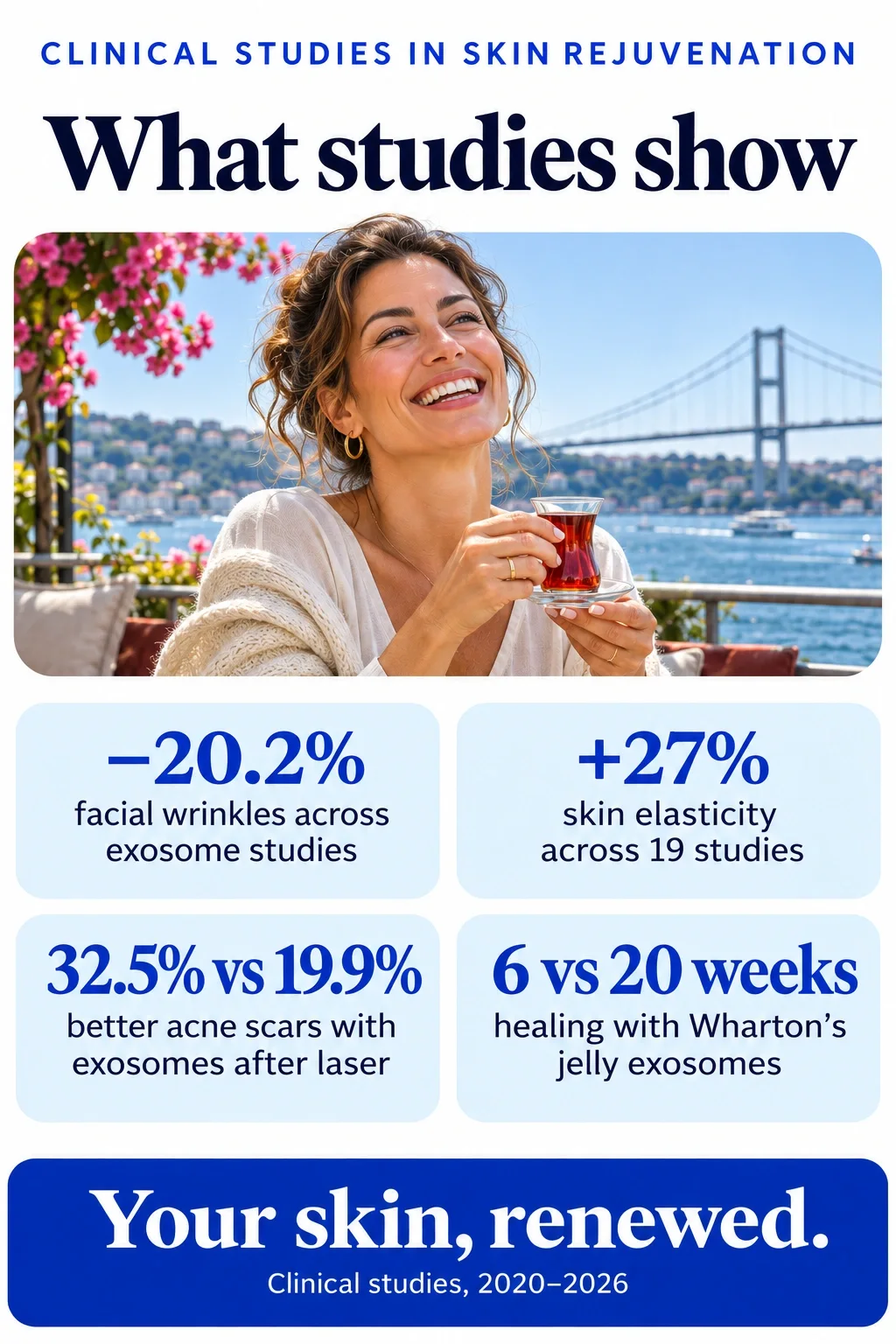
- −20.2%facial wrinkles on average across human exosome skin studies3
- +27%skin elasticity (27.07%) across 19 studies of stem cell vesicles and factors in 624 patients6
- 32.5% vs 19.9%improvement in acne scars when stem cell exosomes were applied after laser, against a control gel11
- 6 vs 20 weeksaverage healing time of diabetic foot ulcers with Wharton’s jelly exosomes on the skin, against standard care5
02
Why does skin age? Collagen, fibroblasts, sun and volume
Knowing why skin ages makes it much easier to choose the right treatment, because different signs of ageing have different causes.
Collagen is the scaffold that keeps skin firm. The amount in your skin falls steadily as the years pass, and it is lower in women than in men at every age.15 The cells that make it slow down too: fibroblasts from people over 80 produced about a third less new collagen (type I procollagen) than fibroblasts from people aged 18 to 29.16 As collagen fragments, fibroblasts lose their grip on it and make even less, a slow cycle that gradually thins the skin.13
The sun speeds everything up. In a study of 298 women aged 30 to 78, ultraviolet exposure appeared responsible for about 80% of visible facial ageing signs, above all uneven pigmentation, while sagging was linked more to the passing years.17 The good news is that protection works: people who used sunscreen every day showed 24% less skin ageing over four and a half years than people who used it when they chose.18
Different changes, different treatments
Skin quality
Fine lines, crepey texture, dullness, enlarged pores and uneven tone come from thinner, less active skin. This is where stem cells and exosomes work, supporting collagen, elastin and calmer, healthier skin.314
Volume
With age, the face loses some of its deeper fullness, so cheeks flatten and folds deepen. Hyaluronic acid fillers replace that volume directly.7
Movement lines
Frown lines and crow’s feet are etched by repeated muscle movement. Botox relaxes those muscles.8
Sagging
Loosening of the deeper tissues is linked more to time than to the sun.17 A surgical facelift lifts them; regenerative treatment improves the skin on top.
This is why the real question is rarely stem cells or fillers. A good plan matches each treatment to the change it treats best, and many faces benefit from more than one. For ageing well inside and out, read our anti-ageing stem cell therapy guide.
03
Stem cell facial vs fillers, Botox, PRP and lasers: what each one does
Every treatment on this list has helped millions of people look and feel their best. They simply do different jobs, and knowing which job you want done is the key to a result you love.
| Treatment | Main job | What studies report | How it fits |
|---|---|---|---|
| Wharton’s jelly stem cells and exosomes | Skin quality: renewal from within for firmer, smoother, more even skin | Wharton’s jelly stem cell factors improved pigmentation, texture and pores more than placebo;4 exosomes reduced wrinkles by 20.2% on average3 | On its own or with fillers and Botox; skin injections, exosomes after microneedling or laser, and IV in one treatment day |
| Umbilical cord stem cells | Skin quality, scars and calmer inflammation | With microneedling, fewer wrinkles and pores and more elasticity than microneedling alone;19 injected into keloid scars, 45.32% smaller scars21 | Added to Wharton’s jelly cells where the doctor advises |
| Hyaluronic acid fillers | Volume: cheeks, folds, lips and contours | 93% of treated folds improved at 6 months and 59% at 18 months7 | Instant shape and volume, with top-ups over time |
| Botox (botulinum toxin) | Movement lines: frown lines, forehead, crow’s feet | Frown lines softer than with placebo at every visit, often up to day 1208 | Repeated every few months |
| PRP (platelet-rich plasma) | Skin quality, using your own blood | Skin thickness and elasticity improved in most studies that measured them22 | A blood draw, then injections or application after microneedling |
| Lasers and microneedling | Resurfacing: texture, tone and scars | Lasers stimulate new collagen;13 results improved further with exosomes applied straight afterwards2311 | Often combined with exosomes in the same session |
| Surgical facelift | Lifting sagging deeper tissues and skin | Repositions tissue that has loosened with time | Surgery and recovery; regenerative treatment can support the skin before or after |
Stem cell facial vs fillers
Hyaluronic acid fillers are one of aesthetic medicine’s great successes. They restore lost volume the same day, and they last: in a randomised trial, 93% of treated nasolabial folds were still improved at 6 months and 59% at 18 months, and a repeat treatment needed only a third of the original volume.7 Injected into the skin, cross-linked hyaluronic acid even encourages some new collagen.13
What fillers are not designed to do is change the quality of the skin over the volume: its texture, tone, pores and fine, crepey lines. That is the job of a stem cell facial. If your main wish is fuller cheeks or softer deep folds, fillers are the natural choice. If you want fresher, firmer, more even skin that still looks completely like you, regenerative treatment is the better fit, and many people enjoy both.
Stem cell facial vs Botox
Botox is the most studied treatment for movement lines. In a randomised trial of 264 people, it reduced frown lines significantly more than placebo at every visit, and the effect lasted to day 120 in many of them.8 It works by relaxing the muscles that crease the skin, so it is excellent for frown lines and crow’s feet. A stem cell facial works on the skin itself rather than on the muscle, which makes the two natural partners: one softens the movement, the other renews the canvas.
PRP vs exosome facial
PRP uses growth factors from your own blood and has a long track record. Across 20 studies of 514 patients, skin thickness improved in 80% of the studies that measured it and elasticity in 75%, every study of satisfaction reported a significant gain, and no serious adverse events were reported.22 Exosomes have now been compared with PRP directly. In an investigator-blinded split-face trial after radiofrequency microneedling, stem cell exosomes improved wrinkles, uneven colour, redness, texture and overall appearance as much as PRP, and skin samples showed more collagen I and glycosaminoglycans with both. Exosomes need no blood draw or centrifuge, which makes the visit quicker and simpler.10
Lasers and microneedling
Fractional lasers prompt the skin to build new, healthy collagen,13 and lasers and microneedling both open tiny channels that exosomes can follow. In randomised split-face trials, adding stem cell exosomes or stem cell factors after microneedling or laser gave better results than the same procedure alone.2324 There is more on this in the section on exosomes after microneedling or laser below.
Can you combine them?
Yes, and combining is often the smartest choice. In a randomised trial in Sweden, France and Brazil, repeated full-face treatment that combined Botox, a hyaluronic acid filler and a skin booster gave better aesthetic results and higher satisfaction than Botox or filler alone.9 A stem cell facial adds the regenerative layer to that kind of plan. Tell us about any fillers or Botox you have had, and the doctor will plan the timing around them. For our full treatment page, see stem cell facelift in Istanbul.
04
Why Wharton’s jelly stem cells and exosomes for your skin?
Wharton’s jelly is the soft, protective jelly that surrounds the blood vessels of the umbilical cord. Our cells come from cords donated after healthy births, so nothing is taken from your own body and the cells start young. Wharton’s jelly stem cells, and the exosomes made by these very same cells, are the heart of our skin plans.
Human results with Wharton’s jelly
In a randomised, double-blind trial at a university dermatology department in Seoul, 36 adults with facial pigmentation and early sun damage applied either a formulation of Wharton’s jelly stem cell factors (conditioned media) with herbal extracts or a placebo formulation for eight weeks. The active group had a significantly greater fall in melanin and more pronounced improvements in skin texture and pore size, blinded dermatologists favoured it, and no treatment-related adverse events occurred.4
Wharton’s jelly exosomes have also shown how strongly they support skin repair in people. In a randomised trial of 110 people with persistent diabetic foot ulcers, wounds that received Wharton’s jelly exosomes on the skin once a week for four weeks, alongside standard care, healed in 6 weeks on average, against 20 weeks in the control group, and a significantly higher share healed fully.5 Healing a wound and renewing ageing skin rely on many of the same processes: new collagen, new small blood vessels and calmer inflammation.
What laboratory research shows
When researchers compared the factors released by stem cells from fat, bone marrow, Wharton’s jelly and cord blood, factors from Wharton’s jelly and bone marrow cells showed a richer regenerative profile than those from cord blood and fat, and in skin cells from people with scleroderma, Wharton’s jelly factors promoted wound healing and the blood-vessel signal VEGF more strongly than bone marrow factors.25 Wharton’s jelly exosomes made human skin fibroblasts multiply, switched on a collagen gene (COL1A2) and reduced signs of cell ageing.26 In research models of skin ageing, Wharton’s jelly stem cells given into the bloodstream thickened thinning skin, increased collagen and reduced ageing cells.27
Why the source matters for your skin
Not every stem cell product carries the same message. In a head-to-head laboratory study on human skin, exosomes from umbilical cord stem cells were rich in the repair signals TGF-β and PDGF-BB and stood out for calming inflammation and protecting sun-damaged skin, while exosomes from fat-derived cells leaned more towards hydration and matrix building; the authors described the two profiles as complementary.14 For skin that shows the redness, uneven tone and dullness of years in the sun, that calming, protective profile is exactly what a facial plan needs, and it is one reason Wharton’s jelly exosomes lead ours.
Our cells and exosomes are also young. Your own skin’s repair cells slow down with the years,16 while Wharton’s jelly cells come from the very start of life and bring that youthful activity with them. Placed in your skin, they add a fresh source of repair signals right where the fibroblasts need them.
Wharton’s jelly and umbilical cord cells in numbers
- 36 adultsin a double-blind trial: Wharton’s jelly stem cell factors lowered melanin and improved texture and pores more than placebo4
- 110 peoplewith diabetic foot ulcers in a randomised trial: Wharton’s jelly exosomes on the skin cut average healing time to 6 weeks, against 205
- 45.32%smaller keloid scars after umbilical cord stem cells were injected into them, against 28.34% with a steroid injection21
- No matchingneeded: Wharton’s jelly cells carry very few of the signals that trigger rejection28
Young cells, rich signals
When researchers compared the proteins released by stem cells from four sources, the secretome of Wharton’s jelly cells had a more diverse composition than that of fat or bone marrow cells.29
A gentle partner to lasers
In research models, Wharton’s jelly cells and their factors improved the healing of laser-injured skin, with thicker skin, more collagen and more of the growth signals VEGF and FGF.30
Natural wound-healing power
Exosomes found in Wharton’s jelly itself helped skin cells survive and move, and sped up wound healing in research models.31
Fresh, never frozen
Our cells are prepared for your date in a Ministry of Health-approved GMP laboratory and never frozen. In laboratory comparisons, fresh MSCs kept stronger immune-calming properties than cells used straight after thawing.32
Umbilical cord cells alongside
Umbilical cord stem cell factors with microneedling reduced wrinkles and pores and improved elasticity and brightness more than microneedling alone,19 and umbilical cord stem cells injected into keloid scars shrank them by 45.32%, against 28.34% with a steroid injection.21
CD34+ exosomes as an extra
Your plan can also include CD34+ exosomes, from cells known for their role in forming new small blood vessels, the network that feeds your skin.
Why we combine cells and exosomes. Stem cells stay in the skin and keep releasing repair signals over time; exosomes deliver a concentrated dose of those signals at once. That is why our doctors put Wharton’s jelly stem cells and Wharton’s jelly exosomes together in most skin plans, with umbilical cord stem cells and CD34+ exosomes added where they help. Read more on our exosome therapy page and our stem cell facelift page.
05
How do stem cells and exosomes rejuvenate the skin?
Stem cells and exosomes do not fill a wrinkle the way a filler does. They change the environment inside the skin, so that its own cells can work more like younger cells again. Studies in people and in the laboratory show how.
How a stem cell facial works
- Placed where skin renewsFine injections into the skin, or exosomes applied straight after microneedling or laser.
- Repair signalsGrowth factors, calming messengers and exosomes reach the fibroblasts.12
- Skin cells respondMore collagen, calmer inflammation and less pigment in studies.1014
- Visible changeFewer wrinkles and better elasticity, texture and tone.3
How Wharton’s jelly stem cells and exosomes renew the skin
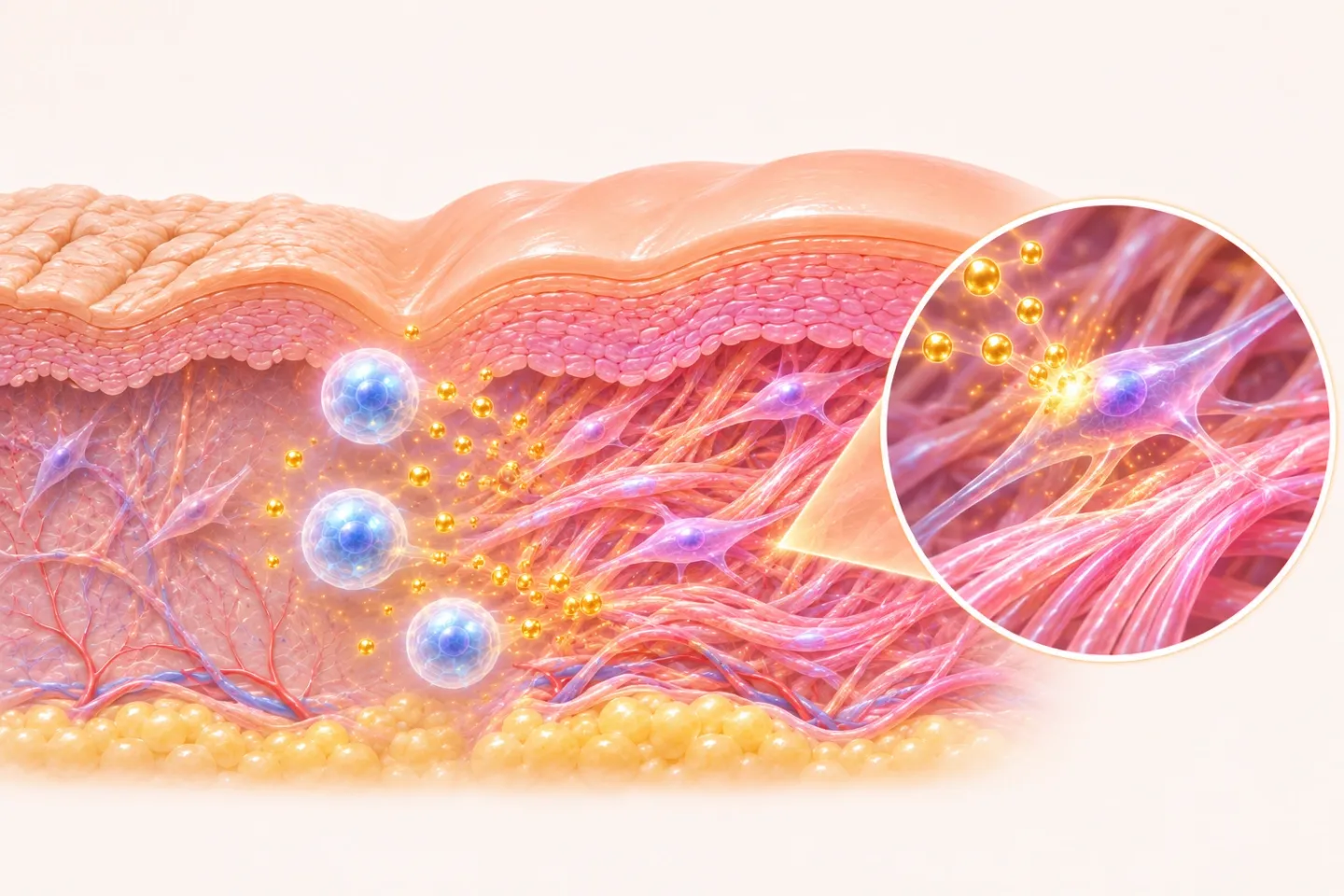
- Older skinWith age the surface thins and fine lines form as collagen declines.
- Quiet fibroblastsFewer active collagen-making cells, with sparse, broken fibres around them.
- Stem cellsWharton’s jelly MSCs release growth factors that support skin renewal.
- ExosomesTiny vesicles carry repair signals into the dermis, injected or applied after microneedling or laser.
- Renewed dermisThe aim: denser, well-organised collagen and elastin for firmer, smoother skin.
- Active fibroblastClose-up: a fibroblast receiving exosome signals and making new collagen.
Building new collagen
In a blinded split-face trial, skin samples showed more collagen I and glycosaminoglycans, the molecules that keep skin plump, after exosome treatment.10 In the laboratory, Wharton’s jelly exosomes switched on a collagen gene in human skin fibroblasts.26
Restoring elastic fibres
In people who later had a facelift, stem cells injected into the facial skin three to four months earlier were followed by new elastic fibres near the surface and a normal elastin network in place of sun-damaged deposits.33
Calming inflammation
Chronic, low-grade inflammation breaks down collagen. Umbilical cord stem cell exosomes lowered the inflammatory signals IL-6 and MMP-9 in sun-damaged human skin samples.14
Evening out pigment
Stem cell factors lowered melanin and brown spots in randomised trials,194 and exosomes reduced melanin production without harming pigment cells in the laboratory.14
A stronger skin barrier
In a randomised split-face trial, stem cell exosomes reduced water loss through the skin, raised hydration at every visit and increased elasticity.34
Fewer ageing cells
Wharton’s jelly exosomes reduced signs of cell ageing in human fibroblasts,26 and Wharton’s jelly stem cells reduced ageing cells and helped thinning skin regain thickness in research models.27
Each of these effects matches a process behind ageing skin, which is why our doctors combine Wharton’s jelly stem cells with Wharton’s jelly exosomes, as set out on our exosome therapy page.
06
Do exosome facials work? What clinical studies report
Stem cell and exosome skin treatments have moved from the laboratory into randomised trials and meta-analyses. Here is what they report, with the cells or products each study used.
The big picture
- 39 studies. In a 2026 meta-analysis of human exosome studies, facial wrinkles fell by 20.2% on average, and pigmentation, elasticity, texture, redness and overall appearance improved by 14.7% to 23.4%.3
- 624 patients. A 2025 review of 19 studies of stem cell vesicles and factors found a 27.07% increase in skin elasticity, more than 10% fewer wrinkles and over 20% better hydration, with only passing redness.6
- Randomised trials pooled. In a meta-analysis of randomised trials, stem cell factors added to resurfacing treatments such as laser and microneedling significantly reduced wrinkles, pigmentation and pores and improved overall skin condition, compared with the procedure alone.24
Randomised trials in ageing skin
In a split-face trial of 28 people, the side of the face treated with adipose stem cell exosomes and microneedling scored significantly higher for overall aesthetic improvement than the side given saline, with greater gains in wrinkles, elasticity, hydration and pigmentation, and skin samples matched the clinical findings.23 With umbilical cord stem cell factors and microneedling, 28 people in their early forties had brighter skin, with fewer wrinkles and pores and higher elasticity, than on the microneedling-only side.19 In 16 adults aged 40 and over, stem cell exosomes improved the skin barrier, hydration and elasticity, and both doctors and patients rated the treated side higher.34
Scars
In a double-blind split-face trial of 25 people with acne scars, stem cell exosomes applied after fractional CO2 laser improved scar scores by 32.5%, against 19.9% on the control side, with milder redness and shorter downtime.11 In a randomised trial of 150 people with surgical scars on the face, human-derived exosome formulations applied after laser gave significantly greater improvement in clinician-rated scar scores than laser with a plain gel.20 Umbilical cord stem cells injected into keloid scars reduced their volume by 45.32%, against 28.34% with a steroid injection.21
| Study | Design and people | Cells or product and route | What improved |
|---|---|---|---|
| Lee 2026, J Cosmet Dermatol4 | Randomised, double-blind, placebo-controlled; 36 adults | Wharton’s jelly stem cell factors with herbal extracts, on the skin for 8 weeks | Melanin, texture and pores improved more than placebo; no treatment-related adverse events |
| Kishta 2025, Stem Cell Res Ther5 | Randomised controlled; 110 people with diabetic foot ulcers | Wharton’s jelly exosomes on the wound, weekly for 4 weeks | Healing in 6 weeks on average, against 20 weeks |
| Liang 2022, Front Med19 | Randomised split-face; 28 people | Umbilical cord stem cell factors after microneedling, 5 sessions | Brighter skin; fewer wrinkles and pores; more elasticity than microneedling alone |
| Park 2023, J Cosmet Dermatol23 | Randomised split-face; 28 people | Adipose stem cell exosomes after microneedling, 3 sessions | Higher aesthetic score; better wrinkles, elasticity, hydration and pigmentation |
| Estupiñan 2025, J Cosmet Dermatol10 | Investigator-blinded split-face; 15 people | Adipose stem cell exosomes vs PRP after radiofrequency microneedling | Equal improvement; more collagen I in skin samples with both |
| Kwon 2020, Acta Derm Venereol11 | Double-blind, randomised split-face; 25 people with acne scars | Adipose stem cell exosome gel after CO2 laser | Scar scores 32.5% vs 19.9% better; shorter downtime |
| Harsono 2024, Int Wound J21 | Randomised, three groups; 24 people with keloids | Umbilical cord stem cells injected into the scar | Volume 45.32% smaller, against 28.34% with a steroid |
| Stack 2026, Aesthet Surg J3 | Meta-analysis; 39 human studies | Exosomes from several sources | Wrinkles −20.2%; other skin measures improved by 14.7% to 23.4% |
Each study used its own cells and products. Your treatment uses fresh Wharton’s jelly and umbilical cord stem cells and Wharton’s jelly exosomes, prepared for your date and placed by the routes Dr. Cihan Bolat plans. Read how we put this evidence into practice on our stem cell facelift and skin rejuvenation page.
07
Exosomes after microneedling or laser: better results, faster recovery
Microneedling and fractional lasers create thousands of tiny, controlled channels in the skin. The skin answers by building new collagen,13 and for a short window those channels let exosomes reach the deeper layers where collagen is made. That is why the exosome facial is so often paired with these procedures.
Better results than the procedure alone
In randomised split-face trials, exosomes or stem cell factors applied straight after microneedling improved wrinkles, elasticity, hydration, pigmentation, brightness and pores more than microneedling with saline,2319 and after laser, acne scars improved by 32.5% instead of 19.9%.11 Across the randomised trials that added stem cell factors to resurfacing, wrinkles, pigmentation and pores all improved significantly more.24
A calmer, quicker recovery
Exosomes also help the skin settle. After CO2 laser, the exosome side had milder redness and shorter downtime,11 and in a double-blind split-face trial, factors from umbilical cord blood stem cells applied after laser reduced crusting and redness and shortened recovery time.35 In research models, Wharton’s jelly stem cells and their factors also helped laser-injured skin heal.30
In your plan, Dr. Cihan Bolat decides whether exosomes are applied after microneedling or laser, placed with fine injections, or both. For every exosome route, see our exosome therapy page.
08
Stem cell facelift: what it means and what it can do
“Stem cell facelift” is used in two quite different ways, so it helps to know which one you are reading about.
In plastic surgery: fat grafting with your own stem cells
Surgeons can take a little fat by liposuction, concentrate its stem cell-rich fraction and inject it into the face. In six people aged 45 to 65 who were due to have a facelift, both this enriched fat and expanded fat-derived stem cells changed the deeper skin over three months, with new elastic fibres and a richer network of small blood vessels.36 When expanded stem cells alone were injected into sun-damaged facial skin, samples taken at the facelift three to four months later showed new elastic fibres near the surface and sun-damaged elastin replaced by a normal network.33 In a trial of 15 people, a fine fat preparation injected into the skin reduced the volume, depth and area of wrinkles at seven months.37
Our approach: regeneration with no harvest
Our stem cell facelift uses no liposuction and no surgery. Fresh Wharton’s jelly stem cells and their exosomes, from donated cords, are placed in the skin of the face and neck with fine injections and, where it helps, applied after microneedling or laser, so nothing is taken from your body. The aim is the skin-quality part of a facelift: firmer, smoother, brighter skin that looks rested and natural.
Can it replace a surgical facelift?
For skin quality, fine lines and early laxity, a regenerative treatment is often all people want. For marked sagging of the jowls and neck, a surgical facelift remains the way to lift the deeper tissues, which loosen mainly with time.17 Regenerative treatment can still support the skin before or after surgery, and Dr. Cihan Bolat will tell you honestly which group you are in. For the full treatment page, see our stem cell facelift in Istanbul.
09
Who is a stem cell facial for? Skin concerns it suits
A stem cell facial suits adults of any skin type who want healthier-looking skin rather than a different face. It is chosen most often for:
Fine lines and crepey skin
Wrinkles fell by 20.2% on average across exosome studies.3
Dull, uneven tone and sun spots
Stem cell factors lowered melanin and brown spots in randomised trials.194
Loss of firmness
Skin elasticity rose by 27.07% across 19 studies.6
Enlarged pores and rough texture
Pores and texture improved more than with placebo or microneedling alone.419
Acne and surgical scars
Exosomes after laser improved acne scars by 32.5%, against 19.9%.11
Dry, tired-feeling skin
Exosomes strengthened the skin barrier and raised hydration.34
Men are very welcome too, and their treatment is planned in the same way. A stem cell facial is not the main tool for deep folds that need volume, strong frown lines or heavy sagging, where fillers, Botox or surgery do the main job, and we will tell you so. The doctor reviews your health and medical history before any plan is made. If you are also thinking about thinning hair, see stem cell therapy for hair restoration.
10
Exosome facial results: when you see them and how long they last
Regenerative results build gradually, because they come from your skin’s own renewal rather than from something added. Here is what the studies measured.
- Days to 2 weeksCalmer, hydrated skinQuicker recovery; hydration up by week 2
- 4 to 8 weeksBrighter, more evenMelanin, texture and pores improve
- 8 to 12 weeksSmoother and firmerWrinkles and elasticity improve
- 3 to 4 monthsRebuilt supportNew elastic fibres in the skin
- 7 monthsLasting changeWrinkle gains still measured
How long does an exosome facial last?
In the trials, improvements were measured over 8 to 12 weeks from the first session,2334 skin structure had changed three to four months after stem cell injections,33 and wrinkle improvements were still measured seven months after a stem cell-rich fat treatment.37 Because the results come from your skin’s own renewal, they fade gradually with time and sun rather than suddenly. For comparison, Botox often lasts up to about four months8 and fillers 6 to 18 months.7 Daily sunscreen protects your result: in a randomised trial, it cut skin ageing by 24% over four and a half years.18
How many sessions?
Trials of exosomes and stem cell factors on the skin used courses of three to five sessions, two to three weeks apart.2319 Because injected stem cells stay in the skin and keep releasing signals, our plans are built around one treatment day in Istanbul. Your written plan states exactly what is included, and if a further session would help your goals, the doctor plans it with you at your follow-up reviews at about 1, 3, 6 and 12 months.
11
Muse cells and Muse exosomes: an optional add-on
Muse cells, short for multilineage-differentiating stress-enduring cells, are a small group of especially hardy repair cells within the MSC family, discovered in Japan in 2010.38 They have a natural link to skin: they are found among human skin fibroblasts, and in laboratory skin models they became working pigment cells.39 In diabetic mice, Muse-rich cells healed skin ulcers faster than the other fat stem cells and became part of the new skin.40 Donor Muse cells have been given to people without tissue matching or immune-suppressing medicines,41 and the cells release repair and immune-calming factors,42 which Muse exosomes carry in cell-free form.
If Dr. Cihan Bolat recommends it, Muse cells can be added by IV infusion, and Muse exosomes by IV infusion or with your facial treatment, alongside your Wharton’s jelly stem cells and exosomes, which remain the core of your plan.
12
Your stem cell facial in Istanbul: routes, plan and what is included
Every plan starts with your skin and your goals. Dr. Cihan Bolat, our medical director and a specialist in anaesthesiology and reanimation and in regenerative medicine, reviews with his team your photos, your skin history, any fillers, Botox or lasers you have had and your general health, and then decides where the cells and exosomes should go.
Three routes, chosen for your skin
- Subdermal and intradermalTiny, shallow injections place cells and exosomes beside the fibroblasts that make collagen.33
- After microneedling or laserExosomes applied straight afterwards reach the deeper skin through fresh channels.2311
- IV infusionFresh cells and exosomes by drip for whole-body support, in the same treatment day.

Fresh cells, prepared for your date
Wharton’s jelly and umbilical cord stem cells from cords donated after healthy births, prepared in a Ministry of Health-approved GMP laboratory and never frozen.
No harvest, no donor matching
Nothing is taken from your body: no liposuction or fat harvest. Wharton’s jelly cells need no donor matching.28
Your cell count in writing
The number of cells in your plan is confirmed in writing, and the count and viability are checked and certified by the GMP laboratory before treatment.
Exosomes in your plan
Wharton’s jelly exosomes, with CD34+ exosomes where they help, placed in the skin, applied after microneedling or laser, or given by IV infusion.
Comfort first
Dr. Cihan Bolat, a specialist in anaesthesiology and reanimation, plans your comfort for every step, at a calm pace.
Inside and out
If you wish, IV stem cells and exosomes for whole-body healthy ageing can be added on the same day, and NAD+ IV can be added to your plan; see our anti-ageing guide and NAD+ IV therapy.
For the full treatment page, see stem cell facelift and skin rejuvenation in Istanbul, and for the bigger picture, read what science can do for ageing today.
13
Is a stem cell facial safe?
Safety comes first, and the published record is reassuring. A 2021 meta-analysis of 62 randomised trials with 3,546 patients found MSC treatment safe, the most common effect a passing fever.12 For exosomes and other vesicles, a meta-analysis of 21 clinical reports concluded that the therapy is safe, with a low rate of serious adverse events (0.7%).43
The skin studies point the same way. No serious adverse events were reported in the randomised trials of stem cell exosomes and factors on the face,233419 no treatment-related adverse events occurred with Wharton’s jelly stem cell factors,4 and across 19 studies, only passing redness was seen.6 After microneedling or laser, exosomes were linked with milder redness and a shorter recovery.1135
Your own care adds further layers. A medical exosome treatment uses human stem cell exosomes from a licensed laboratory, not a cosmetic serum. Wharton’s jelly cells need no donor matching,28 your cells are prepared in a Ministry of Health-approved GMP laboratory with certified count and viability, and Dr. Cihan Bolat plans each step. We screen carefully beforehand, and a specialist team treats you.
14
Why patients travel to Istanbul, Turkey for skin rejuvenation
People come to us for skin rejuvenation from the UK, Germany, the Netherlands, across Europe, the Middle East and the Gulf, the USA and beyond. Many already know fillers, Botox and lasers well. What they look for in Istanbul is the regenerative layer: fresh Wharton’s jelly stem cells and exosomes, planned by a specialist team and given in one treatment day.

A specialist-led plan
A free medical review and phone consultation with the specialist team led by Uzm. Dr. Cihan Bolat, and a written plan before you book.
A fixed price before you travel
One all-inclusive price in writing, so you can decide calmly at home.
One treatment day
Most plans take one treatment day in Istanbul, with no second trip needed.
Help at every step
Help with the hotel, ground transport and translation, and a personal case manager who plans your stay with you.
Easy to reach
Istanbul has two international airports. Many European cities have direct flights, and from much of Western Europe the journey takes around three to four hours.
Follow-up from home
Reviews at about 1, 3, 6 and 12 months, so your care continues after you fly home.
Planning your stay around your skin
A facial treatment fits easily into a short stay. After microneedling or laser, plan a quieter day, wear a hat and a broad-spectrum sunscreen when you go out, and save the sunniest sightseeing for later in your visit. Our clinic is in Suadiye, a calm residential district on Istanbul’s Asian side near the Marmara seafront, where an evening walk along the shore is a lovely way to relax.
15
Your treatment in Istanbul, step by step
From your first message to follow-up at home, every step is planned with you in advance, whether you are travelling from London, Berlin, Amsterdam, Dubai or New York. For the fuller story, read the stem cell treatment in Turkey, step by step, or request your free consultation now.
Send us your photos and goals
Share a few clear daylight photos of your face and neck, the treatments you have had, including fillers, Botox and lasers, your medicines and your questions through our free consultation request, or by WhatsApp on +90 534 856 92 92.
Free medical review and phone call
Dr. Cihan Bolat and his specialist team review your case free of charge and talk it through with you.
Your written plan and fixed price
If treatment is a good fit, you receive a written plan with the cell count, the exosomes and the routes, and a fixed, all-inclusive price before you travel.
One treatment day in Istanbul
Fresh stem cells and exosomes are prepared for your date. Our team welcomes you and guides you calmly through your facial treatment and any IV infusion in one treatment day.
Home, sun care and follow-up
Back home, you protect your skin with daily sunscreen, and we review your progress at about 1, 3, 6 and 12 months and stay available for your questions.
16
How much does a stem cell facial cost in Turkey?
Every plan is personal, so the price depends on the number of cells, the exosomes and the routes in your plan, for example the face alone or the face and neck, and whether you add IV treatment. After the free medical review, you receive a fixed, all-inclusive price in writing before you book anything, so there are no surprises.
Included
- Free medical review and phone consultation
- Fresh Wharton’s jelly and umbilical cord stem cells, with certified count and viability
- Wharton’s jelly exosomes, and CD34+ exosomes if they are in your plan
- Your facial treatment and any IV infusion in your plan, by our specialist team in one treatment day
- Ground transport to and from the clinic, and help with translation
- A personal case manager and follow-up reviews
Not included / optional
- Flights
- Hotel stay, which we can help you arrange
- NAD+ IV and whole-body treatment, if you add them
- A repeat session, if you decide on one later
Read why patients choose Turkey for stem cell therapy, or see how our cells are prepared on our stem cell therapy page.
17
Frequently asked questions
What is a stem cell facial?
A stem cell facial places young stem cells and their exosomes in your skin, with fine injections or straight after microneedling or a laser. Their repair signals reach the fibroblasts that make collagen and elastin, with the aim of firmer, smoother, more even and more radiant skin. At our clinic, the core is fresh Wharton’s jelly stem cells and Wharton’s jelly exosomes.
What is an exosome facial, and how is it different from a stem cell facial?
An exosome facial uses only the exosomes, the tiny packages of proteins and RNA that stem cells use to send repair messages. They are usually applied straight after microneedling or a laser, or placed with fine injections. A stem cell facial adds the living cells, which keep releasing signals over time. Many of our plans combine both.
Is a stem cell facial better than fillers?
They do different jobs. Fillers restore volume instantly and last well: in a trial, 93% of treated folds were still improved at 6 months. A stem cell facial works on skin quality, such as fine lines, texture, tone, pores and firmness, which fillers are not designed to change. Many people choose both.
Stem cell facial or Botox: which should I choose?
Botox relaxes the muscles that cause frown lines and crow’s feet, and its effect often lasts up to about four months. A stem cell facial renews the skin itself. If movement lines bother you most, Botox is the natural choice; if your skin looks tired, dull or crepey, a stem cell facial is the better fit. They combine well.
Is PRP or an exosome facial better for the skin?
Both are regenerative. In a blinded split-face trial after radiofrequency microneedling, stem cell exosomes improved wrinkles, colour, redness and texture as much as PRP, and skin samples showed more collagen with both. Exosomes need no blood draw, which makes the visit quicker and simpler.
Can I combine an exosome facial with fillers or Botox?
Yes. In a randomised trial, combining Botox, a filler and a skin booster in one plan gave better results and higher satisfaction than a single treatment alone. Tell us about any fillers or Botox you have had or plan, and the doctor will plan the timing around them.
What results can I expect from an exosome facial?
In studies, exosome treatments reduced facial wrinkles by 20.2% on average and improved elasticity, texture, pigmentation and redness. People most often notice brighter, smoother, more hydrated skin, smaller-looking pores and a fresher look. Results build gradually over weeks to months.
How long does an exosome facial last?
Trials measured improvements over 8 to 12 weeks from the first session, skin structure changes three to four months after stem cell injections, and wrinkle gains seven months after a stem cell-rich fat treatment. Because the results come from your own renewal, they fade gradually; daily sunscreen protects them, and we plan any top-up with you at follow-up.
How many sessions do I need?
Trials of exosomes on the skin used three to five sessions, two to three weeks apart. Because injected stem cells stay in the skin and keep releasing signals, our plans are built around one treatment day in Istanbul, and your written plan states exactly what is included.
What is a stem cell facelift, and can it replace a surgical facelift?
In plastic surgery the term often means fat grafting enriched with your own stem cells. Our stem cell facelift uses no liposuction or surgery: Wharton’s jelly stem cells and exosomes are placed in the skin of the face and neck. It improves skin quality and early laxity; for marked sagging, a surgical facelift remains the way to lift the deeper tissues.
Why are exosomes used after microneedling or laser?
These procedures open thousands of tiny channels that let exosomes reach the deeper skin. In trials, adding exosomes improved results compared with the procedure alone, and after laser, acne scars improved by 32.5% against 19.9%, with milder redness and shorter downtime.
Which stem cells are best for the skin?
We lead with fresh Wharton’s jelly stem cells and Wharton’s jelly exosomes. In a double-blind trial, Wharton’s jelly stem cell factors improved pigmentation, texture and pores more than placebo, and Wharton’s jelly exosomes cut the healing time of foot ulcers to 6 weeks, against 20. Umbilical cord stem cells come alongside, with no harvest and no donor matching.
Is a stem cell facial safe, and is there downtime?
The published record is reassuring. A 2021 analysis of 62 randomised trials found MSC treatment safe, with a passing fever the most common effect, and the skin studies reported no serious adverse events, only passing redness. Most people return to their day quickly; after microneedling or laser, the skin may look pink for a short time.
Can a stem cell facial help acne scars and pigmentation?
Yes, these are among the best-studied uses. Exosomes applied after laser improved acne scars by 32.5%, compared with 19.9% on the control side, and stem cell factors lowered melanin and brown spots in randomised trials.
Who is a good candidate, and what age is best?
Adults of any skin type who want healthier-looking skin, from first fine lines to mature skin in their sixties and beyond. Men are welcome too. The doctor reviews your photos and medical history first and tells you honestly whether fillers, Botox or surgery would suit a particular concern better.
How much does a stem cell facial cost in Istanbul?
The price depends on the number of cells, the exosomes and the routes in your plan, such as the face alone or the face and neck. After a free medical review, you receive a fixed, all-inclusive price in writing before you travel, covering the treatment, the fresh cells with certified count and viability, transport to and from the clinic, a personal case manager and follow-up reviews. Flights and the hotel are separate.
Can I have skin rejuvenation in Turkey if I live abroad?
Yes. Many of our patients travel from the UK, Europe, the Gulf and further afield. You send photos and your history from home, receive a free review and a written plan with a fixed price, and most plans take one treatment day in Istanbul. Our case manager helps with the hotel, transport and translation, and you can reach us by WhatsApp on +90 534 856 92 92.

Medical review
Uzm. Dr. Cihan Bolat
Medical Director, Istanbul Stemcell
This page was written from the published studies listed below and reviewed for medical accuracy on .
18
References
- Caplan AI, Dennis JE. Mesenchymal stem cells as trophic mediators. J Cell Biochem. 2006;98(5):1076-84. PMID 16619257
- Kalluri R, LeBleu VS. The biology, function, and biomedical applications of exosomes. Science. 2020;367(6478). PMID 32029601
- Stack ER, et al. Clinical Advances in Exosome-Based Therapies for Aesthetic Medicine: A Systematic Review and Meta-analysis of Human Clinical Trials. Aesthet Surg J. 2026;46(12 Suppl 2):S13-S25. PMID 41800726
- Lee YJ, et al. Skin Brightening and Anti-Aging Effects of Human Umbilical Cord Wharton's Jelly-Derived Mesenchymal Stem Cell Conditioned Media and Herbal Extract: A Randomized, Controlled Double-Blinded Trial. J Cosmet Dermatol. 2026;25(11):e71265. PMID 43047314
- Kishta MS, et al. The transforming role of wharton's jelly mesenchymal stem cell-derived exosomes for diabetic foot ulcer healing: a randomized controlled clinical trial. Stem Cell Res Ther. 2025;16(1):559. PMID 41084065
- Jafarzadeh A, et al. Effectiveness of regenerative medicine for skin lightening and rejuvenation: a systematic review of extracellular vesicles and conditioned media. Stem Cell Res Ther. 2025;16(1):513. PMID 41013717
- Dayan S, et al. Safety and Effectiveness of VYC-17.5L for Long-Term Correction of Nasolabial Folds. Aesthet Surg J. 2020;40(7):767-777. PMID 31346621
- Carruthers JA, et al. A multicenter, double-blind, randomized, placebo-controlled study of the efficacy and safety of botulinum toxin type A in the treatment of glabellar lines. J Am Acad Dermatol. 2002;46(6):840-9. PMID 12063480
- Hedén P, et al. Effective and Safe Repeated Full-Face Treatments With AbobotulinumtoxinA, Hyaluronic Acid Filler, and Skin Boosting Hyaluronic Acid. J Drugs Dermatol. 2019;18(7):682-689. PMID 31334927
- Estupiñan B, Ly K, Goldberg DJ. Adipose Mesenchymal Stem Cell-Derived Exosomes Versus Platelet-Rich Plasma Treatment for Photoaged Facial Skin: An Investigator-Blinded, Split-Face, Non-Inferiority Trial. J Cosmet Dermatol. 2025;24(5):e70208. PMID 40414798
- Kwon HH, et al. Combination Treatment with Human Adipose Tissue Stem Cell-derived Exosomes and Fractional CO2 Laser for Acne Scars: A 12-week Prospective, Double-blind, Randomized, Split-face Study. Acta Derm Venereol. 2020;100(18):adv00310. PMID 33073298
- Wang Y, Yi H, Song Y. The safety of MSC therapy over the past 15 years: a meta-analysis. Stem Cell Res Ther. 2021;12(1):545. PMID 34663461
- Fisher GJ, Varani J, Voorhees JJ. Looking older: fibroblast collapse and therapeutic implications. Arch Dermatol. 2008;144(5):666-72. PMID 18490597
- Ponnikorn S, et al. Biologically Distinct, Clinically Convergent: A Comparative Study of Umbilical Cord- and Adipose-Derived Mesenchymal Stem Cell Exosomes in Human Skin Regeneration. Aesthet Surg J. 2026;46:S38-S53. PMID 41800728
- Shuster S, Black MM, McVitie E. The influence of age and sex on skin thickness, skin collagen and density. Br J Dermatol. 1975;93(6):639-43. PMID 1220811
- Varani J, et al. Decreased collagen production in chronologically aged skin: roles of age-dependent alteration in fibroblast function and defective mechanical stimulation. Am J Pathol. 2006;168(6):1861-8. PMID 16723701
- Flament F, et al. Effect of the sun on visible clinical signs of aging in Caucasian skin. Clin Cosmet Investig Dermatol. 2013;6:221-32. PMID 24101874
- Hughes MC, et al. Sunscreen and prevention of skin aging: a randomized trial. Ann Intern Med. 2013;158(11):781-90. PMID 23732711
- Liang X, et al. Efficacy of Microneedling Combined With Local Application of Human Umbilical Cord-Derived Mesenchymal Stem Cells Conditioned Media in Skin Brightness and Rejuvenation: A Randomized Controlled Split-Face Study. Front Med (Lausanne). 2022;9:837332. PMID 35685406
- Park JH, Park JY, Park JU. Exosome-based topical formulations as adjuncts to fractional Nd: YAG laser for postoperative facial scars. Lasers Med Sci. 2026;41(1). PMID 43033286
- Harsono AD, et al. Clinical evaluation of intralesional umbilical cord-derived mesenchymal stem cells, conditioned medium and triamcinolone acetonide injection for keloid treatment: A pilot study. Int Wound J. 2024;21(2):e14460. PMID 37885365
- Qin N, et al. Systematic Review of Platelet-Rich Plasma and Platelet-Rich Fibrin in Facial Rejuvenation. Ann Plast Surg. 2025;94(4S Suppl 2):S376-S389. PMID 40167104
- Park GH, et al. Efficacy of combined treatment with human adipose tissue stem cell-derived exosome-containing solution and microneedling for facial skin aging: A 12-week prospective, randomized, split-face study. J Cosmet Dermatol. 2023;22(12):3418-3426. PMID 37377400
- Lin TJ, et al. Effectiveness of Topical Conditioned Medium of Stem Cells in Facial Skin Nonsurgical Resurfacing Modalities for Antiaging: Systematic Review and Meta-Analysis of Randomized Controlled Trials. Aesthetic Plast Surg. 2023;47(2):799-807. PMID 36396862
- Napolitano F, et al. Cell-free regenerative medicine: identifying the best source of mesenchymal stem cells for skin therapy in Systemic Sclerosis. Front Cell Dev Biol. 2025;13:1518412. PMID 40046231
- Quintero-Gil C, et al. Cryopreserved exosomes derived from hypoxic Wharton's jelly mesenchymal stromal cells enhance fibroblast proliferation, upregulate COL1A2 expression, and mitigate senescence. Front Med (Lausanne). 2025;12:1692585. PMID 41480554
- Chen P, et al. Multi-omic analysis reveals Wharton's jelly mesenchymal stem cells shift the pro-inflammatory phenotype of fibroblast subpopulation to induce skin rejuvenation. Cell Biosci. 2026;16(1). PMID 42271436
- Weiss ML, et al. Immune properties of human umbilical cord Wharton's jelly-derived cells. Stem Cells. 2008;26(11):2865-74. PMID 18703664
- Shin S, et al. Comparative Proteomic Analysis of the Mesenchymal Stem Cells Secretome from Adipose, Bone Marrow, Placenta and Wharton's Jelly. Int J Mol Sci. 2021;22(2). PMID 33467726
- Erkol EE, et al. Therapeutic Effect of Wharton's Jelly-Derived Mesenchymal Stem Cells and Conditioned Medium in a Carbon Dioxide Laser Burn Model: An Experimental Study. Ann Plast Surg. 2025;95(3):258-267. PMID 40577094
- Bakhtyar N, et al. Exosomes from acellular Wharton's jelly of the human umbilical cord promotes skin wound healing. Stem Cell Res Ther. 2018;9(1):193. PMID 30005703
- Moll G, et al. Do cryopreserved mesenchymal stromal cells display impaired immunomodulatory and therapeutic properties? Stem Cells. 2014;32(9):2430-42. PMID 24805247
- Charles-de-Sá L, et al. Photoaged Skin Therapy with Adipose-Derived Stem Cells. Plast Reconstr Surg. 2020;145(6):1037e-1049e. PMID 32459770
- Choi BY, et al. Adipose tissue-derived stem cell exosomes enhance skin barrier function and show exploratory associations with the skin mycobiome in aging skin. J Microbiol. 2026;64(6):e2603020. PMID 42403177
- Kim J, et al. The effect of human umbilical cord blood-derived mesenchymal stem cell media containing serum on recovery after laser treatment: A double-blinded, randomized, split-face controlled study. J Cosmet Dermatol. 2020;19(3):651-656. PMID 31328871
- Charles-de-Sá L, et al. Antiaging treatment of the facial skin by fat graft and adipose-derived stem cells. Plast Reconstr Surg. 2015;135(4):999-1009. PMID 25811565
- Akbari F, et al. Toward facial rejuvenation; A clinical trial to assess the efficacy of nano fat grafting on wrinkles. J Cosmet Dermatol. 2024;23(2):600-606. PMID 37822183
- Kuroda Y, et al. Unique multipotent cells in adult human mesenchymal cell populations. Proc Natl Acad Sci U S A. 2010;107(19):8639-43. PMID 20421459
- Tsuchiyama K, et al. Functional melanocytes are readily reprogrammable from multilineage-differentiating stress-enduring (muse) cells, distinct stem cells in human fibroblasts. J Invest Dermatol. 2013;133(10):2425-2435. PMID 23563197
- Kinoshita K, et al. Therapeutic Potential of Adipose-Derived SSEA-3-Positive Muse Cells for Treating Diabetic Skin Ulcers. Stem Cells Transl Med. 2015;4(2):146-55. PMID 25561682
- Minatoguchi S, et al. Donor Muse Cell Treatment Without HLA-Matching Tests and Immunosuppressant Treatment. Stem Cells Transl Med. 2024;13(6):532-545. PMID 38560897
- Alessio N, et al. The secretome of MUSE cells contains factors that may play a role in regulation of stemness, apoptosis and immunomodulation. Cell Cycle. 2017;16(1):33-44. PMID 27463232
- Van Delen M, et al. A systematic review and meta-analysis of clinical trials assessing safety and efficacy of human extracellular vesicle-based therapy. J Extracell Vesicles. 2024;13(7):e12458. PMID 38958077