
01
What is drug-free ED treatment?
In short: drug-free ED treatment means improving your erections without relying on a tablet before every intimate moment. The options range from exercise and pelvic floor training to shockwave therapy, PRP and, most recently, regenerative treatment with stem cells and exosomes, which aims to repair the erectile tissue itself.89
An erection is teamwork. Nerves carry the signal, the small arteries of the penis open, the spongy smooth muscle of the two erectile chambers relaxes and fills with blood, and the veins are gently pressed closed so that the blood stays. When any link in that chain weakens, through ageing arteries, diabetes, surgery or simply stress, erections become softer, shorter or less reliable.
Tablets such as sildenafil and tadalafil help that chain work for a few hours at a time. Drug-free treatments take a different route: they aim to strengthen the chain itself, so that erections come more naturally again. Some work on your whole body, like exercise and weight loss. Some work mechanically, like a vacuum device. And some work on the erectile tissue, like shockwave, PRP, stem cells and exosomes.
This guide compares all of them side by side, with the published results of each, and then explains why our doctors lead with Wharton’s jelly stem cells and Wharton’s jelly exosomes. For our full treatment page, see stem cell therapy for erectile dysfunction in Istanbul.
Drug-free ED treatments at a glance
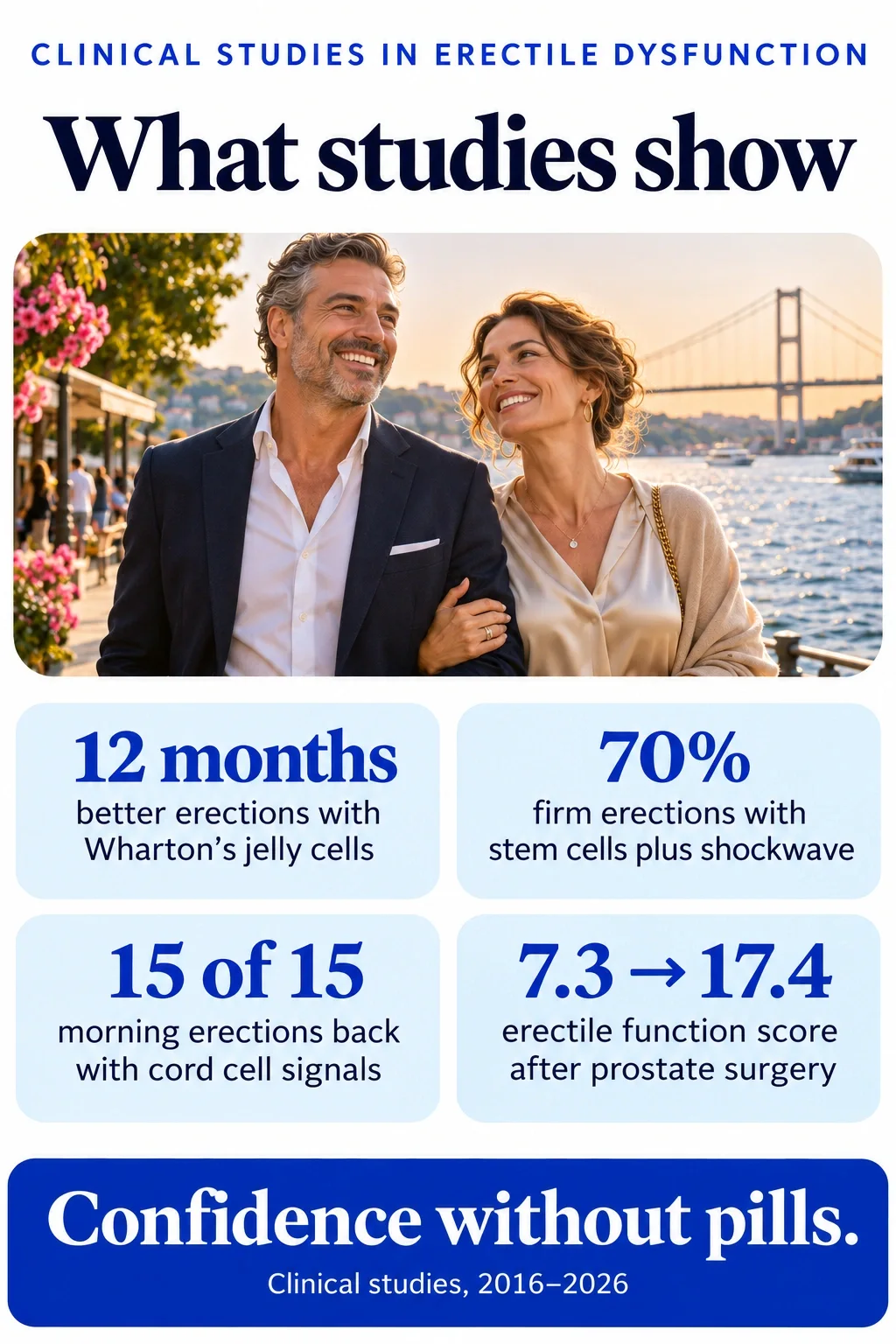
- 12 monthsof better erectile function, hardness and blood flow after two Wharton’s jelly stem cell injections in 22 diabetic men3
- 70%of diabetic men reached erections firm enough for penetration with stem cells plus shockwave, against 40% with shockwave alone4
- 79% vs 0%of men with moderate ED reached a clinically meaningful gain three months after shockwave, against sham1
- 69% vs 27%reached a clinically meaningful gain six months after PRP, against placebo2
02
ED treatment without pills: why so many men look beyond tablets
If your erections are not what they used to be, you are in very large company. In the Massachusetts Male Aging Study, 52% of men aged 40 to 70 reported some degree of erectile dysfunction,10 and researchers projected that about 322 million men worldwide would be living with ED by 2025.11 It is one of the most common health concerns of adult life, and one of the most treatable.
Tablets: a good first step for many men
Tablets that boost blood flow to the penis, known as PDE5 inhibitors, changed men’s health for the better. A network analysis of 82 randomised trials with 47,626 men confirmed how well they work: sildenafil 50 mg had the greatest effect, and tadalafil 10 mg had the fewest side effects.12 For many men they remain an excellent choice, and they can stay part of any plan.
Why men still look for something more
Yet many men would rather not plan intimacy around a tablet. In an analysis of 22 studies with 162,936 men, almost half had stopped their tablets after one year, for a mix of reasons that included a partner’s feelings and tablets that no longer worked as well as hoped.13 The wishes we hear most often in private consultations are simple:
- Spontaneity: being ready when the moment comes, not an hour later.
- Something that lasts: a treatment that works on the tissue, not only on the evening.
- Help for a specific cause: diabetes and prostate surgery are two common causes of ED in which the blood vessels and nerves benefit from extra support.1415
- Confidence: feeling like yourself again, for yourself and for your partner.
The good news is that men today have more drug-free choices than ever. They can be combined with each other and, if your doctor advises, with tablets. The sections below go through each one, from the simplest to the most advanced.
03
Can ED be fixed naturally? Exercise, weight, pelvic floor training, devices and implants
The healthiest foundation for erections is the same as for your heart: active muscles, a healthy weight and supple blood vessels. These steps help on their own, and they help every other treatment work better.
Weight loss and exercise
In a two-year randomised trial in Italy, 110 obese men with ED were given either detailed support to lose weight and move more, or general advice. In the support group, the average erectile function score rose from 13.9 to 17, and 17 of the 55 men reached the normal range, against 3 of 55 in the control group.7 Across randomised trials of lifestyle changes and treatment of heart risk factors, erectile function scores improved significantly, by 2.66 points on average.16
Aerobic exercise
Across 11 randomised trials, regular aerobic exercise raised erectile function scores by 2.8 points, and by 4.9 points in men with severe ED, the group that gained the most.17 Brisk walking, cycling, swimming and jogging all count.
Pelvic floor training
The pelvic floor muscles help keep blood in the erectile tissue during an erection. In a randomised trial in England, men who learned pelvic floor exercises with biofeedback improved their erectile function scores by 6.74 points more than the control group at three months, and by six months 22 of the 55 men (40%) had reached normal erectile function.18
Vacuum devices and rings
A vacuum device draws blood into the penis, and a soft ring at the base holds it there. Across 18 studies with 1,065 men whose ED had not responded to tablets, it allowed successful intercourse or satisfaction in 80%.19 It works mechanically, at the moment of use, rather than on the tissue itself.
Injections of medicine and penile implants
Medicines can also be injected into the penis or placed in the urethra shortly before sex. They are not pills, but they are still drug-based. A penile implant is a dependable surgical option for men who want a lasting solution after other treatments: across 83 studies with 12,132 men, 83% were satisfied, and satisfaction grew with time.20 Because an implant takes over the work of the erectile chambers, many men first explore treatments that aim to restore their own, natural erections.
Mind and relationship
Erections live in the mind as well as the body. When stress, worry or relationship strain play a part, talking with a sex therapist or counsellor, alone or as a couple, is a valuable part of care, and it combines well with every treatment on this page.
04
Shockwave therapy and PRP (the P-shot) for ED: what trials show
After tablets, shockwave and PRP are the best-known treatments for ED. Both aim to improve the tissue rather than the moment, and both have helped many men in randomised trials.
Low-intensity shockwave therapy (Li-ESWT)
Gentle, low-energy sound waves are applied to the penis in a series of short, painless sessions. They are thought to stimulate the growth of new small blood vessels. In a meta-analysis of seven randomised trials with 602 men, erectile function scores rose by 6.40 points with shockwave, against 1.65 points with a sham treatment.21 In a double-blind trial in 70 men with moderate ED, 12 sessions over six weeks gave 79% a clinically meaningful gain at three months, against none with sham.1 And across five double-blind trials from one centre, shockwave helped men whose ED came from diabetes or heart disease as much as other men, whether they had 6 or 12 sessions, with no adverse events.22
Best suited to: mild to moderate ED from reduced blood flow. How often: usually 6 to 12 short sessions over several weeks.
PRP and the P-shot
Platelet-rich plasma (PRP) is made from a small sample of your own blood, concentrated so that it is rich in the growth factors carried by platelets, and injected into the erectile tissue. “P-shot” is a popular name for this kind of PRP injection. In a double-blind, randomised trial in 60 men with mild to moderate ED, two PRP sessions a month apart gave 69% a clinically meaningful gain at six months, against 27% with placebo, and no adverse events were seen.2 Across seven randomised trials with 660 men, adding PRP to shockwave raised erectile function scores further than shockwave alone.23
Best suited to: mild to moderate ED. How often: usually two or more sessions.
Where stem cells and exosomes go further
Both treatments rely on your own tissue’s ability to respond: shockwave nudges the blood vessels, and PRP brings growth factors from your own platelets. Stem cells and exosomes add something new. They bring young repair cells, or their concentrated signals, that act on the blood vessels, the smooth muscle and the nerves together.824 That is why researchers have begun to combine them with shockwave, with encouraging results, as the next sections show.
05
Stem cell therapy for ED: working on the erectile tissue itself
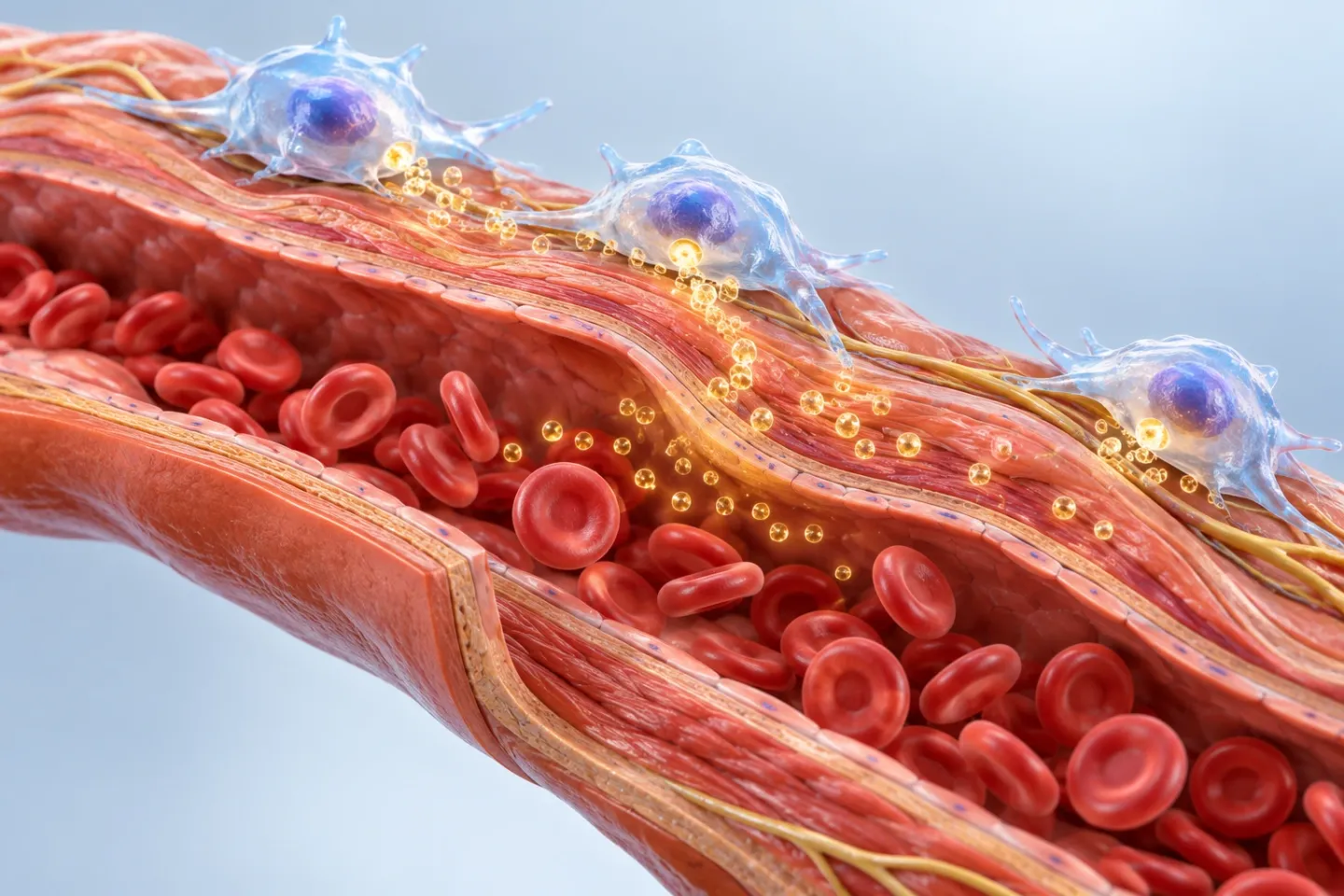
Mesenchymal stem cells (MSCs) are the body’s repair coordinators. Placed in the erectile tissue, they do not simply fill a gap. They release growth factors, calming messengers and exosomes that support the blood vessels, the smooth muscle and the nerves of an erection, the three links that drug-free treatment aims to strengthen.824
What human studies report
- Wharton’s jelly stem cells in diabetes. In 22 diabetic men whose ED had resisted treatment, two injections of donor Wharton’s jelly stem cells brought significant gains in erectile function scores, erection hardness and penile blood flow at every check-up over 12 months.3 There is more on this study in the next section.
- Stem cells and shockwave, head to head. In a randomised trial in 33 diabetic men, a single placental stem cell injection scored higher at six months than four sessions of shockwave (17.5 against 16.7), and the combination did best of all, raising erectile function from 13.1 to 19.8.4
- After prostate surgery. In men whose ED after prostate removal had not responded to maximal medical treatment, erectile function scores rose from 7.3 to 17.4 six months after bone marrow cell injections, with the benefits still present after a year.15
- When tablets no longer work. In 10 diabetic men who did not respond to the maximum dose of tablets, 4 achieved erections firm enough for satisfying intercourse after bone marrow stem cells, and 2 more did with sildenafil.25 After placental stem cells, 3 of 8 men for whom tablets had failed regained erections on their own.26
- The overall picture. A 2025 meta-analysis of clinical trials found significant improvements at six months in erectile function scores, erection hardness and penile blood flow,9 and a review of 18 trials with 373 men describes stem cell therapy as an innovative and safe treatment for ED with a physical cause.27
How stem cells support firmer erections
Where Wharton’s jelly stem cells and exosomes act in the erectile tissue
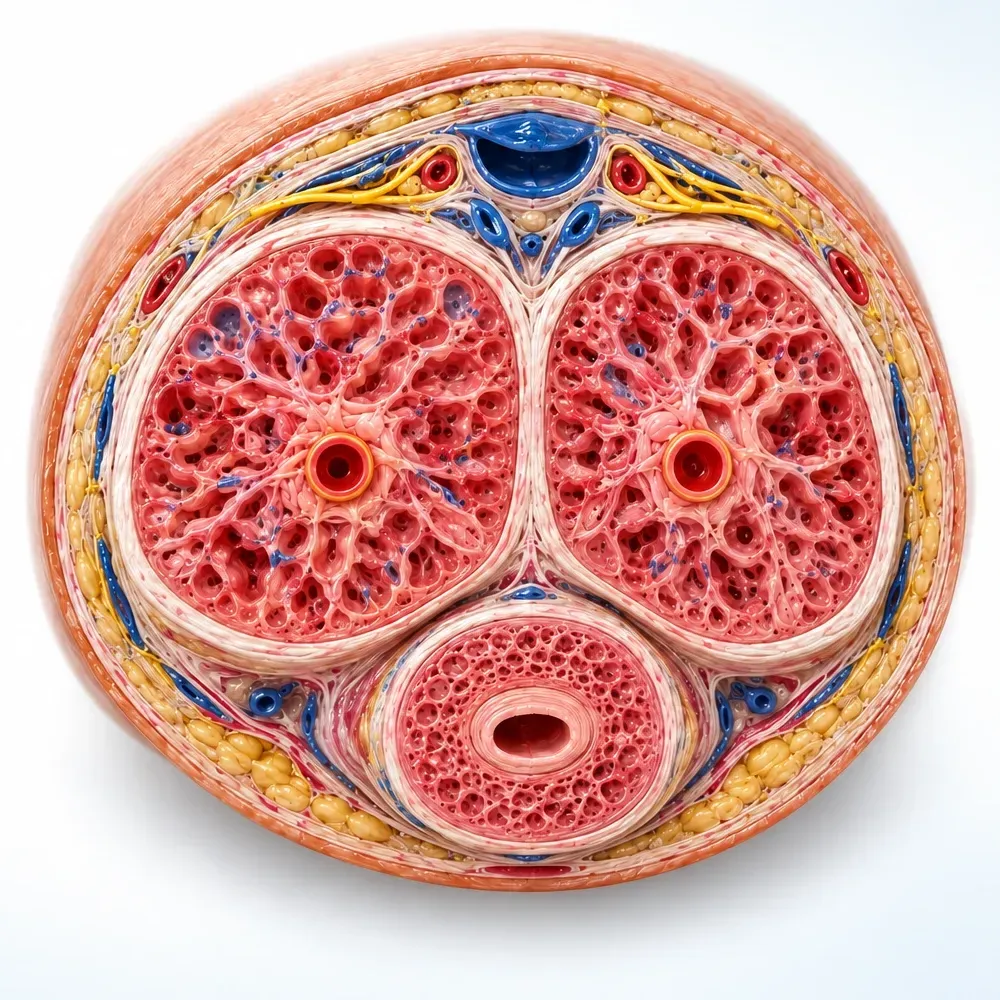
- Dorsal veinlets blood flow out again
- Nervessend the signal that starts an erection
- Erectile chambersspongy smooth muscle that fills with blood
- Central arteriesbring blood into the chambers
- Corpus spongiosumthe softer tissue around the urethra
- Blood vessels: more blood flow
- Smooth muscle: more elastic tissue
- Nerves: support for the signal
Better blood flow
After placental stem cells, blood flow in the penile arteries rose significantly, to 50.7 to 73.9 cm/s at six months,26 and after prostate surgery, firmer erections went hand in hand with better blood flow on ultrasound.15
A healthier vessel lining
Men treated after prostate surgery showed better nitric-oxide release in the penis, a sign of a healthy vessel lining.15 In laboratory research, Wharton’s jelly stem cells raised VEGF, bFGF, IGF-1 and eNOS, the signals that build blood vessels and relax erectile tissue.28
Stronger smooth muscle
In research models of diabetic ED, umbilical cord stem cells increased healthy smooth muscle in the erectile tissue and reduced scar-like collagen.29
Support for nerves
Stem cells release nerve-supporting signals such as BDNF,24 and in research models of nerve injury, umbilical cord stem cells raised nerve, vessel and smooth-muscle markers over 90 days.30
Less oxidative stress
In research models, umbilical cord stem cells sharply reduced oxidative stress and protected the energy units of the cells, the mitochondria, in diabetic erectile tissue.29
Calmer inflammation
MSCs and their vesicles reduce inflammation and promote tissue repair through the signals they release, which is how they help the erectile tissue recover.8
This is the core difference from tablets: the aim is a healthier erectile tissue that responds better on its own. Read the full study results on our stem cell ED treatment page.
06
Why Wharton’s jelly stem cells and exosomes lead our drug-free ED plans
Wharton’s jelly is the soft, protective tissue around the blood vessels of the umbilical cord. Our stem cells come from cords donated after healthy births, so nothing is taken from your own body, and the cells start young. Wharton’s jelly stem cells, together with the exosomes made by the very same cells, are the heart of every ED plan we make.
The ED trial that used our cell type
The first human study of Wharton’s jelly stem cells for ED was carried out in 22 men with diabetes whose erectile dysfunction had not responded to treatment. They received two injections of donor Wharton’s jelly stem cells into the erectile tissue, about a month apart. Their erectile function scores, erection hardness and penile blood flow, both at rest and 20 minutes after stimulation, improved significantly at every check-up over 12 months. The treatment was well tolerated: the only effects were minimal, passing redness and bruising where the injections were given.3
Diabetic ED is among the most demanding kinds to treat, because diabetes affects both the small blood vessels and the nerves. That these men improved, with the same type of cells we use, is the main reason our doctors lead with Wharton’s jelly.
Young cells, rich signals, no matching
When researchers compared the proteins released by stem cells from four sources, the secretome of Wharton’s jelly cells was more diverse than that of fat or bone marrow cells.31 Wharton’s jelly cells also carry very few of the signals that trigger rejection, and they calm overactive immune cells, so no donor matching is needed.32 In laboratory research in diabetic ED, they raised the growth factors VEGF, bFGF and IGF-1 and the nitric-oxide enzyme eNOS, and they improved erectile pressure.28
Wharton’s jelly exosomes: the same signals, concentrated
Exosomes are tiny packages of proteins and genetic messages that cells use to talk to each other.33 Wharton’s jelly exosomes carry the repair signals of these young cells in cell-free form. Their strongest human result so far comes from diabetes: in a randomised trial in 110 people with slow-healing diabetic foot ulcers, wounds treated with Wharton’s jelly exosomes healed in an average of 6 weeks, against 20 weeks with standard care alone.5 Because diabetic ED also involves the small blood vessels, our doctors add these exosomes to almost every ED plan.
Umbilical cord stem cells alongside
Umbilical cord stem cells, the second cell type in our plans, add encouraging results of their own. In a published clinical series, 22 men treated with umbilical cord stem cells injected into the penis and given by IV, together with shockwave and hyperbaric oxygen, improved their erectile function scores significantly within three months, with no major adverse events.34 In 15 men with severe ED that sildenafil no longer helped, the repair signals released by umbilical cord stem cells brought morning erections back to all 15 within one month and nearly doubled their erectile function scores, from 5.7 to 11.3.6 And in research models of diabetic ED, umbilical cord stem cells worked equally well whether they were injected into the penis or given by IV.29
Wharton’s jelly and umbilical cord cells in numbers
- 22 menwith diabetic ED gained in function, hardness and blood flow over 12 months after Wharton’s jelly stem cells3
- 6 vs 20 weeksaverage healing time of diabetic foot ulcers with Wharton’s jelly exosomes, against standard care, in a randomised trial5
- 15 of 15men whom sildenafil no longer helped regained morning erections a month after umbilical cord stem cell signals6
- 3 monthsto a significant gain in erectile function after umbilical cord stem cells into the penis and by IV, with shockwave34
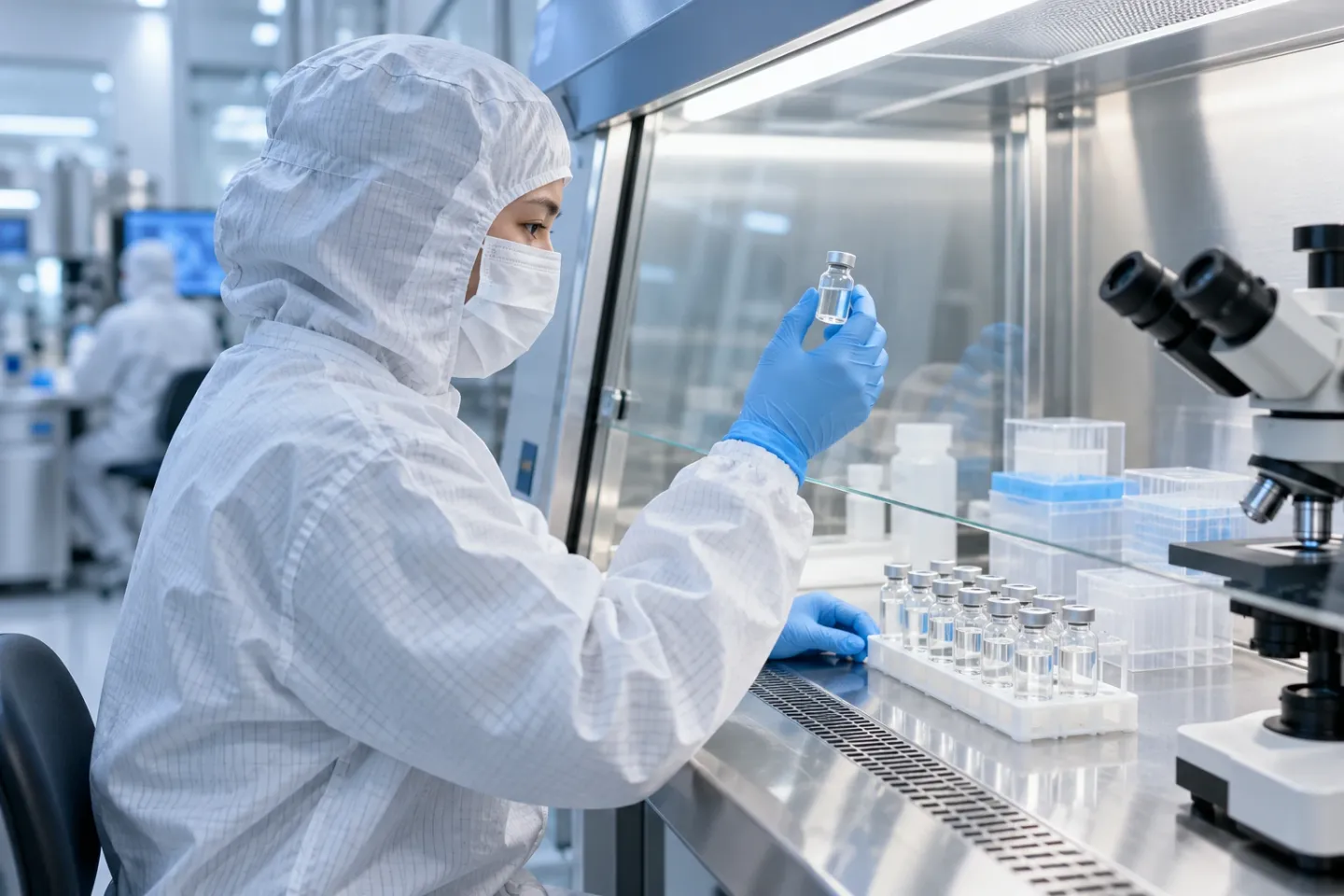
Fresh, never frozen
Our cells are prepared for your date in a Ministry of Health-approved GMP laboratory and never frozen. In laboratory comparisons, fresh MSCs kept stronger immune-calming properties than cells used straight after thawing.35
No harvest, no waiting
Nothing is taken from your body: no fat or bone marrow harvest, and no weeks of waiting while your own cells grow. Your cells are ready 5 to 10 days after booking.
Your cell count in writing
The number of cells in your plan is confirmed in writing, and the count and viability are checked and certified by the GMP laboratory before treatment.
CD34+ exosomes as an extra
Your plan can also include CD34+ exosomes, which in research models carried strong signals for growing new small blood vessels and improved blood flow.36
Why we combine cells and exosomes. Stem cells stay in the tissue and keep releasing repair signals over time; exosomes deliver a concentrated dose of those signals at once. That is why our doctors pair Wharton’s jelly stem cells with Wharton’s jelly exosomes in almost every ED plan, adding umbilical cord stem cells and CD34+ exosomes where they help. Read more on our exosome therapy page and our erectile dysfunction treatment page.
07
Exosomes for erectile dysfunction: the cell-free option
Exosome therapy for ED uses the repair signals of stem cells without the cells themselves. Each exosome is a tiny bubble, far smaller than a cell, filled with proteins and genetic messages that tell the cells around it to repair, calm inflammation and grow new small blood vessels.33 Because they are cell-free, exosomes can be given on their own or added to a stem cell plan.
What research models show
Across 11 studies, stem cell exosomes improved erectile function in research models and restored the structure of the erectile tissue: more smooth muscle, more healthy vessel lining, more of the nitric-oxide enzymes of nerves and vessels (nNOS and eNOS), and fewer signals of scarring and cell death.37 Across 20 studies in 324 rats, stem cell vesicles improved erectile function strongly, with similar results from different cell sources and in both diabetic and nerve-injury models.38 Umbilical cord blood vesicles injected into the erectile tissue gathered in the bundle of nerves and blood vessels of the penis and restored erectile function after nerve injury, with a stronger recovery at higher doses.39
The first results in men
The first human results come from the secretome, the full mix of repair signals, exosomes included, that stem cells release. In 15 men with severe ED that sildenafil no longer helped, umbilical cord stem cell secretome injected into the erectile tissue brought morning erections back to all 15 within a month, with better erection hardness, penile blood flow and tissue elasticity.6 In 38 men treated with three injections of a dental-pulp stem cell secretome, 37 improved, the average erectile function score rose from 13.1 to 19.3, and 18 men (47.4%) reached the range of no ED.40
How exosomes are given for ED
For ED, exosomes are given by intracavernosal injection, into the erectile tissue, with a very fine needle, so that their signals reach the blood vessels, smooth muscle and nerves directly. An IV infusion can add whole-body support for the blood vessels, for example in men with diabetes. These are two of the 21 routes described on our exosome therapy page.
08
Shockwave vs PRP vs stem cells vs exosomes: ED treatments compared
Every option has its place, and many men do best with a combination. This table shows how each one works, what studies report and how it is given.
| Treatment | How it works | What studies report | How it is given |
|---|---|---|---|
| Wharton’s jelly stem cells and exosomes | Young repair cells and their concentrated signals act on blood vessels, smooth muscle and nerves8 | Better function, hardness and blood flow over 12 months in 22 diabetic men3 | A discreet injection into the erectile tissue, with IV if advised, in one treatment day |
| Umbilical cord stem cells | Repair signals from a second young cell type | Morning erections back in 15 of 15 men whom sildenafil no longer helped6 | Added to Wharton’s jelly cells on the same treatment day |
| Shockwave therapy (Li-ESWT) | Low-energy sound waves that stimulate new small blood vessels | 79% vs 0% with a meaningful gain at 3 months, against sham1 | 6 to 12 short sessions over several weeks |
| PRP (the P-shot) | Growth factors from your own platelets | 69% vs 27% with a meaningful gain at 6 months, against placebo2 | Usually two or more injections |
| Tablets (sildenafil, tadalafil) | Boost blood flow for several hours | Effective across 82 randomised trials with 47,626 men12 | Before each time, or a low daily dose |
| Exercise and pelvic floor training | Healthier blood vessels and stronger pelvic muscles | 40% reached normal erectile function with pelvic floor training18 | Daily habits at home |
| Vacuum device | Draws blood into the penis mechanically | Successful intercourse or satisfaction in 80% of men whom tablets had not helped19 | At the moment of use |
| Penile implant | A surgical device inside the erectile chambers | 83% of men satisfied20 | One operation |
Better together
These treatments can add up. In the randomised trial in diabetic men, stem cells alone scored higher than shockwave alone, and the two together gave the best result: 70% of men reached erections firm enough for penetration, and their erections lasted longest.4 PRP likewise added to the effect of shockwave.23 Tablets can stay part of your plan if your doctor advises: in one stem cell study, two men reached firm erections with sildenafil as well.25
For the full treatment details, see our page on stem cell therapy for ED in Istanbul.
09
Diabetic ED treatment: what helps when diabetes is the cause
Diabetes is one of the most common reasons for ED. Across 145 studies with 88,577 men, 52.5% of men with diabetes had erectile dysfunction, and 66.3% of men with type 2 diabetes.14 Over the years, raised blood sugar affects the small blood vessels and the nerves of the penis, which is why diabetic ED responds well to treatment that works on the tissue itself.41
The everyday foundation
Good blood sugar control, regular exercise and a healthy weight support your blood vessels everywhere, erections included.1617 Tablets work well for many men with diabetes and remain a sensible first step.42
Shockwave
In five double-blind trials, shockwave helped men whose ED came from diabetes as much as men with other causes.22
Stem cells and exosomes
Diabetic ED is the type studied most with stem cells. Two injections of Wharton’s jelly stem cells improved erectile function, hardness and blood flow over 12 months in 22 diabetic men whose ED had resisted treatment.3 In the randomised trial, diabetic men did best with stem cells and shockwave together, and 70% reached erections firm enough for penetration.4 In 10 diabetic men who did not respond to maximum-dose tablets, bone marrow stem cells helped 4 reach firm erections on their own and 2 more with sildenafil.25 Reviewers of these studies note that stem cells may also make the body more responsive to tablets such as sildenafil.41
Support for the whole body
Because diabetes affects blood vessels throughout the body, the doctor may add an IV infusion to your plan. In 22 people with type 2 diabetes, Wharton’s jelly stem cells given by IV and by a catheter to the pancreas lowered blood glucose and glycated haemoglobin (HbA1c) and calmed markers of inflammation over 12 months,43 and Wharton’s jelly exosomes helped diabetic foot ulcers heal in 6 weeks instead of 20.5 Read more on our stem cell therapy for diabetes page.
10
ED treatment after prostate surgery: helping nerves and blood vessels recover
Prostate surgery is often an important step for your long-term health, and modern nerve-sparing techniques protect erections as much as possible. Even so, the delicate nerves and blood vessels beside the prostate need time and help to recover. Doctors call this help penile rehabilitation, and it often combines several treatments.
Tablets and vacuum devices
Tablets are the most widely used rehabilitation treatment after prostate surgery.44 A vacuum device helps too: in men after prostate removal, it allowed successful intercourse or satisfaction in 84.5%.19
Shockwave
Across five studies with 460 men, shockwave after prostate surgery gave better erectile function scores three to four months later than control treatment, supporting early recovery.44
Stem cells
In a French trial, men whose ED after prostate removal had not responded to maximal medical treatment received injections of their own bone marrow cells into the erectile tissue. Six months later, their erectile function scores had risen from 7.3 to 17.4 and erection hardness from 1.3 to 2.6, the benefits were still present after one year, and higher doses gave better spontaneous erections.15 Six more men treated at the best dose rose from 3.7 to 18, and over an average of 62 months of follow-up there was no return of prostate cancer.45
Help for the nerves
In research models of nerve injury, umbilical cord stem cells moved to the injured area within a day and raised nerve, vessel and smooth-muscle markers over 90 days,30 and umbilical cord blood vesicles gathered in the bundle of nerves and blood vessels of the penis and restored erectile function.39 That is why our doctors combine Wharton’s jelly stem cells and exosomes for men after prostate surgery, timed with your urologist’s advice.
11
Muse cells and Muse exosomes: an optional add-on
Muse cells, short for multilineage-differentiating stress-enduring cells, are a small group of especially hardy repair cells within the MSC family, discovered in Japan in 2010.46 After an IV infusion they home to damaged tissue, and donor Muse cells have been given without tissue matching or immune-suppressing medicines.47
In rats with the kind of nerve injury that can follow prostate surgery, Muse cells given by IV settled in the pelvic nerve centre that serves the penis and restored erectile function better than ordinary MSCs.48 Muse exosomes carry the cells’ secreted signals in cell-free form.4950
If Dr. Cihan Bolat recommends it, Muse cells and Muse exosomes can be added by IV infusion, alongside your Wharton’s jelly stem cells and exosomes, which remain the core of your plan.
12
How we plan drug-free ED treatment in Istanbul: routes, sessions and timeline
Every plan starts with a private medical review. Dr. Cihan Bolat, our medical director and a specialist in anaesthesiology and reanimation and in regenerative medicine, and his team look at your age, your health, the treatments you have tried and your recent tests: total and free testosterone, a complete blood count and a chemistry screen, plus any heart history and your current medicines.
He then plans the cells, the exosomes and the routes for you. For most men, that means Wharton’s jelly stem cells and Wharton’s jelly exosomes injected into the erectile tissue, with umbilical cord stem cells and CD34+ exosomes where they help, and an IV infusion when whole-body support makes sense, for example with diabetes.
Your drug-free ED plan in four steps
- Private reviewYour tests, health and goals, reviewed in confidence by our specialist team.
- Intracavernosal injectionWharton’s jelly stem cells and exosomes into the erectile tissue, with a very fine needle.3
- IV infusion, if advisedWhole-body support; in research models, umbilical cord stem cells helped by IV as well as by injection.29
- Follow-up and top-upsReviews at about 1, 3, 6 and 12 months, with a further session if planned.45

One private treatment day
Our driver picks you up, takes you to the clinic and brings you back afterwards. You return to your hotel the same day.
Comfort first
The injection uses a very fine needle and takes only a short time. Dr. Cihan Bolat, a specialist in anaesthesiology, plans your comfort with you.
A second session, if planned
The Wharton’s jelly study gave two injections about a month apart, so your plan can include a second session.3
Tablets and shockwave can continue
If your own doctor advises tablets or shockwave, they can continue alongside your plan, and treatments can add up.4
Fresh cells for your date
Your cells are prepared fresh, usually within 5 to 10 days of booking, in a Ministry of Health-approved GMP laboratory.
Discreet from start to finish
Your review, consultation and treatment are confidential, and your case manager is your single point of contact.
When to expect changes
Results build over the months after treatment. In studies, morning erections returned within the first month,6 clear gains in erectile function, hardness and blood flow were measured at about six months,915 and men were still clearly better than before treatment a year later.315 Researchers suggest repeat sessions to keep results at their best,45 so we plan your follow-up with you.
13
Is drug-free ED treatment safe?
Safety matters to every man considering ED treatment, and the published record for regenerative treatment is reassuring. A 2021 meta-analysis of 62 randomised trials with 3,546 patients found MSC treatment safe, the most common effect a passing fever.51
The ED studies point the same way. The early human trials of stem cells for ED all reported no serious adverse events,52 and in the Wharton’s jelly trial the only effects were minimal, passing redness and bruising where the injections were given.3 In the randomised trial of stem cells and shockwave, no severe adverse events occurred, and mild local discomfort settled within a week.4 Secretome injections caused only brief discomfort that faded within minutes,6 and in men treated after prostate surgery there was no return of prostate cancer over an average of 62 months.45
Shockwave and PRP are well tolerated too: no adverse events were reported in the double-blind shockwave trials from one centre or in the PRP trial described above.222
Your own care adds further layers. Wharton’s jelly cells need no donor matching,32 your cells are prepared in a Ministry of Health-approved GMP laboratory with certified count and viability, and our specialist team reviews your tests and heart history beforehand. We screen carefully, and a specialist team treats you.
14
Why men travel to Istanbul, Turkey for drug-free ED treatment
Men come to us from the UK, Germany, the Netherlands, across Europe, the Middle East and the Gulf, the USA and beyond. Many have tried tablets, some have had shockwave or PRP at home, and they come to Istanbul for the regenerative part of the plan: fresh Wharton’s jelly stem cells and Wharton’s jelly exosomes, given discreetly by a specialist team in one treatment day.

Complete discretion
A confidential review, a private driver and one treatment day: your treatment stays between you and your doctor.
A specialist-led plan
A free medical review and phone consultation with the specialist team led by Uzm. Dr. Cihan Bolat, and a written plan before you book.
A clear price in writing
Most plans cost under USD 10,000, all-inclusive and fixed in writing before you travel.
One trip
Most plans take one treatment day in Istanbul, with no second trip needed and no harvest from your body.
Help at every step
Help with the hotel, ground transport and translation, and a personal case manager who plans your stay with you.
Easy to reach
Istanbul has two international airports, and from much of Western Europe the flight takes around three to four hours.
Our clinic is in Suadiye, a calm residential district on Istanbul’s Asian side near the Marmara seafront. Many men combine their treatment day with a few relaxed days in the city, often with their partner. Read why patients choose Turkey for stem cell therapy.
15
Your treatment in Istanbul, step by step
From your first message to follow-up at home, every step is private and planned in advance, whether you travel from London, Berlin, Amsterdam, Dubai or New York. For the fuller story, read the stem cell treatment in Turkey, step by step, or request your free consultation now.
Free, private medical review
Send us your age, the treatments you have tried and your recent tests: total and free testosterone, a complete blood count and a chemistry screen, plus any heart history and current medicines, through our consultation request or by WhatsApp on +90 534 856 92 92.
Phone consultation and fixed price
Once your case is approved, you discuss your plan with the specialist and receive a written plan with the cell count, the exosomes, the routes and a fixed, all-inclusive price.
Fresh preparation
After your deposit, your Wharton’s jelly stem cells and exosomes are prepared fresh for your date, usually within 5 to 10 days.
One private treatment day
Our driver takes you to the clinic, where the specialist gives your treatment, and brings you back to your hotel the same day.
Home and follow-up
Back home, we review your progress privately at about 1, 3, 6 and 12 months and plan any further session with you.
16
How much does drug-free ED treatment with stem cells cost in Turkey?
Your price depends on the number of Wharton’s jelly stem cells, the exosomes and the routes in your plan. Most plans cost under USD 10,000, fixed in writing; adding an IV infusion or a second session raises the price. After your free medical review you receive a fixed, all-inclusive price in writing, before you book anything, so there are no surprises.
When you compare prices, compare what is included: the fresh cells and exosomes, the treatment by our specialist, ground transport, a personal case manager and follow-up, all in one trip and one treatment day.
Included
- Free medical review and phone consultation
- Fresh Wharton’s jelly stem cells, with certified count and viability
- Wharton’s jelly exosomes, and umbilical cord stem cells or CD34+ exosomes if they are in your plan
- Treatment by our specialist in one private treatment day
- Ground transport to and from the clinic, and help with translation
- A personal case manager and follow-up reviews
Not included / optional
- Flights
- Hotel stay, which we can arrange for you
- An IV infusion, if advised
- A second session, if it is part of your plan
See how our cells are prepared on our stem cell therapy page, or read the full treatment details on our erectile dysfunction page.
17
Frequently asked questions
What is the best drug-free treatment for ED?
It depends on the cause. Exercise and pelvic floor training help most men, shockwave suits mild to moderate ED from reduced blood flow, and Wharton’s jelly stem cells and exosomes aim to repair the blood vessels, smooth muscle and nerves of the erectile tissue. In 22 diabetic men, Wharton’s jelly stem cells improved erectile function, hardness and blood flow over 12 months. A free review tells you which suits you.
Can erectile dysfunction be treated without pills?
Yes. The options include weight loss and exercise, pelvic floor training, vacuum devices, shockwave therapy, PRP, stem cells and exosomes, and, for some men, an implant. In randomised trials, 79% of men gained meaningfully with shockwave and 69% with PRP, and in diabetic men, stem cells combined with shockwave gave the best result of all.
Can ED be fixed naturally?
Healthy habits help a great deal. In a two-year trial in obese men, weight loss and exercise brought 17 of 55 men back to normal erectile function, against 3 of 55 controls, and pelvic floor training helped 40% of men reach normal function in another trial. For ED linked to diabetes, surgery or ageing blood vessels, regenerative treatment can add support at the level of the tissue.
Is shockwave therapy for ED worth it?
For many men with mild to moderate ED, yes. In a double-blind trial, 79% of men with moderate ED had a clinically meaningful gain three months after 12 sessions, against none with sham. Shockwave works mainly on the blood vessels, and in diabetic men it did even better when combined with stem cells.
Shockwave vs PRP vs stem cells: which is best for ED?
They work in different ways and can be combined. Shockwave stimulates new small blood vessels, PRP uses the growth factors of your own platelets, and stem cells bring young repair cells that act on vessels, muscle and nerves together. In a randomised trial in diabetic men, stem cells alone scored higher than shockwave alone, and the combination did best.
P-shot vs stem cells: what is the difference?
The P-shot is a PRP injection made from your own blood platelets, which carry growth factors. Stem cell treatment uses living repair cells, such as Wharton’s jelly stem cells, that keep releasing growth factors, calming messengers and exosomes in the tissue. Our plans pair Wharton’s jelly stem cells with Wharton’s jelly exosomes for a concentrated dose of repair signals.
Do exosomes work for erectile dysfunction?
In research models, stem cell exosomes improved erectile function and restored the structure of the erectile tissue across 11 studies. In men, the first results come from stem cell secretome, which includes exosomes: all 15 men with severe ED that sildenafil no longer helped regained morning erections within a month. We give Wharton’s jelly exosomes by injection into the erectile tissue and, if advised, by IV.
What is the difference between stem cells and exosomes for ED?
Stem cells are living cells that stay in the tissue and keep releasing repair signals over time. Exosomes are tiny packages of those signals, with no living cells inside, that act at once. Our doctors usually combine Wharton’s jelly stem cells with exosomes from the same tissue, adding umbilical cord stem cells and CD34+ exosomes where they help.
What is the best ED treatment for diabetics?
Tablets help many men with diabetes, and exercise and good blood sugar control support every treatment. When more is needed, diabetic ED is the type studied most with stem cells: two injections of Wharton’s jelly stem cells improved function, hardness and blood flow over 12 months in 22 diabetic men, and in a randomised trial, stem cells with shockwave gave 70% of diabetic men erections firm enough for penetration.
What helps ED after prostate surgery?
Penile rehabilitation often combines tablets, a vacuum device and shockwave. Regenerative treatment adds support for the nerves and blood vessels: in men whose ED after prostate removal had not responded to maximal medical treatment, stem cell injections raised erectile function scores from 7.3 to 17.4 within six months, with no return of prostate cancer over an average of 62 months. Your plan is timed with your urologist’s advice.
Will I still need Viagra or Cialis after stem cell therapy?
In studies, some men regained erections on their own, and others reached firm erections with a tablet as well. You can keep using tablets if your doctor advises. The aim of treatment is a healthier erectile tissue, so that you no longer have to plan intimacy around a tablet.
How long do the results of drug-free ED treatment last?
It differs by treatment. With stem cells, results built up over the months after treatment, with clear gains at about six months, and men were still clearly better than before treatment after one year. Researchers suggest repeat sessions to keep results at their best, and we review your progress at about 1, 3, 6 and 12 months.
Is stem cell therapy for ED safe?
The published record is reassuring. A meta-analysis of 62 randomised trials with 3,546 patients found MSC treatment safe, with a passing fever the most common effect, and the early stem cell trials for ED reported no serious adverse events. In the Wharton’s jelly trial, the only effects were minimal, passing redness and bruising where the injections were given.
Does the injection hurt?
The injection uses a very fine needle and takes only a short time. Dr. Cihan Bolat, a specialist in anaesthesiology, plans your comfort with you, and you return to your hotel the same day.
How much does stem cell therapy for ED cost in Turkey?
Most plans cost under USD 10,000, fixed in writing. Your price depends on the number of Wharton’s jelly stem cells, the exosomes and the routes in your plan, and adding an IV infusion or a second session raises it. The price includes the free review, the fresh cells with certified count and viability, the treatment, ground transport, a case manager and follow-up.
Can I have drug-free ED treatment in Istanbul if I live abroad?
Yes. Many of our patients travel from the UK, Europe, the Gulf and further afield. You send your tests from home, receive a free review and a written plan with a fixed price, and most plans take one private treatment day in Istanbul. Our case manager helps with the hotel, transport and translation, and you can reach us by WhatsApp on +90 534 856 92 92.
Is my treatment confidential?
Yes. Your medical review, consultation and treatment are confidential, our private driver takes you to and from the clinic, and your case manager is your single point of contact.
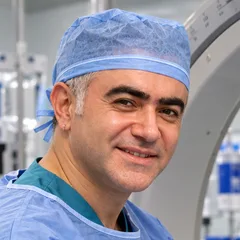
Medical review
Uzm. Dr. Cihan Bolat
Medical Director, Istanbul Stemcell
This page was written from the published studies listed below and reviewed for medical accuracy on .
18
References
- Kalyvianakis D, et al. The Effect of Low-Intensity Shock Wave Therapy on Moderate Erectile Dysfunction: A Double-Blind, Randomized, Sham-Controlled Clinical Trial. J Urol. 2022;208(2):388-395. PMID 35830338
- Poulios E, et al. Platelet-Rich Plasma (PRP) Improves Erectile Function: A Double-Blind, Randomized, Placebo-Controlled Clinical Trial. J Sex Med. 2021;18(5):926-935. PMID 33906807
- Al Demour S, et al. Safety and Efficacy of 2 Intracavernous Injections of Allogeneic Wharton's Jelly-Derived Mesenchymal Stem Cells in Diabetic Patients with Erectile Dysfunction: Phase 1/2 Clinical Trial. Urol Int. 2021;105(11-12):935-943. PMID 34384079
- Ji YH, et al. High-activity placenta-derived mesenchymal stem cells combined with low-intensity extracorporeal shock wave therapy for diabetic erectile dysfunction: a prospective randomized controlled trial. Stem Cell Res Ther. 2025;16(1):359. PMID 40629484
- Kishta MS, et al. The transforming role of wharton's jelly mesenchymal stem cell-derived exosomes for diabetic foot ulcer healing: a randomized controlled clinical trial. Stem Cell Res Ther. 2025;16(1):559. PMID 41084065
- Margiana R, et al. Intracavernosal UC-MSC secretome therapy for severe erectile dysfunction: a clinical anatomy pilot study with elastography and Doppler assessment. Front Reprod Health. 2026;8:1775672. PMID 42094932
- Esposito K, et al. Effect of lifestyle changes on erectile dysfunction in obese men: a randomized controlled trial. JAMA. 2004;291(24):2978-84. PMID 15213209
- Patel AA, et al. The promise of mesenchymal stromal/stem cells in erectile dysfunction treatment: a review of current insights and future directions. Stem Cell Res Ther. 2025;16(1):98. PMID 40012076
- Senel S, et al. Stem cell therapy for erectile dysfunction: promise or reality? - a systematic review and meta-analysis of clinical trials. BMC Urol. 2025;25(1):222. PMID 40883730
- Feldman HA, et al. Impotence and its medical and psychosocial correlates: results of the Massachusetts Male Aging Study. J Urol. 1994;151(1):54-61. PMID 8254833
- Ayta IA, McKinlay JB, Krane RJ. The likely worldwide increase in erectile dysfunction between 1995 and 2025 and some possible policy consequences. BJU Int. 1999;84(1):50-6. PMID 10444124
- Chen L, et al. Phosphodiesterase 5 inhibitors for the treatment of erectile dysfunction: a trade-off network meta-analysis. Eur Urol. 2015;68(4):674-80. PMID 25817916
- Corona G, et al. First-generation phosphodiesterase type 5 inhibitors dropout: a comprehensive review and meta-analysis. Andrology. 2016;4(6):1002-1009. PMID 27636710
- Kouidrat Y, et al. High prevalence of erectile dysfunction in diabetes: a systematic review and meta-analysis of 145 studies. Diabet Med. 2017;34(9):1185-1192. PMID 28722225
- Yiou R, et al. Safety of Intracavernous Bone Marrow-Mononuclear Cells for Postradical Prostatectomy Erectile Dysfunction: An Open Dose-Escalation Pilot Study. Eur Urol. 2016;69(6):988-91. PMID 26439886
- Gupta BP, et al. The effect of lifestyle modification and cardiovascular risk factor reduction on erectile dysfunction: a systematic review and meta-analysis. Arch Intern Med. 2011;171(20):1797-803. PMID 21911624
- Khera M, Bhattacharyya S, Miller LE. Effect of aerobic exercise on erectile function: systematic review and meta-analysis of randomized controlled trials. J Sex Med. 2023;20(12):1369-1375. PMID 37814532
- Dorey G, et al. Randomised controlled trial of pelvic floor muscle exercises and manometric biofeedback for erectile dysfunction. Br J Gen Pract. 2004;54(508):819-25. PMID 15527607
- Zhang F, et al. Efficacy of vacuum erectile device in refractory erectile dysfunction: a systematic review and meta-analysis. Int J Impot Res. 2026;38(2):76-85. PMID 40542251
- Corona G, et al. Long-term penile prosthesis couple's satisfaction: A systematic review and meta-analysis. Andrology. 2025;13(3):610-623. PMID 39010798
- Clavijo RI, et al. Effects of Low-Intensity Extracorporeal Shockwave Therapy on Erectile Dysfunction: A Systematic Review and Meta-Analysis. J Sex Med. 2017;14(1):27-35. PMID 27986492
- Pyrgidis N, et al. Low-intensity shockwave therapy for erectile dysfunction due to diabetes mellitus or coronary artery disease: An individual participant data meta-analysis from a single center. Andrology. 2026;14(2):348-351. PMID 40401767
- Zhou Z, et al. The efficacy of platelet-rich plasma (PRP) alone or in combination with low intensity shock wave therapy (Li-SWT) in treating erectile dysfunction: a systematic review and meta-analysis of seven randomized controlled trials. Aging Male. 2025;28(1):2472786. PMID 40037837
- Fu X, et al. Advances in stem cell therapy for erectile dysfunction: preclinical evidence and emerging therapeutic approaches. Front Med (Lausanne). 2025;12:1519095. PMID 40241900
- Alhefnawy MA, et al. Autologous mesenchymal stem cell therapy for diabetic men with erectile dysfunction. Is it promising? A pilot study. Arch Ital Urol Androl. 2023;95(4):11669. PMID 37990987
- Levy JA, et al. Determining the Feasibility of Managing Erectile Dysfunction in Humans With Placental-Derived Stem Cells. J Am Osteopath Assoc. 2016;116(1):e1-5. PMID 26745574
- Furtado TP, et al. Stem cell therapy for erectile dysfunction: a systematic review. Sex Med Rev. 2023;12(1):87-93. PMID 37758225
- Wu JH, et al. Human umbilical cord Wharton's jelly-derived mesenchymal stem cell transplantation could improve diabetic intracavernosal pressure. Asian J Androl. 2022;24(2):171-175. PMID 33975986
- Feng H, et al. Human umbilical cord mesenchymal stem cells ameliorate erectile dysfunction in rats with diabetes mellitus through the attenuation of ferroptosis. Stem Cell Res Ther. 2022;13(1):450. PMID 36064453
- Wang W, et al. Effects of human umbilical cord-derived mesenchymal stem cell therapy for cavernous nerve injury-induced erectile dysfunction in the rat model. Asian J Androl. 2025;27(4):508-515. PMID 40017050
- Shin S, et al. Comparative Proteomic Analysis of the Mesenchymal Stem Cells Secretome from Adipose, Bone Marrow, Placenta and Wharton's Jelly. Int J Mol Sci. 2021;22(2). PMID 33467726
- Weiss ML, et al. Immune properties of human umbilical cord Wharton's jelly-derived cells. Stem Cells. 2008;26(11):2865-74. PMID 18703664
- Kalluri R, LeBleu VS. The biology, function, and biomedical applications of exosomes. Science. 2020;367(6478). PMID 32029601
- Soto-Rodríguez A, et al. Enhancing penile function: the impact of a regenerative multimodal protocol on erectile dysfunction. Front Reprod Health. 2025;7:1601354. PMID 41089526
- Moll G, et al. Do cryopreserved mesenchymal stromal cells display impaired immunomodulatory and therapeutic properties? Stem Cells. 2014;32(9):2430-42. PMID 24805247
- Mathiyalagan P, et al. Angiogenic Mechanisms of Human CD34(+) Stem Cell Exosomes in the Repair of Ischemic Hindlimb. Circ Res. 2017;120(9):1466-1476. PMID 28298297
- Zhu Y, et al. Effects of stem cell-derived exosome therapy on erectile dysfunction: a systematic review and meta-analysis of preclinical studies. Sex Med. 2023;11(2):qfac019. PMID 36910707
- Lou K, et al. Nanoscale therapeutics for erectile dysfunction: a meta-analysis of stem cell-derived extracellular vesicles as natural nanoparticles in diabetic rat models. Stem Cell Res Ther. 2025;16(1):278. PMID 40457489
- Vo MN, et al. Umbilical Cord Blood-Derived Extracellular Vesicles Enhance Neurovascular Regeneration and Improve Erectile Function in a Mouse Model of Bilateral Cavernous Nerve Injury. Andrology. 2027;15(1). PMID 42381539
- Koga S, Horiguchi Y. Efficacy of a cultured conditioned medium of exfoliated deciduous dental pulp stem cells in erectile dysfunction patients. J Cell Mol Med. 2022;26(1):195-201. PMID 34845823
- Iskakov Y, et al. Treatment of erectile dysfunction by intracavernosal administration of mesenchymal stem cells in patients with diabetes mellitus. Int Braz J Urol. 2024;50(4):386-397. PMID 38701187
- Liao X, et al. Comparative efficacy and safety of phosphodiesterase type 5 inhibitors for erectile dysfunction in diabetic men: a Bayesian network meta-analysis of randomized controlled trials. World J Urol. 2019;37(6):1061-1074. PMID 30523399
- Liu X, et al. A preliminary evaluation of efficacy and safety of Wharton's jelly mesenchymal stem cell transplantation in patients with type 2 diabetes mellitus. Stem Cell Res Ther. 2014;5(2):57. PMID 24759263
- Rho BY, et al. Efficacy of Low-Intensity Extracorporeal Shock Wave Treatment in Erectile Dysfunction Following Radical Prostatectomy: A Systematic Review and Meta-Analysis. J Clin Med. 2022;11(10). PMID 35628901
- Yiou R, et al. Intracavernous Injections of Bone Marrow Mononucleated Cells for Postradical Prostatectomy Erectile Dysfunction: Final Results of the INSTIN Clinical Trial. Eur Urol Focus. 2017;3(6):643-645. PMID 28753830
- Kuroda Y, et al. Unique multipotent cells in adult human mesenchymal cell populations. Proc Natl Acad Sci U S A. 2010;107(19):8639-43. PMID 20421459
- Minatoguchi S, et al. Donor Muse Cell Treatment Without HLA-Matching Tests and Immunosuppressant Treatment. Stem Cells Transl Med. 2024;13(6):532-545. PMID 38560897
- Koyama J, et al. Intravenously engrafted human multilineage-differentiating stress-enduring (Muse) cells rescue erectile function after rat cavernous nerve injury. BJU Int. 2024;133(3):332-340. PMID 37983592
- Alessio N, et al. The secretome of MUSE cells contains factors that may play a role in regulation of stemness, apoptosis and immunomodulation. Cell Cycle. 2017;16(1):33-44. PMID 27463232
- Rajabi A, Bonyadi M. Muse Cell-Derived Exosomes: a Hypothesis for a Cell-Free Therapeutic Platform in Regenerative Medicine. Stem Cell Rev Rep. 2025;21(6):1860-1862. PMID 40531406
- Wang Y, Yi H, Song Y. The safety of MSC therapy over the past 15 years: a meta-analysis. Stem Cell Res Ther. 2021;12(1):545. PMID 34663461
- Lokeshwar SD, et al. A Systematic Review of Human Trials Using Stem Cell Therapy for Erectile Dysfunction. Sex Med Rev. 2020;8(1):122-130. PMID 31640911