
01
Can kidney function improve? The short, hopeful answer
In short: yes, kidney function can improve for some people and hold steady for many more. Your eGFR is not fixed on a one-way path: studies that followed people with chronic kidney disease for years found long periods of stability and, in some, a rising eGFR.17 Good kidney care aims to protect the function you have and give your kidneys the best conditions to recover, with everyday steps, modern medicines and, at our clinic, Wharton’s jelly stem cells and exosomes.136
Hearing that your kidney function is reduced can be unsettling, especially when the numbers on your lab report mean little to you. The good news is that kidney care has moved forward a great deal. Newer medicines protect the kidneys in people with and without diabetes, exercise and diet have measurable effects, and regenerative medicine adds a different kind of support, aimed at the inflammation and scarring that drive kidney disease.14154
Chronic kidney disease is very common: it affects more than 10% of people worldwide, over 800 million in total.16 Because it usually changes slowly, there is often plenty of time to act. This guide walks you through what your numbers mean, what you can do yourself, what your doctors can offer and where Wharton’s jelly and umbilical cord stem cells and exosomes fit in. For our full treatment page, see stem cell therapy for kidney disease in Istanbul.
Results at a glance
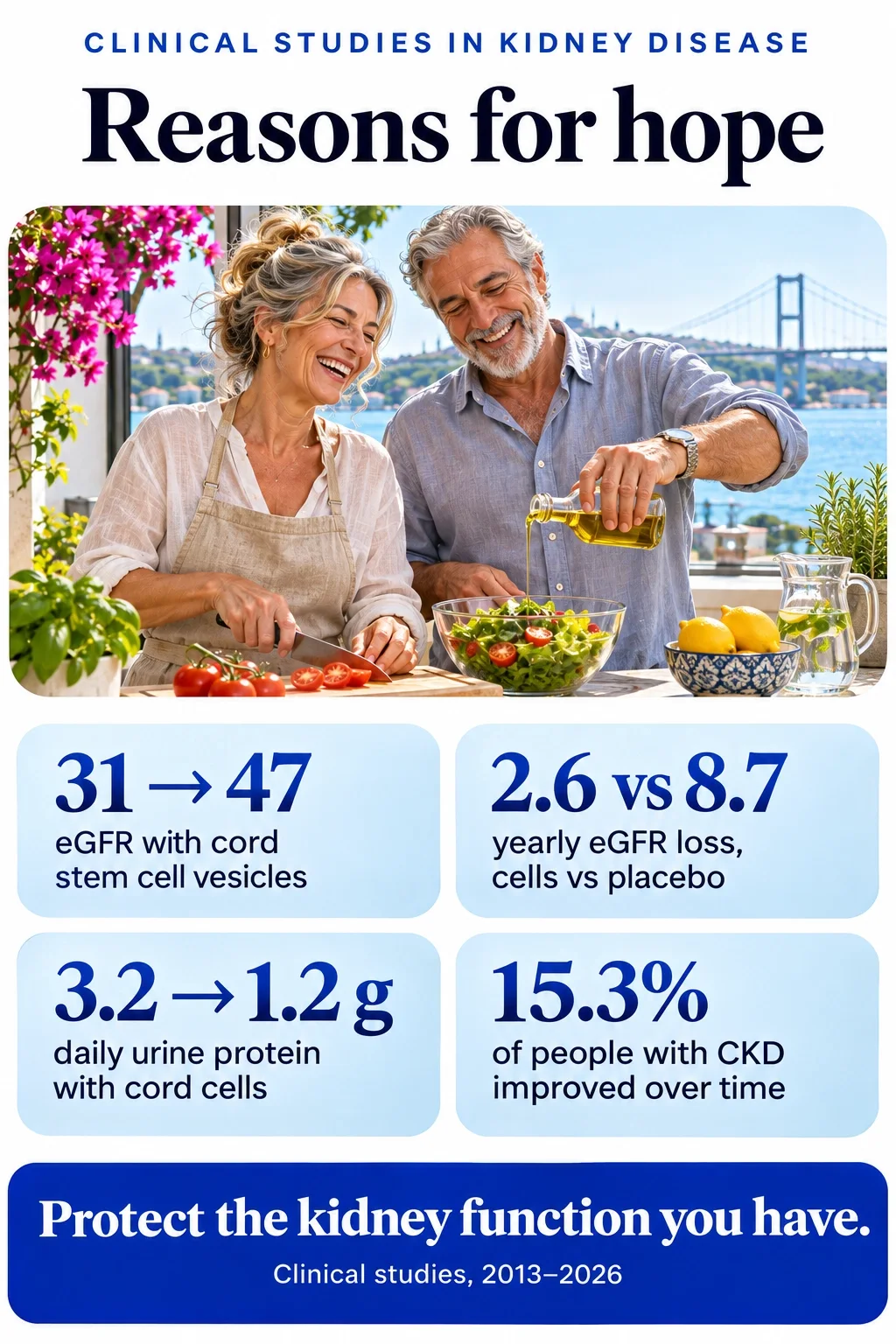
- 15.3%of 406 people with CKD had a sustained rise in measured kidney function, at every stage through to stages 4 and 51
- 31 → 47ml/min: eGFR 12 weeks after vesicles from umbilical cord stem cells, in people with CKD stages 3 and 46
- 2.6 vs 8.7ml/min: median yearly fall in eGFR after one IV infusion of donor stem cells, against placebo11
- +5.77ml/min eGFR with resistance exercise compared with usual care, across 25 randomised trials2
02
What is eGFR? Understanding your kidney numbers
Your kidneys are remarkable filters. Each one contains on average around 900,000 to 1 million tiny filtering units called nephrons, although the number varies widely from person to person.17 Every nephron has a filter, the glomerulus, and a tubule that fine-tunes what your body keeps and what leaves in the urine. Together they clear waste, balance fluids and salts, help control blood pressure and support healthy blood and bones.
Because the filtering itself cannot be seen, doctors estimate it. That estimate is your eGFR, the estimated glomerular filtration rate: roughly how many millilitres of blood your kidneys clean each minute, adjusted to an average body size. It is calculated from a blood test together with your age and sex, and adding a second blood marker, cystatin C, makes the estimate more accurate.18
The four numbers worth knowing
eGFR
Your filtering rate in ml/min/1.73 m². An eGFR of 90 or more is in the normal range, and the CKD stages are defined by it, together with signs of kidney damage.13
Creatinine
A waste product of your muscles. When filtering slows, creatinine rises, so a lower creatinine usually means better filtering. It is the main ingredient of most eGFR results.13
Cystatin C
A second marker, made by all the body’s cells and less affected by muscle mass. An eGFR based on creatinine and cystatin C together was more accurate than one based on creatinine alone.18
Urine albumin (UACR)
The urine albumin-to-creatinine ratio shows how much protein leaks through the filters. Below 30 mg/g is normal; higher values mean the filters are under strain.13
Why your eGFR can change from test to test
A single result is a snapshot. Creatinine can rise for reasons that have little to do with kidney health: a large meat meal before the test, a hard workout, creatine supplements, a lot of muscle or not drinking enough, and some medicines raise it too.13 That is why kidney doctors look at the trend over several tests, and why a cystatin C test helps when the picture is unclear.18
Some protective medicines also cause a small, expected dip in eGFR in the first weeks. In a large trial of the SGLT2 inhibitor dapagliflozin, eGFR dipped by 2.0 to 2.6 ml/min more than with placebo in the first two weeks, and from then on it fell more slowly than with placebo.3 Your doctor expects this dip, so keep taking the medicine unless you are advised otherwise.
03
CKD stages explained: what stage 3 and stage 4 mean for you
Chronic kidney disease means that kidney function is reduced, or that there are signs of kidney damage such as albumin in the urine, for more than three months. Doctors describe it with two letters: G for the filtering stage, based on eGFR, and A for the amount of albumin in the urine.13 Knowing both tells you far more than either number alone.
| Stage | eGFR (ml/min/1.73 m²) | What it means | What to focus on |
|---|---|---|---|
| G1 | 90 or more | Normal filtering, with another sign of kidney damage such as albumin in the urine13 | Find and treat the cause; look after blood pressure and blood sugar |
| G2 | 60 to 89 | Mildly reduced filtering | Healthy habits and kidney-protecting medicines where advised |
| G3a | 45 to 59 | Mildly to moderately reduced filtering | Regular tests, medicines, exercise and less salt; a good time to consider regenerative care, while there is more function to protect |
| G3b | 30 to 44 | Moderately to severely reduced filtering | Closer follow-up with your kidney doctor and a review of medicine doses |
| G4 | 15 to 29 | Severely reduced filtering | Careful protection of the remaining function, and calm planning ahead with your kidney team |
| G5 | Below 15 | Kidney failure | Care planned with your kidney team, which may include dialysis or a transplant |
Albumin in the urine: the A stages
The second letter matters just as much. A1 means a urine albumin-to-creatinine ratio below 30 mg/g, A2 means 30 to 300 mg/g and A3 means more than 300 mg/g.13 A falling albumin level is one of the clearest signs that treatment is helping: in a large trial, people whose albumin fell most in the first two weeks of treatment went on to lose kidney function more slowly.19
CKD stage 3 and stage 4
Stage 3 is where many people first hear about their kidneys, often after a routine blood test. It is a stage with plenty of room to act: in the cohort in which 15.3% of people improved, improvement was seen at every stage, and those who improved had reached more of their treatment targets for blood pressure and protein in the urine.1 At stage 4, the same steps continue with closer follow-up, and your kidney team plans ahead calmly, so that every option is ready should it ever be needed.13 Starting regenerative care earlier gives it more to work with: in a lupus nephritis study, 66.3% of people with an eGFR of 45 or more had a kidney response to umbilical cord stem cells,10 and in a CKD trial, people at stage 3b had more improving trends than those at stage 4.20 Our kidney disease treatment page explains who can be assessed.
04
Can CKD be reversed, and can your eGFR go up again?
It is one of the most searched questions about kidneys, and the honest answer is more hopeful than many people expect. CKD is a long-term condition, and the aim of treatment is to protect and support the kidney function you have. Yet several long-term studies show that kidney function does not always follow a straight downward line.
Rising kidney function in real patients
- 15.3% improved. In the NephroTest cohort in France, 406 people with CKD had their kidney function measured directly at least three times over two years or more. In 62 of them (15.3%), kidney function rose steadily, by a median of 1.88 ml/min a year, while the others lost a median of 2.23 ml/min a year. Improvement occurred at every stage through to stages 4 and 5, and the people who improved had met more treatment targets and had fewer metabolic complications.1
- Long periods of stability. In 846 people followed for up to 12 years in a large American study, 41.6% showed a non-linear course or a long period in which their kidney function did not decline. The researchers saw this as a reason for hope that kidney disease does not always keep progressing.7
- A medicine that turned the curve. In an Italian trial of the blood pressure medicine ramipril in people with heavy protein in the urine, the fall in kidney function slowed year after year, and by the end of follow-up, 10 of 26 patients on long-term treatment had a rising GFR.21
Temporary drops often recover
Not every fall in eGFR is chronic. When a drop comes from a temporary cause, such as dehydration, an infection or a medicine, the number often rises again once the cause is treated. That is another reason why your doctors look at the trend rather than a single result.
The bottom line: the realistic and hopeful goals are a steady eGFR, less protein in the urine and, for some people, a rising eGFR. Everyday steps, modern medicines and regenerative treatment each aim at these goals, and they work best together.136
05
How to improve kidney function: everyday steps with published results
What you do every day has a real effect on your kidneys, and the steps below are backed by randomised trials and kidney guidelines. They are also the foundation on which medicines and regenerative treatment build. Agree any change in diet, exercise or medicines with your own doctor, especially if you take blood pressure or diabetes medicines.
Move more, including strength work
Across 25 randomised trials with 1,827 adults with CKD, resistance training raised eGFR by 5.77 ml/min and aerobic training by 3.66 ml/min compared with usual care, with moderate weekly amounts giving the most benefit.2 An earlier analysis of 13 trials also found lower blood pressure with exercise.22
Less salt
Cutting salt by about 4.2 g a day lowered blood pressure by 6.91/3.91 mmHg in people with CKD and reduced albumin in the urine by 36%, mostly in studies of the earlier stages.23
A healthy weight
In people with CKD, weight loss without surgery lowered protein in the urine by 1.31 g a day and lowered blood pressure, while kidney function held steady.24
Steady blood sugar
In type 1 diabetes, intensive glucose control started early halved the risk of eGFR falling below 60 over 22 years.25 Your HbA1c is one of the most kidney-friendly numbers you can work on.
Blood pressure on target
Kidney guidelines suggest a systolic blood pressure below 120 mmHg for most adults with CKD, when it is well tolerated and measured in a standard way.13
A plant-rich diet with balanced protein
Guidelines suggest a diet rich in plant foods and about 0.8 g of protein per kilogram of body weight a day for adults with CKD stages 3 to 5.13
A medicines check
Ask your doctor or pharmacist before taking anti-inflammatory painkillers such as ibuprofen regularly, and have your medicine doses reviewed as your eGFR changes.13
Not smoking
Stopping smoking protects your blood vessels, including the tiny ones inside your kidneys, and it is part of every kidney guideline.13
These steps add up. In the study in which 15.3% of people improved their kidney function, those who improved had met significantly more of their treatment targets.1 Healthy habits also give regenerative treatment the best possible start, as our kidney disease page explains.
06
Kidney medicines in 2026: SGLT2 inhibitors, ACE inhibitors and other protective treatments
Kidney medicines have made real progress, and the results of the large trials are encouraging. These medicines are prescribed and adjusted by your own doctors, and they remain the foundation of your care.13
ACE inhibitors and ARBs
These blood pressure medicines lower the pressure inside the kidney’s filters and reduce the protein leaking into the urine.13 With long-term ramipril, the fall in kidney function slowed to about a tenth of the rate seen on conventional treatment in the earlier phase of the same trial.21
SGLT2 inhibitors
First developed for diabetes, these tablets now protect the kidneys of people with and without diabetes. In the DAPA-CKD trial of 4,304 people, the trial’s main kidney and heart outcome occurred in 9.2% with dapagliflozin and 14.5% with placebo,14 eGFR fell more slowly, by 0.95 ml/min a year,3 and albumin in the urine fell by 29.3%.19 In EMPA-KIDNEY, with 6,609 people and eGFR values from 20 upwards, empagliflozin lowered the main outcome from 16.9% to 13.1%, with similar results with or without diabetes.26 In type 2 diabetes, canagliflozin lowered the chance of the main outcome by 30%.27
Finerenone
In 5,734 people with type 2 diabetes and CKD, finerenone lowered the share reaching the trial’s kidney outcome from 21.1% to 17.8%.28
GLP-1 medicines
In the FLOW trial of 3,533 people with type 2 diabetes and CKD, weekly semaglutide lowered the chance of the trial’s main kidney outcome by 24% and slowed the yearly fall in eGFR by 1.16 ml/min.15
| Medicine | Trial and people | Published result |
|---|---|---|
| Dapagliflozin (SGLT2 inhibitor) | DAPA-CKD; 4,304 people with CKD, with or without diabetes14 | Main outcome 9.2% vs 14.5% with placebo; eGFR decline 0.95 ml/min a year slower3 |
| Empagliflozin (SGLT2 inhibitor) | EMPA-KIDNEY; 6,609 people, eGFR from 2026 | Main outcome 13.1% vs 16.9% with placebo |
| Canagliflozin (SGLT2 inhibitor) | CREDENCE; 4,401 people with type 2 diabetes and CKD27 | 30% lower chance of the main outcome |
| Finerenone | FIDELIO-DKD; 5,734 people with type 2 diabetes and CKD28 | Kidney outcome 17.8% vs 21.1% with placebo |
| Semaglutide (GLP-1 medicine) | FLOW; 3,533 people with type 2 diabetes and CKD15 | 24% lower chance of the main kidney outcome; eGFR decline 1.16 ml/min a year slower |
| Ramipril (ACE inhibitor) | REIN follow-up; people with heavy protein in the urine21 | Decline about ten times slower; 10 of 26 with a rising GFR |
Where stem cells fit. These medicines ease the strain on the filters. Wharton’s jelly stem cells and exosomes work on another level, aiming at the inflammation, oxidative stress and scarring that keep kidney disease moving,458 and in the stem cell trials, people kept taking their usual medicines, with the benefits measured on top of standard care.1129 The two approaches complement each other.
07
Why Wharton’s jelly stem cells and exosomes for your kidneys
Wharton’s jelly is the soft, gel-like tissue that cushions the blood vessels of the umbilical cord. It is a rich source of young mesenchymal stem cells (MSCs), and it is the heart of our kidney plans. Our Wharton’s jelly and umbilical cord MSCs come from cords donated after healthy births, are prepared fresh for your treatment date in a Ministry of Health-approved GMP laboratory and are never frozen. Nothing is taken from your own body.
Five reasons we lead with Wharton’s jelly
- Young cells. Cord cells come from the very start of life, untouched by years of ageing, diabetes or high blood pressure.
- No donor matching. Wharton’s jelly cells carry very few of the signals that trigger rejection, so no matching is needed.9
- Fresh, never frozen. In laboratory comparisons, fresh MSCs kept stronger immune-calming properties than cells used straight after thawing.30
- Strong anti-inflammatory action. In rats with kidney disease, umbilical cord MSCs calmed inflammation more strongly than bone marrow MSCs or the kidney’s own stromal cells, and the researchers named them the most reliable candidate for people with CKD.31
- Kidney results in research models. Across 40 studies in diabetic animals, cells from the umbilical cord and amniotic fluid were among the most effective for kidney function.32
Wharton’s jelly cells and vesicles in kidney research
- Grade 3–4 → 1kidney scarring fell from grade 3 or 4 to grade 1 in obstructed rat kidneys treated with Wharton’s jelly MSCs33
- 1.0 vs 5.4mg/dl: creatinine 48 hours after vesicles from cord tissue MSCs, against placebo, in rats with acute kidney injury34
- 2 weeksafter one IV dose of Wharton’s jelly MSC vesicles, kidney scarring was prevented and kidney function better in rats5
- 40 studiesin diabetic animals: umbilical cord cells among the most effective for kidney function32
Less scarring
A single IV dose of Wharton’s jelly MSCs reduced kidney scarring in rats by raising HGF, the kidney’s own anti-scarring growth factor,4 and vesicles from the same cells reduced scarring and collagen and improved kidney function after an injury.35
Calmer inflammation
Wharton’s jelly MSC vesicles reduced the number of inflammatory cells entering injured kidneys8 and steered immune cells called macrophages towards a calming, repair-friendly type, partly by delivering HGF.36 Small vesicles from cord tissue MSCs also raised the calming signal IL-10 and damped down complement, part of the inflammatory cascade.34
Protection from oxidative stress
The vesicles lowered harmful oxygen radicals in injured kidney tissue5 and switched on Nrf2, the cells’ own antioxidant defence, while kidney function improved.37
Healthier power stations
In rats, Wharton’s jelly MSC vesicles protected the mitochondria of kidney cells from breaking apart after an injury, through small RNA messages called miR-30.38
Wharton’s jelly exosomes: the cells’ repair messages in concentrated form
Exosomes are tiny packages, around a ten-thousandth of a millimetre across, that cells use to pass proteins and RNA to one another.39 Much of what MSCs do in the kidney travels in these packages: in research models, vesicles from MSCs passed their RNA messages into kidney tubule cells and sped recovery as well as the cells themselves did.40 Across 35 animal studies of CKD, treatment with extracellular vesicles consistently reduced scarring in and around the filters and slowed the decline in kidney function.41
In people, the most direct evidence comes from umbilical cord vesicles. In a placebo-controlled study of 40 adults with CKD stages 3 and 4, two doses of vesicles from umbilical cord stem cells raised eGFR from 31 to 47 ml/min and lowered creatinine from 3.4 to 2.2 mg/dl at 12 weeks, while TNF-α, an inflammatory signal, went down and IL-10, a calming signal, went up. The placebo group showed no significant improvement.6
Why we combine cells and exosomes
The cells and the exosomes play complementary roles. Living MSCs travel to injured kidney tissue and keep releasing repair signals,42 while Wharton’s jelly exosomes deliver a concentrated dose of those signals straight away.835 Your plan gives both by a relaxed IV infusion in one treatment day.
Umbilical cord MSCs: the second pillar of your plan
Umbilical cord MSCs, also from donated cords, have encouraging human kidney data. In lupus nephritis, they were followed by much less protein in the urine and a better eGFR,10 and in type 2 diabetes, IV umbilical cord MSCs were followed by a better eGFR and creatinine in people at CKD stage 2.43 The studies section below gives the details, and our exosome therapy page explains how our exosomes are prepared.
08
How do stem cells and exosomes support kidney repair?
Chronic kidney disease is driven by processes that feed each other: ongoing inflammation, oxidative stress, a shrinking supply of blood and oxygen, and scarring that slowly replaces working tissue. MSCs act on all of them. They do not mainly work by turning into new kidney cells; they work as a source of repair signals that help your own kidney cells cope and recover.44
How Wharton’s jelly stem cells and exosomes aim to help the kidneys
- Fresh stem cells and exosomesWharton’s jelly and umbilical cord MSCs with Wharton’s jelly exosomes, by a relaxed IV infusion.
- Homing to the kidneyMSCs are drawn to injured kidney tissue.42
- Repair signalsGrowth factors such as IGF-1 and HGF, calming signals and RNA messages in vesicles.45440
- Kidney protection in studiesA slower fall in eGFR, a better eGFR and less protein in the urine.11610
How Wharton’s jelly stem cells and exosomes support the kidneys
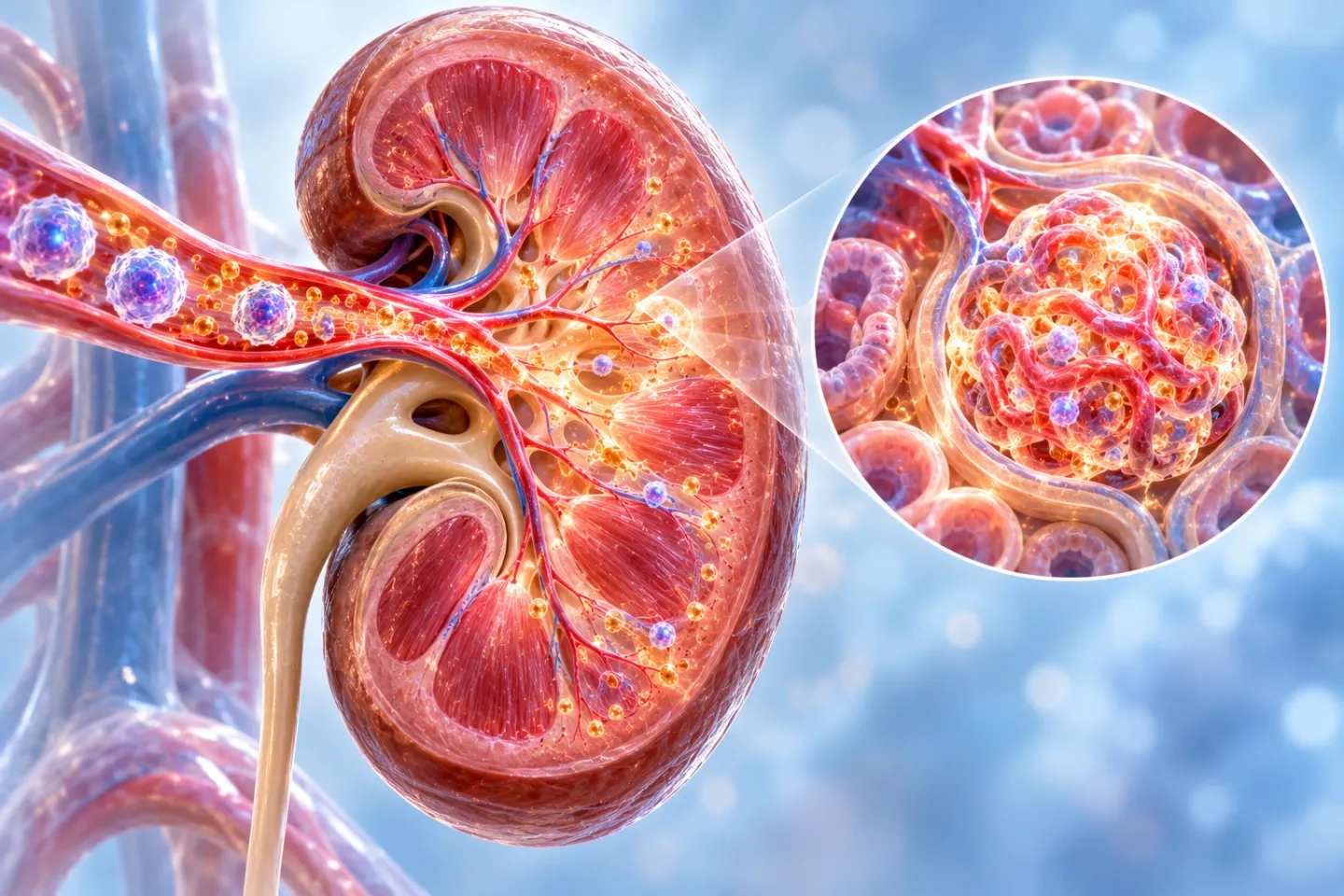
- Stem cellsWharton’s jelly MSCs, given by IV, reach the kidneys through the bloodstream.
- ExosomesTiny vesicles carry repair and anti-inflammatory messages into the kidney tissue.
- Kidney tissueCalmer inflammation and less scarring help protect healthy kidney tissue.
- Filters and tubulesThe glomeruli filter your blood; stem cell signals support these tiny filters and the tubule cells around them.
Finding the injury
After an IV infusion in research models, MSCs travelled to the injured kidney by docking onto hyaluronic acid, a signal that rises in damaged tissue, and their arrival matched the kidney’s recovery.42
Working through signals
In rats, MSCs protected the kidneys after an injury without becoming kidney cells, acting through the signals they release.44 One of these signals, IGF-1, was needed for the tubules to repair.45
RNA messages
In laboratory studies, exosomes delivered the genetic instructions for the IGF-1 receptor to damaged tubule cells, making them more responsive to this repair signal.46
Energy for tubule cells
Kidney tubules use a great deal of energy. In mice, umbilical cord MSCs helped tubule cells rebuild their mitochondria and energy production,47 and in diabetic animals, MSCs handed over their own mitochondria to stressed tubule cells.48
Less scarring in diabetes
In diabetic rats, umbilical cord MSCs and their exosomes reduced kidney damage and scarring.49
New small blood vessels
In research models, CD34+ exosomes promoted the growth of new small blood vessels,50 which is why CD34+ exosomes can be added to your plan alongside Wharton’s jelly exosomes.
Each of these effects answers one of the processes behind kidney disease, which is why our doctors combine Wharton’s jelly stem cells and exosomes, as described on our kidney treatment page.
09
Can stem cells improve kidney function? What human studies report
Human studies of stem cells for kidney disease are encouraging, and they now cover diabetic kidney disease, CKD stages 3 and 4, lupus nephritis and more. Here is what the key studies report, with the cells each one used.
Diabetic kidney disease: placebo-controlled trials
In the NEPHSTROM trial, adults with type 2 diabetes whose kidney function was falling received one IV infusion of donor bone marrow MSCs or placebo. Over 18 months, the median yearly fall in eGFR was 2.6 ml/min with the cells and 8.7 ml/min with placebo.11 In an Australian double-blind trial, eGFR was 4.4 ml/min higher than with placebo 12 weeks after one infusion of the lower dose of donor bone marrow precursor cells.29 And in a 2026 double-blind trial of 78 people with diabetic kidney disease, measured kidney function rose by 1.9 ml/min in the six months after an infusion of donor bone marrow MSCs, while it fell by 4.0 ml/min with placebo, and HbA1c was lower too.51
CKD stages 3 and 4
In a 2026 trial in 39 adults with CKD stages 3b and 4, 88% showed a stable or improving kidney function trend over 48 weeks after one IV infusion of donor fat-derived stem cells, and people at stage 3b had more improving trends than those at stage 4.20
Umbilical cord stem cells
In 120 people with lupus nephritis that had not responded to standard treatment, donor umbilical cord MSCs, the same type of cells we use, were followed by a kidney response in 56.7% within 12 months, and urine protein fell from 3.2 g a day to 2.2 g at 3 months, 1.5 g at 6 months and 1.2 g at 12 months. In those who started at CKD stage 3a, eGFR rose from 53.8 to 87.1 ml/min over 12 months.10 Earlier studies point the same way: 60.5% of 81 people reached kidney remission, with GFR rising from 58.6 to 69.5 ml/min, after donor bone marrow or umbilical cord MSCs,52 and urine protein fell after two IV infusions of umbilical cord MSCs in a multicentre study.53 Read more on our lupus page.
Umbilical cord MSCs have also been studied in diabetes. In a registry of 218 people with type 2 diabetes who received 50 to 100 million umbilical cord MSCs by IV, eGFR and creatinine improved significantly at 6 and 12 months in those at CKD stage 2, alongside a lower HbA1c.43 In type 1 diabetes, only 1 of 14 people treated with umbilical cord MSCs, given together with their own bone marrow cells, developed diabetic kidney disease over eight years, against 6 of 15 in the control group (7.1% against 40.0%).54 In 24 people on peritoneal dialysis, umbilical cord MSCs were followed within three months by higher haemoglobin and albumin and lower CRP, a marker of inflammation.55 See also our stem cell therapy for diabetes page.
Other kidney conditions
In polycystic kidney disease, creatinine had risen from 2.0 to 2.5 mg/dl in the year before one IV infusion of the patients’ own bone marrow MSCs and stayed at 2.5 mg/dl in the year after.56 A 2026 systematic review concluded that MSC therapy supports kidney repair, immune balance and recovery of function, with several studies reporting a better GFR and less protein in the urine.57
eGFR before and after cell-based treatment in key studies (ml/min)
Vesicles from umbilical cord stem cells, CKD stages 3 and 4, at 12 weeks6
Umbilical cord MSCs, lupus nephritis starting at CKD stage 3a, at 12 months10
Bone marrow or umbilical cord MSCs, lupus nephritis, at 12 months52
| Study | Design and people | Cells and route | What improved |
|---|---|---|---|
| Perico 2023, J Am Soc Nephrol (NEPHSTROM)11 | Randomised, placebo-controlled; 16 adults with type 2 diabetes and falling kidney function | Donor bone marrow MSCs, one IV infusion | Median yearly eGFR fall 2.6 vs 8.7 ml/min with placebo over 18 months |
| Packham 2016, EBioMedicine29 | Randomised, double-blind, placebo-controlled; 30 adults with diabetic kidney disease | Donor bone marrow precursor cells, one IV infusion | eGFR 4.4 ml/min higher than with placebo at 12 weeks (lower dose) |
| Sabir 2026, J Coll Physicians Surg Pak51 | Randomised, double-blind, placebo-controlled; 78 adults with diabetic kidney disease | Donor bone marrow MSCs, one infusion | Measured GFR +1.9 vs −4.0 ml/min at 6 months; lower HbA1c |
| Lin 2026, Stem Cells Transl Med20 | Phase I/II, three doses; 39 adults with CKD stages 3b and 4 | Donor fat-derived stem cells, one IV infusion | 88% with a stable or improving eGFR trend over 48 weeks |
| Nassar 2016, Biomater Res6 | Placebo-controlled; 40 adults with CKD stages 3 and 4 | Vesicles from umbilical cord stem cells, two doses | eGFR 31 → 47 ml/min and creatinine 3.4 → 2.2 mg/dl at 12 weeks |
| Zheng 2026, Stem Cell Res Ther10 | 120 adults with hard-to-treat lupus nephritis | Donor umbilical cord MSCs | Kidney response 56.7% at 12 months; urine protein 3.2 → 1.2 g a day |
| Gu 2014, Clin Rheumatol52 | 81 adults with hard-to-treat lupus nephritis | Donor bone marrow or umbilical cord MSCs, IV | Remission 60.5%; GFR 58.6 → 69.5 ml/min at 12 months |
| Chin 2025, Diabetes Metab Syndr Obes43 | Registry; 218 adults with type 2 diabetes | Umbilical cord MSCs, 50 to 100 million by IV | eGFR and creatinine better at 6 and 12 months at CKD stage 2 |
| Wu 2022, Cytotherapy54 | Randomised, 8-year follow-up; people with type 1 diabetes | Umbilical cord MSCs with the patients’ own bone marrow cells | Diabetic kidney disease 7.1% vs 40.0% at 8 years |
Each study used its own cells and routes. Your treatment uses fresh Wharton’s jelly and umbilical cord MSCs with Wharton’s jelly exosomes, prepared for your date and given by IV infusion. Read how we put this evidence into practice on our stem cell therapy for kidney disease page.
10
Muse cells and Muse exosomes: an optional add-on
Muse cells, short for multilineage-differentiating stress-enduring cells, are a small group of especially hardy repair cells within the MSC family, discovered in Japan in 2010.58 In a research model of kidney disease, human Muse cells given by IV settled in damaged filters, took on the features of filter cells, reduced scarring and restored kidney clearance,59 and in rats with acute kidney injury, they improved kidney function by steering immune cells towards a calming type.60 In people, a donor Muse cell product has been given without HLA matching or immune-suppressing medicines.61 If you wish, Muse cells by IV infusion and Muse exosomes can be added to your Wharton’s jelly plan after your medical review.
11
Kidney treatment options compared
Each option has its own role, and the strongest kidney plans combine several of them. This table shows how they fit together.
| Option | How it helps | Best suited to | How it is given |
|---|---|---|---|
| Wharton’s jelly stem cells and exosomes | Repair signals that calmed inflammation and oxidative stress and reduced scarring in research models;458 cord vesicles raised eGFR from 31 to 47 ml/min at 12 weeks6 | CKD at any stage after a medical review, ideally while there is good function to protect | A relaxed IV infusion in one treatment day, alongside your medicines |
| Umbilical cord stem cells | Urine protein 3.2 → 1.2 g a day in lupus nephritis;10 better eGFR at CKD stage 2 in type 2 diabetes43 | Combined with Wharton’s jelly cells in your plan | IV infusion, on the same treatment day |
| SGLT2 inhibitors | eGFR decline 0.95 ml/min a year slower in DAPA-CKD3 | CKD with or without diabetes | A daily tablet |
| ACE inhibitors or ARBs | Lower the pressure in the filters and reduce urine protein13 | High blood pressure or protein in the urine | A daily tablet |
| Finerenone | Kidney outcome 17.8% vs 21.1% with placebo28 | Type 2 diabetes with CKD | A daily tablet |
| Semaglutide | eGFR decline 1.16 ml/min a year slower15 | Type 2 diabetes with CKD | A weekly injection |
| Exercise and less salt | eGFR +5.77 ml/min with resistance training;2 blood pressure −6.91/−3.91 mmHg with less salt23 | Everyone with CKD | Everyday habits |
| Dialysis or a kidney transplant | Take over the work of the kidneys13 | Planned with your kidney team when eGFR is very low | Regular sessions, or one operation with ongoing medicines |
These options add up rather than compete. Your kidney medicines and your own kidney doctor stay at the centre of your care, and regenerative treatment is planned around them.
12
How we plan your kidney treatment in Istanbul: IV stem cells and exosomes
Every plan starts with your own results, not a fixed protocol. Dr. Cihan Bolat, our medical director and a specialist in anaesthesiology and reanimation and in regenerative medicine, reviews with his team your eGFR trend, urine albumin, the cause of your kidney disease, your blood pressure, blood sugar and medicines, and talks with you about your goals.
For kidney disease, your stem cells and exosomes are given by a relaxed IV infusion, the route used in the diabetic kidney disease trials,1129 so that the cells and their signals travel through the bloodstream to the kidneys. Published kidney studies used about 1 to 2 million cells per kilogram of body weight,105256 and your written plan states your exact cell count.
Fresh Wharton’s jelly stem cells
From cords donated after healthy births, prepared for your date in a Ministry of Health-approved GMP laboratory and never frozen. In laboratory comparisons, fresh MSCs kept stronger immune-calming properties than thawed cells.30
Umbilical cord stem cells too
Umbilical cord MSCs complete the cell part of your plan: the type of cells used in the lupus nephritis and diabetes studies above.1043
Wharton’s jelly exosomes
Added by IV infusion for a concentrated dose of repair messages, with CD34+ exosomes according to your plan.
No harvest, no donor matching
Nothing is taken from your body, and Wharton’s jelly cells need no donor matching.9
Your cell count in writing
The number of cells in your plan is confirmed in writing, and the count and viability are checked and certified by the GMP laboratory before treatment.
- 12 weeksFirst lab changeseGFR and creatinine improved in studies
- 3 monthsCalmer inflammationBetter haemoglobin, albumin and CRP
- 6 monthsLess proteinUrine protein kept falling
- 12–18 monthsA steadier courseA slower yearly fall in eGFR
In the studies, eGFR and creatinine improved by 12 weeks,296 haemoglobin and albumin rose within three months,55 urine protein kept falling at 3, 6 and 12 months10 and the slower yearly fall in eGFR was measured over 18 months.11 That is why we review your eGFR, creatinine and urine albumin with you at about 1, 3, 6 and 12 months. See our kidney disease treatment page for what a kidney plan contains.
13
Is stem cell therapy safe for kidney patients?
Safety comes first for every kidney patient, and the published record is reassuring. A 2021 meta-analysis of 62 randomised trials with 3,546 patients found MSC treatment safe, the most common effect a passing fever.12
The kidney studies point the same way. In the placebo-controlled trials in diabetic kidney disease, there were no infusion reactions to the cells and no treatment-related serious adverse events,2911 and no lasting antibodies against the donor cells developed.29 Across 146 umbilical cord MSC infusions in lupus nephritis, no severe adverse events occurred,10 umbilical cord MSC infusions were well tolerated in a multicentre lupus study,53 and in polycystic kidney disease, no cell-related side effects were seen.56
Your own care adds further layers. Wharton’s jelly cells need no donor matching,9 your cells are prepared in a Ministry of Health-approved GMP laboratory with certified count and viability, and your IV infusion is given by our medical team. Before your plan is made, our specialist team reviews your kidney function, blood tests and medicines. We screen carefully, and a specialist team treats you.
14
Why patients travel to Istanbul, Turkey for kidney treatment
People with kidney disease come to us from the UK, Germany, the Netherlands, across Europe, the Middle East and the Gulf, the USA and beyond. Most already have a good kidney doctor at home. What they look for in Istanbul is the regenerative part of the plan: fresh Wharton’s jelly stem cells and exosomes, planned by a specialist team and given in one treatment day.
Stem cell therapy for kidney failure in Europe, Turkey or abroad: how it all fits together
Many families compare countries before they decide. For most, the best answer is a partnership: your kidney care at home continues as before, with your medicines, tests and specialist, and Istanbul adds a regenerative treatment day with a fixed, all-inclusive price in writing. You fly home with your written plan to share with your own doctor, and our team follows your kidney tests from a distance.

A specialist-led plan
A free medical review and phone consultation with the specialist team led by Uzm. Dr. Cihan Bolat, and a written plan before you book.
A fixed price before you travel
One all-inclusive price in writing, so you can decide calmly at home with your family.
One treatment day
Most plans take one treatment day in Istanbul, with no second trip needed.
Help at every step
Help with the hotel, ground transport and translation, and a personal case manager who plans your stay at your pace.
Easy to reach
Istanbul has two international airports. Many European cities have direct flights, and from much of Western Europe the journey takes around three to four hours.
Follow-up from home
Reviews of your kidney tests at about 1, 3, 6 and 12 months, so your care continues after you fly home.
Travelling with kidney disease
A little planning makes the journey easy. Ask your own doctor whether you are fit to travel, bring a printed list of your medicines and your latest test results, keep your medicines in your hand luggage, drink as your doctor advises during the flight, and allow a quiet day of rest after you arrive. Our clinic is in Suadiye, a calm residential district on Istanbul’s Asian side near the Marmara seafront.
15
Your treatment in Istanbul, step by step
From your first message to follow-up at home, every step is planned with you in advance, whether you are travelling from London, Berlin, Amsterdam, Dubai or New York. For the fuller story, read the stem cell treatment in Turkey, step by step, or request your free consultation now.
Send us your kidney tests
Share your latest eGFR and creatinine, a urine albumin-to-creatinine ratio, a blood count, HbA1c if you have diabetes, any kidney ultrasound or biopsy report, older results that show your trend and a list of your medicines, through our free consultation request or by WhatsApp on +90 534 856 92 92.
Free medical review and phone call
Dr. Cihan Bolat and his specialist team review your case free of charge and talk it through with you and your family.
Your written plan and fixed price
If treatment is a good fit, you receive a written plan with the cell count, the exosomes and the route, and a fixed, all-inclusive price before you travel.
One treatment day in Istanbul
Your fresh Wharton’s jelly stem cells and exosomes are prepared for your date. Our team welcomes you and guides you calmly through a relaxed IV infusion.
Home and follow-up
Back home, you continue your usual kidney care, and we review your kidney tests with you at about 1, 3, 6 and 12 months.
16
What does stem cell treatment for kidney disease cost in Istanbul?
Every plan is personal, so the price depends on the number of cells, the exosomes and any optional add-ons in your plan. After the free medical review, you receive a fixed, all-inclusive price in writing before you book anything, so there are no surprises and you can decide calmly at home.
Included
- Free medical review and phone consultation
- Fresh Wharton’s jelly and umbilical cord stem cells, with certified count and viability
- Wharton’s jelly exosomes, and CD34+ exosomes if they are in your plan
- Treatment by our specialist team in one treatment day
- Ground transport to and from the clinic, and help with translation
- A personal case manager and follow-up reviews of your kidney tests
Not included / optional
- Flights
- Hotel stay, which we can help you arrange
- Optional add-ons such as Muse cells or Muse exosomes
- Your medicines and tests at home
- A repeat session, if you decide on one later
Read why patients choose Turkey for stem cell therapy, or see our kidney disease treatment page.
17
Frequently asked questions
Can kidney function improve?
Yes, for some people it can, and for many it can hold steady for years. In a study of 406 people with chronic kidney disease, 15.3% had a sustained rise in measured kidney function, at every stage through to stages 4 and 5, and those who improved had reached more of their treatment targets. Everyday steps, modern medicines and regenerative treatment all aim to protect and support your kidney function.
How can I improve my eGFR naturally?
Regular exercise, including strength training, raised eGFR by 3.66 to 5.77 ml/min compared with usual care across 25 randomised trials. Eating less salt lowered blood pressure and protein in the urine, weight loss lowered protein in the urine, and good blood sugar and blood pressure control protect the kidneys over the long term. Agree any change with your own doctor.
Can CKD be reversed?
CKD is a long-term condition, and the realistic goals are a steady eGFR, less protein in the urine and, for some people, a rising eGFR. Long-term studies show that kidney function does not always fall in a straight line: in one, 41.6% of people showed a non-linear course or a long period without decline. When a drop comes from a temporary cause such as dehydration, eGFR often recovers once the cause is treated.
What do the CKD stages mean?
The G stages describe filtering: G1 is an eGFR of 90 or more with signs of kidney damage, G2 is 60 to 89, G3a 45 to 59, G3b 30 to 44, G4 15 to 29 and G5 below 15. The A stages describe albumin in the urine, from A1 (below 30 mg/g) to A3 (above 300 mg/g). Together they guide how often you are tested and which treatments fit.
What is the treatment for CKD stage 3?
Stage 3 leaves plenty of room to act: blood pressure and blood sugar control, kidney-protecting medicines such as SGLT2 inhibitors and ACE inhibitors, exercise, less salt and regular tests. It is also a good stage to consider regenerative treatment, because there is more kidney function to protect: in a lupus nephritis study, 66.3% of people with an eGFR of 45 or more had a kidney response to umbilical cord stem cells.
What is the treatment for CKD stage 4?
At stage 4, the same protective steps continue with closer follow-up, medicine doses are reviewed and your kidney team plans ahead calmly. In a 2026 trial in CKD stages 3b and 4, 88% of people showed a stable or improving kidney function trend over 48 weeks after one IV infusion of donor stem cells. Dr. Cihan Bolat reviews your results and tells you honestly what a plan can aim for.
How can I slow down kidney disease?
Keep your blood pressure and blood sugar on target, take your kidney-protecting medicines as prescribed, move regularly, eat less salt, check with your doctor before taking anti-inflammatory painkillers regularly, and stop smoking. In large trials, an SGLT2 inhibitor slowed the yearly fall in eGFR by 0.95 ml/min and semaglutide by 1.16 ml/min. Regenerative treatment can be added on top.
Can stem cells improve kidney function?
Human studies are encouraging. In a placebo-controlled trial in diabetic kidney disease, the median yearly fall in eGFR was 2.6 ml/min after one IV stem cell infusion, against 8.7 ml/min with placebo. Vesicles from umbilical cord stem cells raised eGFR from 31 to 47 ml/min at 12 weeks in CKD stages 3 and 4, and in lupus nephritis, umbilical cord stem cells were followed by a fall in urine protein from 3.2 to 1.2 g a day.
Why Wharton’s jelly stem cells for kidney disease?
Wharton’s jelly is the gel-like tissue of the umbilical cord and a rich source of young MSCs that need no donor matching. In research models, Wharton’s jelly cells and their vesicles reduced kidney scarring, oxidative stress and inflammation and improved kidney function. We use them fresh, prepared for your date and never frozen, together with umbilical cord stem cells and Wharton’s jelly exosomes.
What are exosomes, and can they help the kidneys?
Exosomes are tiny packages of proteins and RNA that stem cells use to send repair messages. Across 35 animal studies of CKD, vesicle treatment reduced scarring and slowed the decline in kidney function, and in people with CKD stages 3 and 4, vesicles from umbilical cord stem cells raised eGFR from 31 to 47 ml/min at 12 weeks. Our plans include Wharton’s jelly exosomes by IV infusion, and CD34+ exosomes can be added.
Can stem cell therapy help people with kidney failure or on dialysis?
Stem cell therapy works alongside dialysis rather than replacing it. In 24 people on peritoneal dialysis, umbilical cord stem cells were followed within three months by higher haemoglobin and albumin and lower CRP, a marker of inflammation. Dr. Cihan Bolat reviews your situation and explains honestly what a plan can aim for.
Is stem cell therapy safe for kidney patients?
The published record is reassuring. In the placebo-controlled trials in diabetic kidney disease, there were no treatment-related serious adverse events, and across 146 umbilical cord stem cell infusions in lupus nephritis, no severe adverse events occurred. A 2021 meta-analysis of 62 randomised trials with 3,546 patients found MSC treatment safe, with a passing fever the most common effect. We screen carefully, and a specialist team treats you.
Can I keep taking my kidney medicines?
Yes. In the stem cell trials, people kept taking their usual medicines, such as blood pressure, diabetes and kidney-protecting medicines, and the benefits were measured on top of standard care. Keep seeing your own kidney doctor, and share your written plan with them.
When might my kidney tests change after treatment?
In studies, eGFR and creatinine improved by 12 weeks, haemoglobin and albumin rose within three months, urine protein kept falling at 3, 6 and 12 months and the slower yearly fall in eGFR was measured over 18 months. We review your kidney tests with you at about 1, 3, 6 and 12 months.
Where can I get stem cell therapy for kidney failure: in Europe, Turkey or abroad?
Patients from the UK, Germany, the Netherlands, the Gulf and beyond come to us in Istanbul, Turkey, after a free medical review. Your kidney care at home continues, and Istanbul adds a regenerative treatment day with fresh Wharton’s jelly stem cells and exosomes, a written plan with a fixed price and follow-up from our team. You can reach us by WhatsApp on +90 534 856 92 92.
How much does stem cell therapy for kidney disease cost in Istanbul?
The price depends on the number of cells, the exosomes and any optional add-ons in your plan. After a free medical review, you receive a fixed, all-inclusive price in writing before you travel, covering the treatment, the fresh cells with certified count and viability, transport to and from the clinic, a personal case manager and follow-up reviews. Flights and the hotel are separate.
What tests should I send for my free medical review?
Your latest eGFR and creatinine, a urine albumin-to-creatinine ratio, a blood count, HbA1c if you have diabetes, any kidney ultrasound or biopsy report and a list of your medicines. Older results help too, because they show how your kidney function has changed over time.

Medical review
Uzm. Dr. Cihan Bolat
Medical Director, Istanbul Stemcell
This page was written from the published studies listed below and reviewed for medical accuracy on .
18
References
- Weis L, et al. Renal function can improve at any stage of chronic kidney disease. PLoS One. 2013;8(12):e81835. PMID 24349134
- Li W, et al. Exercise modality and dose effects on renal function in non-dialysis chronic kidney disease: a Bayesian model-based network meta-analysis. BMC Nephrol. 2026;27(1). PMID 41975343
- Heerspink HJL, et al. Effect of dapagliflozin on the rate of decline in kidney function in patients with chronic kidney disease with and without type 2 diabetes: a prespecified analysis from the DAPA-CKD trial. Lancet Diabetes Endocrinol. 2021;9(11):743-754. PMID 34619108
- Du T, et al. Human Wharton's jelly-derived mesenchymal stromal cells reduce renal fibrosis through induction of native and foreign hepatocyte growth factor synthesis in injured tubular epithelial cells. Stem Cell Res Ther. 2013;4(3):59. PMID 23734757
- Zhang G, et al. The anti-oxidative role of micro-vesicles derived from human Wharton-Jelly mesenchymal stromal cells through NOX2/gp91(phox) suppression in alleviating renal ischemia-reperfusion injury in rats. PLoS One. 2014;9(3):e92129. PMID 24637475
- Nassar W, et al. Umbilical cord mesenchymal stem cells derived extracellular vesicles can safely ameliorate the progression of chronic kidney diseases. Biomater Res. 2016;20:21. PMID 27499886
- Li L, et al. Longitudinal progression trajectory of GFR among patients with CKD. Am J Kidney Dis. 2012;59(4):504-12. PMID 22284441
- Zou X, et al. Microvesicles derived from human Wharton's Jelly mesenchymal stromal cells ameliorate renal ischemia-reperfusion injury in rats by suppressing CX3CL1. Stem Cell Res Ther. 2014;5(2):40. PMID 24646750
- Weiss ML, et al. Immune properties of human umbilical cord Wharton's jelly-derived cells. Stem Cells. 2008;26(11):2865-74. PMID 18703664
- Zheng Y, et al. Allogeneic umbilical cord-derived mesenchymal stromal cells for treatment of refractory lupus nephritis: a real-world study. Stem Cell Res Ther. 2026;17(1). PMID 42001190
- Perico N, et al. Safety and Preliminary Efficacy of Mesenchymal Stromal Cell (ORBCEL-M) Therapy in Diabetic Kidney Disease: A Randomized Clinical Trial (NEPHSTROM). J Am Soc Nephrol. 2023;34(10):1733-1751. PMID 37560967
- Wang Y, Yi H, Song Y. The safety of MSC therapy over the past 15 years: a meta-analysis. Stem Cell Res Ther. 2021;12(1):545. PMID 34663461
- . KDIGO 2024 Clinical Practice Guideline for the Evaluation and Management of Chronic Kidney Disease. Kidney Int. 2024;105(4S):S117-S314. PMID 38490803
- Heerspink HJL, et al. Dapagliflozin in Patients with Chronic Kidney Disease. N Engl J Med. 2020;383(15):1436-1446. PMID 32970396
- Perkovic V, et al. Effects of Semaglutide on Chronic Kidney Disease in Patients with Type 2 Diabetes. N Engl J Med. 2024;391(2):109-121. PMID 38785209
- Kovesdy CP. Epidemiology of chronic kidney disease: an update 2022. Kidney Int Suppl (2011). 2022;12(1):7-11. PMID 35529086
- Bertram JF, et al. Human nephron number: implications for health and disease. Pediatr Nephrol. 2011;26(9):1529-33. PMID 21604189
- Inker LA, et al. New Creatinine- and Cystatin C-Based Equations to Estimate GFR without Race. N Engl J Med. 2021;385(19):1737-1749. PMID 34554658
- Jongs N, et al. Effect of dapagliflozin on urinary albumin excretion in patients with chronic kidney disease with and without type 2 diabetes: a prespecified analysis from the DAPA-CKD trial. Lancet Diabetes Endocrinol. 2021;9(11):755-766. PMID 34619106
- Lin YC, et al. Clinical efficacy and safety of allogeneic adipose-derived stem cells ELIXCYTE in chronic kidney disease: a phase I/II study. Stem Cells Transl Med. 2026;15(1). PMID 41555517
- Ruggenenti P, et al. In chronic nephropathies prolonged ACE inhibition can induce remission: dynamics of time-dependent changes in GFR. Investigators of the GISEN Group. Gruppo Italiano Studi Epidemiologici in Nefrologia. J Am Soc Nephrol. 1999;10(5):997-1006. PMID 10232685
- Zhang L, et al. Exercise therapy improves eGFR, and reduces blood pressure and BMI in non-dialysis CKD patients: evidence from a meta-analysis. BMC Nephrol. 2019;20(1):398. PMID 31664943
- McMahon EJ, et al. Altered dietary salt intake for people with chronic kidney disease. Cochrane Database Syst Rev. 2021;6(6):CD010070. PMID 34164803
- Navaneethan SD, et al. Weight loss interventions in chronic kidney disease: a systematic review and meta-analysis. Clin J Am Soc Nephrol. 2009;4(10):1565-74. PMID 19808241
- de Boer IH, et al. Intensive diabetes therapy and glomerular filtration rate in type 1 diabetes. N Engl J Med. 2011;365(25):2366-76. PMID 22077236
- Herrington WG, et al. Empagliflozin in Patients with Chronic Kidney Disease. N Engl J Med. 2023;388(2):117-127. PMID 36331190
- Perkovic V, et al. Canagliflozin and Renal Outcomes in Type 2 Diabetes and Nephropathy. N Engl J Med. 2019;380(24):2295-2306. PMID 30990260
- Bakris GL, et al. Effect of Finerenone on Chronic Kidney Disease Outcomes in Type 2 Diabetes. N Engl J Med. 2020;383(23):2219-2229. PMID 33264825
- Packham DK, et al. Allogeneic Mesenchymal Precursor Cells (MPC) in Diabetic Nephropathy: A Randomized, Placebo-controlled, Dose Escalation Study. EBioMedicine. 2016;12:263-269. PMID 27743903
- Moll G, et al. Do cryopreserved mesenchymal stromal cells display impaired immunomodulatory and therapeutic properties? Stem Cells. 2014;32(9):2430-42. PMID 24805247
- Rota C, et al. Therapeutic potential of stromal cells of non-renal or renal origin in experimental chronic kidney disease. Stem Cell Res Ther. 2018;9(1):220. PMID 30107860
- Hickson LJ, et al. A systematic review and meta-analysis of cell-based interventions in experimental diabetic kidney disease. Stem Cells Transl Med. 2021;10(9):1304-1319. PMID 34106528
- Kheradmand A, et al. Protective Effect of Wharton's Jelly-derived Mesenchymal Stem Cells on Renal Fibrosis in Rats with Unilateral Ureteral Obstruction. Eur Urol Open Sci. 2020;20:48-53. PMID 34337457
- Zilberman Itskovich S, et al. Effects of Small Extracellular Vesicles Derived From Mesenchymal Stromal Cells on Acute Kidney Injury: A Rat Ischemia-Reperfusion Model. Cureus. 2025;17(5):e84411. PMID 40535418
- Chen W, et al. Microvesicles derived from human Wharton's Jelly mesenchymal stem cells ameliorate ischemia-reperfusion-induced renal fibrosis by releasing from G2/M cell cycle arrest. Biochem J. 2017;474(24):4207-4218. PMID 29150436
- Du T, et al. Microvesicles derived from human umbilical cord mesenchyme promote M2 macrophage polarization and ameliorate renal fibrosis following partial nephrectomy via hepatocyte growth factor. Hum Cell. 2021;34(4):1103-1113. PMID 33860459
- Zhang G, et al. Mesenchymal Stromal Cell-Derived Extracellular Vesicles Protect Against Acute Kidney Injury Through Anti-Oxidation by Enhancing Nrf2/ARE Activation in Rats. Kidney Blood Press Res. 2016;41(2):119-28. PMID 26894749
- Gu D, et al. Mesenchymal Stromal Cells Derived Extracellular Vesicles Ameliorate Acute Renal Ischemia Reperfusion Injury by Inhibition of Mitochondrial Fission through miR-30. Stem Cells Int. 2016;2016:2093940. PMID 27799943
- Kalluri R, LeBleu VS. The biology, function, and biomedical applications of exosomes. Science. 2020;367(6478). PMID 32029601
- Bruno S, et al. Mesenchymal stem cell-derived microvesicles protect against acute tubular injury. J Am Soc Nephrol. 2009;20(5):1053-67. PMID 19389847
- Nowak N, Yamanouchi M, Satake E. The Nephroprotective Properties of Extracellular Vesicles in Experimental Models of Chronic Kidney Disease: a Systematic Review. Stem Cell Rev Rep. 2022;18(3):902-932. PMID 34110587
- Herrera MB, et al. Exogenous mesenchymal stem cells localize to the kidney by means of CD44 following acute tubular injury. Kidney Int. 2007;72(4):430-41. PMID 17507906
- Chin SP, et al. Umbilical Cord-Derived Mesenchymal Stem Cells Infusion in Type 2 Diabetes Mellitus Patients: A Retrospective Cytopeutics' Registry Study. Diabetes Metab Syndr Obes. 2025;18:1643-1659. PMID 40416928
- Tögel F, et al. Administered mesenchymal stem cells protect against ischemic acute renal failure through differentiation-independent mechanisms. Am J Physiol Renal Physiol. 2005;289(1):F31-42. PMID 15713913
- Imberti B, et al. Insulin-like growth factor-1 sustains stem cell mediated renal repair. J Am Soc Nephrol. 2007;18(11):2921-8. PMID 17942965
- Tomasoni S, et al. Transfer of growth factor receptor mRNA via exosomes unravels the regenerative effect of mesenchymal stem cells. Stem Cells Dev. 2013;22(5):772-80. PMID 23082760
- Perico L, et al. Human mesenchymal stromal cells transplanted into mice stimulate renal tubular cells and enhance mitochondrial function. Nat Commun. 2017;8(1):983. PMID 29042548
- Konari N, et al. Mitochondria transfer from mesenchymal stem cells structurally and functionally repairs renal proximal tubular epithelial cells in diabetic nephropathy in vivo. Sci Rep. 2019;9(1):5184. PMID 30914727
- Zhang K, et al. Human umbilical cord mesenchymal stem cell-derived exosomes ameliorate renal fibrosis in diabetic nephropathy by targeting Hedgehog/SMO signaling. FASEB J. 2024;38(7):e23599. PMID 38572590
- Mathiyalagan P, et al. Angiogenic Mechanisms of Human CD34(+) Stem Cell Exosomes in the Repair of Ischemic Hindlimb. Circ Res. 2017;120(9):1466-1476. PMID 28298297
- Sabir S, et al. Effect of Mesenchymal Stem Cell Infusion in Stage II-IV Diabetic Nephropathy. J Coll Physicians Surg Pak. 2026;36(1):31-37. PMID 41792063
- Gu F, et al. Allogeneic mesenchymal stem cell transplantation for lupus nephritis patients refractory to conventional therapy. Clin Rheumatol. 2014;33(11):1611-9. PMID 25119864
- Wang D, et al. Umbilical cord mesenchymal stem cell transplantation in active and refractory systemic lupus erythematosus: a multicenter clinical study. Arthritis Res Ther. 2014;16(2):R79. PMID 24661633
- Wu Z, et al. Prevention of chronic diabetic complications in type 1 diabetes by co-transplantation of umbilical cord mesenchymal stromal cells and autologous bone marrow: a pilot randomized controlled open-label clinical study with 8-year follow-up. Cytotherapy. 2022;24(4):421-427. PMID 35086778
- Jiang HY, et al. Clinical observation of umbilical cord mesenchymal stem cell transplantation for treating patients receiving peritoneal dialysis. Minerva Urol Nefrol. 2018;70(1):95-101. PMID 28882029
- Makhlough A, et al. Safety and tolerability of autologous bone marrow mesenchymal stromal cells in ADPKD patients. Stem Cell Res Ther. 2017;8(1):116. PMID 28535817
- Khatami S, et al. Translating Mesenchymal Stem Cell Research into Chronic Kidney Disease Therapy: A Systematic and Clinical Review. Iran Biomed J. 2026;30(4):212-24. PMID 42728363
- Kuroda Y, et al. Unique multipotent cells in adult human mesenchymal cell populations. Proc Natl Acad Sci U S A. 2010;107(19):8639-43. PMID 20421459
- Uchida N, et al. Beneficial Effects of Systemically Administered Human Muse Cells in Adriamycin Nephropathy. J Am Soc Nephrol. 2017;28(10):2946-2960. PMID 28674043
- Wang S, et al. Muse Cells Orchestrating Renal Repair via Macrophage M2 Polarization in Ischemia-Reperfusion Injury. Stem Cells Dev. 2025;34(5-6):136-147. PMID 39937116
- Minatoguchi S, et al. Donor Muse Cell Treatment Without HLA-Matching Tests and Immunosuppressant Treatment. Stem Cells Transl Med. 2024;13(6):532-545. PMID 38560897