Stem cell therapy for stroke at our Istanbul clinic uses fresh Wharton’s jelly stem cells by IV drip and into the spinal fluid (intrathecal), with their exosomes by drip and nasal spray. The aim is calmer inflammation and support for the brain’s own repair, alongside your rehabilitation and your stroke team’s care.12 Whether your stroke was weeks or years ago, Dr. Cihan Bolat reviews your scans free of charge.
01
Living with the effects of a stroke: we understand
A stroke can change everyday life overnight. Perhaps one hand no longer does what you ask, words come more slowly than your thoughts, or a short walk now needs planning and a rest. Tiredness can arrive without warning. You are far from alone: in 2021, 93.8 million people worldwide were living after a stroke.7
Your work, your family, your hobbies and your independence all matter, and so does the person you have always been. For the people who love you, life has changed too, and you are finding a new rhythm together.

Using your hand and arm again
Holding a cup, fastening a button or writing a card: small skills that give back independence.
Finding your words
Talking with ease to the people you love, at the table or on the phone.
Walking with confidence
Steadier steps around the house, in the garden or to the shops, without planning every move.
Energy for your day
Feeling less worn out, so there is more left over for family and the things you enjoy.
Here is the hopeful part: your brain keeps learning long after a stroke. With intensive rehabilitation, people a median of 18 months after their stroke still made meaningful gains in using their arm.8 Here is how stem cells and exosomes aim to add to that, in plain words:
02
How stem cells and exosomes can help your stroke recovery, in plain words
Think of your brain after a stroke as a town after a storm. One part was damaged, but the roads around it are still there, and the town keeps finding new routes for months and years. Your rehabilitation trains that rewiring. Around the damaged area, inflammation (irritation and swelling) can linger, like an alarm that will not switch off. Wharton’s jelly stem cells act like a calm site manager. They do not replace brain cells. They work mainly through the signals they send, and their exosomes carry those signals: tiny text messages, packed with instructions for your own cells.
Calming the brain
The stem cells release calming signals that aim to settle the inflammation around the stroke. In research models, umbilical cord stem cells calmed the brain’s immune cells and made the damaged area smaller.1
Sending repair messages
Their exosomes carry instructions to struggling nerve cells nearby: protect yourselves, and reach out to make new connections. We can also give exosomes as a gentle nasal spray.
Helping your brain rewire
These signals aim to support new connections and tiny blood vessels, so your rehabilitation has more to build on. In a trial, recovery and quality of life improved when stem cells were added to rehabilitation.2
What this could mean for you: small steps that add up. That may mean holding a cup or fastening a button with more ease. It may mean finding your words more easily at the table or on the phone, or moving around the house with more confidence. And it may mean more energy left for family and the things you enjoy. Your therapists help you build on every gain.
03
Stem cell treatment for stroke rehabilitation
Stem cells offer hope for recovery and symptom management in stroke rehabilitation.
Read the full section
Rehabilitation after a stroke is crucial for recovery, and it typically begins in the hospital. Stroke rehabilitation programs vary depending on the severity of the stroke, with tailored approaches designed to restore lost functions. The primary goal of stroke rehabilitation is to help patients regain independence and improve their ability to perform daily tasks on their own.
For individuals seeking advanced recovery options, MSC (Mesenchymal Stem Cells), derived from umbilical cord stem cells, have shown promise in enhancing stroke recovery. In research models, these stem cells help protect brain tissue and encourage new nerve cells to form (neurogenesis), and in human studies, movement and everyday independence improved.
Incorporating stem cell therapy into stroke rehabilitation aims to support recovery and help stroke survivors regain more control of their lives. By calming inflammation and sending repair signals, MSCs can support the body’s natural healing processes and may lead to improved outcomes, reducing dependency and improving quality of life.
If you are looking for advanced treatments for stroke recovery, MSC-based therapies offer an innovative addition that works alongside traditional rehabilitation to support your recovery.
04
Why acting early can make a difference
After a stroke, the brain starts to repair and rewire itself, and this natural recovery is fastest at the beginning. In the Copenhagen Stroke Study of 1,197 people, 80% had reached their best everyday function within 6 weeks, and 95% within 12.5 weeks.9
Today’s stroke care does a great deal: emergency treatment restores blood flow, medicines help protect you from another stroke, and rehabilitation retrains movement and speech. What it cannot do is replace the brain cells that were lost.
That is why timing can matter: the brain cells and connections you have today are your starting point. Support given while the brain is still in its most active repair phase has more to work with: across 13 randomised trials of stem cells given within the first month, 45 of 195 people could do all their usual activities a year later, against 23 of 179 without them.5 Later treatment is worthwhile too: an average of 4.2 years after their stroke, people given one IV dose of donor stem cells made significant gains in everyday living.4
05
How Wharton’s jelly stem cells and exosomes support stroke recovery
Wharton’s jelly stem cells work mainly by sending signals. They release growth factors and calming messages that, in research, helped the brain around a stroke settle, protected struggling nerve cells and encouraged new connections and blood vessels. Their exosomes, tiny messengers, carry the same signals in concentrated form.13 The aim is to give your rehabilitation more to build on.
How Wharton’s jelly stem cells and exosomes aim to support the brain after a stroke
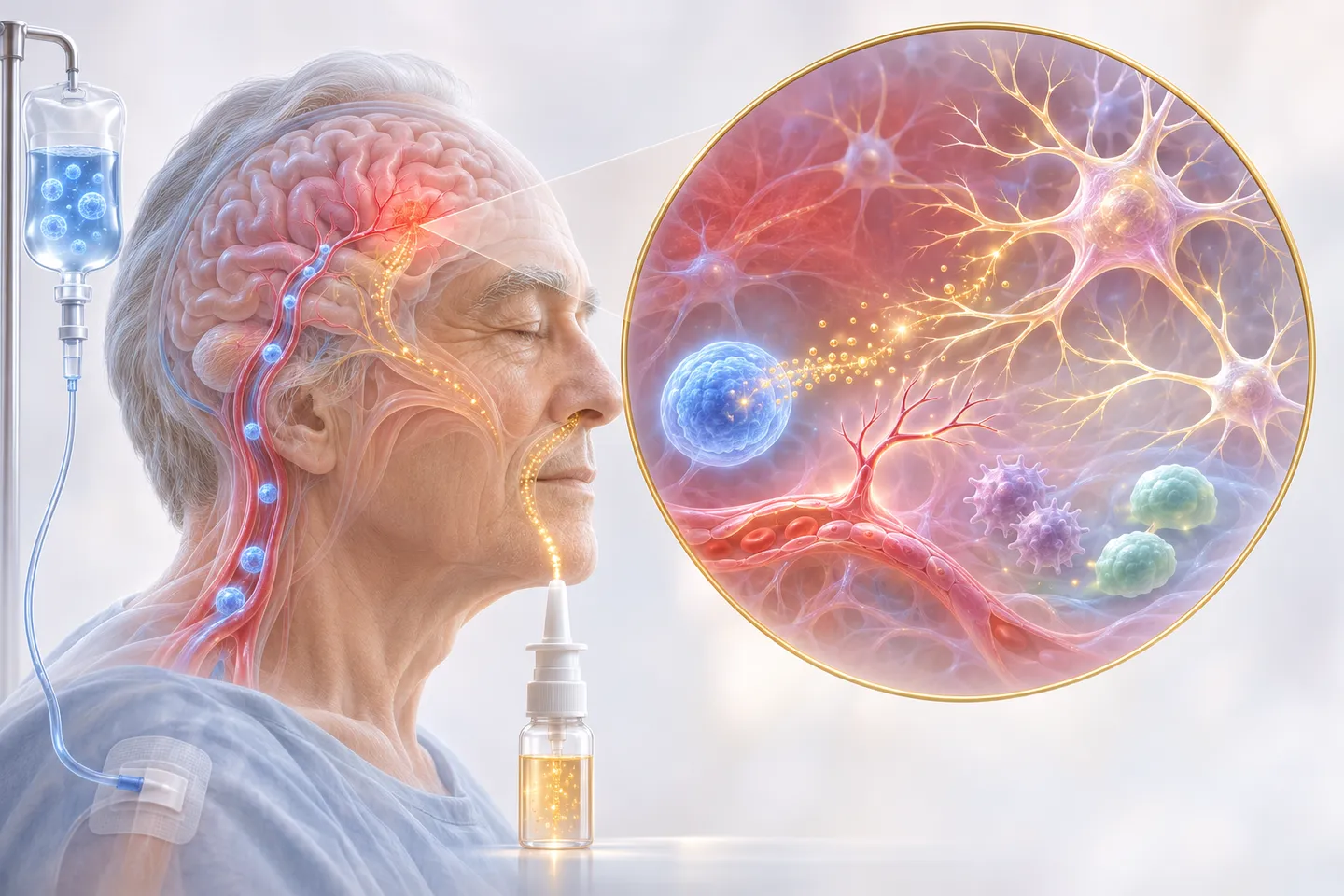
- IV dripFresh Wharton’s jelly stem cells are given by IV infusion, and intrathecally where Dr. Cihan Bolat plans it.
- Cells in the bloodstreamThe stem cells travel with the blood and release protective signals.
- Nasal sprayWharton’s jelly exosomes as a gentle nasal spray, along the nose-to-brain pathway shown in research models.
- Stroke areaThe part of the brain where blood flow was blocked or a vessel bled. The brain tissue around it can still be supported.
- Stem cellA Wharton’s jelly MSC. It does not replace brain cells; it works mainly by releasing signals.
- ExosomesTiny messages that tell nerve cells to protect themselves and calm inflammation.
- New blood vesselsSupport for new small vessels around the injured area, seen mainly in research models.
- New nerve connectionsSupport for the brain’s rewiring (neuroplasticity), alongside your rehabilitation.
Read the science: how the treatment aims to support recovery after a stroke
An IV drip reaches the immune system throughout the body; an intrathecal injection, through a very fine needle in the lower back, places cells in the fluid around the brain and spinal cord. In a phase II trial, both routes with rehabilitation improved recovery and quality of life.2 Exosomes by nasal spray take a short path to the brain.10 Read more about our stem cell therapy and our exosome therapy.
Calming inflammation
Seen in research models. Across 30 studies, umbilical cord stem cells balanced inflammatory signals, acted on the brain’s immune cells (microglia) and reduced the size of the stroke.1
Protecting nerve cells
Seen in laboratory tests. In conditions that mimic a stroke, Wharton’s jelly stem cells protected nerve cells better than bone marrow stem cells.3
New connections and blood vessels
Seen in research models. Stem cell exosomes given by IV after a stroke increased nerve fibres, connections, new nerve cells and new blood vessels, and movement recovered better.11
Exosomes by nasal spray
Seen in research models. Wharton’s jelly exosomes given into the nose reached the whole brain within 3 hours and protected nerve cells from a lack of oxygen.10
Better recovery in people
Seen in people. In a review of 30 studies, MSCs lowered stroke severity (NIHSS) scores in the randomised trials by 1.69 points more than control, and improved daily activities.12
06
How is our stem cell treatment for stroke rehabilitation performed in Istanbul?
Stem cell therapy, using mesenchymal stem cells (MSCs) and umbilical cord stem cells, is becoming a promising treatment for stroke rehabilitation. These stem cells have shown potential in protecting brain cells, improving motor function and supporting recovery after a stroke.
Read the full section
How MSCs and umbilical cord Stem Cells Help in Stroke Recovery
MSCs and umbilical cord stem cells release signals that support the brain’s own repair after a stroke. Studies show that MSCs can reduce inflammation, protect nerve cells and support brain function. Research published in Stem Cells Translational Medicine (2020) indicates that MSCs can reduce brain damage and improve motor skills in animal models, with hopeful implications for human treatment.
Key Benefits of Stem Cell Therapy for Stroke
-
Neuroprotection and New Connections: Stem cells can help protect neural tissue and promote neuroplasticity, the brain’s ability to rewire.
-
Improved Recovery: Clinical studies, such as one published in the journal Stroke (2019), show significant gains in everyday living in stroke patients who receive MSCs, even years after their stroke.4
-
Enhanced Functional Outcomes: A pilot study showed that MSCs enhanced functional recovery, including improved motor skills and cognitive functions, after stroke.
The Future of Stem Cell Therapy for Stroke
While further research is needed, early studies suggest MSCs and umbilical cord stem cells offer great potential for accelerating stroke recovery, reducing brain damage, and improving quality of life. As the science progresses, stem cell therapy is expected to become a key treatment option for stroke rehabilitation, offering a hopeful path for recovery.
If you or a loved one is recovering from a stroke, stem cell therapy could be a promising option to explore for improved outcomes.
07
Why Wharton’s jelly stem cells and exosomes
Wharton’s jelly is the soft tissue inside the umbilical cord. Its stem cells come from cords donated after healthy births, so they are young and nothing is taken from your body. In a Polish series, every patient given these cells into the spinal fluid after a stroke became more independent.13 In a pooled analysis of 19 randomised trials, umbilical cord stem cells were more effective than bone marrow stem cells.14 Umbilical cord MSCs and optional Muse cells and Muse exosomes can join your plan, and every batch is certified.
Compare Wharton’s jelly stem cells with your own cells
| Fresh Wharton’s jelly stem cells (our cells) | Stem cells from your own bone marrow or fat | |
|---|---|---|
| Age of the cells | From newborn tissue, donated after healthy births | As old as you are |
| A procedure for you | None | A bone marrow draw or liposuction first |
| Ready for treatment | Prepared fresh for your date, usually within 5 to 10 days | Only after collection and growing in the laboratory |
| Signals for nerves and blood vessels | More secreted factors for nerve protection, new nerve cells and new blood vessels3 | Fewer in the same comparison3 |
08
What the studies show
These favourable human studies of stem cell therapy for stroke recovery each used their own cells and route.
- +17.9 points: on average about nine months after an ischaemic stroke, people given umbilical cord stem cells by IV with rehabilitation gained 17.9 points more on an independence scale (FIM) at 12 months than with rehabilitation alone (17.1 with intrathecal cells).2
- 11.4% to 35.5%: an average of 4.2 years after a stroke, the share of people with an excellent everyday-living score rose from 11.4% to 35.5% in the year after one IV dose of donor stem cells.4
- 3 of 4: with repeated intrathecal Wharton’s jelly stem cells, movement improved in 3 of the 4 people who had three or more rounds, and speech in 2.13
People with an excellent everyday-living score (Barthel 95 or more) after one IV dose of donor stem cells
6 months after the infusion4
12 months after the infusion4
The studies in detail, with all 5 in one table
| Study | Design | n | Cells (their own source) and route | Result with exact numbers |
|---|---|---|---|---|
| Nguyen 20252 | Phase II, randomised IV vs intrathecal, plus matched rehabilitation-only controls | 48 | Umbilical cord MSCs, 1.5 million per kg, twice; IV or intrathecal, plus rehabilitation | At 12 months vs rehabilitation alone: FIM +17.9 (IV) and +17.1 (intrathecal); NIHSS −4.5 and −3.6 |
| Levy 20194 | Phase I/II, chronic stroke, on average 4.2 years on | 36 | Donor MSCs, up to 1.5 million per kg; one IV dose | Barthel +6.8 at 6 months and +10.8 at 12 months; excellent score 11.4% → 35.5% |
| Milczarek 202313 | Case series vs standard care; 2 to 24 months after the stroke | 6 + 6 | Wharton’s jelly MSCs, 30 million per round; repeated intrathecal | All treated patients more independent; movement better in 3 and speech in 2 of the 4 with three or more rounds |
| Shen 202412 | Systematic review and meta-analysis | 30 trials (15 randomised), 1,217 | MSCs, several sources and routes | In randomised trials: NIHSS −1.69 and modified Rankin score −0.26 vs control |
| Osanai 20255 | Meta-analysis of randomised trials, treatment within 1 month | 13 trials, 872 | Stem cells, several types and routes | All usual activities (modified Rankin 0–1) at 1 year: 45 of 195 vs 23 of 179 |
09
Who can have stem cell therapy after a stroke?
We review strokes of every kind, recent and long-standing, and there is no fixed age limit. Dr. Cihan Bolat decides with you from your scans and records, and tells you honestly if treatment is not right for you. For other conditions, see our pages on multiple sclerosis, Parkinson’s disease, spinal cord injury and heart and blood vessel health.
Often suitable
- An ischaemic stroke (a blocked blood vessel), from a few weeks to many years ago
- Weakness, stiffness, or changes in speech, balance or memory you would like to work on
- Stable general health, and well enough to travel, with a companion if you wish
Considered case by case
- A stroke caused by a bleed (haemorrhagic stroke)
- A stroke in the last few weeks, while you are still in early hospital care
- Seizures since the stroke, or blood thinners
- Serious heart, kidney or lung disease
Not suitable for now
- Active cancer, or recent cancer treatment
- An active infection
- Pregnancy
10
Expert stem cell treatment under the guidance of Uzm. Dr. Cihan Bolat, MD
Under the leadership of Uzm. Dr. Cihan Bolat, MD, Specialist in Anesthesiology & Reanimation and Regenerative Medicine, we provide expert treatments tailored to the unique needs of our patients. With our team’s experience and access to a broad range of mesenchymal stem cells (MSCs) and umbilical cord stem cells, we offer an integrated approach for stroke rehabilitation. At our clinic, we ensure that no performance-enhancing substances or components are used, and we focus on creating a relaxing atmosphere with a friendly and professional team dedicated to helping you make the most of your stay.
Read the full section
11
How does our stem cell therapy treatment for stroke rehabilitation work?
All our stem cell treatments in Istanbul are conducted by highly specialized experts, trained both in the United States and Turkey, not by general practitioners. This ensures the highest level of precision, understanding of the condition, and quality of care for our patients. We are fully transparent and honest with our patients, ensuring they understand that not everyone qualifies for our stem cell treatments. We prioritize patient safety, and many patients are evaluated and declined if the specialist assesses that stem cell therapy is not suitable for their current health condition or medical history. This approach helps prevent false promises and ensures that risks do not outweigh potential benefits. To maintain safety and efficacy, each patient undergoes a thorough assessment before treatment is scheduled.
Step 1. Specialist Evaluation For stroke patients, our specialist will assess the patient's age, medical history, and previous treatments. Additionally, specific tests will be required, which you will be asked to bring.
Step 2. Free Phone Consultation Once the specialist reviews your medical records and approves your case, we will present treatment options and prices. At this point, we also offer a free phone consultation to discuss any questions or concerns.
Step 3. Stem Cell Preparation Once you decide to proceed with the treatment, we will send an invoice for the deposit to initiate the stem cell preparation process. Depending on availability and current demand, this process may take anywhere from 5 to 10 days.
Step 4. Treatment Day On the day of treatment, you can choose to come to our hospital location or use our free transportation to and from our clinic in Istanbul. Our driver will pick you up from your preferred location, escort you to our clinic, where the specialist will administer the treatment, and then safely return you afterward.
Step 5. Follow-Up Treatment Our specialist will contact you according to our follow-up schedule to ensure you have all the necessary resources for maximum benefit. Your well-being and satisfaction are our top priorities.
12
What our patients say
A Remarkable Recovery: Stem Cell Therapy That Changed Our Lives
I cannot express how truly grateful I am for the stem cell therapy I received at this clinic under the expert care of the medical team. My father had been struggling with the aftereffects of a stroke, and after many traditional treatments with limited success, we were recommended to explore stem cell therapy as a potential solution. From the very first consultation, we were impressed by the professionalism and thoroughness of the entire team. The staff provided clear and transparent explanations of the treatment process. They didn’t just treat the condition; they treated us as individuals, addressing all our concerns and ensuring we understood every step of the way. The team was warm, compassionate, and incredibly knowledgeable – a stark contrast to some of the impersonal medical experiences we’ve had in the past. The procedure itself was smooth, and we were relieved to see immediate signs of improvement. After several weeks, we started noticing significant cognitive and physical improvements. My father’s mobility and speech have improved, and the quality of his life has skyrocketed. We are optimistic for even further recovery, and we believe that stem cell therapy has truly been a game changer for his post-stroke rehabilitation. If you’re looking for advanced medical care, a team that genuinely cares, and treatment that delivers real results, I wholeheartedly recommend this clinic. Thank you again to the whole medical team for changing our lives!
Incredible Recovery After Stroke Thanks to Stem Cell Treatment
My father’s stroke left him with significant challenges in mobility and cognitive function. After exploring various treatment options, we decided to try stem cell therapy at this clinic, and the results have been remarkable. The medical team provided a thorough consultation and a clear treatment plan, which helped us feel confident in our decision. The procedure itself was seamless, and within a few weeks, my father showed noticeable improvements in his motor skills and mental clarity. The progress has been consistent, and his overall quality of life has significantly improved. We’re beyond grateful for the care and expertise of the team. If you're looking for a solution that offers real potential for stroke recovery, I highly recommend this clinic. The medical team’s professional approach and the success of the treatment speak volumes. Thank you for giving us a new hope for my father’s recovery.
13
Stroke stem cell therapy cost in Turkey
Our IV packages follow one price list, effective 1 June 2026, in US dollars (M = million stem cells); from 50M they include free Wharton’s jelly exosomes. Intrathecal stem cells and exosome nasal sprays are priced in your written plan. A typical IV range is 1–2 million cells per kilogram, and the right dose is set in your medical review. Our guide to stem cell therapy cost in Turkey explains every package.
| Cell count | USD price | Free exosomes | Free hotel |
|---|---|---|---|
| 25M | $4,950 | No | No |
| 50M | $6,950 | 10 billion exosomes | No |
| 75M | $8,950 | 10 billion exosomes | No |
| 100M | $10,500 | 20 billion exosomes | 2 nights |
| 125M | $11,850 | 20 billion exosomes | 2 nights |
| 150M | $13,550 | 30 billion exosomes | 2 nights |
| 175M | $15,000 | 30 billion exosomes | 2 nights |
| 200M | $16,500 | 30 billion exosomes | 3 nights |
| 225M | $18,000 | 30 billion exosomes | 3 nights |
| 250M | $19,500 | 30 billion exosomes | 3 nights |
What is included, and what is optional
Included
- Free medical review of your scans and reports
- Fresh Wharton’s jelly stem cells, with certified count and viability
- Treatment by our specialist team, led by Uzm. Dr. Cihan Bolat
- Ground transport and a personal case manager
- Hotel nights where the price list shows them
- Follow-up at about 1, 3, 6 and 12 months
Not included
- Flights
- Intrathecal stem cells and extra exosomes, priced in your written plan
- Optional add-ons, such as CD34+ exosomes
14
Read our full guides
Want the full picture? These guides go deeper into the research and the questions families ask most.
Stem cell therapy for stroke: the full guide
Every human trial in detail, progress after the rehab plateau, and how IV and intrathecal stem cells and nasal exosome sprays are planned.
Read the guide GuideHow to reduce plaque in arteries
Practical, evidence-based steps for healthier blood vessels, from food and exercise to the medicines your doctor may suggest.
Read the guide GuideCan stem cells repair a spinal cord injury?
How intrathecal stem cells and exosomes are studied in nerve injury, with every favourable human result.
Read the guide15
Frequently asked questions
How long after a stroke can stem cell therapy help?
Studies have treated people from the first weeks to many years after a stroke. In a phase II trial, people were treated between 7 days and 24 months after their stroke, and in another study an average of 4.2 years after it, with gains in everyday living. Because the brain’s natural repair is most active early on, it is worth asking sooner rather than later, and a stroke some years ago is still worth asking about.
Can stem cells help after a haemorrhagic stroke (a bleed)?
Most stroke trials so far have included people after an ischaemic stroke, caused by a blocked blood vessel, and the studies on this page are ischaemic stroke studies. After a bleed, Dr. Cihan Bolat looks at your scans and how far you have recovered, and decides with you case by case.
Can stem cells help with speech, arm movement or walking?
Studies have looked at all three. With repeated intrathecal Wharton’s jelly stem cells, movement improved in 3 of 4 people who had three or more rounds, and speech in 2. In a phase II trial, umbilical cord stem cells with rehabilitation raised both the movement part (which includes walking) and the thinking part of an independence scale. Your therapists help you turn any new ability into everyday skills.
How soon might we notice changes?
Changes tend to build gradually over months: in the phase II trial on this page, the gains were largest at 12 months. Keeping up your rehabilitation helps you make the most of them, and we follow up with you at about 1, 3, 6 and 12 months.
Is the intrathecal injection painful?
It is given in a similar way to a lumbar puncture, through a very fine needle in the lower back. Dr. Cihan Bolat, a specialist in anaesthesiology and reanimation, plans your comfort and explains each step beforehand, and a passing headache is the best-known after-effect. The exosome nasal spray is given like an ordinary nasal spray.
Is there an age limit, and how long will we stay in Istanbul?
There is no fixed age limit: Dr. Cihan Bolat decides with you, based on your records and your general health. Your plan sets the dates, your case manager helps you choose them, and a family member or friend is welcome to come with you.
How effective is stem cell treatment for post-stroke rehabilitation?
Patient satisfaction among stroke patients after their stem cell treatment is high. However, it is important to understand that treatment effectiveness depends on several factors, including the patient's age, medical history, and overall lifestyle.
Is stem cell therapy for post-stroke rehabilitation safe?
Yes, stem cell therapy is generally safe and carries few risks: large reviews of mesenchymal stem cell trials found it well tolerated, and the most common effect was a passing fever. It is minimally invasive: an IV drip, or an injection into the spinal fluid through a very fine needle, without surgery.
How safe is stem cell treatment for post-stroke rehabilitation at this clinic?
We take pride in being the safest and most honest stem cell therapy clinic in Istanbul. All our stem cell treatments are evaluated and administered by specialists in this field who have trained in both the United States and Turkey, rather than only by general physicians or specialists. This helps ensure the highest level of precision, understanding of the condition, and treatment quality for our patients. We are completely clear and honest with our patients. Not everyone qualifies for our stem cell treatments. We decline many patients when our specialist determines that treatment is unsuitable, to avoid false promises or expectations when the risks outweigh the benefits.
How much does stem cell treatment for post-stroke rehabilitation cost?
Treatment prices may vary depending on the patient's individual needs, such as special accommodation or stay requirements, and the number of stem cells in your plan. Our prices include: ground transportation to and from our clinic; treatment by a certified specialist in this field; certified allogeneic stem cells with 97% viability, prepared fresh for your treatment date; a personal case manager; and aftercare.
Medical review
Uzm. Dr. Cihan Bolat
Medical Director, Istanbul Stemcell
This page was written from the published studies listed below and reviewed for medical accuracy on .
16
References
All 14 published studies, with PubMed links
- Wei R, et al. Efficacy and Potential Mechanisms of Umbilical Cord-Derived Mesenchymal Stem Cells in the Treatment of Ischemic Stroke in Animal Models: A Meta-Analysis. CNS Neurosci Ther. 2025;31(4):e70357. PMID 40202099
- Nguyen LT, et al. Intrathecal versus intravenous umbilical cord mesenchymal stem cells for ischemic stroke sequelae. Stem Cells Transl Med. 2025;14(12). PMID 41277536
- Hsieh JY, et al. Mesenchymal stem cells from human umbilical cord express preferentially secreted factors related to neuroprotection, neurogenesis, and angiogenesis. PLoS One. 2013;8(8):e72604. PMID 23991127
- Levy ML, et al. Phase I/II Study of Safety and Preliminary Efficacy of Intravenous Allogeneic Mesenchymal Stem Cells in Chronic Stroke. Stroke. 2019;50(10):2835-2841. PMID 31495331
- Osanai T, et al. Efficacy and safety of stem cell therapy for acute and subacute ischemic stroke: a systematic review and meta-analysis. Sci Rep. 2025;15(1):21214. PMID 40595869
- Wang Y, Yi H, Song Y. The safety of MSC therapy over the past 15 years: a meta-analysis. Stem Cell Res Ther. 2021;12(1):545. PMID 34663461
- . Global, regional, and national burden of stroke and its risk factors, 1990-2021: a systematic analysis for the Global Burden of Disease Study 2021. Lancet Neurol. 2024;23(10):973-1003. PMID 39304265
- Ward NS, Brander F, Kelly K. Intensive upper limb neurorehabilitation in chronic stroke: outcomes from the Queen Square programme. J Neurol Neurosurg Psychiatry. 2019;90(5):498-506. PMID 30770457
- Jørgensen HS, et al. Outcome and time course of recovery in stroke. Part II: Time course of recovery. The Copenhagen Stroke Study. Arch Phys Med Rehabil. 1995;76(5):406-12. PMID 7741609
- Thomi G, et al. Intranasally Administered Exosomes from Umbilical Cord Stem Cells Have Preventive Neuroprotective Effects and Contribute to Functional Recovery after Perinatal Brain Injury. Cells. 2019;8(8). PMID 31398924
- Xin H, et al. Systemic administration of exosomes released from mesenchymal stromal cells promote functional recovery and neurovascular plasticity after stroke in rats. J Cereb Blood Flow Metab. 2013;33(11):1711-5. PMID 23963371
- Shen Z, et al. Efficacy and safety of mesenchymal stem cell therapies for ischemic stroke: a systematic review and meta-analysis. Stem Cells Transl Med. 2024;13(9):886-897. PMID 39159204
- Milczarek O, et al. Comparative Analysis of the Results of Stroke Treatment With Multiple Administrations of Wharton's Jelly Mesenchymal Stem Cells-Derived HE-ATMP and Standard Conservative Treatment: Case Series Study. Cell Transplant. 2023;32:9636897231195145. PMID 37644776
- Jiang Y, et al. Efficacy and safety of mesenchymal stem cells for cerebral infarction: A meta-analysis. Biomed Rep. 2026;24(4):41. PMID 41669112