
01
Does stem cell therapy work for heart failure?
Yes, for many people with heart failure. In randomised trials, stem cell treatment strengthened the heart’s pumping (ejection fraction), eased breathlessness, lengthened walking distance and improved quality of life, on top of the best heart medicines.19107 Analyses of many trials also found fewer hospital stays.211
Heart failure after a heart attack (ischaemic cardiomyopathy)
When a heart attack leaves scar tissue, the rest of the heart muscle has to work harder. In a placebo-controlled trial in this group, stem cells injected into the heart muscle raised ejection fraction by 6.2 points compared with placebo, made the enlarged heart smaller and reduced scar tissue.1012 In patients with advanced heart failure (NYHA class III–IV), cardiac events fell by 37%.6 Read more on our page about stem cell therapy for ischaemic cardiomyopathy.
Dilated cardiomyopathy (non-ischaemic heart failure)
In dilated cardiomyopathy the heart muscle stretches and weakens without a blocked artery being the main cause. In the POSEIDON-DCM trial, donor stem cells injected into the heart muscle by catheter raised ejection fraction by 8.0 points, added 37 metres to the six-minute walk and improved quality of life.9 Given by IV drip, donor stem cells added 36 metres to the walk compared with placebo and improved quality-of-life scores.13
When your heart medicines are already optimised
The patients in these trials were already taking the best available heart failure medicines. Stem cells were added on top, and the improvements came in addition to what the medicines achieve.18
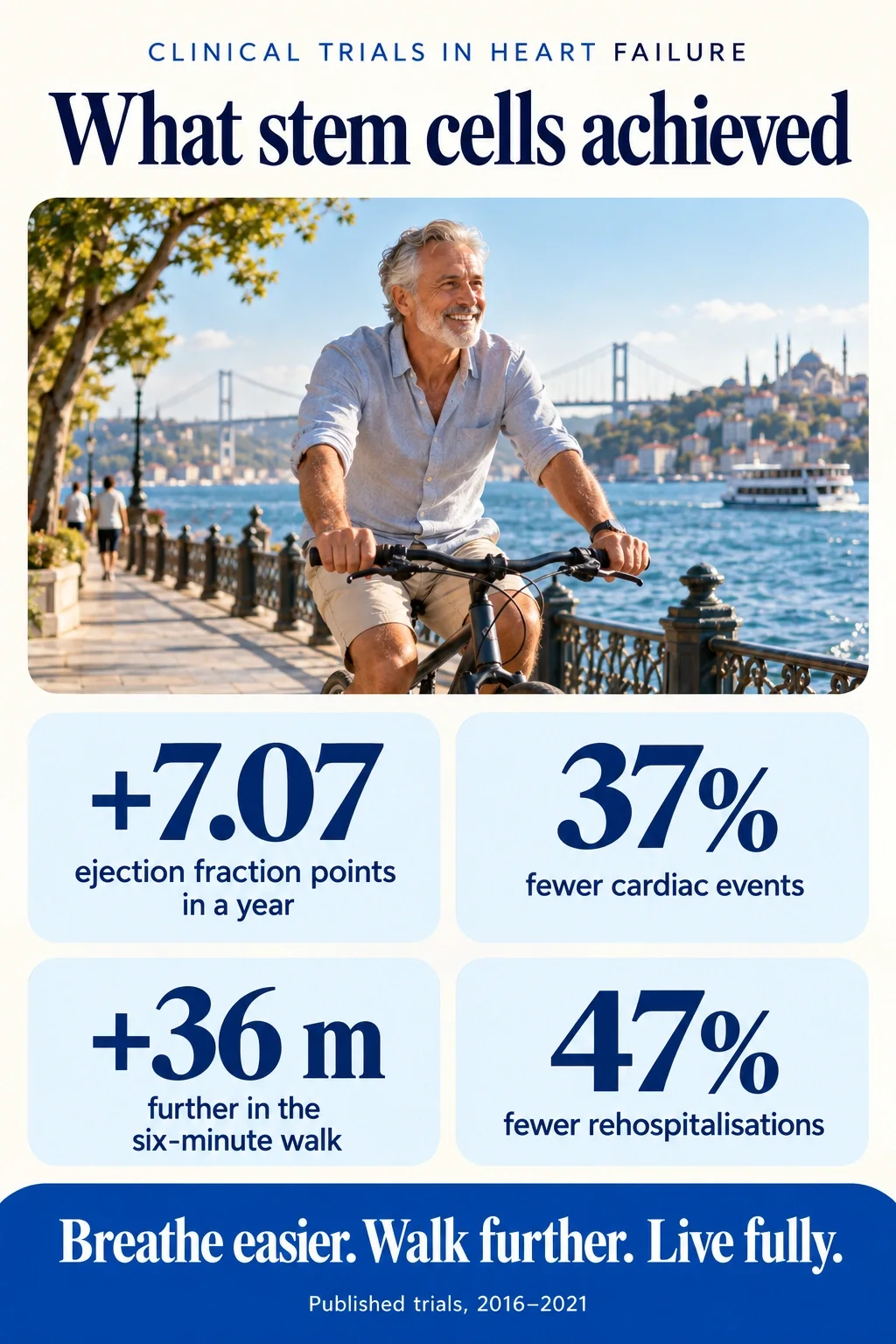
Results at a glance
- +7.07points of ejection fraction in 12 months with IV umbilical cord stem cells, against +1.85 with placebo1
- 37%fewer cardiac events, such as hospital admissions, in advanced ischaemic heart failure6
- +36 mfurther in the six-minute walk than with placebo, after IV stem cells13
- −47%rehospitalisation across 12 randomised trials with 823 patients2
02
How stem cells and exosomes work in heart failure
In heart failure, the heart muscle is under constant strain. Low-grade inflammation, scar tissue and a shortage of small blood vessels all make it harder for the heart to pump, and inflammation is closely linked to how heart failure progresses.14 Mesenchymal stem cells do not work by turning into new heart muscle. They act as a source of repair signals: growth factors, anti-inflammatory messengers and exosomes that help the heart’s own cells recover.3
Given by IV drip, stem cells travel through the bloodstream to injured heart tissue: in research models, infused stem cells were seen in the damaged area of the heart within 24 hours.4 They also work at a distance. In research models, IV stem cells released the anti-inflammatory protein TSG-6, which calmed inflammation, reduced heart muscle damage and improved heart function.15 Six effects explain the results seen in studies.
How stem cell therapy works in heart failure
- Fresh stem cells and exosomesA relaxed IV drip, alongside your heart medicines.
- Homing and repair signalsThe cells release growth factors and exosomes; in research models they reach injured heart tissue.34
- Calmer, better-supplied muscleLess inflammation, healthier blood vessels and less scarring.91612
- A stronger heart, easier breathingHigher ejection fraction, better NYHA class and quality of life in trials.117
How stem cells support a weakened heart
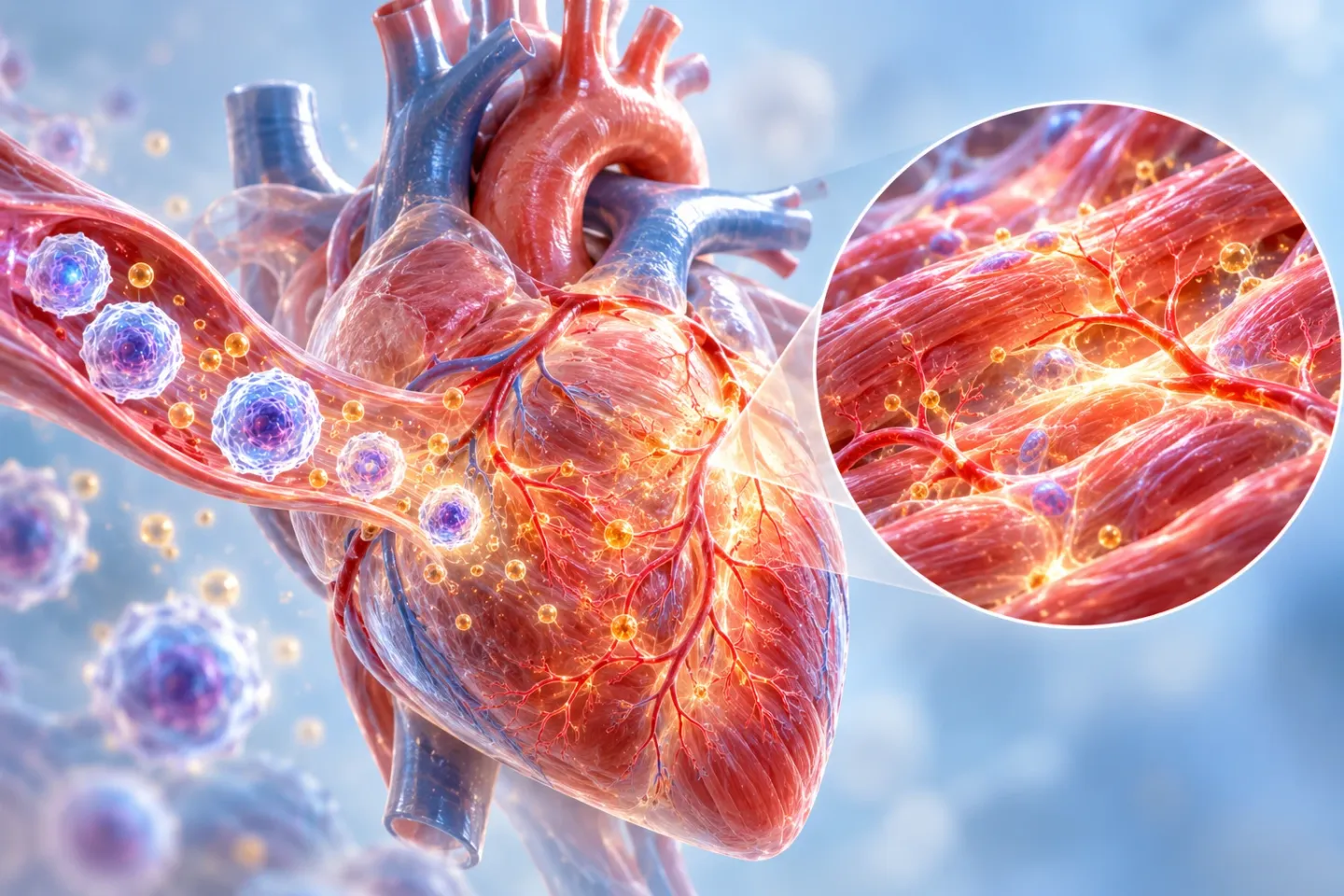
- Stem cellsGiven by IV, they travel through the bloodstream to the heart.
- New small blood vesselsGrowth factors support new small vessels that bring oxygen to the heart muscle.
- ExosomesTiny vesicles carry repair messages and calm inflammation in the heart.
- Heart muscleBetter supplied, less inflamed muscle can pump more strongly.
Calming inflammation in the heart
After stem cell treatment, the inflammation marker TNF-α fell in patients with dilated cardiomyopathy.9 IV stem cells had immune-balancing effects whose size went hand in hand with better heart pumping,13 and in the largest trial the benefits were greatest in patients with high inflammation.8
Protecting heart muscle cells
Stem cells release growth factors that protect stressed heart muscle cells and support their recovery.3 In laboratory tests, umbilical cord stem cells showed 55 times higher expression of hepatocyte growth factor, a signal for muscle repair and immune balance, than bone marrow stem cells.1
Healthier blood vessels
In patients with heart failure, donor stem cells increased the body’s own blood-vessel repair cells and improved blood vessel function within three months.16 In laboratory studies, exosomes from CD34+ stem cells stimulated the growth of new small blood vessels.18
Less scar, a better-shaped heart
In randomised trials, stem cells reduced scar tissue in the heart,12 made the scar of an old heart attack 18.9% smaller19 and made the enlarged heart smaller.10
Energy for tired heart cells
Stem cells can hand healthy mitochondria, the cell’s energy units, to stressed cells through tiny tunnels between cells.20 In research models of ischaemic and drug-induced cardiomyopathy, this mitochondrial transfer restored the energy of heart cells and improved heart function.2122
Exosomes: repair messages in concentrated form
Exosomes are tiny vesicles that carry proteins and RNA messages from stem cells to heart cells. In research models, stem cell exosomes reduced heart muscle damage,5 and across 37 animal studies they raised ejection fraction by about 11 points.23 In an Istanbul study, patients who received umbilical cord stem cell exosomes into the heart arteries together with IV stem cells had a higher ejection fraction at 3, 6 and 12 months.24
Learn more about how our exosome therapy works.
03
Stem cell therapy for heart failure: success rates and clinical evidence
Heart failure trials measure what matters in daily life: ejection fraction (the share of blood the heart pumps out with each beat), NYHA class (how breathless you are with activity, from class I to IV), the six-minute walk, quality-of-life questionnaires such as the MLHFQ and KCCQ, and hospital stays. These are the key published trials:
| Study | Design | What improved |
|---|---|---|
| Bartolucci 2017, RIMECARD1 | Randomised, placebo-controlled; 30 patients; one IV infusion of umbilical cord stem cells, like ours | Ejection fraction +7.07 vs +1.85 points at 12 months; better NYHA class and quality of life at every check-up |
| Butler 201713 | Randomised, placebo-controlled; 22 patients with dilated cardiomyopathy; IV donor stem cells | Six-minute walk +36.5 m and KCCQ quality-of-life score +5.2 compared with placebo |
| Keskin 2026, Istanbul24 | Pilot study; 10 patients; umbilical cord exosomes into the heart arteries, then two IV infusions of umbilical cord stem cells | Ejection fraction +4.45 points at 3 months, +5.35 at 6 months and +4.66 at 1 year; smaller heart chambers; lower NT-proBNP at 6 months |
| Hare 2017, POSEIDON-DCM9 | Randomised; 37 patients with dilated cardiomyopathy; donor or own stem cells by catheter into the heart muscle | With donor cells: ejection fraction +8.0 points, six-minute walk +37 m, better quality of life, fewer major cardiac events |
| Mathiasen 2015 and 2020, MSC-HF1012 | Randomised, placebo-controlled; 60 patients with ischaemic heart failure; injections into the heart muscle | Ejection fraction +6.2 points vs placebo; stroke volume +18.4 mL; less scar tissue and better quality of life at 12 months |
| Patel 2016, ixCELL-DCM6 | Randomised, placebo-controlled; 126 patients, NYHA class III–IV, ischaemic; by catheter | 37% fewer cardiac events, including hospital admissions; fewer serious adverse events than placebo |
| Perin 2023 and 2025, DREAM-HF825 | Randomised, sham-controlled; 565 patients; donor precursor cells by catheter | Higher ejection fraction at 12 months; 58% fewer heart attacks or strokes; 52% fewer major cardiovascular events in ischaemic heart failure with inflammation |
| Heldman 2014, TAC-HFT19 | Randomised, placebo-controlled; 65 patients with ischaemic cardiomyopathy; by catheter | Better quality of life and six-minute walk; heart-attack scar 18.9% smaller |
| Ulus 2020, HUC-HEART, Turkey26 | Randomised; 54 patients; umbilical cord stem cells during bypass surgery | With umbilical cord cells: ejection fraction up 5.4% and stroke volume up 19.7%; six-minute walk up 23.1% (14.4% with surgery alone) |
| Vrtovec 201327 | Randomised; 110 patients with dilated cardiomyopathy; CD34+ stem cells into the heart arteries; 5 years | Ejection fraction 24.3% → 30.0%; six-minute walk 344 → 477 m; deaths 14% vs 35% without cell therapy |
With IV umbilical cord stem cells, the same cells and route we use
RIMECARD is the trial closest to our treatment. Thirty patients with stable heart failure with reduced ejection fraction, all on optimal medicines, received a single IV infusion of umbilical cord stem cells (1 million cells per kilogram) or placebo. Only the stem cell group improved its ejection fraction, at 3, 6 and 12 months, on both heart ultrasound and cardiac MRI, and NYHA class and Minnesota quality-of-life scores improved at every check-up.1 In a 2026 study at an Istanbul university hospital, patients who received umbilical cord stem cell exosomes followed by two IV stem cell infusions had a higher ejection fraction at 3, 6 and 12 months and smaller heart chambers.24
Breathlessness, walking and quality of life
In a pooled analysis of three randomised trials, NYHA class improved in both dilated and ischaemic cardiomyopathy, the six-minute walk rose by 31 to 36 metres, and Minnesota quality-of-life scores improved by 19.5 points in dilated and 6.4 points in ischaemic cardiomyopathy.17 An analysis of 11 randomised trials in dilated cardiomyopathy found ejection fraction 4.84 points higher, the six-minute walk 44 metres longer, a better NYHA class and clearly improved quality of life on both the MLHFQ (−16.6) and the KCCQ (+14.8).7
Fewer hospital stays
Hospital admissions are what people with heart failure most want to avoid. In ixCELL-DCM, stem cell treatment cut cardiac events, such as hospital admissions and urgent visits for worsening heart failure, by 37%.6 Across randomised trials, rehospitalisation was 47% lower in one analysis2 and 59% lower in another.11 Four years after treatment in MSC-HF, patients had fewer hospital stays for chest pain (angina).12
Umbilical cord and Wharton’s jelly cells
In an analysis of 13 randomised trials, umbilical cord stem cells raised ejection fraction by 5.08 points at six months compared with controls,28 and another analysis found umbilical cord cells seemed more effective than bone marrow cells.2 With Wharton’s jelly stem cells, the same cells we use, given into the heart artery after a heart attack, ejection fraction rose by 7.8 points over 18 months, against 2.8 with placebo.29
Long-term results
In dilated cardiomyopathy, patients treated with CD34+ stem cells had a higher ejection fraction and a longer six-minute walk five years later, and fewer of them died: 14% against 35%.27 In DREAM-HF, a single treatment reduced the risk of heart attack or stroke by 58% over about 30 months of follow-up.825
04
Beyond heart medicines: where stem cells differ
Today’s heart failure medicines are the foundation of your care. ACE inhibitors or sacubitril/valsartan, beta-blockers, mineralocorticoid receptor antagonists and SGLT2 inhibitors ease the strain on the heart, and devices such as an ICD or CRT protect against dangerous rhythms and help the heart beat in sync.3031 Stem cell therapy works alongside them, on a different level.
Working on the heart muscle itself
Medicines lower the workload of the heart and block harmful hormone signals. Stem cells add biological repair signals: they calm inflammation, support the small blood vessels and help limit scarring in the heart muscle.91612
On top of the best medicines
The patients in the stem cell trials were already taking optimal heart failure medicines, and the gains in ejection fraction, NYHA class and quality of life came on top of them.18 You keep taking your heart medicines; our specialist reviews them with you before your plan is made.
When you feel you have run out of options
Several trials included people with severe heart failure who could not have further stents or bypass surgery, and they still benefited from stem cell treatment.106
From a strained heart to a stronger one
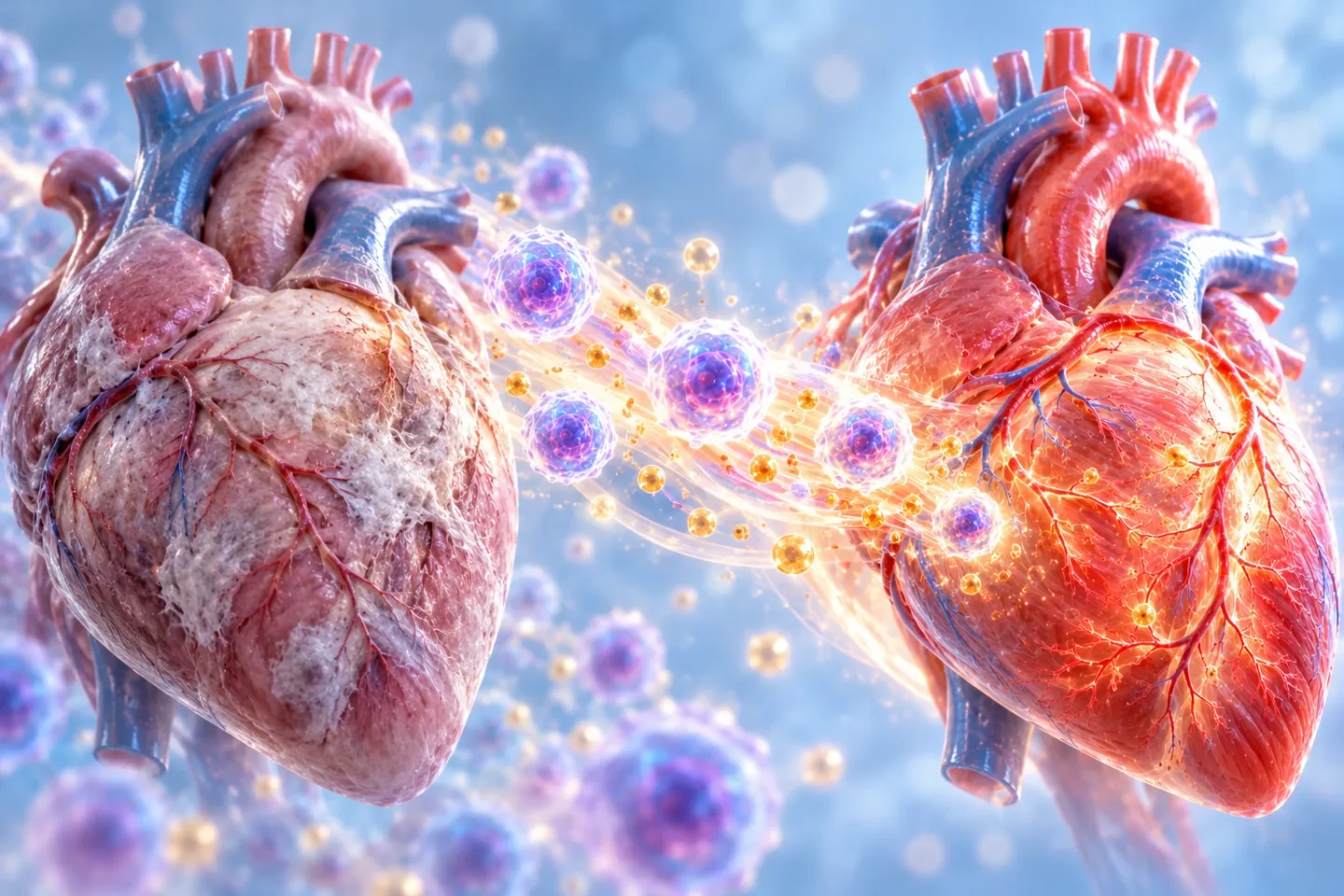
- A strained heartInflammation, scar tissue and too few small blood vessels make the heart work harder.
- Stem cells and exosomesRepair signals calm inflammation, support new small blood vessels and help limit scarring.
- A stronger heartThe aim of treatment: stronger pumping, less breathlessness and more energy, as patients experienced in the trials.
05
Is stem cell therapy a cure for heart failure?
Heart failure is a long-term condition, and stem cell therapy is designed to help your heart work better so that your days feel easier. The goals are realistic and meaningful: a stronger heartbeat, less breathlessness, more energy for walking and climbing stairs, a better quality of life and fewer hospital stays.
That is what patients in the trials experienced. Ejection fraction rose,110 NYHA class improved, which means less breathlessness in daily life,117 patients walked further137 and they needed fewer hospital admissions.62 Benefits were still measured years later: fewer hospital stays for angina four years on in MSC-HF,12 and a stronger heart and better survival five years after CD34+ cell treatment.27
In short: stem cell therapy aims to give your heart more strength and you more good days, working together with your heart medicines.

06
Who is stem cell therapy for heart failure for?
You are not alone: more than 55 million people worldwide live with heart failure.32 Most adults with heart failure with reduced ejection fraction can be assessed for stem cell therapy. It has been studied most in:
- Heart failure after a heart attack (ischaemic cardiomyopathy), the group with the most trials.10619
- Dilated cardiomyopathy, where ejection fraction, walking distance and quality of life improved.97
- People with NYHA class II to IV symptoms, from breathlessness on the stairs to breathlessness with very little effort.106
- People already on optimal heart medicines who want to do more for their heart.1
- People with an ICD or CRT device: in one trial, every patient had an implanted defibrillator.6
- People who cannot have further stents or bypass surgery.106
In the trials, adults from their thirties to their eighties took part.10 Our specialist reviews your heart ultrasound, blood tests, medicines and heart history first, so your plan is built around you.
07
Your stem cell treatment for heart failure in Istanbul, step by step
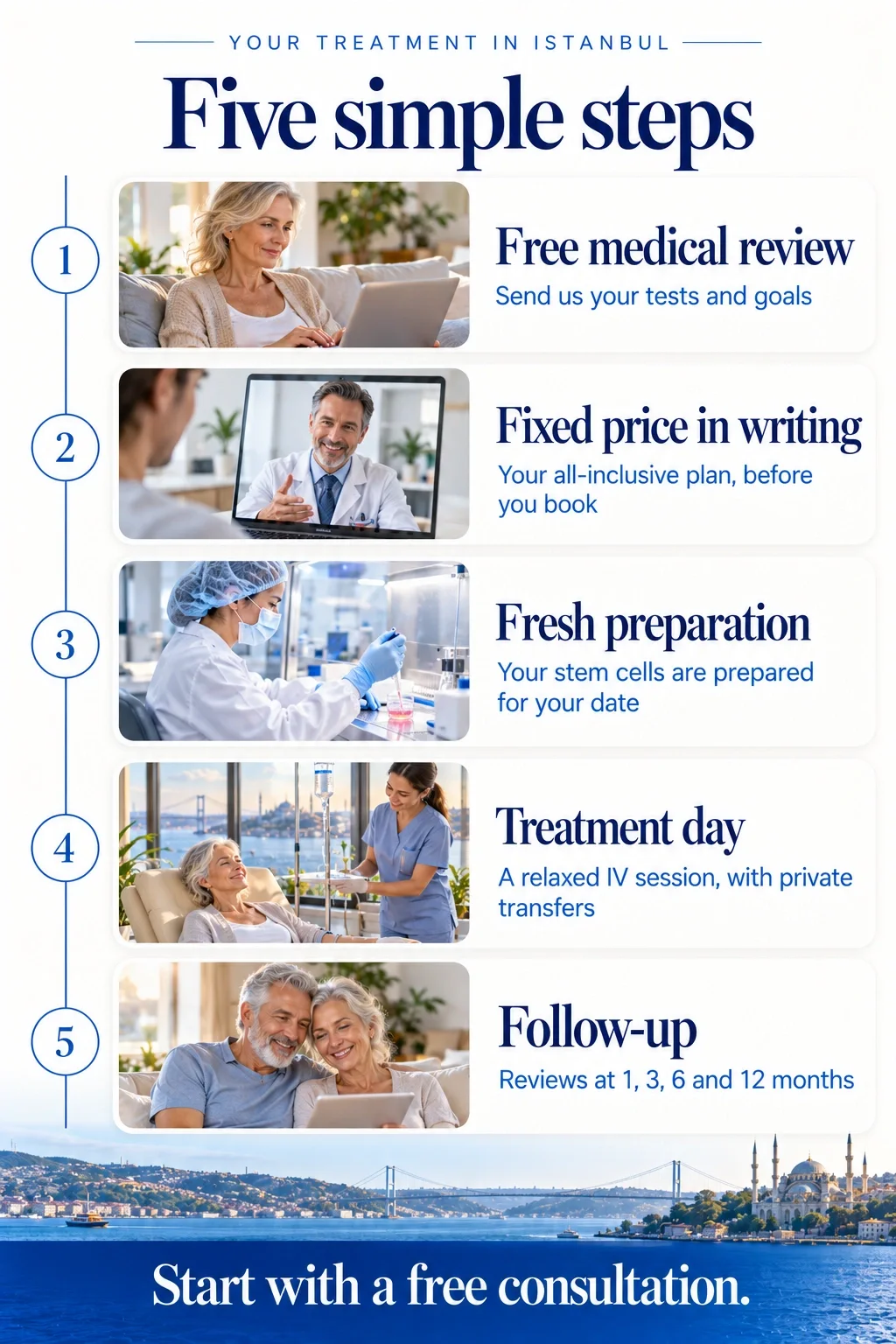
Free medical review
Send us your age, diagnosis and current medicines, with your most recent heart ultrasound (echocardiogram) showing your ejection fraction, an NT-proBNP or BNP test, a complete blood count, kidney and liver tests and any letters from your cardiologist.
Free phone consultation and fixed price
Once your case is approved, you discuss your plan with the specialist team led by Uzm. Dr. Cihan Bolat and receive the total, all-inclusive price in writing.
Fresh preparation
After your deposit, your Wharton’s jelly stem cells are prepared fresh for your date in a Ministry of Health-approved GMP laboratory. Preparation usually takes 5 to 10 days.
Treatment day
Our driver takes you to the clinic, where your stem cells and exosomes are given by a relaxed IV drip under the care of our specialist team, and brings you back afterwards.
Home and follow-up
You travel home and carry on with your heart medicines. We review your progress with you at about 1, 3, 6 and 12 months and plan any further session with you.
Read more about the treatment process step by step.
08
When you may notice changes
Heart muscle recovers gradually. In the trials, ejection fraction, NYHA class and quality of life had improved by the first check-up at 3 months, and the gains held at 12 months.124 In MSC-HF, the difference in heart size compared with placebo grew between 6 and 12 months,1012 and in long-term studies the benefits were still measured years later.2725 We review your progress with you at about 1, 3, 6 and 12 months.
- Week 1Home againOne treatment day, then you travel home
- 3 monthsFirst changesEjection fraction and breathing improve in trials
- 6 monthsBuilding upGains continue in the months after treatment
- 12 monthsStill betterGains measured a year on
- YearsLasting supportBenefits measured up to 5 years later
09
Is stem cell therapy for heart failure safe?
The published safety record is reassuring. In the IV umbilical cord stem cell trial, there were no adverse events related to the infusion, and none of the patients tested developed antibodies against the donor cells.1 In a placebo-controlled trial of IV donor stem cells after a heart attack, side effects were no more common than with placebo, and episodes of fast heart rhythm (ventricular tachycardia) were fewer.33 In ixCELL-DCM, serious adverse events were less common with stem cells than with placebo.6 A 2021 meta-analysis of 62 randomised trials with 3,546 patients found mesenchymal stem cell treatment safe compared with placebo, with no serious adverse events such as death or infection; the most common effect was a passing fever.34
Wharton’s jelly stem cells carry very few of the markers that trigger rejection, so no donor matching is needed.35 Before your plan is made, our specialist team reviews your heart tests and medicines carefully. Your IV infusion is given under the care of Dr. Cihan Bolat, a specialist in anaesthesiology and reanimation, and his team, and you return to your hotel the same day.
10
Stem cells vs medicines, devices and other heart failure treatments
Each heart failure treatment has its own role, and they work best together. Stem cell therapy is the option designed to support the heart muscle itself with repair signals, alongside your medicines.
| Option | How it works | What it aims to do | How often |
|---|---|---|---|
| Stem cells and exosomes | Repair signals that calm inflammation, support small blood vessels and help limit scarring3916 | A stronger heartbeat, easier breathing and a better quality of life17 | One treatment day; a repeat session can be planned |
| Heart failure medicines | Ease the strain on the heart and block harmful hormone signals30 | Longer life, fewer hospital stays and fewer symptoms30 | Every day, long term |
| Devices (ICD, CRT) | Protect against dangerous rhythms and help the heart beat in sync30 | Safety and a more efficient heartbeat | Implanted once, with regular checks |
| Cardiac rehabilitation | Supervised exercise training | Fitness, confidence and wellbeing | Several sessions a week for some weeks |
| Heart pump or transplant | Takes over or replaces the heart’s pumping | Support for the most advanced heart failure | Major surgery with a long recovery |
Stem cells can be combined with all of these. In the trials, patients kept their medicines and devices, and the benefits of stem cells came on top.16
11
Stem cell therapy for heart failure cost in Turkey: what’s included
Your price depends on the number of Wharton’s jelly stem cells, the amount of exosomes and the routes in your plan. After your free medical review you receive a fixed, all-inclusive price in writing, before you book anything.
Included
- Free medical review and phone consultation
- Fresh Wharton’s jelly stem cells, with certified count and viability
- Exosomes, as set out in your plan
- Treatment by our specialist team
- Ground transport to and from the clinic
- A personal case manager
- Aftercare and follow-up reviews
Not included / optional
- Flights
- Hotel stay, which we can arrange for you
- Extra exosomes, from Wharton’s jelly or CD34+ stem cells
- A repeat session, if you choose one later
12
Our guarantees to you
- A fixed price in writingYour all-inclusive price is confirmed in writing before you travel. No surprises.
- A guaranteed cell countThe number of fresh stem cells in your plan is guaranteed, and the count and viability are checked and certified by our GMP laboratory before treatment.
- Follow-up includedProgress reviews at about 1, 3, 6 and 12 months are part of every treatment, so we can follow your heart’s progress with you.
- A free consultation with Dr. Cihan BolatBefore you commit, our medical director reviews your heart tests and your case free of charge.
13
Where can I get stem cell treatment for heart failure?
With us in Istanbul, Turkey, after a free medical review. In many countries, stem cell therapy for heart failure is offered mainly within research studies, which is why many patients travel to experienced clinics abroad.
Why patients from abroad choose Istanbul Stemcell
- Fresh cells: Wharton’s jelly stem cells from donated umbilical cords, prepared for your date and never frozen, in a Ministry of Health-approved GMP laboratory.
- Certified quality: your cell count is guaranteed in writing, and count and viability are certified before every treatment.
- One trip: one treatment day, no harvest from your own body and no second trip.
- Looked after: a personal case manager, ground transport and a hotel arranged on request.
- Specialist-led: a team led by our medical director, Uzm. Dr. Cihan Bolat, with follow-up at about 1, 3, 6 and 12 months.
Turkey also has its own published heart research with umbilical cord stem cells, from a randomised trial in Ankara26 to a 2026 study at a university hospital in Istanbul.24
14
Frequently asked questions
Does stem cell therapy work for heart failure?
Yes, for many people. In randomised trials, stem cell treatment improved ejection fraction, breathlessness (NYHA class), walking distance and quality of life, on top of the best heart medicines. With IV umbilical cord stem cells, ejection fraction rose by 7.07 points in 12 months, against 1.85 with placebo.
Can stem cells repair a damaged heart?
Stem cells work as repair messengers rather than by turning into new heart muscle. They calm inflammation, support the small blood vessels and help limit scarring. In trials, the scar of an old heart attack became smaller, the enlarged heart became smaller and the heart pumped more strongly.
Can stem cell therapy cure heart failure?
Heart failure is a long-term condition, and stem cell therapy is designed to help your heart work better. In studies, patients had a stronger heartbeat, less breathlessness, longer walks, a better quality of life and fewer hospital stays, with benefits still measured years later.
Can stem cells improve my ejection fraction?
In many trials, yes. Ejection fraction rose by 7.07 points with IV umbilical cord stem cells, by 6.2 points more than placebo after injections into the heart muscle, and by 8.0 points with donor stem cells in dilated cardiomyopathy.
How is stem cell therapy for heart failure given?
We give fresh Wharton’s jelly stem cells and exosomes by a relaxed IV drip, the route used in the RIMECARD trial of umbilical cord stem cells. Some research trials injected cells into the heart muscle with a catheter; with an IV drip you need no procedure on the heart.
Is an IV drip as good as injecting stem cells into the heart?
Both routes improved heart function in trials. With IV umbilical cord stem cells, ejection fraction, NYHA class and quality of life improved over 12 months, and IV donor stem cells lengthened the six-minute walk in dilated cardiomyopathy. In research models, IV stem cells reached the injured heart within 24 hours.
Can I keep taking my heart medicines?
Yes. Stem cell therapy works alongside your heart medicines, and in the trials patients continued their optimal medicines throughout. Our specialist reviews your medicines with you before your plan is made.
Can stem cells help dilated cardiomyopathy?
Yes, in studies. An analysis of 11 randomised trials in dilated cardiomyopathy found a higher ejection fraction, 44 metres more in the six-minute walk, a better NYHA class and clearly improved quality-of-life scores.
Can stem cells help heart failure after a heart attack?
Heart failure after a heart attack (ischaemic cardiomyopathy) is the type studied most. In randomised trials, stem cells raised ejection fraction, reduced scar tissue and, in advanced heart failure, led to 37% fewer cardiac events. You can read more on our ischaemic cardiomyopathy page.
Will I need fewer hospital stays?
That is one of the aims. In a 126-patient trial, cardiac events such as hospital admissions fell by 37% with stem cells, and an analysis of 12 randomised trials found 47% fewer rehospitalisations.
Is stem cell therapy for heart failure safe?
The published safety record is reassuring. In the IV umbilical cord stem cell trial there were no adverse events related to the infusion, and a meta-analysis of 62 randomised trials with 3,546 patients found mesenchymal stem cell treatment safe; the most common effect was a passing fever.
Can I have stem cell therapy if I have a pacemaker, ICD or CRT device?
Please tell us about your device in your medical review. In one large trial, every patient had an implanted defibrillator, and our specialist plans your treatment around your device and medicines.
How much does stem cell therapy for heart failure cost in Turkey?
Your price depends on the number of stem cells, the amount of exosomes and the routes in your plan. After a free medical review you receive a fixed, all-inclusive price in writing, which includes fresh Wharton’s jelly stem cells, treatment by our specialist team, ground transport, a personal case manager and follow-up reviews.
How soon will I notice results, and how long do they last?
In trials, ejection fraction, breathlessness and quality of life had improved by the first check-up at 3 months, and the gains were still present at 12 months. Long-term studies measured benefits four to five years later.
What is the difference between stem cells and exosomes?
Stem cells are living cells that keep releasing repair signals; exosomes are tiny packages of those signals, carrying proteins and RNA messages, with no living cells inside. Your plan combines both: fresh Wharton’s jelly stem cells and exosomes from Wharton’s jelly or CD34+ stem cells.
Where can I get stem cell therapy for heart failure?
With us in Istanbul, Turkey, after a free medical review. In many countries, stem cell therapy for heart failure is offered mainly within research studies, which is why many patients travel to experienced clinics abroad. We use fresh cells from a Ministry of Health-approved GMP laboratory.
Medical review
Uzm. Dr. Cihan Bolat
Medical Director, Istanbul Stemcell
This page was written from the published studies listed below and reviewed for medical accuracy on .
15
References
- Bartolucci J, et al. Safety and Efficacy of the Intravenous Infusion of Umbilical Cord Mesenchymal Stem Cells in Patients With Heart Failure: A Phase 1/2 Randomized Controlled Trial (RIMECARD Trial [Randomized Clinical Trial of Intravenous Infusion Umbilical Cord Mesenchymal Stem Cells on Cardiopathy]). Circ Res. 2017;121(10):1192-1204. PMID 28974553
- Shen T, et al. A Systematic Review and Meta-Analysis: Safety and Efficacy of Mesenchymal Stem Cells Therapy for Heart Failure. Curr Stem Cell Res Ther. 2021;16(3):354-365. PMID 32867655
- Gnecchi M, et al. Paracrine mechanisms in adult stem cell signaling and therapy. Circ Res. 2008;103(11):1204-19. PMID 19028920
- Kraitchman DL, et al. Dynamic imaging of allogeneic mesenchymal stem cells trafficking to myocardial infarction. Circulation. 2005;112(10):1451-61. PMID 16129797
- Lai RC, et al. Exosome secreted by MSC reduces myocardial ischemia/reperfusion injury. Stem Cell Res. 2010;4(3):214-22. PMID 20138817
- Patel AN, et al. Ixmyelocel-T for patients with ischaemic heart failure: a prospective randomised double-blind trial. Lancet. 2016;387(10036):2412-21. PMID 27059887
- Tao S, et al. Stem cell therapy for non-ischemic dilated cardiomyopathy: a systematic review and meta-analysis. Syst Rev. 2024;13(1):276. PMID 39516841
- Perin EC, et al. Randomized Trial of Targeted Transendocardial Mesenchymal Precursor Cell Therapy in Patients With Heart Failure. J Am Coll Cardiol. 2023;81(9):849-863. PMID 36858705
- Hare JM, et al. Randomized Comparison of Allogeneic Versus Autologous Mesenchymal Stem Cells for Nonischemic Dilated Cardiomyopathy: POSEIDON-DCM Trial. J Am Coll Cardiol. 2017;69(5):526-537. PMID 27856208
- Mathiasen AB, et al. Bone marrow-derived mesenchymal stromal cell treatment in patients with severe ischaemic heart failure: a randomized placebo-controlled trial (MSC-HF trial). Eur Heart J. 2015;36(27):1744-53. PMID 25926562
- Fu H, Chen Q. Mesenchymal stem cell therapy for heart failure: a meta-analysis. Herz. 2020;45(6):557-563. PMID 30341444
- Mathiasen AB, et al. Bone marrow-derived mesenchymal stromal cell treatment in patients with ischaemic heart failure: final 4-year follow-up of the MSC-HF trial. Eur J Heart Fail. 2020;22(5):884-892. PMID 31863561
- Butler J, et al. Intravenous Allogeneic Mesenchymal Stem Cells for Nonischemic Cardiomyopathy: Safety and Efficacy Results of a Phase II-A Randomized Trial. Circ Res. 2017;120(2):332-340. PMID 27856497
- Murphy SP, et al. Inflammation in Heart Failure: JACC State-of-the-Art Review. J Am Coll Cardiol. 2020;75(11):1324-1340. PMID 32192660
- Lee RH, et al. Intravenous hMSCs improve myocardial infarction in mice because cells embolized in lung are activated to secrete the anti-inflammatory protein TSG-6. Cell Stem Cell. 2009;5(1):54-63. PMID 19570514
- Premer C, et al. Allogeneic Mesenchymal Stem Cells Restore Endothelial Function in Heart Failure by Stimulating Endothelial Progenitor Cells. EBioMedicine. 2015;2(5):467-75. PMID 26137590
- Tompkins BA, et al. Comparison of Mesenchymal Stem Cell Efficacy in Ischemic Versus Nonischemic Dilated Cardiomyopathy. J Am Heart Assoc. 2018;7(14). PMID 30005555
- Sahoo S, et al. Exosomes from human CD34(+) stem cells mediate their proangiogenic paracrine activity. Circ Res. 2011;109(7):724-8. PMID 21835908
- Heldman AW, et al. Transendocardial mesenchymal stem cells and mononuclear bone marrow cells for ischemic cardiomyopathy: the TAC-HFT randomized trial. JAMA. 2014;311(1):62-73. PMID 24247587
- Paliwal S, et al. Regenerative abilities of mesenchymal stem cells through mitochondrial transfer. J Biomed Sci. 2018;25(1):31. PMID 29602309
- Mori D, et al. Mitochondrial Transfer Induced by Adipose-Derived Mesenchymal Stem Cell Transplantation Improves Cardiac Function in Rat Models of Ischemic Cardiomyopathy. Cell Transplant. 2023;32:9636897221148457. PMID 36624995
- Zhang Y, et al. iPSC-MSCs with High Intrinsic MIRO1 and Sensitivity to TNF-α Yield Efficacious Mitochondrial Transfer to Rescue Anthracycline-Induced Cardiomyopathy. Stem Cell Reports. 2016;7(4):749-763. PMID 27641650
- Khan K, et al. Extracellular Vesicles as a Cell-free Therapy for Cardiac Repair: a Systematic Review and Meta-analysis of Randomized Controlled Preclinical Trials in Animal Myocardial Infarction Models. Stem Cell Rev Rep. 2022;18(3):1143-1167. PMID 35107768
- Keskin B, et al. Combined umbilical cord-derived mesenchymal stem cell exosome and cell therapy in heart failure with reduced ejection fraction. Regen Med. 2026;21(6-7):405-412. PMID 42638332
- Perin EC, et al. Mesenchymal precursor cells reduce mortality and major morbidity in ischaemic heart failure with inflammation: DREAM-HF. Eur J Heart Fail. 2025;27(12):3288-3296. PMID 39593178
- Ulus AT, et al. Intramyocardial Transplantation of Umbilical Cord Mesenchymal Stromal Cells in Chronic Ischemic Cardiomyopathy: A Controlled, Randomized Clinical Trial (HUC-HEART Trial). Int J Stem Cells. 2020;13(3):364-376. PMID 32840230
- Vrtovec B, et al. Effects of intracoronary CD34+ stem cell transplantation in nonischemic dilated cardiomyopathy patients: 5-year follow-up. Circ Res. 2013;112(1):165-73. PMID 23065358
- Safwan M, et al. Tissue-source effect on mesenchymal stem cells as living biodrugs for heart failure: Systematic review and meta-analysis. World J Cardiol. 2024;16(8):469-483. PMID 39221190
- Gao LR, et al. Intracoronary infusion of Wharton's jelly-derived mesenchymal stem cells in acute myocardial infarction: double-blind, randomized controlled trial. BMC Med. 2015;13:162. PMID 26162993
- McDonagh TA, et al. 2021 ESC Guidelines for the diagnosis and treatment of acute and chronic heart failure. Eur Heart J. 2021;42(36):3599-3726. PMID 34447992
- McDonagh TA, et al. 2023 Focused Update of the 2021 ESC Guidelines for the diagnosis and treatment of acute and chronic heart failure. Eur Heart J. 2023;44(37):3627-3639. PMID 37622666
- Valente V, et al. The global epidemiology of heart failure: a comprehensive and contemporary review. Eur J Heart Fail. 2026;28(3):347-373. PMID 41955514
- Hare JM, et al. A randomized, double-blind, placebo-controlled, dose-escalation study of intravenous adult human mesenchymal stem cells (prochymal) after acute myocardial infarction. J Am Coll Cardiol. 2009;54(24):2277-86. PMID 19958962
- Wang Y, Yi H, Song Y. The safety of MSC therapy over the past 15 years: a meta-analysis. Stem Cell Res Ther. 2021;12(1):545. PMID 34663461
- Weiss ML, et al. Immune properties of human umbilical cord Wharton's jelly-derived cells. Stem Cells. 2008;26(11):2865-74. PMID 18703664