
Stem cell therapy for degenerative disc disease places fresh Wharton’s jelly stem cells and their exosomes into a worn disc, to calm inflammation and support the disc’s own repair; it is also how we approach stem cell therapy for herniated disc and bulging disc pain.12 In a study of donor umbilical cord stem cells injected into painful worn discs, 30 of 33 people rated their result excellent or good two years later.3
01
Living with degenerative disc disease: we understand
If you live with degenerative disc disease, you know the deep ache low in your back or in your neck, the pain that builds on a long drive or a long day at your desk, and the care you take before you bend, lift or turn. Some days are good, others flare without warning. You are far from alone: at a university spine centre, a painful disc was the most common source of long-lasting low back pain, found in 42% of people, and the younger the person, the more likely the pain came from a disc.7
So disc pain often arrives in the busiest years of life, between work, children and the things you love. Wanting to sit, sleep and move without thinking about your back is completely natural, and it deserves a careful plan.

Sitting through a film or a flight
A long journey or a family dinner, without shifting every few minutes.
Bending and lifting with confidence
Tying your shoes, lifting a child or carrying the shopping, without bracing first.
A full night’s sleep
Finding a comfortable position and staying asleep until morning.
Your work and your hobbies
Your job, your gym or your garden, planned around your life, not your back.
Here is the hopeful part: stem cell therapy for degenerative disc disease has moved forward quickly, and people with worn discs now have more options than ever. The published studies are further down. First, in plain words, this is how it aims to help:
02
How stem cells and exosomes can help your worn discs, in plain words
Picture each disc as a jam doughnut between two bones: a soft, juicy centre inside a tough outer ring. With wear, the centre dries out and the disc stays inflamed, like an alarm that will not switch off. Discs have no blood supply of their own, so they struggle to mend themselves. Wharton’s jelly stem cells, from donated umbilical cords, work like a calm site manager. They do not become a new disc. They send exosomes, tiny text messages full of instructions, telling your disc cells to settle down and keep repairing. The messages do most of the work.
Calming the inflamed disc
First, the cells and exosomes help turn down the inflammation inside your disc. In the laboratory, Wharton’s jelly exosomes calmed the genes that drive inflammation and damage in cells from worn human discs.2
Sending repair messages
Next, the exosomes deliver their instructions to the disc cells you still have. The message is simple: stay alive, hold on to water and keep your cushion springy.
Protecting your cushion
Finally, a calmer disc can help protect the cushion you still have. In 125 people with worn discs, adding exosomes to Wharton’s jelly stem cells made a meaningful gain in everyday function about twice as likely.1
What this could mean for you: a long drive or a flight where you simply enjoy the view. Tying your shoes or lifting a child without bracing first. A comfortable night’s sleep, all the way to morning. Your work, your gym and your garden, on your own terms. Treatment aims to bring these moments closer.
03
Stem Cell Treatment for Degenerative Disc Disease
Stem cells offer hope for recovery and symptom management in disc disease.
Read the full section
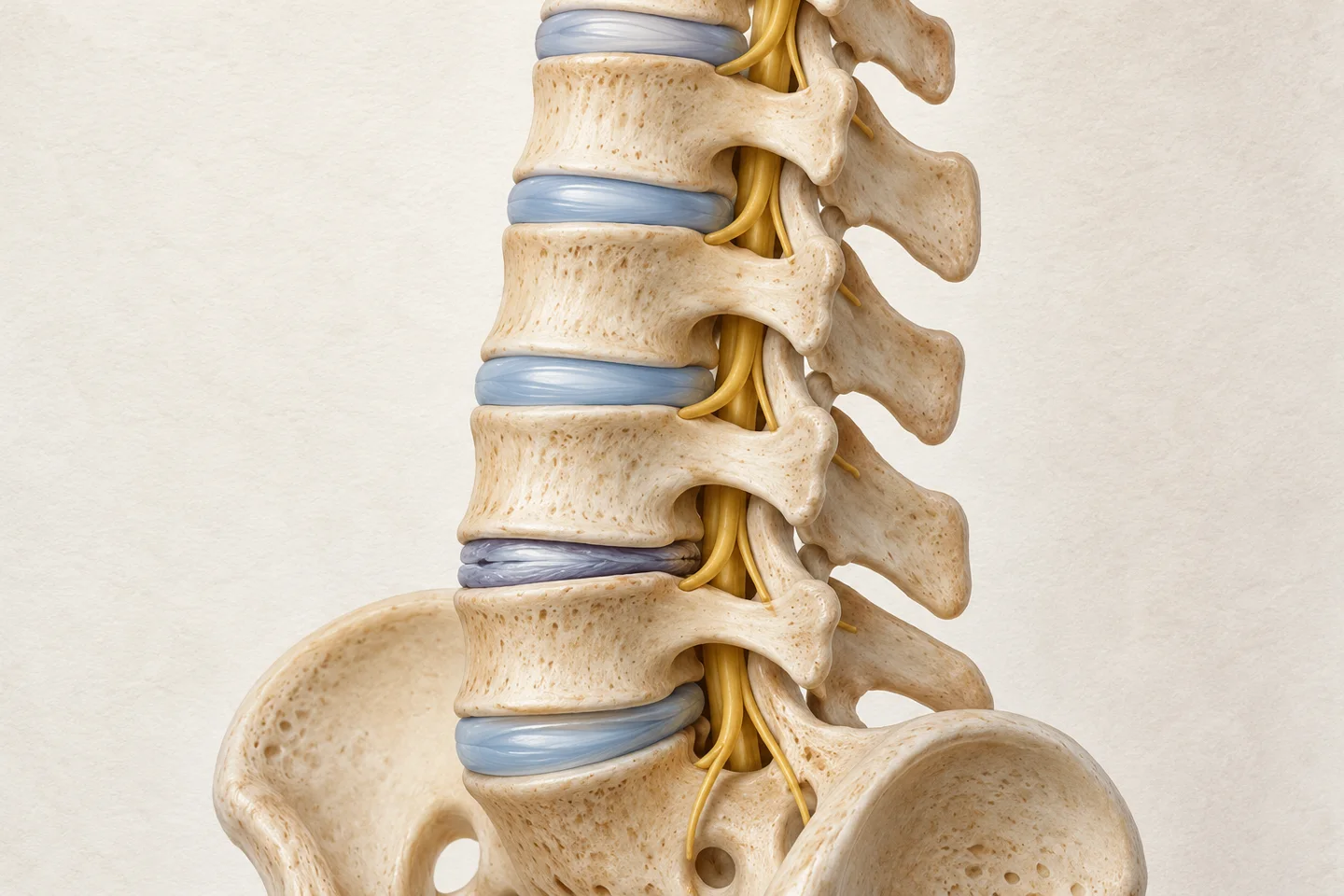
The term "degenerative" suggests a deterioration over time, but this is not always the case with degenerative disc disease. Contrary to common belief, the back pain caused by this condition can improve over time. It is essential to understand that disc degeneration is a natural aging process, with the severity of degeneration varying from person to person.
Stem cell research offers new insights into the treatment of degenerative disc disease, with strategies aimed at slowing further wear and supporting the disc’s own repair. In research models, transplanted stem cells can take on features of disc cells and release signals that protect the disc cells that remain. This innovative approach holds great promise for enhancing the healing process and improving the quality of life for those affected by degenerative disc disease.
04
Why acting early can make a difference
Each disc has a soft, water-rich centre and a tough outer ring. With wear, the centre slowly loses water and the disc loses height, so the outer ring takes more strain and can bulge or develop small tears. Researchers describe a circle: worn tissue binds less water, the disc carries load less well, and that load adds to the wear.8 Discs have few cells and no blood supply of their own, so they repair themselves only to a small extent.9
Today’s care does a lot of good. Regular, moderate movement strengthens all the tissues of the spine, discs included,9 and physiotherapy and pain medicines help you keep moving. They ease pain, but they are not designed to restore the disc itself.10
This is where timing helps. Disc tissue with milder wear shows fewer signs of cell death than tissue with severe wear,11 and the donor-cell disc study on this page treated discs at an intermediate stage of wear.3 The sooner you look at your options, the more healthy disc tissue there is to protect, and the better the starting point for any treatment, regenerative care included.
05
How Wharton’s jelly stem cells and exosomes work in a worn disc
A disc works like a cushion: a soft, water-rich centre held in place by a tough outer ring. In degenerative disc disease, inflammation and the loss of living cells slowly drain that cushion. Wharton’s jelly stem cells and their exosomes, tiny messages that carry proteins and RNA between cells, are placed into the disc to calm inflammation, protect the cells that are left and support the disc’s own repair.
How Wharton’s jelly stem cells and exosomes aim to support a worn disc
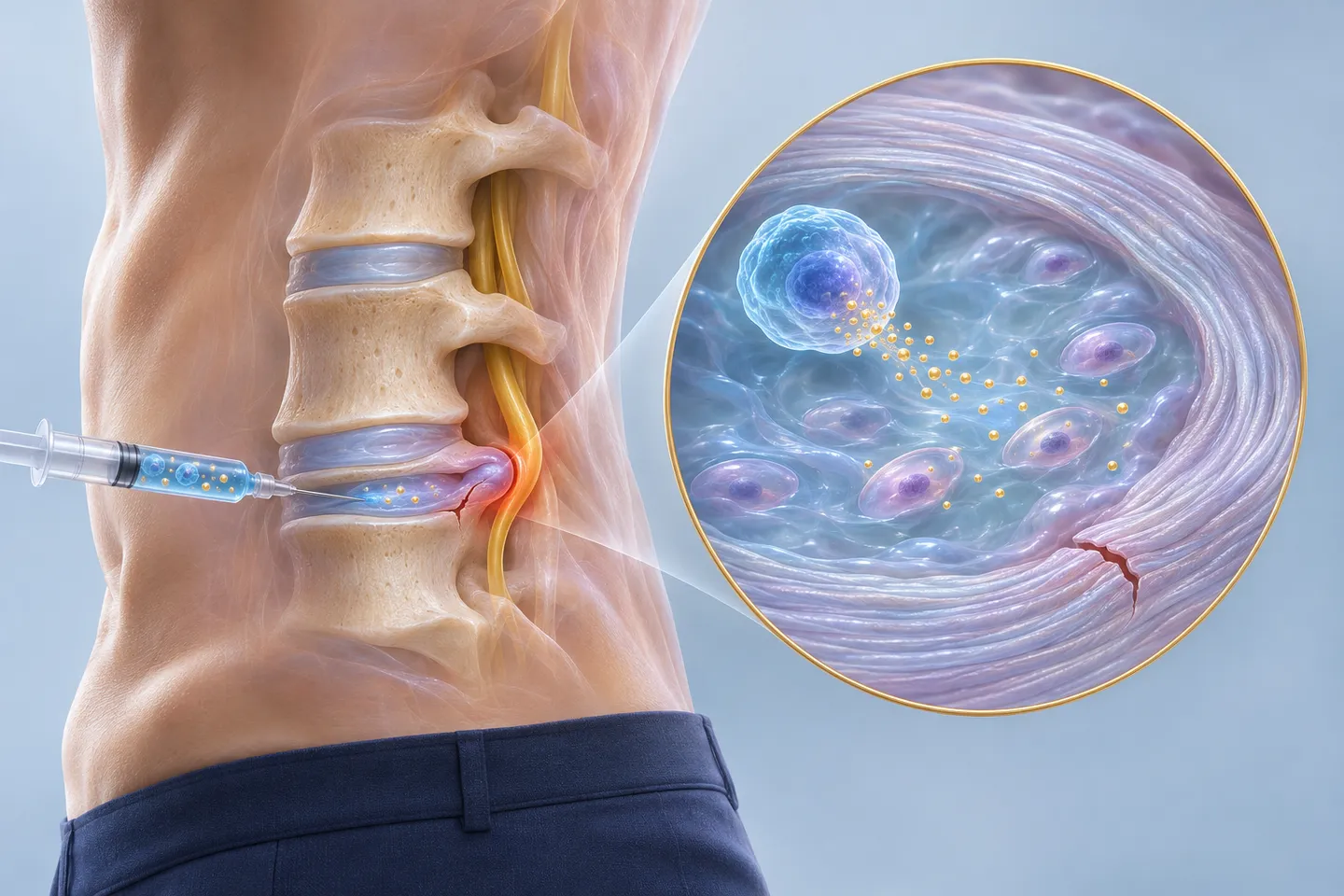
- Soft disc centre (nucleus)The jelly-like core that cushions every movement. With age and wear it dries out and holds less water.
- Tough outer ring (annulus)Layers of strong collagen fibres that hold the soft centre in place.
- Small tear in the ringA crack in the outer layers. It can let the centre bulge and can be a source of pain.
- Disc bulgePart of the disc pushing outwards. Near a nerve root it can cause leg pain or tingling.
- Lost disc heightA worn disc becomes thinner, which puts more load on the small joints at the back of the spine.
- Nerve rootThe nerve leaving the spine at this level. Calming inflammation around it is one aim of treatment.
- Wharton’s jelly stem cellA fresh donor stem cell placed in the disc with a fine needle. It works mainly through the signals it releases.
- ExosomesTiny messages from stem cells that, in research models, calm inflammation and protect the disc cells that remain.
Read the science: how the treatment aims to help a worn disc
The cells act mainly through the signals they release, which exosomes carry in concentrated form.2 Each effect below says whether it was seen in people or in research models. Read about our stem cells and our exosomes.
Calming inflammation in the disc
Shown in laboratory studies. In cells from worn human discs, Wharton’s jelly exosomes turned down inflammatory and tissue-breaking genes and sharply reduced a marker of oxidative stress.2
Protecting the cells of the soft centre
Shown in laboratory studies. Wharton’s jelly stem cells reduced the death of disc cells placed under pressure,11 and their exosomes increased the number of living disc cells.2
Helping the disc hold water
Shown in laboratory studies, and seen in people. Wharton’s jelly exosomes raised proteoglycan, the part of the disc that binds water,2 and carry 1,018 proteins, including type II collagen.1 In people, discs held significantly more water on MRI 12 months after injections of their own bone marrow stem cells.12
Supporting disc height and quality
Seen in research models and in people. In an analysis of 19 research-model studies, stem cell vesicles, the family that includes exosomes, raised disc height by 12.8%.10 In people, the MRI grade of disc wear improved after donor bone marrow stem cells and worsened after a sham injection.4
06
Discover the Execution of Our Stem Cell Therapy Transplantation for Degenerative Disc Disease in Istanbul
Support Your Recovery: Allogeneic Mesenchymal Stem Cell Therapy for Degenerative Disc Disease
Read the full section
Discover our advanced stem cell therapy for degenerative disc disease, a treatment placed where your back pain starts. Our innovative treatment utilizes allogeneic mesenchymal stem cells, which are carefully injected into the affected areas of the spine. This procedure aims to support worn disc tissue and to ease the pain, inflammation and stiffness that this condition can bring.
Why Choose Stem Cell Therapy for Your Back Pain?
Degenerative disc disease presents a complex challenge, significantly impacting your quality of life by limiting the functionality and range of motion of your back. Our stem cell therapy offers a beacon of hope and a potential pathway to alleviate these symptoms by calming inflammation and supporting the worn disc’s own repair. Here’s what sets our treatment apart:
-
Targeted Treatment: Directly addresses the worn areas within the spine, supporting the disc’s own repair.
-
Personalized Treatment Plans: Recognizes that benefits can vary between individuals, tailored to your unique health profile, medical history, and the extent of disc damage.
-
Evidence-Based Approach: Utilizes allogeneic mesenchymal stem cells, studied in worn discs in randomised and observational trials, offering a promising option for those affected by degenerative disc disease.
Setting Realistic Expectations for Stem Cell Therapy
While our stem cell therapy has shown remarkable potential in treating degenerative disc disease, it is crucial for patients to maintain realistic expectations. The success of the treatment can be influenced by various factors, including your overall health, medical background, and the severity of the condition. It’s important to understand that, while promising, stem cell therapy aims to ease pain and support your disc, and results differ from person to person. Our commitment is to provide a transparent, evidence-based approach to help you navigate your recovery journey with informed optimism.
Embark on Your Path to Recovery
Ready to explore what stem cell therapy could mean for you? Dive deeper into the science behind our treatment and discover how we can tailor our approach to meet your needs. Contact us today for more information on harnessing the power of allogeneic mesenchymal stem cells for degenerative disc disease. Together, we can take the first step toward easing your pain and supporting the health and movement of your back.
07
Why Wharton’s jelly stem cells and exosomes lead our disc treatment
Choosing stem cells for degenerative disc disease starts with the cells themselves. Wharton’s jelly is the soft tissue inside the umbilical cord, and its stem cells come from cords donated after healthy births, so you need no bone marrow draw or liposuction, and no donor matching. They are prepared fresh for your date in a Ministry of Health-approved GMP laboratory, never frozen, with the cell count and viability certified (see what our lab report shows). Your plan can also include umbilical cord stem cells and extra Wharton’s jelly exosomes.
Compare Wharton’s jelly stem cells with your own cells
| Fresh Wharton’s jelly stem cells (our cells) | Stem cells from your own bone marrow or fat | |
|---|---|---|
| Age of the cells | From newborn tissue, donated after healthy births | The same age as you |
| A procedure for you | None | A bone marrow draw or liposuction first |
| Ready for treatment | Prepared fresh for your date, usually within 5 to 10 days | After a harvest, often with laboratory growth |
| Pain relief in osteoarthritis trials | Umbilical cord stem cells: the largest effect on pain of three sources, in an analysis of 36 randomised trials13 | Smaller effects for bone marrow and fat stem cells13 |
08
Stem cell therapy for degenerative disc disease: what the studies show
Each human study used its own cells, always injected into the disc. The highlights:
- Wharton’s jelly stem cells and exosomes: in 125 people with worn discs, pain and disability fell significantly at 3 and 6 months, with no serious adverse events.1
- Donor umbilical cord stem cells: two years after one disc injection, disability scores were 38.3 points lower and 30 of 33 people rated their result excellent or good.3
- Randomised trials: across 7 trials, stem cell (MSC) disc injections reduced pain and disability significantly more than sham or placebo (p < 0.00001), with gains growing over time.14
- Bulging discs with leg pain: with people’s own cultured stem cells, 85% of those rescanned had a smaller bulge, and people rated themselves 60% better on average at 3 years.5
Disability and back pain before and 3 years after one disc injection of the patients’ own bone marrow concentrate (0–100; lower is better)
Disability (Oswestry Disability Index)15
Back pain (visual analogue scale)15
The studies in detail, with all 6 in one table
| Study | Design | n | Cells and route | Result with exact numbers |
|---|---|---|---|---|
| Toro-Rivera 2026, Biomedicines1 | Prospective cohort; worn discs, mid and lower back | 125 | Wharton’s jelly MSCs, alone or with Wharton’s jelly exosomes; into the disc | Pain and disability significantly lower at 3 and 6 months; meaningful function gain about twice as likely with exosomes (aRR 2.003, 6 months); no serious adverse events |
| Lewandrowski 2023, Pain Physician3 | Retrospective; intermediate-stage disc wear | 33 | Donor umbilical cord MSCs, about 5 million; into the disc | At 2 years, pain 6.6 points lower (0–10), disability 38.3 points lower; 30 of 33 excellent or good; no further treatment at that level |
| Noriega 2017, Transplantation4 | Randomised, sham-controlled, phase II | 24 | Donor bone marrow MSCs, 25 million per disc; into the disc | Quick, significant gain in pain and function over sham; MRI grade of wear improved with cells and worsened with sham |
| Rahyussalim 2026, Asian Spine Journal14 | Meta-analysis of randomised trials | 7 trials | MSCs; into the disc | Pain and disability fell significantly more than with sham or placebo (p < 0.00001); gains grew with follow-up; adverse events no different |
| Pettine 2017, International Orthopaedics15 | Prospective, 3 years; surgery candidates | 26 | Own bone marrow concentrate; into the disc | 20 without surgery at 3 years: disability 56.7 → 17.5, pain 82.1 → 21.9; MRI grade one step better in 40% at 1 year, none worse |
| Centeno 2017, Journal of Translational Medicine5 | Registry, up to 6 years; bulging disc with leg pain | 33 | Own cultured bone marrow MSCs; into the disc | Pain significantly lower at 3 months and from 3 to 6 years; 60% better on average at 3 years; smaller bulge in 85% of 20 rescanned (by 23%) |
Our plans bring these strengths together with young Wharton’s jelly stem cells and exosomes. Stem cell therapy for herniated disc pain follows the same careful path: Dr. Cihan Bolat reads your MRI first and tells you honestly whether the disc is the right target.
09
Who can have stem cell therapy for degenerative disc disease?
We treat worn, bulging and herniated discs in the lower back and the neck, with no fixed age limit. Dr. Cihan Bolat decides with you from your MRI report, and plans the routes and timing for you. If your pain comes mainly from the small paired joints at the back of the spine, see facet syndrome; if it sits where the spine meets the pelvis, SI joint inflammation; for wear across many levels, spinal osteoarthritis.
Often suitable
- Disc wear, a bulging disc or a herniated disc on MRI
- Back or neck pain that comes from one or a few discs
- Pain despite exercise, physiotherapy or medicines
- Stable health, and well enough to travel
Considered case by case
- Previous disc surgery or a spinal fusion
- A large herniation pressing on a nerve
- Advanced wear, with a much flattened disc
- Blood thinners, diabetes or another long-term condition
Not suitable for now
- Active cancer, or recent cancer treatment
- An active infection
- Pregnancy
- New leg weakness, numbness or bladder changes: please see your own doctor first
10
Expert Stem Cell Treatment Led by Uzm. Dr. Cihan Bolat, MD
Under the leadership of Uzm. Dr. Cihan Bolat, MD, Specialist in Anesthesiology & Reanimation and Regenerative Medicine, we provide specialized treatments tailored to the unique needs of our patients. With extensive experience and a wide range of mesenchymal stem cells (MSCs) derived from umbilical cord tissue at our disposal, we offer a comprehensive approach to treating degenerative disc disease.
Read the full section
At our clinic, we prioritize creating a relaxed atmosphere, and our friendly and professional team is dedicated to ensuring you have an enjoyable stay while receiving the best possible care. Our goal is to help you achieve optimal health and recovery through advanced stem cell therapy.
11
How does our stem cell treatment for degenerative disc disease work?
All our stem cell treatments for degenerative disc disease in Istanbul are evaluated and administered by specialists in the field, trained in both the United States and Turkey, rather than general practitioners. This approach ensures the highest level of precision, understanding of the condition, and quality of treatment for our patients. We are 100% transparent and honest with our patients. Not everyone qualifies for our stem cell treatments; we carefully assess each individual's situation. Many patients are turned away after our specialist evaluates their current health status and medical history, determining that the treatment may not be suitable. This helps us avoid making false promises or expectations when the risks may outweigh the benefits. To ensure patient safety, every individual must be assessed by the specialist before scheduling treatment.
Step 1. Specialist Assessment For patients with degenerative disc disease, our specialist will need to know your age and any previous medical treatments. Additionally, specific diagnostic tests should be reviewed that you are asked to bring.
Step 2. Free Phone Consultation with the Specialist Once the specialist has reviewed your medical records and approved your case, we will present treatment options and pricing. At that time, we also offer a complimentary phone consultation to address any questions or concerns you may have.
Step 3. Preparation of the Stem Cells Once you decide to proceed with our treatment, we will send you an invoice for a deposit to initiate the stem cell preparation process, ensuring it is ready for your scheduled treatment. The duration of this process can vary based on current demand and availability but typically takes 5-10 days.
Step 4. Treatment Day On the day of treatment, you can choose to come to our hospital location or take advantage of our free transportation to and from our clinic in Istanbul. Our driver will pick you up from your chosen location and escort you to our clinic, where the specialist will administer your treatment and then safely bring you back.
Step 5. Follow-Up Treatment Our follow-up specialist will contact you according to our established follow-up schedule to ensure you have all the necessary resources for maximum benefit. Your well-being and satisfaction are our top priorities.
By utilizing mesenchymal stem cells (MSCs) derived from umbilical cord tissue, we aim to support healing for patients with degenerative disc disease, calming inflammation in the disc and improving overall spinal function.
12
What our patients say
Life-Changing Experience at Istanbul
I recently underwent treatment at Istanbul Stem Cell Clinic, and it was one of the best decisions I've made. From the start, the medical team provided exceptional care, thoroughly explaining the stem cell therapy process and addressing all my questions. The clinic is state-of-the-art, creating a welcoming atmosphere that put me at ease. The treatment was smooth and comfortable, thanks to the attentive staff. Since the procedure, my pain has significantly decreased, and I feel more active and vibrant. I highly recommend Istanbul Stem Cell Clinic to anyone considering stem cell therapy. Their expertise and compassionate care have truly transformed my life!
Outstanding Care and Results at Istanbul Stem Cell Clinic
I had an amazing experience at Istanbul Stem Cell Clinic. From the moment I stepped in, the staff was incredibly welcoming and attentive. The medical team took the time to explain the entire stem cell therapy process in detail, which really put my mind at ease. The treatment itself was very comfortable, and I appreciated the professionalism of the entire team. The clinic’s environment is clean and modern, making it a pleasant place for treatment. Since undergoing therapy, I have seen significant improvements in my condition. My pain levels have decreased, and I feel much more energized. I can’t thank the team enough for their dedication and support. I highly recommend Istanbul Stem Cell Clinic to anyone looking for effective and compassionate care!
13
Degenerative disc disease stem cell therapy cost in Turkey
Our IV packages use fresh Wharton’s jelly stem cells and follow one price list, effective 1 June 2026, in US dollars (M = million stem cells). Disc and paraspinal injections, including exosome injections for back pain, are priced in your written plan: a fixed, all-inclusive price before you book. See our cost guide.
| Cell count | USD price | Free exosomes | Free hotel |
|---|---|---|---|
| 25M | $4,950 | No | No |
| 50M | $6,950 | 10 billion exosomes | No |
| 75M | $8,950 | 10 billion exosomes | No |
| 100M | $10,500 | 20 billion exosomes | 2 nights |
| 125M | $11,850 | 20 billion exosomes | 2 nights |
| 150M | $13,550 | 30 billion exosomes | 2 nights |
| 175M | $15,000 | 30 billion exosomes | 2 nights |
| 200M | $16,500 | 30 billion exosomes | 3 nights |
| 225M | $18,000 | 30 billion exosomes | 3 nights |
| 250M | $19,500 | 30 billion exosomes | 3 nights |
What is included, and what is optional
Included
- Free MRI review and phone consultation
- Fresh Wharton’s jelly stem cells, count and viability certified
- Free Wharton’s jelly exosomes from 50M, as listed
- PRP (platelet-rich plasma), free with any stem cell package
- Treatment by Uzm. Dr. Cihan Bolat’s specialist team
- Ground transport, a case manager and interpreter help
- Hotel nights as listed, in 5-star hotels
- Follow-up by phone or WhatsApp
Not included / optional
- Flights and extra hotel nights
- Disc injections and extra exosomes, priced in your plan
- Add-ons such as Muse cells, Muse exosomes or CD34+ exosomes
- A repeat treatment, if you choose one
14
Read our full guides
Would you like the whole story? These guides go deeper.
15
Frequently asked questions
Does stem cell therapy for herniated disc pain work?
It can help many people. A herniated or bulging disc is part of the same disc wear, so stem cell therapy for a bulging disc or a herniation is placed in that same disc. In a study of people with a bulging disc and leg pain, 85% of those rescanned had a smaller bulge after stem cells were injected into the disc, and pain was still significantly lower 6 years later. Some herniations settle with time and physiotherapy, so Dr. Cihan Bolat reviews your MRI first.
What is the success rate, and how soon will I feel a difference?
It depends on your disc and how worn it is. With donor umbilical cord stem cells, 30 of 33 people rated their result excellent or good at two years. Changes can start early: in a randomised trial, the gain over a sham injection came quickly, and in a 3-year study, disability scores fell from 56.7 to 17.5. Everyone responds at their own pace.
Can stem cells restore a worn disc’s height or water?
That is the aim of the research, and the first signs are encouraging. In people, discs held significantly more water on MRI a year after stem cell injections, and in a randomised trial the MRI grade of wear improved with stem cells while it worsened with a sham injection. In research models, stem cell vesicles raised disc height by 12.8%. The aim is a calmer, better-supported disc; we never promise a new one.
Are disc injections painful?
Dr. Cihan Bolat, a specialist in anaesthesiology and reanimation, plans every injection with your comfort in mind, guided by imaging where needed, and you walk out the same day. Some people notice a passing ache where the injection was given.
Can stem cell therapy help me avoid disc surgery?
Some people use it to delay or avoid surgery, but your surgeon’s advice comes first, especially if you have new weakness or numbness. In a study of 26 people who were candidates for a fusion or disc replacement, 20 had not had surgery 3 years after an injection of their own bone marrow concentrate into the disc.
How long do I need to stay in Istanbul?
Your plan sets the dates. Your cells are prepared fresh for your treatment date, usually within 5 to 10 days of booking, and your case manager helps you choose dates that suit you.
How much does stem cell treatment for degenerative disc disease cost?
Treatment prices may vary depending on the patient's individual needs, such as special accommodation or stay requirements, and the number of stem cells in your plan. Our prices include: ground transportation to and from our clinic; treatment by a certified specialist in this field; certified allogeneic stem cells with 97% viability, prepared fresh for your treatment date; a personal case manager; and aftercare.
How safe is stem cell treatment for degenerative disc disease at this clinic?
We take pride in being the safest and most honest stem cell therapy clinic in Istanbul. All our stem cell treatments are evaluated and administered by specialists in this field who have trained in both the United States and Turkey, rather than only by general physicians or specialists. This helps ensure the highest level of precision, understanding of the condition, and treatment quality for our patients. We are completely clear and honest with our patients. Not everyone qualifies for our stem cell treatments. We decline many patients when our specialist determines that treatment is unsuitable, to avoid false promises or expectations when the risks outweigh the benefits.
Can stem cell therapy cure my degenerative disc disease?
The benefits of stem cell treatment for degenerative disc disease may vary from patient to patient, depending on factors such as current health, medical history, the extent of damage, and other considerations. It is important to understand that, although allogeneic mesenchymal stem cell injections into the disc have shown encouraging results in studies, the goals of treatment are less pain, easier movement and a better quality of life.
Is stem cell therapy for degenerative disc disease safe?
Yes, stem cell therapy is generally safe and carries few risks: large reviews of mesenchymal stem cell trials found it well tolerated, and the most common effect was a passing fever. It is minimally invasive, given by injection without surgery.
Medical review
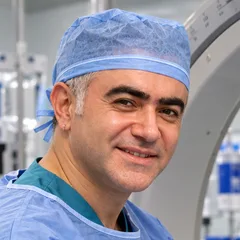
Uzm. Dr. Cihan Bolat
Medical Director, Istanbul Stemcell
This page was written from the published studies listed below and reviewed for medical accuracy on .
16
References
All 15 published studies, with PubMed links
- Toro-Rivera A, et al. Mechanisms of Exosome-Supplemented WJ-MSC Therapy in Degenerative Disc Disease: Integrating Proteomic Profiling with Clinical Functional Recovery. Biomedicines. 2026;14(10). PMID 42940041
- Tilotta V, et al. Wharton's Jelly mesenchymal stromal cell-derived extracellular vesicles promote nucleus pulposus cell anabolism in an in vitro 3D alginate-bead culture model. JOR Spine. 2024;7(1):e1274. PMID 38222813
- Lewandrowski KU, et al. Pain Relief After Allogenic Stem Cell Disc Therapy. Pain Physician. 2023;26(2):197-206. PMID 36988365
- Noriega DC, et al. Intervertebral Disc Repair by Allogeneic Mesenchymal Bone Marrow Cells: A Randomized Controlled Trial. Transplantation. 2017;101(8):1945-1951. PMID 27661661
- Centeno C, et al. Treatment of lumbar degenerative disc disease-associated radicular pain with culture-expanded autologous mesenchymal stem cells: a pilot study on safety and efficacy. J Transl Med. 2017;15(1):197. PMID 28938891
- Wang Y, Yi H, Song Y. The safety of MSC therapy over the past 15 years: a meta-analysis. Stem Cell Res Ther. 2021;12(1):545. PMID 34663461
- DePalma MJ, Ketchum JM, Saullo T. What is the source of chronic low back pain and does age play a role? Pain Med. 2011;12(2):224-33. PMID 21266006
- Vergroesen PP, et al. Mechanics and biology in intervertebral disc degeneration: a vicious circle. Osteoarthritis Cartilage. 2015;23(7):1057-70. PMID 25827971
- Adams MA, et al. Why do some intervertebral discs degenerate, when others (in the same spine) do not? Clin Anat. 2015;28(2):195-204. PMID 24753325
- Wei YP, et al. Therapeutic effects of stem cell-derived extracellular vesicles in animal models of intervertebral disc degeneration: a systematic review and meta-analysis of species differences and delivery strategies. Front Bioeng Biotechnol. 2026;14:1749916. PMID 41693926
- Zhao YT, et al. Wharton's Jelly-derived mesenchymal stem cells suppress apoptosis of nucleus pulposus cells in intervertebral disc degeneration via Wnt pathway. Eur Rev Med Pharmacol Sci. 2020;24(19):9807-9814. PMID 33090383
- Orozco L, et al. Intervertebral disc repair by autologous mesenchymal bone marrow cells: a pilot study. Transplantation. 2011;92(7):822-8. PMID 21792091
- Zeng L, et al. Efficacy and safety of culture-expanded mesenchymal stromal cell therapy in the treatment of 4 types of inflammatory arthritis: A systematic review and meta-analysis of 36 randomized controlled trials. Semin Arthritis Rheum. 2024;68:152498. PMID 38970896
- Rahyussalim AJ, et al. Intradiscal mesenchymal stem cell therapy for degenerative disc disease: a systematic review and meta-analysis of randomized trials. Asian Spine J. 2026;20(3):541-557. PMID 41844059
- Pettine KA, et al. Autologous bone marrow concentrate intradiscal injection for the treatment of degenerative disc disease with three-year follow-up. Int Orthop. 2017;41(10):2097-2103. PMID 28748380