01
Things to do in Istanbul during medical treatment: how to plan your days
Istanbul is one of the world’s great cities to visit, and an easy one to enjoy slowly. It spreads across two continents on either side of the Bosphorus, so one day can hold a palace in Europe, a ferry ride between continents and dinner by the sea in Asia. You can choose a full day of sightseeing or a quiet morning with tea and a view, and both feel like Istanbul.
Most of our international patients come from the UK and the United States, and this guide is written for you and the people travelling with you: the classic sights, the calm corners, the food, where to stay and the weather through the year. Our guides for patients from the UK and patients from the USA cover flights, entry rules and the treatment journey from home.
Why patients choose Istanbul for their treatment
Patients come to us for fresh Wharton’s jelly stem cells, never frozen, from a GMP laboratory approved by the Turkish Ministry of Health; a free medical review by Uzm. Dr. Cihan Bolat, our medical director, before they travel; a written plan with a fixed, all-inclusive price; and one treatment day for most plans. Read more in why choose stem cell therapy in Turkey and how to choose a stem cell clinic abroad.
Build your trip around one calm treatment day
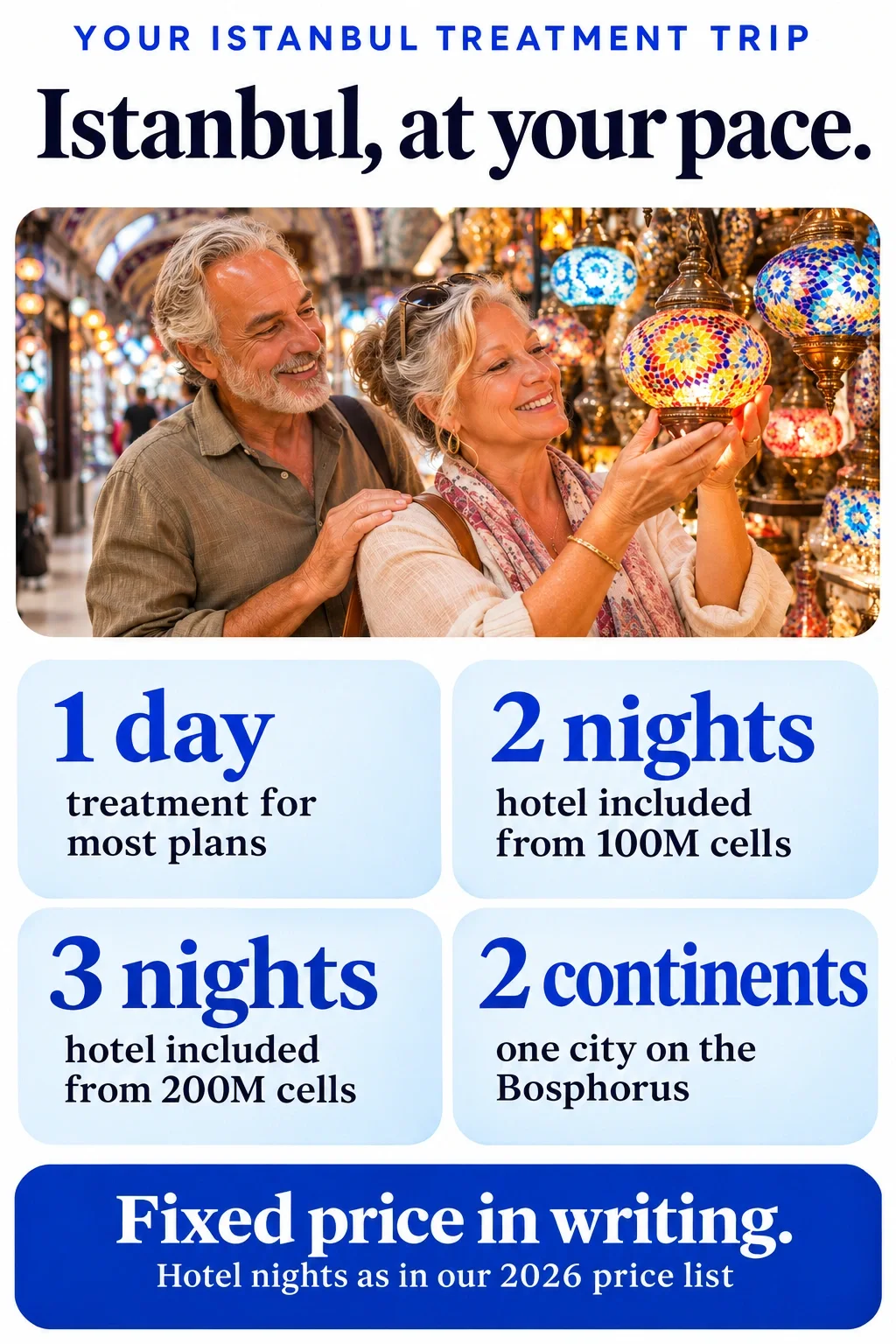
Most plans take one treatment day, and you walk out the same day. Think of that day as a calm day: a relaxed start, your treatment with our specialist team, and a quiet evening. The days around it are yours to fill as you like.
Your case manager helps you choose your dates, and is the right person to ask which activities suit the days after your treatment. A simple way to plan is to keep your fuller sightseeing days for before your treatment and leave the days after flexible, with a few calm options in reserve.
Pace yourself in a city of hills
Istanbul is built on hills, with many cobbled, steep streets. Ferries, trams, the metro and short funicular lines save a lot of climbing, taxis are easy to find, and a rechargeable Istanbulkart card covers public transport. Plan one main sight per half day, with tea in between, and you will enjoy more.
A relaxed Istanbul trip in four parts
- Arrive and settle inCheck in, take a short walk by the water and have an easy evening. Your case manager helps you choose your dates.
- Sightseeing at your paceThe days before your treatment suit Sultanahmet, the bazaars and a Bosphorus cruise.
- A calm treatment dayOne treatment day for most plans, with fresh Wharton’s jelly stem cells and exosomes; you walk out the same day.
- Gentle days afterFerries, parks and tea gardens; ask your case manager which activities suit the days after your treatment.
Istanbul at a glance: the places in this guide
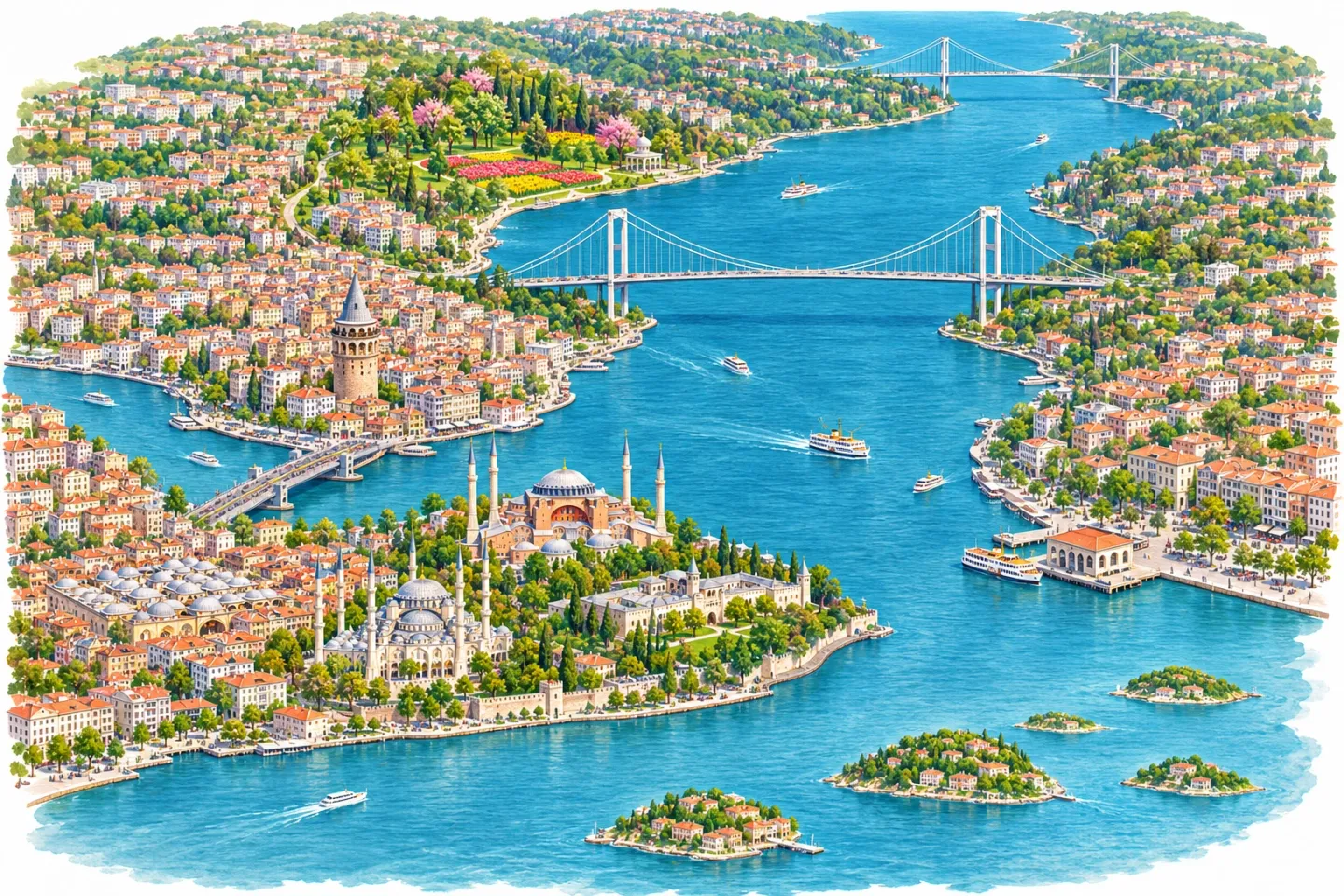
- SultanahmetHagia Sophia, the Blue Mosque, Topkapı Palace and the Basilica Cistern.
- The bazaarsThe Grand Bazaar, and the Spice Bazaar at Eminönü.
- Galata and BeyoğluThe Galata Tower, Karaköy and İstiklal Avenue.
- The BosphorusFerries, palaces, fortresses and Emirgan Park.
- Kadıköy and ModaMarkets, cafés and seafront sunsets on the Asian side.
- Our clinic in SuadiyeOn Bağdat Avenue, near the Marmara seafront.
- Princes’ IslandsCar-free islands, a ferry ride from Bostancı.
02
A Bosphorus cruise: the calmest way to see Istanbul
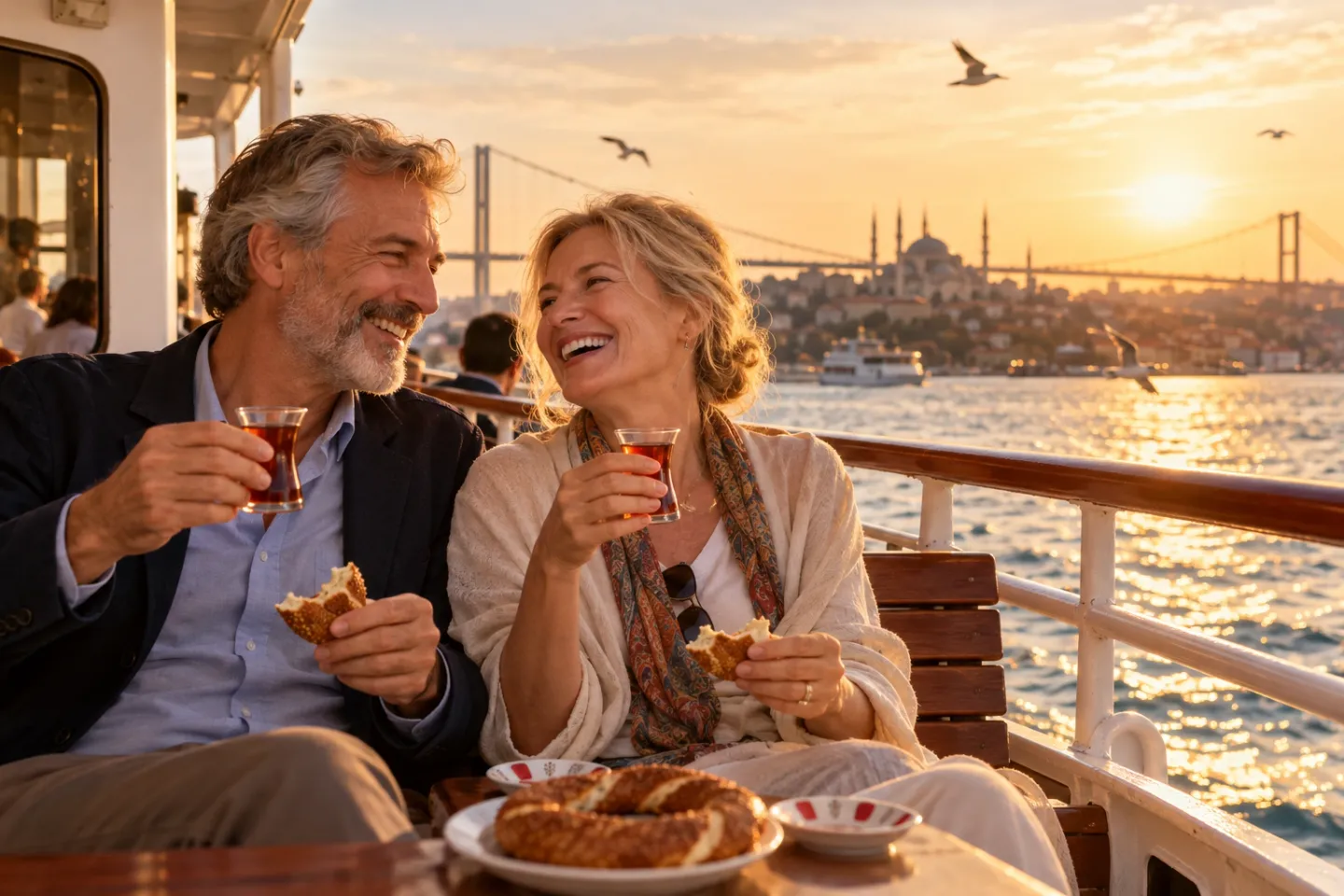
If you do one thing in Istanbul, make it the Bosphorus. This narrow strait, about 30 kilometres long, joins the Black Sea to the Sea of Marmara and divides the city between Europe and Asia. From the water you see Istanbul at its most beautiful: palaces and wooden waterside mansions, fortresses, mosques and three great bridges, with seagulls following the boat. And you see it all sitting down.
Three ways to cruise the Bosphorus
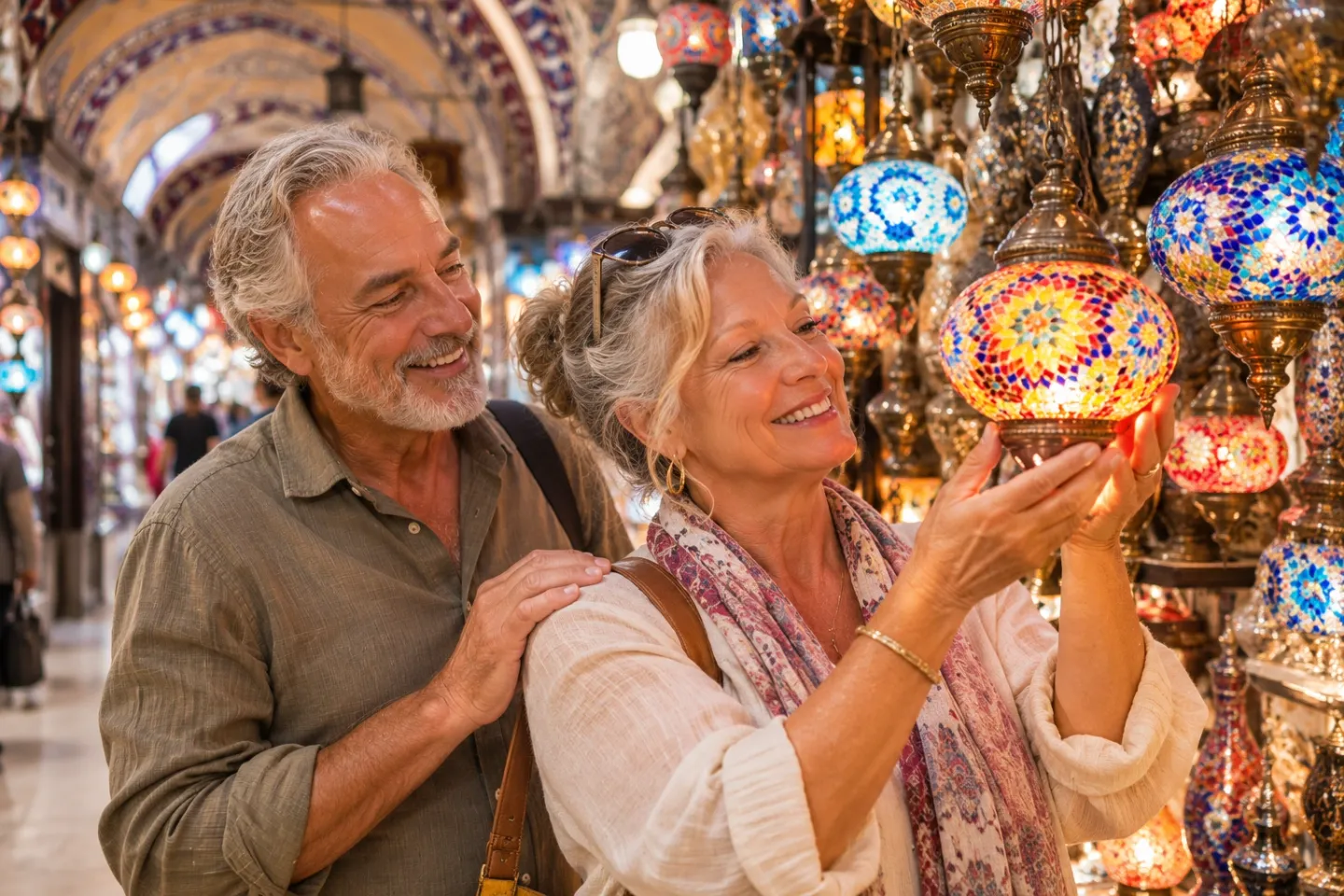
- A public ferry. The city’s ferries cross between Europe and Asia all day, between piers such as Eminönü, Karaköy, Beşiktaş, Kadıköy and Üsküdar. A crossing is short, inexpensive and a favourite with Istanbul’s residents: buy a glass of tea on board, find a seat by the window and watch the skyline slide past.
- A longer sightseeing cruise. Sightseeing boats travel up the Bosphorus towards the Black Sea and back, taking in both shores. Some go as far as Anadolu Kavağı, a fishing village near the Black Sea with a hilltop castle and seafood restaurants.
- A private boat. For a family or a small group, a private boat for an hour or two lets you set the pace, stop for photographs and choose the sunset hour if you like.
Timetables and fares change with the seasons, so check them before you go, or ask at your hotel.
What you see from the water
- Dolmabahçe Palace, the grand 19th-century palace of the later Ottoman sultans, its long white façade right on the European shore.
- Ortaköy Mosque, small and graceful at the water’s edge beneath the first Bosphorus bridge.
- Rumeli Hisarı, the fortress Sultan Mehmed II built in 1452, a year before the conquest of Constantinople.
- Beylerbeyi Palace, a summer palace of the sultans on the Asian shore.
- The yalıs, the elegant wooden waterside mansions of old Istanbul families.
- The Maiden’s Tower, on its tiny island off Üsküdar, one of the city’s best-loved landmarks.
A Bosphorus cruise is a lovely choice for a treatment trip because it asks so little of you: you sit, you watch, and the city does the rest.
03
Sultanahmet: Hagia Sophia, the Blue Mosque, Topkapı Palace and the Basilica Cistern
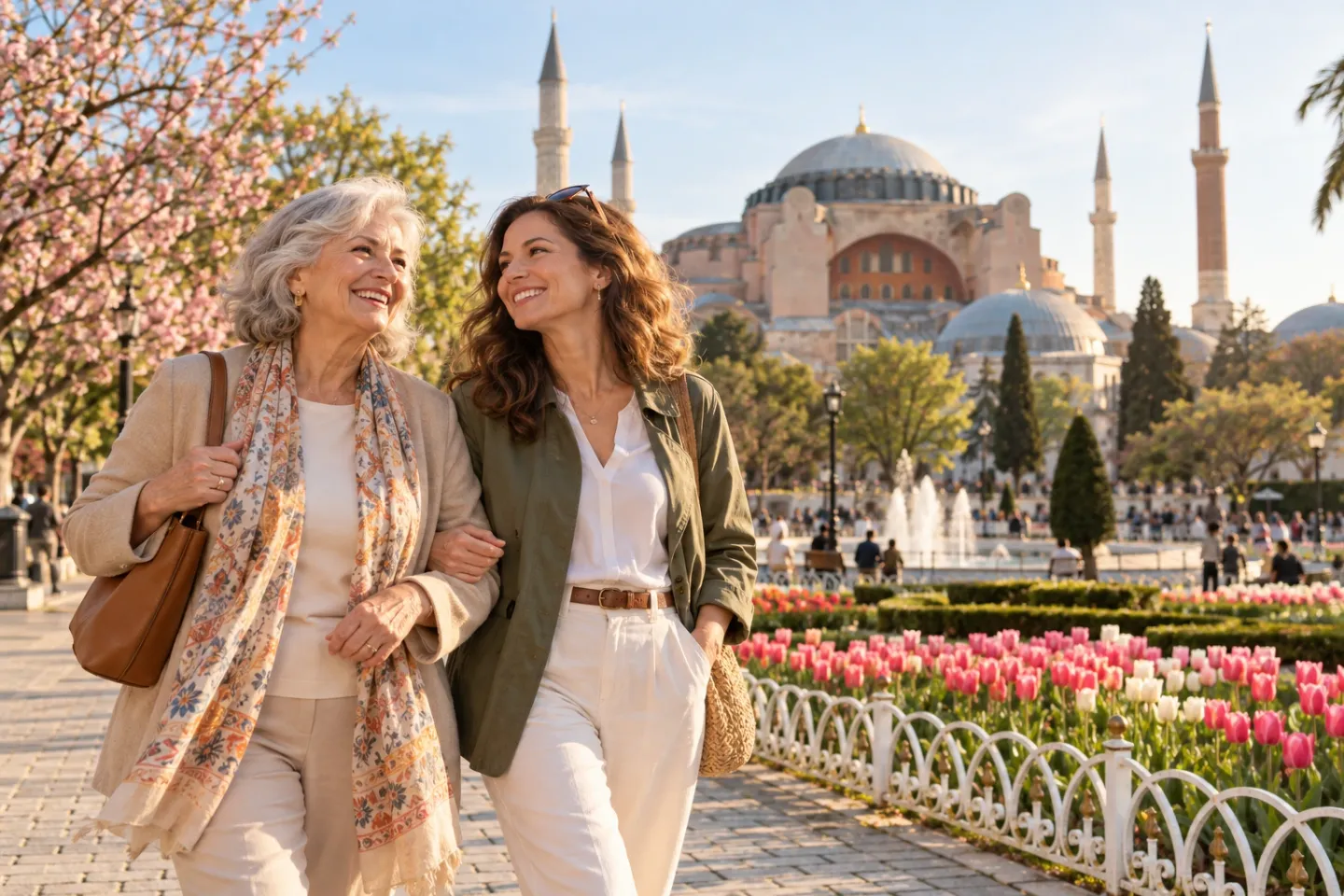
Sultanahmet is the heart of old Istanbul, at the tip of the historic peninsula between the Golden Horn and the Sea of Marmara. The Historic Areas of Istanbul have been a UNESCO World Heritage Site since 1985, and the most famous of them stand within a short walk of each other, around gardens where you can sit between visits.
Hagia Sophia
Completed in 537 under the Byzantine emperor Justinian, its vast dome has crowned the city for nearly 1,500 years. It served for centuries as a cathedral, then as a mosque and later as a museum, and today it is a working mosque that welcomes visitors outside prayer times. Look up: the light through the ring of windows at the base of the dome makes it seem to float.
The Blue Mosque
The Sultan Ahmed Mosque, built for Sultan Ahmed I in the early 17th century, takes its popular name from the thousands of hand-painted blue İznik tiles inside. Its six minarets and cascade of domes face Hagia Sophia across the gardens, and it remains a working mosque, open to visitors outside prayer times.
Topkapı Palace
For about four centuries, this was the home and seat of government of the Ottoman sultans. Its courtyards, pavilions and gardens look out over the meeting point of the Bosphorus, the Golden Horn and the Sea of Marmara, and its treasury and Harem are highlights. The palace is large, so allow plenty of time and enjoy its shady courtyards.
The Basilica Cistern
A vast 6th-century underground reservoir, built under Justinian to store the city’s water, with 336 columns rising from the water in soft light. Look for the two Medusa heads at the base of two of the columns. It is cool, dim and calm, a welcome pause on a warm day.
More in the old city
Between visits, rest in the gardens of Sultanahmet Square, or stroll along the old Hippodrome, where an Egyptian obelisk more than 3,000 years old still stands. Gülhane Park, beside Topkapı Palace, was once part of the palace grounds and is one of the city’s loveliest places for a quiet walk, with tulips in April. A little further on, the Süleymaniye Mosque, designed by the great architect Mimar Sinan in the 16th century, crowns a hill above the Golden Horn, with peaceful courtyards and wide views.
Tips for visiting
- Opening hours, ticket arrangements and prayer times change, so check them before you go, or ask at your hotel.
- For mosques, dress modestly, with shoulders and knees covered; women cover their hair, and scarves are often available at the entrance. Shoes come off at the door.
- Friday midday prayers are the busiest time at the mosques, so plan your mosque visits for another time.
- The T1 tram stops right in Sultanahmet, which saves a walk, and the early morning is often the calmest time to visit.
04
The Grand Bazaar and the Spice Bazaar: colour, gifts and Turkish delight
Istanbul’s two great bazaars are a feast for the senses, and good places to find gifts for the people at home.
The Grand Bazaar
The Grand Bazaar is one of the oldest and largest covered markets in the world, begun soon after the Ottoman conquest of the city in the 15th century. Under its painted vaults, dozens of covered streets hold thousands of shops: carpets and kilims, lamps, ceramics, leather, jewellery, textiles and towels for the hammam. It is a maze, so agree on a gate to meet at and enjoy getting a little lost.
The Spice Bazaar
The Spice Bazaar, also called the Egyptian Bazaar, stands beside the New Mosque at Eminönü, near the Galata Bridge. Built in the 17th century, it is smaller and easier to explore than the Grand Bazaar, and it smells wonderful: spices, dried fruits, nuts, teas, honey and many kinds of lokum, the Turkish delight. Many stalls offer a taste before you buy.
Shopping tips
- In the bazaars, a friendly bit of bargaining is part of the fun for carpets, lamps and other crafts.
- Cards are widely accepted, but carry some Turkish lira for small stalls.
- Larger purchases, such as a carpet, can often be shipped home, so you can travel light.
- The bazaars can be busy and involve a lot of walking. Go early in the day, or choose the Spice Bazaar for a shorter visit.
05
Galata, Karaköy and Beyoğlu: views, cafés and İstiklal Avenue
Across the Golden Horn from the old city, the hills of Galata and Beyoğlu have been Istanbul’s cosmopolitan quarter for centuries. Walk across the Galata Bridge, where fishermen line the rails and the views back to the mosques are among the best in the city, and you arrive in Karaköy, with its waterfront cafés, galleries and Istanbul Modern, the city’s museum of modern art.
The Galata Tower
The round stone Galata Tower, built by the Genoese in the 14th century, rises above the rooftops of Galata. From its viewing gallery the whole city spreads out around you: the old city, the Bosphorus and the Asian shore. It is popular, so expect a queue, and enjoy the cafés and little shops in the streets around it.
İstiklal Avenue and the historic tram
İstiklal Avenue, a long pedestrian street lined with 19th-century buildings, runs from Taksim Square down towards Galata, and a red nostalgic tram still trundles along it. Along the way you find churches, arcades, bookshops and cafés, and the Pera Museum is just off the avenue. At the bottom, Tünel, opened in 1875, is one of the oldest underground railways in the world: a short funicular that saves you the steep climb between Karaköy and Beyoğlu.
Balat and Fener
Further along the Golden Horn, the old neighbourhoods of Balat and Fener are known for their brightly painted houses, steep cobbled lanes and little cafés. They are lovely for photographs but hilly, so a taxi to the top and a slow stroll down is an easy way to see them.
06
The Asian side: Kadıköy, Moda, Üsküdar and the Bağdat Avenue area near our clinic
The Asian side is where many of Istanbul’s residents live, and it has some of the city’s most relaxed and likeable neighbourhoods. Our clinic is here, in Suadiye, a calm residential district near the Marmara seafront, so this is the side of the city you will come to know best.
Kadıköy
Kadıköy is a lively, friendly district with a famous market area: streets of fishmongers, cheese and olive shops, bakeries, sweet shops and coffee roasters, with small restaurants serving home-style Turkish dishes. Ferries connect Kadıköy with the European side, so it is easy to combine with a day in the old city.
Moda
A short walk, or a ride on the little nostalgic tram, takes you from Kadıköy to Moda, a leafy neighbourhood on a point above the sea. Its seafront park and promenade are made for an easy stroll, with tea gardens, ice cream and some of the best sunset views in Istanbul, across the water to the domes and minarets of the old city.
Üsküdar
Üsküdar faces the old city across the Bosphorus. Its waterfront has tea gardens looking straight at the Maiden’s Tower, and its historic mosques include several by Mimar Sinan. Above it, Çamlıca Hill offers one of the widest views over the city.
Bağdat Avenue and the Marmara seafront
Our clinic is on Bağdat Avenue, a long, tree-lined avenue of shops, cafés and restaurants that runs through Suadiye and its neighbouring districts, parallel to the Sea of Marmara. A few streets away, a long seaside park follows the shore, with paths for walking and cycling, benches and views across to the Princes’ Islands. Ferries to the islands leave from nearby Bostancı.
It is a calm and pleasant area to stay in, and a walk by the sea, a glass of tea in the sun and an early dinner on Bağdat Avenue make a lovely evening. Read about the treatment itself on our stem cell therapy page, or send us a question through our contact page.
07
Calm things to do in Istanbul around your treatment day
Some of Istanbul’s greatest pleasures need very little energy. These ideas suit anyone who prefers a gentle pace, and they are lovely for the days around your treatment. As always, ask your case manager which activities suit the days after your treatment.
Emirgan Park and the April tulips
One of the largest parks in Istanbul, on a hillside above the Bosphorus, with lawns, ponds, old trees and historic pavilions serving tea and breakfast. In April, the Istanbul Tulip Festival fills it with tulips in every colour.
A tea garden with a view
Turkish tea comes in small, tulip-shaped glasses all day long. Find a tea garden at Moda, Üsküdar, Emirgan or on Pierre Loti Hill above the Golden Horn, and watch the boats go by. At sunset, the old city’s skyline glows across the water.
A short ferry crossing
A ferry between Kadıköy or Üsküdar and the European side gives you a seat by the window, a glass of tea and the whole skyline, for the price of a bus ride.
Gülhane and Yıldız parks
Gülhane Park, beside Topkapı Palace, and Yıldız Park, on the wooded hill above Beşiktaş, are green, shady and quiet, with cafés and plenty of benches.
Museums at an easy pace
Indoor and calm, museums such as the Pera Museum and Istanbul Modern make a relaxed morning. The Istanbul Archaeology Museums, beside Gülhane Park, hold treasures from across the ancient world.
A hammam, when the time is right
The Turkish bath, or hammam, is an Istanbul tradition, and some of the most beautiful are historic buildings by Mimar Sinan. Because a hammam involves heat, steam and a vigorous scrub, ask your case manager whether and when it suits your plan.
08
A day trip to the Princes’ Islands
The Princes’ Islands, or Adalar, are a group of islands in the Sea of Marmara, a ferry ride from the city and a world away from its traffic. The islands are largely car-free: people get around on foot, by bicycle and in small electric vehicles, past pine woods, gardens and grand old wooden mansions.
Büyükada, the largest island, is the most popular, with seafront restaurants, elegant old streets and, at the top of a steep climb, the hilltop monastery church of Aya Yorgi, with views far over the sea. Heybeliada, the second largest, is quieter and greener, and Burgazada and Kınalıada are smaller still.
Ferries leave from both sides of the city, including Kabataş on the European side and Bostancı on the Asian side, a short trip from our clinic. Timetables change with the seasons, so check them before you go. The islands are at their best on a sunny weekday from spring to autumn, as summer weekends are busy.
The ferry ride itself is restful, and on the island you choose how much to do: a stroll along the seafront and a long lunch of fish and meze make a perfect day. Before you plan an island day, ask your case manager which activities suit the days after your treatment.
09
Turkish food to try in Istanbul, from breakfast to baklava
Eating well is one of the great pleasures of Istanbul. Turkish cooking is generous, fresh and seasonal, with plenty of vegetables, pulses, yoghurt, olive oil, grilled fish and meat, so there is something for every taste.
A Turkish breakfast
Kahvaltı is a feast: white cheese, olives, tomatoes, cucumbers, honey with kaymak (clotted cream), jams, eggs, fresh bread and endless tea. A long weekend breakfast with a view is an Istanbul ritual.
Simit and street food
The sesame-crusted simit ring is sold on street corners all over the city. By the Galata Bridge, try balık ekmek, a grilled fish sandwich, and in Ortaköy, kumpir, a baked potato filled with toppings of your choice.
Meze and fish
An evening of small dishes, or meze, followed by fresh fish by the Bosphorus or the Marmara is a classic Istanbul night out.
Soups and home cooking
Lentil soup (mercimek çorbası), vegetables cooked in olive oil, stuffed vine leaves and mantı, little dumplings with yoghurt, are comforting choices for a quiet day.
Köfte, kebabs and pide
Try grilled köfte meatballs, the many kinds of kebab, and pide, the boat-shaped Turkish flatbread, baked with cheese, egg or minced meat.
Sweets, tea and coffee
Baklava, künefe, rice pudding and Turkish delight go perfectly with Turkish tea or a small cup of Turkish coffee, whose culture and tradition are on UNESCO’s list of the Intangible Cultural Heritage of Humanity.
Vegetarian dishes are easy to find, and restaurants are happy to explain their dishes to visitors. If you have a special diet, or a question about food and drink around your treatment, ask your case manager.
10
What to do in Istanbul with family and the people travelling with you
Travelling with a partner, a friend, your grown-up children or the whole family can turn a treatment trip into a shared break. Here are ideas for the people travelling with you, to enjoy together or while you rest.
For curious minds
The Rahmi M. Koç Museum on the Golden Horn is full of ships, trains, cars and aircraft, and the Istanbul Archaeology Museums hold treasures from across the ancient world.
Istanbul in miniature
Miniatürk, a park on the Golden Horn, shows Turkey’s famous buildings as detailed small-scale models, an easy outing for children and grandparents alike.
Up in a cable car
A short cable car ride climbs to Pierre Loti Hill above the Golden Horn, with a tea garden and a wide view at the top.
On the water
Ferries are fun at every age, and a family day on the Princes’ Islands, with bicycles and a picnic, is a classic.
Parks and playgrounds
Emirgan Park, Yıldız Park and the seaside park along the Marmara shore near our clinic have room to run, playgrounds and cafés.
Treats and souvenirs
The bazaars, İstiklal Avenue and Bağdat Avenue, with ice cream, Turkish delight and warm simit along the way.
If your child is the one receiving treatment, our autism treatment page explains how a child’s treatment is planned, and you can ask your case manager which activities suit the days after the treatment.
11
Where to stay in Istanbul for your treatment
Istanbul is huge, so where you stay shapes your trip. For a treatment trip, a simple choice is to stay close to our clinic on the Asian side, with the old city a ferry ride away; if you would rather wake up among the sights, the European side is a lovely choice too. Ground transport in Istanbul is included in your package, and your case manager helps you choose your dates.
| Area | Side | Best for | Good to know |
|---|---|---|---|
| Suadiye, Caddebostan and the Bağdat Avenue area | Asian | Being close to our clinic, seafront walks, shops and cafés | Residential and relaxed; ferries to the Princes’ Islands from nearby Bostancı |
| Kadıköy and Moda | Asian | Food, markets, seafront sunsets and local life | Ferries to the old city and Karaköy |
| Sultanahmet | European | Walking to Hagia Sophia, the Blue Mosque and Topkapı Palace | Historic and busy by day, calmer in the evening |
| Karaköy and Galata | European | Cafés, views, galleries and the Galata Tower | Hilly streets; ferries and trams close by |
| Beşiktaş and Nişantaşı | European | Shopping, restaurants and the Bosphorus shore | Close to Dolmabahçe Palace and Yıldız Park |
| The Bosphorus villages, such as Bebek and Ortaköy | European | Waterside hotels in a peaceful setting | Further from the old city; a lovely treat |
Hotel nights in your package
Your package includes hotel nights from 100M: 2 nights from 100M and 3 nights from 200M. Smaller packages do not include a hotel, flights are not included, and our team can help you book flights and hotels. Our stem cell therapy cost guide shows which packages include hotel nights.
What to look for in a hotel
- A lift, and a lower floor if stairs tire you.
- A quiet room, away from busy streets and nightlife.
- A good breakfast, since a Turkish breakfast is a highlight of the day.
- Easy access to a ferry pier, a tram stop or a taxi rank.
12
Istanbul weather by season: when to plan your treatment trip
Istanbul has four distinct seasons, and each has its charm. The weather can change quickly, so pack layers and a light rain jacket whatever the season, and check the forecast before you travel.
Spring (March to May)
Fresh, mild and green, with the famous tulips in Emirgan Park and across the city in April. Days warm up through May, and evenings can still be cool. One of the loveliest times to visit.
Summer (June to August)
Warm and often humid, with long, bright days and a sea breeze along the Bosphorus and the Marmara. Sightsee in the mornings and evenings, keep the middle of the day for shade, a museum or a long lunch, and bring sun protection.
Autumn (September to November)
Warm early in the season, then gradually cooler and wetter. September and October are often wonderful for walking and ferry rides, with soft light and a calmer feel after the summer.
Winter (December to February)
Mild and wet, with grey days, wind off the sea and the occasional snowfall. It is the quietest season for sightseeing, the bazaars and museums are warm and welcoming, and a hot salep or a bowl of soup is a joy on a cold day.
There is no wrong season for a treatment trip. Your cells are prepared fresh for your treatment date, never frozen, and your case manager helps you choose your dates in the season you prefer.
13
Istanbul travel tips for patients: flights, entry, time, money and phones
A few practical points make your trip easy. For full travel planning from home, read our guides for UK patients and US patients.
Flights and airports
Istanbul has two international airports: Istanbul Airport on the European side, and Sabiha Gökçen on the Asian side, the closer of the two to our clinic in Suadiye. Flights from London take about 4 hours, and there are direct flights from many US cities, taking about 9–12 hours.
Entry requirements
For short visits, British and US citizens with ordinary passports do not need a visa for stays of up to 90 days in any 180-day period. Rules differ for other passports. Check the latest entry requirements before you book, including how long your passport must still be valid.
Time difference
Istanbul is on UTC+3 all year, with no change of clocks. It is 3 hours ahead of the UK in winter and 2 hours ahead in summer, and 7 to 11 hours ahead of the mainland United States, depending on the time zone and the season.
Money
The currency is the Turkish lira. Cards are widely accepted in hotels, restaurants and shops, and cash machines are easy to find; keep some lira for small cafés, markets and tips. Our treatment prices are in US dollars.
Phones and internet
Ask your mobile provider about roaming before you go, or buy a local SIM card or an eSIM data plan. Wi-Fi is widely available in hotels and cafés.
Plugs and power
Turkey uses two-pin European plugs (types C and F) at 230 volts, so bring an adapter for UK or US plugs and check that your devices suit the voltage.
Getting around
The rechargeable Istanbulkart works on ferries, trams, the metro, buses and funiculars, and taxis are plentiful. Traffic can be heavy, so allow extra time. Ground transport in Istanbul is included in your package.
Language
Turkish is the language of Istanbul, and English is widely spoken in hotels, restaurants and at the main sights. A few words go a long way: merhaba (hello), lütfen (please) and teşekkür ederim (thank you).
Our team can help you book flights and hotels, and your case manager helps you choose your dates. Travel rules can change, so check the latest entry requirements before you book.
14
Your treatment in Istanbul: Wharton’s jelly stem cells and exosomes in one treatment day
The reason for your trip deserves a few words of its own. Your treatment is built on fresh Wharton’s jelly mesenchymal stem cells and Wharton’s jelly exosomes, our main treatment, with umbilical cord stem cells second. Wharton’s jelly is the soft, protective tissue of the umbilical cord, and its stem cells come from cords donated after healthy births, so nothing is taken from your own body.
Your cells are prepared fresh for your treatment date, never frozen, in a GMP laboratory approved by the Turkish Ministry of Health. The batch certificate shows the cell count, viability and sterility tests, and you receive the certificate the laboratory provides for your batch; our guide to stem cell quality and the lab report explains each result.
Here is what a plan can include, with what published trials report. Each trial used its own cells, routes and schedules.
| Treatment | What it is | How it can be given | What studies report |
|---|---|---|---|
| Fresh Wharton’s jelly stem cells, our main treatment | Young stem cells from donated cords, prepared fresh and never frozen | IV infusion, plus routes such as into a joint or intrathecal, as Dr. Cihan Bolat plans | In a randomised trial of 116 people after a heart attack, cells given into the heart artery raised heart pumping strength by 7.8 points over 18 months, against 2.8 with placebo1 |
| Wharton’s jelly exosomes, free from 50M | Cell-free repair messengers from the same young cells | IV infusion and nasal spray | In a randomised trial of 110 people, diabetic foot ulcers treated with the exosomes healed fully in 6 weeks on average, against 20 weeks with standard care2 |
| Umbilical cord stem cells, second in our plans | Young donor cells from the wider cord tissue | IV infusion, or into a joint, where your doctor advises | One IV infusion of 1 million cells per kilogram raised heart pumping strength by 7.07 points against 1.85 with placebo in heart failure;4 two knee injections left knee pain at 2.4 on a 100-point scale after a year, against 22.1 with hyaluronic acid5 |
| CD34+ exosomes | A second type of exosome | IV infusion and nasal spray | Added where your doctor feels they will help |
| Muse cells and Muse exosomes, optional | Especially hardy repair cells and their exosomes | Muse cells by IV or intrathecal injection; Muse exosomes by IV or nasal spray | See below |
Stem cells are never given into the nose; the nasal spray is for exosomes only.
Muse cells, if you wish. Muse cells are a small group of especially hardy repair cells within the MSC family. In a randomised trial in stroke, 40.0% of patients given one IV dose of a donor Muse cell product could look after their own affairs at 12 weeks, against 10.0% with placebo.6 Muse cells and Muse exosomes can be added to your plan as an optional extra.
Is stem cell treatment safe?
The published record is reassuring: a 2021 meta-analysis of 62 randomised trials with 3,546 patients found MSC treatment safe, the most common effect a passing fever.3 Dr. Cihan Bolat reviews your health before any plan is made, and our specialist team treats you.
Your treatment day: a calm day
Most plans take one treatment day, and you walk out the same day. Your stem cells and exosomes are given by a relaxed IV drip, with any other routes in your plan, and the rest of the day is a calm day. Read more on our stem cell therapy page and our exosome therapy page.
15
Your treatment trip to Istanbul, step by step
From your first message to your follow-up at home, every step is planned with you in advance, whether you are travelling from London, Manchester, New York or Los Angeles. For the full story, read the stem cell treatment in Turkey, step by step.
Free medical review
Send us your health details and any recent reports. Uzm. Dr. Cihan Bolat, our medical director, reviews your case free of charge and tells you honestly whether treatment suits you.
Your written plan and fixed price
You receive a written plan with your cell count and your exosomes, and a fixed, all-inclusive price in US dollars, before you book anything.
Your dates, flights and hotel
Your case manager helps you choose your dates, and our team can help you book flights and hotels. Packages from 100M include hotel nights.
Istanbul and your treatment day
Enjoy the city at your own pace. On your calm treatment day, our specialist team treats you, and you walk out the same day. Ground transport in Istanbul is included.
Home and follow-up
Back home, we review your progress with you at about 1, 3, 6 and 12 months.
16
What your package includes: hotel nights, ground transport and the price list
Every package is built on fresh Wharton’s jelly stem cells by IV, with a fixed, all-inclusive price in writing after your free medical review. Prices are in US dollars, effective 1 June 2026, and start at USD 4,950 for 25 million cells. From 50M, free Wharton’s jelly exosomes are included: 10 billion with the 50M (USD 6,950) and 75M (USD 8,950) packages. From 100M, hotel nights in Istanbul are included too.
| Cell count | USD price | Free exosomes | Free hotel |
|---|---|---|---|
| 100M | $10,500 | 20 billion exosomes | 2 nights |
| 125M | $11,850 | 20 billion exosomes | 2 nights |
| 150M | $13,550 | 30 billion exosomes | 2 nights |
| 175M | $15,000 | 30 billion exosomes | 2 nights |
| 200M | $16,500 | 30 billion exosomes | 3 nights |
| 225M | $18,000 | 30 billion exosomes | 3 nights |
| 250M | $19,500 | 30 billion exosomes | 3 nights |
Included
- A free medical review by Uzm. Dr. Cihan Bolat, our medical director
- Fresh Wharton’s jelly stem cells, with certified count and viability
- Free Wharton’s jelly exosomes from 50M, as shown in the price list
- Treatment by our specialist team
- Ground transport in Istanbul
- A personal case manager
- Follow-up reviews at about 1, 3, 6 and 12 months
- Hotel nights where the price list shows them: 2 nights from 100M, 3 nights from 200M
Not included / optional
- Flights; our team can help you book them
- A hotel for packages below 100M, or extra nights; our team can help you book one
- Sightseeing and personal travel costs
- Extra exosomes, extra routes, NAD+ IV and Muse cells, if you add them; your written price then includes them
Our prices are in US dollars, for patients from the UK, the USA and everywhere else. See the full price list, and how to choose your cell count by weight, in our stem cell therapy cost guide, and read about the treatment on our stem cell therapy page.
17
Frequently asked questions
What are the best things to do in Istanbul during medical treatment?
Choose sights you can enjoy at your own pace: a Bosphorus cruise, Sultanahmet, the Spice Bazaar, the seafront at Moda, Emirgan Park and the Princes’ Islands. Keep your treatment day as a calm day, and ask your case manager which activities suit the days after your treatment.
Can I go sightseeing after my stem cell treatment?
Ask your case manager which activities suit the days after your treatment, because the answer depends on your plan. Most plans take one treatment day, and you walk out the same day. Many of Istanbul’s pleasures are gentle ones, such as a ferry ride, a park or a tea garden with a view.
How many days should I spend in Istanbul?
Your case manager helps you choose your dates, based on your plan. Most plans take one treatment day. Packages from 100M include 2 hotel nights, and packages from 200M include 3 nights.
What are calm things to do in Istanbul?
A ferry crossing between Europe and Asia, a tea garden at Moda or Üsküdar, a stroll in Emirgan, Gülhane or Yıldız Park, the cool Basilica Cistern, a museum such as the Pera Museum, the seaside park near our clinic and a slow lunch on the Princes’ Islands.
Is a Bosphorus cruise worth it?
Yes. It is the most relaxing way to see Istanbul: you sit by the window while palaces, fortresses, mosques and bridges pass by. Choose a public ferry, a longer sightseeing cruise or a private boat, and check timetables and fares before you go.
Where should I stay in Istanbul for my treatment?
Near our clinic in Suadiye, on the Asian side, you are close to seafront walks and Bağdat Avenue, with the old city a ferry ride away. Kadıköy and Moda suit food lovers; Sultanahmet, Karaköy and Beşiktaş put you among the sights. Our team can help you book flights and hotels.
Are hotel nights included in my package?
Yes, from 100M: packages from 100M include 2 hotel nights, and packages from 200M include 3 nights. Smaller packages do not include a hotel, and our team can help you book one. Flights are not included.
Which airport is closest to your clinic?
Sabiha Gökçen Airport, on the Asian side, is the closer of Istanbul’s two international airports to our clinic in Suadiye. Istanbul Airport, on the European side, also has a wide choice of international flights. Ground transport in Istanbul is included in your package.
Do I need a visa for Turkey from the UK or the USA?
For short visits, British and US citizens with ordinary passports do not need a visa for stays of up to 90 days in any 180-day period. Check the latest entry requirements before you book, including how long your passport must still be valid.
What is the time difference with Istanbul?
Istanbul is on UTC+3 all year. It is 3 hours ahead of the UK in winter and 2 hours ahead in summer, and 7 to 11 hours ahead of the mainland United States, depending on the time zone and the season.
What is the weather like in Istanbul by season?
Spring is mild and fresh, with tulips in Emirgan Park in April. Summers are warm and often humid. Autumn starts warm and turns cooler and wetter, and winters are mild and wet, with the occasional snowfall. Pack layers and check the forecast before you travel.
When is the best time to visit Istanbul?
Spring and early autumn are lovely for walking and ferry rides, and April brings the tulips, but every season has its charm. Your cells are prepared fresh for your treatment date, and your case manager helps you choose your dates in the season you prefer.
What can my family do in Istanbul while I rest?
Plenty: a Bosphorus ferry, the Rahmi M. Koç Museum, Miniatürk, the cable car up to Pierre Loti Hill, the bazaars, Emirgan Park and a day on the Princes’ Islands.
What food should I try in Istanbul?
A Turkish breakfast, simit, balık ekmek by the Galata Bridge, meze and fresh fish, lentil soup, mantı and pide, with baklava or Turkish delight and a glass of tea to finish. If you have a question about food and drink around your treatment, ask your case manager.
What should I wear to visit a mosque in Istanbul?
Dress modestly, with shoulders and knees covered. Women cover their hair, and scarves are often available at the entrance. Shoes come off at the door, and visitors are welcome outside prayer times.
What currency is used in Istanbul, and can I pay by card?
The currency is the Turkish lira. Cards are widely accepted in hotels, restaurants and shops, and cash machines are easy to find, but keep some lira for small cafés, markets and tips. Our treatment prices are in US dollars.
Can I visit the Princes’ Islands?
Yes. The largely car-free islands are a ferry ride from the city, with ferries from both sides, including Bostancı on the Asian side, near our clinic. Büyükada is the largest and most popular, and Heybeliada is quieter. Check the ferry timetables before you go, and ask your case manager which activities suit the days after your treatment.
What is the treatment day like?
It is a calm day. Most plans take one treatment day, with fresh Wharton’s jelly stem cells and exosomes given by a relaxed IV drip and any other routes in your plan, and you walk out the same day. Ground transport in Istanbul is included.

Medical review
Uzm. Dr. Cihan Bolat
Medical Director, Istanbul Stemcell
This page was written from the published studies listed below and reviewed for medical accuracy on .
18
References
- Gao LR, et al. Intracoronary infusion of Wharton's jelly-derived mesenchymal stem cells in acute myocardial infarction: double-blind, randomized controlled trial. BMC Med. 2015;13:162. PMID 26162993
- Kishta MS, et al. The transforming role of wharton's jelly mesenchymal stem cell-derived exosomes for diabetic foot ulcer healing: a randomized controlled clinical trial. Stem Cell Res Ther. 2025;16(1):559. PMID 41084065
- Wang Y, Yi H, Song Y. The safety of MSC therapy over the past 15 years: a meta-analysis. Stem Cell Res Ther. 2021;12(1):545. PMID 34663461
- Bartolucci J, et al. Safety and Efficacy of the Intravenous Infusion of Umbilical Cord Mesenchymal Stem Cells in Patients With Heart Failure: A Phase 1/2 Randomized Controlled Trial (RIMECARD Trial [Randomized Clinical Trial of Intravenous Infusion Umbilical Cord Mesenchymal Stem Cells on Cardiopathy]). Circ Res. 2017;121(10):1192-1204. PMID 28974553
- Matas J, et al. Umbilical Cord-Derived Mesenchymal Stromal Cells (MSCs) for Knee Osteoarthritis: Repeated MSC Dosing Is Superior to a Single MSC Dose and to Hyaluronic Acid in a Controlled Randomized Phase I/II Trial. Stem Cells Transl Med. 2019;8(3):215-224. PMID 30592390
- Niizuma K, et al. Randomized placebo-controlled trial of CL2020, an allogenic muse cell-based product, in subacute ischemic stroke. J Cereb Blood Flow Metab. 2023;43(12):2029-2039. PMID 37756573