
01
What is stem cell therapy for stroke?
In short: stem cell therapy for stroke uses repair cells and their messengers to calm inflammation in the injured brain, protect surviving nerve cells, grow new blood vessels and support new connections, so that the brain can make more of every rehabilitation session. It is planned alongside physiotherapy, not instead of it, and trials report gains from the first weeks to several years after a stroke.947
A stroke happens in minutes, but recovery takes months and often years. Emergency treatment saves brain tissue in the first hours, and rehabilitation helps the brain relearn movement, speech and everyday skills. Many people make wonderful progress and then reach a point where it slows. Regenerative medicine adds a new layer of support. Mesenchymal stem cells (MSCs) from the umbilical cord and Wharton’s jelly work mainly through the signals they release: growth factors, immune-balancing messengers and exosomes that help the brain’s own cells survive and repair.1011 Muse cells, a hardy kind of repair cell found within the MSC family, bring something special: in research models they travel to the injured brain and can take on the features of new nerve cells.1213 And exosomes carry the cells’ repair messages in concentrated form.14
At Istanbul Stemcell, your plan can combine all three. This guide goes deep on the science, the trials and the timing. For our treatment page, see stem cell therapy for stroke rehabilitation in Istanbul.
Results at a glance
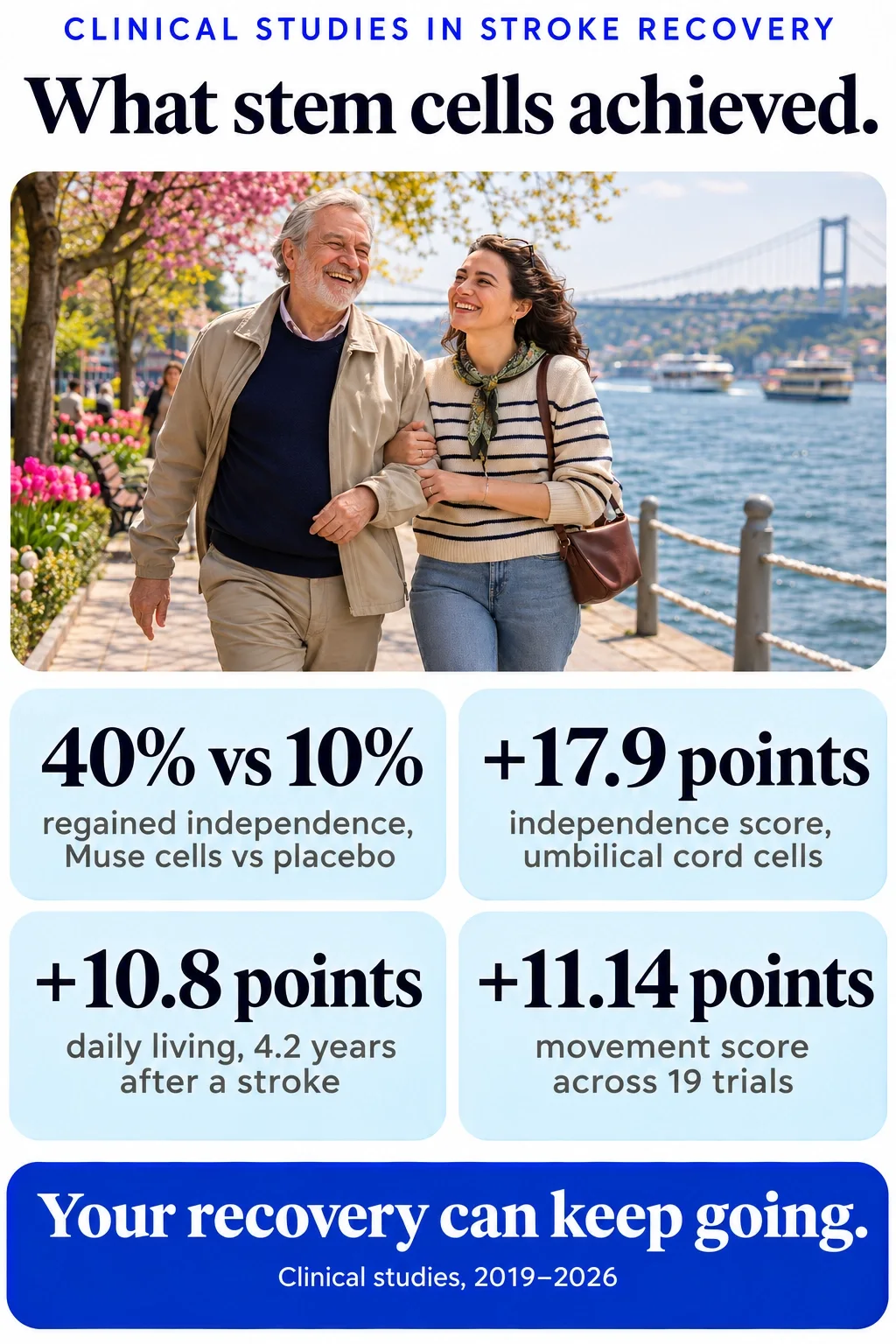
- 40.0% vs 10.0%of patients could look after their own affairs 12 weeks after one IV dose of a donor Muse cell product, against placebo3
- +17.9 pointson the independence scale (FIM) at 12 months with IV umbilical cord stem cells, compared with rehabilitation alone4
- 4.2 yearsaverage time since the stroke in a trial in which Barthel daily-living scores rose by 10.8 points after donor stem cells7
- +11.14 pointson the Fugl-Meyer movement scale across 19 randomised trials of MSC treatment2
02
Can brain damage from a stroke be repaired?
It is one of the first questions people ask after a stroke, and the answer is more hopeful than many expect. The brain is far more adaptable than was once thought: surviving areas can take over lost tasks, new connections can form, and the brain even makes some new nerve cells of its own.
Stroke is also very common, which is why so much research now focuses on recovery. In 2021, 93.8 million people worldwide were living after a stroke. Of the 11.9 million new strokes that year, 65.3% were ischaemic, caused by a blocked artery, and 28.8% were bleeds into the brain (intracerebral haemorrhages).15
What happens in the brain after a stroke
The injured area and the zone around it
Around the core of the stroke lies a zone of stunned but surviving tissue, where recovery is possible and where repair treatments aim to help.
Inflammation
The brain’s immune cells, the microglia, react with inflammatory signals. Across 30 studies in research models of stroke, umbilical cord MSCs rebalanced these signals and calmed the microglia.9
Blood vessels
Recovering tissue needs a good blood supply. In the same research models, umbilical cord MSCs increased the density of blood vessels around the injury.9
Your brain’s own new nerve cells
In the brains of people who had a stroke, researchers found cells carrying the markers of newborn nerve cells around the injured area, a sign that the human brain works to repair itself.16
Where stem cells come in. Stem cells, Muse cells and exosomes aim to support all of these repair processes at once. In research models, Muse cells that settled beside the injury took on the features of nerve cells and sent fibres all the way to the spinal cord,13 and Wharton’s jelly stem cells given two weeks after a stroke improved movement and reduced brain shrinkage.17 In people, the clearest sign is better function: stronger movement, more independence and a better quality of life.43
So the hopeful answer is this: the aim is not to rebuild the brain exactly as it was, but to help the brain around the injury recover as much as it possibly can. You can read how we put this into practice on our stroke recovery treatment page.
03
Stroke treatment in 2026: from emergency care to regenerative medicine
Modern stroke care has three stages, and regenerative medicine adds a fourth. They work best together.
1. Emergency treatment in the first hours
Clot-dissolving medicine and thrombectomy, in which a specialist removes the clot through a fine catheter, restore blood flow after an ischaemic stroke. In a pooled analysis of five randomised trials with 1,287 patients, thrombectomy within 12 hours significantly reduced disability at 90 days: for every 2.6 patients treated, one had at least one level less disability.18
2. Rehabilitation
A review of 467 randomised trials with 25,373 patients found strong evidence for 13 physiotherapy approaches for walking and 11 for arm and hand activities, and strong evidence that more practice brings better results.19
3. Preventing another stroke
Blood pressure and cholesterol control, blood-thinning medicines where needed, a healthy diet, movement and not smoking protect your brain for life, guided by your own doctors.
4. Regenerative medicine
Stem cells, Muse cells and exosomes are given in the weeks, months or years after a stroke to support the repair processes that rehabilitation relies on.207 Our stem cell therapy page explains how our cells are prepared.
04
Stroke recovery after the rehab plateau: is more progress possible?
Almost everyone who has had a stroke knows the feeling: rapid progress in the first weeks, then a slower phase, and sometimes a long stretch in which little seems to change. Therapists call it a plateau.
The plateau has a biological basis. In the Copenhagen Stroke Study of 1,197 patients, 80% had reached their best everyday function within 6 weeks and 95% within 12.5 weeks; after severe strokes, the best function came within 17 weeks.5 The brain’s natural burst of repair is strongest in these early months.
A plateau is not a ceiling
The brain keeps its ability to change for years. What changes is the push it needs.
- Intensive therapy. In the Queen Square programme in London, 224 people a median of 18 months after their stroke completed 90 hours of arm training over three weeks. Their arm movement scores (Fugl-Meyer) rose from 26 to 37, and the gains kept growing during the six months after the programme.6
- Nerve stimulation with therapy. In people at least nine months after a stroke, vagus nerve stimulation paired with rehabilitation raised arm movement scores by 5.0 points, against 2.4 points with rehabilitation and sham stimulation.21
- Stem cells. In a randomised trial in which most patients were more than six months past their stroke, umbilical cord stem cells plus rehabilitation raised independence (FIM) scores by 17.1 to 17.9 points more than rehabilitation alone at 12 months.4 And in people an average of 4.2 years after a stroke, donor stem cells were followed by significant gains on every behavioural measure over a year.7
Why stem cells and physiotherapy belong together
Rehabilitation teaches the brain new patterns; stem cells and exosomes aim to improve the biology those patterns are built on, with calmer inflammation, a better blood supply and more support for new connections.9 In the randomised umbilical cord trial, the cells were given together with rehabilitation,4 and in Istanbul, stroke patients treated with umbilical cord stem cells continued a rehabilitation programme and improved over a year.22 In monkeys in the chronic phase after a stroke, umbilical cord MSCs combined with brain stimulation improved movement and switched on the brain’s own stem cells.23
That is why we encourage you to keep up your physiotherapy before and after treatment, and perhaps to plan an extra block of therapy at home in the months after your treatment day.
05
How do stem cells and exosomes support stroke recovery?
Stem cells do not simply fill the gap left by a stroke. They act as repair coordinators, releasing signals that change the environment around the injury. Laboratory and animal research shows how, and it helps explain the improvements now reported in people.
How stem cell therapy works after a stroke
- Stem cells, Muse cells and exosomesStem cells by IV and intrathecal routes, exosomes by IV infusion and nasal spray.
- Repair signalsGrowth factors, immune-balancing messengers and exosomes.1011
- A healthier zone around the injuryLess inflammation, more blood vessels and new connections in research models.924
- Better function in trialsStronger movement and more independence than with rehabilitation alone or placebo.43
How stem cells, Muse cells and exosomes aim to support the brain after a stroke
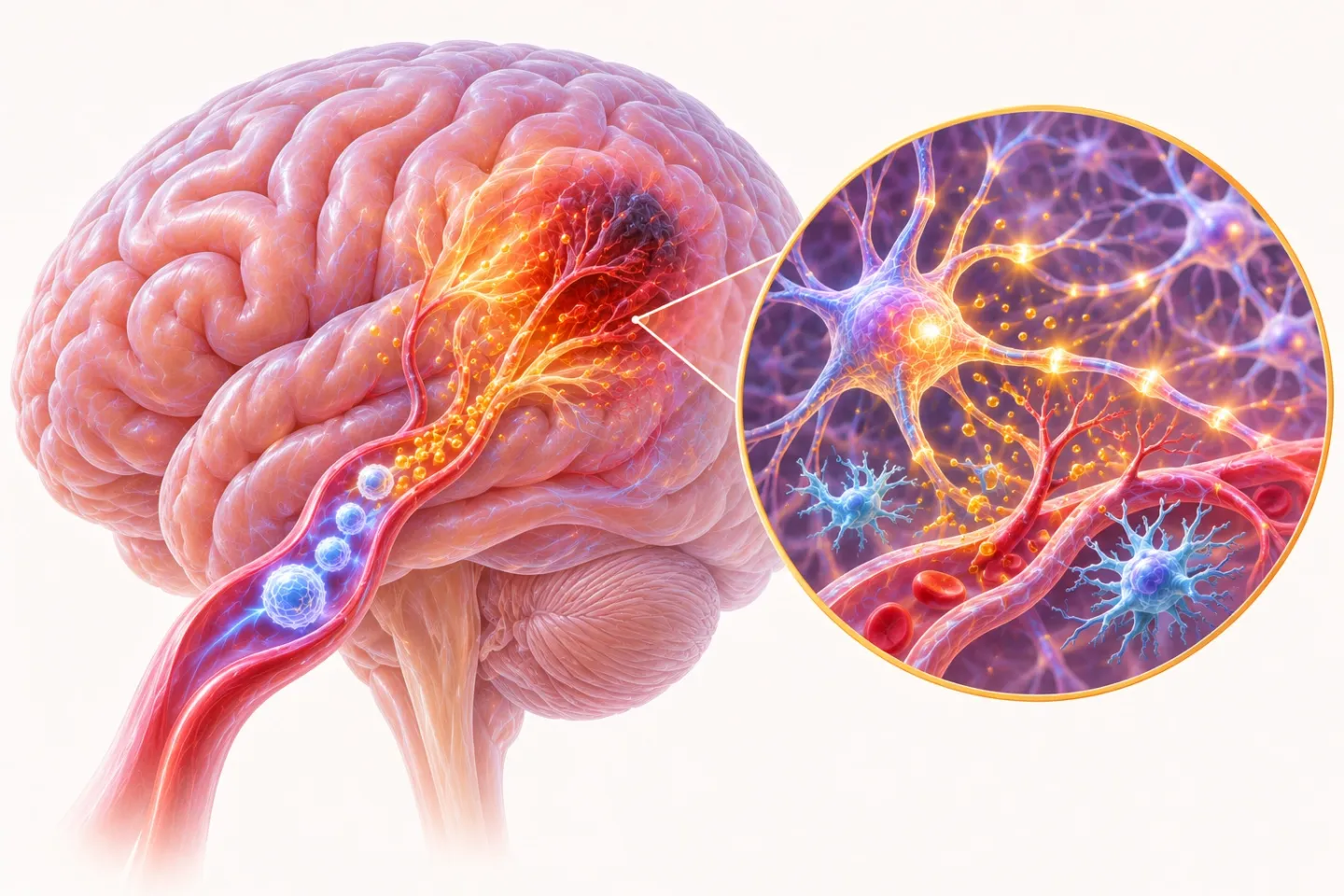
- Stem cellsGiven by IV or intrathecally, stem cells and Muse cells travel towards the injured area and release repair signals.
- ExosomesTiny vesicles carry these messages into the brain tissue around the stroke.
- Stroke areaBrain tissue that lost its blood supply. The living tissue around it is where recovery happens.
- New connectionsThe signals aim to support nerve cells in forming new connections, the basis of regaining skills.
- Calm immune cellsCalming inflammation helps protect the surrounding brain and new blood vessels.
Calming inflammation
Across 30 animal studies, umbilical cord MSCs reduced the size of the stroke, improved neurological scores and rebalanced inflammatory signals in the brain and blood.9
Settling the immune system
In research models, Muse cells given by IV improved movement after a stroke, partly by calming immune activity in the spleen.25
Protecting nerve cells
Umbilical cord MSCs release a rich mix of factors linked with protecting nerve cells and forming new ones,11 and in research models of stroke, they reduced the loss of nerve cells around the injury.9
New blood vessels
In research models, MSC exosomes given by IV a day after a stroke increased the number of new blood vessel cells around the injury.24
New nerve fibres and connections
In the same rats, the exosomes increased nerve fibres, connection points (synapses) and young nerve cells, and the animals recovered better.24
Energy for injured cells
In laboratory studies, MSCs passed mitochondria, the cells’ power stations, to brain support cells damaged by a lack of blood flow and restored their energy production.26
Each of these effects matches one of the processes the brain relies on to recover, which is why our doctors combine stem cells, Muse cells and exosomes, as set out on our stroke rehabilitation page.
06
Does stem cell therapy work for stroke? What human trials report
Human trials of stem cell therapy for stroke are encouraging, and they now cover every stage, from a few weeks to several years after the stroke. Here is what the key studies report, with the cells and routes each one used. The Muse cell trial has its own section below.
Umbilical cord stem cells, IV or intrathecal, with rehabilitation
In a randomised phase II trial, 32 adults aged 40 to 75 living with the after-effects of an ischaemic stroke received two infusions of umbilical cord MSCs, the same type of cells we use, three months apart, by IV or intrathecally, together with rehabilitation. Sixteen matched patients received rehabilitation alone. On average, patients joined about nine months after their stroke.4
At 12 months, compared with rehabilitation alone, stroke severity (NIHSS) scores had fallen by 4.5 points more in the IV group and 3.6 points more in the intrathecal group, and independence (FIM) scores had risen by 17.9 and 17.1 points more. Quality of life improved too, and no severe adverse events related to the cells were seen. The authors concluded that both routes improved neurological recovery and quality of life.4
Years after a stroke: donor stem cells by IV
In a multicentre trial, 36 people still living with substantial disability an average of 4.2 years after an ischaemic stroke received one IV dose of donor MSCs. Every behavioural measure improved significantly over 12 months: Barthel daily-living scores rose by 6.8 points at 6 months and 10.8 points at 12 months, and the share of patients with an excellent Barthel score of 95 or more rose from 11.4% to 27.3% and then 35.5%.7 Even 6 to 60 months after a stroke, modified bone marrow MSCs placed around the injury were followed by a 19.4-point rise in Fugl-Meyer scores at two years.27
Wharton’s jelly stem cells into the spinal fluid
Six people 2 to 24 months after a stroke received repeated rounds of 30 million Wharton’s jelly MSCs, the same type of cells we use, into the spinal fluid by lumbar puncture. In the four who received at least three rounds, speech problems eased in two and movement improved in three, and the authors report that all the patients became more independent, with no adverse events.28
Umbilical cord and Wharton’s jelly stem cells in Istanbul
Turkish doctors are adding to the evidence. In Istanbul, five stroke patients received one IV dose of donor umbilical cord MSCs and continued rehabilitation for a year; their NIHSS scores fell and their Rivermead motor scores rose significantly, with better arm function, strength and fine movement.22 In another Istanbul study, young adults with brain injury from trauma improved in thinking, muscle stiffness, strength and independence over a year after Wharton’s jelly MSCs by intrathecal, intramuscular and IV routes.29 And in a 2026 dose study, single IV doses of up to 200 million umbilical cord MSCs were well tolerated in the weeks after a stroke.30
| Study | Design and people | Cells and route | What improved |
|---|---|---|---|
| Niizuma 2023, J Cereb Blood Flow Metab3 | Randomised, double-blind, placebo-controlled; 35 people, 14 to 28 days after an ischaemic stroke | Donor Muse cell product, one IV dose | 40.0% vs 10.0% able to look after their own affairs at 12 weeks; arm movement better from week 4 to week 52 |
| Nguyen 2025, Stem Cells Transl Med4 | Randomised phase II plus matched controls; 48 people, on average about 9 months after an ischaemic stroke | Umbilical cord MSCs, two IV or intrathecal infusions, with rehabilitation | NIHSS −4.5 (IV) and −3.6 (intrathecal); FIM +17.9 and +17.1 versus rehabilitation alone at 12 months |
| Levy 2019, Stroke7 | Phase I/II, multicentre; 36 people, on average 4.2 years after an ischaemic stroke | Donor MSCs, one IV dose | Barthel +10.8 at 12 months; excellent Barthel score 11.4% → 35.5% |
| Milczarek 2023, Cell Transplant28 | Case series with a comparison group; 6 treated, 2 to 24 months after a stroke | Wharton’s jelly MSCs, repeated intrathecal rounds | Better speech, movement and independence; no adverse events |
| Ercelen 2023, Front Med (Istanbul)22 | Clinical series; 5 people, with a year of rehabilitation | Umbilical cord MSCs, one IV dose | NIHSS fell and Rivermead motor scores rose significantly over 12 months |
| Cui 2026, Cell Rep Med30 | Phase 1; 18 people in the weeks after an ischaemic stroke | Umbilical cord MSCs, one IV dose of 50, 100 or 200 million | No serious adverse events; NIHSS 1 to 5 points lower in 14 of 18 |
| Steinberg 2019, J Neurosurg27 | Phase 1/2a; 18 people, 6 to 60 months after an ischaemic stroke | Modified bone marrow MSCs, placed around the injury | Fugl-Meyer +19.4 and NIHSS −2.1 at 24 months |
Each study used its own cells and routes. Your treatment uses fresh umbilical cord and Wharton’s jelly MSCs, Muse cells and exosomes, prepared for your date and given by the routes Dr. Cihan Bolat plans. Read how we put this evidence into practice on our stroke rehabilitation treatment page.
07
Stem cells for stroke recovery: success rates in numbers
“Success” after a stroke can mean walking again, using your hand, speaking more clearly or simply needing less help. Trials measure it with standard scales, explained in the table below.
What the reviews of all the trials say
- 30 trials, 1,217 patients. In a 2024 meta-analysis, MSC treatment improved everyday independence (mRS) and lowered stroke severity (NIHSS) scores by 1.69 points in the randomised trials; the authors concluded that MSC transplantation improves neurological deficits and daily activities.1
- 19 randomised trials. MSC treatment raised Fugl-Meyer movement scores by 11.14 points and FIM independence scores by 13.71 points compared with conventional treatment, and umbilical cord MSCs were more effective than bone marrow MSCs.2
- 18 randomised trials, 1,026 patients. Stem cell therapy raised Barthel daily-living scores by 12.00 points and Fugl-Meyer scores by 18.16 points, and the authors called it a safe and effective approach to improving function.31
- Treatment in the first month. Across 13 randomised trials with 872 patients, 45 of 195 treated patients (23.1%) had no significant disability (mRS 0 to 1) at one year, against 23 of 179 controls (12.8%): 1.74 times as likely.20
What this means for you
Results build gradually. In the umbilical cord trial, the clearest differences from rehabilitation alone appeared at 6 and 12 months,4 and in the Muse cell trial, the lead of about 30 percentage points over placebo was still there at week 52.3 That is why we follow your progress for a full year.
Recovery outcomes in key studies (% of patients)
Able to look after their own affairs (mRS ≤2) at 12 weeks, donor Muse cell product3
No significant disability (mRS 0–1) at one year, stem cells in the first month, 13 trials20
Excellent daily-living score (Barthel ≥95), on average 4.2 years after the stroke7
| Scale | What it measures | How to read it |
|---|---|---|
| NIHSS | Stroke severity: movement, speech, vision, sensation and more | From 0 to 42; a fall means improvement |
| Modified Rankin Scale (mRS) | Overall independence in daily life | 0 means no symptoms; 2 or less means you can look after your own affairs |
| Barthel Index | Everyday activities such as washing, dressing and walking | From 0 to 100; 95 or more is an excellent score |
| FIM | Independence in movement and thinking tasks | From 18 to 126; a rise means more independence |
| Fugl-Meyer | Movement of the arm and leg after a stroke | A rise means better movement |
08
How long after a stroke can stem cells help?
This is one of the most important questions for anyone whose stroke was months or years ago, and the research is reassuring: trials have treated people at every stage.
In the first weeks
The Muse cell trial treated people 14 to 28 days after the stroke.3 Across 13 randomised trials of treatment within a month, recovery with no significant disability at one year was 1.74 times as likely with stem cells.20
In the months after
The randomised umbilical cord trial treated people 7 days to 24 months after their stroke, on average about nine months.4 The Wharton’s jelly series treated people 2 to 24 months after it.28
Years later
Donor stem cells brought gains to people an average of 4.2 years after a stroke,7 and cells placed beside the injury to people 6 to 60 months after it.27
In research models
IV doses of a clinical-grade Muse cell product improved movement in mice treated in the subacute phase, about 9 days after a stroke, and in the chronic phase, about 30 days after it.32
Is earlier better?
Early treatment acts while the brain’s natural repair is at its peak, and in one analysis, results were most favourable when treatment started within the first two months.31 But the chronic stroke trials carry an equally important message: it is rarely too late to ask. Whether your stroke was last month or five years ago, Dr. Cihan Bolat tells you honestly what is realistic.
Ischaemic and haemorrhagic stroke
Most trials have treated ischaemic strokes, the commoner type.115 For bleeds into the brain, research is growing: IV donor bone marrow MSCs were feasible and safe in the first days after a brain haemorrhage,33 and in research models of haemorrhagic stroke, stem cell vesicles improved long-term neurological scores34 and umbilical cord MSC exosomes given through the nose improved movement and memory.35
Who is a good candidate?
The trials included adults with moderate to substantial disability after an ischaemic stroke, from the first weeks to years later.347 Dr. Cihan Bolat reviews each case individually: your scans, the type and date of your stroke, what you can do today, your therapy, your medicines and your goals. Read more on our post-stroke rehabilitation page.
09
Muse cells for stroke: hardy repair cells with a placebo-controlled trial
Muse cells, short for multilineage-differentiating stress-enduring cells, were discovered in Japan in 2010 by the team of Professor Mari Dezawa.36 They are a small group within the mesenchymal stem cell family, about 1% to several percent of MSCs, recognised by a surface marker called SSEA-3,37 and stroke is the condition in which they have their strongest human evidence.3
Four qualities make them special:
- Stress-enduring. True to their name, they tolerate stress, and a single Muse cell can renew itself and give rise to many different cell types.36
- Homing to damage. Injured cells release a damage signal called S1P. Muse cells sense it through their S1PR2 receptor and travel selectively to the damaged tissue.3812
- Becoming new tissue cells. Once there, they can turn into the tissue’s own cell types, including cells with the features of nerve cells.1213
- Immune-friendly. Donor Muse cells have been given without HLA matching or immune-suppressing medicines,37 and they did not form tumours in laboratory testing.36
Muse cells in human trials
- 40.0% vs 10.0%of stroke patients able to look after their own affairs at 12 weeks after one IV dose, against placebo3
- Week 4 to 52arm movement (Fugl-Meyer) improved significantly more than with placebo throughout this period3
- 40.7% → 52.0%heart pumping strength (LVEF) 12 weeks after IV Muse cells following a heart attack39
- No HLA matchingneeded: donor Muse cells were given in trials without matching or immune-suppressing medicines37
The stroke trial in detail
At Tohoku University Hospital in Japan, 35 people with an ischaemic stroke and moderate to severe disability (a modified Rankin score of 3 or more) received one IV dose of 15 million cells of a donor Muse cell product, or placebo, 14 to 28 days after the stroke, with no immune-suppressing medicines. Neither the patients nor their doctors knew who received which.3
At 12 weeks, 40.0% of the Muse cell group could look after their own affairs again (a Rankin score of 2 or better), against 10.0% with placebo; the lower limit of the confidence range, 21.1%, was well above the preset threshold of 8.7% drawn from registry data. Arm and total movement scores (Fugl-Meyer) improved significantly more than with placebo from week 4 to week 52, and by week 52, 7 patients in the Muse cell group (32%) had reached a Rankin score of 1, no significant disability, a level no patient on placebo reached. The authors described the product as a possible effective treatment for subacute ischaemic stroke.3
Muse cell trials have also reported encouraging results after a heart attack, where heart pumping strength rose from 40.7% to 52.0% at 12 weeks,39 and in spinal cord injury, where one IV dose was followed by significant gains in movement, daily activities and quality of life.40 Each trial used its own Muse cell product.
Muse cells in stroke research models
- Rebuilding connections. In mice, Muse cells placed beside a small, deep stroke settled in the brain; about 62% became cells carrying a marker of mature nerve cells, their fibres reached the spinal cord, and the mice recovered movement, with no tumours at 10 months.13
- IV, even in the chronic phase. IV Muse cells travelled to the area around the injury and improved movement in mice treated in the subacute and in the chronic phase, with no tumours over 22 weeks.32
- Nose-to-brain delivery. In mice after a stroke, human Muse cells given through the nose reached the injured brain in much greater numbers than standard MSCs; 63.6% of the settled cells took on the features of nerve cells, and movement improved steadily.41
These nasal findings come from research models. At Istanbul Stemcell, Muse cells are given by IV infusion and intrathecally, and the nasal spray is used for exosomes, including Muse exosomes.
Muse exosomes
In laboratory studies, the secretome of Muse cells contained factors that regulate tissue repair, oxidative balance and immune activity and help cells survive under stress,42 and researchers have proposed Muse cell exosomes as a cell-free way to deliver these signals.43 Muse exosomes bring that message to your plan by IV infusion and as a nasal spray.
Muse cells and Muse exosomes can be part of your plan
Your plan can bring the strengths of each together: fresh umbilical cord and Wharton’s jelly MSCs for their rich repair signals,11 Muse cells for their homing and repair abilities, given by IV infusion and intrathecally, and Wharton’s jelly MSC, Muse and CD34+ exosomes by IV infusion and nasal spray. Dr. Cihan Bolat chooses the mix with you, and your written plan sets out exactly what you receive.
10
Exosome therapy for stroke: repair messengers by IV and nasal spray
Exosomes are tiny packages, around a ten-thousandth of a millimetre across, that cells use to pass proteins and RNA to one another.14 Much of what stem cells achieve after a stroke appears to travel in these packages, which is why researchers study them as a treatment in their own right.
What stroke research shows
- As effective as the cells. In mice after a stroke, MSC vesicles improved neurological recovery and protected brain tissue in the long term, with more new blood vessels and nerve cells, closely matching the stem cells themselves.44
- 73 studies. Pooling 73 studies in research models, MSC exosomes reduced the size of the stroke and improved recovery, whether given within or beyond 24 hours.45
- IV and nasal routes. Across 38 animal experiments, IV exosomes reduced the size of the stroke and improved neurological scores, and nasal exosomes reduced its size.46
- Calmer inflammation through the nose. In mice, MSC vesicles given through the nose improved forelimb movement after a stroke, raised the calming signals IL-10 and IL-13 and lowered IL-1β, IL-6 and TNF-α.47
Exosomes in people with brain injury
In Istanbul, five young adults with brain injury from trauma received six rounds of Wharton’s jelly MSC exosomes by intrathecal and intramuscular injection. Over a year, no serious adverse events occurred, motor independence (FIM motor) scores rose from 46.20 to 64.20 and overall function (Karnofsky) scores from 46.00 to 72.00.48 And in Alzheimer’s disease, a nasal spray of MSC exosomes, the route we use for exosomes in brain conditions, was well tolerated and improved memory and thinking scores up to week 36.49
Our exosomes
Your plan can include Wharton’s jelly MSC exosomes, Muse exosomes and CD34+ exosomes, which in research models carry strong signals for growing new blood vessels.50 For stroke, the doctor typically plans them by IV infusion and as a nasal spray of a few gentle sprays, with no needle; in research models, nasal Wharton’s jelly MSC exosomes spread through the whole brain within three hours.51 Stem cells, including Muse cells, are never given into the nose; the nasal route is for exosomes only. Read more on our exosome therapy page.
11
Stroke recovery options compared
Each option has its own place, and the strongest recovery plans combine several of them. This table shows where each one fits.
| Option | How it helps | When it fits | How it is given |
|---|---|---|---|
| Stem cells and exosomes | Repair signals that aim to calm inflammation, protect nerve cells and support blood vessels and connections;911 FIM 17.1 to 17.9 points higher than with rehabilitation alone at 12 months4 | Weeks, months or years after a stroke, alongside rehabilitation | IV and intrathecal stem cells, IV and nasal exosomes, in one hospital day |
| Muse cells and Muse exosomes | Hardy repair cells that home to damaged tissue;12 40.0% vs 10.0% regained independence at 12 weeks, against placebo3 | Added to stem cells and exosomes after a medical review | Muse cells by IV and intrathecal routes, Muse exosomes by IV infusion and nasal spray |
| Clot-dissolving medicine and thrombectomy | Restore blood flow; reduced disability at 90 days18 | The first hours after an ischaemic stroke | Emergency hospital treatment |
| Physiotherapy, occupational and speech therapy | Retrain movement, skills and speech; more practice brings better results19 | Every stage, from the first days onwards | Sessions with therapists and exercises at home |
| Intensive arm programmes | Arm movement scores rose from 26 to 37, a median of 18 months after a stroke6 | Months or years after a stroke | High-dose training over several weeks |
| Vagus nerve stimulation with rehabilitation | Arm movement +5.0 points, against +2.4 with sham stimulation21 | Arm weakness at least nine months after an ischaemic stroke | A small implanted stimulator, used during therapy |
These options add up rather than compete. Your physiotherapy and your medicines to prevent another stroke continue, and stem cell therapy is planned around them, in agreement with your own doctors.
12
How we plan stroke treatment in Istanbul: IV and intrathecal stem cells, IV and nasal exosomes
Every plan starts with you, not with a protocol. Dr. Cihan Bolat, our medical director and a specialist in anaesthesiology and reanimation and in regenerative medicine, reviews with his team your brain scans, the type and date of your stroke, your abilities and therapy, your medicines and your general health, and talks with you about your goals.
For brain conditions such as stroke, the doctor plans the routes: typically IV and intrathecal stem cells with IV and nasal exosomes, all in one hospital day. The intrathecal route places cells into the spinal fluid through a very fine needle in the lower back, so that their signals can circulate around the brain and spinal cord.
Why we combine routes
Each route reaches the brain in its own way. In the randomised stroke trial, umbilical cord MSCs improved recovery by both the IV and the intrathecal route,4 and a 2025 analysis of 17 studies found significant improvements with IV and other routes, with the strongest long-term gains from routes other than IV alone.52 Stem cells, including Muse cells, are given by IV infusion and intrathecally; exosomes by IV infusion and nasal spray.
Four routes in one hospital day
- IV stem cellsImmune-balancing signals through the whole body; independence +17.9 points at 12 months in a stroke trial.4
- Intrathecal stem cellsInto the spinal fluid around the brain and spinal cord; independence +17.1 points in the same trial.4
- IV exosomesConcentrated repair messages that improved recovery after a stroke in research models.24
- Nasal exosomesA nose-to-brain route that reduced the size of the stroke in research models.46
Fresh cells, prepared for your date
Umbilical cord and Wharton’s jelly MSCs from cords donated after healthy births, prepared in a Ministry of Health-approved GMP laboratory and never frozen. In laboratory comparisons, fresh MSCs kept stronger immune-calming properties than cells used straight after thawing.53
No harvest, no donor matching
Nothing is taken from your body. Wharton’s jelly cells carry very few of the signals that trigger rejection, so no donor matching is needed.54
Muse cells in your plan
Muse cells can be added and given by IV infusion and intrathecally, alongside umbilical cord and Wharton’s jelly MSCs. In trials, donor Muse cells were given without HLA matching.37
Your cell count in writing
The number of cells in your plan is confirmed in writing, and the count and viability are checked and certified by the GMP laboratory before treatment.
Exosomes in your plan
Wharton’s jelly MSC exosomes, Muse exosomes and CD34+ exosomes, added according to your plan and given by IV infusion and nasal spray.
Your physiotherapy continues
Keep up your therapy before and after treatment, and share the written plan with your own doctor and therapists.
Comfort on the treatment day
Dr. Cihan Bolat, a specialist in anaesthesiology and reanimation, plans your comfort for the intrathecal and IV treatment, at a calm pace.
Follow-up together
We review your progress at about 1, 3, 6 and 12 months, so you can see how your movement, speech and independence develop.
For the full treatment page, including what a stroke plan contains, see stem cell therapy for stroke rehabilitation.
13
Is stem cell therapy for stroke safe?
Safety is the first question for every stroke survivor and family, and the published record is reassuring. A 2021 meta-analysis of 62 randomised trials with 3,546 patients found MSC treatment safe, the most common effect a passing fever.8
The stroke trials point the same way. In 13 randomised trials of early treatment, serious adverse events were no more common with stem cells than without.20 Across 19 randomised trials, MSC treatment had a high safety profile, and the most reported effects, fever and headache, settled on their own or with simple treatment.2 In the umbilical cord trial, no severe adverse events related to the cells were seen with either route,4 in the 2026 dose study, up to 200 million cells by IV were well tolerated with no serious adverse events,30 and in the trial years after a stroke, treatment was judged safe on examinations, heart tracings, blood tests and scans over a year.7
Intrathecal treatment has a reassuring record too: a systematic review of 39 studies found no serious adverse events related to intrathecal MSC injection and concluded that, properly performed, it is exceedingly safe.55 In the Muse cell stroke trial, the authors reported no major safety issues with a single IV dose.3
Your own care adds further layers. Wharton’s jelly cells need no donor matching,54 your cells are prepared in a Ministry of Health-approved GMP laboratory with certified count and viability, and Dr. Cihan Bolat, a specialist in anaesthesiology and reanimation, plans your comfort for the treatment day. We screen carefully beforehand, and a specialist team treats you.
14
Why patients travel to Istanbul, Turkey for stroke recovery treatment
Stroke survivors come to us from Germany, the Netherlands, the UK, across Europe, the Middle East and the Gulf, the USA and beyond. Most have already had excellent emergency care and rehabilitation at home. What they look for in Istanbul is the regenerative part of the plan: fresh stem cells, Muse cells and exosomes, planned by a specialist team and given in one hospital day.
Stroke treatment in Germany or Turkey: how the two fit together
Families often compare countries, and for most the best answer is both. Germany, like many European countries, has strong stroke units and rehabilitation clinics, and your therapy there continues. Istanbul adds a regenerative treatment day with a fixed, all-inclusive price in writing, and you fly home to your own therapists, with follow-up from our team.

A specialist-led plan
A free medical review and phone consultation with the specialist team led by Uzm. Dr. Cihan Bolat, and a written plan before you book.
A fixed price before you travel
One all-inclusive price in writing, so you can decide calmly at home with your family.
One treatment day
Most plans take one treatment day in Istanbul, with no second trip needed.
Help at every step
Help with the hotel, ground transport and translation, and a personal case manager who plans your stay around your pace.
Easy to reach
Istanbul has two international airports. Many European cities have direct flights, and from much of Western Europe the journey takes around three to four hours.
Follow-up from home
Reviews at about 1, 3, 6 and 12 months, so your care continues after you fly home.
Travelling after a stroke
A little planning makes the journey easy. Ask your own doctor whether you are fit to fly, travel with a companion, request airport wheelchair assistance when you book, keep your medicines in your hand luggage with a written list, and allow a quiet day of rest after you arrive. Our clinic is in Suadiye, a calm residential district on Istanbul’s Asian side near the Marmara seafront.
15
Your treatment in Istanbul, step by step
From your first message to follow-up at home, every step is planned with you in advance, whether you are travelling from Berlin, London, Amsterdam, Dubai or New York. For the fuller story, read the stem cell treatment in Turkey, step by step, or request your free consultation now.
Send us your reports
Share your brain scan reports (MRI or CT), the date and type of your stroke, your hospital discharge letter, therapy reports, current medicines and your questions through our free consultation request, or by WhatsApp on +90 534 856 92 92.
Free medical review and phone call
Dr. Cihan Bolat and his specialist team review your case free of charge and talk it through with you and your family.
Your written plan and fixed price
If treatment is a good fit, you receive a written plan with the cell count, any Muse cells, the exosomes and the routes, and a fixed, all-inclusive price before you travel.
One hospital day in Istanbul
Fresh stem cells and exosomes are prepared for your date. Our team welcomes you and guides you calmly through the IV, intrathecal and nasal treatment in one hospital day.
Home, therapy and follow-up
Back home, you continue your physiotherapy, and we review your progress at about 1, 3, 6 and 12 months and stay available for your questions.
16
How much does stem cell therapy for stroke cost in Istanbul?
Every plan is personal, so the price depends on the number of cells, the exosomes, any Muse cells or Muse exosomes and the routes in your plan. After the free medical review, you receive a fixed, all-inclusive price in writing before you book anything, so there are no surprises and you can decide together as a family.
Included
- Free medical review and phone consultation
- Fresh umbilical cord and Wharton’s jelly stem cells, with certified count and viability
- Muse cells and Muse exosomes, if they are part of your plan
- Exosomes as set out in your plan
- Treatment by our specialist team in one hospital day
- Ground transport to and from the clinic, and help with translation
- A personal case manager and follow-up reviews
Not included / optional
- Flights
- Hotel stay, which we can help you arrange
- Your physiotherapy and medicines at home
- A repeat session, if you decide on one later
Read why patients choose Turkey for stem cell therapy, or see our stroke rehabilitation treatment page.
17
Frequently asked questions
Does stem cell therapy work for stroke?
Human trials are encouraging. In a randomised trial, umbilical cord stem cells given with rehabilitation improved stroke severity and independence scores more than rehabilitation alone at 12 months, and in a placebo-controlled trial, 40.0% of patients given one IV dose of a donor Muse cell product could look after their own affairs at 12 weeks, against 10.0% with placebo. Reviews of up to 30 trials report better movement, independence and daily activities.
What is the success rate of stem cell therapy for stroke?
It depends on how success is measured. In the Muse cell trial, 40.0% of patients regained the ability to look after their own affairs at 12 weeks, against 10.0% with placebo. In 13 randomised trials of treatment in the first month, 23.1% of treated patients had no significant disability at one year, against 12.8% of controls, and across 19 randomised trials, movement scores rose by 11.14 points. Your own result depends on your stroke, your starting point and your rehabilitation.
Can brain damage from a stroke be repaired?
The brain is more adaptable than was once thought. Surviving areas can take over lost tasks, new connections can form, and the brain even makes some new nerve cells around the injury. Treatment aims to help the brain around the injury recover as much as it can, and stem cells, Muse cells and exosomes support this by calming inflammation, protecting nerve cells and supporting blood vessels and connections.
Can you still recover after the rehab plateau?
Progress is often still possible. Most natural recovery happens in the first three months, but people a median of 18 months after a stroke raised their arm movement scores from 26 to 37 with intensive therapy, and their gains continued afterwards. In stem cell trials, people treated months and even years after a stroke improved in independence and daily activities.
How long after a stroke can stem cells help?
Trials have treated people at every stage: the Muse cell trial 14 to 28 days after the stroke, the randomised umbilical cord trial between 7 days and 24 months after it, and a donor stem cell trial an average of 4.2 years after it, when Barthel daily-living scores still rose by 10.8 points over a year. Early treatment acts while natural repair is at its peak, but it is rarely too late to ask for a free review.
What are Muse cells, and can they help after a stroke?
Muse cells are a small group of especially hardy repair cells within the mesenchymal stem cell family, discovered in Japan in 2010. They sense damage signals, travel to injured tissue and, in research models, can become cells with the features of nerve cells. In a placebo-controlled stroke trial, 40.0% of patients given one IV dose of a donor Muse cell product could look after their own affairs at 12 weeks, against 10.0% with placebo. Muse cells and Muse exosomes can be part of your plan at our clinic.
Which stem cells are best for stroke?
Mesenchymal stem cells are the most studied cells for stroke, and in a review of 19 randomised trials, umbilical cord MSCs were more effective than bone marrow MSCs. Muse cells have a placebo-controlled stroke trial of their own. We use fresh umbilical cord and Wharton’s jelly MSCs, prepared for your date and never frozen, and your plan can add Muse cells, Muse exosomes, Wharton’s jelly MSC exosomes and CD34+ exosomes.
Can stem cells help after a haemorrhagic stroke?
Most trials have treated ischaemic strokes, which are caused by a blocked artery. For bleeds into the brain, IV donor stem cells were feasible and safe in an early trial, and in research models, stem cell vesicles and nasal exosomes improved recovery. Dr. Cihan Bolat reviews haemorrhagic strokes case by case, with your scans, and advises you honestly.
How is stem cell treatment for stroke given at your clinic?
For brain conditions, the doctor plans the routes, typically IV and intrathecal stem cells, including Muse cells if they are in your plan, together with IV and nasal exosomes, all in one hospital day. The intrathecal route uses a very fine needle in the lower back to place cells in the spinal fluid around the brain and spinal cord. Stem cells and Muse cells are never given through the nose; the nasal spray is for exosomes only.
Should I keep doing physiotherapy?
Yes, please. Rehabilitation teaches the brain new patterns, and stem cells and exosomes aim to improve the biology those patterns are built on, so the two work best together. In the randomised umbilical cord trial, the cells were given together with rehabilitation. You may like to plan an extra block of therapy at home after your treatment day.
Can stem cells help with arm movement or speech after a stroke?
Arm movement is one of the clearest results: in the Muse cell trial, arm movement scores improved significantly more than with placebo from week 4 to week 52, and across 19 randomised trials, movement scores rose by 11.14 points. In people treated with Wharton’s jelly stem cells into the spinal fluid, speech problems eased in two patients. Speech therapy remains the foundation, and stem cells aim to support it.
Is stem cell therapy for stroke safe?
The published record is reassuring. A 2021 analysis of 62 randomised trials with 3,546 patients found MSC treatment safe, with a passing fever the most common effect. In stroke trials, serious adverse events were no more common with stem cells than without, and a review of 39 studies found intrathecal MSC injection exceedingly safe when properly performed. We screen carefully, and a specialist team treats you.
How soon might I notice changes after treatment?
Changes usually build gradually. In the Muse cell trial, arm movement improved more than with placebo from week 4, and in the umbilical cord trial, the clearest differences from rehabilitation alone appeared at 6 and 12 months. That is why we review your progress at about 1, 3, 6 and 12 months.
How much does stem cell therapy for stroke cost in Istanbul?
The price depends on the number of cells, the exosomes, any Muse cells or Muse exosomes and the routes in your plan. After a free medical review, you receive a fixed, all-inclusive price in writing before you travel, covering the treatment, the fresh cells with certified count and viability, transport to and from the clinic, a personal case manager and follow-up reviews. Flights and the hotel are separate.
Stroke treatment in Germany or Turkey: which should I choose?
For most families, the answer is both. Germany and other European countries offer strong stroke units and rehabilitation, which you keep. Istanbul adds a regenerative treatment day with fresh stem cells, Muse cells and exosomes, a written plan with a fixed price and follow-up after you return home. Our case manager helps with the hotel, transport and translation, and you can reach us by WhatsApp on +90 534 856 92 92.
What are exosomes, and can they help after a stroke?
Exosomes are tiny packages of proteins and RNA that stem cells use to send repair messages. In research models of stroke, MSC exosomes reduced the size of the stroke and improved recovery, given by IV or through the nose, and in Istanbul, young adults with brain injury gained motor independence over a year after Wharton’s jelly MSC exosomes. Our plans use Wharton’s jelly MSC, Muse and CD34+ exosomes by IV infusion and nasal spray.

Medical review
Uzm. Dr. Cihan Bolat
Medical Director, Istanbul Stemcell
This page was written from the published studies listed below and reviewed for medical accuracy on .
18
References
- Shen Z, et al. Efficacy and safety of mesenchymal stem cell therapies for ischemic stroke: a systematic review and meta-analysis. Stem Cells Transl Med. 2024;13(9):886-897. PMID 39159204
- Jiang Y, et al. Efficacy and safety of mesenchymal stem cells for cerebral infarction: A meta-analysis. Biomed Rep. 2026;24(4):41. PMID 41669112
- Niizuma K, et al. Randomized placebo-controlled trial of CL2020, an allogenic muse cell-based product, in subacute ischemic stroke. J Cereb Blood Flow Metab. 2023;43(12):2029-2039. PMID 37756573
- Nguyen LT, et al. Intrathecal versus intravenous umbilical cord mesenchymal stem cells for ischemic stroke sequelae. Stem Cells Transl Med. 2025;14(12). PMID 41277536
- Jørgensen HS, et al. Outcome and time course of recovery in stroke. Part II: Time course of recovery. The Copenhagen Stroke Study. Arch Phys Med Rehabil. 1995;76(5):406-12. PMID 7741609
- Ward NS, Brander F, Kelly K. Intensive upper limb neurorehabilitation in chronic stroke: outcomes from the Queen Square programme. J Neurol Neurosurg Psychiatry. 2019;90(5):498-506. PMID 30770457
- Levy ML, et al. Phase I/II Study of Safety and Preliminary Efficacy of Intravenous Allogeneic Mesenchymal Stem Cells in Chronic Stroke. Stroke. 2019;50(10):2835-2841. PMID 31495331
- Wang Y, Yi H, Song Y. The safety of MSC therapy over the past 15 years: a meta-analysis. Stem Cell Res Ther. 2021;12(1):545. PMID 34663461
- Wei R, et al. Efficacy and Potential Mechanisms of Umbilical Cord-Derived Mesenchymal Stem Cells in the Treatment of Ischemic Stroke in Animal Models: A Meta-Analysis. CNS Neurosci Ther. 2025;31(4):e70357. PMID 40202099
- Caplan AI, Dennis JE. Mesenchymal stem cells as trophic mediators. J Cell Biochem. 2006;98(5):1076-84. PMID 16619257
- Hsieh JY, et al. Mesenchymal stem cells from human umbilical cord express preferentially secreted factors related to neuroprotection, neurogenesis, and angiogenesis. PLoS One. 2013;8(8):e72604. PMID 23991127
- Yamashita T, et al. Non-Tumorigenic Pluripotent Reparative Muse Cells Provide a New Therapeutic Approach for Neurologic Diseases. Cells. 2021;10(4). PMID 33924240
- Uchida H, et al. Human Muse Cells Reconstruct Neuronal Circuitry in Subacute Lacunar Stroke Model. Stroke. 2017;48(2):428-435. PMID 27999136
- Kalluri R, LeBleu VS. The biology, function, and biomedical applications of exosomes. Science. 2020;367(6478). PMID 32029601
- . Global, regional, and national burden of stroke and its risk factors, 1990-2021: a systematic analysis for the Global Burden of Disease Study 2021. Lancet Neurol. 2024;23(10):973-1003. PMID 39304265
- Jin K, et al. Evidence for stroke-induced neurogenesis in the human brain. Proc Natl Acad Sci U S A. 2006;103(35):13198-202. PMID 16924107
- Fu YS, et al. Xenograft of Human Umbilical Mesenchymal Stem Cells Promotes Recovery from Chronic Ischemic Stroke in Rats. Int J Mol Sci. 2022;23(6). PMID 35328574
- Goyal M, et al. Endovascular thrombectomy after large-vessel ischaemic stroke: a meta-analysis of individual patient data from five randomised trials. Lancet. 2016;387(10029):1723-31. PMID 26898852
- Veerbeek JM, et al. What is the evidence for physical therapy poststroke? A systematic review and meta-analysis. PLoS One. 2014;9(2):e87987. PMID 24505342
- Osanai T, et al. Efficacy and safety of stem cell therapy for acute and subacute ischemic stroke: a systematic review and meta-analysis. Sci Rep. 2025;15(1):21214. PMID 40595869
- Dawson J, et al. Vagus nerve stimulation paired with rehabilitation for upper limb motor function after ischaemic stroke (VNS-REHAB): a randomised, blinded, pivotal, device trial. Lancet. 2021;397(10284):1545-1553. PMID 33894832
- Ercelen N, et al. Clinical experience: Outcomes of mesenchymal stem cell transplantation in five stroke patients. Front Med (Lausanne). 2023;10:1051831. PMID 36744151
- Ma YH, et al. Robust neurogenesis in chronic stroke monkeys following mesenchymal stem cell transplantation plus intermittent theta-burst stimulation. Signal Transduct Target Ther. 2026;11(1). PMID 42031725
- Xin H, et al. Systemic administration of exosomes released from mesenchymal stromal cells promote functional recovery and neurovascular plasticity after stroke in rats. J Cereb Blood Flow Metab. 2013;33(11):1711-5. PMID 23963371
- Kato Y, et al. Intravenous administration of muse cells improves cerebral ischemia outcome via immunomodulation in the spleen. J Cereb Blood Flow Metab. 2025;45(3):542-557. PMID 39397400
- Babenko VA, et al. Miro1 Enhances Mitochondria Transfer from Multipotent Mesenchymal Stem Cells (MMSC) to Neural Cells and Improves the Efficacy of Cell Recovery. Molecules. 2018;23(3). PMID 29562677
- Steinberg GK, et al. Two-year safety and clinical outcomes in chronic ischemic stroke patients after implantation of modified bone marrow-derived mesenchymal stem cells (SB623): a phase 1/2a study. J Neurosurg. 2019;131(5):1462-1472. PMID 30497166
- Milczarek O, et al. Comparative Analysis of the Results of Stroke Treatment With Multiple Administrations of Wharton's Jelly Mesenchymal Stem Cells-Derived HE-ATMP and Standard Conservative Treatment: Case Series Study. Cell Transplant. 2023;32:9636897231195145. PMID 37644776
- Kabatas S, et al. Safety and efficiency of Wharton's Jelly-derived mesenchymal stem cell administration in patients with traumatic brain injury: First results of a phase I study. World J Stem Cells. 2024;16(6):641-655. PMID 38948099
- Cui L, et al. Intravenous human umbilical cord-derived mesenchymal stem cell transplantation for ischemic stroke (MERIT): A phase 1 trial. Cell Rep Med. 2026;7(6):102836. PMID 42208543
- Alrasheed AS, et al. Safety and Efficacy of Stem Cell Therapy in Ischemic Stroke: A Comprehensive Systematic Review and Meta-Analysis. J Clin Med. 2025;14(6). PMID 40142929
- Abe T, et al. Intravenously Transplanted Human Multilineage-Differentiating Stress-Enduring Cells Afford Brain Repair in a Mouse Lacunar Stroke Model. Stroke. 2020;51(2):601-611. PMID 31826733
- Durand NC, et al. Mesenchymal Stem Cell Therapy in Acute Intracerebral Hemorrhage: A Dose-Escalation Safety and Tolerability Trial. Neurocrit Care. 2024;41(1):59-69. PMID 38114796
- Wang C, et al. Meta-Analysis of the Therapeutic Effects of Stem Cell-Derived Extracellular Vesicles in Rodent Models of Hemorrhagic Stroke. Stem Cells Int. 2024;2024:3390446. PMID 39263375
- Ru D, et al. Human umbilical MSC-derived exosomes improve intracerebral hemorrhage recovery via SIRT1-driven suppression of NF-κB/NOS2 signaling: coordinating microglial homeostasis and neuroprotection. J Transl Med. 2025;23(1):1361. PMID 41310775
- Kuroda Y, et al. Unique multipotent cells in adult human mesenchymal cell populations. Proc Natl Acad Sci U S A. 2010;107(19):8639-43. PMID 20421459
- Minatoguchi S, et al. Donor Muse Cell Treatment Without HLA-Matching Tests and Immunosuppressant Treatment. Stem Cells Transl Med. 2024;13(6):532-545. PMID 38560897
- Yamada Y, et al. S1P-S1PR2 Axis Mediates Homing of Muse Cells Into Damaged Heart for Long-Lasting Tissue Repair and Functional Recovery After Acute Myocardial Infarction. Circ Res. 2018;122(8):1069-1083. PMID 29475983
- Noda T, Nishigaki K, Minatoguchi S. Safety and Efficacy of Human Muse Cell-Based Product for Acute Myocardial Infarction in a First-in-Human Trial. Circ J. 2020;84(7):1189-1192. PMID 32522904
- Koda M, et al. Safety and feasibility of intravenous administration of a single dose of allogenic-Muse cells to treat human cervical traumatic spinal cord injury: a clinical trial. Stem Cell Res Ther. 2024;15(1):259. PMID 39135172
- Yamamoto S, et al. Nose-to-brain delivery of human muse cells enhances structural and functional recovery in the murine ischemic stroke model. Sci Rep. 2025;15(1):16243. PMID 40346279
- Alessio N, et al. The secretome of MUSE cells contains factors that may play a role in regulation of stemness, apoptosis and immunomodulation. Cell Cycle. 2017;16(1):33-44. PMID 27463232
- Rajabi A, Bonyadi M. Muse Cell-Derived Exosomes: a Hypothesis for a Cell-Free Therapeutic Platform in Regenerative Medicine. Stem Cell Rev Rep. 2025;21(6):1860-1862. PMID 40531406
- Doeppner TR, et al. Extracellular Vesicles Improve Post-Stroke Neuroregeneration and Prevent Postischemic Immunosuppression. Stem Cells Transl Med. 2015;4(10):1131-43. PMID 26339036
- Zhang X, et al. Therapeutic potential of mesenchymal stem cell-derived extracellular vesicles in ischemic stroke: A meta-analysis of preclinical studies. Brain Res Bull. 2025;221:111219. PMID 39837375
- Xu K, et al. Stem cell-derived exosomes for ischemic stroke: a conventional and network meta-analysis based on animal models. Front Pharmacol. 2024;15:1481617. PMID 39508049
- Barbati SA, et al. Intranasal delivery of extracellular vesicles derived from human bone marrow mesenchymal stem cells dampens neuroinflammation and ameliorates motor deficits in a mouse model of cortical stroke. Exp Neurol. 2026;396:115540. PMID 41192650
- Kabatas S, et al. Efficacy and safety of exosomes from Wharton's Jelly-derived mesenchymal stem cells in traumatic brain injury. World J Crit Care Med. 2025;14(4):103782. PMID 41377533
- Xie X, et al. Clinical safety and efficacy of allogenic human adipose mesenchymal stromal cells-derived exosomes in patients with mild to moderate Alzheimer's disease: a phase I/II clinical trial. Gen Psychiatr. 2023;36(5):e101143. PMID 37859748
- Mathiyalagan P, et al. Angiogenic Mechanisms of Human CD34(+) Stem Cell Exosomes in the Repair of Ischemic Hindlimb. Circ Res. 2017;120(9):1466-1476. PMID 28298297
- Thomi G, et al. Intranasally Administered Exosomes from Umbilical Cord Stem Cells Have Preventive Neuroprotective Effects and Contribute to Functional Recovery after Perinatal Brain Injury. Cells. 2019;8(8). PMID 31398924
- Mulia GJ, et al. Stem Cell-Based Therapies via Different Administration Route for Stroke: A Meta-analysis of Comparative Studies. Cell Transplant. 2025;34:9636897251315121. PMID 39925239
- Moll G, et al. Do cryopreserved mesenchymal stromal cells display impaired immunomodulatory and therapeutic properties? Stem Cells. 2014;32(9):2430-42. PMID 24805247
- Weiss ML, et al. Immune properties of human umbilical cord Wharton's jelly-derived cells. Stem Cells. 2008;26(11):2865-74. PMID 18703664
- Barmada A, et al. Serious Adverse Events Have Not Been Reported with Spinal Intrathecal Injection of Mesenchymal Stem Cells: A Systematic Review. Curr Stem Cell Res Ther. 2023;18(6):829-833. PMID 35980065