
01
What is stem cell therapy for type 1 diabetes?
In short: stem cell therapy for type 1 diabetes uses mesenchymal stem cells (MSCs) to rebalance the immune system and protect the beta cells you still have, so your body keeps making more of its own insulin. It works alongside your insulin, not instead of it, and the strongest results come when treatment starts in the first years after diagnosis.18
Mesenchymal stem cells are best known as the body’s repair coordinators. Rather than turning into new pancreas tissue, they release signals that calm overactive immune cells and help stressed cells survive.9 That makes them a natural fit for type 1 diabetes, a condition that begins with an immune system that has turned against the insulin-making cells of the pancreas.
At Istanbul Stemcell, your treatment uses fresh mesenchymal stem cells from Wharton’s jelly, the soft tissue of umbilical cords donated after healthy births. For diabetes, a plan usually includes 50 to 200 million viable cells, given by a relaxed IV infusion, together with exosomes, the tiny messengers that stem cells release. This guide goes deep on type 1. For our full treatment page covering both types, see stem cell therapy for diabetes in Turkey.
Results at a glance
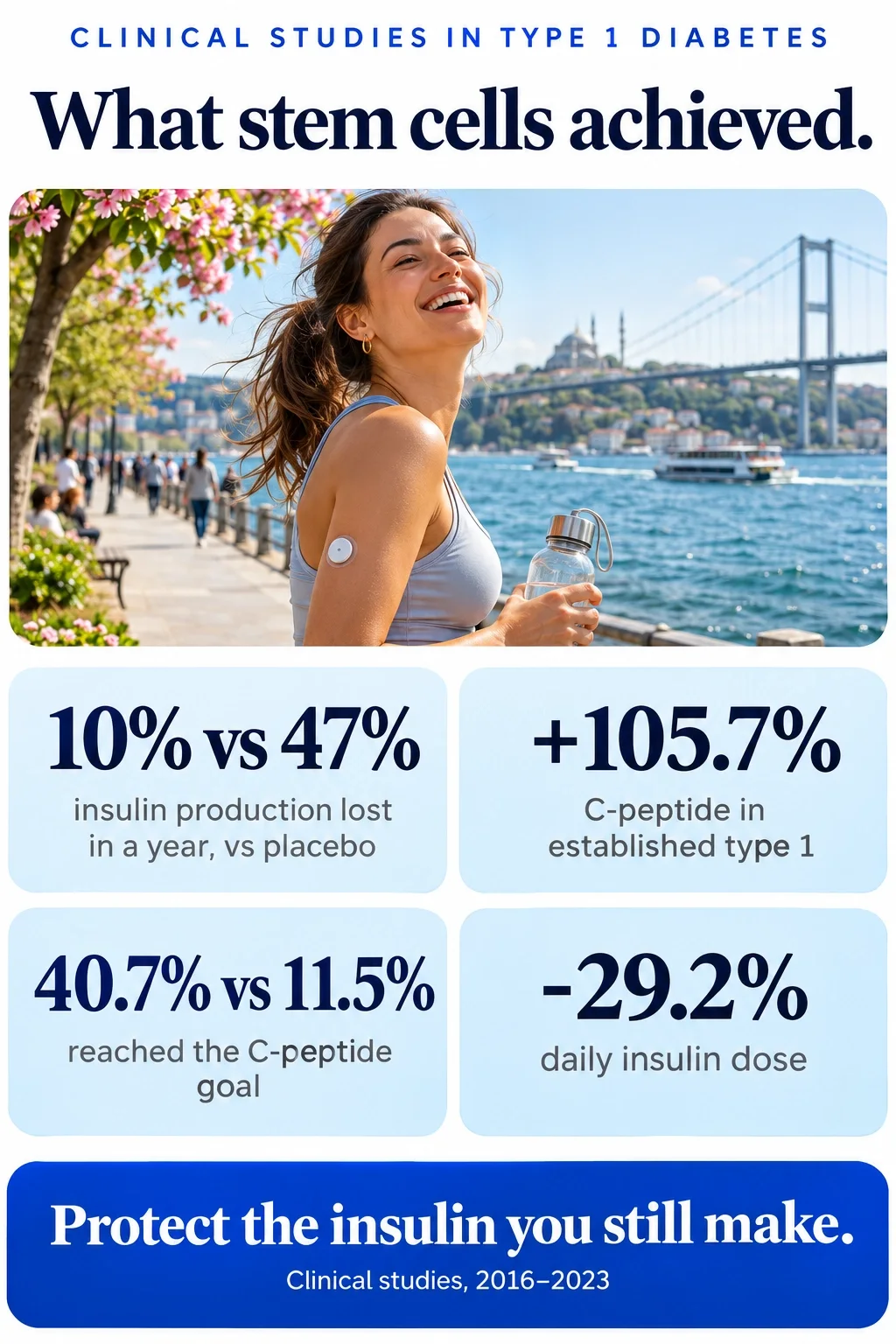
- 10% vs 47%loss of the body’s own insulin production in a year: Wharton’s jelly stem cells against placebo1
- +105.7%rise in C-peptide in established type 1 with umbilical cord stem cells plus bone marrow cells, against a 7.7% fall in controls5
- 40.7%of people with recent-onset type 1 reached the C-peptide goal with umbilical cord stem cells, against 11.5% with standard care10
- 14.3% vs 73.3%developed at least one diabetes complication over eight years, treated against standard care6
02
What happens in type 1 diabetes, and why does the immune attack matter?
In type 1 diabetes, the immune system mistakes the beta cells of the pancreas, the cells that make insulin, for a threat. Immune cells called T cells gradually destroy them, and without enough insulin, glucose builds up in the blood.3 Insulin treatment replaces what the beta cells can no longer make, and modern insulin pumps and continuous glucose monitors make that daily work easier than ever before.3
The important point for you is that the immune attack is a process, not a single moment. It begins before the first symptoms, often long before, and it continues after diagnosis.11 In the months after diagnosis, your remaining beta cells are still making insulin, and doctors can measure how much with a C-peptide test.1213 Every one of those cells is worth protecting, and that is what stem cell therapy is designed to do: calm the attack so that more of them survive and keep working.
Type 1 is also far more common in adults than many people think. In 2021, about 8.4 million people worldwide lived with type 1 diabetes, 1.5 million of them under the age of 20, and the median age at diagnosis was 39.14 Whether you were diagnosed as a child, a student or in your forties, the principle is the same: the more of your own insulin you keep, the easier your diabetes is to live with.
Stage 1: the attack begins
Two or more islet autoantibodies appear in the blood, a sign that the immune system has started to target the beta cells, while blood glucose is still normal.11
Stage 2: glucose starts to rise
The autoantibodies are still present and glucose levels begin to drift upwards, while the person still feels well.11
03
The honeymoon phase and C-peptide: why your own insulin is worth protecting
Soon after diagnosis, many people notice that their diabetes suddenly feels easier: insulin doses fall and glucose levels settle. This is the honeymoon phase, which doctors call partial remission, and it reflects the insulin your remaining beta cells still produce. In a study of 275 children and teenagers under 16, researchers defined it with a simple formula that combines HbA1c and insulin dose, called the insulin dose-adjusted HbA1c (IDAA1c), which closely tracks how much insulin the body still makes.12
What C-peptide tells you
Your beta cells release C-peptide and insulin together, in equal amounts. Because injected insulin contains no C-peptide, a C-peptide blood test shows how much insulin your own body is making, even while you take insulin. That is why diabetes specialists regard C-peptide as the best measure of beta-cell function, and why trials of new type 1 treatments use it as their main result. Experts also concluded that even modest effects on C-peptide bring clinically meaningful benefits.13
Why a little insulin of your own makes a big difference
Large, long-term studies show that the insulin you still make pays off every day:
- Fewer hypos. In the landmark Diabetes Control and Complications Trial (DCCT), people who kept a stimulated C-peptide above 0.20 nmol/l for at least a year had fewer severe hypoglycaemic episodes, and even modest beta-cell activity was linked with fewer eye and kidney complications.15
- Gains at every level. For every 50% higher C-peptide, the risk of hypoglycaemia was 8.2% lower and the risk of lasting changes in the retina 25% lower, with no threshold: the benefits rose steadily with C-peptide.4
- Even decades later. In people who had lived with type 1 for an average of 35 years, 27% of those with the highest remaining C-peptide had ever had a severe hypo, against 70% to 74% of those with little or none.16
Protecting your C-peptide, and with it your honeymoon phase, is exactly what stem cell therapy for type 1 diabetes sets out to do.
04
How do stem cells work in type 1 diabetes?
Stem cell therapy for type 1 diabetes is not about forcing new cells into your pancreas. Mesenchymal stem cells act as messengers: once in your bloodstream, they release signals and exosomes that rebalance the immune system and create calmer conditions for your beta cells.9 Six effects, seen in laboratory studies and research models, help explain the results that clinical trials report.
How stem cell therapy works in type 1 diabetes
- Fresh stem cellsWharton’s jelly stem cells and exosomes, given by IV infusion.
- Immune-balancing signalsIn laboratory studies, more regulatory T cells and a calmer response to islet proteins.1718
- Beta cells protectedIn laboratory studies, islets kept with stem cells survived better and released more insulin.19
- More of your own insulinC-peptide preserved in clinical trials.120
How stem cells and exosomes aim to protect your beta cells
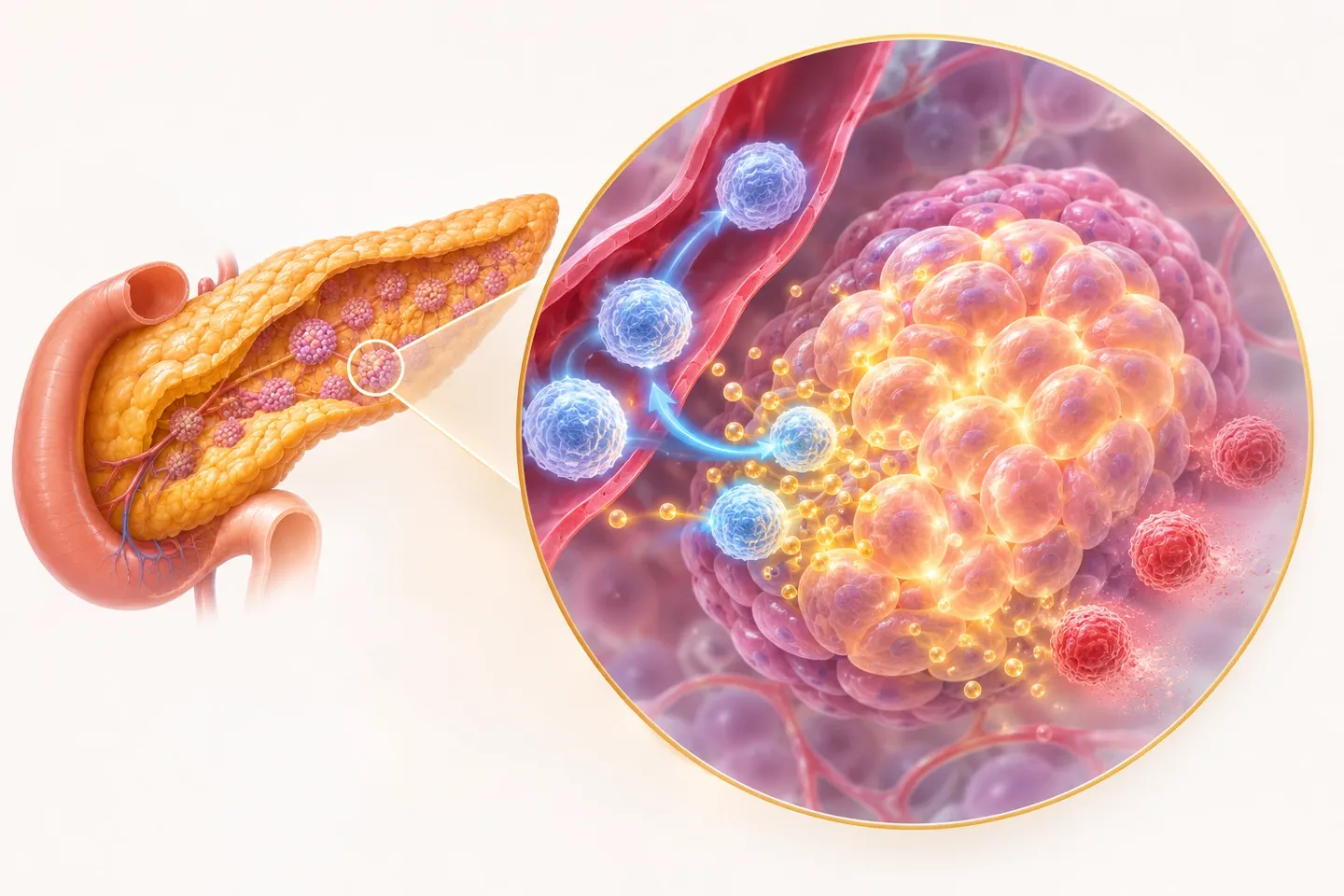
- Pancreas and isletsInsulin is made in small clusters of cells called islets, spread through the pancreas.
- Stem cellsGiven by IV, they travel through the bloodstream and release calming, protective signals.
- ExosomesTiny vesicles carry these messages to the islets and to the immune cells around them.
- Beta cellsThe insulin-making cells. Protecting the ones you still have is the aim of treatment.
- Immune cellsIn type 1 diabetes the immune system attacks the beta cells; stem cell signals aim to calm this attack.
Calming the attack
In laboratory studies, when immune cells from people with newly diagnosed type 1 were exposed to an islet protein, vesicles released by bone marrow MSCs reduced the attacking response and raised calming messengers such as IL-10 and TGF-β.18
More peacekeepers
Regulatory T cells (Tregs) stop the immune system from attacking the body. In laboratory studies with immune cells from people with type 1, Wharton’s jelly stem cells restored a healthy balance between Tregs and inflammatory Th17 cells.17
Switching on tolerance
In laboratory studies with immune cells from people with type 1, Wharton’s jelly stem cells switched on immune-tolerance genes such as FOXP3, IL10 and TGFB1 and lowered inflammatory messengers.21
Going where the attack starts
In research models, stem cells travelled to the lymph nodes beside the pancreas, protected regulatory T cells and reduced the ability of attacking T cells to enter the islets.22
Shielding beta cells
Across 24 laboratory and animal studies, islets kept together with MSCs were more viable and secreted more insulin than islets kept alone.19
Exosomes: messages in a package
Exosomes are nano-sized vesicles that carry proteins and RNA between cells.23 In research models of type 1 diabetes, vesicles from MSCs prevented the onset of disease and dampened the immune cells that drive it.24
In people, the sign that this is working is a preserved C-peptide, the marker of your own insulin production, and that is exactly what the clinical trials below measured. Read more about stem cell therapy and exosome therapy at our clinic.
05
Stem cell therapy for type 1 diabetes: success rates in clinical trials
In type 1 diabetes, success is measured first by how well a treatment protects your own insulin production (C-peptide), and then by what follows from it: HbA1c, insulin needs and, over the years, complications. Here are the key human trials, with the cell source each study used. Two of them used Wharton’s jelly stem cells, the same type of cells we use.
| Study | Who took part | Cells used | Key result |
|---|---|---|---|
| Carlsson 2023 (ProTrans), Sweden | 24 adults aged 18 to 40, diagnosed within 2 years; 15 in the double-blind randomised part | Wharton’s jelly MSCs, one IV infusion | C-peptide fell by 10% with stem cells against 47% with placebo at one year; insulin needs stayed level, against a rise of 10 units a day1 |
| Hu 2013, China | 29 people with newly diagnosed type 1, randomised to stem cells or saline | Wharton’s jelly MSCs, with intensive insulin treatment | HbA1c and C-peptide significantly better than before treatment and than with saline over two years25 |
| Carlsson 2015, Sweden | 20 adults with newly diagnosed type 1, randomised | Their own bone marrow MSCs | C-peptide preserved or even increased at one year, while the control group lost it20 |
| Lu 2021, China | 53 people with recent-onset type 1 | Umbilical cord MSCs, IV, repeated after 3 months | 40.7% reached the goal of a 10% or greater rise in C-peptide, against 11.5% with standard care10 |
| Cai 2016, China | 42 people with established type 1, randomised | Umbilical cord MSCs plus their own bone marrow cells, via the pancreatic artery | C-peptide +105.7% against −7.7%; HbA1c 8.6% → 7.5%; daily insulin −29.2%5 |
| Wu 2022 (8-year follow-up of Cai 2016) | 29 of the original participants | As above | At least one complication in 14.3% of treated patients against 73.3% with standard care6 |
Recently diagnosed type 1: the Wharton’s jelly trials
The ProTrans trial at Karolinska University Hospital in Stockholm is the clearest test so far. Adults aged 18 to 40, diagnosed within the previous two years, received a single IV infusion of Wharton’s jelly stem cells or a placebo, and neither they nor their doctors knew which. A year later, C-peptide had fallen by 47% with placebo but by only 10% with stem cells, and insulin needs stayed level with stem cells while they rose by a median of 10 units a day with placebo.1 In the dose-finding part of the trial, the 200-million-cell dose preserved C-peptide better than the lowest dose of 25 million cells.1
An earlier randomised trial gave Wharton’s jelly stem cells or saline to 29 people with newly diagnosed type 1, alongside intensive insulin treatment. Over two years, both HbA1c and C-peptide were significantly better in the stem cell group than before treatment and than in the saline group.25 In Sweden, adults treated with their own bone marrow stem cells soon after diagnosis kept or even increased their C-peptide over the first year, while the control group lost it.20
Umbilical cord stem cells, given twice
In a study of 53 people with recent-onset type 1, those who received two courses of umbilical cord stem cells three months apart were far more likely to reach the goal of at least a 10% rise in C-peptide: 40.7%, against 11.5% with standard care. Three treated participants had insulin-free periods lasting 3 to 12 months, and a higher cell dose was linked with a better response.10
Established type 1: gains years after diagnosis
In 42 people who had lived with type 1 for some time, umbilical cord stem cells together with their own bone marrow cells, delivered through the artery that supplies the pancreas, raised C-peptide by 105.7% in a year, while it fell by 7.7% in the control group. HbA1c fell from 8.6% to 7.5%, and daily insulin needs by 29.2%.5 Eight years later, 14.3% of the treated patients had developed at least one diabetes complication, against 73.3% with standard care alone.6
What the reviews say
- 60 trials, 4,597 people. A 2025 network analysis of randomised trials in newly diagnosed type 1 found that mesenchymal stem cells, including Wharton’s jelly-derived cells, were among 11 of 42 treatments that kept significantly more C-peptide than placebo at 12 months.2
- Higher C-peptide, lower insulin needs. Pooling the type 1 studies in a 2021 meta-analysis, people treated with MSCs had significantly higher C-peptide than controls and needed significantly less insulin than before treatment.26
- Lower HbA1c. Across 13 randomised trials in type 1 and type 2 diabetes with 507 people, MSC treatment lowered HbA1c by 0.72 percentage points and daily insulin needs by 14.5 units compared with control groups at 12 months.27
- Umbilical cord cells and early timing. In pooled data from 22 trials, umbilical cord MSCs gave a significantly beneficial result in type 1 compared with bone marrow MSCs, and treatment early after diagnosis was twice as likely to succeed as treatment at a later stage.8
- The 2026 picture. A 2026 systematic review of 11 clinical trials concluded that MSC treatment is an acceptable option for type 1 diabetes with a positive safety profile, with benefits for beta-cell function, immune balance and insulin needs.28
06
Newly diagnosed or living with type 1 for years: what can stem cells do for you?
Everyone with type 1 diabetes is at a different point on the journey, and your goals shape your plan. The single most useful number is your C-peptide, because it shows how many working beta cells there are to protect. Here is what research shows at each stage.
If you were diagnosed in the last two years
This is when the strongest results have been reported. Your remaining beta cells are still working, and trials in this window kept C-peptide largely stable for a year.120 Treatment early after diagnosis was twice as likely to succeed as later treatment.8
If you have lived with type 1 for years
Most people still make a little insulin of their own: among 924 people who had lived with type 1 for more than five years, 80% had detectable C-peptide.29 In established type 1, umbilical cord stem cells raised C-peptide and, over eight years, people developed fewer complications.56
Your beta cells may be more resilient than you think
One of the most encouraging discoveries of recent years is how long beta cells can hold on. In the Joslin Medalist Study of people who had lived with type 1 for 50 years or more, over two-thirds still made some insulin, and all nine pancreases the researchers examined still contained insulin-making beta cells. The researchers concluded that supporting these surviving cells could be a worthwhile approach even in long-standing diabetes.30
Realistic goals at each stage
- Recently diagnosed: protect your C-peptide, support a longer honeymoon phase and keep your insulin needs low and steady.110
- Living with type 1 for years: support the beta cells you still have, aim for steadier glucose with fewer hypos, and look after your nerves, kidneys and eyes over time. In the eight-year study, neuropathy developed in 7.1% of treated patients against 46.7% with standard care, and kidney disease in 7.1% against 40.0%.616
- Living with complications: research with Wharton’s jelly exosomes is encouraging here too. In a randomised trial, diabetic foot ulcers treated weekly with Wharton’s jelly MSC exosomes healed in a mean of 6 weeks, against 20 weeks with standard care.31 Read more about stem cell therapy for diabetic complications.
Dr. Cihan Bolat’s team assesses long-standing type 1 case by case, starting with your C-peptide, HbA1c, hypoglycaemia history and any complications, and tells you honestly what you can expect.
07
Type 1 diabetes in children and teenagers: what stem cell research shows
Many families first meet type 1 diabetes through a child’s diagnosis, and it is natural to want to protect your child’s own insulin from the very start. The encouraging news is that research in children and teenagers increasingly shows that protecting beta cells early, by calming the immune attack or easing the strain on beta cells, helps preserve your child’s own insulin. That is the same principle on which stem cell therapy is built.
- Teplizumab, an immune therapy, was given to children and teenagers soon after diagnosis: 78 weeks later, 94.9% kept a clinically meaningful level of C-peptide, against 79.2% with placebo.32 In relatives at high risk of type 1, most of them aged 18 or younger, a single 14-day course delayed diagnosis from a median of 24.4 to 48.4 months.33
- Verapamil, a calcium channel blocker long used for the heart and blood pressure, helped children and teenagers aged 7 to 17 hold their C-peptide steady through the first year (0.66 to 0.65 pmol/ml), while it fell from 0.60 to 0.44 with placebo.34
Stem cells for young people with type 1
The first randomised Wharton’s jelly trial in type 1 treated young people with newly diagnosed diabetes, and their HbA1c and C-peptide were significantly better than with saline over two years.25 Building on the adult results, researchers in Sweden are now testing Wharton’s jelly stem cells in a randomised, placebo-controlled trial in children and young people aged 7 to 21, diagnosed within the previous six months (ClinicalTrials.gov NCT05061030).
How we look at a child’s case
Every child is different, and a child’s plan is always made together with the family and the child’s own paediatric diabetes team. If your child has type 1 diabetes, send us the date of diagnosis, the latest HbA1c and C-peptide results and the current insulin doses. Dr. Cihan Bolat’s team reviews each child’s case individually and explains clearly which options suit your child now.
08
Is there a cure for type 1 diabetes? Can it be reversed?
It is the question almost everyone asks, and you deserve an answer that is both honest and hopeful. Today, type 1 diabetes is a lifelong condition that you manage with insulin, and the tools for doing so have never been better: automated insulin delivery systems, which link a glucose sensor to an insulin pump, make steady glucose easier to reach every year.35
At the same time, research is moving faster than ever. Immune therapies can delay the onset of type 1 and protect beta cells after diagnosis,3332 and scientists are growing new insulin-making islets from stem cells, with the first patients producing enough of their own insulin to stop injections.3637 You can read more in the 2026 research overview below.
Where stem cell therapy fits
Mesenchymal stem cell therapy takes a different path from islet replacement. Instead of replacing beta cells, it aims to calm the immune attack and protect the beta cells you still have, without immune-suppressing medicines.5 Its realistic goals are meaningful ones:
- keeping more of your own insulin production, as measured by C-peptide;15
- steadier glucose with fewer hypos, which go hand in hand with a higher C-peptide;4
- stable or lower insulin needs;15
- support against complications over the long term.6
A few trial participants had insulin-free periods lasting months,10 yet for most people the true prize is everyday: a diabetes that is easier to live with, alongside the insulin and technology you already use.
09
Type 1 diabetes new treatments in 2026: the research landscape
Researchers describe this as a transformative era for type 1 diabetes, with progress on three fronts at once: protecting beta cells, replacing them and delivering insulin more smartly.35 Here is where each approach stands, and where stem cell therapy fits in.
Mesenchymal stem cells
In a 2025 network analysis of 60 randomised trials, MSCs, including Wharton’s jelly-derived cells, were among the 11 treatments that kept significantly more C-peptide than placebo at 12 months, alongside immune therapies such as teplizumab and baricitinib.2
Immune therapies
Teplizumab delayed type 1 in people at high risk33 and preserved C-peptide in newly diagnosed children and teenagers.32 Baricitinib, a daily tablet, kept C-peptide higher (0.65 against 0.43 nmol/l per minute) and insulin doses lower over 48 weeks.38
Familiar medicines, new uses
Verapamil, a long-established heart and blood pressure medicine, helped newly diagnosed children and teenagers keep their C-peptide steady through the first year.34
Islets grown from stem cells
In 2024, a woman with type 1 who received islets grown from her own reprogrammed cells stopped insulin injections from day 75, with HbA1c around 5% at one year.36 In 2025, most patients given stem-cell-derived islets, with immune-suppressing medicines, no longer needed insulin after a year.37
Gene-edited islets
In 2025, gene-edited donor islet cells placed in the forearm of a man with long-standing type 1 released insulin in response to glucose, with no immune-suppressing medicines and no immune response at 12 weeks.39
Smarter insulin delivery
Automated insulin delivery systems, which combine glucose monitoring with an insulin pump, and new ultra-rapid and ultra-long insulins are making daily control steadier.35
These approaches complement each other. Stem cell therapy works alongside your insulin and technology, and it fits naturally with the field’s focus on protecting beta cells as early as possible. For both types of diabetes together, see our comparison of stem cell options for diabetes.
10
Stem cells vs insulin, immune therapies and islet transplants for type 1 diabetes
Each option for type 1 diabetes has its own role. Stem cell therapy is the one designed to protect the beta cells you still have without immune-suppressing medicines, and it can be combined with everything else on this list.
| Approach | Main goal | How it is given | Immune-suppressing medicines needed? |
|---|---|---|---|
| Stem cells and exosomes (Wharton’s jelly MSCs) | Calm the immune attack and protect your remaining beta cells, so you keep more of your own insulin12 | IV infusion, usually on one treatment day | No, and no donor matching75 |
| Insulin, pumps, sensors and automated insulin delivery | Replace the insulin your body no longer makes and keep glucose in range35 | Every day; the foundation of care | No |
| Immune therapies and beta-cell medicines (teplizumab, baricitinib, verapamil) | Slow the immune attack, delay diagnosis or preserve C-peptide333834 | An infusion course or daily tablets, under specialist care | No lifelong immune suppression; teplizumab and baricitinib act on the immune system directly |
| Donor islet transplantation | Replace beta cells with islets from organ donors37 | Islets from donors, in specialist transplant centres | Yes, lifelong37 |
| Stem-cell-derived and gene-edited islets | Grow new insulin-making cells3639 | Within research studies | Usually; gene-edited cells are designed to avoid them39 |
You do not have to choose between these options. Your insulin, pump and sensor stay at the centre of your care, and stem cell therapy is designed to add to them by protecting the insulin your body still makes.
11
Why we use fresh Wharton’s jelly stem cells and exosomes for type 1 diabetes
Wharton’s jelly is the soft, protective tissue inside the umbilical cord. Its mesenchymal stem cells are among the youngest available to medicine: they multiply quickly and have strong immune-balancing abilities.40 They are also the type of cells used in the two randomised Wharton’s jelly trials in type 1 diabetes.125
Your cells come from cords donated after healthy births and are prepared fresh for your treatment date in a Ministry of Health-approved GMP laboratory. They are never frozen. The cell count of your plan is confirmed in writing, and the GMP laboratory checks and certifies the count and viability before your treatment.
No harvest, no matching
Nothing is taken from your own body. Wharton’s jelly cells lack the signals that trigger rejection and did not stimulate donor immune cells in laboratory tests, so no donor matching is needed.7
Fresh, never frozen
In laboratory comparisons, freshly cultured stem cells kept stronger immune-calming properties than cells used straight after thawing, one reason we never freeze yours.41
A dose planned for you
For diabetes, plans usually include 50 to 200 million viable stem cells by IV infusion. In the ProTrans trial, the 200-million-cell dose preserved C-peptide better than the lowest dose.1
Exosomes in your plan
Your plan can add Wharton’s jelly MSC exosomes and CD34+ exosomes. In laboratory studies, vesicles from bone marrow MSCs calmed the immune response to islet proteins in cells from people with type 1.18 Read about exosome therapy
Muse cells and Muse exosomes
Your plan can also include Muse cells, a naturally stress-resistant kind of repair cell found among mesenchymal stem cells, and Muse exosomes. Dr. Cihan Bolat explains in your free medical review which combination suits you.
12
Living with type 2 diabetes instead?
Type 2 diabetes works differently. The main challenge is the body’s resistance to insulin rather than an immune attack on the beta cells, so stem cell therapy for type 2 aims mainly to improve insulin sensitivity and glucose control. In a double-blind trial of 91 adults with type 2, umbilical cord stem cells lowered HbA1c by 1.31 percentage points over 48 weeks, against 0.63 with placebo, and insulin doses fell by 27.78%, against 15.62%.42
Our main diabetes page explains stem cell therapy for type 2 diabetes in full, with the results for both types and your treatment options in Istanbul.
13
Is stem cell therapy for type 1 diabetes safe?
The published safety record is reassuring. A 2021 meta-analysis of 62 randomised trials with 3,546 patients found mesenchymal stem cell treatment safe, with a passing fever as the most common effect.43
The type 1 trials tell the same story. In the ProTrans trial, no serious side effects were linked to the Wharton’s jelly stem cells, and the few minor events, mainly mild colds, occurred in both the treated and placebo groups.1 The earlier Wharton’s jelly trial found the treatment well tolerated throughout two years of follow-up,25 and in the umbilical cord study, three people had a mild fever that settled within 24 hours.10
How we keep your treatment safe and comfortable
- Careful screening. Before anything is planned, Dr. Cihan Bolat’s team reviews your medical history, recent tests and medicines.
- A specialist team. Dr. Cihan Bolat is a specialist in anaesthesiology and reanimation and in regenerative medicine, and his specialist team looks after you on your treatment day.
- Your insulin continues. You keep using your insulin, pump and sensor exactly as usual. If your own insulin production improves and your readings change, your diabetes team at home adjusts your doses.
- Certified cells. The count and viability of your fresh cells are checked and certified by the GMP laboratory before treatment.
14
Why patients travel to Istanbul, Turkey for stem cell therapy for type 1 diabetes
Patients living with type 1 diabetes come to Istanbul from the UK, Europe, the Middle East, the USA and beyond. Some want to act in the valuable months after diagnosis; others have lived with type 1 for years and want to support the insulin they still make. What they find is specialist care, fresh cells and a clear plan, in a city that is easy to reach and a pleasure to stay in.

Specialist-led care
Your case is reviewed free of charge by the specialist team led by Uzm. Dr. Cihan Bolat, our medical director.
Fresh cells for your date
Wharton’s jelly stem cells and exosomes prepared in a Ministry of Health-approved GMP laboratory, never frozen.
One treatment day
Most plans take one treatment day in Istanbul, with no second trip needed. Your plan tells you how long to stay.
A fixed price before you travel
A written plan with a fixed, all-inclusive price, so you can decide calmly at home with your family.
Help from arrival to departure
Help with your hotel, ground transport and translation, and a personal case manager throughout your stay.
Easy to find us
Our clinic is in Suadiye, Bağdat Cad. No: 393, Kadıköy, Istanbul, on the Asian side of the city. You can message us on WhatsApp at +90 534 856 92 92.
Read more about why patients choose stem cell therapy in Turkey.
15
Your treatment in Istanbul, step by step
From your first message to your follow-up at home, every step is planned with you, whether you are travelling from London, Amsterdam, Riyadh, Dubai or New York.
Send us your results
Share your date of diagnosis, HbA1c, C-peptide if you have it, insulin doses and a summary from your glucose sensor through our free consultation request, or on WhatsApp at +90 534 856 92 92.
Free medical review and phone consultation
Dr. Cihan Bolat’s specialist team reviews your case free of charge, explains realistic goals for your stage of type 1 and answers your questions by phone.
Your written plan and fixed price
If treatment suits you, you receive a written plan with your cell count and exosomes, and a fixed, all-inclusive price, before you travel.
Your treatment day in Istanbul
We help with your hotel, transport and translation. Your fresh cells are prepared for your date, and you relax during a calm IV infusion with your exosomes, with your case manager at your side.
Home, with follow-up
Keep using your insulin and sensor as usual. We review your progress, including C-peptide, HbA1c and insulin needs, at about 1, 3, 6 and 12 months, together with your own diabetes team.
For the full journey, read the stem cell treatment in Turkey, step by step.
16
How much does stem cell therapy for type 1 diabetes cost in Turkey?
Every plan is personal, so your price depends on the number of stem cells, the exosomes and the routes in your plan. After your free medical review, you receive a fixed, all-inclusive price in writing, before you book anything, so there are no surprises and you can talk it through with your family at home.
Included
- Free medical review and phone consultation
- Fresh Wharton’s jelly stem cells, with certified count and viability
- Exosomes, as set out in your plan
- Treatment by our specialist team
- Ground transport and translation help
- A personal case manager
- Follow-up reviews at about 1, 3, 6 and 12 months
Not included
- Flights
- Hotel stay, which we help you arrange
- Your usual insulin, sensors and diabetes supplies
See the cost section of our diabetes treatment page for more about how diabetes plans are put together.
17
Frequently asked questions
Can stem cell therapy cure type 1 diabetes?
Stem cell therapy is designed to protect the insulin your body still makes, alongside your insulin treatment. In a randomised trial in recently diagnosed adults, Wharton’s jelly stem cells limited the loss of the body’s own insulin production to 10% in a year, against 47% with placebo, and insulin needs stayed stable. Keeping more of your own insulin brings steadier glucose and fewer hypos, which is the realistic and very worthwhile goal of treatment.
Is there a cure for type 1 diabetes in 2026?
Type 1 diabetes is managed today with insulin, and automated insulin delivery systems make that easier every year. Research is moving quickly: immune therapies such as teplizumab protect beta cells, stem cell therapy preserves C-peptide in clinical trials, and scientists are growing new insulin-making islets from stem cells. Together, these advances give people with type 1 more reasons for hope than ever before.
Can type 1 diabetes be reversed?
What medicine can do today is slow the immune attack and protect the beta cells you still have. In clinical trials, stem cell therapy kept C-peptide largely stable in recently diagnosed people and raised it in people with established type 1, and a few participants had insulin-free periods lasting months. For most people, the goal is steadier glucose, fewer hypos and lower insulin needs, alongside the insulin they already use.
What is the success rate of stem cell therapy for type 1 diabetes?
In type 1, success is measured mainly by C-peptide, the marker of your own insulin production. In one study, 40.7% of people with recent-onset type 1 reached a rise in C-peptide of at least 10% with umbilical cord stem cells, against 11.5% with standard care. In another, C-peptide rose by 105.7% in a year in established type 1. Your own result depends on how much C-peptide you still have, which is why we review your results first.
Will I be able to stop insulin after stem cell therapy?
Please plan to keep using your insulin. In trials, insulin needs stayed stable after Wharton’s jelly stem cells while they rose with placebo, daily insulin fell by 29.2% in a study of established type 1, and a few people had insulin-free periods. If your own insulin production improves and your readings change, your diabetes team at home decides on any change to your doses.
Can stem cells extend the honeymoon phase?
The honeymoon phase reflects the insulin your surviving beta cells still make, and stem cell therapy aims to protect those cells. In the ProTrans trial, adults treated within two years of diagnosis kept their C-peptide and their insulin needs largely stable for a year. That is why the months after diagnosis are a valuable time to ask for a free medical review.
What is C-peptide, and why does it matter?
C-peptide is released by your beta cells in equal amounts with insulin, so a simple blood test shows how much insulin your own body still makes, even while you inject insulin. Higher C-peptide is linked with steadier glucose, fewer hypos and fewer eye and kidney complications. It is the main measure in stem cell trials, and it is the first number we look at in your review.
I have had type 1 diabetes for many years. Can stem cells still help?
Often more is possible than people expect. Most people who have lived with type 1 for years still make a little insulin of their own, and in a trial in established type 1, umbilical cord stem cells raised C-peptide by 105.7% in a year, with fewer complications over eight years. Dr. Cihan Bolat’s team assesses long-standing type 1 case by case, starting with your C-peptide, and tells you honestly what to expect.
Can children with type 1 diabetes have stem cell therapy?
Research in children is encouraging. Immune therapies have preserved C-peptide in newly diagnosed children and teenagers, the first Wharton’s jelly trial treated young people with newly diagnosed type 1, and a trial of Wharton’s jelly stem cells in children and young people aged 7 to 21 is under way in Sweden. Send us your child’s reports, and our team will review the case individually, together with you and your child’s own diabetes team.
Which stem cells are used for type 1 diabetes?
We use fresh mesenchymal stem cells from Wharton’s jelly, the soft tissue of umbilical cords donated after healthy births. This is the type of cell used in the two randomised Wharton’s jelly trials in type 1 diabetes. Nothing is taken from your own body, and your cells are prepared for your treatment date in a Ministry of Health-approved GMP laboratory, never frozen. Your plan can also include umbilical cord stem cells, Muse cells and Muse exosomes.
Do I need immune-suppressing medicines or donor matching?
No. Wharton’s jelly stem cells carry very few of the signals that trigger rejection, so no donor matching is needed, and the type 1 stem cell trials gave the cells without immune-suppressing medicines. This is one of the main differences from islet transplants, which replace beta cells and usually need lifelong immune suppression.
Is stem cell therapy for type 1 diabetes safe?
The published safety record is reassuring. An analysis of 62 randomised trials with 3,546 patients found mesenchymal stem cell treatment safe, with a passing fever as the most common effect. In the ProTrans trial in type 1, no serious side effects were linked to the Wharton’s jelly stem cells. Before treatment, Dr. Cihan Bolat’s team reviews your medical history and medicines carefully.
How is the treatment given, and how long do I stay in Istanbul?
For diabetes, your stem cells are usually given by a relaxed IV infusion of 50 to 200 million viable cells, together with exosomes, as set out in your plan. Most plans take one treatment day in Istanbul, with no second trip needed, and your written plan tells you how long to stay. We help you with the hotel, ground transport and translation.
How soon might I notice changes?
Stem cells work by supporting your own beta cells, so changes build gradually. In the trials, C-peptide, HbA1c and insulin needs were measured over one to two years. We review your progress with you at about 1, 3, 6 and 12 months, so you and your diabetes team can see how your own insulin production, glucose and insulin needs develop.
How much does stem cell therapy for type 1 diabetes cost in Turkey?
Your price depends on the number of stem cells, the exosomes and the routes in your plan. After your free medical review, you receive a fixed, all-inclusive price in writing before you travel. It includes your fresh Wharton’s jelly stem cells with certified count and viability, the treatment by our specialist team, ground transport, a personal case manager and follow-up reviews.
Will my own diabetes team be involved?
Yes, and we encourage it. Stem cell therapy complements the care you already receive, so you keep your insulin, pump and glucose sensor exactly as before. You can share your written plan and your follow-up results with your own doctor, who stays in charge of your insulin doses and day-to-day diabetes care at home.
Can I travel to Istanbul for treatment from the UK, Europe, the USA or the Gulf?
Yes. Patients from the UK, Europe, the Middle East, the USA and beyond come to Istanbul for treatment. Istanbul has two international airports with direct flights from many cities, and we help you arrange your hotel, transport and translation. A personal case manager looks after you from your arrival to your flight home.
What are exosomes, and why are they added to my plan?
Exosomes are tiny packages of proteins and RNA that stem cells release to pass messages to other cells. In laboratory studies, vesicles from bone marrow stem cells calmed the immune response to islet proteins in cells from people with type 1. Your plan can include Wharton’s jelly MSC exosomes and CD34+ exosomes, added alongside your stem cells.
Medical review
Uzm. Dr. Cihan Bolat
Medical Director, Istanbul Stemcell
This page was written from the published studies listed below and reviewed for medical accuracy on .
18
References
- Carlsson PO, et al. Umbilical cord-derived mesenchymal stromal cells preserve endogenous insulin production in type 1 diabetes: a Phase I/II randomised double-blind placebo-controlled trial. Diabetologia. 2023;66(8):1431-1441. PMID 37221247
- Beese SE, et al. A systematic review and network meta-analysis of interventions to preserve insulin-secreting beta cell function in people newly diagnosed with type 1 diabetes: results from randomised controlled trials of immunomodulatory therapies. BMC Med. 2025;23(1):351. PMID 40598585
- Atkinson MA, Eisenbarth GS, Michels AW. Type 1 diabetes. Lancet. 2014;383(9911):69-82. PMID 23890997
- Lachin JM, McGee P, Palmer JP. Impact of C-peptide preservation on metabolic and clinical outcomes in the Diabetes Control and Complications Trial. Diabetes. 2014;63(2):739-48. PMID 24089509
- Cai J, et al. Umbilical Cord Mesenchymal Stromal Cell With Autologous Bone Marrow Cell Transplantation in Established Type 1 Diabetes: A Pilot Randomized Controlled Open-Label Clinical Study to Assess Safety and Impact on Insulin Secretion. Diabetes Care. 2016;39(1):149-57. PMID 26628416
- Wu Z, et al. Prevention of chronic diabetic complications in type 1 diabetes by co-transplantation of umbilical cord mesenchymal stromal cells and autologous bone marrow: a pilot randomized controlled open-label clinical study with 8-year follow-up. Cytotherapy. 2022;24(4):421-427. PMID 35086778
- Weiss ML, et al. Immune properties of human umbilical cord Wharton's jelly-derived cells. Stem Cells. 2008;26(11):2865-74. PMID 18703664
- El-Badawy A, El-Badri N. Clinical Efficacy of Stem Cell Therapy for Diabetes Mellitus: A Meta-Analysis. PLoS One. 2016;11(4):e0151938. PMID 27073927
- Yang G, et al. Immunomodulatory Mechanisms and Therapeutic Potential of Mesenchymal Stem Cells. Stem Cell Rev Rep. 2023;19(5):1214-1231. PMID 37058201
- Lu J, et al. One repeated transplantation of allogeneic umbilical cord mesenchymal stromal cells in type 1 diabetes: an open parallel controlled clinical study. Stem Cell Res Ther. 2021;12(1):340. PMID 34112266
- Insel RA, et al. Staging presymptomatic type 1 diabetes: a scientific statement of JDRF, the Endocrine Society, and the American Diabetes Association. Diabetes Care. 2015;38(10):1964-74. PMID 26404926
- Mortensen HB, et al. New definition for the partial remission period in children and adolescents with type 1 diabetes. Diabetes Care. 2009;32(8):1384-90. PMID 19435955
- Palmer JP, et al. C-peptide is the appropriate outcome measure for type 1 diabetes clinical trials to preserve beta-cell function: report of an ADA workshop, 21-22 October 2001. Diabetes. 2004;53(1):250-64. PMID 14693724
- Gregory GA, et al. Global incidence, prevalence, and mortality of type 1 diabetes in 2021 with projection to 2040: a modelling study. Lancet Diabetes Endocrinol. 2022;10(10):741-760. PMID 36113507
- Steffes MW, et al. Beta-cell function and the development of diabetes-related complications in the diabetes control and complications trial. Diabetes Care. 2003;26(3):832-6. PMID 12610045
- Gubitosi-Klug RA, et al. Residual β cell function in long-term type 1 diabetes associates with reduced incidence of hypoglycemia. J Clin Invest. 2021;131(3). PMID 33529168
- Montanucci P, et al. Restoration of t cell substes of patients with type 1 diabetes mellitus by microencapsulated human umbilical cord Wharton jelly-derived mesenchymal stem cells: An in vitro study. Clin Immunol. 2016;163:34-41. PMID 26680606
- Favaro E, et al. Human mesenchymal stem cell-derived microvesicles modulate T cell response to islet antigen glutamic acid decarboxylase in patients with type 1 diabetes. Diabetologia. 2014;57(8):1664-73. PMID 24838680
- Li X, et al. Change in Viability and Function of Pancreatic Islets after Coculture with Mesenchymal Stromal Cells: A Systemic Review and Meta-Analysis. J Diabetes Res. 2020;2020:5860417. PMID 32309447
- Carlsson PO, et al. Preserved β-cell function in type 1 diabetes by mesenchymal stromal cells. Diabetes. 2015;64(2):587-92. PMID 25204974
- Mrahleh MA, et al. Human Wharton's Jelly-Derived Mesenchymal Stromal Cells Primed by Tumor Necrosis Factor-α and Interferon-γ Modulate the Innate and Adaptive Immune Cells of Type 1 Diabetic Patients. Front Immunol. 2021;12:732549. PMID 34650558
- Madec AM, et al. Mesenchymal stem cells protect NOD mice from diabetes by inducing regulatory T cells. Diabetologia. 2009;52(7):1391-9. PMID 19421731
- Kalluri R, LeBleu VS. The biology, function, and biomedical applications of exosomes. Science. 2020;367(6478). PMID 32029601
- Shigemoto-Kuroda T, et al. MSC-derived Extracellular Vesicles Attenuate Immune Responses in Two Autoimmune Murine Models: Type 1 Diabetes and Uveoretinitis. Stem Cell Reports. 2017;8(5):1214-1225. PMID 28494937
- Hu J, et al. Long term effects of the implantation of Wharton's jelly-derived mesenchymal stem cells from the umbilical cord for newly-onset type 1 diabetes mellitus. Endocr J. 2013;60(3):347-57. PMID 23154532
- Li Y, et al. Efficacy of mesenchymal stem cell transplantation therapy for type 1 and type 2 diabetes mellitus: a meta-analysis. Stem Cell Res Ther. 2021;12(1):273. PMID 33957998
- Kashbour M, et al. Mesenchymal stem cell-based therapy for type 1 & 2 diabetes mellitus patients: a systematic review and meta-analysis of randomized controlled trials. Diabetol Metab Syndr. 2025;17(1):189. PMID 40462158
- Dayer D, Ahadi S, Khaksar MA. A systematic review of clinical trials in mesenchymal stem cell therapy for type 1 diabetes mellitus. J Diabetes Metab Disord. 2026;25(1):93. PMID 41773266
- Oram RA, et al. Most people with long-duration type 1 diabetes in a large population-based study are insulin microsecretors. Diabetes Care. 2015;38(2):323-8. PMID 25519449
- Keenan HA, et al. Residual insulin production and pancreatic ß-cell turnover after 50 years of diabetes: Joslin Medalist Study. Diabetes. 2010;59(11):2846-53. PMID 20699420
- Kishta MS, et al. The transforming role of wharton's jelly mesenchymal stem cell-derived exosomes for diabetic foot ulcer healing: a randomized controlled clinical trial. Stem Cell Res Ther. 2025;16(1):559. PMID 41084065
- Ramos EL, et al. Teplizumab and β-Cell Function in Newly Diagnosed Type 1 Diabetes. N Engl J Med. 2023;389(23):2151-2161. PMID 37861217
- Herold KC, et al. An Anti-CD3 Antibody, Teplizumab, in Relatives at Risk for Type 1 Diabetes. N Engl J Med. 2019;381(7):603-613. PMID 31180194
- Forlenza GP, et al. Effect of Verapamil on Pancreatic Beta Cell Function in Newly Diagnosed Pediatric Type 1 Diabetes: A Randomized Clinical Trial. JAMA. 2023;329(12):990-999. PMID 36826844
- Ziegler AG, Cengiz E, Kay TWH. The future of type 1 diabetes therapy. Lancet. 2025;406(10511):1520-1534. PMID 40983070
- Wang S, et al. Transplantation of chemically induced pluripotent stem-cell-derived islets under abdominal anterior rectus sheath in a type 1 diabetes patient. Cell. 2024;187(22):6152-6164.e18. PMID 39326417
- Lericque V, et al. Rebuilding beta-cell function: Advances in replacement, preservation and regeneration. Ann Endocrinol (Paris). 2026;87(6):102591. PMID 42476259
- Waibel M, et al. Baricitinib and β-Cell Function in Patients with New-Onset Type 1 Diabetes. N Engl J Med. 2023;389(23):2140-2150. PMID 38055252
- Carlsson PO, et al. Survival of Transplanted Allogeneic Beta Cells with No Immunosuppression. N Engl J Med. 2025;393(9):887-894. PMID 40757665
- Marino L, et al. Mesenchymal Stem Cells from the Wharton's Jelly of the Human Umbilical Cord: Biological Properties and Therapeutic Potential. Int J Stem Cells. 2019;12(2):218-226. PMID 31022994
- Moll G, et al. Do cryopreserved mesenchymal stromal cells display impaired immunomodulatory and therapeutic properties? Stem Cells. 2014;32(9):2430-42. PMID 24805247
- Zang L, et al. Efficacy and safety of umbilical cord-derived mesenchymal stem cells in Chinese adults with type 2 diabetes: a single-center, double-blinded, randomized, placebo-controlled phase II trial. Stem Cell Res Ther. 2022;13(1):180. PMID 35505375
- Wang Y, Yi H, Song Y. The safety of MSC therapy over the past 15 years: a meta-analysis. Stem Cell Res Ther. 2021;12(1):545. PMID 34663461