
01
Why Wharton’s jelly MSCs and exosomes lead our Parkinson’s treatment
Wharton’s jelly is the soft, protective tissue inside the umbilical cord. Its mesenchymal stem cells (WJ-MSCs) come from cords donated after healthy births, so they are among the youngest stem cells available for treatment, and nothing has to be taken from your own body. These cells, together with their exosomes, are at the heart of our Parkinson’s plans at Istanbul Stemcell.
They earn that place for the brain. They multiply quickly and expand well in the laboratory, and they balance both the innate and the adaptive parts of the immune system.12 Compared side by side with bone marrow stem cells, they produced more of the signals that help new nerve cells form and new blood vessels grow, and they protected nerve cells better in laboratory tests.6 For Parkinson’s, where inflammation and the gradual loss of dopamine cells go hand in hand, that combination is exactly what we look for.
Wharton’s jelly MSC exosomes: the cells’ messages, concentrated
Exosomes are tiny vesicles, about 100 nanometres wide and far smaller than a cell, that cells release to pass proteins, fats and RNA messages to one another.8 Wharton’s jelly MSC exosomes carry the messages of these young cells with no living cells inside. In laboratory studies, exosomes from umbilical cord stem cells held back over-active immune cells from people with multiple sclerosis even more efficiently than the cells themselves,13 and in research models, Wharton’s jelly MSC exosomes reached the brain within an hour of a nasal dose and calmed its immune cells, an effect that depended on the microRNA messages they carry.14
They have been studied in people too. An Istanbul team gave Wharton’s jelly MSC exosomes to five young adults with traumatic brain injury: over one year, their independence in movement (FIM motor score) rose from 46.2 to 64.2 and their overall performance score from 46 to 72.15 In a randomised trial in 110 people with diabetic foot ulcers, wounds treated with these exosomes healed fully in 6 weeks on average, against 20 weeks in the control group.16
Umbilical cord MSCs and CD34+ exosomes
Your plan can also include umbilical cord MSCs from the cord tissue itself, young cells with the same immune-balancing strengths; umbilical cord MSCs were among the effective cell sources in controlled Parkinson’s trials.4 CD34+ exosomes can be added for their blood-vessel-building signals, which they carried on their own in laboratory and research models.17 Muse cells and Muse exosomes are optional add-ons, described further down this page.
Young and vigorous
From cords donated after healthy births. In a comparison of cells from 18 donors each, Wharton’s jelly stem cells multiplied more readily than bone marrow stem cells.5
Immune-balancing
In laboratory tests, they calmed stimulated immune cells while leaving resting immune cells alone, a targeted, immune-balancing effect.7
No donor matching
They lack CD40, CD80 and CD86, the signals that alert the immune system, and did not stimulate another person’s immune cells in laboratory tests, so no matching is needed.7
Rich in nerve-protecting signals
They expressed more genes for secreted signals linked with new nerve cells and new blood vessels than bone marrow stem cells, and protected nerve cells better.6
Fresh, never frozen
Prepared for your date in a Ministry of Health-approved GMP laboratory. Laboratory work shows why: MSCs used straight after thawing had weaker immune-calming properties than freshly cultured cells.18
02
Stem Cell Treatment for Parkinson’s Disease (PD)
Stem cells offer hope for Parkinson’s: a new approach to treatment and quality of life.
Parkinson’s Disease (PD) disrupts the brain’s ability to produce dopamine due to damaged or lost dopamine-producing nerve cells. This progressive neurological disorder significantly impacts motor functions and quality of life.
At Istanbul StemCell Clinic, we offer advanced stem cell therapy for Parkinson’s Disease, using allogeneic mesenchymal stem cells precisely administered into the patient’s body. These stem cells aim to protect and support dopamine-producing nerve cells and the brain tissue around them. The therapy also helps reduce inflammation and supports overall brain function, offering a promising approach to managing PD symptoms.
The benefits of stem cell therapy for Parkinson’s Disease vary based on individual factors such as medical history, health status, and the extent of neurological damage. This innovative treatment has shown encouraging results in clinical studies, and every plan is tailored to you.
Take a step toward improving your quality of life. Contact us today to learn more about our cutting-edge stem cell therapy for Parkinson’s Disease.
03
How Wharton’s jelly stem cells and exosomes work in Parkinson’s disease
In Parkinson’s disease, the nerve cells that make dopamine, in a small area of the midbrain called the substantia nigra, are gradually lost. Dopamine is the messenger that keeps movement smooth, so as it falls, slowness, stiffness and tremor appear. Ongoing inflammation in the brain is part of this process: researchers have found it in brain tissue, on brain scans and in the blood and spinal fluid of people with Parkinson’s.19
Mesenchymal stem cells do not work mainly by turning into new brain cells. They act as a source of repair signals: growth factors, immune-balancing messengers and exosomes that help your own cells protect themselves and recover.20 For Parkinson’s, researchers highlight the nerve-nourishing (neurotrophic) factors that MSCs release, and see their exosomes as carrying a large part of the benefit.1 That is why our Parkinson’s plans usually combine stem cells with exosomes. Five effects explain the results seen in studies.
How your treatment aims to work
- Fresh cells and exosomesWharton’s jelly stem cells by IV and intrathecal routes, exosomes by IV infusion and nasal spray.
- Repair signalsGrowth factors, immune-balancing messengers and exosomes.208
- Protected dopamine cellsLess inflammation and more surviving dopamine cells in research models.2122
- Results in peopleBetter movement scores, lower TNF-α and higher BDNF a year after one infusion.3
How Wharton’s jelly stem cells and exosomes aim to support the brain in Parkinson’s
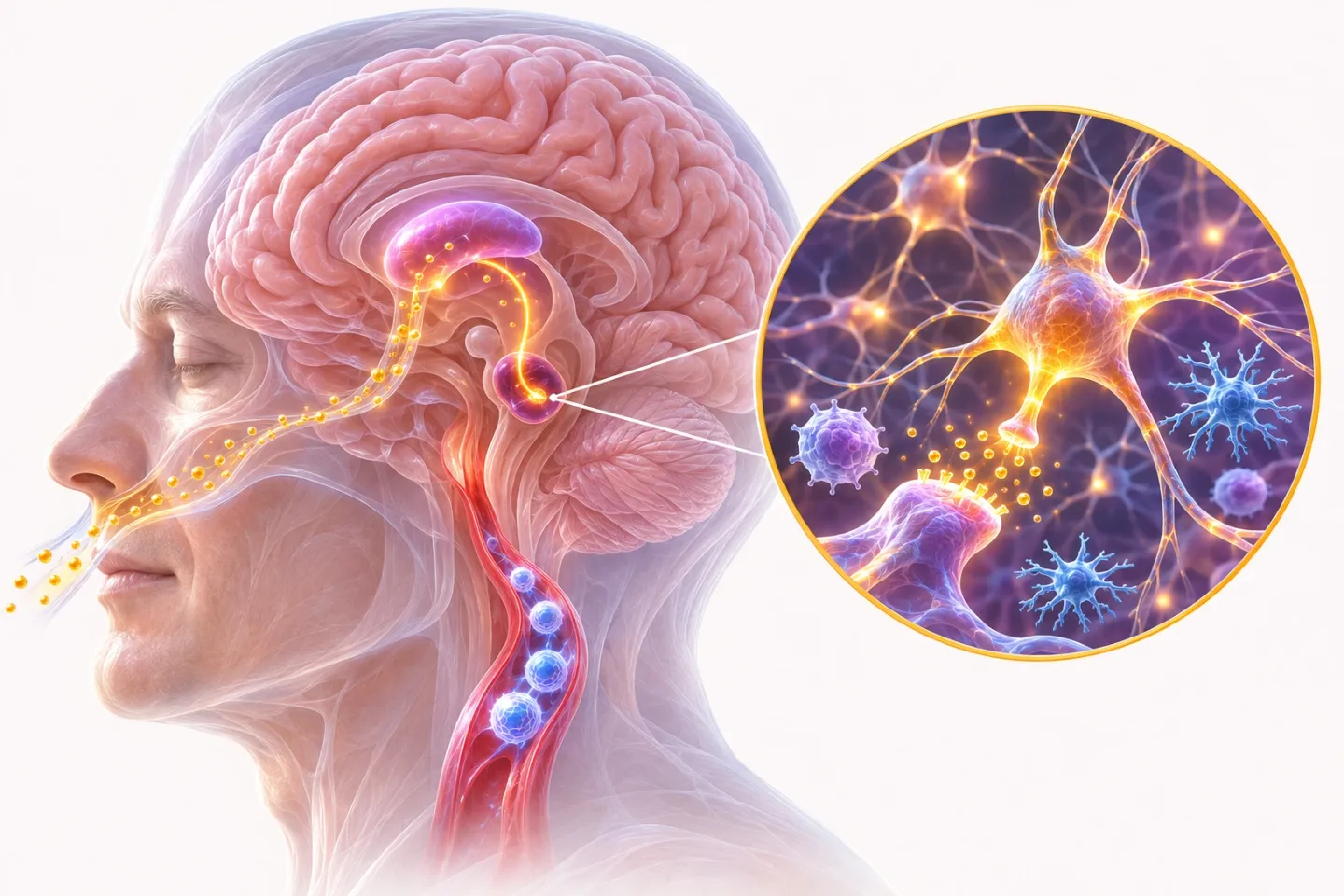
- Nasal exosomesWharton’s jelly MSC exosomes, given as a gentle nasal spray, are designed to reach the brain along the smell nerve pathway.
- StriatumThe brain’s movement centre, which receives dopamine to make movement smooth.
- Substantia nigraHome of the dopamine-producing nerve cells that Parkinson’s gradually affects.
- Stem cellsWharton’s jelly MSCs, given by IV and intrathecally, release protective, anti-inflammatory signals.
- Dopamine nerve cellsThe aim is to protect these cells and support the connections they make.
- Calm immune cellsCalming inflammation in the brain is a key aim of treatment.
Calming inflammation
A year after a single IV infusion of donor MSCs at the highest dose, people with Parkinson’s had lower blood levels of the inflammatory signals TNF-α and CCL22.3 Nasal umbilical cord MSC exosomes quietened the brain’s immune cells (microglia) and support cells (astrocytes) in a research model.23
Protecting dopamine nerve cells
In mice with a Parkinson’s model, an IV dose of umbilical cord MSCs eased movement problems and cut both dopamine-cell death and the oxidative stress around these cells.21 In rats with a Parkinson’s model, Wharton’s jelly MSCs, alone or together with levodopa, protected dopamine cells, raised dopamine levels and improved movement.2425
Nourishing nerve cells
The nerve-supporting factor BDNF rose in the blood a year after IV MSCs in people with Parkinson’s.3 Wharton’s jelly MSCs produce more of the signals linked with new nerve cells than bone marrow MSCs, and in laboratory tests they helped nerve cells grow and survive.6
Exosomes that reach the brain
In rats with a Parkinson’s model, umbilical cord MSC exosomes passed the blood–brain barrier and gathered in the substantia nigra, where fewer dopamine cells were lost and dopamine in the striatum, the brain’s movement centre, went up.22 Pooling 13 controlled studies in research models, a 2025 review found that MSC exosomes improved movement tests, brought down the inflammatory signals TNF-α and IL-6 and left more dopamine-producing cells.26
A nose-to-brain pathway
In research models, Wharton’s jelly MSC exosomes were found at the front of the brain 30 minutes after a nasal dose and throughout the brain after three hours.9 The smell pathway is also among the first areas that Parkinson’s touches.27
Summing up the research on umbilical cord MSCs in Parkinson’s, a 2026 review describes improved movement and behaviour, nerve protection, and less cell death and oxidative stress in research models.2 For a wider look at the science and the newest trials, read stem cell therapy for Parkinson’s: options and trials, or learn more about our exosome therapy.
04
How is our stem cell therapy transplantation for Parkinson's Disease (PD) performed in Istanbul?
Stem cell therapy offers a groundbreaking approach to managing Parkinson’s Disease, that aims to slow disease progression and support movement and quality of life. Success rates are influenced by factors such as the patient’s age, disease duration, and overall health condition. As muscle function improves through therapy, patients often experience a significant boost in their quality of life. Recognized as a cutting-edge treatment, stem cell therapy for Parkinson’s Disease continues to be a focus of scientific research.
The therapy uses the ability of stem cells to release protective, anti-inflammatory signals around damaged brain tissue, supporting dopamine-producing cells. Treatment protocols are carefully tailored to the individual, with stem cell doses determined by age and weight. The treatment takes place in one hospital day, planned around the patient’s condition. Starting early makes the most of the therapy, as it aims to protect the brain cells you still have.
Clinical studies have shown promising results, with better movement scores and benefits lasting a year or more in controlled trials. Stem cell therapy offers new hope for those living with Parkinson’s Disease. Contact us today to learn how this innovative treatment can improve your quality of life.
05
Stem cell therapy for Parkinson’s disease: success rates and clinical results
Parkinson’s trials measure movement with the UPDRS (Unified Parkinson’s Disease Rating Scale), often in the “off” state, when your medicines have worn off, so that the effect of the treatment can be seen on its own. Lower scores mean milder symptoms. These are the key clinical studies, with the cells and routes each one used:
| Study | Design and people | Cells and route | What improved |
|---|---|---|---|
| Schiess 2021, Movement Disorders3 | Open-label phase 1, four doses; 20 people with mild to moderate Parkinson’s | Donor bone marrow MSCs; one IV infusion | Highest dose at 52 weeks: off-medication UPDRS motor score 14.4 points lower, total score 20.8 points lower; TNF-α lower, BDNF higher; safe at every dose, with no immune response |
| Zhao 2024, Frontiers in Neurology4 | Meta-analysis of 9 controlled trials; 129 people | Stem cells including umbilical cord and bone marrow MSCs | Stem cell treatment effective (pooled UPDRS change −14.86) and effective for at least 12 months |
| Wang 2023, Journal of Translational Medicine10 | Meta-analysis of 11 trials; 210 patients | Cell therapies from several sources | Better disease severity and movement off medication at 3 to 24 months; movement still better at 36 months; donor cells better than own cells |
| Wang 2021, Stem Cell Research & Therapy11 | Meta-analysis of 62 randomised trials; 3,546 patients with about 20 conditions | MSCs, IV or local | MSC treatment safe compared with placebo; the most common effect a passing fever |
| Zhuo 2024, Military Medical Research28 | First-in-human phase I; 5 people with severe Parkinson’s | Olfactory mucosa MSCs; into the spinal canal | Better recovery of neurological function, balanced inflammation, no adverse reactions |
| Prodromos 2026, Pain Medicine Case Reports29 | Case series; 19 people with Parkinson’s, 40 doses | Exosome-rich umbilical cord MSC secretome; nasal | No adverse events; 15 of 19 kept a significant decrease in symptoms over up to a year; PDQ-39 quality-of-life scores better after each treatment |
| Kabatas 2024, World Journal of Stem Cells30 | Phase I in Istanbul; 6 young adults with traumatic brain injury | Wharton’s jelly MSCs; intrathecal, intramuscular and IV | Cognition, muscle strength, spasticity, independence (FIM) and performance scores improved over one year |
| Kabatas 2025, World Journal of Critical Care Medicine15 | 5 young adults with traumatic brain injury, in Istanbul | Wharton’s jelly MSC exosomes; intrathecal and intramuscular | FIM motor 46.2 → 64.2 and performance score (KPS) 46 → 72 over one year; no serious adverse events |
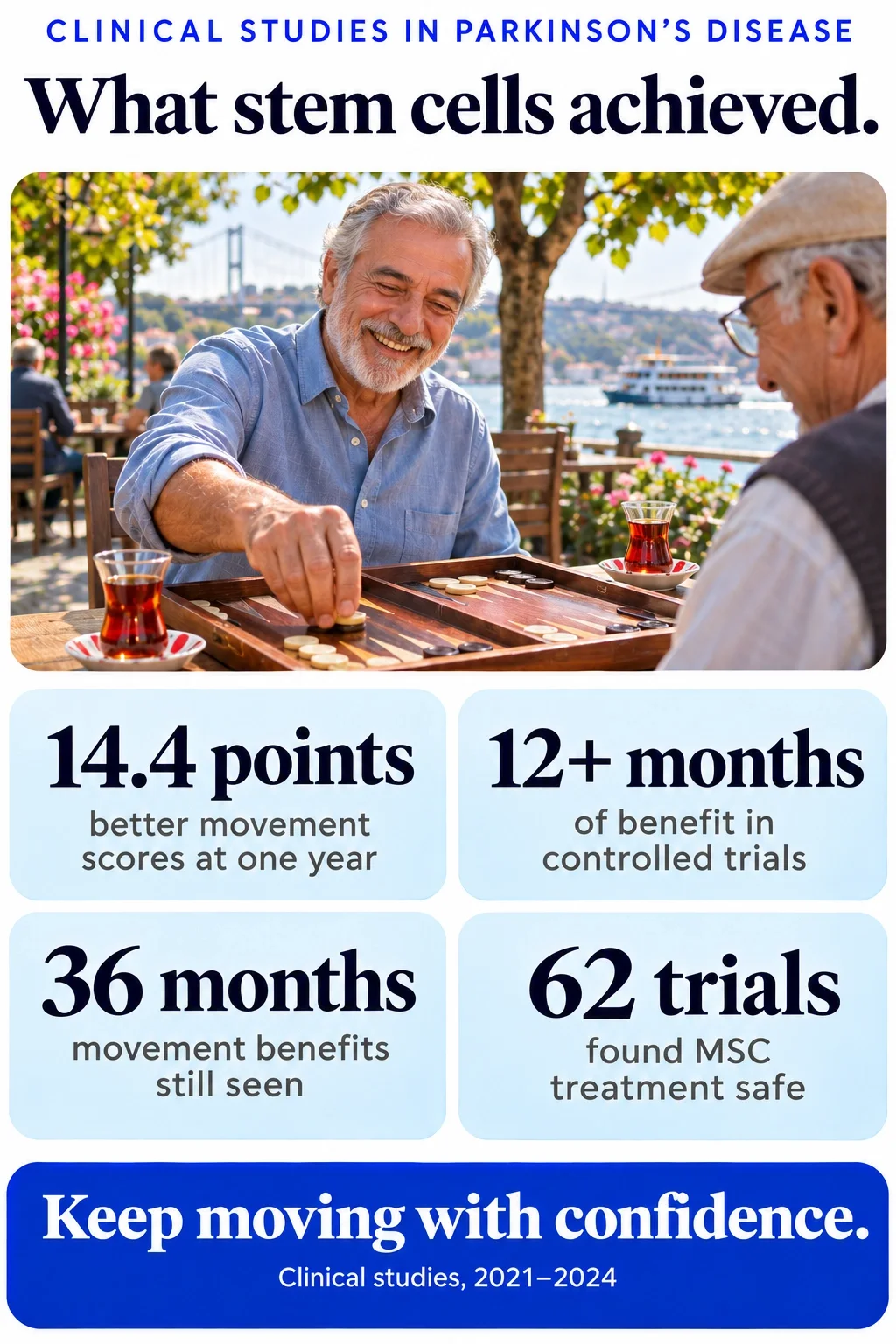
14.4 points better movement scores at one year
Twenty people with mild to moderate Parkinson’s received one IV infusion of donor bone marrow MSCs at one of four doses. At the highest dose, UPDRS motor scores off medication were 14.4 points better and total UPDRS scores 20.8 points better after 52 weeks. Blood tests showed less of the inflammatory signal TNF-α and more BDNF, a protein that nourishes nerve cells.3
Benefits for 12 months or more in controlled trials
Controlled trials compare treated people with a similar group who did not receive cells. Pooling nine such trials with 129 people, a 2024 meta-analysis concluded that stem cell treatment can be effective for at least 12 months. Umbilical cord MSCs, one of the two cell types we use, were among the effective sources, given into the bloodstream or intrathecally.4
Movement benefits still seen at 36 months
A 2023 meta-analysis of 11 trials with 210 patients followed people for longer. Disease severity and movement off medication were better at 3, 6, 12 and 24 months, movement was still better after 36 months and daily activities improved. Donor cells did better than patients’ own cells,10 and all the cells we use are donor cells from umbilical cords.
62 randomised trials found MSC treatment safe
A 2021 meta-analysis of 62 randomised trials with 3,546 patients found MSC treatment safe compared with placebo, with no serious adverse events such as death or infection; the most common effect was a passing fever.11
Exosomes and Wharton’s jelly cells in the nervous system
A case series of 19 people with Parkinson’s, treated with a nasal, exosome-rich secretome from umbilical cord MSCs, reported no adverse events; 15 kept a significant decrease in symptoms over up to a year, with better tremor, sleep and bladder and bowel function.29 Wharton’s jelly MSCs, our main cells, were given by intrathecal, intramuscular and IV routes in Turkish trials in traumatic brain injury and spinal cord injury, followed by gains in movement, independence and neurological function over one year.3031
Each study used its own cells and routes. To see how these results compare with iPS cells, DBS and new medicines, read our 2026 guide to stem cell therapy for Parkinson’s.
06
Who is stem cell therapy for Parkinson’s disease suitable for?
Most adults with Parkinson’s disease can be assessed, whatever their age at diagnosis and however long they have lived with it. The studies on this page included:
- Mild to moderate Parkinson’s, the group in the IV infusion trial with the 14.4-point improvement.3
- People who respond to levodopa: in the 2023 meta-analysis, most patients were levodopa responders, and the authors point to this group as the one likely to benefit.10
- Severe Parkinson’s: olfactory mucosa MSCs given into the spinal canal improved the recovery of neurological function.28
- People troubled by tremor, poor sleep or bladder and bowel symptoms, which improved in the nasal exosome case series.29
Your plan is built around what matters to you: walking and balance, handwriting and fine movements, speech, sleep, energy, mood and how long each dose of your medicines lasts. If you have a DBS (deep brain stimulation) device, or another form of parkinsonism such as multiple system atrophy (MSA) or progressive supranuclear palsy (PSP), Dr. Cihan Bolat reviews your case individually.
We are open about suitability. Our specialist reviews your medical history and reports first, and treatment is planned only when it is right for you, so that your expectations and your plan match.
07
Your Parkinson’s treatment plan: IV and intrathecal stem cells, IV and nasal exosomes
Your treatment takes one hospital day, and the doctor plans the routes for you. Dr. Cihan Bolat, our medical director, who specialises in anaesthesiology and reanimation and in regenerative medicine, looks at your diagnosis, your neurologist’s reports and scans, your medicines and your general health, then chooses the cells, exosomes, doses and routes that suit your Parkinson’s.
Four routes are available. Stem cells, including Muse cells when they are part of your plan, are given by IV infusion and intrathecally. Exosomes, from Wharton’s jelly MSCs, Muse cells or CD34+ cells, are given by IV infusion and as a nasal spray. Stem cells are never given into the nose; the nasal spray is for exosomes only.
Four routes, one plan
- IV stem cellsA slow drip that carries immune-balancing signals through the whole body.3
- Intrathecal stem cellsCells enter the spinal fluid through a fine needle in the lower back, close to the brain and spinal cord.28
- IV exosomesConcentrated repair messages that crossed into the brain in research models.22
- Nasal exosomesA gentle, needle-free spray along the nose-to-brain pathway.9
IV infusion: support for the whole body
In Parkinson’s, one IV infusion of donor MSCs proved safe, and movement scores and inflammation markers were better a year later.3 IV umbilical cord MSCs also shielded dopamine cells in research models.21
Intrathecal: starting inside the nervous system
Cells placed in the spinal fluid release their signals on the brain’s side of the blood–brain barrier. The umbilical cord MSC trials in the 2024 meta-analysis included the intrathecal route,4 and Turkish researchers combine intrathecal Wharton’s jelly MSCs, for local targeting of the nervous system, with IV cells for immune balance throughout the body.31
Intrathecal cells in other brain conditions
Children with cerebral palsy who received a single intrathecal dose of umbilical cord tissue MSCs in a double-blind, sham-controlled trial gained 10.65 points on the GMFM-66 motor scale by 12 months.32 In progressive multiple sclerosis, intrathecal treatment with patients’ own MSCs left 58.6% free of any sign of disease activity for a year, compared with 9.7% after sham treatment.33
Nasal exosomes: needle-free and direct
A nasal dose of Wharton’s jelly MSC exosomes was in the brain within an hour in research models, where their microRNA messages helped calm its immune cells.14 In people with Parkinson’s, 40 nasal doses of an exosome-rich umbilical cord MSC secretome, given to 19 patients, caused no adverse events.29
Your Parkinson’s medicines
Carry on with your medicines exactly as your neurologist advises, and pack them for the trip. Let us have the complete list, with doses and times, in advance, so that Dr. Cihan Bolat can plan your treatment around them and you stay as comfortable and mobile as possible. Your levodopa, DBS and physiotherapy carry on as before.
Your written plan states the cells, exosomes and routes, your cell count and the fixed price, so you can share it with your own neurologist before you decide.
08
Muse cells and Muse exosomes: optional add-ons
First described by a Japanese team in 2010, Muse cells (multilineage-differentiating stress-enduring cells) are a small, hardy group among mesenchymal stem cells.34 They make up about 1% to several percent of MSCs, and trials have given donor Muse cells with no HLA matching and no immune-suppressing medicines.35 In a research model of Parkinson’s, human Muse cells travelled to the brain and gave rise to cells with the key feature of dopamine-producing neurons,36 and in a randomised, placebo-controlled stroke trial, 40.0% of patients were able to manage their own affairs 12 weeks after one IV dose of a donor Muse cell product, compared with 10.0% on placebo.37
If you and Dr. Cihan Bolat decide to add them, Muse cells are given by IV infusion and intrathecally, and Muse exosomes by IV infusion and nasal spray, alongside your Wharton’s jelly stem cells and exosomes.
09
Your stem cell treatment for Parkinson’s in Istanbul, step by step
From your first message to your last follow-up review, a personal case manager guides you and your family. Nothing is taken from your own body, and no donor matching is needed.
Free medical review
Send us your neurologist’s latest report with your diagnosis and stage, any brain MRI or DaTscan, your medicines with doses and timings, details of any DBS device and recent blood tests if you have them. Uzm. Dr. Cihan Bolat reviews them free of charge.
Free phone consultation and fixed price
Once your case is approved, you talk through your plan with the specialist team. The doctor plans your one-day treatment and its routes, and you receive the all-inclusive price in writing.
Fresh preparation
After your deposit, your Wharton’s jelly stem cells and exosomes are prepared fresh for your date in a Ministry of Health-approved GMP laboratory. Preparation usually takes 5 to 10 days.
Your treatment in Istanbul
Our driver brings you to the clinic and back. The cell count and viability are certified before treatment, and the specialist team gives your stem cells and exosomes by the routes in your plan.
Home and follow-up
We review your movement, daily life and medicines with you at about 1, 3, 6 and 12 months, and plan any next steps together.
Read more about the treatment process step by step.
10
Expert stem cell treatment led by Uzm. Dr. Cihan Bolat, MD
Under the leadership of Uzm. Dr. Cihan Bolat, MD, Specialist in Anesthesiology & Reanimation and Regenerative Medicine, our clinic offers personalized treatments designed to meet the specific needs of our patients. With extensive experience and a broad range of stem cells at our disposal, we provide a comprehensive approach to treating Parkinson’s Disease. We adhere to the highest ethical standards, strictly avoiding the use of any performance-enhancing substances or components. Our commitment is to create a calm and welcoming atmosphere, where our friendly and professional team ensures your visit is both comfortable and enjoyable.
11
How does our stem cell therapy treatment process for Parkinson's Disease (PD) work?
All our stem cell treatments in Istanbul are evaluated and administered by specialists trained in the relevant field, not just by general practitioners or specialists, to ensure the highest level of precision, understanding of the condition, and quality of care for you. We are 100% transparent and honest with our patients. Not everyone qualifies for our stem cell treatments; we decline many patients after our specialist assesses their current health status and medical history to determine if the treatment is appropriate. This is done to prevent false promises or expectations when the risks outweigh the benefits. For this reason, and to ensure patient safety in all our treatments, each patient is evaluated by the specialist before scheduling their treatment.
Step 1: Specialist Evaluation For patients with Parkinson's Disease (PD), our specialist will need to assess your age and previous medical treatments. Additionally, specific tests will need to be reviewed, which you will be asked to bring along.
Step 2: Free Phone Consultation with the Specialist Once the specialist has reviewed the medical records and approved your case, we will present treatment options and pricing. At that time, we also offer a free phone consultation to discuss any questions or concerns.
Step 3: Stem Cell Preparation Once you decide to proceed with our treatment, we will send a deposit invoice to initiate the stem cell preparation process, ensuring they are ready for your scheduled procedure. This process may take 5-10 days, depending on current demand and availability.
Step 4: Treatment Day On the day of your treatment, you may choose to come to our hospital location or take advantage of our complimentary transportation service to and from our clinic in Istanbul. Our driver will pick you up from your preferred location, escort you to our clinic where the specialist will administer the treatment, and then safely return you afterward.
Step 5: Follow-Up Care Our follow-up specialist will contact you according to our post-treatment schedule to ensure you have all the resources needed for maximum benefit. Your well-being and satisfaction are our top priorities.
12
When you may notice changes
Parkinson’s changes slowly, so studies follow people over months and years. In one meta-analysis, benefits for movement off medication were measured from 3 months,10 the largest single-trial improvement was recorded at one year,3 controlled trials showed benefits for at least 12 months,4 and movement benefits were still present at 36 months.10 In the nasal exosome case series, quality of life improved with each treatment.29 We review your progress with you at about 1, 3, 6 and 12 months.
- 3 monthsFirst measured benefitsBetter movement off medication in trials
- 6 monthsBuilding on itBenefits still seen at 6 months
- 12 monthsOne-year results14.4 points better movement at the highest dose
- 24–36 monthsLasting benefitsMovement still better at 36 months
- Follow-upTogether with youReviews at about 1, 3, 6 and 12 months
13
Is stem cell therapy for Parkinson’s disease safe?
The published safety record is reassuring. A 2021 meta-analysis of 62 randomised trials with 3,546 patients found MSC treatment safe compared with placebo, with no serious adverse events such as death or infection; the most common effect was a passing fever.11
The Parkinson’s studies agree. One IV infusion of donor MSCs was safe and well tolerated at all four doses, and no patient reacted to the donor cells’ tissue markers.3 MSCs given into the spinal canal in severe Parkinson’s caused no adverse reactions,28 and the 19 people in the nasal exosome case series had no adverse events.29
Wharton’s jelly cells and their exosomes have reassuring records in the nervous system as well. In the Istanbul brain injury trial, intrathecal, intramuscular and IV Wharton’s jelly MSCs caused only short-lived effects, such as a mild temperature, that settled within 24 hours,30 and Wharton’s jelly MSC exosomes caused no serious adverse events.15 Intrathecal MSCs were well tolerated in progressive multiple sclerosis33 and safe in children with cerebral palsy.32
At our clinic, safety starts before you travel. We review your health and medicines carefully, Wharton’s jelly cells need no donor matching,7 the GMP laboratory certifies the count and viability of your cells, and Dr. Cihan Bolat, whose specialties include anaesthesiology and reanimation, makes sure every route is as comfortable as possible. A specialist team treats you.
14
Stem cells vs levodopa, DBS and other Parkinson’s treatments
Today’s Parkinson’s care is effective and keeps improving, and each option has its own role. Levodopa eases symptoms well: in a placebo-controlled trial, total UPDRS scores rose (worsened) by 7.8 points over 42 weeks on placebo, but by no more than 1.9 points on levodopa.38 DBS improved quality of life and movement in advanced Parkinson’s,39 and most types of exercise improve movement and quality of life.40 Stem cell therapy adds something different: it aims to calm inflammation and protect dopamine nerve cells, alongside these treatments.13
| Option | How it works | Main goal | How it is given |
|---|---|---|---|
| Wharton’s jelly MSCs and exosomes | Repair signals that calm inflammation and support dopamine nerve cells201 | Protect nerve cells and support movement and daily life34 | IV and intrathecal stem cells, IV and nasal exosomes, in one hospital day |
| Umbilical cord MSCs | Cord-tissue stem cells that protected nerve cells in research models2 | Among the effective cell sources in controlled trials4 | IV and intrathecal, as part of your plan |
| Levodopa and other medicines | Replace or mimic dopamine in the brain | Ease movement symptoms38 | Tablets, usually several times a day |
| Deep brain stimulation (DBS) | Electrodes send steady pulses to the brain’s movement centres | Ease motor fluctuations and improve quality of life39 | Brain surgery and an implanted device |
| Exercise and physiotherapy | Trains movement, balance and strength | Better movement and quality of life40 | Regular sessions, ideally for life |
| Dopamine cells grown from iPS cells | New dopamine-making cells placed in the brain | Replace lost dopamine cells41 | Brain surgery |
These options work well together, and stem cell therapy does not replace your medicines: in research models, Wharton’s jelly MSCs helped both on their own and together with levodopa.2425 For a fuller comparison, including iPS cells and the new medicines in development, see stem cell therapy for Parkinson’s: options and trials.
15
What our patients say
Professional and friendly!
After thorough research and some initial hesitation, I decided to undergo my stem cell treatment with Istanbul Stem Cell. From the very first interaction, I felt completely supported and reassured by their professional and welcoming team. The treatment process was smooth and nearly painless, which made the experience even better. What truly impressed me was the genuine care and dedication of the medical staff, who ensured that everything went according to plan. The outcome? I couldn’t be happier! My health has improved remarkably, and I am incredibly grateful to Istanbul Stem Cell for this transformative experience. I would wholeheartedly recommend them to anyone considering stem cell therapy.
Simply astounding!
My experience with Istanbul Stem Cell was truly remarkable. From the very first contact, they were extremely professional and helpful. Initially, I was a bit skeptical about stem cell therapy, but their team patiently and convincingly addressed all my questions and concerns. The treatment itself was conducted with great care and expertise, and I felt I was in good hands. Shortly after the procedure, I began to notice improvements in my health, and I can joyfully say that my life has changed significantly thanks to Istanbul Stem Cell. I can’t thank them enough and would highly recommend their services to anyone seeking high-quality stem cell therapy.
16
Stem cell therapy for Parkinson’s cost in Turkey: what’s included
Your price depends on the number of Wharton’s jelly stem cells, the exosomes and the routes in your plan, and on any add-ons you choose, such as Muse cells. After your free medical review, you receive a fixed, all-inclusive price in writing, before you book anything. Because the price is fixed, you and your family can plan your trip from the UK, Europe, the Gulf or further afield with no surprises.
Included
- Free medical review and phone consultation
- Fresh Wharton’s jelly stem cells, with certified count and viability
- The exosomes and routes in your written plan
- Treatment by our specialist team, led by Uzm. Dr. Cihan Bolat
- Ground transport to and from the clinic
- A personal case manager
- Aftercare and follow-up reviews at about 1, 3, 6 and 12 months
Not included / optional
- Flights
- Hotel stay, which we can arrange for you
- Add-ons such as Muse cells or Muse exosomes, priced into your plan if you choose them
- Further treatment that you decide on later
17
Our guarantees to you
- A fixed price in writingYour all-inclusive price is confirmed in writing before you travel. No surprises.
- A guaranteed cell countThe number of fresh Wharton’s jelly stem cells in your plan is guaranteed, and the count and viability are checked and certified by our GMP laboratory before treatment.
- Follow-up includedReviews of your movement, daily life and medicines at about 1, 3, 6 and 12 months are part of every treatment.
- A free consultation with Dr. Cihan BolatBefore you commit, our medical director reviews your case and your neurologist’s reports free of charge.
18
Where to get stem cell therapy for Parkinson’s: why patients choose Istanbul, Turkey
We welcome patients from the UK, Europe, the Gulf, the USA and beyond. Istanbul is well connected by direct flights, and our clinic is in Suadiye, Kadıköy, on the city’s Asian side. When you look for Parkinson’s disease treatment in Turkey or anywhere abroad, these are the things that matter, and what you can expect from us:
Led by Dr. Cihan Bolat
Your case is reviewed and your plan made by the specialist team led by our medical director, Uzm. Dr. Cihan Bolat, specialist in anaesthesiology and reanimation and in regenerative medicine.
Wharton’s jelly first
Fresh Wharton’s jelly stem cells and exosomes from donated umbilical cords, prepared for your date in a Ministry of Health-approved GMP laboratory and never frozen.
Certified quality
Your cell count is guaranteed in writing, and the count and viability are certified before every treatment.
Every route under one roof
IV and intrathecal stem cells and IV and nasal exosomes, planned together by one team, alongside your neurologist’s care.
Support from arrival to follow-up
Ground transport, a personal case manager and help with your hotel and translation, with a family member welcome at your side.
A clear price
A fixed, all-inclusive price in writing before you travel, and follow-up reviews at about 1, 3, 6 and 12 months.
19
Frequently asked questions
Does stem cell therapy work for Parkinson’s disease, and what is the success rate?
The results are encouraging. A year after a single IV infusion of donor stem cells, movement scores off medication were 14.4 points better at the highest dose. Controlled trials found benefits lasting at least 12 months, and a second meta-analysis still saw movement benefits at 36 months. Every person is different, so Dr. Cihan Bolat explains what your plan can aim for once he has reviewed your reports.
Why do you use Wharton’s jelly stem cells for Parkinson’s?
Wharton’s jelly stem cells come from umbilical cords donated after healthy births. They are young and vigorous, multiply faster than bone marrow stem cells, produce more nerve-supporting signals and need no donor matching. We prepare them fresh for your date in a Ministry of Health-approved GMP laboratory, never frozen, and pair them with their exosomes.
What do Wharton’s jelly MSC exosomes add to the treatment?
Exosomes are tiny vesicles that carry a stem cell’s proteins and RNA messages in concentrated form. Because they are so small, they can be given as a gentle nasal spray as well as by IV infusion, and in research models, nasal exosomes reached the whole brain within three hours. They give repair signals a second, needle-free way to reach the brain.
How is stem cell therapy for Parkinson’s given?
Stem cells, including Muse cells if they are in your plan, are given by IV infusion and intrathecally, through a fine needle in the lower back into the spinal fluid. Exosomes are given by IV infusion and as a nasal spray. Stem cells are never given into the nose. As a specialist in anaesthesiology and reanimation, Dr. Cihan Bolat takes care to keep each route comfortable.
How many sessions will I need?
Your treatment takes one hospital day: IV and intrathecal stem cells with IV and nasal exosomes, planned by the doctor based on your stage, your symptoms, your general health and your goals. Your written plan sets out the cells, exosomes and routes, your cell count and the fixed price before you book anything.
Can I keep taking levodopa and my other Parkinson’s medicines?
Yes. Keep taking your medicines as your neurologist advises, and bring them with you. Send us the full list with doses and timings in advance, so that Dr. Cihan Bolat can plan your treatment around them. Stem cell therapy works alongside levodopa, other medicines and physiotherapy rather than replacing them.
Can I have stem cell therapy if I have a DBS device?
Send us the details of your device and its settings together with your neurologist’s report. Dr. Cihan Bolat reviews your case individually and takes the device into account when he plans your routes.
Which stage of Parkinson’s is best for stem cell therapy?
People at different stages have been treated in studies: the IV infusion trial included mild to moderate Parkinson’s, and MSCs given into the spinal canal were studied in severe Parkinson’s. In one meta-analysis, most patients were levodopa responders. Our specialist reviews your case at any stage and tells you openly what your plan can aim for.
When might I notice changes, and how long do the results last?
Parkinson’s changes slowly, so results are measured over months. In one meta-analysis, benefits off medication were seen from 3 months, the largest single-trial improvement was measured at one year, and movement benefits were still present at 36 months. We review your progress with you at about 1, 3, 6 and 12 months.
Can stem cells help non-motor symptoms such as sleep, constipation and bladder problems?
In a case series of 19 people with Parkinson’s who received a nasal, exosome-rich secretome from umbilical cord stem cells, sleep, tremor, sensory symptoms and bladder and bowel function improved, and quality-of-life scores got better with each treatment. In a meta-analysis of cell therapy trials, daily activities improved too.
Is stem cell therapy for Parkinson’s safe?
The safety record is reassuring. A 2021 meta-analysis of 62 randomised trials with 3,546 patients found MSC treatment safe, the most common effect a passing fever. In Parkinson’s, a single IV infusion of donor MSCs was safe and well tolerated at every dose, and a nasal exosome treatment caused no adverse events in 19 people.
Are donor Wharton’s jelly stem cells better than my own stem cells?
Donor cells mean nothing is taken from your body: no bone marrow or fat harvest and no wait while your own cells are grown. In a meta-analysis of Parkinson’s cell therapy trials, donor cells did better than patients’ own cells, and in laboratory comparisons, Wharton’s jelly stem cells multiplied more readily than bone marrow stem cells. They need no donor matching.
What should I send for my free medical review?
Your neurologist’s latest report with your diagnosis and stage, any brain MRI or DaTscan, a list of your medicines with doses and timings, details of any DBS device, recent blood tests if you have them, and a short note on your main symptoms and goals. Older reports help too, because they show how your Parkinson’s has changed over time.
Where can I get stem cell therapy for Parkinson’s disease in Turkey?
With us in Istanbul, after a free medical review by Uzm. Dr. Cihan Bolat. Our clinic is in Suadiye, Kadıköy, and we welcome patients from the UK, Europe, the Gulf, the USA and beyond, with ground transport, a personal case manager and help with your hotel. You can reach us on WhatsApp at +90 534 856 92 92.
Can stem cell therapy cure my Parkinson's disease (PD)?
The benefits of stem cell treatment for Parkinson's disease (PD) may vary from patient to patient, depending on factors such as current health, medical history, the extent of damage, and other considerations. It is important to understand that, although allogeneic mesenchymal stem cell injections for damaged brain tissue and nerve cells have shown some of the most encouraging results in this condition, the goals of treatment are better movement, steadier symptoms and a better quality of life.
How effective is stem cell treatment for Parkinson's disease (PD)?
Patient satisfaction after stem cell treatment for Parkinson's disease (PD) is high. However, it is important to understand that treatment effectiveness depends on several factors, including the patient's age, medical history, and overall lifestyle.
How safe is stem cell treatment for Parkinson's disease (PD) at this clinic?
We take pride in being the safest and most honest stem cell therapy clinic in Istanbul. All our stem cell treatments are evaluated and administered by specialists in this field who have trained in both the United States and Turkey, rather than only by general physicians. This helps ensure the highest level of precision, understanding of the condition, and treatment quality for our patients. We are completely clear and honest with our patients. Not everyone qualifies for our stem cell treatments. We decline many patients when our specialist determines that treatment is unsuitable, to avoid false promises or expectations when the risks outweigh the benefits.
How much does stem cell treatment for Parkinson's disease (PD) cost?
Treatment prices may vary depending on the patient's individual needs, such as special accommodation or stay requirements, and the number of stem cells needed for the best result. Our prices include: ground transportation to and from our clinic; treatment by a certified specialist in this field; certified allogeneic stem cells with 97% viability, prepared fresh for your treatment date; a personal case manager; and aftercare.
Medical review
Uzm. Dr. Cihan Bolat
Medical Director, Istanbul Stemcell
This page was written from the published studies listed below and reviewed for medical accuracy on .
20
References
- Heris RM, et al. The potential use of mesenchymal stem cells and their exosomes in Parkinson's disease treatment. Stem Cell Res Ther. 2022;13(1):371. PMID 35902981
- Mante N, et al. Advances in Parkinson's disease management using umbilical cord-derived mesenchymal stem cells. J Neuroimmunol. 2026;416:578911. PMID 41861502
- Schiess M, et al. Allogeneic Bone Marrow-Derived Mesenchymal Stem Cell Safety in Idiopathic Parkinson's Disease. Mov Disord. 2021;36(8):1825-1834. PMID 33772873
- Zhao J, et al. Efficacy and efficacy-influencing factors of stem cell transplantation on patients with Parkinson's disease: a systematic review and meta-analysis. Front Neurol. 2024;15:1329343. PMID 38682036
- Batsali AK, et al. Differential expression of cell cycle and WNT pathway-related genes accounts for differences in the growth and differentiation potential of Wharton's jelly and bone marrow-derived mesenchymal stem cells. Stem Cell Res Ther. 2017;8(1):102. PMID 28446235
- Hsieh JY, et al. Mesenchymal stem cells from human umbilical cord express preferentially secreted factors related to neuroprotection, neurogenesis, and angiogenesis. PLoS One. 2013;8(8):e72604. PMID 23991127
- Weiss ML, et al. Immune properties of human umbilical cord Wharton's jelly-derived cells. Stem Cells. 2008;26(11):2865-74. PMID 18703664
- Kalluri R, LeBleu VS. The biology, function, and biomedical applications of exosomes. Science. 2020;367(6478). PMID 32029601
- Thomi G, et al. Intranasally Administered Exosomes from Umbilical Cord Stem Cells Have Preventive Neuroprotective Effects and Contribute to Functional Recovery after Perinatal Brain Injury. Cells. 2019;8(8). PMID 31398924
- Wang F, et al. Cell-therapy for Parkinson's disease: a systematic review and meta-analysis. J Transl Med. 2023;21(1):601. PMID 37679754
- Wang Y, Yi H, Song Y. The safety of MSC therapy over the past 15 years: a meta-analysis. Stem Cell Res Ther. 2021;12(1):545. PMID 34663461
- Marino L, et al. Mesenchymal Stem Cells from the Wharton's Jelly of the Human Umbilical Cord: Biological Properties and Therapeutic Potential. Int J Stem Cells. 2019;12(2):218-226. PMID 31022994
- Baharlooi H, et al. Umbilical cord mesenchymal stem cells as well as their released exosomes suppress proliferation of activated PBMCs in multiple sclerosis. Scand J Immunol. 2021;93(6):e13013. PMID 33338274
- Tscherrig V, et al. All but Small: miRNAs from Wharton's Jelly-Mesenchymal Stromal Cell Small Extracellular Vesicles Rescue Premature White Matter Injury after Intranasal Administration. Cells. 2024;13(6). PMID 38534387
- Kabatas S, et al. Efficacy and safety of exosomes from Wharton's Jelly-derived mesenchymal stem cells in traumatic brain injury. World J Crit Care Med. 2025;14(4):103782. PMID 41377533
- Kishta MS, et al. The transforming role of wharton's jelly mesenchymal stem cell-derived exosomes for diabetic foot ulcer healing: a randomized controlled clinical trial. Stem Cell Res Ther. 2025;16(1):559. PMID 41084065
- Sahoo S, et al. Exosomes from human CD34(+) stem cells mediate their proangiogenic paracrine activity. Circ Res. 2011;109(7):724-8. PMID 21835908
- Moll G, et al. Do cryopreserved mesenchymal stromal cells display impaired immunomodulatory and therapeutic properties? Stem Cells. 2014;32(9):2430-42. PMID 24805247
- Tansey MG, et al. Inflammation and immune dysfunction in Parkinson disease. Nat Rev Immunol. 2022;22(11):657-673. PMID 35246670
- Caplan AI, Dennis JE. Mesenchymal stem cells as trophic mediators. J Cell Biochem. 2006;98(5):1076-84. PMID 16619257
- Chi H, et al. The Effect of Human Umbilical Cord Mesenchymal Stromal Cells in Protection of Dopaminergic Neurons from Apoptosis by Reducing Oxidative Stress in the Early Stage of a 6-OHDA-Induced Parkinson's Disease Model. Cell Transplant. 2019;28(1_suppl):87S-99S. PMID 31775521
- Chen HX, et al. Exosomes derived from mesenchymal stem cells repair a Parkinson's disease model by inducing autophagy. Cell Death Dis. 2020;11(4):288. PMID 32341347
- Huang W, et al. Intranasal Administration of Umbilical Cord Mesenchymal Stem Cell Exosomes Alleviates Parkinson's Disease. Neuroscience. 2024;549:1-12. PMID 38705349
- Jalali MS, et al. Therapeutic effects of Wharton's jelly-derived Mesenchymal Stromal Cells on behaviors, EEG changes and NGF-1 in rat model of the Parkinson's disease. J Chem Neuroanat. 2021;113:101921. PMID 33600923
- Jalali MS, et al. Neuroprotective effects of Wharton's jelly-derived mesenchymal stem cells on motor deficits due to Parkinson's disease. Iran J Basic Med Sci. 2021;24(9):1173-1181. PMID 35083003
- Wang XS, et al. Effectiveness of mesenchymal stem cell-derived extracellular vesicles therapy for Parkinson's disease: A systematic review of preclinical studies. World J Stem Cells. 2025;17(4):102421. PMID 40308882
- Braak H, et al. Staging of brain pathology related to sporadic Parkinson's disease. Neurobiol Aging. 2003;24(2):197-211. PMID 12498954
- Zhuo Y, et al. TGF-β1 mediates hypoxia-preconditioned olfactory mucosa mesenchymal stem cells improved neural functional recovery in Parkinson's disease models and patients. Mil Med Res. 2024;11(1):48. PMID 39034405
- Prodromos CC, et al. Exosome-Rich Mesenchymal Stem Cell Secretome Improves Symptoms From Parkinson's Disease: A Case Series. Pain Med Case Rep. 2026;10(3):259-266. PMID 42263287
- Kabatas S, et al. Safety and efficiency of Wharton's Jelly-derived mesenchymal stem cell administration in patients with traumatic brain injury: First results of a phase I study. World J Stem Cells. 2024;16(6):641-655. PMID 38948099
- Kaplan N, et al. Multiroute administration of Wharton's jelly mesenchymal stem cells in chronic complete spinal cord injury: A phase I safety and feasibility study. World J Stem Cells. 2025;17(5):101675. PMID 40503363
- Amanat M, et al. Clinical and imaging outcomes after intrathecal injection of umbilical cord tissue mesenchymal stem cells in cerebral palsy: a randomized double-blind sham-controlled clinical trial. Stem Cell Res Ther. 2021;12(1):439. PMID 34362453
- Petrou P, et al. Beneficial effects of autologous mesenchymal stem cell transplantation in active progressive multiple sclerosis. Brain. 2020;143(12):3574-3588. PMID 33253391
- Kuroda Y, et al. Unique multipotent cells in adult human mesenchymal cell populations. Proc Natl Acad Sci U S A. 2010;107(19):8639-43. PMID 20421459
- Minatoguchi S, et al. Donor Muse Cell Treatment Without HLA-Matching Tests and Immunosuppressant Treatment. Stem Cells Transl Med. 2024;13(6):532-545. PMID 38560897
- Lu Z, et al. Intranasally administered muse cells attenuate neurodegeneration in Parkinson's disease. J Transl Med. 2025;23(1):1421. PMID 41444595
- Niizuma K, et al. Randomized placebo-controlled trial of CL2020, an allogenic muse cell-based product, in subacute ischemic stroke. J Cereb Blood Flow Metab. 2023;43(12):2029-2039. PMID 37756573
- Fahn S, et al. Levodopa and the progression of Parkinson's disease. N Engl J Med. 2004;351(24):2498-508. PMID 15590952
- Deuschl G, et al. A randomized trial of deep-brain stimulation for Parkinson's disease. N Engl J Med. 2006;355(9):896-908. PMID 16943402
- Ernst M, et al. Physical exercise for people with Parkinson's disease: a systematic review and network meta-analysis. Cochrane Database Syst Rev. 2024;4(4):CD013856. PMID 38588457
- Sawamoto N, et al. Phase I/II trial of iPS-cell-derived dopaminergic cells for Parkinson's disease. Nature. 2025;641(8064):971-977. PMID 40240591