
01
Can neuropathy be reversed? The short, honest and hopeful answer
In short: neuropathy can often improve, and damaged nerves can recover more than many people expect, especially when the cause is treated early. Small nerve fibres in the skin can grow back: after a year of diet and exercise counselling, people with early neuropathy linked to raised blood sugar had more nerve fibres in their skin, and the regrowth went hand in hand with less pain.6 Complete repair of long-standing nerve damage is uncommon,12 but burning, tingling, numbness and unsteady balance can ease a great deal, and that is exactly what modern care and regenerative treatment aim for: calmer nerves, better feeling and steadier steps.
Being told you have neuropathy can feel worrying, especially when your feet feel numb or burn at night. The encouraging news is that you are far from alone and that a great deal can be done. Peripheral neuropathy affects about 1% of adults worldwide, and diabetes is its most common cause, accounting for more than half of all cases in Western countries.12 Steady blood sugar, regular exercise, balance work, foot care and well-chosen pain medicines all have proven benefits, and stem cell research has added a new, regenerative layer on top of them.
This guide follows the questions people ask most: what peripheral and diabetic neuropathy are, what helps today, what stem cells and exosomes do for nerves, and what the human studies report, with exact numbers. Wharton’s jelly stem cells and exosomes complement your usual care rather than replacing it. If your neuropathy is part of diabetes, our full treatment page is stem cell therapy for diabetes in Turkey.
Neuropathy results at a glance
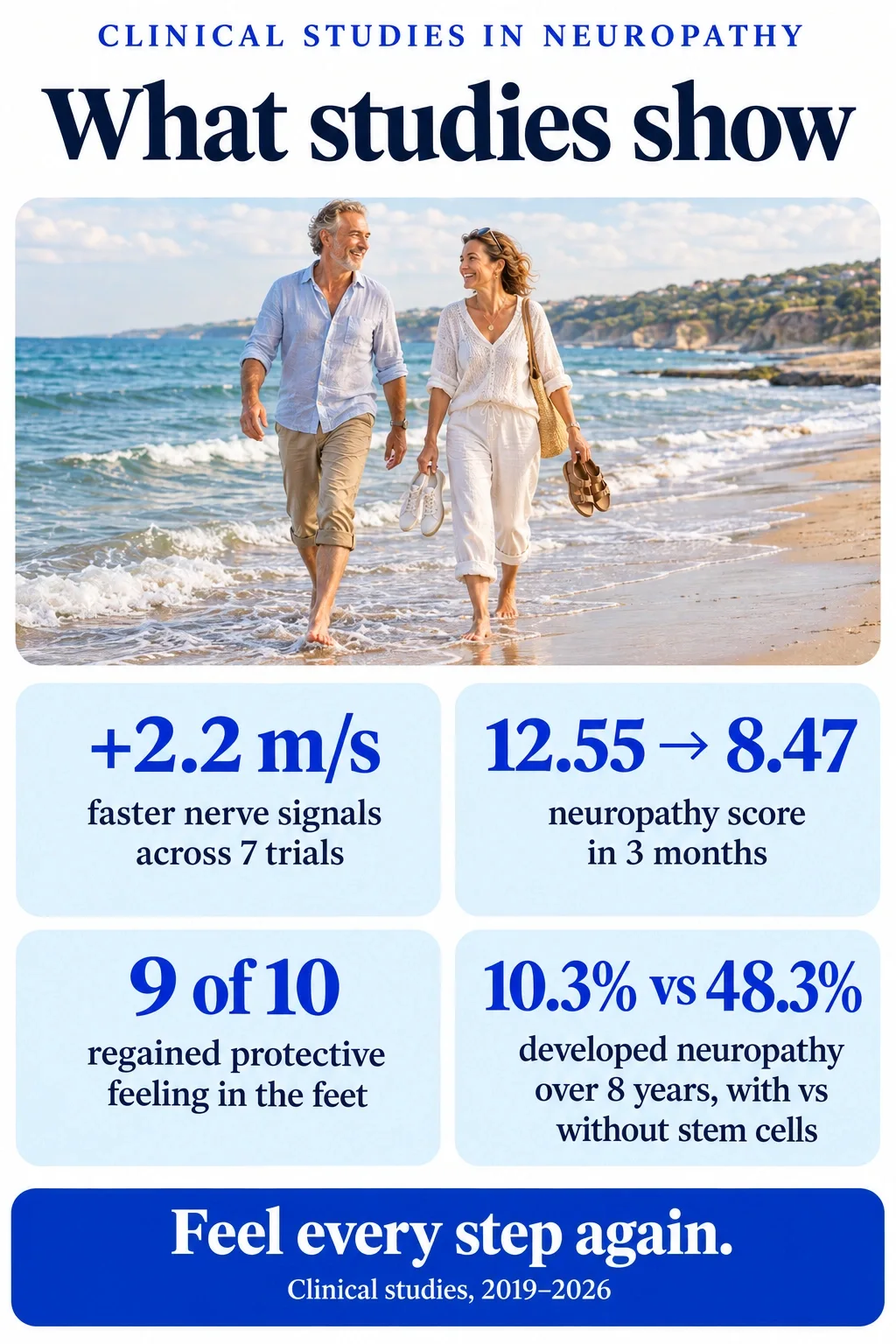
- +2.2 m/sfaster motor nerve conduction with stem cell treatment, across seven controlled trials in diabetic neuropathy1
- 12.55 → 8.47neuropathy score (lower is better) three months after stem cells were injected into the leg muscles of 168 people7
- 10.3% vs 48.3%of people with type 2 diabetes developed neuropathy over eight years, with stem cells added or with standard care alone5
- 9 of 10people with diabetic foot ulcers regained normal protective sensation within 12 months of stem cells injected in the foot10
02
What are peripheral neuropathy and diabetic neuropathy? Symptoms and causes
Your peripheral nerves are the long nerves that run from your spinal cord to your feet, legs, hands and organs. They carry feeling (touch, temperature, vibration and pain), movement signals to your muscles, and automatic signals that steady your blood pressure and digestion. Peripheral neuropathy means that some of these nerves are damaged. It usually starts in the longest nerves, so the toes and feet are affected first, on both sides, and feeling is affected more than strength.12
Common symptoms
- Numbness, or a feeling of walking on cotton wool or wearing socks that are not there.
- Tingling, pins and needles, or a prickling, buzzing sensation.
- Burning, stabbing or electric pain, often worse at night.
- Poor balance and unsteadiness, especially in the dark or on uneven ground.
- Weak feet or hands, and in some people dizziness on standing up.12
Up to half of people with diabetic neuropathy notice symptoms such as numbness, tingling, poor balance or burning pain, while the rest have none, which is why doctors check the feet every year.13
Diabetic neuropathy
Diabetic neuropathy is the most common type. Over time, raised blood sugar affects the nerves themselves and the tiny blood vessels that feed them, and low-grade inflammation adds to the strain. Good diabetes care protects the nerves strongly: in the landmark Diabetes Control and Complications Trial, intensive treatment of type 1 diabetes reduced confirmed clinical neuropathy by 64% over five years, 5% against 13%, and kept nerve conduction stable.2 Guidelines advise checking for neuropathy from the diagnosis of type 2 diabetes and five years after the diagnosis of type 1 diabetes, then at least once a year, including a simple 10-g monofilament test of the feet.13 If you live with type 1 diabetes, read our guide to stem cell therapy for type 1 diabetes, and for diabetes as a whole, see our diabetes treatment page.
Other causes
More than 200 causes of neuropathy are known. Besides diabetes, they include low vitamin B12, alcohol, some chemotherapy medicines such as cisplatin, paclitaxel and vincristine, inherited neuropathies such as Charcot-Marie-Tooth disease, and abnormal proteins in the blood. In up to 27% of adults, no cause is found after testing, which doctors call idiopathic neuropathy.12 Recommended first tests include blood sugar, vitamin B12 and a blood protein test, so that any treatable cause is found first.12
Numb, tingling feet
Large nerve fibres carry touch, vibration and position sense. When they are affected, the feet feel numb or tingly and balance becomes harder.13
Burning pain at night
Small nerve fibres carry pain and temperature. When they are irritated, burning, stabbing or electric pain can follow, often at night.13
Balance and walking
Less feeling in the soles makes balance harder. Specific balance and gait training improved walking speed and balance in people with diabetes.14
Feet that need care
Reduced protective sensation means small cuts can go unnoticed. A yearly 10-g monofilament test finds feet that need extra protection.13
03
Peripheral neuropathy and diabetic neuropathy treatment today: what helps
The foundations of neuropathy care are well proven, and every regenerative plan builds on them. Your own doctor guides your medicines and targets; here is what the trials report, so you can see how much each step can do.
Diabetic neuropathy treatment: protecting the nerves
Steady blood sugar is the first step: guidelines advise optimising glucose control as early as possible to prevent or slow neuropathy in type 1 and type 2 diabetes.13 In the Diabetes Control and Complications Trial, abnormal nerve conduction developed in 26% of people on intensive treatment, against 46% on conventional treatment.2 Movement adds to this: in a four-year randomised study, people with diabetes who walked briskly for four hours a week developed no motor neuropathy, against 17% of the comparison group, and sensory neuropathy in 6.45%, against 29.8%.3
Peripheral neuropathy treatment for pain
First-choice medicines for nerve pain are gabapentin or pregabalin, duloxetine and amitriptyline, and combinations can add benefit.12 In the OPTION-DM trial across 13 UK centres, average pain in painful diabetic neuropathy fell from 6.6 to 3.3 on a 0–10 scale after 16 weeks, whichever of three treatment pathways people followed, and adding a second medicine gave extra relief when one alone was not enough.4 For pain that continues despite medicines, high-frequency (10 kHz) spinal cord stimulation, a small implanted device, brought at least 50% pain relief to 79% of patients, against 5% with usual care alone.15

Steady blood sugar
Intensive diabetes care reduced confirmed clinical neuropathy by 64% over five years, and nerve conduction stayed stable instead of slowing.2
Move most days
In 17 people with diabetic neuropathy, a 10-week aerobic and strengthening programme reduced pain by 18.1 mm on a 100 mm scale and increased the branching of small nerve fibres in the skin.16
Balance training
Twice-weekly gait and balance training for 12 weeks increased walking speed by 0.149 m/s and improved balance, strength and confidence about falling in people with diabetes.14
Food, weight and lifestyle
With a year of diet and exercise counselling, nerve fibres in the thigh skin increased by 1.4 fibres/mm in people with early neuropathy, and pain eased as they grew back.6
Pain medicines
Pregabalin or duloxetine are recommended first steps for diabetic nerve pain,13 and in OPTION-DM, combining two medicines lowered pain by a further 1.0 point, against 0.2 points on one medicine alone.4
Alpha-lipoic acid
In the SYDNEY 2 trial, 600 mg of alpha-lipoic acid a day for five weeks reduced burning, stabbing and numbness symptoms by 51%, against 32% with placebo.17
Spinal cord stimulation
In SENZA-PDN, leg pain fell from 7.6 to 1.7 cm on a 10 cm scale over six months, and the neurological examination improved in 62% of patients, against 3% with usual care.15
Daily foot care
Checking your feet each day, comfortable shoes and a yearly foot examination keep small problems small. Guidelines advise foot self-care education for everyone whose feet are at risk.13
Check vitamin B12
Low vitamin B12 is a treatable cause of neuropathy, so a B12 test belongs to the first tests for anyone with new symptoms.12
Where stem cells fit. These treatments protect the nerves and calm the pain signals. Wharton’s jelly stem cells and exosomes work on a different level: they release repair signals aimed at the nerve fibres, their small blood vessels and inflammation. In the long-term stem cell studies, everyone kept their usual diabetes treatment, such as insulin and metformin,5 so the two approaches add up rather than compete.
04
Why Wharton’s jelly stem cells and exosomes for neuropathy?
Wharton’s jelly is the soft, protective jelly that cushions the blood vessels of the umbilical cord. Our mesenchymal stem cells (MSCs) come from cords donated after healthy births, so nothing is taken from your own body and no donor matching is needed. They are young, active cells, prepared fresh for your treatment date and never frozen, and together with the exosomes released by the very same cells, they lead every neuropathy plan we make.
Wharton’s jelly stem cells in the legs and feet of people with diabetes
Wharton’s jelly stem cells have been injected into the legs of people with diabetes whose feet were short of blood and oxygen, a problem that can go together with neuropathy. In a phase I study in five people with type 2 diabetes, donor Wharton’s jelly stem cells were injected into the calf and shin muscles (the gastrocnemius, soleus and tibialis anterior), the same type of cells we use and one of the routes we use. Six months later, pain scores were significantly lower, pain-free walking time was longer and foot and ankle function was better than before treatment, with no adverse events during the six months.8 In a randomised, double-blind pilot study in 24 people with diabetes and advanced leg ischaemia, those given donor Wharton’s jelly stem cells around the leg arteries had higher skin oxygen levels, faster wound healing, less pain and longer pain-free walking than the placebo group, and they kept their limbs throughout the 12-month follow-up. Their improvement came faster than with the patients’ own bone marrow cells.18
Wharton’s jelly cells and damaged nerves
Wharton’s jelly cells have also been studied directly in nerve damage in Turkey. At Ankara University, in 36 eyes of 18 people with toxic optic neuropathy, damage to the nerve of the eye, Wharton’s jelly stem cells placed beside the eye improved best-corrected vision by 32% at four months, and by 47% together with electromagnetic stimulation, and the electrical signal of the optic nerve (the VEP amplitude) rose by 83% with the cells alone.19 In Istanbul, a 24-year-old man whose radial nerve had been cut below the elbow had the nerve repaired with a graft, and 5 billion Wharton’s jelly stem cell exosomes were placed into the nerve ends during surgery. Six months later, his motor recovery was graded excellent (M5) and his sensory recovery good (S3+), without physiotherapy.20
Why young cord cells
In laboratory comparisons, Wharton’s jelly stem cells released more factors linked to nerve protection, nerve growth and new small blood vessels than bone marrow stem cells, and they supported nerve cells and microvessel formation better.21 They also showed low immunogenicity and calmed over-active immune cells,22 and because they come from a newborn’s cord, their quality does not depend on your own age, diabetes or health.
Wharton’s jelly and umbilical cord cells in nerve and foot studies
- 6 vs 20 weeksaverage healing time of diabetic foot ulcers with Wharton’s jelly exosomes, against standard care9
- +32%sharper vision four months after Wharton’s jelly stem cells in toxic optic neuropathy, a nerve condition of the eye19
- M5excellent motor recovery six months after Wharton’s jelly stem cell exosomes on a repaired arm nerve20
- 7.1% vs 46.7%developed neuropathy over eight years in type 1 diabetes after umbilical cord stem cells with the patients’ own bone marrow cells, against standard care23
Wharton’s jelly exosomes work in people
In a randomised trial in 110 people with diabetic foot ulcers, wounds treated with Wharton’s jelly exosomes healed in 6 weeks on average, against 20 weeks in the control group, a clear sign of how strongly these exosomes support tissue repair in the diabetic foot.9
Umbilical cord stem cells alongside
Umbilical cord MSCs complete the cell part of your plan. In type 1 diabetes, umbilical cord stem cells given with the patients’ own bone marrow cells were followed by neuropathy in 7.1% of people over eight years, against 46.7% with standard care.23
Fresh, never frozen
Your cells are prepared fresh for your date in a GMP-certified laboratory approved by the Turkish Ministry of Health, and never frozen. In laboratory comparisons, freshly harvested MSCs kept stronger immune-calming properties than freeze-thawed cells.24
No harvest, no matching
Nothing is taken from your body: no bone marrow draw and no liposuction. Wharton’s jelly cells carry very few of the signals that trigger rejection, so no donor matching is needed.22
Certified before treatment
Every batch certificate shows the cell count, the viability and the sterility tests, and your written plan states your exact cell count.
CD34+ exosomes as an extra
Your plan can also include CD34+ exosomes, from cells known for their role in forming new small blood vessels, added alongside your Wharton’s jelly exosomes where your doctor feels they will help.
Why we combine cells and exosomes. Stem cells keep releasing repair signals as they sense inflammation, while exosomes deliver a concentrated dose of those signals at once. That is why your neuropathy plan can pair Wharton’s jelly stem cells with Wharton’s jelly exosomes, with umbilical cord stem cells and CD34+ exosomes added where they help. Read how our cells are checked in what a stem cell lab report shows, and see every product and route on our stem cell therapy page.
05
Nerve damage regeneration: how do stem cells and exosomes support damaged nerves?
A healthy peripheral nerve needs three things: its own repair cells (the Schwann cells that build the protective myelin sheath), a good blood supply through tiny vessels inside the nerve, and calm surroundings without constant inflammation. In diabetes and many other neuropathies, all three are under strain. Mesenchymal stem cells do not replace nerves directly. They act as a source of repair signals, growth factors, anti-inflammatory messengers and exosomes, that help the nerve’s own cells and blood vessels recover.
Can damaged nerves regenerate?
Yes, peripheral nerves can regrow, which is one of the most hopeful facts about neuropathy. In people with type 2 diabetes, a year of weekly supervised exercise increased the density of nerve fibres in the skin of the lower leg by 1.5 fibres/mm, while it stayed unchanged (−0.1) with counselling alone.25 Regenerative treatment aims to strengthen this natural capacity. Across 23 studies in research models of diabetic neuropathy, MSCs improved motor and sensory nerve conduction, the density of nerve fibres in the skin and blood flow in the sciatic nerve, increased nerve-growth and blood-vessel factors and lowered inflammatory signals.26
From your treatment day to better-supported nerves
- Fresh cells and exosomesWharton’s jelly stem cells by IV and, depending on Dr. Cihan Bolat’s evaluation, around the nerves or into leg and foot muscles.
- Repair signalsIn research models, MSCs injected into the leg muscles released nerve- and blood-vessel-supporting growth factors.27
- Better-fed, calmer nervesIn research models, nerve blood flow rose and inflammatory signals fell after MSC treatment.26
- Faster nerve signalsIn people, motor and sensory nerve conduction improved across seven controlled trials.1
How Wharton’s jelly stem cells and exosomes aim to support a damaged nerve
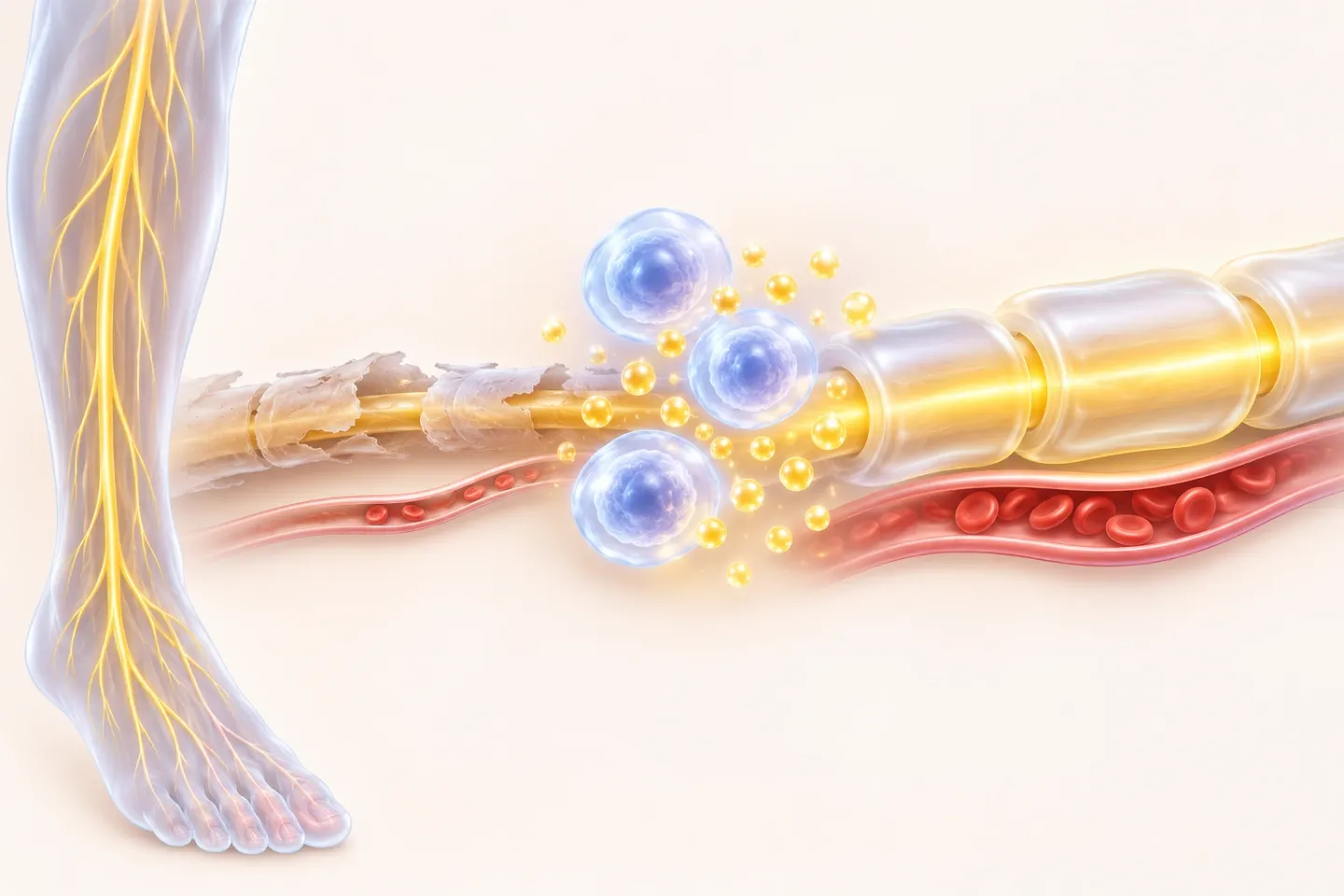
- Peripheral nervesLong nerves run from the spine to the legs and feet; neuropathy usually starts in the longest ones.
- Toes and feetNumbness, tingling or burning usually begins in the toes, on both sides.
- Damaged myelinThe insulating sheath around the nerve fibre becomes thin and patchy, so signals slow down.
- Narrow small vesselThe tiny blood vessels that feed the nerve can narrow, especially in diabetes.
- Stem cellsWharton’s jelly MSCs release growth factors that support nerves and small blood vessels.
- ExosomesTiny vesicles carry these repair messages to the nerve and calm inflammation.
- Healthy myelinThe aim: a thicker, smoother sheath and faster nerve signals, as measured in studies.
- Healthy blood supplyA full small blood vessel brings oxygen and nutrients to the nerve.
Nerve-growth signals
In research models, MSCs injected into the leg muscles produced the growth factors VEGF and bFGF where they were placed, and improved nerve conduction, nerve blood flow and the shape of the nerve fibres.27
Small blood vessels
Across 11 studies in research models, exosomes improved blood flow in the sole of the foot and in the sciatic nerve and increased the density of small vessels.28
Calming inflammation
In research models of diabetic neuropathy, MSC exosomes given into a vein lowered inflammatory signals and turned immune cells towards a calming, healing (M2) type.29
Myelin and nerve fibres
In research models, exosome treatment thickened the myelin sheath, widened nerve fibres and axons and increased markers of nerve regrowth and remyelination.28
Regrowth after nerve injury
In research models of a cut nerve, Wharton’s jelly stem cells placed in a nerve guidance tube helped the nerve rebuild a structure close to normal,30 and in a review of 13 studies, the repair signals released by MSCs brought up to 35% higher nerve conduction velocity.31
Nerve signals in people
Across seven controlled trials, stem cell treatment raised motor nerve conduction by 2.2 m/s and sensory conduction by 1.9 m/s, and lowered the vibration threshold by 2.9 and the Toronto neuropathy score by 3.6 points.1
In people, these signals show up as faster nerve conduction, lower symptom scores and better feeling in the feet, as the next section shows. Read how stem cells work in every part of the body on our stem cell therapy page.
06
Stem cell therapy for diabetic neuropathy: what human studies report
Neuropathy studies measure what you can feel and what doctors can test: nerve conduction velocity (how fast signals travel along a nerve, in metres per second), the vibration perception threshold, protective sensation with a monofilament, and symptom scores such as the Toronto Clinical Scoring System (TCSS), where a lower score means less neuropathy. Here is what the key studies report, with each study’s own cell source and route.
Better nerve function
A 2024 systematic review and meta-analysis pooled seven controlled trials in diabetic peripheral neuropathy, using bone marrow mononuclear cells or umbilical cord MSCs, given mainly by injection into the leg muscles. Stem cell treatment improved motor nerve conduction by 2.2 m/s and sensory nerve conduction by 1.9 m/s, and lowered the vibration perception threshold by 2.9 and the TCSS score by 3.6 points. The only complications were pain and swelling at the injection sites, which settled within a few days.1
In a single-group study, 168 people with neuropathy that had not responded to medicines had their own bone marrow cells injected into the leg muscles and were followed for three years. The TCSS score fell from 12.55 to 9.68 at one month and to 8.47 at three months, and the improvement lasted to the end of the study. Motor nerve conduction rose from 38.21 to 41.00 m/s at 12 months, and no adverse event linked to the treatment was seen.7
Feeling in the feet
In a first-in-human study, ten people with diabetic foot ulcers and peripheral neuropathy received placenta-derived stem cells, 30 to 60 million cells injected around and into the ulcer and along the foot arteries. Every wound had healed by six months, neuropathy improved in all ten, and 9 of 10 had normal protective sensation by 12 months, with no serious adverse events related to the cells.10
Protection over the long term
Two randomised studies followed people for eight years. In type 2 diabetes, 97 people on insulin and metformin were randomly assigned to bone marrow stem cells with mononuclear cells, mononuclear cells alone, or standard care alone. Neuropathy developed in 10.3%, 17.9% and 48.3% of them, and the combined cells also raised insulin production (C-peptide) by 50.6% at one year.5 In type 1 diabetes, umbilical cord stem cells given with the patients’ own bone marrow cells were followed by neuropathy in 7.1% of people, against 46.7% with standard care, and by at least one diabetic complication in 14.3%, against 73.3%.23
| Study | Design and people | Cells and route | What improved |
|---|---|---|---|
| Alizadeh 2024, meta-analysis1 | 7 controlled trials in diabetic neuropathy | Bone marrow mononuclear cells or umbilical cord MSCs, mainly into leg muscles | Motor conduction +2.2 m/s; sensory +1.9 m/s; vibration threshold −2.9; TCSS −3.6 |
| Mao 20197 | 168 people with neuropathy not helped by medicines; 3 years | Own bone marrow cells into leg muscles | TCSS 12.55 → 8.47 at 3 months, lasting; motor conduction 38.21 → 41.00 m/s |
| Carstens 202610 | First-in-human; 10 people with foot ulcers and neuropathy | Placenta-derived stem cells around the ulcer and along foot arteries | All wounds healed by 6 months; normal protective sensation in 9 of 10 at 12 months |
| Wu 20245 | Randomised; 97 people with type 2 diabetes; 8 years | Bone marrow stem cells and mononuclear cells, by infusion | Neuropathy in 10.3% vs 48.3% with standard care |
| Wu 202223 | Randomised; 42 people with type 1 diabetes; 8-year follow-up | Umbilical cord MSCs with own bone marrow cells | Neuropathy in 7.1% vs 46.7%; any complication 14.3% vs 73.3% |
| Ashoobi 20248 | Phase I; 5 people with type 2 diabetes and leg ischaemia | Donor Wharton’s jelly MSCs into calf and shin muscles | Less pain, longer pain-free walking and better foot function at 6 months |
| Arango-Rodríguez 202318 | Randomised, double-blind; 24 people with diabetes | Donor Wharton’s jelly MSCs around leg arteries | More skin oxygen, faster healing, less pain, longer pain-free walking vs placebo |
| Kishta 20259 | Randomised; 110 people with diabetic foot ulcers | Wharton’s jelly MSC exosomes on the wound | Healed in 6 weeks on average vs 20 weeks |
Each study used its own cells, doses and routes, and none used our product. Your treatment uses fresh Wharton’s jelly and umbilical cord stem cells with Wharton’s jelly exosomes, prepared for your date. If diabetes is the cause of your neuropathy, see how we treat diabetes itself on our diabetes mellitus page.
07
Neuropathy in feet treatment: numbness, burning, balance and healing skin
The feet are where neuropathy is usually felt first and felt most: numb toes, burning soles at night, a feeling of walking on pebbles, and less confidence on stairs. Caring for your feet well protects them, and regenerative treatment aims to add better-fed nerves, healthier small blood vessels and stronger healing to that care.
A plan for the feet can combine an IV infusion with fine injections into the muscles of the calves and feet or around the affected nerves, depending on Dr. Cihan Bolat’s evaluation, much like the leg-muscle route used in the studies below.18 Your own podiatrist or diabetes nurse stays involved in your everyday foot care.
Feeling returns
After stem cells were injected around foot ulcers and along the foot arteries of people with diabetic neuropathy, 9 of 10 had normal protective sensation within 12 months.10
Less pain on walking
Donor Wharton’s jelly stem cells injected into the calf muscles of people with type 2 diabetes lowered pain scores and lengthened pain-free walking time at six months.8
Warmer, better-fed feet
In 53 people with diabetic foot disease, umbilical cord stem cells added after angioplasty brought greater gains in skin temperature, ankle blood pressure, skin oxygen and walking distance than angioplasty alone, with new small vessels at three months.32
Skin that heals
Wharton’s jelly exosomes healed diabetic foot ulcers in 6 weeks on average, against 20 weeks,9 and umbilical cord stem cells given onto the wound and by IV closed more than 95% of the ulcer area within 1.5 months.33
Steadier steps
Gait and balance training improved walking speed by 0.149 m/s and balance in people with diabetes, and most gains were still there six months later.14
Daily protection
A daily look at your feet, well-fitting shoes and a yearly monofilament test protect feet with reduced feeling.13
If your symptoms began in the hands or arms, or come with back or neck pain, the nerve may be pinched near the spine rather than affected along its length. Read our guide to stem cell therapy for back and neck pain.
08
Exosomes for neuropathy: what they add, by IV infusion and nasal spray
Exosomes are tiny vesicles that stem cells release to pass on their repair messages: proteins, growth factors and small RNA molecules that tell other cells to calm inflammation and repair. Wharton’s jelly exosomes carry the messages of the very same young cells we use, in a concentrated, cell-free form.
What research reports
A 2025 meta-analysis of 11 studies in research models of diabetic neuropathy found that exosomes improved motor and sensory nerve conduction, eased heat-related pain, improved blood flow in the foot and the sciatic nerve, and thickened the myelin sheath around the nerve fibres.28 In one research model, MSC exosomes given into a vein once a week for eight weeks increased nerve conduction velocity and the number of nerve fibres in the skin, and lowered inflammatory signals.29 Across 16 studies in research models of nerve injury, diabetic neuropathy and chemotherapy-related neuropathy, exosomes from stem cells reduced pain behaviour and calmed inflammation in the nervous system.34
In people, Wharton’s jelly exosomes healed diabetic foot ulcers in 6 weeks on average, against 20 weeks with standard care,9 and 5 billion Wharton’s jelly stem cell exosomes placed into a repaired arm nerve were followed by excellent motor recovery within six months.20
How exosomes are given in your plan
In a neuropathy plan, Wharton’s jelly exosomes are given by IV infusion, so their messages travel through the whole body, and in wider plans also as a nasal spray. CD34+ exosomes can be added where your doctor feels they will help. Read more about our exosome therapy and the full range of exosome treatments explained.
09
Chemotherapy-induced neuropathy and other types: what research shows
Neuropathy has many causes, and the right plan starts with yours. Here is how the main types relate to regenerative treatment.
Chemotherapy-induced neuropathy
Some cancer medicines, such as cisplatin, paclitaxel and vincristine, can affect the peripheral nerves.12 For chemotherapy-induced neuropathy, the stem cell and exosome results so far come from research models, and they are encouraging. In a research model of oxaliplatin-related nerve pain, a single IV dose of adipose stem cells eased pain within an hour, the effect lasted five days, and each repeat dose worked again.35 In a systematic review, stem cell exosomes reduced pain behaviour in research models of chemotherapy-related neuropathy as well as of diabetic neuropathy and nerve injury.34 Please note that our clinic does not treat neuropathy caused by chemotherapy. Our neuropathy plans are for diabetic neuropathy and other peripheral neuropathies, and Dr. Cihan Bolat reviews every case individually.
Idiopathic and small-fibre neuropathy
When no cause is found, as in up to 27% of adults with neuropathy, care focuses on symptoms, movement and protecting the feet.12 Your free review looks at whether a regenerative plan can add to that.
Vitamin B12 and alcohol
Low vitamin B12 and alcohol are treatable causes of neuropathy, so they are checked and addressed first.1213
Nerve pain from the spine
Sciatica and arm pain from a trapped nerve root are treated differently. See stem cell therapy for back and neck pain.
Nerve pain in the head
For pain from the nerves at the back of the head, see our page on occipital neuralgia.
10
Muse cells and Muse exosomes: an optional add-on
Muse cells, short for multilineage-differentiating stress-enduring cells, are a small group of especially hardy repair cells within the MSC family, first described in 2010.36 They make up about 1% to several percent of MSCs, home to damaged tissue after IV infusion, and donor Muse cells have been given without tissue matching or immune-suppressing medicines.37 In research models of nerve pain, Muse cells eased pain more than equal low doses of bone marrow stromal cells, through the calming messengers TGF-β and IL-10,38 and after an injury to the nerves that control erections, IV Muse cells settled in the injured nerve ganglion and restored erectile function.39 In ten people with a cervical spinal cord injury, one IV dose of a donor Muse cell product was well tolerated, with significant gains in motor scores, daily activities and quality of life.40
If you wish, Muse cells by IV infusion or intrathecal injection, and Muse exosomes by IV infusion or nasal spray, can be added to your Wharton’s jelly plan after your medical review. Wharton’s jelly stem cells and exosomes remain the core of your neuropathy plan.
11
How stem cell therapy for neuropathy is given, and who it suits
Every plan starts with your own results, not a fixed protocol. Dr. Cihan Bolat, our medical director and a specialist in anaesthesiology and reanimation and in regenerative medicine, reviews with his team your nerve conduction study or EMG, your HbA1c and other blood tests, including vitamin B12, your foot examination and your medicines, and talks with you about your symptoms and goals.
How it is given
Your Wharton’s jelly stem cells are given by IV infusion and, depending on Dr. Cihan Bolat’s evaluation, by fine injections around the affected nerves or into the muscles of your legs and feet; injection into the leg muscles was the route used in most of the neuropathy trials.1 Your exosomes are given by IV infusion and, in wider plans, as a nasal spray. A typical IV range is 1–2 million cells per kilogram of body weight, and the right dose for you is set in your medical review.
Who it suits
- People with diabetic neuropathy whose numbness, tingling or burning continues despite good care, like the people in the leg-muscle studies.71
- People with diabetes who want to protect their nerves over the long term.523
- People with numb feet and slow-healing skin, where feeling and healing both matter.109
- People with peripheral neuropathy from other causes, once the cause has been checked; Dr. Cihan Bolat reviews each case individually.

Fresh Wharton’s jelly stem cells
From cords donated after healthy births, prepared for your date in a Ministry of Health-approved GMP laboratory and never frozen, with count and viability certified before treatment.
Umbilical cord stem cells too
The second cell type in our plans, the cell source of the umbilical cord neuropathy and diabetic foot studies.133
Wharton’s jelly exosomes
Added by IV infusion for a concentrated dose of repair messages, with CD34+ exosomes according to your plan, and as a nasal spray in wider plans.
Alongside your medicines
In the long-term studies, people kept their insulin and metformin.5 You keep taking your medicines, and you can share your written plan with your own doctor.
One treatment day
Most plans take one treatment day in Istanbul, and you walk out of the clinic the same day.
With your diabetes plan
If diabetes is the cause, your plan can support your nerves and your blood sugar together. See stem cell therapy for diabetes.
- Day 0Walk outOne treatment day, home the same day
- 1 monthFirst changesNeuropathy scores lower in studies
- 3 monthsClearer gainsScores and nerve conduction better
- 6 monthsWalking and healingLess leg pain; ulcers healed
- 12 monthsFeeling returnsProtective sensation regained in studies
In the studies, the neuropathy score had fallen by the first check-up at one month and further by three months, and the improvement lasted for three years.7 Leg pain and walking improved by six months,8 and protective sensation had returned by 12 months.10 We review your progress with you at about 1, 3, 6 and 12 months. For prices, doses and what is included, read our guide to stem cell therapy cost in Turkey.
12
Neuropathy treatments compared: medicines, exercise, spinal cord stimulation and regenerative care
Each treatment has its own role, and the best results come from combining them. Blood sugar care and exercise protect the nerves, medicines and stimulation calm the pain, and Wharton’s jelly stem cells and exosomes aim at the nerve fibres, their small blood vessels and inflammation.
| Option | What it does | What studies report | How it is given |
|---|---|---|---|
| Wharton’s jelly stem cells and exosomes | Repair signals for the nerves, their small blood vessels and inflammation2628 | Less pain and longer pain-free walking after injection into the calf muscles;8 foot ulcers healed in 6 vs 20 weeks with Wharton’s jelly exosomes9 | IV, plus injections around the nerves or into leg and foot muscles, depending on Dr. Cihan Bolat’s evaluation; exosomes by IV and nasal spray |
| Umbilical cord stem cells | Young donor cells, the second cell type in our plans | Neuropathy in 7.1% vs 46.7% over eight years, given with own bone marrow cells23 | IV, as part of your plan |
| Steady blood sugar | Protects the nerves from further strain | Confirmed clinical neuropathy 64% lower over five years2 | Everyday diabetes care |
| Pain medicines | Calm overactive pain signals | Pain 6.6 → 3.3 out of 10 at 16 weeks4 | Daily tablets, alone or combined |
| Exercise and balance training | Better nerve health, strength and balance | Sensory neuropathy 6.45% vs 29.8% over four years;3 walking speed +0.149 m/s14 | Brisk walking and guided training |
| Alpha-lipoic acid | An antioxidant for nerve symptoms | Symptoms −51% vs −32% with placebo in five weeks17 | A daily tablet |
| 10 kHz spinal cord stimulation | Changes how pain signals reach the brain | At least 50% pain relief in 79% vs 5%15 | A small implanted device |
These options add up rather than compete. Your own doctor and your medicines stay at the centre of your care, and regenerative treatment is planned around them. If diabetes is part of your story, see our stem cell treatment page for diabetes.
13
Is stem cell therapy for neuropathy safe?
Safety comes first, and the published record is reassuring. A 2021 meta-analysis of 62 randomised trials with 3,546 patients found MSC treatment safe, the most common effect a passing fever.11
The neuropathy studies point the same way. In 168 people followed for three years after injections of their own bone marrow cells into the leg muscles, no adverse event linked to the treatment was seen.7 Across seven controlled trials, the only complications were pain and swelling at the injection sites, which settled within a few days.1 There were no adverse events after Wharton’s jelly stem cells were injected into the calf muscles,8 no serious adverse events related to the cells after injections in the foot,10 and only two cases of passing fever after IV umbilical cord stem cells in people with diabetic foot ulcers.33
Your own care adds further layers. Wharton’s jelly cells need no donor matching,22 your cells are prepared in a GMP-certified laboratory approved by the Turkish Ministry of Health, and every batch certificate shows the cell count, the viability and the sterility tests. Your treatment is given by Dr. Cihan Bolat, a specialist in anaesthesiology and reanimation, and his team, who plan your comfort for every injection. Before your plan is made, our specialist team reviews your tests and medicines carefully, and you return to your hotel the same day. Read more in how to read a stem cell lab report.
14
Why patients travel to Istanbul, Turkey for stem cell therapy for neuropathy
People from the UK, the USA, Europe, the Gulf and beyond travel to Istanbul for regenerative nerve care: specialist-led treatment with fresh Wharton’s jelly stem cells and exosomes in a single treatment day for most plans, in a city that is easy to reach and a pleasure to stay in.

Specialist-led from the first message
Uzm. Dr. Cihan Bolat, our medical director, a specialist in anaesthesiology and reanimation and in regenerative medicine, leads the team that reviews your nerve tests free of charge and treats you.
Fresh cells for your date
Your Wharton’s jelly stem cells come from cords donated after healthy births and are prepared fresh for your treatment date, never frozen, with their count and viability checked before treatment.
Your cell count in writing
Your written plan states your exact cell count, the exosomes and the routes, with a fixed, all-inclusive price before you travel.
One treatment day
Most plans take one treatment day in Istanbul, and you walk out of the clinic the same day.
Help at every step
A personal case manager helps with your hotel, ground transport and translation, so you can focus on your recovery.
Follow-up from home
Reviews at about 1, 3, 6 and 12 months, so your care continues after you fly back to London, New York or wherever home is.
Istanbul has two international airports with direct flights from the UK, the USA, Europe and the Middle East, and our clinic is in Suadiye, a calm district on the Asian side near the Marmara seafront, ideal for gentle walks after treatment. Read more about why patients choose stem cell therapy in Turkey.
15
Your neuropathy treatment in Istanbul, step by step
From your first message to your follow-up at home, every step is planned with you in advance, whether you are travelling from London, Manchester, New York, Chicago, Dubai or Amsterdam. For the fuller story, read the stem cell treatment in Turkey, step by step, or request your free consultation now.
Send your nerve tests
Share your nerve conduction study or EMG if you have one, your HbA1c, vitamin B12 and other blood tests, any foot examination results, your medicines and your goals, through our free consultation request or by WhatsApp on +90 534 856 92 92.
Free medical review and phone call
Dr. Cihan Bolat’s team reviews your case free of charge, talks it through with you by phone and tells you honestly whether a Wharton’s jelly plan suits your nerves.
Your written plan and fixed price
If treatment is a good fit, you receive a written plan with your exact cell count, any exosomes and the routes, and a fixed, all-inclusive price.
Fresh preparation and treatment day
Once you confirm, your cells are prepared fresh for your date, which takes about 5 to 10 days. On treatment day, our driver brings you to the clinic, and you walk out the same day.
Home and follow-up
Back home, you continue your medicines, foot care and exercise, and we review your progress with you at about 1, 3, 6 and 12 months.
16
How much does stem cell therapy for neuropathy cost in Turkey?
Every plan is personal, so the price depends on the number of stem cells, the exosomes and the routes in your plan. As a guide, our IV stem cell packages start at USD 4,950 for 25 million cells. The 50 million cell package (USD 6,950) includes 10 billion exosomes free, and the 100 million cell package (USD 10,500) includes 20 billion exosomes and two hotel nights. A typical IV range is 1–2 million cells per kilogram of body weight, and higher cell-count packages may suit heavier patients or more complex goals.
Injections around the nerves or into the leg and foot muscles, extra exosomes and an exosome nasal spray shape a custom plan. After your free medical review, you receive a fixed, all-inclusive price in writing before you book anything, so you can decide calmly at home. See every package in our guide to stem cell therapy cost in Turkey.
Included
- Free medical review and phone consultation
- Fresh Wharton’s jelly stem cells, with certified count and viability
- Wharton’s jelly exosomes, umbilical cord stem cells and CD34+ exosomes, if they are in your plan
- Your treatment by our specialist team, in one treatment day for most plans
- Ground transport to and from the clinic, and help with translation
- A personal case manager and follow-up reviews
Not included / optional
- Flights
- Hotel stay, unless your package includes nights; we can help you arrange it
- Muse cells or Muse exosomes, as optional add-ons
- A repeat session, if you choose one later
See the full diabetes treatment on our diabetes mellitus page, or read about exosome therapy.
17
Frequently asked questions
Can neuropathy be reversed?
Neuropathy can often improve, and peripheral nerves can regrow, especially when the cause is treated early. After a year of diet and exercise counselling, small nerve fibres grew back in the skin of people with early neuropathy, and pain eased. Complete repair of long-standing damage is uncommon, but numbness, burning and balance can improve a great deal, which is what modern and regenerative care aim for.
Does stem cell therapy work for neuropathy?
In studies, it improved nerve function for many people. Across seven controlled trials in diabetic neuropathy, stem cell treatment raised motor nerve conduction by 2.2 m/s and sensory conduction by 1.9 m/s and lowered symptom scores. In 168 people whose neuropathy had not responded to medicines, the neuropathy score fell from 12.55 to 8.47 within three months and stayed lower for three years.
Can stem cells help diabetic neuropathy?
Diabetic neuropathy is where most of the human research has been done. Besides better nerve conduction, a randomised study in type 2 diabetes found that neuropathy developed in 10.3% of people over eight years with stem cells added, against 48.3% with standard care. Our diabetes page explains how a plan can support your blood sugar and your nerves together.
What is the best treatment for peripheral neuropathy?
There is no single best treatment for everyone. Treating the cause comes first, such as steady blood sugar or vitamin B12, then exercise, balance training, foot care and pain medicines such as pregabalin, duloxetine or amitriptyline. Spinal cord stimulation helps when pain continues. Wharton’s jelly stem cells and exosomes add regenerative support to these foundations.
What helps neuropathy in the feet?
Daily foot checks, good shoes, steady blood sugar, walking and balance exercises are the foundation. In studies, Wharton’s jelly stem cells injected into the calf muscles eased leg pain and lengthened pain-free walking, and after stem cells were injected in the foot, 9 of 10 people with diabetic foot ulcers regained normal protective sensation within 12 months.
Can damaged nerves regenerate?
Yes, peripheral nerves can regrow. In people with type 2 diabetes, a year of supervised exercise increased the nerve fibres in the skin of the lower leg. In research models, stem cells and exosomes improved nerve conduction, myelin and the blood supply of nerves, and in people, nerve conduction improved after stem cell treatment.
How are stem cells given for neuropathy?
Your Wharton’s jelly stem cells are given by IV infusion and, depending on Dr. Cihan Bolat’s evaluation, by fine injections around the affected nerves or into the muscles of your legs and feet. Exosomes are given by IV infusion and, in wider plans, as a nasal spray. Stem cells are never given into the nose.
Do exosomes help neuropathy?
In research models of diabetic neuropathy, exosomes improved nerve conduction, nerve blood flow and the myelin around nerve fibres. In people, Wharton’s jelly exosomes healed diabetic foot ulcers in 6 weeks on average, against 20 weeks with standard care. Your plan can include Wharton’s jelly exosomes by IV infusion and nasal spray.
Can stem cells help chemotherapy-induced neuropathy?
For chemotherapy-induced neuropathy, the results so far come from research models, where a single IV dose of stem cells eased chemotherapy-related nerve pain and stem cell exosomes reduced pain behaviour. Our clinic does not treat neuropathy caused by chemotherapy; our plans are for diabetic neuropathy and other peripheral neuropathies.
How soon might I notice a difference?
In the studies, neuropathy scores were lower by one month and further improved by three months, leg pain and walking were better by six months, and protective sensation in the feet had returned by 12 months. We review your progress with you at about 1, 3, 6 and 12 months.
How long do the results last?
In a three-year leg-muscle study, the lower neuropathy scores lasted to the end of three years of follow-up, and in two randomised diabetes studies, the lower rates of neuropathy were measured eight years after treatment. Your follow-up reviews show how your own nerves respond, and a repeat session can be discussed later if you wish.
Can I keep taking my neuropathy and diabetes medicines?
Yes. Stem cell treatment works alongside your medicines, and in the long-term studies, people kept their insulin and metformin. Keep taking your pain medicines and diabetes treatment as prescribed, and share your written plan with your own doctor.
Who is a good candidate for stem cell therapy for neuropathy?
People with diabetic neuropathy whose symptoms continue despite good care, people with diabetes who want to protect their nerves, and people with numb feet or slow-healing skin. If your neuropathy has another cause, Dr. Cihan Bolat reviews your case individually once the cause has been checked.
Is stem cell therapy for neuropathy safe?
The published record is reassuring. A meta-analysis of 62 randomised trials with 3,546 patients found MSC treatment safe, the most common effect a passing fever. In the neuropathy trials, the only complications were pain and swelling at the injection sites, which settled within a few days.
How many stem cells do I need for neuropathy?
A typical IV range is 1–2 million cells per kilogram of body weight, about 0.45–0.9 million per pound, so a 70 kg (154 lb) adult would be in the range of 70 to 140 million cells. The right dose for you, and whether injections around the nerves or into the leg and foot muscles are added, is set in your free medical review.
How much does stem cell therapy for neuropathy cost in Turkey?
Our IV stem cell packages start at USD 4,950 for 25 million cells, and from 50 million cells, free exosomes are included. Local injections and extra exosomes shape a custom plan, and after a free medical review you receive a fixed, all-inclusive price in writing before you travel.
Why travel to Istanbul for stem cell therapy for neuropathy?
Istanbul offers specialist-led treatment with fresh Wharton’s jelly stem cells, one treatment day for most plans and direct flights from the UK, the USA, Europe and the Gulf. You receive a written plan and a fixed price before you travel, and you can reach us on WhatsApp at +90 534 856 92 92.
What should I send for my free review?
Send your nerve conduction study or EMG if you have one, your HbA1c, vitamin B12 and other recent blood tests, any foot examination or wound photos, your list of medicines and a short description of your symptoms and goals.
Medical review
Uzm. Dr. Cihan Bolat
Medical Director, Istanbul Stemcell
This page was written from the published studies listed below and reviewed for medical accuracy on .
18
References
- Alizadeh SD, et al. Human studies of the efficacy and safety of stem cells in the treatment of diabetic peripheral neuropathy: a systematic review and meta-analysis. Stem Cell Res Ther. 2024;15(1):442. PMID 39563393
- . The effect of intensive diabetes therapy on the development and progression of neuropathy. The Diabetes Control and Complications Trial Research Group. Ann Intern Med. 1995;122(8):561-8. PMID 7887548
- Balducci S, et al. Exercise training can modify the natural history of diabetic peripheral neuropathy. J Diabetes Complications. 2006;20(4):216-23. PMID 16798472
- Tesfaye S, et al. Comparison of amitriptyline supplemented with pregabalin, pregabalin supplemented with amitriptyline, and duloxetine supplemented with pregabalin for the treatment of diabetic peripheral neuropathic pain (OPTION-DM): a multicentre, double-blind, randomised crossover trial. Lancet. 2022;400(10353):680-690. PMID 36007534
- Wu Z, et al. Bone marrow mesenchymal stem cell and mononuclear cell combination therapy in patients with type 2 diabetes mellitus: a randomized controlled study with 8-year follow-up. Stem Cell Res Ther. 2024;15(1):339. PMID 39350270
- Smith AG, et al. Lifestyle intervention for pre-diabetic neuropathy. Diabetes Care. 2006;29(6):1294-9. PMID 16732011
- Mao H, et al. Efficacy of autologous bone marrow mononuclear cell transplantation therapy in patients with refractory diabetic peripheral neuropathy. Chin Med J (Engl). 2019;132(1):11-16. PMID 30628954
- Ashoobi MT, et al. Wharton's jelly mesenchymal stem cells transplantation for critical limb ischemia in patients with type 2 diabetes mellitus: a preliminary report of phase I clinical trial. Cell Tissue Res. 2024;395(2):211-220. PMID 38112806
- Kishta MS, et al. The transforming role of wharton's jelly mesenchymal stem cell-derived exosomes for diabetic foot ulcer healing: a randomized controlled clinical trial. Stem Cell Res Ther. 2025;16(1):559. PMID 41084065
- Carstens MH, et al. Treatment of diabetic foot chronic ulcers and neuropathy with placenta-derived stem cells. Stem Cells Transl Med. 2026;15(11). PMID 42976200
- Wang Y, Yi H, Song Y. The safety of MSC therapy over the past 15 years: a meta-analysis. Stem Cell Res Ther. 2021;12(1):545. PMID 34663461
- Mauermann ML, Staff NP. Peripheral Neuropathy: A Review. JAMA. 2026;335(3):255-266. PMID 41247746
- Pop-Busui R, et al. Diabetic Neuropathy: A Position Statement by the American Diabetes Association. Diabetes Care. 2017;40(1):136-154. PMID 27999003
- Allet L, et al. The gait and balance of patients with diabetes can be improved: a randomised controlled trial. Diabetologia. 2010;53(3):458-66. PMID 19921145
- Petersen EA, et al. Effect of High-frequency (10-kHz) Spinal Cord Stimulation in Patients With Painful Diabetic Neuropathy: A Randomized Clinical Trial. JAMA Neurol. 2021;78(6):687-698. PMID 33818600
- Kluding PM, et al. The effect of exercise on neuropathic symptoms, nerve function, and cutaneous innervation in people with diabetic peripheral neuropathy. J Diabetes Complications. 2012;26(5):424-9. PMID 22717465
- Ziegler D, et al. Oral treatment with alpha-lipoic acid improves symptomatic diabetic polyneuropathy: the SYDNEY 2 trial. Diabetes Care. 2006;29(11):2365-70. PMID 17065669
- Arango-Rodríguez ML, et al. A novel therapeutic management for diabetes patients with chronic limb-threatening ischemia: comparison of autologous bone marrow mononuclear cells versus allogenic Wharton jelly-derived mesenchymal stem cells. Stem Cell Res Ther. 2023;14(1):221. PMID 37626416
- Özmert E, Arslan U. Management of toxic optic neuropathy via a combination of Wharton's jelly-derived mesenchymal stem cells with electromagnetic stimulation. Stem Cell Res Ther. 2021;12(1):518. PMID 34579767
- Civelek E, et al. Effects of exosomes from mesenchymal stem cells on functional recovery of a patient with total radial nerve injury: A pilot study. World J Stem Cells. 2024;16(1):19-32. PMID 38292440
- Hsieh JY, et al. Mesenchymal stem cells from human umbilical cord express preferentially secreted factors related to neuroprotection, neurogenesis, and angiogenesis. PLoS One. 2013;8(8):e72604. PMID 23991127
- Weiss ML, et al. Immune properties of human umbilical cord Wharton's jelly-derived cells. Stem Cells. 2008;26(11):2865-74. PMID 18703664
- Wu Z, et al. Prevention of chronic diabetic complications in type 1 diabetes by co-transplantation of umbilical cord mesenchymal stromal cells and autologous bone marrow: a pilot randomized controlled open-label clinical study with 8-year follow-up. Cytotherapy. 2022;24(4):421-427. PMID 35086778
- Moll G, et al. Do cryopreserved mesenchymal stromal cells display impaired immunomodulatory and therapeutic properties? Stem Cells. 2014;32(9):2430-42. PMID 24805247
- Singleton JR, et al. Exercise increases cutaneous nerve density in diabetic patients without neuropathy. Ann Clin Transl Neurol. 2014;1(10):844-9. PMID 25493275
- Li Y, et al. Evaluating the efficacy of mesenchymal stem cells for diabetic neuropathy: A systematic review and meta-analysis of preclinical studies. Front Bioeng Biotechnol. 2024;12:1349050. PMID 38770273
- Shibata T, et al. Transplantation of bone marrow-derived mesenchymal stem cells improves diabetic polyneuropathy in rats. Diabetes. 2008;57(11):3099-107. PMID 18728233
- Lu X, et al. Cell-derived exosome therapy for diabetic peripheral neuropathy: a preclinical animal studies systematic review and meta-analysis. Stem Cell Res Ther. 2025;16(1):297. PMID 40490808
- Fan B, et al. Mesenchymal stromal cell-derived exosomes ameliorate peripheral neuropathy in a mouse model of diabetes. Diabetologia. 2020;63(2):431-443. PMID 31740984
- Shalaby SM, et al. Combined Wharton's jelly derived mesenchymal stem cells and nerve guidance conduit: A potential promising therapy for peripheral nerve injuries. Int J Biochem Cell Biol. 2017;86:67-76. PMID 28274689
- Nevado-Sánchez E, et al. Effectiveness of Stem Cell Secretomes in the Regeneration and Functional Recovery of Severed Nerves in Patients with Nerve Injuries: A Systematic Review. Cells. 2025;14(7). PMID 40214446
- Qin HL, et al. Clinical Evaluation of Human Umbilical Cord Mesenchymal Stem Cell Transplantation After Angioplasty for Diabetic Foot. Exp Clin Endocrinol Diabetes. 2016;124(8):497-503. PMID 27219884
- Zhang C, et al. Topical and intravenous administration of human umbilical cord mesenchymal stem cells in patients with diabetic foot ulcer and peripheral arterial disease: a phase I pilot study with a 3-year follow-up. Stem Cell Res Ther. 2022;13(1):451. PMID 36064461
- Shahrezaei A, Dashti L, Nasirinezhad F. A Systematic Review of Stem Cell Secretome-Derived Exosomes for Neuropathic Pain: Therapeutic Mechanisms and Translational Potential. Mol Neurobiol. 2026;63(1). PMID 42837065
- Di Cesare Mannelli L, et al. Adipose-derived stem cells decrease pain in a rat model of oxaliplatin-induced neuropathy: Role of VEGF-A modulation. Neuropharmacology. 2018;131:166-175. PMID 29241656
- Kuroda Y, et al. Unique multipotent cells in adult human mesenchymal cell populations. Proc Natl Acad Sci U S A. 2010;107(19):8639-43. PMID 20421459
- Minatoguchi S, et al. Donor Muse Cell Treatment Without HLA-Matching Tests and Immunosuppressant Treatment. Stem Cells Transl Med. 2024;13(6):532-545. PMID 38560897
- Zhao Y, et al. Multilineage differentiating stress-enduring cells alleviate neuropathic pain in mice through TGF-β and IL-10-dependent anti-inflammatory signaling. J Biol Chem. 2026;302(3):111270. PMID 41655691
- Koyama J, et al. Intravenously engrafted human multilineage-differentiating stress-enduring (Muse) cells rescue erectile function after rat cavernous nerve injury. BJU Int. 2024;133(3):332-340. PMID 37983592
- Koda M, et al. Safety and feasibility of intravenous administration of a single dose of allogenic-Muse cells to treat human cervical traumatic spinal cord injury: a clinical trial. Stem Cell Res Ther. 2024;15(1):259. PMID 39135172