
01
What is stem cell therapy for back pain and neck pain?
In short: stem cell therapy for back and neck pain places Wharton’s jelly stem cells and their exosomes exactly where your pain begins: inside a worn disc, in the small facet joints, beside the spine or around an irritated nerve. There they release signals that calm inflammation, protect the disc’s own cells and support repair, with the aim that you can move, work and sleep with less pain.1142
Most people who search for this treatment have lived with pain for months or years. They have done the physiotherapy, taken the tablets, perhaps had injections, and they want something that works on the cause rather than only the symptom. That is exactly what regenerative medicine aims to do. Mesenchymal stem cells (MSCs) act mainly as repair coordinators: they release growth factors, immune-calming messengers and exosomes, tiny packages that carry their repair instructions from cell to cell.115
At Istanbul Stemcell, Wharton’s jelly stem cells and Wharton’s jelly exosomes lead every back and neck plan, with umbilical cord stem cells alongside. The same approach serves the lower back (the lumbar spine) and the neck (the cervical spine), because discs and facet joints age in much the same way in both. This guide goes deep on the science and the trials; for our treatment page, see stem cell therapy for degenerative disc disease in Istanbul.
Results at a glance
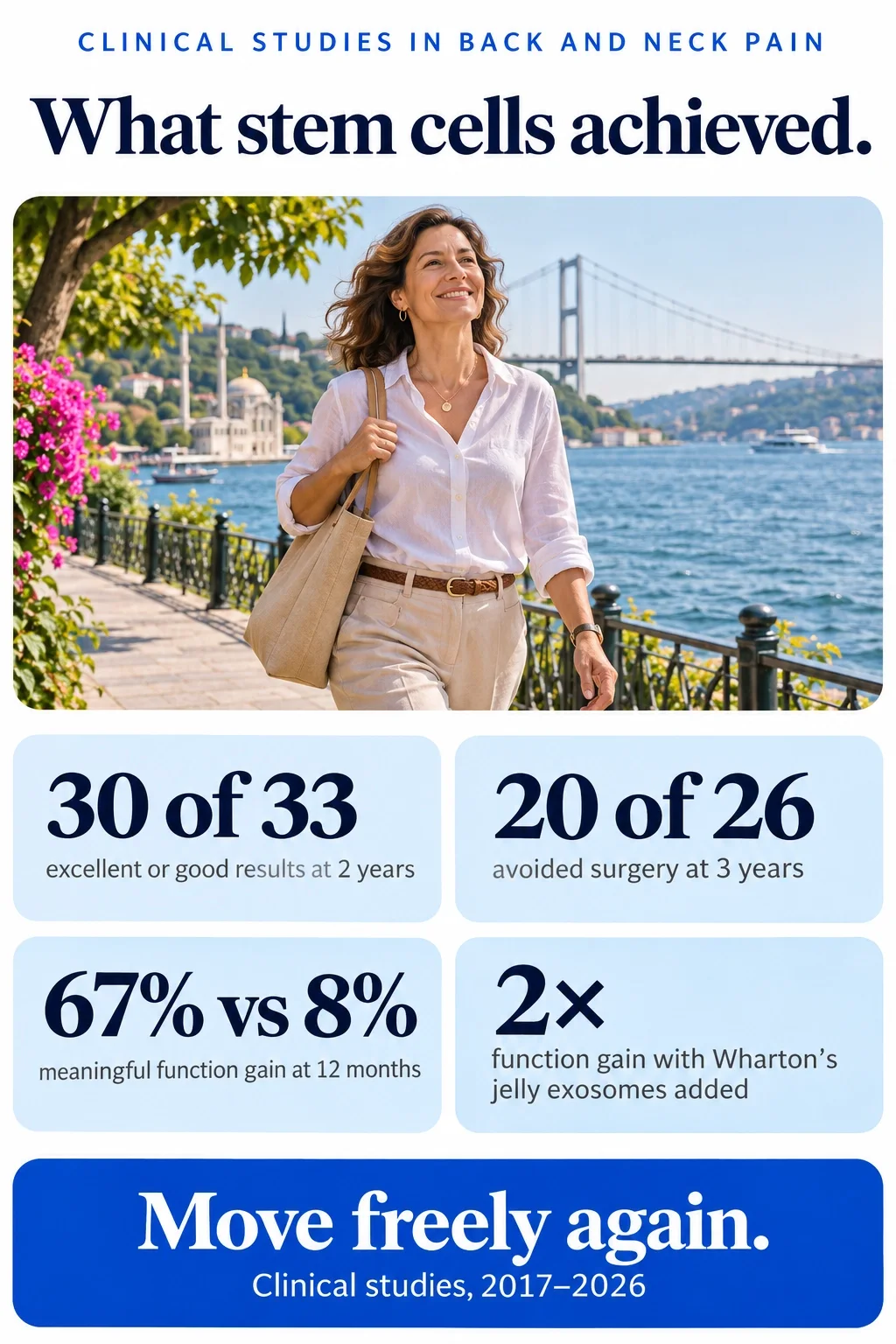
- 2.0×as likely to reach a clinically meaningful gain in function at 6 months when Wharton’s jelly exosomes were added to Wharton’s jelly stem cells4
- 30 of 33people rated their result excellent or good about two years after umbilical cord stem cells were injected into the disc5
- 67% vs 8%reached a meaningful gain in everyday function at 12 months after bone marrow cells into the spine, against conventional care alone10
- 20 of 26surgery candidates had not needed an operation three years after a disc injection of their own bone marrow cells6
02
What causes chronic back and neck pain? Discs, facet joints, nerves and the SI joint
You are in very large company. In 2020, low back pain affected 619 million people worldwide, and it remains the leading cause of years lived with disability.11 Neck pain affected 203 million people that year, a number expected to reach 269 million by 2050.12 That is why so much research now goes into treatments that work on the spine’s biology.
Your spine is a column of vertebrae with a disc between each pair. Every disc has a tough outer ring, the annulus, and a soft, water-rich centre, the nucleus. Discs have almost no blood supply of their own, so once they begin to wear, they repair themselves only slowly. At the back of each vertebra sit two small facet joints, and at the base of the spine the sacroiliac (SI) joints link the spine to the pelvis. Nerve roots leave the spinal canal between the vertebrae on their way to your arms and legs.
Where back and neck pain can start
Worn discs (degenerative disc disease)
A worn disc loses water and height. Inflammatory messengers such as TNF-α and IL-1β break down its matrix and sensitise nerves,16 and in painful discs, nerve fibres grow deep into areas that are normally nerve-free.17 Read more on degenerative disc disease.
Bulging or herniated disc
Part of the soft centre pushes outwards and presses on or inflames a nerve root, causing sciatica in the leg or, in the neck, pain down the arm. Many herniations shrink by themselves over the following months.18
Spinal stenosis
A narrowing of the spinal canal, usually from a mix of bulging discs, thickened ligaments and enlarged facet joints, which can cause leg pain and heaviness when you walk.
Facet joints
Wear in these small joints, often called facet syndrome or spinal osteoarthritis, causes aching back or neck pain that is often worse when you lean backwards or turn.
The SI joint
Where the spine meets the pelvis. Strain, wear or inflammation here, as in SI joint inflammation, causes pain low in the back and buttock.
The neck
The cervical spine has the same discs, facet joints and nerve roots in a smaller, more mobile form, so wear can cause neck stiffness, arm pain and headaches.
Your MRI is a starting point, not a verdict. In a review of 33 studies of 3,110 people without back pain, disc degeneration was seen on scans in 37% of 20-year-olds and 96% of 80-year-olds, and disc bulges in 30% and 84%. The authors concluded that many of these changes are part of normal ageing.19 What matters is which structure is causing your pain today.
That is why Dr. Cihan Bolat looks at your scans together with your symptoms and examination findings, and plans treatment for the discs, joints or nerves that are actually involved.
03
Back pain treatment without surgery: physiotherapy, injections, surgery and where stem cells fit
Back and neck care has improved enormously, and every option has its place. The best results usually come from combining them in the right order.
Exercise and physiotherapy: the foundation
A review of 249 trials found that exercise reduces chronic low back pain by 15.2 points on a 100-point scale compared with no treatment, usual care or placebo, a clinically important difference.20 Strength, mobility and good movement habits protect your spine for life, and they remain part of every plan we make.
Time and the body’s own healing
A herniated disc often settles by itself. Across 31 studies of 2,233 people treated without surgery, herniations shrank in 70.39% overall and in 87.77% of sequestered herniations, in which a fragment has broken free, mostly within six months; in the studies from Turkey, 83.68% shrank by at least a quarter.18
Medicines and injections
Pain relievers, anti-inflammatory tablets, steroid injections and nerve blocks can bring welcome relief and help you keep moving through a flare. Their effect is mainly on the symptoms, so many people look for something that also works on the tissue itself.
Surgery, when it is the right step
Discectomy, decompression, fusion and disc replacement help many people, especially when a nerve is clearly compressed. In a randomised trial in people aged 50 and over with lumbar spinal stenosis, physical function improved by 22.4 points after decompression surgery and by 19.2 points with a physiotherapy programme, with no significant difference between the groups at two years.21 For persistent leg pain after back surgery, spinal cord stimulation added to medical care gave 48% of people at least 50% less leg pain at six months, against 9% with medical care alone.22
Regenerative medicine: working on the biology
Stem cells and exosomes add a different kind of help: they aim to calm the inflammation inside the disc, joint or nerve and to support the tissue’s own repair.162 They fit between conservative care and surgery, for people whose pain continues despite good physiotherapy and who would like to avoid or delay an operation. They also complement surgery and physiotherapy rather than compete with them. See our stem cell treatment for degenerative disc disease for the treatment page.
04
Why Wharton’s jelly stem cells and exosomes for back and neck pain?
Wharton’s jelly is the soft, protective jelly that surrounds the blood vessels of the umbilical cord. Our cells come from cords donated after healthy births, so nothing is taken from your own body, and the cells start young. Wharton’s jelly stem cells are the heart of our back and neck plans, together with the exosomes made by the very same cells.
The strongest spine evidence for our cell type
In a 2026 study of 125 people with worn discs in the mid and lower back, Wharton’s jelly stem cells, the same type of cells we use, were injected into the disc, either alone or together with Wharton’s jelly exosomes. Both groups had significant reductions in pain and disability at 3 and 6 months compared with before treatment.4
Adding the exosomes brought an extra gain in everyday function. People who received both were about 1.5 times as likely to reach a clinically meaningful improvement in the Oswestry disability score at any follow-up visit, and about twice as likely at 6 months, compared with the cells alone. No serious adverse events were reported in either group.4
The researchers also analysed what the exosomes carry: 1,018 different proteins, rich in the building blocks and regulators of disc tissue, such as collagen II (COL2A1), lumican and the matrix-protecting proteins TIMP1 and TIMP2.4 In other words, Wharton’s jelly exosomes bring the disc a concentrated delivery of exactly the materials and signals it needs.
Umbilical cord stem cells alongside
Umbilical cord stem cells, the second cell type in our plans, have their own encouraging disc results. In 33 people with painful, intermediate-stage disc degeneration, about 5 million umbilical cord MSCs in hyaluronic acid were injected into the disc. At about two years, back pain scores had fallen by an average of 6.57 points and Oswestry scores by 38.3 points. The results were excellent in 11 people (33.3%), good in 19 (57.6%) and fair in 3, no one needed further treatment at the treated level, and no adverse reactions were seen.5 In the first two people treated this way, pain and function improved straight away and stayed better over two years.23
Wharton’s jelly and umbilical cord cells in numbers
- 125 peoplewith worn discs treated with Wharton’s jelly stem cells into the disc, alone or with exosomes; pain and disability fell significantly in both groups4
- 1,018 proteinscarried by Wharton’s jelly exosomes, including disc building blocks such as collagen II and lumican4
- 90.9%excellent or good results (30 of 33 people) about two years after umbilical cord stem cells into the disc5
- 6 vs 20 weeksaverage time for diabetic foot ulcers to heal with Wharton’s jelly exosomes, against standard care, in a randomised trial24
Young cells, rich signals
When researchers compared the proteins released by MSCs from four sources, the secretome of Wharton’s jelly cells had a more diverse composition than that of fat or bone marrow cells.25
Immune-friendly, no matching
Wharton’s jelly cells carry very few of the signals that trigger rejection, so no donor matching is needed.26 In disc and knee trials with donor MSCs, the immune response was weak and passing, and closer tissue matching did not improve results.27
Protecting disc cells
In laboratory studies, Wharton’s jelly stem cells protected human disc cells from dying under pressure,14 and in research models, umbilical cord stem cells lowered pain and inflammation signals and helped preserve the soft centre of the disc.28
Exosomes from the same tissue
Wharton’s jelly exosomes helped degenerated human disc cells grow and survive, increased their proteoglycan content and quietened inflammatory genes.2 In research models, umbilical cord exosomes restored disc cell energy and improved disc structure.29
Fresh, never frozen
Our cells are prepared for your date in a Ministry of Health-approved GMP laboratory and never frozen. In laboratory comparisons, fresh MSCs kept stronger immune-calming properties than cells used straight after thawing.30
The strongest pain relief of three sources
Across 36 randomised trials in arthritis, MSCs eased joint pain, and in osteoarthritis the largest effect came with umbilical cord cells (standardised difference −2.03), against −0.95 for bone marrow and −1.26 for fat-derived cells.31
Already helping people in Turkey
In Istanbul, young adults with brain injury gained motor independence over a year after Wharton’s jelly exosomes into the spinal fluid and muscles,32 and in a Turkish multicentre study, Wharton’s jelly stem cells by intrathecal, intramuscular and IV routes improved neurological function after chronic spinal cord injury.33
CD34+ exosomes as an extra
Your plan can also include CD34+ exosomes, which in research models carry strong signals for growing new small blood vessels.34
Why we combine cells and exosomes. Stem cells stay and keep releasing repair signals over time; exosomes deliver a concentrated dose of those signals at once. That is why our doctors put Wharton’s jelly stem cells and Wharton’s jelly exosomes together in almost every back and neck plan, with umbilical cord stem cells and CD34+ exosomes added where they help. Read more on our exosome therapy page and our disc treatment page.
05
How do stem cells and exosomes work on a painful disc, joint or nerve?
Stem cells do not simply fill a gap in the disc. They change the environment around the painful structure, so that the tissue’s own cells can survive, rebuild and calm down. Laboratory and animal research shows how, and it helps explain the gains now reported in people.
How regenerative treatment works in the spine
- Cells and exosomes placed preciselyInto the disc, beside the spine, around a nerve, with IV support for the whole body.
- Repair signalsGrowth factors, immune-calming messengers and exosomes.14
- A calmer, healthier discLess inflammation, protected disc cells and more matrix in research models.235
- Less pain, better functionLower pain and disability than sham or placebo in randomised trials.3
How Wharton’s jelly stem cells and exosomes aim to support your spine
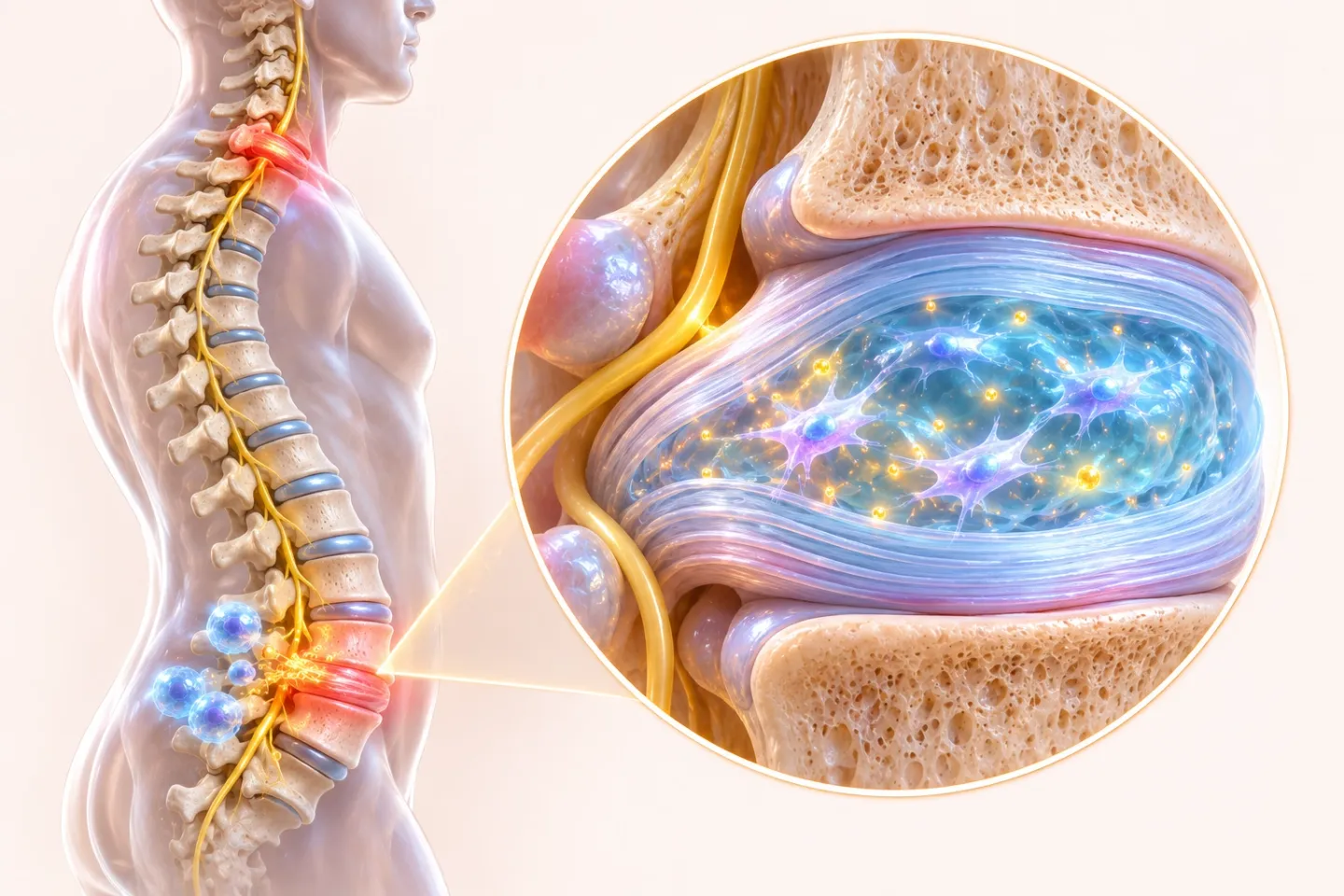
- Neck discWorn or bulging discs in the neck can cause neck pain and pain into the arms.
- Stem cellsWharton’s jelly MSCs, injected into or around the disc, release calming, repair-supporting signals.
- Lower-back discA common source of long-lasting low back pain: the disc slowly loses water and height.
- Nerve rootCalmer inflammation around the disc aims to ease irritation of the nearby nerve.
- Disc coreThe aim: a healthier, better-hydrated disc core with active disc cells.
Calming inflammation
Disc inflammation is driven by messengers such as TNF-α and IL-1β.16 Wharton’s jelly exosomes suppressed inflammatory and matrix-destroying genes in degenerated human disc cells,2 and umbilical cord stem cells lowered pain and inflammation genes in research models.28
Protecting disc cells
In laboratory studies, Wharton’s jelly stem cells reduced the death of disc cells exposed to compression,14 and umbilical cord exosomes lowered oxidative stress and improved the function of the cells’ power stations, the mitochondria.29
Rebuilding disc tissue
Across 22 controlled animal studies, stem cells placed in the disc improved disc height and MRI signal, increased collagen II and lowered the degeneration grade.35 Across 19 studies in 305 rats, stem cell exosomes raised the disc height index by 12.8% and improved MRI grades.36
More water in the disc
In ten people given stem cells into the disc, pain and disability improved rapidly, reaching 85% of the maximum gain within three months, and the water content of the discs was significantly higher at 12 months.37
Soothing irritated nerves
In rats with an injured spinal nerve root, one dose of umbilical cord exosomes into the spinal fluid relieved pain sensitivity, lowered TNF-α and IL-1β and raised the nerve-protecting factors BDNF and GDNF.38
Helping worn joints
In a phase I trial of stem cells injected into the lumbar facet joints, MRI showed less facet joint degeneration at one or more levels in five of the patients.9
Each of these effects matches a process behind chronic spine pain, which is why our doctors combine Wharton’s jelly stem cells with Wharton’s jelly exosomes and place them where your pain starts, as set out on our stem cell therapy page.
06
Does stem cell therapy work for back pain? What human trials report
Human studies of stem cells for back pain now include randomised trials, meta-analyses and follow-up of ten years. Here is what they report, with the cells and routes each one used. The Wharton’s jelly and umbilical cord studies are described in the section above.
Randomised trials
In a randomised trial in Spain, 24 people with chronic back pain from worn lumbar discs, who had not improved with conservative treatment, received donor bone marrow MSCs into the disc or a sham injection. The cell group improved quickly and significantly in pain and disability compared with controls, and disc quality on MRI improved in the treated patients while it worsened in the controls.39
In a multicentre randomised trial in the USA, 40 people with disc pain received an injection of their own bone marrow concentrate or platelet-rich plasma (PRP) into the disc, or a saline injection into the muscle. Both treatments improved pain and function significantly more than the placebo, every placebo patient chose to cross over to an active treatment, and no one had adverse effects, a hospital stay or surgery over 12 months.40
What the reviews of all the trials say
- Seven randomised trials. In a 2026 meta-analysis, MSCs injected into worn discs reduced pain and Oswestry disability scores significantly more than sham or placebo, the improvement grew with longer follow-up, and side effects were no more common than with sham. The authors concluded that the injections appear safe and effective for people whose disc pain has not responded to conservative care.3
- 518 patients. Across seven randomised trials of cell therapy for chronic low back pain, pain scores fell by 12.04 points and Oswestry scores by 8.03 points more than in the control groups, without more serious adverse events.41
- Nine studies, 245 patients. MSC treatment lowered pain scores by 41.62 points and Oswestry scores by 22.04 points from the start of treatment, with no serious related adverse events.42
Results that last
Of 26 people who were candidates for fusion or disc replacement, only six went on to surgery within three years of a disc injection of their own bone marrow concentrate. In the other 20, Oswestry scores fell from 56.7 to 17.5 and pain scores from 82.1 to 21.9 at 36 months, 40% improved by one MRI grade at one year, and no one worsened on MRI.6 In people treated with their own cultured MSCs, pain relief was significant at 3, 36, 48, 60 and 72 months,7 and in a series followed for ten years, the seven people who responded reported an average improvement of 78.1%.8
| Study | Design and people | Cells and route | What improved |
|---|---|---|---|
| Toro-Rivera 2026, Biomedicines4 | Prospective cohort; 125 people with worn mid and lower back discs | Wharton’s jelly MSCs into the disc, alone or with Wharton’s jelly exosomes | Pain and disability lower at 3 and 6 months; with exosomes, meaningful function gain about twice as likely at 6 months |
| Lewandrowski 2023, Pain Physician5 | Observational cohort; 33 people, followed about two years | Umbilical cord MSCs in hyaluronic acid, into the disc | Back pain −6.57, Oswestry −38.3; 90.9% excellent or good |
| Noriega 2017, Transplantation39 | Randomised, sham-controlled; 24 people | Donor bone marrow MSCs, into the disc | Quicker, greater relief than sham; MRI disc quality better |
| Navani 2024, Pain Physician40 | Randomised, placebo-controlled, multicentre; 40 people | Own bone marrow concentrate or PRP, into the disc | Pain and function better than placebo; no adverse effects or surgery at 12 months |
| Pettine 2017, Int Orthop6 | Prospective; 26 surgery candidates, 3 years | Own bone marrow concentrate, into the disc | 20 of 26 without surgery; Oswestry 56.7 → 17.5 |
| Atluri 2022, Pain Physician10 | Controlled, non-randomised; severe multi-level degeneration | Own bone marrow concentrate into discs, facets, nerves and SI joints | Meaningful function gain 67% vs 8% at 12 months; less opioid use |
| Qu 2025, Stem Cell Res Ther9 | Phase I; 10 people with facet joint arthritis, 2 years | Donor bone marrow MSCs, into two lumbar facet joints | Pain at least halved in 6 at every visit to 24 months |
| Pitts 2025, Cureus43 | Case series; 18 people with neck disc pain | Own bone marrow concentrate or PRP, into cervical discs | 14 of 18 reported 50% or greater improvement; no adverse events |
Each study used its own cells and routes. Your treatment uses fresh Wharton’s jelly and umbilical cord MSCs and Wharton’s jelly exosomes, prepared for your date and given by the routes Dr. Cihan Bolat plans. Read how we put this evidence into practice on our degenerative disc disease treatment page.
07
Herniated disc stem cell injection: help for a bulging disc and sciatica
A herniated or bulging disc is one of the most common reasons for sharp back pain with pain running down the leg (sciatica) or, in the neck, down the arm. The good news comes first: in most people, the herniation shrinks on its own. In 31 studies, 70.39% of herniations resorbed with conservative care, most within six months.18
But some people keep hurting after the herniation has settled, or live with a bulge that never quite calms down. For them, the pain often comes from two sources at once: the worn disc itself and an inflamed nerve root beside it.
What studies report
- Smaller disc bulges. In 33 people with low back pain, leg symptoms and a disc bulge on MRI, cultured MSCs injected into the disc were followed by significant pain relief that lasted up to six years. Of the 20 who had a follow-up MRI, 85% had a smaller disc bulge, by an average of 23%, and the mean improvement in overall rating was 60% at three years.7
- Treating the nerves too. In the controlled trial that treated discs, facet joints, spinal nerves and SI joints together, 74% of people had at least a two-point fall in pain at three months and 56% at twelve months, and their use of opioid painkillers fell.10
- Calming the nerve root. In rats with an injured spinal nerve root, umbilical cord exosomes given into the spinal fluid relieved pain, both soon after the injury and once pain was established.38 In research models, umbilical cord blood MSCs injected beside a crushed sciatic nerve improved walking function and nerve fibre regrowth.44
How we treat a herniated disc
For a disc that keeps hurting, the doctor may plan Wharton’s jelly stem cells and exosomes into the disc (intradiscal), a perineural injection around the irritated nerve root and an IV infusion for whole-body support. If a nerve is severely compressed, with marked weakness, surgery may be the right first step, and Dr. Cihan Bolat will tell you so honestly.
08
Stem cell therapy for neck pain and cervical disc degeneration
Neck pain is the lower back’s smaller cousin, and it is just as common in daily clinic life. It affected 203 million people in 2020, most often between the ages of 45 and 74, and more women than men.12 Long hours at screens, old injuries and natural disc wear all play their part.
Your neck has seven vertebrae, with discs between them and facet joints behind, all working harder than their size suggests: they carry your head and move it thousands of times a day. When cervical discs wear, the result can be neck stiffness, pain between the shoulder blades, pain or tingling down an arm (cervical radiculopathy) and headaches that start at the back of the head. As in the lower back, scan findings are common with age, so the doctor always matches them with your symptoms.19
What research shows for the neck
Cervical and lumbar discs are made of the same tissue, so the biology described above applies to both: in the laboratory, Wharton’s jelly exosomes supported human disc cells and calmed their inflammatory genes.2 In 18 people with neck disc pain, injections of their own bone marrow concentrate or PRP into the cervical discs, as part of a complete treatment of the neck segment, caused no adverse events, and 14 of the 18 reported an improvement of 50% or more.43
How we treat neck pain
For neck pain, and depending on Dr. Cihan Bolat’s evaluation, plans can combine ultrasound-guided paraspinal injections into and around the cervical facet joints, perineural injections around an irritated nerve and an IV infusion, with injection into a cervical disc when the disc is clearly the source. If your pain comes with headaches from the back of the head, read about occipital neuralgia and headaches and migraines. For worn cervical discs, see our degenerative disc disease page.
09
Facet joint pain, SI joint pain, spinal stenosis and pain after back surgery
Facet joint pain
Facet joints are small, true joints, lined with cartilage like a knee, and they wear in a similar way. In a phase I trial at the Mayo Clinic, ten people with painful lumbar facet arthritis received 10 million donor bone marrow MSCs into each of two facet joints. Six had their pain at least halved at 6, 12, 18 and 24 months, five gained meaningfully in physical function at every visit, and MRI showed less facet degeneration in five.9 Exosomes help too: in 20 adults with lumbar facet joint pain, one injection of bone marrow MSC vesicles improved pain severity by 65.04%, the impact of pain on daily life by 72.09% and Oswestry scores by 58.43% at three months, with no complications.45 Read more on facet syndrome and spinal osteoarthritis.
SI joint pain and inflammatory back pain
The SI joints were among the structures treated in the controlled trial in which 67% of people reached a meaningful gain in function, against 8% with conventional care.10 When back pain comes from inflammation, as in ankylosing spondylitis, the IV route comes into its own: in 31 people who had not responded to anti-inflammatory tablets, four IV infusions of donor MSCs brought at least a 20% improvement (an ASAS20 response) in 77.4% at four weeks, and spinal inflammation on MRI fell significantly by week 20, with no adverse effects.46 See our page on SI joint inflammation.
Spinal stenosis and stem cells
Stenosis has several contributors, a bulging disc, enlarged facet joints and thickened ligaments, so treatment aims at the parts that respond. Stem cells and exosomes in the disc, the facet joints and around the nerve roots aim to calm the inflammation that makes a narrow canal painful. In people with severe, multi-level spinal degeneration, treating these structures together brought clear gains in function and pain over 12 months.10 Physiotherapy matters here too: in the randomised stenosis trial, it improved function almost as much as surgery.21 When a nerve is tightly compressed, decompression surgery remains a good option.
After failed back surgery
Pain after back surgery often has a new source: the disc above or below a fusion, the facet joints, scar tissue around a nerve or a disc that was partly removed. Spinal cord stimulation helps many people with persistent leg pain,22 and regenerative treatment aims at the structures still causing pain. In research models, stem cells placed into a disc after a partial discectomy supported its regeneration.47 Before surgery, the outlook is encouraging too: 20 of 26 surgery candidates had not needed an operation three years after a disc injection.6 Dr. Cihan Bolat reviews your scans and operation notes and tells you honestly which structures can be treated. See our disc treatment page for the full approach.
10
Muse cells and Muse exosomes: an optional add-on
Muse cells, short for multilineage-differentiating stress-enduring cells, are a small group of especially hardy repair cells within the MSC family, discovered in Japan in 2010.48 Donor Muse cells have been given without tissue matching or immune-suppressing medicines.49
Two findings make them interesting for the spine. In a trial in ten people with a cervical spinal cord injury, one IV dose of a donor Muse cell product was followed by significant gains in motor scores, daily activities and quality of life, with no safety concerns.50 And in mice with nerve pain, Muse cells given into the spinal fluid eased pain better than equal low doses of bone marrow cells, by releasing the calming messengers TGF-β and IL-10.51 Muse exosomes carry the cells’ secreted signals in cell-free form.5253
If Dr. Cihan Bolat recommends it, Muse cells can be added by IV infusion or intrathecally, and Muse exosomes by IV infusion, alongside your Wharton’s jelly stem cells and exosomes, which remain the core of your plan.
11
Back and neck pain treatment options compared
Each option has its place, and the strongest plans combine several of them. This table shows where each one fits.
| Option | How it helps | When it fits | How it is given |
|---|---|---|---|
| Wharton’s jelly stem cells and exosomes | Repair signals that aim to calm inflammation and protect disc cells;2 pain and disability fell at 3 and 6 months, and adding exosomes made a meaningful function gain about twice as likely at 6 months4 | Pain that continues despite physiotherapy, before or instead of surgery, or after it | Into the disc, beside the spine, around nerves and by IV, in one treatment day |
| Umbilical cord stem cells | 30 of 33 people rated their result excellent or good after disc injection5 | Added to Wharton’s jelly cells where the doctor advises | The same routes, in the same treatment day |
| Exercise and physiotherapy | Pain 15.2 points lower on a 100-point scale than with no treatment or usual care20 | Every stage, before and after any other treatment | Sessions with a therapist and exercises at home |
| Pain medicines, steroid injections and nerve blocks | Short-term relief of pain and inflammation | Flares, and to keep you moving | Tablets, or injections into a joint or around a nerve |
| PRP (platelet-rich plasma) | Better than placebo in a randomised disc trial, like bone marrow concentrate40 | Mild to moderate disc or joint pain | Injection of your own concentrated platelets |
| Surgery | Decompression improved function by 22.4 points in spinal stenosis21 | Clear nerve compression, weakness or instability | Discectomy, decompression, fusion or disc replacement |
| Spinal cord stimulation | 48% vs 9% with at least half less leg pain after back surgery22 | Persistent leg pain after surgery | A small implanted stimulator |
These options add up rather than compete. Your physiotherapy continues, and any regenerative plan is made around the care you already have, in agreement with your own doctors.
12
How we plan back and neck treatment in Istanbul: intradiscal, paraspinal, perineural and IV
Every plan starts with you, not with a protocol. Dr. Cihan Bolat, our medical director and a specialist in anaesthesiology and reanimation and in regenerative medicine, reviews with his team your MRI and other scans, your symptoms and examination, the treatments you have already had and your goals.
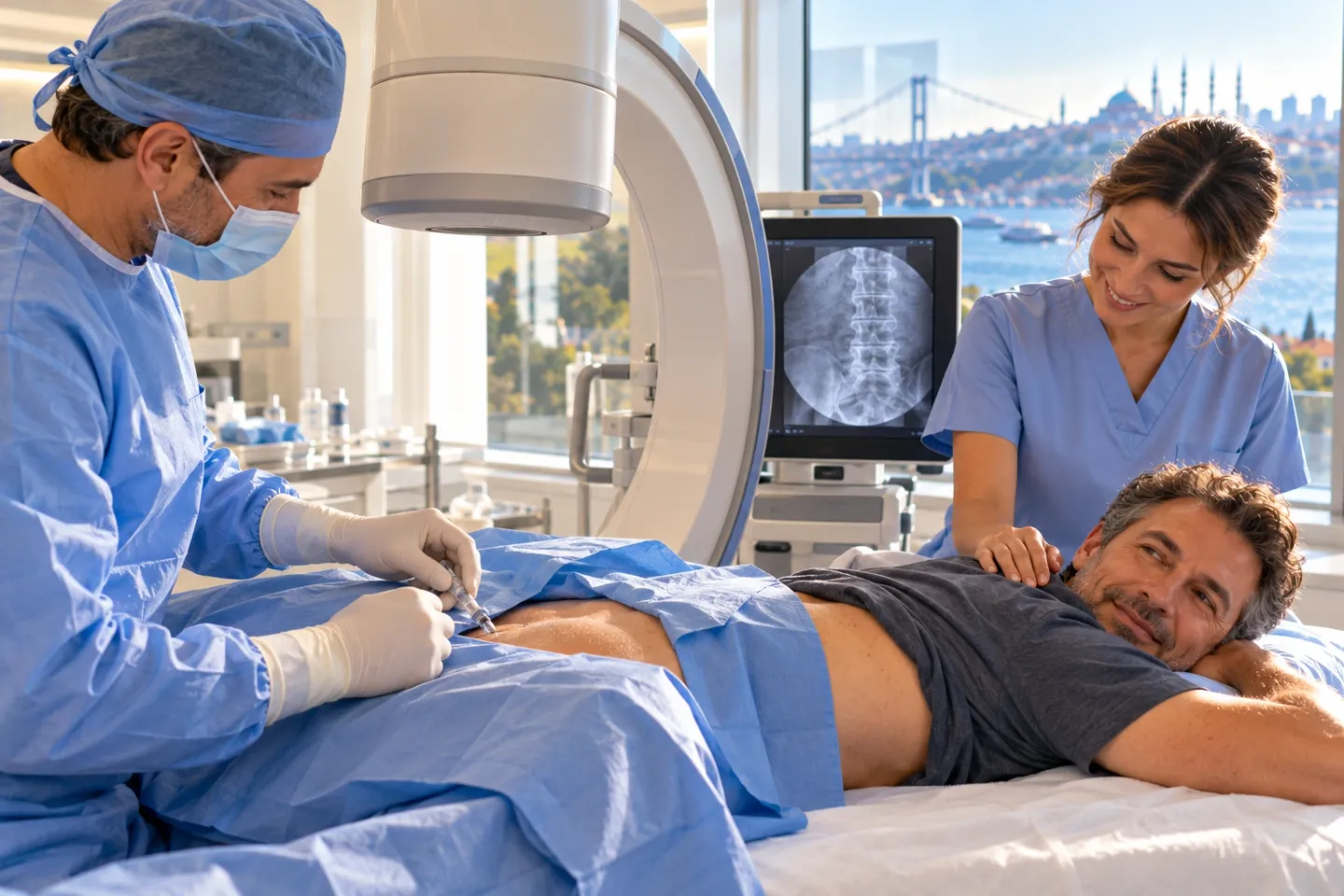
He then chooses where the cells and exosomes should go. Many plans combine routes, because back and neck pain rarely has a single source: for example, an injection into a worn disc, paraspinal injections into the facet joints and an IV infusion for whole-body, immune-calming support. When nerve pain dominates, he may add a perineural injection or, in selected cases, an intrathecal dose into the spinal fluid.
Four routes, chosen for your spine
- IntradiscalA precise, image-guided injection into the worn disc; pain and disability fell more than with sham across seven randomised trials.3
- Paraspinal and facetUltrasound-guided injections into the facet joints and the tissues beside the spine; pain at least halved for two years in a facet trial.9
- PerineuralA fine injection around an irritated nerve root, the source of sciatica and arm pain.38
- IV infusionWhole-body, immune-calming support; spinal inflammation fell after IV MSCs in inflammatory back pain.46
Fresh cells, prepared for your date
Wharton’s jelly and umbilical cord MSCs from cords donated after healthy births, prepared in a Ministry of Health-approved GMP laboratory and never frozen.30
No harvest, no donor matching
Nothing is taken from your body: no bone marrow or fat harvest. Wharton’s jelly cells need no donor matching.26
Your cell count in writing
The number of cells in your plan is confirmed in writing, and the count and viability are checked and certified by the GMP laboratory before treatment.
Exosomes in your plan
Wharton’s jelly MSC exosomes, with CD34+ exosomes where they help, given into the same structures as the cells or by IV infusion.
Comfort on the treatment day
Dr. Cihan Bolat, a specialist in anaesthesiology and reanimation, plans your comfort for every injection, at a calm pace.
Your physiotherapy continues
Keep moving before and after treatment, and share the written plan with your own doctor and physiotherapist.
For the full treatment page, see stem cell therapy for degenerative disc disease.
13
Is stem cell therapy for back pain safe?
Safety comes first for everyone with back or neck pain, and the published record is reassuring. A 2021 meta-analysis of 62 randomised trials with 3,546 patients found MSC treatment safe, the most common effect a passing fever.13
The spine studies point the same way. In the meta-analysis of seven randomised disc trials, treatment-emergent and serious adverse events were no more common with MSCs than with sham or placebo,3 and across seven randomised trials of cell therapy for low back pain, serious adverse events were not increased.41 No serious adverse events were reported with Wharton’s jelly stem cells and exosomes in 125 people,4 no adverse reactions with umbilical cord cells in 33,5 and no study-related serious adverse events or signs of immune reaction with donor cells in the facet joints.9
For nerve-related plans, the intrathecal route has a reassuring record too: a systematic review of 39 studies found no serious adverse events related to intrathecal MSC injection.54
Your own care adds further layers. Wharton’s jelly cells need no donor matching,26 your cells are prepared in a Ministry of Health-approved GMP laboratory with certified count and viability, and Dr. Cihan Bolat, a specialist in anaesthesiology and reanimation, plans each injection and your comfort. We screen carefully beforehand, and a specialist team treats you.
14
Why patients travel to Istanbul, Turkey for stem cell therapy for back pain
People with back and neck pain come to us from the UK, Germany, the Netherlands, across Europe, the Middle East and the Gulf, the USA and beyond. Most have had good care at home: physiotherapy, medicines, injections and sometimes surgery. What they look for in Istanbul is the regenerative part of the plan: fresh Wharton’s jelly stem cells and exosomes, placed precisely by a specialist team in one treatment day.

A specialist-led plan
A free medical review and phone consultation with the specialist team led by Uzm. Dr. Cihan Bolat, and a written plan before you book.
A fixed price before you travel
One all-inclusive price in writing, so you can decide calmly at home.
One treatment day
Most plans take one treatment day in Istanbul, with no second trip needed.
Help at every step
Help with the hotel, ground transport and translation, and a personal case manager who plans your stay around your back.
Easy to reach
Istanbul has two international airports. Many European cities have direct flights, and from much of Western Europe the journey takes around three to four hours.
Follow-up from home
Reviews at about 1, 3, 6 and 12 months, so your care continues after you fly home.
Travelling with back or neck pain
A little planning makes the journey comfortable. Choose an aisle seat so you can stand and stretch, walk the aisle every hour, keep your medicines in your hand luggage, use a small cushion for your lower back or neck, and ask for help with your bags. Our clinic is in Suadiye, a calm residential district on Istanbul’s Asian side near the Marmara seafront, where gentle walks along the shore are a pleasant way to keep moving.
15
Your treatment in Istanbul, step by step
From your first message to follow-up at home, every step is planned with you in advance, whether you are travelling from London, Berlin, Amsterdam, Dubai or New York. For the fuller story, read the stem cell treatment in Turkey, step by step, or request your free consultation now.
Send us your scans and reports
Share your MRI report and images of the lower back or neck, any X-rays, operation notes, the treatments you have tried, your current medicines and your questions through our free consultation request, or by WhatsApp on +90 534 856 92 92.
Free medical review and phone call
Dr. Cihan Bolat and his specialist team review your case free of charge and talk it through with you.
Your written plan and fixed price
If treatment is a good fit, you receive a written plan with the cell count, the exosomes and the routes, and a fixed, all-inclusive price before you travel.
One treatment day in Istanbul
Fresh stem cells and exosomes are prepared for your date. Our team welcomes you and guides you calmly through your injections and IV infusion in one treatment day.
Home, movement and follow-up
Back home, you keep moving and continue your exercises, and we review your progress at about 1, 3, 6 and 12 months and stay available for your questions.
16
How much does stem cell therapy for back pain cost in Turkey?
Every plan is personal, so the price depends on the number of cells, the exosomes and the routes in your plan, for example one disc, several levels, the facet joints or the neck as well as the lower back. After the free medical review, you receive a fixed, all-inclusive price in writing before you book anything, so there are no surprises.
Included
- Free medical review and phone consultation
- Fresh Wharton’s jelly and umbilical cord stem cells, with certified count and viability
- Wharton’s jelly exosomes, and CD34+ exosomes if they are in your plan
- All injections and the IV infusion in your plan, by our specialist team in one treatment day
- Ground transport to and from the clinic, and help with translation
- A personal case manager and follow-up reviews
Not included / optional
- Flights
- Hotel stay, which we can help you arrange
- Your physiotherapy and medicines at home
- A repeat session, if you decide on one later
Read why patients choose Turkey for stem cell therapy, or see how our cells are prepared on our stem cell therapy page.
17
Frequently asked questions
Does stem cell therapy work for back pain?
Human studies are encouraging. Across seven randomised trials, stem cells injected into worn discs reduced pain and disability significantly more than sham or placebo, and the gains grew over time. In 125 people treated with Wharton’s jelly stem cells, pain and disability fell significantly at 3 and 6 months, and adding Wharton’s jelly exosomes made a meaningful gain in function about twice as likely. Your own result depends on the source of your pain, which is why the doctor reviews your MRI first.
Can stem cell therapy help neck pain?
Yes, it can be planned for the neck as well as the lower back. Cervical discs and facet joints are made of the same tissues and wear in the same way. In 18 people with neck disc pain, injections into the cervical discs caused no adverse events, and 14 reported an improvement of 50% or more. For the neck, plans often combine ultrasound-guided injections into the facet joints, injections around an irritated nerve and an IV infusion.
What is an intradiscal stem cell injection?
It is a precise, image-guided injection that places stem cells, and often exosomes, into the soft centre of a worn disc, where the disc’s own repair is slowest because it has almost no blood supply. In a randomised trial, donor MSCs injected into worn discs improved pain and disability faster and more than sham, and disc quality on MRI improved.
Is a herniated disc stem cell injection a good option?
It can be, when a herniated or bulging disc keeps hurting. Many herniations shrink on their own, about 70% in studies of conservative care, so time and physiotherapy come first. For a disc that does not settle, cells injected into the disc were followed by pain relief lasting up to six years, and 85% of rescanned patients had a smaller disc bulge. If a nerve is severely compressed with marked weakness, surgery may be the better first step.
Can a worn disc be regenerated with stem cells?
Studies show signs of disc repair as well as pain relief. In one study, the water content of treated discs was significantly higher at 12 months; in another, 40% of patients improved by one MRI grade and none worsened; and in a randomised trial, disc quality improved with cells and worsened with sham. The main aim is less pain and better function, and the disc changes are an encouraging bonus.
Which stem cells are best for back and neck pain?
We lead with fresh Wharton’s jelly stem cells and Wharton’s jelly exosomes. In 125 people with worn discs, Wharton’s jelly cells were followed by significant falls in pain and disability, and adding their exosomes made a meaningful gain in function about twice as likely at 6 months. Umbilical cord stem cells come alongside: 30 of 33 people rated their result excellent or good after disc injection. No harvest from your body and no donor matching are needed.
What are exosomes, and can they help back pain?
Exosomes are tiny packages of proteins and RNA that stem cells use to send repair messages. Wharton’s jelly exosomes carry more than a thousand proteins, including disc building blocks such as collagen II. In 20 adults with facet joint pain, one injection of stem cell vesicles improved pain severity by 65% at three months, and in people with worn discs, adding Wharton’s jelly exosomes to the cells improved function further.
How long does stem cell therapy for back pain take to work, and how long does it last?
Changes usually build over weeks to months. In one study, 85% of the maximum gain came within three months. Relief has been followed for a long time: pain was still significantly lower at six years in one study, and in a ten-year series, the people who responded reported an average improvement of 78%. That is why we review your progress at about 1, 3, 6 and 12 months.
Is stem cell therapy a degenerative disc disease treatment without surgery?
Yes. The treatment uses injections, not operations, and it is often chosen by people who would like to avoid or delay surgery. Of 26 people who were candidates for fusion or disc replacement, 20 had not needed surgery three years after a disc injection of their own bone marrow cells. Surgery remains the right choice for some people, and Dr. Cihan Bolat will tell you honestly which group you are in.
Can stem cells help spinal stenosis?
They can help with the parts of stenosis that cause pain: the bulging disc, the enlarged facet joints and the inflamed nerve roots. In people with severe, multi-level spinal degeneration, treating discs, facets, nerves and SI joints together gave 67% a meaningful gain in function at 12 months, against 8% with conventional care. Physiotherapy also helps, and decompression surgery remains a good option when a nerve is tightly compressed.
Can stem cells help facet joint pain?
Facet joints respond well in studies. In a phase I trial, donor stem cells injected into lumbar facet joints at least halved pain in six of ten people at every visit up to two years, and MRI showed less joint degeneration in five. In another study, one injection of stem cell vesicles into the facet joints improved disability scores by 58% at three months.
Can stem cell therapy help after failed back surgery?
Often the doctor can find structures that still cause pain after surgery, such as the disc above or below a fusion, the facet joints or an irritated nerve, and these can be treated with injections and an IV infusion. Dr. Cihan Bolat reviews your scans and operation notes and tells you honestly what is realistic. Spinal cord stimulation is another option that helps many people with persistent leg pain after surgery.
Is stem cell therapy better than PRP or steroid injections for back pain?
They do different jobs, and each has its place. Steroid injections calm a flare quickly. In a randomised disc trial, both PRP and bone marrow concentrate improved pain and function more than placebo. Wharton’s jelly stem cells and exosomes aim to work on the biology of the disc, joint and nerve, and in studies their benefits have been followed for years. The doctor advises which option suits your spine.
Is stem cell therapy for back pain safe?
The published record is reassuring. A 2021 analysis of 62 randomised trials with 3,546 patients found MSC treatment safe, with a passing fever the most common effect. In the randomised disc trials, side effects were no more common with stem cells than with sham, and no serious adverse events were reported with Wharton’s jelly cells and exosomes in 125 people. We screen carefully, and a specialist team treats you.
Who is a good candidate for stem cell therapy for back or neck pain?
Good candidates are adults with back or neck pain lasting several months from worn or bulging discs, facet joints or the SI joint, whose pain continues despite physiotherapy and other treatment, and people who would like to avoid or delay surgery or still have pain after it. Dr. Cihan Bolat reviews your MRI, symptoms and medical history free of charge and tells you honestly whether treatment is a good fit.
How much does stem cell therapy for back pain cost in Istanbul?
The price depends on the number of cells, the exosomes and the routes in your plan, such as one disc or several levels, the facet joints or the neck as well. After a free medical review, you receive a fixed, all-inclusive price in writing before you travel, covering the treatment, the fresh cells with certified count and viability, transport to and from the clinic, a personal case manager and follow-up reviews. Flights and the hotel are separate.
Can I have stem cell therapy for back pain in Turkey if I live abroad?
Yes. Many of our patients travel from the UK, Europe, the Gulf and further afield. You send your MRI and reports from home, receive a free review and a written plan with a fixed price, and most plans take one treatment day in Istanbul. Our case manager helps with the hotel, transport and translation, follow-up continues from home, and you can reach us by WhatsApp on +90 534 856 92 92.

Medical review
Uzm. Dr. Cihan Bolat
Medical Director, Istanbul Stemcell
This page was written from the published studies listed below and reviewed for medical accuracy on .
18
References
- Caplan AI, Dennis JE. Mesenchymal stem cells as trophic mediators. J Cell Biochem. 2006;98(5):1076-84. PMID 16619257
- Tilotta V, et al. Wharton's Jelly mesenchymal stromal cell-derived extracellular vesicles promote nucleus pulposus cell anabolism in an in vitro 3D alginate-bead culture model. JOR Spine. 2024;7(1):e1274. PMID 38222813
- Rahyussalim AJ, et al. Intradiscal mesenchymal stem cell therapy for degenerative disc disease: a systematic review and meta-analysis of randomized trials. Asian Spine J. 2026;20(3):541-557. PMID 41844059
- Toro-Rivera A, et al. Mechanisms of Exosome-Supplemented WJ-MSC Therapy in Degenerative Disc Disease: Integrating Proteomic Profiling with Clinical Functional Recovery. Biomedicines. 2026;14(10). PMID 42940041
- Lewandrowski KU, et al. Pain Relief After Allogenic Stem Cell Disc Therapy. Pain Physician. 2023;26(2):197-206. PMID 36988365
- Pettine KA, et al. Autologous bone marrow concentrate intradiscal injection for the treatment of degenerative disc disease with three-year follow-up. Int Orthop. 2017;41(10):2097-2103. PMID 28748380
- Centeno C, et al. Treatment of lumbar degenerative disc disease-associated radicular pain with culture-expanded autologous mesenchymal stem cells: a pilot study on safety and efficacy. J Transl Med. 2017;15(1):197. PMID 28938891
- Hooper N, et al. Long-Term Effectiveness of Intradiscal Culture-Expanded Mesenchymal Stem Cells (MSCs) with Platelet Products for Discogenic Low Back Pain. Biomedicines. 2025;13(10). PMID 41153652
- Qu W, et al. Intra-articular delivery of allogeneic bone marrow derived mesenchymal stromal cells (BM-MSCs) for painful lumbar facet arthropathy: a phase I clinical trial. Stem Cell Res Ther. 2025;16(1):596. PMID 41163019
- Atluri S, et al. Evaluation of the Effectiveness of Autologous Bone Marrow Mesenchymal Stem Cells in the Treatment of Chronic Low Back Pain Due to Severe Lumbar Spinal Degeneration: A 12-Month, Open-Label, Prospective Controlled Trial. Pain Physician. 2022;25(2):193-207. PMID 35322978
- . Global, regional, and national burden of low back pain, 1990-2020, its attributable risk factors, and projections to 2050: a systematic analysis of the Global Burden of Disease Study 2021. Lancet Rheumatol. 2023;5(6):e316-e329. PMID 37273833
- . Global, regional, and national burden of neck pain, 1990-2020, and projections to 2050: a systematic analysis of the Global Burden of Disease Study 2021. Lancet Rheumatol. 2024;6(3):e142-e155. PMID 38383088
- Wang Y, Yi H, Song Y. The safety of MSC therapy over the past 15 years: a meta-analysis. Stem Cell Res Ther. 2021;12(1):545. PMID 34663461
- Zhao YT, et al. Wharton's Jelly-derived mesenchymal stem cells suppress apoptosis of nucleus pulposus cells in intervertebral disc degeneration via Wnt pathway. Eur Rev Med Pharmacol Sci. 2020;24(19):9807-9814. PMID 33090383
- Kalluri R, LeBleu VS. The biology, function, and biomedical applications of exosomes. Science. 2020;367(6478). PMID 32029601
- Risbud MV, Shapiro IM. Role of cytokines in intervertebral disc degeneration: pain and disc content. Nat Rev Rheumatol. 2014;10(1):44-56. PMID 24166242
- Freemont AJ, et al. Nerve ingrowth into diseased intervertebral disc in chronic back pain. Lancet. 1997;350(9072):178-81. PMID 9250186
- Zou T, et al. Incidence of Spontaneous Resorption of Lumbar Disc Herniation: A Meta-analysis. Clin Spine Surg. 2024;37(6):256-269. PMID 37559207
- Brinjikji W, et al. Systematic literature review of imaging features of spinal degeneration in asymptomatic populations. AJNR Am J Neuroradiol. 2015;36(4):811-6. PMID 25430861
- Hayden JA, et al. Exercise therapy for chronic low back pain. Cochrane Database Syst Rev. 2021;9(9):CD009790. PMID 34580864
- Delitto A, et al. Surgery versus nonsurgical treatment of lumbar spinal stenosis: a randomized trial. Ann Intern Med. 2015;162(7):465-73. PMID 25844995
- Kumar K, et al. Spinal cord stimulation versus conventional medical management for neuropathic pain: a multicentre randomised controlled trial in patients with failed back surgery syndrome. Pain. 2007;132(1-2):179-88. PMID 17845835
- Pang X, Yang H, Peng B. Human umbilical cord mesenchymal stem cell transplantation for the treatment of chronic discogenic low back pain. Pain Physician. 2014;17(4):E525-30. PMID 25054402
- Kishta MS, et al. The transforming role of wharton's jelly mesenchymal stem cell-derived exosomes for diabetic foot ulcer healing: a randomized controlled clinical trial. Stem Cell Res Ther. 2025;16(1):559. PMID 41084065
- Shin S, et al. Comparative Proteomic Analysis of the Mesenchymal Stem Cells Secretome from Adipose, Bone Marrow, Placenta and Wharton's Jelly. Int J Mol Sci. 2021;22(2). PMID 33467726
- Weiss ML, et al. Immune properties of human umbilical cord Wharton's jelly-derived cells. Stem Cells. 2008;26(11):2865-74. PMID 18703664
- García-Sancho J, et al. Influence of HLA Matching on the Efficacy of Allogeneic Mesenchymal Stromal Cell Therapies for Osteoarthritis and Degenerative Disc Disease. Transplant Direct. 2017;3(9):e205. PMID 28894792
- Ekram S, et al. Human umbilical cord-derived mesenchymal stem cells and their chondroprogenitor derivatives reduced pain and inflammation signaling and promote regeneration in a rat intervertebral disc degeneration model. Mol Cell Biochem. 2021;476(8):3191-3205. PMID 33864569
- Jia S, et al. Exosomes from umbilical cord mesenchymal stem cells ameliorate intervertebral disc degeneration via repairing mitochondrial dysfunction. J Orthop Translat. 2024;46:103-115. PMID 38841339
- Moll G, et al. Do cryopreserved mesenchymal stromal cells display impaired immunomodulatory and therapeutic properties? Stem Cells. 2014;32(9):2430-42. PMID 24805247
- Zeng L, et al. Efficacy and safety of culture-expanded mesenchymal stromal cell therapy in the treatment of 4 types of inflammatory arthritis: A systematic review and meta-analysis of 36 randomized controlled trials. Semin Arthritis Rheum. 2024;68:152498. PMID 38970896
- Kabatas S, et al. Efficacy and safety of exosomes from Wharton's Jelly-derived mesenchymal stem cells in traumatic brain injury. World J Crit Care Med. 2025;14(4):103782. PMID 41377533
- Kaplan N, et al. Multiroute administration of Wharton's jelly mesenchymal stem cells in chronic complete spinal cord injury: A phase I safety and feasibility study. World J Stem Cells. 2025;17(5):101675. PMID 40503363
- Mathiyalagan P, et al. Angiogenic Mechanisms of Human CD34(+) Stem Cell Exosomes in the Repair of Ischemic Hindlimb. Circ Res. 2017;120(9):1466-1476. PMID 28298297
- Wang Z, et al. Efficacy of intervertebral disc regeneration with stem cells - a systematic review and meta-analysis of animal controlled trials. Gene. 2015;564(1):1-8. PMID 25796605
- Wei YP, et al. Therapeutic effects of stem cell-derived extracellular vesicles in animal models of intervertebral disc degeneration: a systematic review and meta-analysis of species differences and delivery strategies. Front Bioeng Biotechnol. 2026;14:1749916. PMID 41693926
- Orozco L, et al. Intervertebral disc repair by autologous mesenchymal bone marrow cells: a pilot study. Transplantation. 2011;92(7):822-8. PMID 21792091
- Shiue SJ, et al. Mesenchymal stem cell exosomes as a cell-free therapy for nerve injury-induced pain in rats. Pain. 2019;160(1):210-223. PMID 30188455
- Noriega DC, et al. Intervertebral Disc Repair by Allogeneic Mesenchymal Bone Marrow Cells: A Randomized Controlled Trial. Transplantation. 2017;101(8):1945-1951. PMID 27661661
- Navani A, et al. The Safety and Effectiveness of Orthobiologic Injections for Discogenic Chronic Low Back Pain: A Multicenter Prospective, Crossover, Randomized Controlled Trial with 12 Months Follow-up. Pain Physician. 2024;27(1):E65-E77. PMID 38285032
- Li Z, et al. Clinical efficacy and safety of somatic cell therapy for chronic low back pain: evidence from the pooled randomized controlled trials. Stem Cell Res Ther. 2025;16(1):495. PMID 40999526
- Zhang W, et al. Mesenchymal stem cells can improve discogenic pain in patients with intervertebral disc degeneration: a systematic review and meta-analysis. Front Bioeng Biotechnol. 2023;11:1155357. PMID 37397969
- Pitts J, et al. Intradiscal Injections of Bone Marrow Concentrate or Leukocyte-Rich Platelet-Rich Plasma for the Treatment of Cervical Discogenic Pain: A Case Series. Cureus. 2025;17(5):e84166. PMID 40519474
- Sung MA, et al. Human umbilical cord blood-derived mesenchymal stem cells promote regeneration of crush-injured rat sciatic nerves. Neural Regen Res. 2012;7(26):2018-27. PMID 25624833
- Wilson JE, et al. Safety of bone marrow derived mesenchymal stem cell extracellular vesicle injection for lumbar facet joint pain. Regen Med. 2024;19(1):19-26. PMID 38327218
- Wang P, et al. Effects and safety of allogenic mesenchymal stem cell intravenous infusion in active ankylosing spondylitis patients who failed NSAIDs: a 20-week clinical trial. Cell Transplant. 2014;23(10):1293-303. PMID 23711393
- Ukeba D, et al. Bone marrow mesenchymal stem cells combined with ultra-purified alginate gel as a regenerative therapeutic strategy after discectomy for degenerated intervertebral discs. EBioMedicine. 2020;53:102698. PMID 32143180
- Kuroda Y, et al. Unique multipotent cells in adult human mesenchymal cell populations. Proc Natl Acad Sci U S A. 2010;107(19):8639-43. PMID 20421459
- Minatoguchi S, et al. Donor Muse Cell Treatment Without HLA-Matching Tests and Immunosuppressant Treatment. Stem Cells Transl Med. 2024;13(6):532-545. PMID 38560897
- Koda M, et al. Safety and feasibility of intravenous administration of a single dose of allogenic-Muse cells to treat human cervical traumatic spinal cord injury: a clinical trial. Stem Cell Res Ther. 2024;15(1):259. PMID 39135172
- Zhao Y, et al. Multilineage differentiating stress-enduring cells alleviate neuropathic pain in mice through TGF-β and IL-10-dependent anti-inflammatory signaling. J Biol Chem. 2026;302(3):111270. PMID 41655691
- Alessio N, et al. The secretome of MUSE cells contains factors that may play a role in regulation of stemness, apoptosis and immunomodulation. Cell Cycle. 2017;16(1):33-44. PMID 27463232
- Rajabi A, Bonyadi M. Muse Cell-Derived Exosomes: a Hypothesis for a Cell-Free Therapeutic Platform in Regenerative Medicine. Stem Cell Rev Rep. 2025;21(6):1860-1862. PMID 40531406
- Barmada A, et al. Serious Adverse Events Have Not Been Reported with Spinal Intrathecal Injection of Mesenchymal Stem Cells: A Systematic Review. Curr Stem Cell Res Ther. 2023;18(6):829-833. PMID 35980065