
01
Can you reverse aging? The honest, hopeful answer
In short: no treatment can change the number of birthdays you have had, and an honest clinic will never promise to make you young again. What science can do in 2026 is measure how fast your body is aging and improve the things that make you feel and look your best: strength, walking speed, stamina, energy, skin, hair and chronic inflammation. In randomised trials, lifestyle programmes, stem cells and NAD+ boosters have each moved at least one of these measures in the right direction.1411
Scientists separate two kinds of age. Your chronological age is simply the time since you were born. Your biological age describes how well your cells, tissues and organs are working, and it can run ahead of or behind the date in your passport. That is why two people of 60 can have such different bodies, energy levels and faces.
So the most useful question is a practical one: how much strength, energy and freshness can you protect, and how much can you win back? The answer is more encouraging than many people expect. In one placebo-controlled trial, blood-based biological age rose over 60 days in the placebo group but held steady in every group taking an NAD+ booster,11 and in older adults with frailty, stem cell infusions improved walking, strength and quality of life.45
This guide takes you through every layer, from the everyday habits with the strongest evidence to the regenerative treatments we offer in Istanbul. For our full treatment page, see anti-aging stem cell therapy in Istanbul.
What science can measure and improve
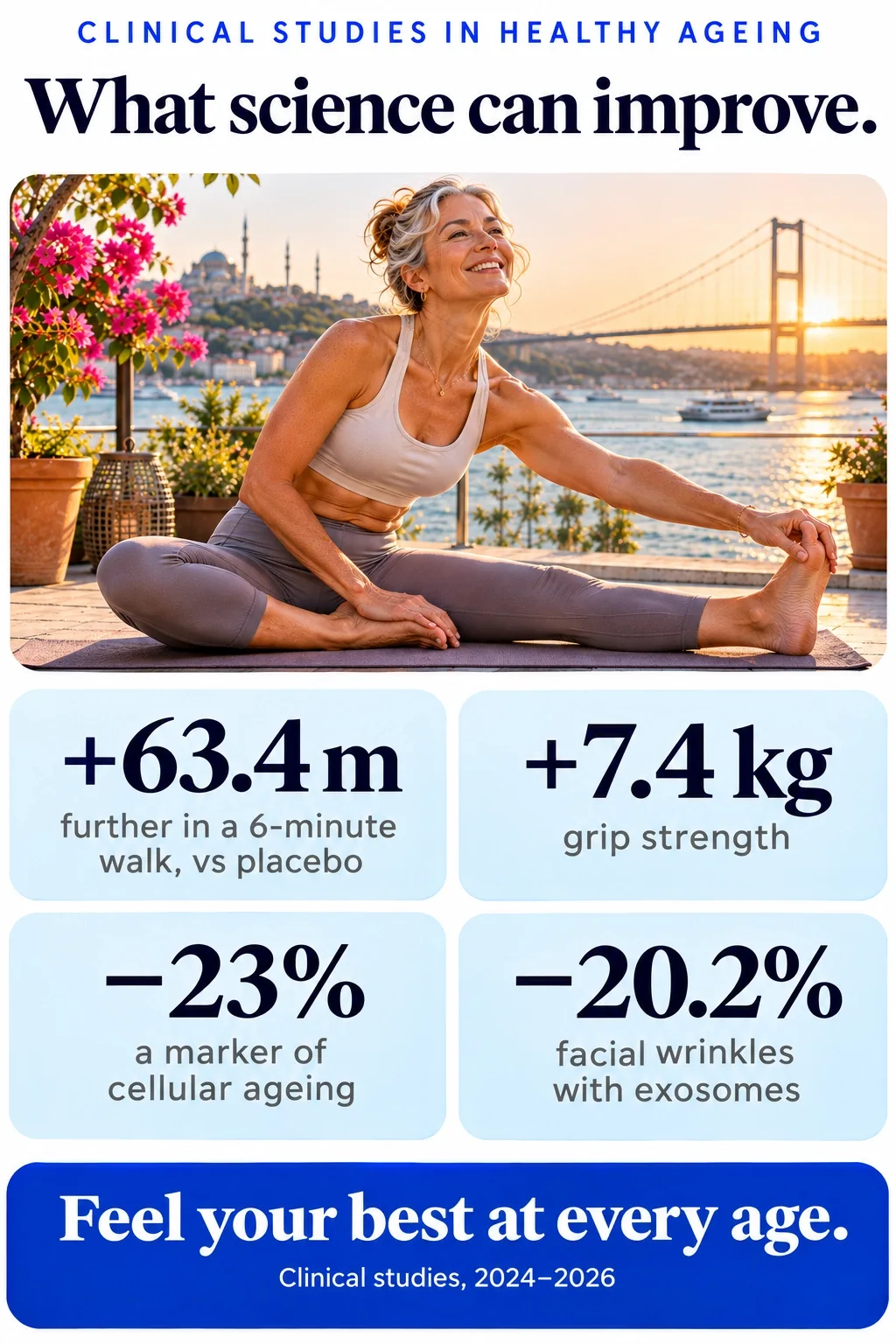
- 2–3%slower pace of aging, measured in the blood, after two years of eating fewer calories1
- +63.4 mfurther in the six-minute walk than placebo, nine months after one stem cell infusion4
- −23%p16, a marker of cellular aging in immune cells, after umbilical cord stem cells7
- −20.2%facial wrinkles on average across human exosome studies9
02
What is biological age, and can you lower it?
Biological age is estimated from signs that change predictably over the years. The best known are epigenetic clocks: chemical tags called DNA methylation build up on your DNA in a steady pattern, and in 2013 researchers showed that 353 of these sites, read together, predict age across 51 healthy tissues and cell types.12 Newer tests such as DunedinPACE work more like a speedometer: they estimate how fast you are aging right now, and a faster pace was linked with more illness, disability and mortality in five groups of people.13
What has lowered biological age in trials
- Eating a little less. In the CALERIE trial, healthy adults who followed a calorie-restriction programme for two years slowed their DunedinPACE by 2–3% compared with the control group.1
- Omega-3, vitamin D and exercise. In 777 older adults in the DO-HEALTH trial, 1 g of omega-3 a day slowed the PhenoAge, GrimAge2 and DunedinPACE clocks over three years, by the equivalent of 2.9 to 3.8 months, and omega-3, vitamin D and a home exercise programme together had an additive benefit on PhenoAge.2
- An eight-week lifestyle programme. In a randomised trial of 43 healthy men aged 50 to 72, guidance on diet, sleep, exercise and relaxation, with probiotics and plant nutrients, was linked with a 3.23-year fall in epigenetic age compared with the control group.14
- An NAD+ booster. In 80 healthy middle-aged adults, blood biological age rose over 60 days with placebo but stayed unchanged in every group taking NMN, while walking distance and general health scores improved.11
Markers you can track
Epigenetic clocks
Blood or saliva tests estimate your biological age (such as the Horvath clock) or your pace of aging (such as DunedinPACE).1213
Walking speed
In 34,485 older adults, faster walking went hand in hand with longer life: each extra 0.1 metres per second was linked with better survival.15
Grip strength and physical performance
A hand-held dynamometer and a short test of balance, walking and rising from a chair. Both improved in stem cell trials in older adults.57
Inflammation markers
CRP, IL-6 and TNF-α in a blood test. Chronic, low-grade inflammation is linked with frailty and heart disease in later life.16
Cellular aging
The marker p16 rises in aged, worn-out cells. In immune cells, it was 23% lower after umbilical cord stem cell treatment than in the control group.7
Before your plan, our team reviews your recent blood tests. Many patients also like to repeat a few simple checks at home, such as walking speed, grip strength and photos of their skin taken in the same light, so they can follow their progress alongside our reviews at about 1, 3, 6 and 12 months.
03
Why do we age? The processes science can work on
Scientists now describe aging through 12 “hallmarks”, the biological processes that slowly wear the body down. They include worn DNA and shorter telomeres, cells that run low on energy, aged “senescent” cells that linger in tissues, tired stem cells and chronic inflammation.3 The last one has its own name, inflammaging, first proposed in 2000 to describe the low, smouldering inflammation that builds up over the years.19 It is linked with frailty, heart disease and loss of independence.16
The good news is that these processes are not fixed. Each one is a target for at least one approach in this guide, and the table shows how the changes you notice connect to what is happening inside and to what can help.
| What you notice | What is happening | What can help |
|---|---|---|
| Less strength and stamina | Muscle loss and tired repair cells (stem cell exhaustion)3 | Strength training;6 stem cells, which raised grip strength in a trial5 |
| Tiredness and slower recovery | Mitochondria make less energy, and NAD+ falls with age320 | Interval training;21 NAD+ boosters;22 stem cells sharing mitochondria in research models23 |
| Aches, stiffness and frailty | Chronic, low-grade inflammation (inflammaging)16 | Mediterranean-style eating;24 stem cells, which lowered TNF-α, IL-6 and IL-1757 |
| Lines, dullness and thinning hair | Sun damage, less collagen and hair follicles that spend less time growing | Daily sunscreen;25 exosomes for skin and hair9 |
| Slower immune response | Immune aging, with an imbalance of immune cells3 | Stem cells, which rebalanced immune cells in a trial;26 mTOR-acting medicines under study27 |
Because aging is many processes rather than one, the strongest plans combine several approaches: daily habits that work on all of them, and regenerative treatments that aim to calm inflammation and support repair throughout the body.
04
How to slow aging: the lifestyle foundations with the strongest evidence
The most powerful anti-aging tools are free, and you can start them this week. They also prepare your body for every other treatment, including stem cell therapy. These are the habits with the best results in randomised trials.
Lift something heavy, twice a week
In 100 frail nursing-home residents with an average age of 87, ten weeks of strength training raised muscle strength by 113%, against 3% without exercise, and walking speed by 11.8%.6
Walk more, and keep walking
In the LIFE trial of 1,635 adults aged 70 to 89, a programme of walking and strength exercise lowered the share who lost the ability to walk 400 metres to 30.1%, against 35.5% with health education, over 2.6 years.28
Add some intervals
Twelve weeks of high-intensity interval training raised the capacity of muscle mitochondria by 69% in adults aged 65 to 80, and their aerobic fitness by about 17%.21
Eat the Mediterranean way
In 7,447 adults aged 55 to 80, a Mediterranean diet with extra-virgin olive oil or nuts was followed by about 30% fewer major heart and blood-vessel events than a low-fat diet.29 In older Europeans, a year of Mediterranean-style eating shifted the gut microbiome in a way linked with lower frailty and lower inflammation markers.24
Eat a little less, but well
Two years of moderate calorie restriction slowed the pace of aging measured in the blood by 2–3% in healthy adults.1
Protect your skin every morning
In 903 adults, those who used sunscreen every day showed no detectable increase in skin aging after 4.5 years, and 24% less skin aging than people who used it only when they chose.25
Sleep, calm and connection
Regular sleep and relaxation were part of the eight-week programme that lowered epigenetic age by 3.23 years compared with controls.14 A calm daily rhythm also makes it easier to keep up every other habit.
Lifestyle is the foundation, and regenerative medicine builds on it. Stem cells, exosomes and NAD+ aim to support the body’s own repair systems, while movement and good food give those systems their daily work. Our guide to healthy ageing with stem cells and NAD+ explains how the treatments support the ageing body as a whole.
05
Anti-aging treatments in 2026: what is available today?
Longevity medicine has moved from theory to treatments you can plan. The options fall into four layers, and the best results come from combining them rather than choosing just one.
A longevity plan, layer by layer
- FoundationsStrength training, walking, Mediterranean-style food and daily sunscreen.62925
- RegenerativeStem cells, Muse cells and exosomes that aim to calm inflammation and support repair.530
- Cell energyNAD+ IV and oral NAD+ boosters for energy and repair enzymes.3122
- AppearanceExosomes for skin and hair, alongside good daily skin care.9
Which treatments can you have now?
Stem cell therapy with umbilical cord and Wharton’s jelly stem cells, Muse cells, exosomes and NAD+ IV are available now, and at our clinic they fit into one treatment day in Istanbul. Each is explained in its own section below.
What else is being studied
Medicines first developed for other conditions are being tested for their effects on aging. In older volunteers, everolimus, a medicine that acts on the mTOR pathway like rapamycin, raised the immune response to the flu vaccine by about 20%.27 Metformin, senolytic medicines and hormone therapy are also discussed in longevity medicine, and your own doctor is the right person to advise whether any of them suit you. They work on different processes from stem cells, so the two approaches can sit side by side.
06
Stem cell therapy for anti-aging: what human trials report
Mesenchymal stem cells (MSCs) are the body’s repair coordinators. Rather than turning into new tissue, they release growth factors, immune-balancing messengers and exosomes that help your own cells protect and repair themselves.32 Since 2017, a series of randomised trials has tested donor MSCs by IV infusion in older adults with frailty, the gradual loss of strength and stamina that comes with age. Here is what improved, measure by measure.
Walking further
In a randomised, placebo-controlled trial of 148 adults with frailty, a single infusion of donor bone marrow MSCs (laromestrocel) was followed by a 63.4-metre longer six-minute walk than placebo at nine months, and the extra distance went hand in hand with better scores on patients’ own ratings of physical function.4 In the earlier CRATUS trial of 30 adults with an average age of 75.5, the six-minute walk, physical performance and lung function improved in the 100-million-cell group.8
Stronger and quicker on your feet
In a double-blind, placebo-controlled trial, IV umbilical cord MSCs, the same type of cells we use, raised grip strength by 7.4 kg over six months, against 1.3 kg with placebo, and the timed up-and-go test kept improving throughout follow-up. Physical quality-of-life scores improved from the first visit and stayed better than with placebo, and overall health ratings were higher from the second month.5 In 147 frail adults aged 60 to 85, two infusions of umbilical cord MSCs three months apart gave physical performance (SPPB) scores 1.1 points higher than in the control group at nine months, with a stronger grip and less fatigue.7
Calmer inflammation and healthier immune cells
The inflammation markers TNF-α and IL-17 fell compared with placebo,5 and in the 147-person trial, TNF-α was 8.3 pg/mL and IL-6 37.6 pg/mL lower than in the control group at nine months, while p16, a marker of aged cells, was 23% lower in immune cells at three months.7 A detailed analysis of blood samples found a gradual rebalancing of the immune system after umbilical cord MSCs, and these changes went hand in hand with gains in grip strength and walking speed.26 In 12 adults with inflammaging, IL-1α, IL-1β, IL-6, IL-8 and TNF-α had all fallen 180 days after two infusions of their own adipose MSCs.33
Organs that age more gently
Kidney function usually declines a little with age.34 In adults aged 50 to 79 taking part in a trial in Parkinson’s disease, three infusions of donor bone marrow MSCs were followed by an average yearly rise in kidney function (eGFR) of 3.29 mL/min/1.73 m², against a fall of 2.92 with placebo.34
A 2026 systematic review of the randomised trials found MSC treatment in aging frailty well tolerated, with no treatment-related serious adverse events, and reported improvements in mobility, physical performance, quality of life and inflammation markers.35
| What was measured | Result | Study and cells |
|---|---|---|
| Six-minute walk | 63.4 m further than placebo at 9 months | Ruiz 2026, Cell Stem Cell; donor bone marrow MSCs, one IV infusion4 |
| Grip strength | +7.4 kg, against +1.3 kg with placebo, at 6 months | Zhu 2024, Stem Cell Res Ther; umbilical cord MSCs, IV5 |
| Physical performance (SPPB) | 1.1 points higher than control at 9 months | Nguyen 2026, EBioMedicine; umbilical cord MSCs, two IV infusions7 |
| Quality of life | Physical health scores better than placebo throughout 6 months | Zhu 2024; umbilical cord MSCs, IV5 |
| Inflammation | TNF-α 8.3 pg/mL and IL-6 37.6 pg/mL lower than control | Nguyen 2026; umbilical cord MSCs7 |
| Cellular aging marker | p16 in immune cells 23% lower at 3 months | Nguyen 2026; umbilical cord MSCs7 |
| Kidney function | eGFR +3.29 a year, against −2.92 with placebo | Martinez-Lemus 2025; donor bone marrow MSCs, three IV infusions34 |
Each study used its own cells and schedule. Your treatment uses fresh umbilical cord and Wharton’s jelly MSCs, prepared for your date and given by the routes Dr. Cihan Bolat plans with you. For the study-by-study details and the timeline of results, see our anti-aging stem cell therapy page.
07
How stem cells and exosomes aim to work on aging
Stem cells act as messengers. After an IV infusion, they release signals and exosomes, tiny packages of proteins and RNA that cells use to talk to one another.36 Six effects, seen in patients and in research models, explain the results above.
How stem cells and exosomes aim to work on ageing
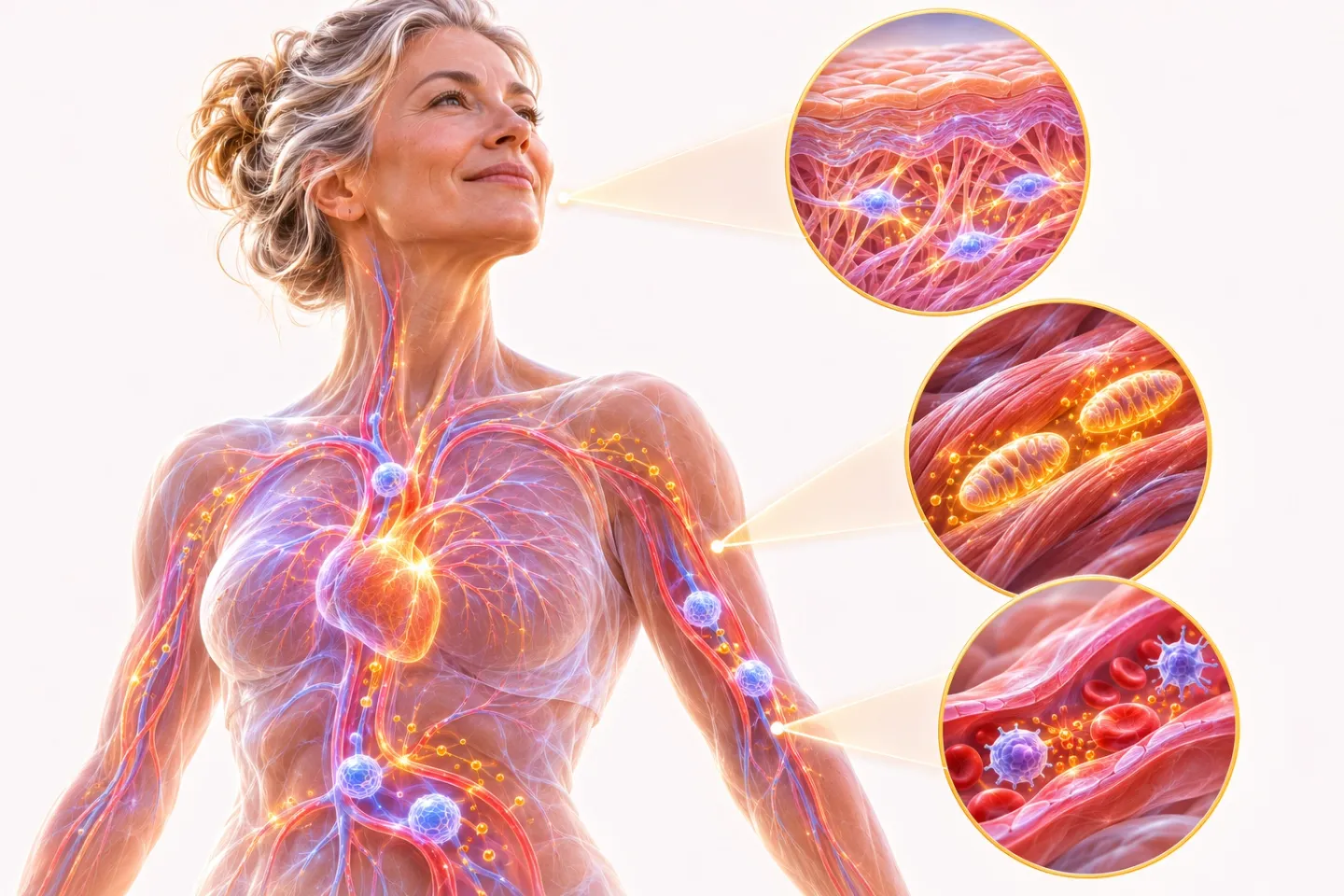
- Stem cellsGiven by IV, they travel through the bloodstream and release repair and anti-inflammatory signals.
- ExosomesTiny vesicles carry these messages to tissues all over the body.
- SkinSignals that support collagen and skin cells, for firmer, smoother skin.
- Muscle and energyHealthy mitochondria power muscle strength and everyday energy.
- Blood vesselsCalmer inflammation (“inflammaging”) and healthier vessel walls support the whole body.
Calming inflammaging
In older adults, stem cell infusions were followed by lower levels of TNF-α, IL-6 and IL-17, the signals that keep chronic inflammation smouldering.857
Rebalancing immune cells
After umbilical cord MSCs, B-cell overactivity eased and natural killer cells showed stronger defensive markers, changes that tracked with better grip strength and walking speed.26
Fewer signs of aged cells
In people, p16 in immune cells was 23% lower after umbilical cord MSCs.7 In old mice, vesicles from young stem cells reduced frailty and senescence markers and lowered predicted epigenetic age.37
Energy for tired cells
In research models, MSCs pass healthy mitochondria to stressed cells through tiny tunnels, restoring their energy production.23 NAD+ is the fuel those mitochondria run on.31
Healthier blood vessels
In the Cell Stem Cell trial, stem cells lowered soluble TIE2, a blood marker of vessel health, in step with the dose.4
Signals for skin and hair
Applied to the face after microneedling, adipose stem cell exosomes improved wrinkles, elasticity, hydration and pigmentation,17 and an adipose stem cell extract on the scalp increased hair count and thickness.18
08
Exosome therapy for anti-aging: what it does for skin and hair
Exosomes carry much of a stem cell’s message in concentrated form, with no living cells inside. That makes them especially useful where you want a precise, local effect, such as the skin of your face or your scalp, as well as throughout the body.
Fresher-looking skin
A 2026 meta-analysis of 39 human studies found that exosome treatments reduced facial wrinkles by 20.2% on average, and improved pigmentation, elasticity, texture, redness and overall appearance by 14.7% to 23.4%.9 In a randomised split-face study of 28 people, the side of the face treated with adipose stem cell exosomes and microneedling scored significantly better for overall aesthetic improvement than the side given saline, with greater gains in wrinkles, elasticity, hydration and pigmentation.17 Umbilical cord stem cell factors (conditioned medium) with microneedling also gave brighter skin with a finer texture than microneedling alone.38
Fuller hair
In the same meta-analysis, exosome treatments improved hair density by 23.6% and hair thickness by 18.0% on average.9 In a randomised, double-blind trial of 38 people with pattern hair loss, an extract of adipose stem cells raised hair count by 28.1% over 16 weeks, against 7.1% in the control group, and hair thickness by 14.2%, against 6.3%.18 In 30 adults with pattern hair loss treated with adipose stem cell exosomes, total hair density rose significantly over 24 weeks.39
Our exosomes
Your plan can include Wharton’s jelly MSC exosomes, Muse exosomes and CD34+ exosomes. Given by IV infusion, they travel through the whole body. For the face and scalp, exosomes are placed with tiny, shallow injections or applied straight after microneedling or a laser. Read more about stem cell facelift and skin rejuvenation, stem cell therapy for hair restoration and exosome therapy at our clinic.
09
NAD+ IV therapy: how does it help with aging?
NAD+ (nicotinamide adenine dinucleotide) is a molecule found in every cell. Your mitochondria need it to turn food into energy, and repair enzymes such as the sirtuins use it to look after your DNA and metabolism.3140 NAD+ levels fall with age in the human brain,41 and in muscle they are lower in older adults, although older people who train regularly keep levels closer to those of younger people.20
What raising NAD+ achieved in people
- Higher NAD+ levels. In healthy overweight adults, 1,000 mg a day of nicotinamide riboside (NR) raised blood NAD+ by 142% within two weeks, and the rise held for the whole eight weeks.22
- Better muscle metabolism. In a randomised trial published in Science, NMN raised muscle insulin sensitivity in women with prediabetes.42
- Walking further and feeling healthier. In 80 middle-aged adults, 60 days of NMN improved six-minute walking distance and general health scores compared with placebo.11
- Calmer inflammation. In older men, NR raised the NAD+ metabolome in muscle and lowered circulating inflammatory signals.43
NAD+ by IV drip
An IV drip delivers NAD+ itself straight into the bloodstream. In the first human study, NAD+ given slowly over several hours was taken up quickly from the blood,44 and in a clinic review, the sensations some people feel during the drip passed once the infusion finished.45 At our clinic, NAD+ IV can be added to your stem cell plan on the same day. Our medical team gives it as a slow drip under physician supervision, and your doctor sets the dose and pace for your comfort.
Stem cells and NAD+ support your cells from two sides: stem cells calm inflammation and, in research models, share healthy mitochondria, while NAD+ is the fuel those mitochondria and repair enzymes run on.2331 Read more about NAD+ on our anti-aging treatment page.
10
Muse cells for anti-aging: what they are and what research shows
Muse cells, short for multilineage-differentiating stress-enduring cells, were discovered in Japan in 2010 by the team of Professor Mari Dezawa.46 They are a small group within the mesenchymal stem cell family, around 1% to 3% of MSCs, and are recognised by a surface marker called SSEA-3.4746
Four qualities make them interesting for healthy ageing:
- Stress-enduring. True to their name, Muse cells coped with DNA-damaging stress better than other MSCs, repaired the damage quickly and showed fewer signs of senescence afterwards.47
- Homing to damage. Damaged cells release a signal called S1P. Muse cells sense it through their S1PR2 receptor and travel selectively to the damaged tissue.4830
- Becoming tissue cells. Once there, they can turn into the tissue’s own cell types and replace damaged cells with healthy ones.30
- Immune-friendly. Donor Muse cells have been given in trials without HLA matching or immune-suppressing medicines,49 and they did not form tumours in laboratory testing.46
A 2025 review by Professor Dezawa links these qualities directly to aging, which is rooted in DNA damage, telomere wear and tired mitochondria, and describes Muse cells as key to the potential use of stem cells in anti-aging therapy.30
Muse cells in human trials
- 40.0% vs 10.0%of stroke patients could look after their own affairs at 12 weeks after one IV dose of a donor Muse cell product, against placebo10
- 40.7% → 52.0%heart pumping strength (LVEF) 12 weeks after IV Muse cells following a heart attack50
- 1 IV doseof Muse cells was followed by significant gains in movement, daily activities and quality of life after spinal cord injury51
- No HLA matchingneeded: donor Muse cells were given in trials without matching or immune-suppressing medicines49
What human trials report
In a randomised, double-blind, placebo-controlled trial in ischaemic stroke, 40.0% of patients given a single IV dose of a donor Muse cell product could look after their own affairs again at 12 weeks, against 10.0% with placebo.10 After a heart attack, heart pumping strength rose from 40.7% to 52.0% at 12 weeks in the first patients treated by IV,50 and in ten people with a spinal cord injury in the neck, one IV dose was followed by significant gains in movement, daily activities and quality of life, with good tolerability.51 Each trial used its own Muse cell product.
Muse cells in skin and aging research models
- Repairing skin. In mice, Muse cells given into a vein settled in damaged skin and became skin cells there.46
- Healing slow wounds. In diabetic mice, Muse-rich adipose stem cells healed skin ulcers significantly faster than Muse-poor cells and became part of the new blood vessels in the healed skin.52
- Pigment cells. In laboratory studies, Muse cells from human skin readily became working melanocytes, which settled in the right layer of three-dimensional skin models and made melanin.53
- Protecting skin cells under stress. Grown alongside human melanocytes, Muse cells helped them withstand oxidative stress, boosted their natural clean-up process (autophagy) and reduced cell death.54
Muse exosomes
Like other MSCs, Muse cells release a rich mix of signals. In laboratory studies, their secretome contained factors that regulate tissue repair, oxidative balance and immune activity, as well as factors that help cells survive under stress.55 Researchers have proposed exosomes from Muse cells as a cell-free way to deliver these signals in regenerative medicine.56 At our clinic, Muse exosomes are given by IV infusion and as a nasal spray.
Muse cells and Muse exosomes in your plan
Your longevity plan can bring the strengths of each together: fresh umbilical cord and Wharton’s jelly MSCs for their rich repair signals, Muse cells by IV infusion for their homing and repair abilities, and Wharton’s jelly MSC, Muse and CD34+ exosomes. Muse cells, like all stem cells, are never given into the nose. Dr. Cihan Bolat chooses the mix with you, and your written plan sets out exactly what you receive.
11
Anti-aging treatments compared: which option does what?
Each option works on a different part of aging, and they add up rather than compete. This table shows where each one fits.
| Option | What it aims to improve | Results in people | How it is given |
|---|---|---|---|
| Stem cells and exosomes | Strength, walking, energy, inflammation, skin and hair | Better walking, grip strength and quality of life and lower inflammation than placebo or control;457 fewer wrinkles and fuller hair with exosomes9 | IV infusion in one treatment day, with facial or scalp treatment if you wish |
| Muse cells and Muse exosomes | Repair of damaged tissue through homing and cell replacement30 | More stroke patients regained independence than with placebo after one IV dose10 | Muse cells by IV infusion; Muse exosomes by IV infusion and nasal spray |
| NAD+ IV and oral NAD+ boosters | Cell energy, repair enzymes and metabolism | Oral NR and NMN raised NAD+ levels and improved walking distance and muscle insulin sensitivity221142 | A slow IV drip, or daily capsules |
| Exercise | Strength, mobility, heart and mitochondria | Muscle strength +113% in frail older adults;6 fewer people lost the ability to walk 400 m28 | Several sessions a week, for life |
| Mediterranean-style eating and fewer calories | Heart health, inflammation and the pace of aging | About 30% fewer major cardiovascular events;29 a 2–3% slower pace of aging1 | Every day |
| Sunscreen and skin care | Skin aging caused by the sun | 24% less skin aging with daily sunscreen over 4.5 years25 | Every morning |
Everyday habits work on every hallmark a little, every day. Stem cells, Muse cells, exosomes and NAD+ add a concentrated push for repair, energy and calmer inflammation, and you keep the benefits growing with the habits above.
12
Your longevity plan in Istanbul: stem cells, Muse cells, exosomes and NAD+ together
Every plan starts with you, not with a protocol. Dr. Cihan Bolat, our medical director and a specialist in anaesthesiology and reanimation and in regenerative medicine, reviews your health, recent blood tests, medicines and goals with his team, and talks with you about what you would most like to improve.
A typical anti-aging plan combines IV stem cells and IV exosomes for the whole body, with facial or scalp treatment if fresher skin or fuller hair is among your goals. Muse cells can be added by IV infusion, and NAD+ IV on the same day. If brain health is part of your plan, exosomes can also be given as a gentle nasal spray; stem cells, including Muse cells, are never given into the nose.
Fresh cells, prepared for your date
Umbilical cord and Wharton’s jelly MSCs from cords donated after healthy births, prepared in a Ministry of Health-approved GMP laboratory and never frozen. In laboratory comparisons, fresh MSCs kept stronger immune-calming properties than cells used straight after thawing.57
No harvest, no donor matching
Nothing is taken from your body. Wharton’s jelly cells carry very few of the signals that trigger rejection, so no donor matching is needed.58
Muse cells in your plan
Muse cells, the hardy repair cells described above, can be added by IV infusion alongside umbilical cord and Wharton’s jelly MSCs. In trials, donor Muse cells were given without HLA matching.49
Exosomes in your plan
Wharton’s jelly MSC exosomes, Muse exosomes and CD34+ exosomes, added according to your plan, by IV infusion and, for the face and scalp, by shallow injections or after microneedling.
NAD+ IV on the same day
A slow, supervised NAD+ drip can be added to your treatment day, with the dose and pace set by your doctor.
Your cell count in writing
The number of cells in your plan is confirmed in writing, and the count and viability are checked and certified by the GMP laboratory before treatment.
Alongside your own doctor
Your usual medicines and check-ups continue, and you can share the written plan with your own doctor.
Follow-up together
We review your progress with you at about 1, 3, 6 and 12 months, so you can see how things develop and plan any repeat treatment together.
Who is a good candidate?
The stem cell trials in frailty included adults aged 60 to 85,57 and the skin and hair studies included adults with average ages in their forties.3818 There is no fixed age limit: some people start in their fifties or sixties, when they notice slower recovery, less energy or changes in their skin, and others later in life, to protect their strength and independence. Dr. Cihan Bolat reviews every case individually and tells you honestly whether treatment is a good fit.
13
Is anti-aging stem cell therapy safe?
Safety is the first question most people ask, and the published record is reassuring. A 2021 meta-analysis of 62 randomised trials with 3,546 patients found MSC treatment safe, the most common effect a passing fever.59
The trials in older adults point the same way. In the CRATUS trial, no treatment-related serious adverse events occurred after infusion,8 in the double-blind umbilical cord trial, side effects were no more common than with placebo,5 and in the 147-person trial, no serious adverse events were related to the cells.7 A 2026 systematic review of the randomised trials concluded that MSC treatment was well tolerated in older adults with frailty.35
The other parts of your plan have reassuring records too. No serious adverse events were seen with exosome skin treatment,17 the NAD+ boosters NR and NMN were well tolerated in randomised trials,2211 and in the spinal cord injury trial, no safety concerns were identified with IV Muse cells.51
Your own care adds further layers. Wharton’s jelly cells need no donor matching,58 your cells are prepared in a Ministry of Health-approved GMP laboratory with certified count and viability, and Dr. Cihan Bolat, a specialist in anaesthesiology and reanimation, plans your comfort for the treatment day. We screen carefully beforehand, and a specialist team treats you.
14
Why patients travel to Istanbul, Turkey for longevity treatments
People come to us from the UK, across Europe, the Middle East and the Gulf, the USA and beyond. Many want a longevity plan that brings stem cells, Muse cells, exosomes and NAD+ together in one place, with a specialist team, a clear written plan and a city they will enjoy visiting.

A specialist-led plan
A free medical review and phone consultation with the specialist team led by Uzm. Dr. Cihan Bolat, and a written plan before you book.
A fixed price before you travel
One all-inclusive price in writing, so you can decide calmly at home.
One treatment day
Most plans take one treatment day in Istanbul, with no second trip needed.
Help at every step
Help with the hotel, ground transport and translation, and a personal case manager.
Easy to reach
Istanbul has two international airports. Many European cities have direct flights, and from much of Western Europe the journey takes around three to four hours.
Follow-up from home
Reviews at about 1, 3, 6 and 12 months, so your care continues after you fly home.
Make the most of your stay
Because the treatment itself takes one day, many patients add a few days to enjoy the city: a walk along the Bosphorus, a ferry between Europe and Asia, Turkish breakfast and the Mediterranean-style food that suits a longevity plan so well. Our clinic is in Suadiye, a calm residential district on Istanbul’s Asian side, near the Marmara seafront.
15
Your treatment in Istanbul, step by step
From your first message to follow-up at home, every step is planned with you in advance, whether you are travelling from London, Amsterdam, Dubai or New York. For the fuller story, read the stem cell treatment in Turkey, step by step, or request your free consultation now.
Tell us your goals
Share your age, health, recent blood tests, medicines and what you would most like to improve through our free consultation request, or by WhatsApp on +90 534 856 92 92.
Free medical review and phone call
Dr. Cihan Bolat and his specialist team review your details free of charge and talk your goals through with you.
Your written plan and fixed price
If treatment is a good fit, you receive a written plan with the cell count, any Muse cells, the exosomes, NAD+ and the routes, and a fixed, all-inclusive price before you travel.
One treatment day in Istanbul
Your fresh stem cells and exosomes are prepared for your date. Our team welcomes you and gives your IV treatment, with any facial, scalp or NAD+ treatment, in one relaxed day.
Follow-up at home
Back home, we review your progress with you at about 1, 3, 6 and 12 months and stay available for your questions.
16
How much do anti-aging treatments cost in Turkey?
Every plan is personal, so the price depends on the number of cells, the exosomes, any Muse cells or Muse exosomes, NAD+ and the routes in your plan. After the free medical review, you receive a fixed, all-inclusive price in writing before you book anything, so there are no surprises.
Included
- Free medical review and phone consultation
- Fresh umbilical cord and Wharton’s jelly stem cells, with certified count and viability
- Exosomes as set out in your plan
- Muse cells and Muse exosomes, if they are part of your plan
- Treatment by our specialist team in one treatment day
- Ground transport to and from the clinic, and help with translation
- A personal case manager and follow-up reviews
Not included / optional
- Flights
- Hotel stay, which we can help you arrange
- NAD+ IV and facial or scalp treatment, if you choose to add them
- A repeat session, if you decide on one later
17
Frequently asked questions
Can you reverse aging?
You cannot change your calendar age, but you can improve many of the things that make up biological aging. In trials, eating fewer calories slowed the pace of aging measured in the blood by 2–3%, strength training more than doubled muscle strength in frail older adults, and stem cell infusions improved walking, grip strength and inflammation markers. Science can now measure these changes, which is why a plan built around your own goals makes such a difference.
Is it possible to lower your biological age?
Yes, biological age is not fixed. In randomised trials, a calorie-restriction programme slowed the pace of aging, daily omega-3 slowed three epigenetic clocks over three years, and an eight-week lifestyle programme was linked with an epigenetic age 3.23 years lower than in the control group. In a trial of the NAD+ booster NMN, blood biological age stayed steady while it rose with placebo.
How can I slow down aging naturally?
Start with strength training twice a week, regular walking and some interval training, a Mediterranean-style diet, good sleep and daily sunscreen. These habits have the strongest evidence in randomised trials, cost little and support every other treatment, including stem cell therapy.
What are the best anti-aging treatments in 2026?
The best results come from combining layers: healthy habits as the foundation, regenerative treatment with stem cells, Muse cells and exosomes, NAD+ for cell energy, and exosomes for skin and hair. In randomised trials in older adults, stem cell infusions improved walking distance, grip strength, quality of life and inflammation markers.
What are longevity treatments?
Longevity treatments aim to keep you healthy, strong and active for longer by working on the biological processes of aging, such as chronic inflammation, falling cell energy and tired repair cells. They include lifestyle programmes, stem cell and exosome therapy, NAD+ IV and oral NAD+ boosters, and medicines that are being studied for their effects on aging.
Can stem cells reverse aging?
Stem cell therapy is about aging well rather than changing your age. In randomised trials, older adults walked 63.4 metres further than with placebo nine months after one infusion, grip strength rose by 7.4 kg with umbilical cord stem cells, and p16, a marker of aged cells, was 23% lower in immune cells. Those are measurable gains in strength, mobility and cellular health.
What is inflammaging?
Inflammaging is the chronic, low-grade inflammation that builds up with age. It is linked with frailty, heart disease and loss of independence, and it can be measured with blood markers such as CRP, IL-6 and TNF-α. Exercise and a Mediterranean-style diet help to calm it, and in trials stem cell infusions lowered TNF-α, IL-6 and IL-17.
Does exosome therapy work for anti-aging?
For skin and hair, the results are encouraging. Across 39 human studies, exosome treatments reduced facial wrinkles by 20.2% on average and improved hair density by 23.6% and hair thickness by 18.0%. Our plans can include Wharton’s jelly MSC exosomes, Muse exosomes and CD34+ exosomes, by IV infusion and, for the face and scalp, by shallow injections or after microneedling.
What does NAD+ IV therapy do?
NAD+ is a molecule your cells need to make energy and to power repair enzymes, and its levels fall with age. An IV drip delivers NAD+ itself straight into the bloodstream. In trials of oral NAD+ boosters, raising NAD+ was linked with longer walking distance, better muscle insulin sensitivity and lower inflammatory signals. NAD+ IV can be added to your stem cell plan on the same day.
What are Muse cells, and can they help with aging?
Muse cells are a small group of especially hardy repair cells within the mesenchymal stem cell family, discovered in Japan in 2010. They sense damage signals, travel to injured tissue and can replace damaged cells, and in research models they repaired skin and healed slow wounds. In a placebo-controlled stroke trial, 40.0% of patients given one IV dose of a donor Muse cell product could look after their own affairs at 12 weeks, against 10.0% with placebo. Muse cells and Muse exosomes can be part of your plan.
At what age should you start anti-aging treatments?
Healthy habits are worth starting at any age. The stem cell trials in frailty included adults aged 60 to 85, and the skin and hair studies included adults with average ages in their forties. There is no fixed age limit: Dr. Cihan Bolat reviews your health and goals and advises what suits you.
How long do the results of anti-aging stem cell therapy last?
In a 148-person trial, the extra walking distance was still measured nine months after a single infusion. Many people choose a repeat treatment to build on their results, and your healthy habits keep the benefits growing. We plan this with you at your follow-up reviews at about 1, 3, 6 and 12 months.
Is anti-aging stem cell therapy safe?
The published record is reassuring. A 2021 meta-analysis of 62 randomised trials with 3,546 patients found MSC treatment safe, with a passing fever the most common effect, and a 2026 review of the trials in older adults found MSC treatment well tolerated. We screen carefully, prepare cells in a Ministry of Health-approved GMP laboratory, and a specialist team treats you.
Can I combine stem cells, exosomes and NAD+ in one trip?
Yes. Most plans take one treatment day in Istanbul, combining IV stem cells and exosomes, Muse cells if they are in your plan, facial or scalp treatment if you wish, and NAD+ IV. Your written plan sets out every part in advance, with a fixed price.
How much does anti-aging stem cell therapy cost in Turkey?
The price depends on the number of cells, the exosomes, any Muse cells or Muse exosomes, NAD+ and the routes in your plan. After a free medical review, you receive a fixed, all-inclusive price in writing before you travel, covering the treatment, the fresh cells with certified count and viability, transport to and from the clinic, a personal case manager and follow-up reviews. Flights and the hotel are separate, and we can help you arrange the hotel.
Why choose a longevity clinic in Istanbul?
Patients from the UK, Europe, the Gulf, the USA and beyond choose Istanbul for specialist-led care, a free medical review, a written plan with a fixed price and treatment in one day. Fresh umbilical cord and Wharton’s jelly stem cells are prepared for your date and never frozen, your plan can include Muse cells, exosomes and NAD+, and follow-up continues after you fly home. You can reach us by WhatsApp on +90 534 856 92 92.

Medical review
Uzm. Dr. Cihan Bolat
Medical Director, Istanbul Stemcell
This page was written from the published studies listed below and reviewed for medical accuracy on .
18
References
- Waziry R, et al. Effect of long-term caloric restriction on DNA methylation measures of biological aging in healthy adults from the CALERIE trial. Nat Aging. 2023;3(3):248-257. PMID 37118425
- Bischoff-Ferrari HA, et al. Individual and additive effects of vitamin D, omega-3 and exercise on DNA methylation clocks of biological aging in older adults from the DO-HEALTH trial. Nat Aging. 2025;5(3):376-385. PMID 39900648
- López-Otín C, et al. Hallmarks of aging: An expanding universe. Cell. 2023;186(2):243-278. PMID 36599349
- Ruiz JG, et al. Randomized phase 2b dose-escalation trial of stem cell therapy with laromestrocel for aging frailty. Cell Stem Cell. 2026;33(3):393-404.e4. PMID 41747733
- Zhu Y, et al. Safety and efficacy of umbilical cord tissue-derived mesenchymal stem cells in the treatment of patients with aging frailty: a phase I/II randomized, double-blind, placebo-controlled study. Stem Cell Res Ther. 2024;15(1):122. PMID 38679727
- Fiatarone MA, et al. Exercise training and nutritional supplementation for physical frailty in very elderly people. N Engl J Med. 1994;330(25):1769-75. PMID 8190152
- Nguyen LT, et al. Safety and efficacy of allogeneic umbilical cord-derived mesenchymal stem cell infusion for frailty: a phase 2, single-centre, randomised, open-label controlled trial. EBioMedicine. 2026;127:106268. PMID 42019090
- Tompkins BA, et al. Allogeneic Mesenchymal Stem Cells Ameliorate Aging Frailty: A Phase II Randomized, Double-Blind, Placebo-Controlled Clinical Trial. J Gerontol A Biol Sci Med Sci. 2017;72(11):1513-1522. PMID 28977399
- Stack ER, et al. Clinical Advances in Exosome-Based Therapies for Aesthetic Medicine: A Systematic Review and Meta-analysis of Human Clinical Trials. Aesthet Surg J. 2026;46(12 Suppl 2):S13-S25. PMID 41800726
- Niizuma K, et al. Randomized placebo-controlled trial of CL2020, an allogenic muse cell-based product, in subacute ischemic stroke. J Cereb Blood Flow Metab. 2023;43(12):2029-2039. PMID 37756573
- Yi L, et al. The efficacy and safety of β-nicotinamide mononucleotide (NMN) supplementation in healthy middle-aged adults: a randomized, multicenter, double-blind, placebo-controlled, parallel-group, dose-dependent clinical trial. Geroscience. 2023;45(1):29-43. PMID 36482258
- Horvath S. DNA methylation age of human tissues and cell types. Genome Biol. 2013;14(10):R115. PMID 24138928
- Belsky DW, et al. DunedinPACE, a DNA methylation biomarker of the pace of aging. Elife. 2022;11. PMID 35029144
- Fitzgerald KN, et al. Potential reversal of epigenetic age using a diet and lifestyle intervention: a pilot randomized clinical trial. Aging (Albany NY). 2021;13(7):9419-9432. PMID 33844651
- Studenski S, et al. Gait speed and survival in older adults. JAMA. 2011;305(1):50-8. PMID 21205966
- Ferrucci L, Fabbri E. Inflammageing: chronic inflammation in ageing, cardiovascular disease, and frailty. Nat Rev Cardiol. 2018;15(9):505-522. PMID 30065258
- Park GH, et al. Efficacy of combined treatment with human adipose tissue stem cell-derived exosome-containing solution and microneedling for facial skin aging: A 12-week prospective, randomized, split-face study. J Cosmet Dermatol. 2023;22(12):3418-3426. PMID 37377400
- Tak YJ, et al. A randomized, double-blind, vehicle-controlled clinical study of hair regeneration using adipose-derived stem cell constituent extract in androgenetic alopecia. Stem Cells Transl Med. 2020;9(8):839-849. PMID 32420695
- Franceschi C, et al. Inflamm-aging. An evolutionary perspective on immunosenescence. Ann N Y Acad Sci. 2000;908:244-54. PMID 10911963
- Janssens GE, et al. Healthy aging and muscle function are positively associated with NAD(+) abundance in humans. Nat Aging. 2022;2(3):254-263. PMID 37118369
- Robinson MM, et al. Enhanced Protein Translation Underlies Improved Metabolic and Physical Adaptations to Different Exercise Training Modes in Young and Old Humans. Cell Metab. 2017;25(3):581-592. PMID 28273480
- Conze D, Brenner C, Kruger CL. Safety and Metabolism of Long-term Administration of NIAGEN (Nicotinamide Riboside Chloride) in a Randomized, Double-Blind, Placebo-controlled Clinical Trial of Healthy Overweight Adults. Sci Rep. 2019;9(1):9772. PMID 31278280
- Paliwal S, et al. Regenerative abilities of mesenchymal stem cells through mitochondrial transfer. J Biomed Sci. 2018;25(1):31. PMID 29602309
- Ghosh TS, et al. Mediterranean diet intervention alters the gut microbiome in older people reducing frailty and improving health status: the NU-AGE 1-year dietary intervention across five European countries. Gut. 2020;69(7):1218-1228. PMID 32066625
- Hughes MC, et al. Sunscreen and prevention of skin aging: a randomized trial. Ann Intern Med. 2013;158(11):781-90. PMID 23732711
- Huang C, et al. Immunomodulatory effects of HUC-MSCs therapy: enhancing adaptive and innate immune responses in aging frailty. Front Immunol. 2026;17:1796161. PMID 42564874
- Mannick JB, et al. mTOR inhibition improves immune function in the elderly. Sci Transl Med. 2014;6(268):268ra179. PMID 25540326
- Pahor M, et al. Effect of structured physical activity on prevention of major mobility disability in older adults: the LIFE study randomized clinical trial. JAMA. 2014;311(23):2387-96. PMID 24866862
- Estruch R, et al. Primary Prevention of Cardiovascular Disease with a Mediterranean Diet Supplemented with Extra-Virgin Olive Oil or Nuts. N Engl J Med. 2018;378(25):e34. PMID 29897866
- Dezawa M. Comparison of MSCs and Muse cells: the possible use for healthspan optimization. Biogerontology. 2025;26(4):139. PMID 40601066
- Verdin E. NAD⁺ in aging, metabolism, and neurodegeneration. Science. 2015;350(6265):1208-13. PMID 26785480
- Caplan AI, Dennis JE. Mesenchymal stem cells as trophic mediators. J Cell Biochem. 2006;98(5):1076-84. PMID 16619257
- Nguyen NT, et al. Safety and efficacy of autologous adipose tissue-derived stem cell transplantation in aging-related low-grade inflammation patients: a single-group, open-label, phase I clinical trial. Trials. 2024;25(1):309. PMID 38715140
- Martinez-Lemus JD, et al. Allogeneic bone marrow-derived mesenchymal stem cells in the aging kidney: secondary results of a Parkinson's disease clinical trial. Stem Cell Res Ther. 2025;16(1):493. PMID 40993774
- Poutouri E, et al. Safety and Efficacy of Mesenchymal Stem Cell Therapy in Aging Frailty: A Systematic Review. Int J Mol Sci. 2026;27(17). PMID 42737497
- Kalluri R, LeBleu VS. The biology, function, and biomedical applications of exosomes. Science. 2020;367(6478). PMID 32029601
- Sanz-Ros J, et al. Small extracellular vesicles from young adipose-derived stem cells prevent frailty, improve health span, and decrease epigenetic age in old mice. Sci Adv. 2022;8(42):eabq2226. PMID 36260670
- Liang X, et al. Efficacy of Microneedling Combined With Local Application of Human Umbilical Cord-Derived Mesenchymal Stem Cells Conditioned Media in Skin Brightness and Rejuvenation: A Randomized Controlled Split-Face Study. Front Med (Lausanne). 2022;9:837332. PMID 35685406
- Lee E, et al. The efficacy of adipose stem cell-derived exosomes in hair regeneration based on a preclinical and clinical study. Int J Dermatol. 2024;63(9):1212-1220. PMID 39155501
- Covarrubias AJ, et al. NAD(+) metabolism and its roles in cellular processes during ageing. Nat Rev Mol Cell Biol. 2021;22(2):119-141. PMID 33353981
- Zhu XH, et al. In vivo NAD assay reveals the intracellular NAD contents and redox state in healthy human brain and their age dependences. Proc Natl Acad Sci U S A. 2015;112(9):2876-81. PMID 25730862
- Yoshino M, et al. Nicotinamide mononucleotide increases muscle insulin sensitivity in prediabetic women. Science. 2021;372(6547):1224-1229. PMID 33888596
- Elhassan YS, et al. Nicotinamide Riboside Augments the Aged Human Skeletal Muscle NAD(+) Metabolome and Induces Transcriptomic and Anti-inflammatory Signatures. Cell Rep. 2019;28(7):1717-1728.e6. PMID 31412242
- Grant R, et al. A Pilot Study Investigating Changes in the Human Plasma and Urine NAD+ Metabolome During a 6 Hour Intravenous Infusion of NAD. Front Aging Neurosci. 2019;11:257. PMID 31572171
- Reyna K, et al. Intravenous infusion of nicotinamide adenine dinucleotide (NAD(+)) versus nicotinamide riboside (NR): a retrospective tolerability pilot study in a real-world setting. Front Aging. 2026;7:1652582. PMID 41704678
- Kuroda Y, et al. Unique multipotent cells in adult human mesenchymal cell populations. Proc Natl Acad Sci U S A. 2010;107(19):8639-43. PMID 20421459
- Alessio N, et al. Stress and stem cells: adult Muse cells tolerate extensive genotoxic stimuli better than mesenchymal stromal cells. Oncotarget. 2018;9(27):19328-19341. PMID 29721206
- Yamada Y, et al. S1P-S1PR2 Axis Mediates Homing of Muse Cells Into Damaged Heart for Long-Lasting Tissue Repair and Functional Recovery After Acute Myocardial Infarction. Circ Res. 2018;122(8):1069-1083. PMID 29475983
- Minatoguchi S, et al. Donor Muse Cell Treatment Without HLA-Matching Tests and Immunosuppressant Treatment. Stem Cells Transl Med. 2024;13(6):532-545. PMID 38560897
- Noda T, Nishigaki K, Minatoguchi S. Safety and Efficacy of Human Muse Cell-Based Product for Acute Myocardial Infarction in a First-in-Human Trial. Circ J. 2020;84(7):1189-1192. PMID 32522904
- Koda M, et al. Safety and feasibility of intravenous administration of a single dose of allogenic-Muse cells to treat human cervical traumatic spinal cord injury: a clinical trial. Stem Cell Res Ther. 2024;15(1):259. PMID 39135172
- Kinoshita K, et al. Therapeutic Potential of Adipose-Derived SSEA-3-Positive Muse Cells for Treating Diabetic Skin Ulcers. Stem Cells Transl Med. 2015;4(2):146-55. PMID 25561682
- Tsuchiyama K, et al. Functional melanocytes are readily reprogrammable from multilineage-differentiating stress-enduring (muse) cells, distinct stem cells in human fibroblasts. J Invest Dermatol. 2013;133(10):2425-2435. PMID 23563197
- Wang S, Wang P, Zhang R. Adipose tissue-derived Muse cells promote autophagy and oxidative stress tolerance in human epidermal melanocytes. Cell Tissue Bank. 2023;24(1):253-264. PMID 35986799
- Alessio N, et al. The secretome of MUSE cells contains factors that may play a role in regulation of stemness, apoptosis and immunomodulation. Cell Cycle. 2017;16(1):33-44. PMID 27463232
- Rajabi A, Bonyadi M. Muse Cell-Derived Exosomes: a Hypothesis for a Cell-Free Therapeutic Platform in Regenerative Medicine. Stem Cell Rev Rep. 2025;21(6):1860-1862. PMID 40531406
- Moll G, et al. Do cryopreserved mesenchymal stromal cells display impaired immunomodulatory and therapeutic properties? Stem Cells. 2014;32(9):2430-42. PMID 24805247
- Weiss ML, et al. Immune properties of human umbilical cord Wharton's jelly-derived cells. Stem Cells. 2008;26(11):2865-74. PMID 18703664
- Wang Y, Yi H, Song Y. The safety of MSC therapy over the past 15 years: a meta-analysis. Stem Cell Res Ther. 2021;12(1):545. PMID 34663461