Stem cell therapy for rotator cuff tendinitis, a partly torn rotator cuff or Achilles tendinopathy at our Istanbul clinic uses fresh Wharton’s jelly stem cells and their exosomes, tiny repair messages, injected into and around the sore tendon. Tendinitis, also spelled tendonitis, means a painful, irritated tendon; when it lasts for months, doctors often call it tendinopathy. Uzm. Dr. Cihan Bolat reviews your MRI or ultrasound report free of charge.
01
Living with tendinitis: we understand
If you live with tendinitis, you know how one sore tendon can shape your whole day. Reaching for a high shelf, fastening a seatbelt or lifting a bag sends a catch of pain through your shoulder, and the first steps out of bed, or the first minutes of a walk, pull at the back of your heel. Nights can be the hardest part: of 973 people waiting for a rotator cuff repair, 88.4% had disturbed sleep, and 59% were disturbed every night.6
It is not only an athlete’s problem, either. Each year, about 2.35 in every 1,000 adults aged 21 to 60 see their family doctor with Achilles tendinopathy, and a link with sport was recorded in only 35% of them.7 Perhaps rest, exercises or an injection helped for a while, and then the pain came back. Wanting to work, play and move freely again is completely natural, and it deserves a careful plan.

A full night’s sleep on your sore side
Turning over in bed without your shoulder waking you.
Reaching up without a second thought
The top shelf, your coat sleeve or the overhead locker on a flight.
Easy first steps in the morning
Getting out of bed without a stiff, sore heel.
Your walk, your run, your game
The activity you love, at a pace that suits your tendon.
Here is the hopeful part: you do not have to just live with it. Stem cell therapy for rotator cuff and Achilles tendons now aims at the tendon itself, alongside your exercises. Here is how it works, in plain words, with the published studies further down:
02
How stem cells and exosomes can help your sore shoulder or Achilles tendon, in plain words
Think of a sore tendon as a building site where the work has stalled. An alarm keeps ringing. The repair crew patches things up in a hurry, and the new fibres come out messy and weak. Stem cells act like a site manager. They do not become your new tendon. They quiet the alarm and send your own repair cells tiny text messages, called exosomes, packed with instructions. The signals do most of the work. In a research model, only about 5 in 100 cells were left after four weeks, yet the tendon healed stronger.17
Calming the inflammation
First, they help quiet the long-lasting inflammation in your tendon, the alarm that keeps it sore and slows its healing.
Sending repair messages
Next, the stem cells release exosomes, tiny parcels of proteins and instructions. Your own tendon cells read these messages and are nudged to protect themselves and get back to repair work.
Rebuilding stronger fibres
Finally, they help your tendon cells lay down strong collagen (the tough, rope-like fibres of a healthy tendon) in neater lines. In the laboratory, umbilical cord stem cell signals raised this strong collagen in cells from people’s torn rotator cuffs.14
What this could mean for you: a full night’s sleep on your sore side again. Reaching for the top shelf or your coat sleeve without a second thought. Easy first steps in the morning. A calmer, stronger tendon may give you back these small moments. We aim to help you return to your walk, your run or your game, at your tendon’s pace.
03
Stem Cell Treatment for Tendinitis: Shoulder & Achilles tendon
Stem cells offer hope for recovery and symptom management in tendinitis of the shoulder and Achilles tendon.
Read the full section
Tendinitis, characterized by inflammation of the tendons, especially in the shoulder and Achilles, causes pain and affects both genders, often due to overuse or injury. Our advanced stem cell therapy uses donor (allogeneic) Wharton’s jelly mesenchymal stem cells (MSCs) to calm inflammation, support tendon healing and ease discomfort. This innovative, non-surgical approach harnesses the unique capabilities of MSCs to calm the immune response and support tissue healing, alongside physiotherapy and your other care.
By choosing our MSC therapy, you’ll undergo a minimally invasive, safe procedure aimed at not only relieving pain but also restoring tendon functionality for long-term relief and improved mobility. Our expert team provides a personalized treatment plan focused on symptom relief and overall well-being. Discover the benefits of advanced stem cell therapy for tendinitis and join many others who have experienced significant improvements in their condition and quality of life.
04
Why acting early can make a difference
Tendons heal slowly, often with scar tissue rather than their original fibres.8 Tendon wear can also progress quietly: in 229 people whose painless shoulder was checked each year for a median of 7.1 years, rotator cuff tears grew larger in 60% of those shoulders, and full-thickness tears grew sooner than partial ones.9
Today’s care does a lot of good. A physiotherapy programme was effective for about three in four people with a full-thickness rotator cuff tear that came on without an injury,10 and 12 weeks of heavy-load calf exercises brought 15 recreational athletes with long-standing Achilles pain back to full running.11 Exercise eases pain, builds strength and stays at the heart of tendon care, but it is not designed to rebuild worn tendon tissue.
This is where timing helps. The injection studies on this page treated partly torn or long-standing tendons, not complete tears,13 and in rats, umbilical cord stem cells worked best at an early stage of tendinopathy.12 Starting while your tendon still has plenty of healthy tissue gives any treatment, regenerative care included, a better place to begin.
05
How Wharton’s jelly stem cells and exosomes work in tendinitis
In tendinitis, the tendon is sore and irritated, and over time its fibres can become worn and disorganised; in the rotator cuff, part of the tendon may tear. Wharton’s jelly stem cells and their exosomes, tiny messages that carry proteins and RNA between cells, are injected into and around the tendon. There they aim to calm inflammation, protect tendon cells and support stronger, better-organised healing.
How Wharton’s jelly stem cells and exosomes aim to calm a sore tendon
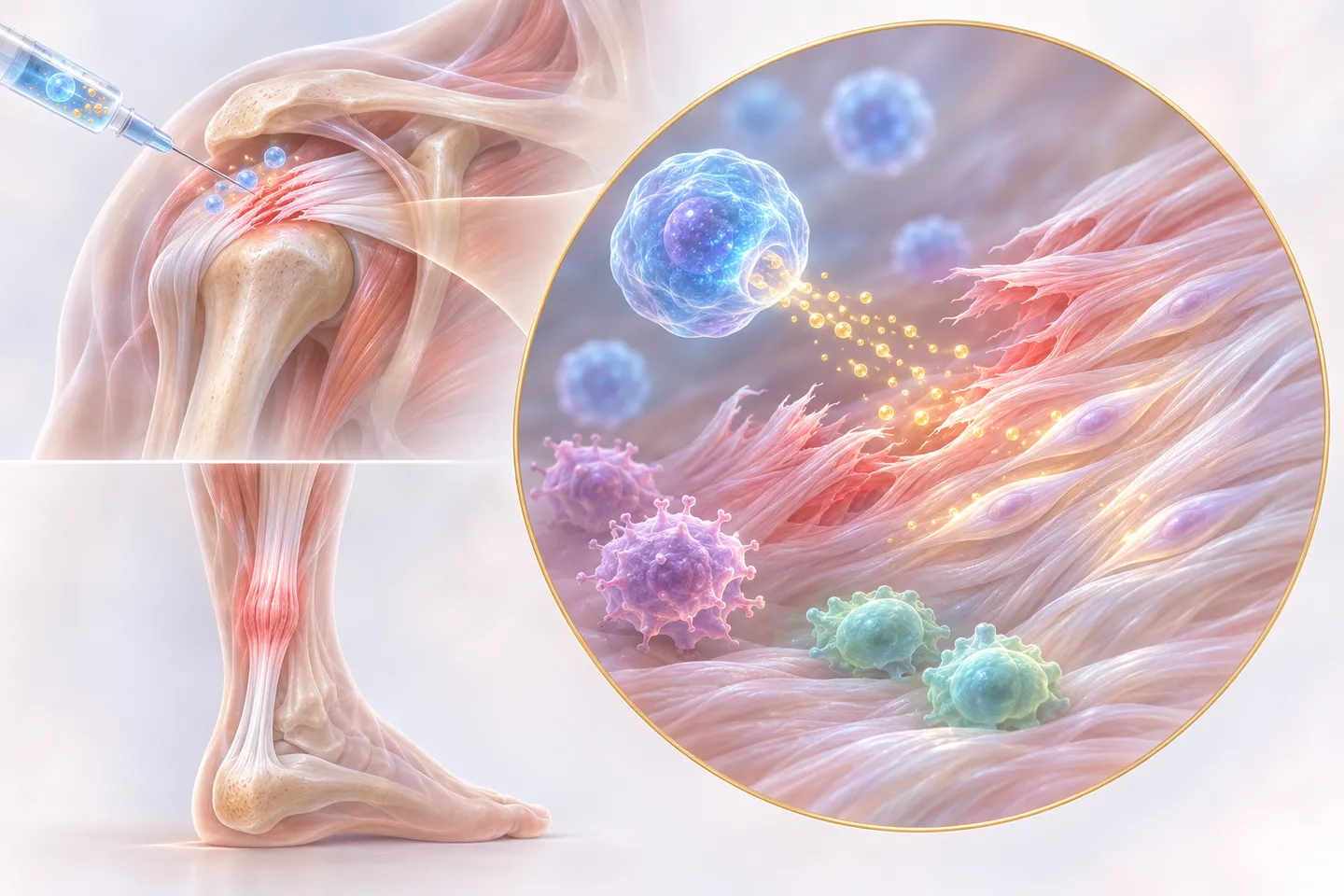
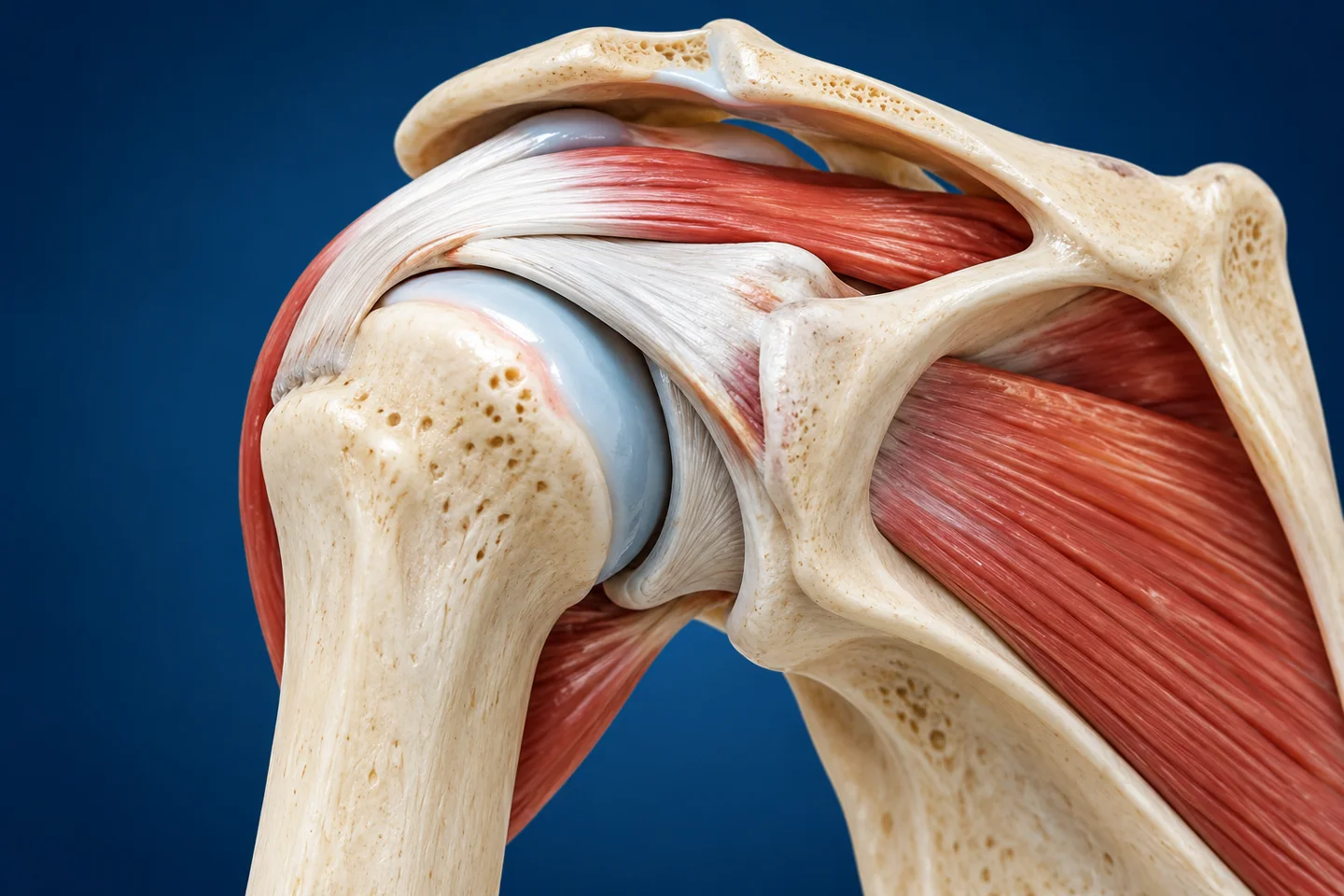
- Rotator cuff tendon (supraspinatus)The tendon over the top of the upper arm bone that helps you lift your arm. It is the one most often sore or partly torn.
- Partial tendon tearFrayed fibres where part of the tendon thickness is torn. Pain is often worst when you reach up or lie on that side.
- Upper arm bone (humerus)The rotator cuff tendons attach to its rounded top.
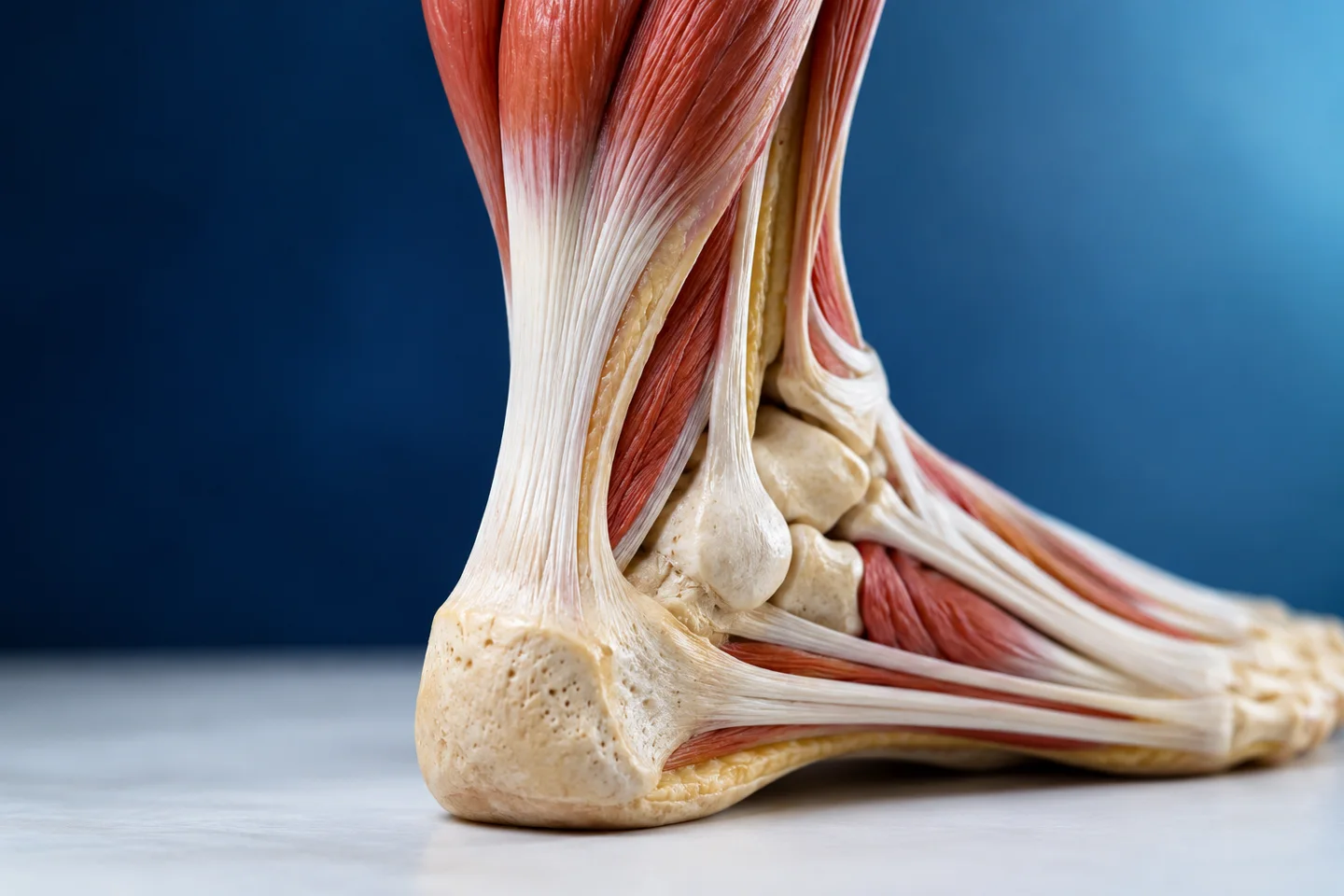
- Achilles tendonThe strong tendon at the back of the ankle. When it is overloaded it can thicken and hurt, often in the morning or when you start walking.
- Heel bone (calcaneus)Where the Achilles tendon attaches.
- Targeted injectionA fine needle, guided by imaging where needed, places the treatment where it is needed. Dr. Cihan Bolat plans the routes for you.
- Wharton’s jelly stem cellA fresh donor stem cell from umbilical cord tissue. It works mainly through calming and repair signals, shown mostly in research models.
- ExosomesTiny messages released by stem cells, carrying signals that calm inflammation and support repair.
Read the science: how the treatment aims to calm a sore tendon
Stem cells help tendons mainly through the signals they release, exosomes included.8 Each effect below says whether it was seen in people or in research models. Read more about our stem cells and our exosomes.
Calming long-lasting inflammation
Seen in people’s tendon tissue and in the laboratory. Biopsies from long-standing Achilles tendinopathy show a chronic inflammation that does not settle by itself.13 In tendon cells taken from people’s worn, torn rotator cuffs, signals released by umbilical cord stem cells calmed inflammatory genes and lowered the inflammatory messenger PGE2.14
Filling tendon defects and building strength
Seen in people. After people’s own fat-derived stem cells, a different cell type from our Wharton’s jelly cells, were injected into partly torn rotator cuffs, tears on the side facing the bursa had nearly disappeared on MRI at one year in the high-dose group, and three rotator cuff muscles were more than 50% stronger at two years.1
Stronger, better-organised collagen
Seen in research models. In the same rotator cuff tendon cells, umbilical cord stem cell signals raised the share of type I collagen, the strong collagen of healthy tendon.14 In rats with Achilles tendinopathy, umbilical cord stem cells gave thicker collagen fibres, and tougher tendons when given early.12
Exosomes from umbilical cord stem cells
Seen in research models. In sheep, tiny exosome-like vesicles from umbilical cord stem cells, placed on an injured rotator cuff during surgery, improved healing of the tendon and its attachment to bone, and MRI suggested less inflammation around it.15
Umbilical cord stem cells in an injured rotator cuff
Seen in research models. In rats with a full-thickness rotator cuff defect, umbilical cord stem cells injected into the tendon gave less inflammation and swelling, and better-organised collagen, than saline (salt water). The healing tendon held 25.0% more load before it gave way at two weeks and 19.0% more at four weeks. Only 5.3% of the cells were still there at four weeks, which points to their repair signals.17
Exosomes calming a sore shoulder tendon
Seen in research models. In rats with a worn, sore shoulder tendon (a model of tendinopathy), exosomes from umbilical cord stem cells were injected in a collagen gel that held them in the tendon for two weeks. The tendon looked calmer and less swollen on MRI, its collagen was better organised, and its immune cells shifted towards calming, repair-friendly types.18
06
How is our stem cell therapy transplant for Tendinitis - Shoulder, Achilles tendon performed in Istanbul?
Explore the forefront of tendinitis relief for both shoulder and Achilles tendon issues with our pioneering Mesenchymal Stem Cell (MSC) and Exosome Therapy. Leveraging the transformative potential of regenerative medicine, we offer a novel approach aimed at calming the inflammation and tendon wear behind tendinitis, supporting the healing of the tendon, and easing pain without surgery.
Read the full section
Our process initiates with a comprehensive evaluation to tailor a treatment strategy that caters to your unique condition. Utilizing MSCs, known for their regenerative capabilities and versatility in differentiating into diverse cell types, alongside exosomes—packed with beneficial proteins and RNA—to support tissue repair, we plan a targeted treatment for you. The core of our therapy involves a minimally invasive injection of MSCs and exosomes directly into the affected area, aiming to diminish inflammation, encourage the repair of tendon tissues, and mitigate discomfort, working alongside physiotherapy and the care you already receive.
Equipped with the latest advancements in regenerative medicine and backed by a team of specialists committed to excellence, our clinic prioritizes your health and recovery. We adhere to the highest standards of safety, effectiveness, and research-driven practices to enhance your mobility, lessen pain, and elevate your overall well-being.
However, it's important to approach treatment with balanced expectations. While MSC and Exosome Therapy has been a beacon of hope for many, achieving remarkable improvements, individual responses can vary. What may yield significant benefits for some may not produce identical outcomes for others, highlighting the personalized nature of regenerative medicine. We're here to guide you through understanding this innovative treatment, ensuring you make an informed decision about your health journey.
Embark on a path to recovery with our cutting-edge MSC and Exosome Therapy for tendinitis in the shoulder and Achilles tendon. Reach out to us to discover more about how this advanced treatment can potentially transform your life, tailored to meet your specific needs and health goals.
07
Why Wharton’s jelly stem cells and exosomes lead our tendon treatment
Wharton’s jelly is the soft tissue inside the umbilical cord. Its stem cells come from cords donated after healthy births, so nothing is taken from your body and no donor matching is needed. They are prepared fresh for your treatment date in a Ministry of Health-approved GMP laboratory, with the cell count and viability certified (see what our lab report shows). Your plan can also include umbilical cord stem cells and extra Wharton’s jelly exosomes.
Compare Wharton’s jelly stem cells with your own cells
| Fresh Wharton’s jelly stem cells (our cells) | Stem cells from your own bone marrow or fat | |
|---|---|---|
| Age of the cells | Newborn tissue, from cords donated after healthy births | As old as you are |
| A procedure for you | None | A bone marrow draw or liposuction first |
| Ready for treatment | Prepared fresh for your date, usually within 5 to 10 days | After a harvest, often with laboratory growth |
| Growth | Multiplied faster in a side-by-side laboratory comparison of 18 donors each16 | Bone marrow cells grew more slowly in the same comparison16 |
08
Stem cell therapy for rotator cuff and Achilles tendons: what the studies show
First, research models with umbilical cord stem cells, which come from the same source as our Wharton’s jelly cells. In rats, umbilical cord stem cells injected into an injured rotator cuff gave neater collagen and up to 25% more strength,17 and in rats with Achilles tendinopathy they calmed inflammatory signals and thickened the collagen fibres.12 The human studies below used other cell types, named in each line: people’s own fat or bone marrow cells, or donor fat cells, all different from the Wharton’s jelly cells we use. The highlights:
- Stem cell therapy for rotator cuff tears, by injection: people’s own fat-derived stem cells, injected into partly torn rotator cuffs, lowered shoulder pain by about 90% at one and two years at the two higher doses, and no one needed shoulder surgery during the two years.1
- A torn rotator cuff, at surgery: when people’s own fat-derived stem cells were added during keyhole repair, 14.3% of repairs had torn again on MRI, against 28.5% after repair alone; pain and function improved in both groups.2
- Achilles tendon: in 10 people whose Achilles pain had lasted more than six months despite earlier treatment, their own bone marrow stem cells, injected into the tendon, brought a meaningful gain in pain and function for 8 of them at 24 weeks, with no serious side effects.3
- Donor fat cells, elbow tendon: donor fat-derived stem cells lowered long-standing tennis elbow pain from 66.8 to 14.8 out of 100 over 52 weeks.4 See golfer’s and tennis elbow.
Shoulder pain and disability after one injection of people’s own fat-derived stem cells into partly torn rotator cuffs (high-dose group)
Shoulder Pain and Disability Index (SPADI): how much lower than before1
Shoulder pain with movement: how much lower than before1
The studies in detail, with all 4 in one table
| Study | Design | n | Cells and route | Result with exact numbers |
|---|---|---|---|---|
| Jo 2020, Arthroscopy1 | Dose-escalation study, 2 years; partial-thickness rotator cuff tears | 19 | Own fat-derived MSCs; one injection into the tendon, after a diagnostic keyhole look (no repair) | Shoulder pain about 90% lower at 1 and 2 years (mid and high dose); SPADI 90.2% lower at 2 years (high dose); bursal-side defects nearly gone on MRI; no treatment-related adverse events and no surgery needed |
| Kim 2017, American Journal of Sports Medicine2 | Matched cohort, about 28 months; rotator cuff tears repaired by keyhole surgery | 70 (35 + 35) | Own fat-derived MSCs in fibrin glue, added at the repair | Retear on MRI 14.3% with MSCs against 28.5% with repair alone; pain and function improved in both groups |
| Goldberg 2024, Scientific Reports3 | First-in-human (phase IIa), 24 weeks; mid-portion Achilles tendinopathy for more than 6 months | 10 | Own cultured bone marrow MSCs (median 12.2 million); one injection into the tendon | 8 of 10 improved by more than 12 points in Achilles pain (MOXFQ) and function (VISA-A); no serious adverse reactions |
| Lee 2015, Stem Cells4 | Pilot, two dose groups, 52 weeks; chronic tennis elbow | 12 | Donor fat-derived MSCs with fibrin glue; one injection into the tendon | Pain 66.8 → 14.8 (0–100) and elbow performance 64.0 → 90.6; tendon defects smaller; no significant adverse effects |
09
Who can have stem cell therapy for tendinitis?
We treat shoulder (rotator cuff) and Achilles tendinitis, with no fixed age limit. Dr. Cihan Bolat decides with you from your MRI or ultrasound report, plans the routes and timing for you, and tells you honestly if treatment is not right for you. Physiotherapy and loading exercises stay central: we work alongside your physiotherapist, never instead. The patellar tendon below the kneecap and the gluteal tendons at the outer hip can be treated too (see bursitis for outer-hip pain); for the elbow, see golfer’s and tennis elbow, for sprains ligament injuries, after a sports injury sports rehabilitation, and for a worn shoulder joint shoulder osteoarthritis.
Often suitable
- Rotator cuff tendinitis or tendinopathy
- A partly torn (partial-thickness) rotator cuff
- Long-standing Achilles tendinopathy
- Patellar or gluteal tendon pain
- Pain despite physiotherapy, loading exercises or injections
Considered case by case
- A full-thickness rotator cuff tear, especially one that has pulled back: send your MRI for a free, honest review by Dr. Cihan Bolat
- A complete tendon rupture, the Achilles included: send your MRI or X-ray for a free, honest review by Dr. Cihan Bolat, including whether surgery would suit you better
- Before or after tendon surgery, alongside your surgeon’s plan
- Diabetes, blood thinners or a bleeding disorder
Not suitable for now
- A hot, red, swollen joint or a fever: please see your own doctor first
- Active cancer, or recent cancer treatment
- An active infection elsewhere
- Pregnancy
10
Expert stem cell treatment led by Uzm. Dr. Cihan Bolat, MD
Under the leadership of Uzm. Dr. Cihan Bolat, MD, Specialist in Anesthesiology & Reanimation and Regenerative Medicine, we offer advanced, customized stem cell treatments specifically tailored to the unique needs of our patients. Thanks to our extensive experience and access to a diverse array of high-quality mesenchymal stem cells (MSC) and exosomes, we adopt a holistic approach in treating Tendinitis - Shoulder and Achilles tendon problems.
Read the full section
In our modern clinic, we avoid the use of performance-enhancing substances or synthetic components, focusing on evidence-informed care and well-being. We are committed to creating a relaxed atmosphere, supported by a friendly and knowledgeable team, to ensure you enjoy a pleasant stay while receiving the best care.
Trust in the expertise of Uzm. Dr. Cihan Bolat, MD and our dedicated team for a leading treatment not only aimed at alleviating symptoms but also at supporting the healing of damaged tissue through stem cell therapy. Opt for future-oriented medicine with us and experience a new dimension of healthcare, focused on your recovery and well-being.
11
How does our stem cell therapy treatment for tendinitis of the shoulder and Achilles tendon work?
All our stem cell treatments in Istanbul are assessed and administered by specialists in the field, trained in the United States and Turkey, and not by general doctors or specialists. We do this to ensure the highest level of precision, understanding of the condition and quality of treatment for our patients. We are 100% clear and honest with our patients. Not everyone is eligible for our stem cell treatments. We turn away many patients where our specialist evaluates the current health status and medical history and judges that the treatment is not appropriate, to avoid false promises or expectations when the risks exceed the benefits. For this reason, and to ensure patient safety in all our treatments, each patient is assessed by the specialist before they can plan their treatment.
Step 1. Assessment by the Specialist – For patients with Tendinitis - Shoulder, Achilles Tendon complaints, our specialist needs to know the patient's age and previous medical treatments. In addition, he will need to review specific tests that you will be asked to bring.
Step 2. Free Phone Consultation with the Specialist – Once the specialist has reviewed the medical records and approved your case, we will present treatment options and pricing. At this time we also offer a free telephone consultation to discuss questions and concerns.
Step 3. Stem Cell Preparation – Once you decide to undergo our treatment, we will send a deposit invoice to begin the process of stem cell preparation so that it is ready for your planned treatment. The duration of this process may vary depending on current demand and availability, but can take 5-10 days.
Step 4. Treatment day – On the day of treatment you can choose to come to our hospital location or use our free transportation to and from our clinic in Istanbul. Our driver will pick you up at your desired location and accompany you to our clinic, where the specialist will administer the treatment, and then return you safely.
Step 5. Follow-up Treatment – Our follow-up treatment specialist will contact you according to our follow-up schedule to ensure you have all the resources you need for maximum benefits. Your well-being and satisfaction are our top priority.
12
What our patients say
Professional and friendly!
After long research and much hesitation, I decided to have my stem cell treatment carried out by Istanbul Stemcel. From the moment I contacted them I felt completely supported and reassured by their professional and friendly team. The treatment itself went smoothly and was virtually painless. What really struck me was the care and dedication of the medical staff to ensure everything went according to plan. The result? I couldn't be happier! My health has improved significantly, and I am grateful to Istanbul Stem Cell for this life-changing experience. I would have no hesitation in recommending them to anyone considering stem cell therapy.
Simply stunning!
My experience with Istanbul Stem Cell was simply amazing. From the very first contact they were extremely professional and helpful. I was initially a little skeptical about stem cell therapy, but their team answered all my questions and concerns patiently and convincingly. The treatment itself was carried out carefully and professionally, and I felt in good hands. After treatment, I quickly began to notice improvements in my health, and I can happily say that my life has changed significantly thanks to Istanbul Stem Cell. I can't thank them enough and would highly recommend their services to anyone looking for high quality stem cell therapy.
13
Tendinitis stem cell therapy cost in Turkey
Tendon treatment is a targeted injection into and around the tendon, so it is priced in your written plan: a fixed, all-inclusive price before you book. PRP (platelet-rich plasma), made from a small sample of your own blood, is free with any stem cell package, and Dr. Cihan Bolat tells you whether it suits your plan. An IV infusion, only where your plan includes one, follows our price list, effective 1 June 2026, in US dollars (M = million stem cells), with free Wharton’s jelly exosomes from 50M. See our stem cell therapy cost guide.
| Cell count | USD price | Free exosomes | Free hotel |
|---|---|---|---|
| 25M | $4,950 | No | No |
| 50M | $6,950 | 10 billion exosomes | No |
| 75M | $8,950 | 10 billion exosomes | No |
| 100M | $10,500 | 20 billion exosomes | 2 nights |
| 125M | $11,850 | 20 billion exosomes | 2 nights |
| 150M | $13,550 | 30 billion exosomes | 2 nights |
| 175M | $15,000 | 30 billion exosomes | 2 nights |
| 200M | $16,500 | 30 billion exosomes | 3 nights |
| 225M | $18,000 | 30 billion exosomes | 3 nights |
| 250M | $19,500 | 30 billion exosomes | 3 nights |
What is included, and what is optional
Included
- Free review of your MRI or ultrasound report, and a phone consultation
- Your tendon injections, and any IV infusion, as set out in your plan
- Fresh Wharton’s jelly stem cells, count and viability certified
- PRP (platelet-rich plasma), free with any stem cell package
- Treatment by Uzm. Dr. Cihan Bolat’s specialist team
- Ground transport, a case manager and interpreter help
- Hotel nights as listed, in 5-star hotels
- Follow-up by phone or WhatsApp
Not included / optional
- Flights and extra hotel nights
- Extra exosomes, priced in your plan
- Add-ons such as Muse cells, Muse exosomes or CD34+ exosomes
- A repeat treatment, if you choose one
14
Read our full guides
Would you like the whole story? These guides go deeper.
Does stem cell therapy work for sports injuries?
Tendons, ligaments and muscles, with the studies and how physiotherapy fits in.
Read the guide GuideExosome treatments explained
What exosomes are, how they carry repair signals and how each exosome injection is given.
Read the guide GuideWhat a stem cell lab report shows
Cell count, viability and sterility tests, and why fresh cells from a GMP laboratory matter.
Read the guide15
Frequently asked questions
Does stem cell therapy work for a torn rotator cuff?
Stem cell therapy for a torn rotator cuff depends on the tear. For a partial tear, one injection of people’s own fat-derived stem cells, a different cell type from the Wharton’s jelly cells we use, lowered shoulder pain by about 90% at one and two years at the two higher doses. For full-thickness tears, one study added stem cells during keyhole repair, and fewer repairs tore again: 14.3%, against 28.5% with repair alone. If your tear goes all the way through and has pulled back, it is looked at case by case. You do not need a surgeon’s opinion first: send your MRI or X-ray, and Dr. Cihan Bolat will review it free of charge and tell you honestly whether stem cell therapy suits you, or whether surgery would suit you better. When surgery is needed, stem cells can sit alongside it and your rehabilitation.
Can stem cells help Achilles tendinopathy?
They may, alongside your loading exercises. In a first-in-human study, 8 of 10 people with Achilles pain lasting more than six months improved meaningfully in pain and function 24 weeks after their own bone marrow stem cells were injected into the tendon. Our treatment uses donor Wharton’s jelly stem cells and exosomes instead, so nothing is taken from your body.
How soon after stem cell therapy for tendonitis will I feel a difference?
Results build gradually over weeks and months as the tendon settles and heals. In the Achilles study (people’s own bone marrow cells), pain and function had improved by 12 weeks and improved further by 24 weeks; in partly torn rotator cuffs (people’s own fat cells), the gains were still there two years later. Everyone heals at their own pace.
Do I still need physiotherapy and loading exercises?
Yes. Exercise is the foundation of tendon care: a physiotherapy programme was effective for about three in four people with a full-thickness rotator cuff tear that came on without an injury, and 12 weeks of heavy-load calf exercises brought 15 recreational athletes with long-standing Achilles pain back to full running. Stem cell therapy works alongside your programme, never instead of it, and you can share your written plan with your physiotherapist.
Can stem cell therapy help me avoid shoulder or Achilles surgery?
Some people use it to delay or avoid surgery, especially with partial tears and long-standing tendinopathy: in the rotator cuff injection study, no one needed shoulder surgery during two years of follow-up. A complete tear or rupture is looked at case by case, and you do not need a surgeon’s opinion first: send your MRI, ultrasound or X-ray report, and Dr. Cihan Bolat will review it free of charge and tell you honestly whether stem cell therapy suits you, or whether surgery or another option would suit you better. When surgery is needed, stem cells can sit alongside it and your physiotherapy, never instead.
How long do I need to stay in Istanbul?
Your plan sets the dates. Your cells are prepared fresh for your treatment date, usually within 5 to 10 days of booking, and your case manager helps you choose dates that suit you.
Which types of stem cells are used to treat shoulder or Achilles tendon tendinitis, and why are they suitable for this condition?
Mesenchymal stem cells are often used because of the repair signals they release, exosomes included, and their anti-inflammatory properties, which are beneficial for shoulder or Achilles tendon tendinitis.
Can stem cell therapy cure my shoulder or Achilles tendon tendinitis?
The benefits of stem cell treatment for shoulder or Achilles tendon tendinitis may vary from patient to patient, depending on factors such as current health, medical history, the extent of damage, and other considerations. It is important to understand that, although mesenchymal stem cell injections have shown encouraging results in shoulder and Achilles tendon studies, the goals of treatment are a calmer tendon, less pain, easier movement and a better quality of life.
How effective is stem cell treatment for shoulder or Achilles tendon tendinitis?
Patient satisfaction after stem cell treatment for shoulder or Achilles tendon tendinitis is high. However, it is important to understand that treatment effectiveness depends on several factors, including the patient's age, medical history, and overall lifestyle.
How safe is stem cell treatment for shoulder or Achilles tendon tendinitis at this clinic?
We take pride in being the safest and most honest stem cell therapy clinic in Istanbul. All our stem cell treatments are evaluated and administered by specialists in this field who have trained in both the United States and Turkey, rather than only by general physicians or specialists. This helps ensure the highest level of precision, understanding of the condition, and treatment quality for our patients. We are completely clear and honest with our patients. Not everyone qualifies for our stem cell treatments. We decline many patients when our specialist determines that treatment is unsuitable, to avoid false promises or expectations when the risks outweigh the benefits.
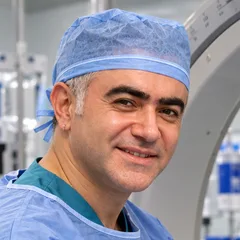
Medical review
Uzm. Dr. Cihan Bolat
Medical Director, Istanbul Stemcell
This page was written from the published studies listed below and reviewed for medical accuracy on .
16
References
All 18 published studies, with PubMed links
- Jo CH, et al. Intratendinous Injection of Mesenchymal Stem Cells for the Treatment of Rotator Cuff Disease: A 2-Year Follow-Up Study. Arthroscopy. 2020;36(4):971-980. PMID 31805388
- Kim YS, et al. Does an Injection of Adipose-Derived Mesenchymal Stem Cells Loaded in Fibrin Glue Influence Rotator Cuff Repair Outcomes? A Clinical and Magnetic Resonance Imaging Study. Am J Sports Med. 2017;45(9):2010-2018. PMID 28448728
- Goldberg AJ, et al. Autologous bone marrow derived mesenchymal stem cells are safe for the treatment of Achilles tendinopathy. Sci Rep. 2024;14(1):11421. PMID 38763976
- Lee SY, et al. Treatment of Lateral Epicondylosis by Using Allogeneic Adipose-Derived Mesenchymal Stem Cells: A Pilot Study. Stem Cells. 2015;33(10):2995-3005. PMID 26202898
- Wang Y, Yi H, Song Y. The safety of MSC therapy over the past 15 years: a meta-analysis. Stem Cell Res Ther. 2021;12(1):545. PMID 34663461
- Feltri P, et al. Rotator cuff repair: Sleep disturbance significantly improves after arthroscopic tendon repair. Knee Surg Sports Traumatol Arthrosc. 2025;33(4):1459-1471. PMID 39189149
- de Jonge S, et al. Incidence of midportion Achilles tendinopathy in the general population. Br J Sports Med. 2011;45(13):1026-8. PMID 21926076
- Lui PPY. Mesenchymal Stem Cell-Derived Extracellular Vesicles for the Promotion of Tendon Repair - an Update of Literature. Stem Cell Rev Rep. 2021;17(2):379-389. PMID 32785869
- Torchia MT, et al. Evaluation of survivorship of asymptomatic degenerative rotator cuff tears in patients 65 years and younger: a prospective analysis with long-term follow-up. J Shoulder Elbow Surg. 2023;32(7):1432-1444. PMID 37024038
- Kuhn JE, et al. Effectiveness of physical therapy in treating atraumatic full-thickness rotator cuff tears: a multicenter prospective cohort study. J Shoulder Elbow Surg. 2013;22(10):1371-9. PMID 23540577
- Alfredson H, et al. Heavy-load eccentric calf muscle training for the treatment of chronic Achilles tendinosis. Am J Sports Med. 1998;26(3):360-6. PMID 9617396
- Yuan Z, et al. Early delivery of human umbilical cord mesenchymal stem cells improves healing in a rat model of Achilles tendinopathy. Regen Med. 2024;19(2):93-102. PMID 38415316
- Dakin SG, et al. Chronic inflammation is a feature of Achilles tendinopathy and rupture. Br J Sports Med. 2018;52(6):359-367. PMID 29118051
- Lee MJ, et al. Effects of Conditioned Media From Human Umbilical Cord-Derived Mesenchymal Stem Cells on Tenocytes From Degenerative Rotator Cuff Tears in an Interleukin 1β-Induced Tendinopathic Condition. Orthop J Sports Med. 2024;12(11):23259671241286412. PMID 39534392
- Jenner F, et al. Evaluation of the Potential of Umbilical Cord Mesenchymal Stromal Cell-Derived Small Extracellular Vesicles to Improve Rotator Cuff Healing: A Pilot Ovine Study. Am J Sports Med. 2023;51(2):331-342. PMID 36645050
- Batsali AK, et al. Differential expression of cell cycle and WNT pathway-related genes accounts for differences in the growth and differentiation potential of Wharton's jelly and bone marrow-derived mesenchymal stem cells. Stem Cell Res Ther. 2017;8(1):102. PMID 28446235
- Yea JH, et al. Regeneration of a full-thickness defect in rotator cuff tendon with umbilical cord-derived mesenchymal stem cells in a rat model. PLoS One. 2020;15(11):e0235239. PMID 33166292
- Jeon YD, et al. Regenerative Effect of Injectable Collagen Loaded With Mesenchymal Stem Cell-Derived Extracellular Vesicles in a Collagenase-Induced Tendinopathy Rat Model. Am J Sports Med. 2026;54(5):1088-1102. PMID 41761488