Stem cell therapy for bone fractures in Istanbul is for breaks that are slow to heal. Fresh Wharton’s jelly stem cells and their exosomes, tiny repair messages, are injected at the fracture, guided by imaging, with an IV infusion if your plan includes one. Most broken bones heal well, yet in a study of 309,330 fractures, 4.9% did not heal (a non-union).1 Uzm. Dr. Cihan Bolat reviews your X-ray or CT free of charge.
01
Living with a slow-healing fracture: we understand
If you live with a fracture that is slow to heal, you know the waiting. The cast, the brace or the operation was meant to be the end of it. Months later, the bone still aches when you stand or lift, and every X-ray brings the same question: is it healing? Most broken bones heal well, but in a study of 309,330 fractures, 4.9% did not heal, and the shin, thigh and small wrist (scaphoid) bones were the most likely to stall.1
It is rarely only about one bone. A non-union (a break that has stopped healing) can affect your mood, your work and your finances as well as how you move.7 You may lean on crutches for longer than planned, miss sport or work, or think twice before carrying the shopping or a child. Wanting to trust your body again is completely natural, and it deserves a careful plan.

Walking without a limp
Stairs, pavements and the walk to the shops, without favouring one leg.
Back to work and sport
Your job, the gym or the pitch, at your own pace.
Carrying what matters
Bags, a suitcase or a grandchild, without the deep ache.
Good news at your next X-ray
A bridge of new bone, and life moving forward again.
Here is the hopeful part: bone is one of the few tissues that can heal back to its original strength and shape.7 Stem cell therapy for bone fractures aims to restart that healing at the break, alongside your fracture care. First, how it works, in plain words:
02
How stem cells and exosomes can help your broken bone heal, in plain words
Think of a healing break as a building site. In the first days, an alarm (inflammation) calls in the workers. They build a soft bridge across the gap, then turn it into hard bone. In a slow-healing fracture, the alarm keeps ringing, the supply roads (blood vessels) stay thin, and the builders go quiet. Stem cells act like a site manager. They do not become your new bone. Instead, they send exosomes, tiny text messages packed with instructions, that tell your own cells to calm down, bring in supplies and start building again.
They calm the alarm
Stem cells and exosomes help quieten the long-lasting inflammation at your break. Then the healing can move on from the sore, swollen stage to the building stage.
They send repair messages
Exosomes carry proteins and RNA (the cell’s own instructions) to the cells at your break. In research models, healing slowed when these messages were missing and got back on track once they were added.8
Your own cells build bone
The messages call in new blood vessels and wake up your own bone-building cells. They can then lay down a bridge of new bone across the gap.
What this could mean for you: the aim is a bone you can trust again. That may mean walking without a limp, climbing the stairs without that deep ache, getting back to work or sport at your own pace, and carrying your bags or a grandchild with confidence. And, we hope, good news at your next X-ray.
03
Stem Cell Treatment for Bone Fractures
Stem cells offer hope for recovery and symptom management in bone fractures.
Read the full section
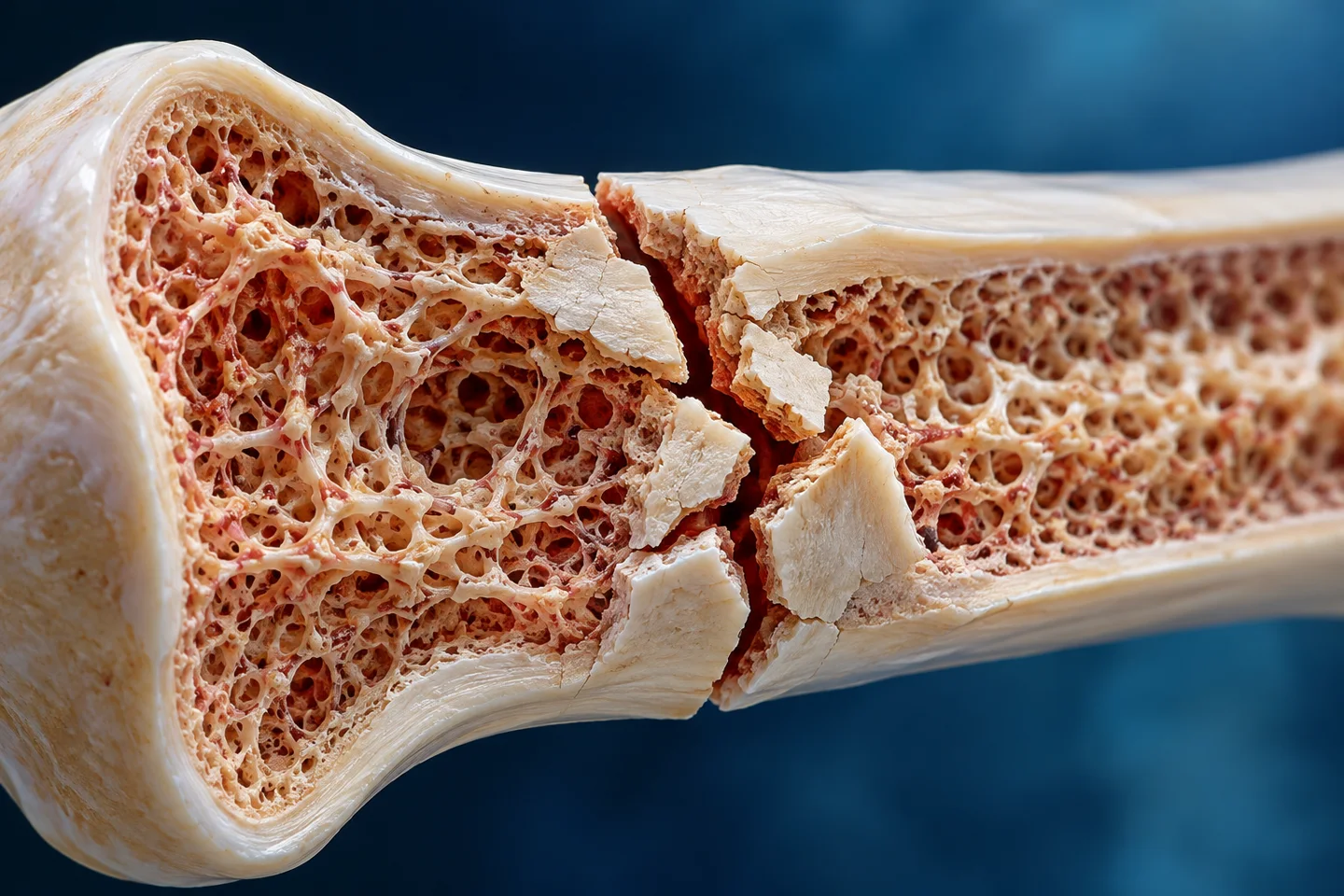
The term "fracture" is used to describe a broken bone. Bone fractures are quite common, and it is said that nearly everyone will experience a fracture at some point in their life. Fractures occur when too much physical pressure is applied to a bone. Our bones are not flexible; it is the joints that allow for bending.
That said, bones can slightly bend under external pressure, but if that pressure becomes too heavy, a fracture is inevitable.
When our bones break, they usually heal without adverse complications or significant functional limitations. However, fractures can also come with complications that can be risky for the limb. Unfortunately, fractures may not heal properly in some cases.
This is where mesenchymal stem cells (MSCs) derived from umbilical cord tissue can play a supporting role in the healing process. In the laboratory, MSCs can develop into several types of cells, including bone-forming cells, and at a fracture they release signals that calm inflammation and wake up the body’s own bone-building cells. With umbilical cord-derived MSCs, we aim to support your own repair, help a slow-healing break move forward, and improve the quality of bone repair.
MSC therapy aims to support the healing of fractures and the strength of the healing bone. This innovative approach represents a promising advancement in orthopedic care, offering hope for improved outcomes for patients suffering from bone fractures.
04
Why acting early can make a difference
Bone heals in stages. First comes a short burst of inflammation that starts the repair. Then a soft bridge of new tissue (callus) forms, and it slowly turns into hard bone.9 Healing needs a steady fracture and a good blood supply. Inflammation that lasts too long, as can happen with diabetes, rheumatoid arthritis or a severe injury, can lengthen healing and raise the chance of a non-union.9 Smoking, diabetes and some medicines raise that chance too.1
Today’s care does a lot of good. A cast, a brace or surgery holds the bone still, and when a break does not heal, further surgery helps many people: five years after non-union surgery, 95.6% of patients were satisfied with their treatment.10 These steps give the bone the right conditions, but they are not designed to add new repair signals.
This is where timing helps. A break needs enough repair cells: in one study of non-unions, the breaks that healed had received more of them, and more cells meant more new bone.5 Stem cells have also been studied in breaks at this slow stage, 3 to 7 months after the injury, with encouraging results.4 Asking early, while your bone is slow but still trying to heal, gives any treatment, stem cell therapy included, a better place to begin.
05
How Wharton’s jelly stem cells and exosomes work in slow-healing fractures
In a slow-healing fracture, the break stays inflamed, its blood supply is thin and the bone-building cells go quiet. Wharton’s jelly stem cells and their exosomes, tiny messages that carry proteins and RNA between cells, are injected at the break, guided by imaging, with an IV infusion if your plan includes one. There they aim to calm the inflammation, bring in new blood vessels and wake up your bone-building cells.
How Wharton’s jelly stem cells and exosomes aim to support a slow-healing fracture
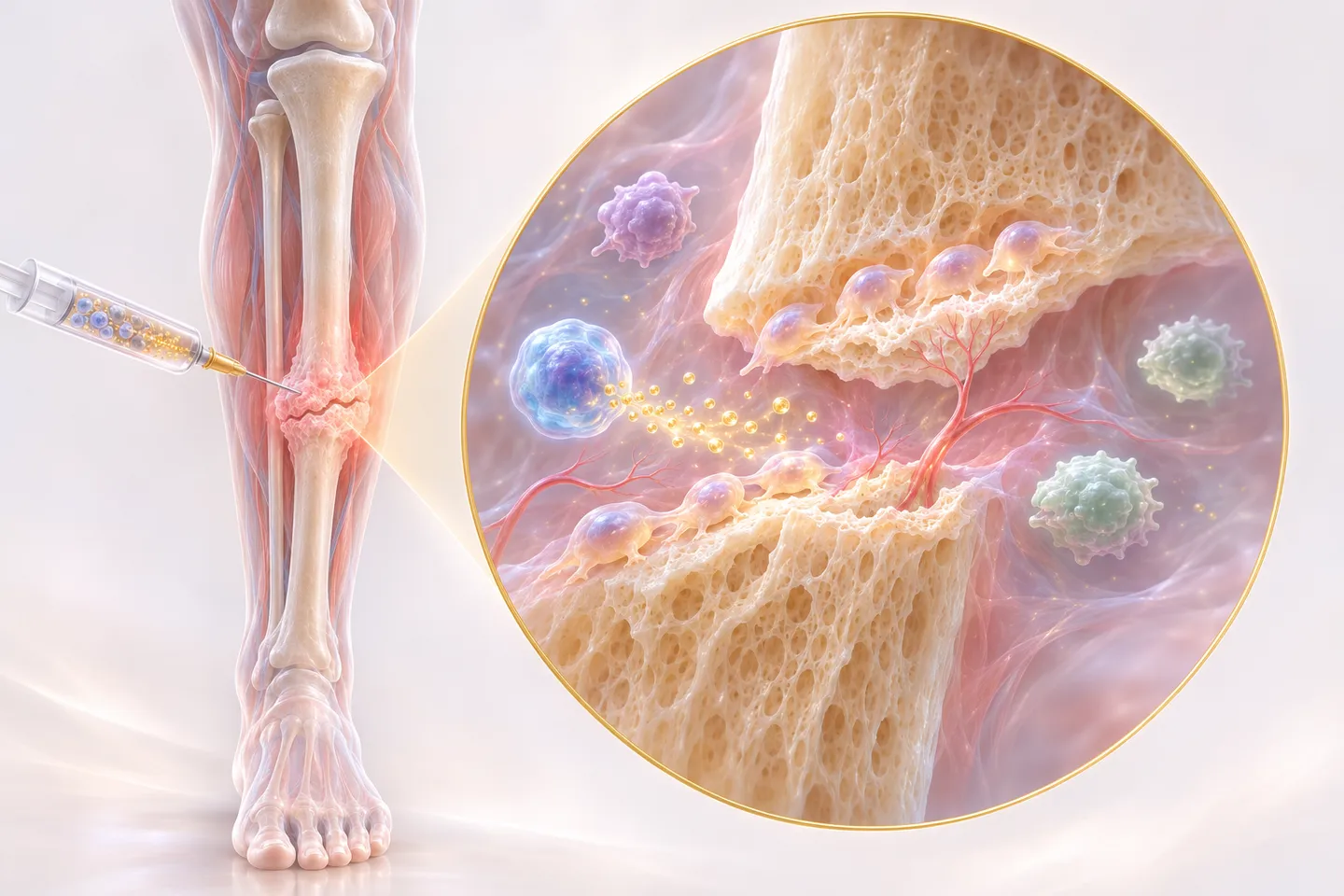
- Shin bone (tibia)The main bone of the lower leg. Long bones like this one are where fractures most often heal slowly.
- Slow-healing fractureA break that has not knitted together on time, wrapped in soft healing tissue (callus). Doctors call it delayed union, or non-union when healing has stopped.
- Targeted injectionA fine needle, guided by imaging, places the treatment at the fracture. Dr. Cihan Bolat plans the routes for you.
- Bone-forming cells (osteoblasts)Your own cells that lay down new bone along the broken ends.
- New blood vesselsFresh vessels bring oxygen and building materials into the gap. Healing stalls without them.
- Wharton’s jelly stem cellA fresh donor stem cell from umbilical cord tissue. It works mainly through calming and repair signals, shown mostly in research models.
- ExosomesTiny messages released by stem cells, carrying signals that calm inflammation and support repair.
- Calmer immune cellsLess inflammation, which is a main aim of treatment.
Read the science: how the treatment aims to support a slow-healing fracture
Each effect below says whether it was seen in people or in research models. Read more about our stem cells and our exosomes.
Calming inflammation at the break
Seen in research models. Stem cells given into the bloodstream travelled to a broken shin bone, lowered the inflammatory signals TNF-α and IL-1β in the first week, and made the healing bone stronger.11
Exosomes carry the repair message
Seen in research models. In a research model that makes few exosomes, broken bones healed slowly. Injected stem cell exosomes brought healing back on track, while the same fluid with its exosomes removed did not.8
New blood vessels and new bone in a non-union
Seen in research models. In a thigh-bone non-union, weekly injections of bone marrow stem cell exosomes into the break boosted new bone, new blood vessels and healing.12
Wharton’s jelly stem cells inside a broken bone
Seen in people. Wharton’s jelly stem cells injected straight into broken spine bones (vertebrae), then by IV a week later, with a bone-building medicine, were followed by better bone structure in the broken vertebra on CT than the medicine alone.2
More repair cells, more new bone
Seen in people. When people’s own bone marrow was injected into shin-bone non-unions, the breaks that healed had received more repair cells (progenitors), and the more cells they received, the more new bone formed within four months.5
06
How is our stem cell therapy transplantation for bone fractures performed in Istanbul?
Fractures can lead to various complications, which are classified as either local or systemic. Early local complications may include vascular injury, resulting in internal or external bleeding. Other local complications can involve wound infections, visceral injury, and soft tissue damage. Early systemic complications include shock, thromboembolism, pneumonia, and exacerbation of pre-existing conditions.
Read the full section
Some complications may arise months after the fracture occurs, such as delayed healing, joint stiffness, contractures, malunion, and nonunion. Nonunion refers to a situation where the fracture does not heal properly, potentially necessitating surgical intervention. Stem cell therapy may support the healing of these slow-healing fractures, alongside your fracture care and, when it is needed, surgery.
Mesenchymal stem cells (MSCs), particularly those derived from umbilical cord tissue, offer promising solutions for managing nonunion fractures. In the laboratory, these MSCs can develop into several cell types, including osteoblasts (bone-forming cells), and at the fracture they release signals that calm inflammation and support new blood vessels and new bone. With umbilical cord-derived MSC therapy, we aim to support your body’s own repair and improve the overall quality of bone repair.
Stem cell therapy is of special interest for patients dealing with nonunion fractures, which are resistant to healing despite treatment. This approach aims at the stalled healing behind the problem, and it is given by injection, alongside surgery when it is needed. Stem cell therapy can bring renewed hope and a path towards recovery for those facing the challenges of bone fractures.
07
Why Wharton’s jelly stem cells and exosomes lead our fracture treatment
Wharton’s jelly is the soft tissue inside the umbilical cord. Its stem cells come from cords donated after healthy births, so nothing is taken from your body and no donor matching is needed. They are prepared fresh for your treatment date in a Ministry of Health-approved GMP laboratory, with the cell count and viability certified (see what our lab report shows). Your plan can also include umbilical cord stem cells and extra Wharton’s jelly exosomes.
Compare Wharton’s jelly stem cells with your own cells
| Fresh Wharton’s jelly stem cells (our cells) | Stem cells from your own bone marrow or fat | |
|---|---|---|
| Age of the cells | Newborn tissue, from cords donated after healthy births | As old as you are |
| A procedure for you | None | A bone marrow draw or liposuction first |
| Ready for treatment | Prepared fresh for your date, usually within 5 to 10 days | After a harvest, often with laboratory growth |
| Growth | Multiplied faster in a side-by-side laboratory comparison of 18 donors each13 | Bone marrow cells grew more slowly in the same comparison13 |
08
Stem cell therapy for non-union and slow-healing fractures: what the studies show
Research on stem cells in broken bones is growing, with human studies in non-unions, delayed unions, large bone gaps and spine fractures. Each used its own cells and route. The highlights:
- Non-union, donor umbilical cord cells: in a controlled study of 72 people whose thigh or shin bone had not healed, donor umbilical cord stem cells injected into the break with PRP were followed by healing in 5.6 months on average, against 10.3 months after a bone graft from the hip.3
- Spine fractures, Wharton’s jelly cells: in a randomised study, Wharton’s jelly stem cells were injected into the broken vertebra and then given by IV, with teriparatide, a bone-building medicine. Disability fell from 68.9 to 17.8 out of 100 in a year, against 81.2 to 34.4 with the medicine alone.2
- Delayed union, donor cells: in 22 people whose break had not healed after 3 to 7 months, one injection of donor bone-forming cells, grown from bone marrow stem cells, was followed by 61% less pain at the fracture on average, and 76.2% showed more healing on CT at 6 months.4
- Large bone gaps, donor umbilical cord cells: all 7 people treated for a non-union with a large gap in the bone scored better on a leg-function scale 12 to 36 months later.14
Spine fractures a year after treatment: Wharton’s jelly stem cells with teriparatide vs teriparatide alone
Physical health score (SF-36), 0–100 (higher is better)2
Disability (Oswestry Disability Index), 0–100 (lower is better)2
The studies in detail, with all 6 in one table
| Study | Design | n | Cells and route | Result with exact numbers |
|---|---|---|---|---|
| Shim 2021, Stem Cells Transl Med2 | Randomised, open-label phase I/IIa, 12 months; recent spine fractures from thin bones (osteoporosis) | 20 (14 completed) | Donor Wharton’s jelly stem cells: 40 million injected into the broken vertebra, 200 million by IV a week later; with teriparatide | Pain eased more than with teriparatide alone from month 1; ODI 68.9 → 17.8 vs 81.2 → 34.4; SF-36 physical 16.6 → 68.2 vs 10.4 → 40.2; better bone structure in the broken vertebra on CT |
| Qu 2009, Zhongguo Xiu Fu Chong Jian Wai Ke Za Zhi3 | Controlled clinical study against a bone graft from the hip; thigh and shin non-unions | 72 (36 + 36) | Donor umbilical cord stem cells with PRP and demineralised bone powder, injected through the skin into the non-union | Union in 5.6 ± 0.8 vs 10.3 ± 2.8 months (P < 0.05); no deep infection, rejection or fever reaction in the stem cell group |
| Jayankura 2021, Stem Cell Res Ther4 | Open-label phase I/IIa pilot; long-bone delayed unions not healed after 3 to 7 months | 22 | Donor bone-forming cells grown from bone marrow stem cells, 50 to 100 million, injected through the skin into the fracture | At 6 months: CT union score up by at least 2 points in 76.2%; global health score 48% better; pain at the fracture 61% lower; no rescue surgery within 6 months |
| Dilogo 2021, Eur J Orthop Surg Traumatol14 | Translational study, 12 to 36 months; non-unions with a critical-sized bone defect | 7 | Donor umbilical cord stem cells, implanted into the defect | Leg function (LEFS) better in all 7 at the end of follow-up |
| Gómez-Barrena 2020, Injury15 | Multicentre European phase I/II trial, 12 months; thigh, shin and upper-arm non-unions | 28 | People’s own bone marrow stem cells, grown in a GMP laboratory, with bone-substitute granules, placed during surgery | Healed on X-ray in 25.0% at 3 months, 67.8% at 6 months and 92.8% at 12 months |
| Hernigou 2005, J Bone Joint Surg Am5 | Case series; shin-bone non-unions | 60 | People’s own concentrated bone marrow, injected through the skin into the non-union | 53 of 60 healed; more repair cells were linked with more new bone at 4 months |
PRP for fractures. PRP (platelet-rich plasma), made from a small sample of your own blood, is free with any stem cell package and can be given at the same visit. In the non-union study above, PRP was part of the injection, together with the donor cord stem cells.3 Dr. Cihan Bolat tells you whether PRP suits your plan.
09
Who can have stem cell therapy for bone fractures?
We treat delayed unions, non-unions, slow recovery after a fracture or fracture surgery, and stress fractures that are slow to settle, with no fixed age limit. You do not need a surgeon’s opinion first. Send your X-ray, CT or MRI, and Dr. Cihan Bolat will review it free of charge and plan the routes and timing for you. You will then hear honestly whether stem cell therapy suits you, or whether another option, surgery included, would suit you better. Stem cells sit alongside your fracture care and fixation, never instead. A new break needs emergency care first. If thin bones are part of your story, see stem cell therapy for osteoporosis; after a sports injury, sports injuries and rehabilitation; and for worn joints, hip, knee and shoulder osteoarthritis or cartilage disorders.
Often suitable
- A break that is healing more slowly than expected (delayed union)
- A break that has stopped healing (non-union), with or without a plate or nail
- Pain or weakness months after a fracture or fracture surgery
- A stress fracture that is slow to settle despite rest
Considered case by case
- A large gap in the bone, or a loose plate, nail or screw: send your X-ray or CT for a free, honest review by Dr. Cihan Bolat, including whether surgery would suit you better
- A past bone infection, alongside your own doctors
- Diabetes, smoking or thin bones, which can slow healing: stopping smoking gives any bone a better chance
- Blood thinners or a bleeding disorder
Not suitable for now
- A new break: please go to emergency care first
- A hot, red, swollen area or a fever, which can be an infection: please see your own doctor first
- Active cancer, or recent cancer treatment
- Pregnancy
10
Expert Stem Cell Treatment Led by Uzm. Dr. Cihan Bolat, MD
Under the leadership of Uzm. Dr. Cihan Bolat, MD, Specialist in Anesthesiology & Reanimation and Regenerative Medicine, we provide specialized treatments tailored to the unique needs of our patients. With extensive experience and a wide range of mesenchymal stem cells (MSCs) derived from umbilical cord tissue at our disposal, we offer a comprehensive approach to addressing bone fracture complaints.
Read the full section
At our clinic, we strive to create a relaxed atmosphere with a friendly and professional team dedicated to ensuring you enjoy your stay.
11
How does our stem cell treatment for bone fractures work?
All our stem cell treatments for bone fractures in Istanbul are evaluated and administered by specialists in the field, trained in the United States and Turkey, rather than general practitioners. This ensures the highest level of precision, understanding of the condition, and quality of treatment for our patients. We are 100% transparent and honest with our patients. Not everyone qualifies for our stem cell treatments; we carefully assess each individual's situation. Many patients are turned away after our specialist evaluates their current health status and medical history, determining that the treatment may not be suitable. This helps us avoid making false promises or expectations when the risks may outweigh the benefits. To ensure patient safety, every individual must be assessed by the specialist before scheduling treatment.
Step 1. Specialist Assessment For patients with bone fracture complaints, our specialist will need to know your age and any previous medical treatments. Additionally, specific diagnostic tests should be reviewed that you are asked to bring.
Step 2. Free Phone Consultation with the Specialist Once the specialist has reviewed your medical records and approved your case, we will present treatment options and pricing. At that time, we also offer a complimentary phone consultation to address any questions or concerns you may have.
Step 3. Preparation of the Stem Cells Once you decide to proceed with our treatment, we will send you an invoice for a deposit to initiate the stem cell preparation process, ensuring it is ready for your scheduled treatment. The duration of this process can vary based on current demand and availability but typically takes 5-10 days.
Step 4. Treatment Day On the day of treatment, you can choose to come to our hospital location or take advantage of our free transportation to and from our clinic in Istanbul. Our driver will pick you up from your chosen location and escort you to our clinic, where the specialist will administer your treatment and then safely bring you back.
Step 5. Follow-Up Treatment Our follow-up specialist will contact you according to our established follow-up schedule to ensure you have all the necessary resources for maximum benefit. Your well-being and satisfaction are our top priorities.
By incorporating umbilical cord-derived mesenchymal stem cells (MSCs) into our treatment for bone fractures, we draw on the repair signals of these cells to support healing and recovery. MSCs aim to support your body’s own repair, offering renewed hope for patients facing the challenges of bone fractures.
12
What our patients say
Professional and friendly!
I recently had the opportunity to receive stem cell treatment at Istanbul Stem Cell, and I can confidently say it was one of the best decisions I've ever made. From the initial consultation to the treatment itself, the entire process was seamless. The team was incredibly knowledgeable and took the time to explain every step, which put my mind at ease. During the treatment, I felt well cared for and supported. The staff was attentive and made sure I was comfortable throughout the entire procedure. What impressed me the most was their genuine dedication to my recovery and well-being. Since the treatment, I've noticed a remarkable improvement in my health. I feel more energetic and my mobility has significantly increased. I’m so grateful for the expertise and compassion shown by everyone at Istanbul Stem Cell. I wholeheartedly recommend their services to anyone looking for effective stem cell therapy. You’re in great hands with this team!
Simply amazing!
I had an exceptional experience at Istanbul Stem Cell. From the very first contact, the staff was professional, attentive, and genuinely caring. They took the time to address all my questions and concerns, which made me feel confident in my decision to proceed with treatment. The procedure itself was surprisingly comfortable, and I appreciated the thoroughness of the medical team. They ensured that everything was explained clearly, and their expertise was evident throughout the process. Since undergoing the treatment, I have experienced significant improvements in my condition. My mobility has increased, and I feel an overall boost in my well-being. I can't thank the team at Istanbul Stem Cell enough for their dedication and support. I highly recommend their services to anyone considering stem cell therapy—it's a life-changing decision!
13
Bone fracture stem cell therapy cost in Turkey
Fracture treatment is a targeted injection at the slow-healing break, guided by imaging, so it is priced in your written plan: a fixed, all-inclusive price before you book. An IV infusion, only where your plan includes one, follows our price list, effective 1 June 2026, in US dollars (M = million stem cells), with free Wharton’s jelly exosomes from 50M. See our stem cell therapy cost guide.
| Cell count | USD price | Free exosomes | Free hotel |
|---|---|---|---|
| 25M | $4,950 | No | No |
| 50M | $6,950 | 10 billion exosomes | No |
| 75M | $8,950 | 10 billion exosomes | No |
| 100M | $10,500 | 20 billion exosomes | 2 nights |
| 125M | $11,850 | 20 billion exosomes | 2 nights |
| 150M | $13,550 | 30 billion exosomes | 2 nights |
| 175M | $15,000 | 30 billion exosomes | 2 nights |
| 200M | $16,500 | 30 billion exosomes | 3 nights |
| 225M | $18,000 | 30 billion exosomes | 3 nights |
| 250M | $19,500 | 30 billion exosomes | 3 nights |
What is included, and what is optional
Included
- Free review of your X-ray, CT or MRI report, and a phone consultation
- Your injections, and any IV infusion, as set out in your plan
- Fresh Wharton’s jelly stem cells, count and viability certified
- PRP (platelet-rich plasma), free with any stem cell package
- Treatment by Uzm. Dr. Cihan Bolat’s specialist team
- Ground transport, a case manager and interpreter help
- Hotel nights as listed, in 5-star hotels
- Follow-up by phone or WhatsApp
Not included / optional
- Flights and extra hotel nights
- Extra exosomes, priced in your plan
- Add-ons such as Muse cells, Muse exosomes or CD34+ exosomes
- A repeat treatment, if you choose one
14
Read our full guides
Would you like the whole story? These guides go deeper.
Does stem cell therapy work for sports injuries?
Tendons, ligaments, muscles and joints, with the studies and how rehabilitation helps you back to your sport.
Read the guide GuideExosome treatments explained
What exosomes are, how they carry repair signals and how each exosome treatment is given.
Read the guide GuideWhat a stem cell lab report shows
How the count, viability and sterility of your Wharton’s jelly stem cells are tested and certified before treatment.
Read the guide15
Frequently asked questions
Can stem cells help a fracture that is not healing?
They may. A fracture that is not healing has usually stalled: the inflammation stays, the blood supply is thin and the bone-building cells go quiet. In a controlled study, donor umbilical cord stem cells injected into non-unions with PRP were followed by healing in 5.6 months on average, against 10.3 months after a bone graft. We inject Wharton’s jelly stem cells and exosomes at the break, guided by imaging, and Dr. Cihan Bolat tells you honestly what is realistic for you.
What is the difference between a delayed union and a non-union?
A delayed union is a break that is healing more slowly than expected for that bone. A non-union is a break that has stopped healing. Your doctors judge this from X-rays or CT scans taken over several months. Both can be considered for stem cell therapy, and asking at the delayed-union stage gives your bone a better place to begin.
What is the best non-union fracture treatment?
It depends on why the bone has not healed. If the break is not held steady, better fixation often comes first; if the healing has gone quiet, doctors may add a bone graft or other healing support. Stem cell therapy adds repair signals at the break by injection, and it can sit alongside surgery and fixation, never instead. Send your X-ray or CT, and Dr. Cihan Bolat will tell you honestly which option suits you best.
Can stem cells help a stress fracture?
Many stress fractures heal with rest and a gradual return to activity. When one is slow to settle, Wharton’s jelly stem cells and exosomes can be injected at the fracture to support healing, alongside rest and physiotherapy. The published stem cell studies are in non-unions, delayed unions and spine fractures, so Dr. Cihan Bolat tells you honestly what is realistic for your stress fracture.
How soon will I see a difference on my X-ray?
Bone heals slowly, so results build over months. In the non-union study with donor umbilical cord stem cells, healing came at 5.6 months on average. In a European trial with people’s own bone marrow stem cells, 67.8% of non-unions had healed on X-ray by 6 months and 92.8% by 12 months. We follow up by phone or WhatsApp at about 1, 3, 6 and 12 months.
How long do I need to stay in Istanbul?
Your plan sets the dates. Your cells are prepared fresh for your treatment date, usually within 5 to 10 days of booking. Dr. Cihan Bolat, a specialist in anaesthesiology and reanimation, plans each injection with your comfort in mind, you walk out the same day, and your case manager helps you choose dates that suit you.
How safe is stem cell treatment for bone fractures at this clinic?
We take pride in being the safest and most honest stem cell therapy clinic in Istanbul. All our stem cell treatments are evaluated and administered by specialists in the relevant condition who have trained in both the United States and Turkey, rather than only by general physicians or general practitioners. This helps ensure the highest level of precision, understanding of the condition, and treatment quality for our patients. We are completely clear and honest with our patients. Not everyone qualifies for our stem cell treatments. We decline many patients when our specialist determines that treatment is unsuitable, to avoid false promises or expectations when the risks outweigh the benefits.
How effective is stem cell treatment for bone fractures?
Patient satisfaction after stem cell treatment for bone fractures is high. However, it is important to understand that treatment effectiveness depends on several factors, including the patient's age, medical history, and overall lifestyle.
Can stem cell therapy cure my bone fractures?
The benefits of stem cell treatment for bone fractures may vary from patient to patient, depending on factors such as current health, medical history, the extent of damage, and other considerations. It is important to understand that, although allogeneic mesenchymal stem cells have shown encouraging results in studies of fractures that are slow to heal, the goals of treatment are a calmer, more active healing process, easier movement and a better quality of life.
How much does stem cell treatment for bone fractures cost?
Treatment prices may vary depending on the patient's individual needs, such as special accommodation or stay requirements, and the number of stem cells in your plan. Our prices include: ground transportation to and from our clinic; treatment by a certified specialist in this field; certified allogeneic stem cells with 97% viability, prepared fresh for your treatment date; a personal case manager; and aftercare.
Medical review
Uzm. Dr. Cihan Bolat
Medical Director, Istanbul Stemcell
This page was written from the published studies listed below and reviewed for medical accuracy on .
16
References
All 15 published studies, with PubMed links
- Zura R, et al. Epidemiology of Fracture Nonunion in 18 Human Bones. JAMA Surg. 2016;151(11):e162775. PMID 27603155
- Shim J, et al. Safety and efficacy of Wharton's jelly-derived mesenchymal stem cells with teriparatide for osteoporotic vertebral fractures: A phase I/IIa study. Stem Cells Transl Med. 2021;10(4):554-567. PMID 33326694
- Qu Z, Mi S, Fang G. [Clinical study on treatment of bone nonunion with MSCs derived from human umbilical cord]. Zhongguo Xiu Fu Chong Jian Wai Ke Za Zhi. 2009;23(3):345-7. PMID 19366151
- Jayankura M, et al. Percutaneous administration of allogeneic bone-forming cells for the treatment of delayed unions of fractures: a pilot study. Stem Cell Res Ther. 2021;12(1):363. PMID 34174963
- Hernigou P, et al. Percutaneous autologous bone-marrow grafting for nonunions. Influence of the number and concentration of progenitor cells. J Bone Joint Surg Am. 2005;87(7):1430-7. PMID 15995108
- Wang Y, Yi H, Song Y. The safety of MSC therapy over the past 15 years: a meta-analysis. Stem Cell Res Ther. 2021;12(1):545. PMID 34663461
- Wildemann B, et al. Non-union bone fractures. Nat Rev Dis Primers. 2021;7(1):57. PMID 34354083
- Furuta T, et al. Mesenchymal Stem Cell-Derived Exosomes Promote Fracture Healing in a Mouse Model. Stem Cells Transl Med. 2016;5(12):1620-1630. PMID 27460850
- Claes L, Recknagel S, Ignatius A. Fracture healing under healthy and inflammatory conditions. Nat Rev Rheumatol. 2012;8(3):133-43. PMID 22293759
- Böpple JC, et al. Long-term clinical and radiological outcomes following non-union surgery: ongoing remodeling and improvement in clinical findings after five years. J Orthop Surg Res. 2026;21(1). PMID 42218521
- Granero-Moltó F, et al. Regenerative effects of transplanted mesenchymal stem cells in fracture healing. Stem Cells. 2009;27(8):1887-98. PMID 19544445
- Zhang L, et al. Exosomes from bone marrow mesenchymal stem cells enhance fracture healing through the promotion of osteogenesis and angiogenesis in a rat model of nonunion. Stem Cell Res Ther. 2020;11(1):38. PMID 31992369
- Batsali AK, et al. Differential expression of cell cycle and WNT pathway-related genes accounts for differences in the growth and differentiation potential of Wharton's jelly and bone marrow-derived mesenchymal stem cells. Stem Cell Res Ther. 2017;8(1):102. PMID 28446235
- Dilogo IH, et al. Allogeneic umbilical cord-derived mesenchymal stem cells for treating critical-sized bone defects: a translational study. Eur J Orthop Surg Traumatol. 2021;31(2):265-273. PMID 32804289
- Gómez-Barrena E, et al. Early efficacy evaluation of mesenchymal stromal cells (MSC) combined to biomaterials to treat long bone non-unions. Injury. 2020;51 Suppl 1:S63-S73. PMID 32139130